
Specs are compiled from manufacturer listings and verified buyer reviews and can change over time — please confirm the key details on the product page before buying.
Ever tried to water a fern on a high shelf with a short pitcher? You know the mess. You tilt into a lean, the water sloshes over the rim, and the windowsill catches more than the soil. This guide finds the tool that delivers a slow, steady drink exactly where you want it — no splash, no spill, no guesswork.
I’m Rikta — the founder behind Lawn Gear Lab. This guide compares published specs from the manufacturers and patterns from verified customer reviews, so every pick shows real strengths and trade-offs, not marketing claims.
The right plant waterer saves your furniture and your plants from a crooked pour. But the difference between a tool that drips and one that delights depends on a few key specs.
Quick Picks
- Fiskars Indoor Watering Can, Long Reach Spout for Precision Hydration — Best Overall
- HB Design Co. 35 Ounce Metal Small Indoor Watering Can — Premium Pick
- 2.8L Watering Can for Indoor Plants, Garden Watering Cans for Outdoor Plant — Best Value
- Flora Premium Plant Mister Spray Bottle for Gentle & Fine Mist — Best for Travel
- Self Watering Spikes Mushroom Shaped Plant Watering Globes Irrigation Terracotta (4 Packs) — Buyers Choice
- Reifier 10-Pack Natural Self Watering Spikes – Terracotta – Automatic Plant Waterer — Budget Champion
How To Choose The Best Plant Waterer
A plant waterer is not a one-size-fits-all tool. The right choice for a fiddle-leaf fig in a tall pot is the wrong one for a tray of succulent seedlings. These three details separate a good waterer from a frustrating one.
Spout Reach and Pour Control
The spout is your aiming arm. A long, narrow one reaches under dense foliage and between stems without knocking leaves. A wide or short spout makes you tilt the can more, and more tilt means a higher chance of water running down the outside of the pot instead of into the soil. Look for a spout that lets you keep the can level while still hitting the pot.
Capacity vs. Weight
A 2-liter can (about 2.1 quarts) holds enough water for several houseplants. But a full 2-liter can weighs over 4.4 pounds. If you have arthritis or carry the can from room to room, a smaller capacity — around 1 liter or 35 fluid ounces — trades extra refills for easier handling. Plastic cans are lighter than metal ones when full, so your hands feel the difference.
Targeted Watering vs. Misting vs. Automation
Decide if you need a steady stream to the roots, a fine mist for humidity-loving plants like ferns, or a self-regulating spike that waters while you are away. Each job needs a different tool. A single can rarely does all three well, so focus on your primary use case first.
Quick Comparison
On smaller screens, swipe sideways to see the full table.
| Model | Best For | Capacity | Weight | Spout Type | Amazon |
|---|---|---|---|---|---|
| Fiskars Indoor Watering Can | Precision indoor pouring | 40 oz (1.2 L) | 5.58 ounces | Long, slender anti-drip | Amazon |
| HB Design Co. Metal Can | Stylish small-space watering | 35 fl oz | 15.84 ounces | Long spout, no measurement | Amazon |
| Flora Premium Plant Mister | Fine mist for humidity lovers | 300 ml | 0.13 Kilograms | Wide trigger spray | Amazon |
| 2.8L Watering Can | Large batch indoor/outdoor | 2.8 liters | 0.35 Kilograms | Long spout w/ sprinkler head | Amazon |
| Self-Watering Spikes Mushroom | Vacation plant care (4-pack) | Varies by refill | 1.6 ounces (each) | Terracotta spike | Amazon |
| Reifier Self-Watering Spikes | Multi-plant automated watering (10-pack) | Varies by bottle | 2.16 Pounds (pack) | Terracotta spike with bottle | Amazon |
In‑Depth Reviews
1. Fiskars Indoor Watering Can, Long Reach Spout for Precision Hydration
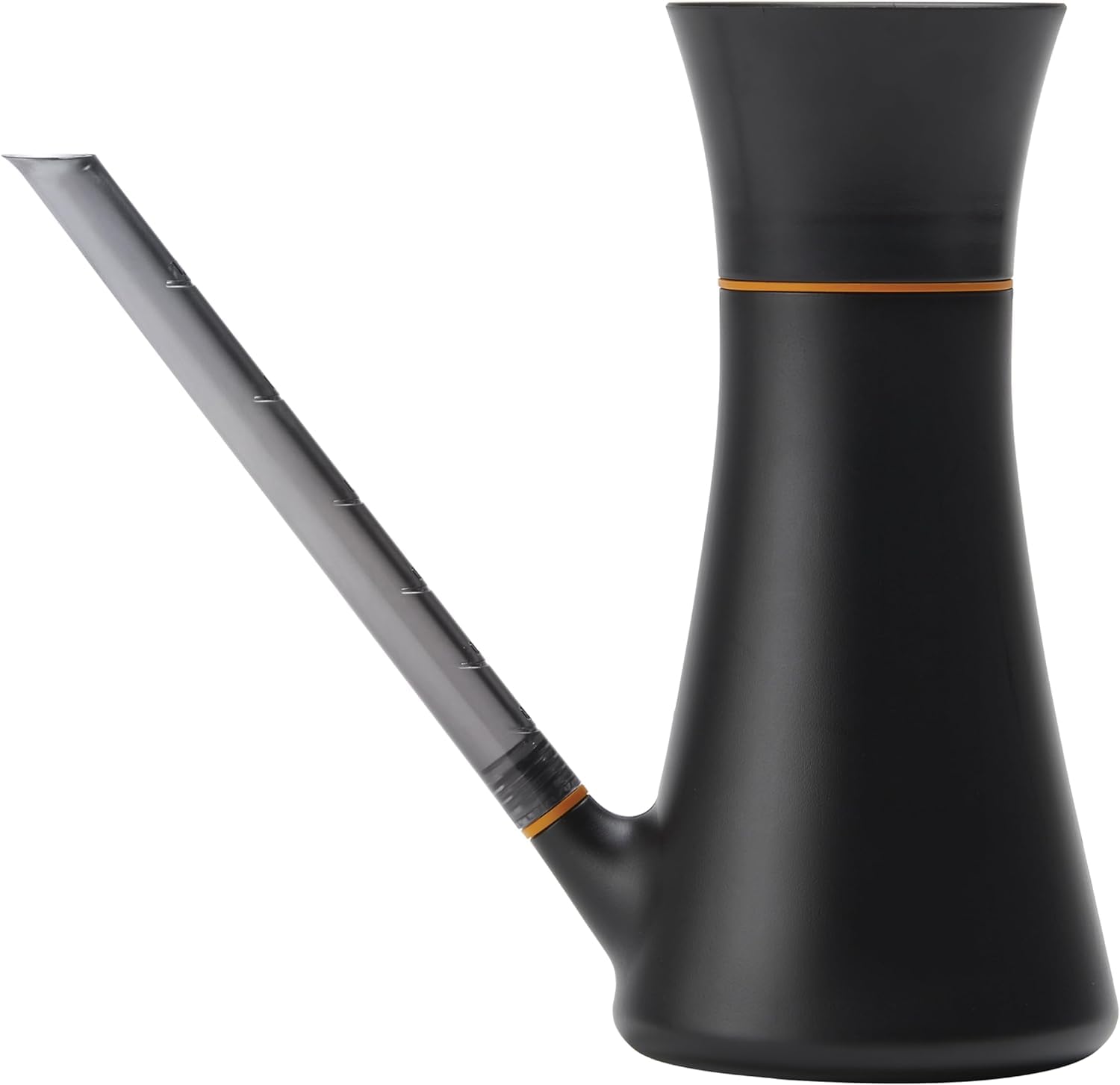
It weighs just 5.58 ounces empty, so you can reach through crowded leaves without disturbing a single stem.
At 5.58 ounces, the Fiskars weighs less than the 15.84-ounce HB Design Co. metal can — a difference you feel as you carry it from sink to shelf. The 40-ounce (1.2-liter) capacity holds enough for a small collection of houseplants. The translucent nozzle shows the water level as you pour. Buyers report that the “long narrow spout provides slow, controlled pour for small pots and tight spaces without splashing.” The anti-drip tip (a nozzle designed to stop drips after you tilt it back) works as promised: water goes into the pot, not onto the sill.
The screw-on spout has a gasket (a small rubber seal) that stops leaks at the joint. The cap lets you refill without removing the lid, which speeds up a multi-plant circuit. The body is made from 30% post-consumer recycled plastic and comes with a lifetime warranty — unusual at this price tier. Reviews note the sleek modern profile that looks good left out, and one owner said guests ask where they bought it.
The trade-off is the 40-ounce capacity: for a room full of thirsty plants you will refill more than with a 2.8-liter can. And the nozzle can be tricky to re-attach if you misalign the threads. But for someone who owns 3–8 indoor pots and values precision over volume, this is the one to beat.
Where it wins: Zero-splash pouring into tight spots — the slender spout and gasket-sealed nozzle keep every drop aimed at the soil. Buyers call it “art that works.”
The honest limit: 40 ounces gives you roughly 5–6 average houseplants per fill, so a larger indoor jungle needs a companion can for the second lap.
Reach for this if: Your windowsill has ferns, peace lilies, and succulents in different pot sizes — you want one controlled pourer that does not drip between stops.
Look elsewhere if: You water more than a dozen plants in one go and hate walking back to the sink — the 2.8-liter option below saves trips.
2. HB Design Co. 35 Ounce Metal Small Indoor Watering Can
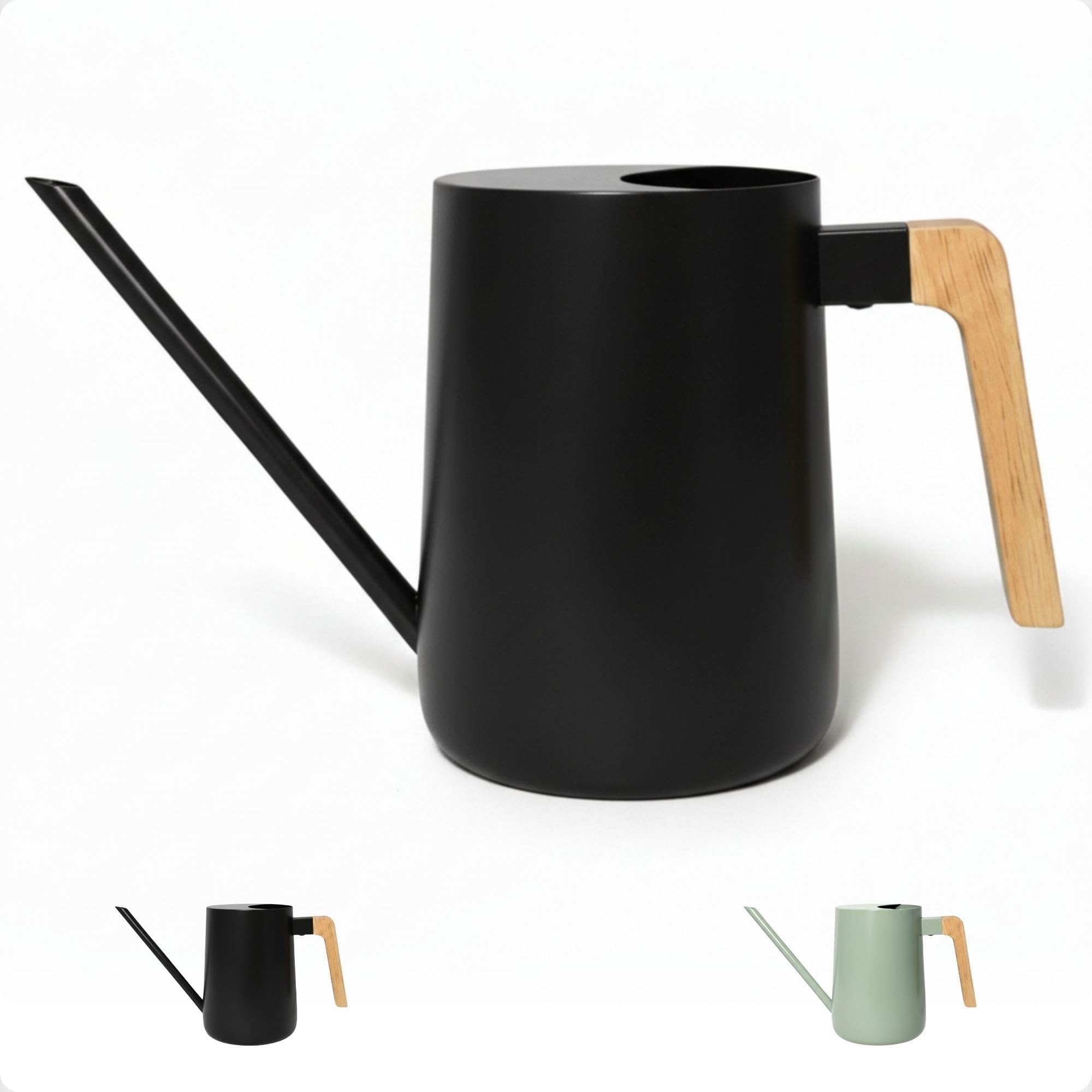
It is stainless steel and powder-coated, so it survives scratches and still looks good on your shelf between waterings.
The HB Design Co. goes opposite to the Fiskars: it prioritizes heft and finish over feather-light utility. Its stainless steel body is powder-coated (a baked-on finish, not paint) — owners mention “no rust, scratches, chips or leaks.” The 6.5-inch spout delivers a controlled pour that one reviewer called “perfect for succulents.” The 35-ounce capacity is 5 ounces smaller than the Fiskars, but the real wood handle gives a comfortable grip that feels natural in your palm. One buyer with a small collection said it “handles about six plants” per fill, which suits a compact indoor setup.
The trade-off is weight: at 15.84 ounces empty, the HB can weighs more than the Fiskars at 5.58 ounces. You feel that 10.26-ounce difference when the can is full. A few owners mention that the spout drips briefly after you stop pouring. The fill opening is small, so you need to be careful at the sink. There are no volume markings on the can, so if you measure plant food by the liter you will need a separate cup. But buyers uniformly praise its “elegant, handmade look” and the absence of plastic, making it the clear choice if your waterer doubles as decor.
Why it stands out: The powder-coated stainless finish and real wood handle make it the only waterer here that looks like kitchenware — customers note it is “handsome enough for display.”
The catch: A post-pour drip from the tip is common enough that several owners noted it. The lack of measurement markings means you must guess or use a separate cup.
Grab this for: An open-shelf plant display in a living room or kitchen where the can lives in plain sight — the aesthetic payoff is real for design-conscious owners.
Skip it for: Anyone who hates a tiny drip after every pour or who prefers to eyeball water levels through a clear spout. If that bothers you, the Fiskars is the better daily tool.
3. 2.8L Watering Can for Indoor Plants, Garden Watering Cans for Outdoor Plant
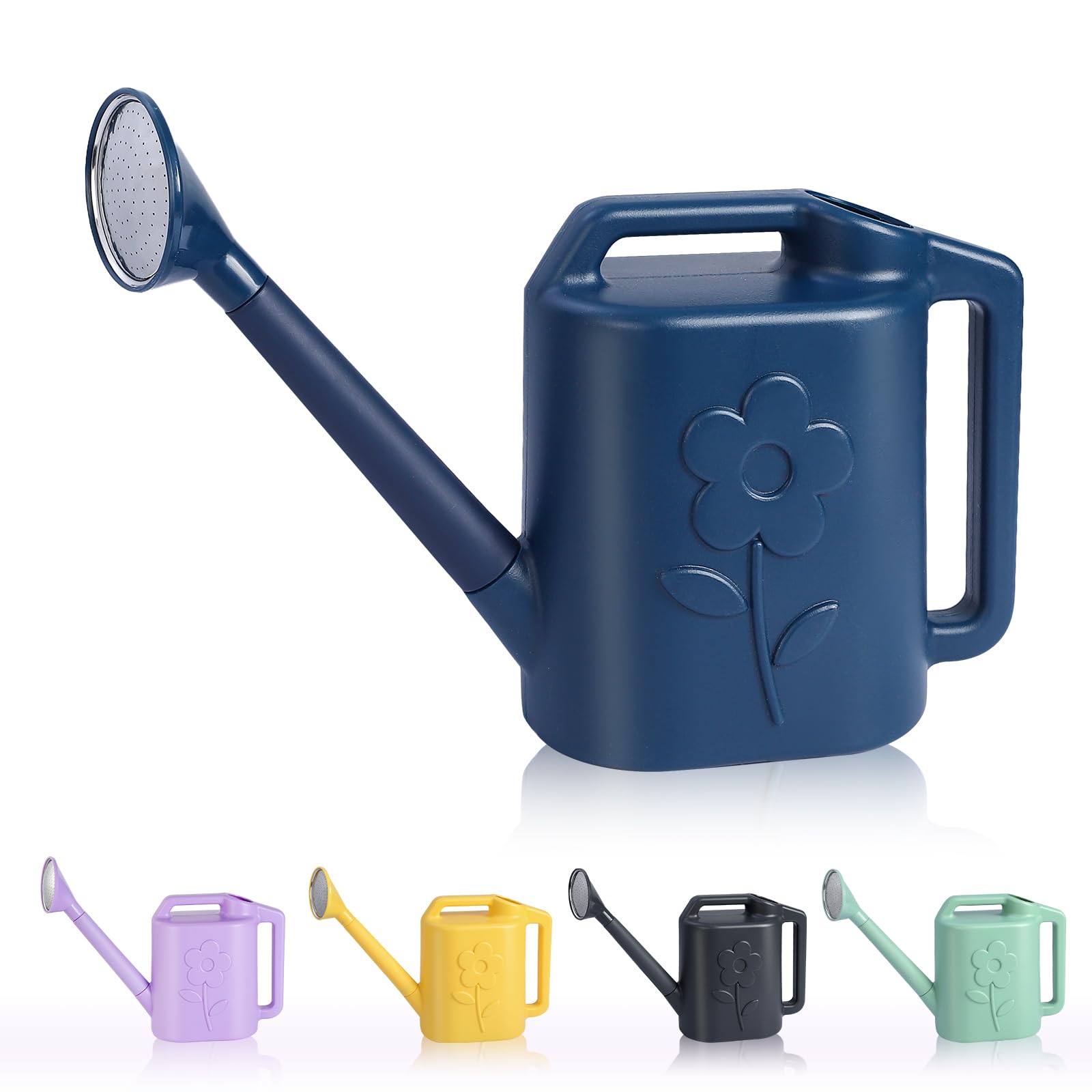
The 2.8-liter tank cuts refill trips in half for a shelf full of thirsty plants.
This plastic can from gegemaoyi goes after a different buyer: someone with a dozen or more pots who does not want to march back to the sink after every four pours. The long stem spout directs water where you aim it, and the detachable shower nozzle turns the stream into a gentle rain for seedlings or delicate topsoil. Buyers with arthritic hands specifically noted that the “nice size and shape” makes carrying it manageable even when full. Two separate handle positions let you grip the can close to the body for heavy lifting or farther out for precise aiming.
The plastic construction is thick-walled and shatterproof. At 0.35 Kilograms (about 12.3 ounces) empty, it weighs more than the Fiskars can before you add water. When fully filled, the 2.8 liters of water add over 6 pounds, so this is a two-hand carry for most people. One reviewer called it “sturdy” and another praised the “embossed flower on the front” as a cute detail. The trade-off: the large capacity encourages longer sessions, and the sprinkler head, while easy to remove, is less precise than the Fiskars’ slender nozzle for reaching into a dense crown of leaves.
What buyers love
- Dual handle positions offer excellent control for different watering angles
- Big opening makes filling at the sink fast and splash-free
- Detachable sprinkler head gives you both a stream and a shower
Where it falls short
- Becomes noticeably heavy when full — not ideal for weak wrists
- No anti-drip spout tip, so you may get a few drips on the move
Perfect for: A balcony garden plus a row of indoor pots where you water everything in one sweep — the 2.8-liter tank lets you finish in one trip.
Not for: Anyone with very tight shelf spacing where a wide can body cannot fit between pots.
4. Flora Premium Plant Mister Spray Bottle for Gentle & Fine Mist
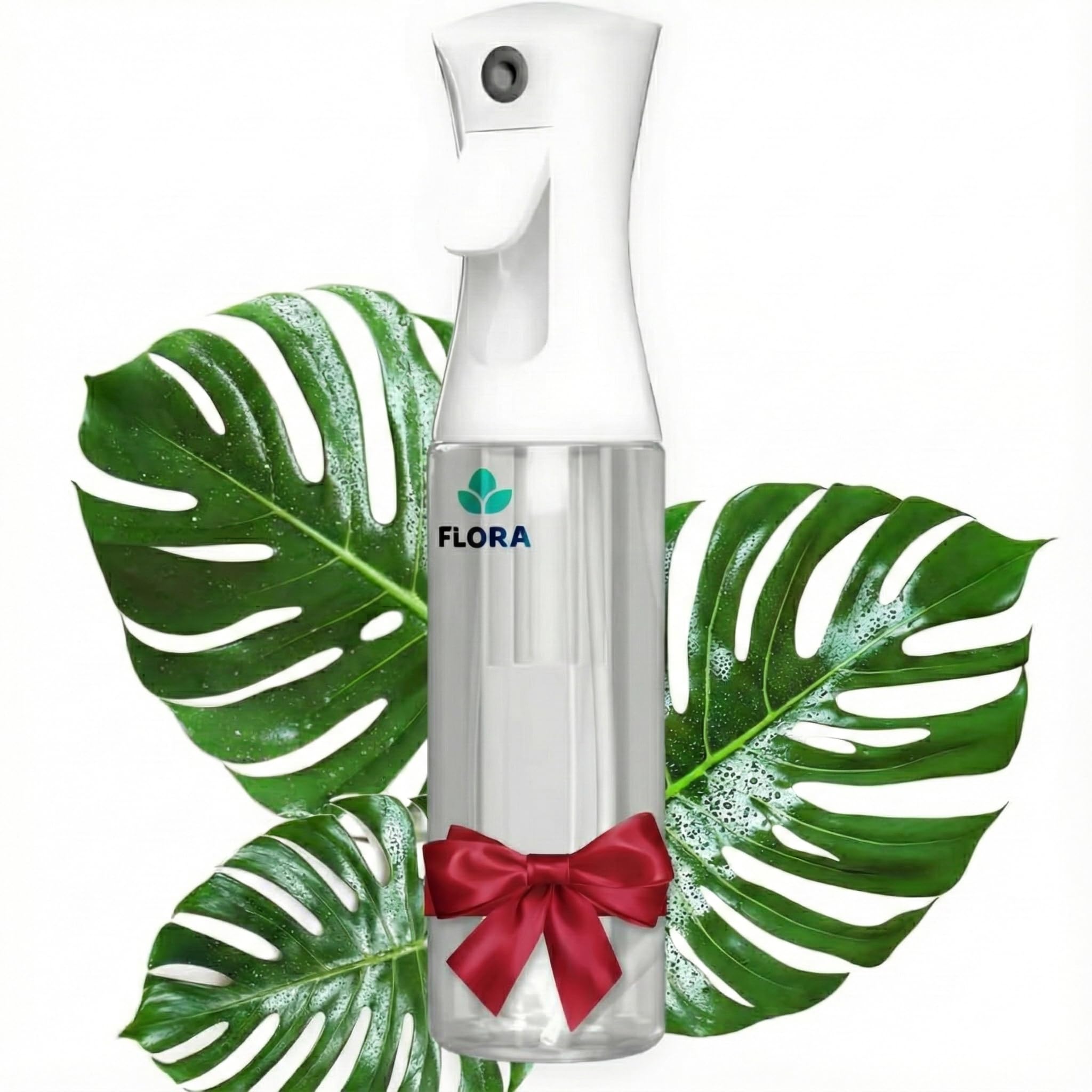
It turns tap water into a fine mist for humidity-craving leaves, not a stream for the soil.
This is not a pourer — it is a sprayer for a different job. The Flora mister delivers a fine mist for plants that want moisture on their leaves, like ferns, Bird of Paradise, and Monstera. At 0.13 Kilograms (4.6 ounces), it is lighter than the Fiskars can at 5.58 ounces. The wide, hand-shaped trigger is easy to squeeze, and reviewers point out they could mist at every angle without hand strain. One reviewer noted that the “fine mist prevents over-wetting; keeps Bird of Paradise leaves shiny and moist.”
The Flora app adds plant identification, personalized care reminders, and a community of over 300,000 plant parents. It is a different value than the Fiskars or HB Design cans, but it fills a gap they do not: without a misting step, ferns get crispy edges and humidity-loving plants stay dusty. The 300-ml tank is small — about ten ounces — so you will refill often if you mist a large collection. And this does not wet the soil below the surface; it is strictly for foliar hydration (water on the leaves) and air moisture.
Its real job: Keeps the leaves of a Bird of Paradise or Monstera clean and moist without soaking the soil — something no watering can does.
The honest limit: A 300-ml tank runs out fast for multiple large plants, and the mister does nothing for root-zone watering, so you still need a separate can.
Get this if: You own ferns, calatheas, or orchids that need a humidity boost between deep waterings — the fine mist is exactly what those leaves want.
Pass if: All your plants are succulents, cacti, or other dry-soil types that should never have wet leaves.
5. Self Watering Spikes Mushroom Shaped Plant Watering Globes Irrigation Terracotta (4 Packs)

The four-pack of terracotta mushrooms waters your plants while you are at the beach.
Porous terracotta (natural baked clay) soaks up water from the globe reservoir and slowly releases it into the soil as it dries. Shoppers say the setup “keeps plants hydrated 3-5 days, ideal for vacations.” The mushroom shape makes refilling easy because the upward-facing beak gives you a clear view of the water level. One reviewer called them “life savers for my plants” and noted they are “cute, durable.”
The spikes work best for plants that like consistent moisture — think pothos, ferns, and peace lilies. They are less suited for succulents or any plant that needs a dry-out period. At about 7 inches tall, the spikes are too large for very small desktop pots. One buyer mentioned you “cannot see water level” once the spike is inserted. The terracotta is fragile: a previous cracked unit was quickly replaced by the manufacturer, who takes full responsibility for damage during normal use. For a set of four, this is cheap insurance against returning from a weekend to wilted leaves.
Why it works: The porous clay wicks moisture into the root zone only when the soil is dry — this mimics a natural watering cycle better than a plastic drip stake.
The shortfall: At 7 inches tall they are too big for tiny pots, and there is no way to adjust the release rate — the plant takes what it needs, when it needs it.
Best for: A weekend away or a forgetful plant owner with 3-4 medium-to-large pots that like even moisture — just fill, insert, and relax. It is a smaller, simpler setup than the Reifier 10-pack for a small trip.
Skip for: Succulents, cacti, or very small desktop pots where the spike body takes up more space than the plant itself.
6. Reifier 10-Pack Natural Self Watering Spikes – Terracotta – Automatic Plant Waterer

Ten reusable terracotta stakes turn any recycled bottle into a drip system for the whole shelf.
The Reifier 10-pack takes the same terracotta-spike idea as the mushroom globes and scales it to a whole garden. Each spike inserts into the soil and accepts any standard soda or wine bottle as a water reservoir. One buyer paired them with green plastic wine bottles and reported they “work perfectly to water my potted plants and flowers for a week while out of town.” A different reviewer calculated that a 1-liter wine bottle “lasts about a week in heat,” making this viable for long vacations — not just a weekend.
At 2.16 pounds for the 10-pack, the Reifier set is heavier than any single can on this list, but that weight buys coverage for a whole indoor garden or a row of outdoor planters. The terracotta is natural and unglazed, which is great for water wicking but does mean it can crack over time — one owner reported cracks forming after about a year of use. The packaging is sturdy (buyers noted all 10 arrived intact), and the system recycles your own bottles, so there is no proprietary tank to replace. The main catch: the spikes need to sit snugly in the bottle mouth — standard soda and wine bottles fit, but oddly shaped bottles may not seal well.
What makes it smart
- Uses your own containers — zero waste from dedicated globes
- 10 stakes cover a full shelf of plants for a fraction of the per-unit cost of globes
- Natural terracotta material is unglazed and biodegradable
The honest drawbacks
- Terracotta spikes can develop hairline cracks after a year of freeze-thaw or dry cycles
- Bottle compatibility depends on the neck diameter — not all bottles seal
Ideal for: The owner of 8-10 medium-to-large pots who wants a low-maintenance vacation system without buying expensive branded globes — recycle your own bottles and swap out as needed.
Not ideal if: You want a “low-maintenance” solution for tiny pots or hanging baskets where a water bottle atop a spike looks awkward.
Understanding the Specs
Spout Length & Control
The reach of the spout determines whether you can water a plant in the center of a shelf without knocking over the pot in front of it. A long, slender spout, like the 6.5-inch one on the HB Design Co. can, lets you keep the can body low and level while the tip extends into the pot. Wider or shorter spouts force you to tilt the can, which increases the chance of water running down the outside of the pot instead of into the soil.
Capacity & Weight Relationship
A larger tank saves refill trips, but every liter of water weighs about 2.2 pounds. A 2.8-liter can like the gegemaoyi holds nearly three quarts, which means a full can weighs over 6 pounds — enough to make a difference for anyone with wrist or hand issues. A smaller 35-ounce or 40-ounce can (like the HB Design Co. or Fiskars) weighs roughly 2.5 pounds when full, which is much easier to carry one-handed. Match the capacity to your physical comfort, not just the number of plants you own.
FAQ
Can I use a plant waterer for both indoor and outdoor pots?
How long do terracotta self-watering spikes water a plant before needing a refill?
What is the difference between a plant mister and a watering can?
Will a long-spout watering can fit into a hanging basket?
Are metal watering cans better than plastic ones?
Can I use self-watering spikes in very small pots?
How do I clean terracotta watering spikes?
Is it safe to leave terracotta watering spikes in the soil all the time?
What size watering can do I need for a typical collection of houseplants?
Do I need a watering can with measurement markings?
Final Thoughts: The Verdict
The plant waterer that works for most owners is the Fiskars Indoor Watering Can: its anti-drip spout, 5.58-ounce body, and lifetime warranty combine into a tool that outpaces the HB Design Co. in control and the 2.8-liter can in light weight. For a can that looks like kitchenware, choose the HB Design Co. Metal Can. And for a weekend away without a plant sitter, the Self Watering Spikes Mushroom Pack keeps your potted plants hydrated for 3 to 5 days while you relax.
How We Picked
We do not accept paid placement, and we did not hands-on test every unit. Instead, we match each pick to a real buyer and use-case by comparing the manufacturers’ published specifications against the patterns in verified customer reviews — so you get each pick’s real strengths and trade-offs instead of marketing copy.
Sources & Methodology
Specifications: manufacturer listings and product documentation. Review insights: verified customer reviews, as of July 2026. Pricing: not shown on this page (it changes often); check the current price via the retailer link.
As an Amazon Associate, Lawn Gear Lab earns from qualifying purchases. This does not affect which products we feature.