
Specs are compiled from manufacturer listings and verified buyer reviews and can change over time — please confirm the key details on the product page before buying.
When the summer sun turns your tomato leaves pale and your lettuce bitter, the fix isn’t less sun — it’s softer sun. That’s what plant shade netting does: it filters harsh UV rays while letting air and water through, so your garden keeps growing instead of baking. The choices come down to one number — the shade percentage — and this guide breaks down the seven best options by what they actually do in a real garden.
I’m Rikta — the founder and writer behind Lawn Gear Lab. This guide is built by comparing the manufacturers’ published specifications and the patterns across verified customer reviews, so you get each pick’s real strengths and trade-offs instead of marketing spin.
From 40% filters for veggies to a 60% roll for big projects, here’s how to match the right plant shade netting to your garden’s real needs.
Our Picks at a Glance
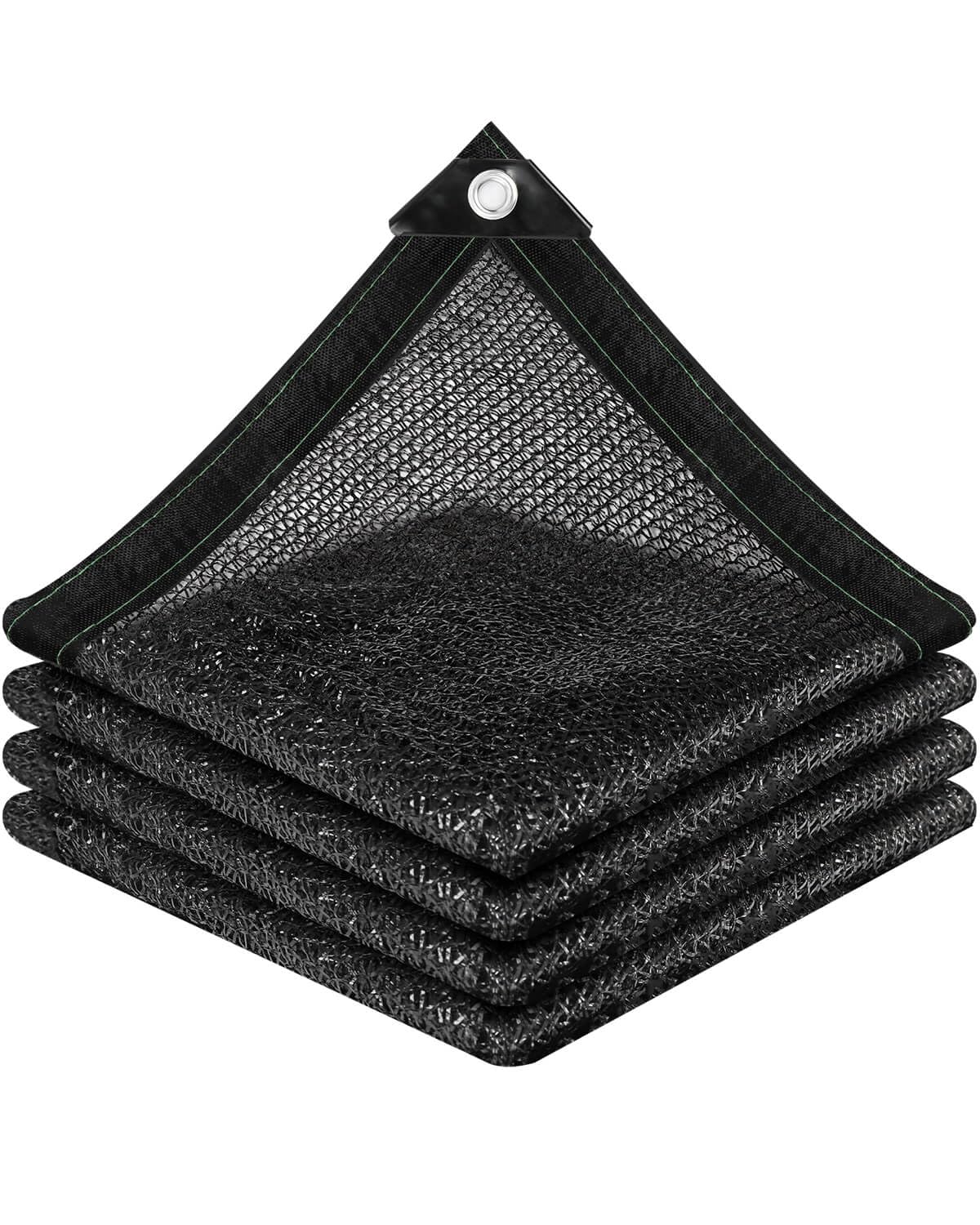

How To Choose The Best Plant Shade Netting
Shade netting is a simple product with one crucial decision: how much sun to block. Get that percentage right and your plants stay productive through the hottest weeks; get it wrong and you either scorch leaves or starve them of light. Here’s what to weigh before you buy.
Shade percentage: the single number that decides everything
The percentage tells you how much sunlight the mesh blocks. A 40% net lets 60% of light through — ideal for sun-loving vegetables like tomatoes and peppers that need strong light without the harsh midday burn. A 55% or 60% net blocks more, suiting leafy greens, seedlings, and animals like chickens that need heavier relief. Higher isn’t better; it’s just different. Match the density to what you’re protecting.
Grommets versus a cut-to-size roll
Pre-installed grommets (the metal rings along the edges) mean you can hang the net in minutes with rope, zip ties, or hooks. A plain roll without grommets gives you total freedom to cut custom shapes — but you’ll need clips or staples to anchor it. Think about your setup: a fixed greenhouse or pergola rewards grommets; a fence line or livestock barn rewards a roll you trim yourself.
Material and weave: why HDPE wins
Nearly every serious shade net is knitted from high-density polyethylene (HDPE), a plastic that’s tough, tear-resistant, and survives seasons of sun. The knitted structure is what lets air and rain pass through, so you never have to lift the net to water. A solid tarp traps heat and turns your garden into an oven; a knitted HDPE mesh keeps things cooler and drier.
Quick Comparison
| Model | Best For | Shade Rate | Size | Weight | Amazon |
|---|---|---|---|---|---|
| vensovo 40%★ Best Overall | Balanced veggie protection | 40% | 12 x 20 ft | — | Amazon |
| LOVE STORY 55%Premium Pick | Hot-climate sun filtering | 55% | 10 x 20 ft | 0.68 kg | Amazon |
| DGSL 40% Grommet | Quick setup, tear-resistant | 40% | 10 x 20 ft | 0.82 kg | Amazon |
| HOLAA 60% | Heavy sun block | 60% | 6 x 14 ft | — | Amazon |
| Storystore 40% | Greenhouse seedlings | 40% | 10 x 20 ft | — | Amazon |
| KAAOGITY 55% | Chicken coops & raised beds | 55% | 6 x 20 ft | — | Amazon |
| NCSNA 60% Roll | Custom DIY projects | 60% | 5’10” x 100 ft | 9.78 lbs | Amazon |
In-Depth Reviews
1. vensovo 40% Shade Cloth, 12 x 20 ft
Our pick — over 4.5★ from 900+ verified ratings; the strongest balance of quality and price.
The crowd-pleaser that saves tomatoes without smothering them
You can hang this net straight and tight without wrestling it, thanks to triangular protective corners on all four edges and grommets spaced at 17.71 to 19.68 inches — enough anchor points for a first-time user to get a clean fit. The knitted high-density polyethylene (HDPE) structure (a tough, woven plastic mesh) resists tearing and stays breathable, so you can water right through it without lifting a panel.
Gardeners in scorching climates report this net keeps tomatoes thriving through the hottest part of the day. Buyers report setting it up over 2-foot-tall tomato plants and shading them through the hottest six hours of the day, from 11 a.m. to 4:30 p.m., and the plants coming through fine. Another pattern that shows up repeatedly: it cools greenhouses by 10 degrees and covers multiple trees at once. That 40% shade rate leaves 60% of light passing through, which is why sun-loving vegetables keep producing rather than sulking.
Durability is a mixed bag: some owners praise its storm resilience, while others report rips under heavy weather. Some owners say it holds up great in storms, while others report it ripping under heavy weather. At roughly a third the weight of a sturdier alternative like the DGSL grommet version (0.68 kg vs 0.82 kg), it’s a lighter fabric that rewards gentle handling and solid anchoring.
What wins people over
- Heat relief that owners describe as saving their tomato crop
- Plenty of grommets at even spacing for a clean, quick hang
- Lets water and air pass through, so no need to remove it to water
Who should think twice
- Storm-prone regions may find the fabric too light for violent winds
- Some owners wish the material felt more substantial
The right pick for: vegetable gardeners in hot climates who want easy setup and real heat relief without darkening their beds too much.
Look elsewhere if: your site takes constant high winds — the lighter weave asks for sheltered spots.
2. LOVE STORY 55% Shade Cloth, 10 x 20 ft
The Arizona-tested filter that cools the whole yard, not just the plants
If you live in the desert, this 55% net is the one buyers reach for, because its see-through weave shades while keeping visibility — so it works for chicken coops, dog kennels, and patios without blocking your view. The high-density polyethylene (HDPE) knit (a woven plastic mesh) lets breeze and water pass through, so you water without lifting it, and it gives vines a surface to climb on a trellis.
Owners talk about plants perking up once it’s overhead and the yard staying measurably cooler around it. It weighs just 0.68 kg, which makes it the lightest of the grommet-free options here, and owners mention it holding up in strong wind.
There’s no grommet ring to latch onto — this is a DIY mesh tarp, so plan on clips, rope, or staples for anchoring. The maker also flags a tolerance of ±5 inches from edge to edge in the material, so sizes are approximate. Keep that in mind when ordering for a tight frame.
Best in hot climates: the 55% density plus see-through knit makes it the pick owners in Arizona and other scorching states consistently praise for keeping plants and yards cooler.
The honest catch: no grommets and a ±5-inch size tolerance means you bring your own hanging hardware and a little flexibility on fit.
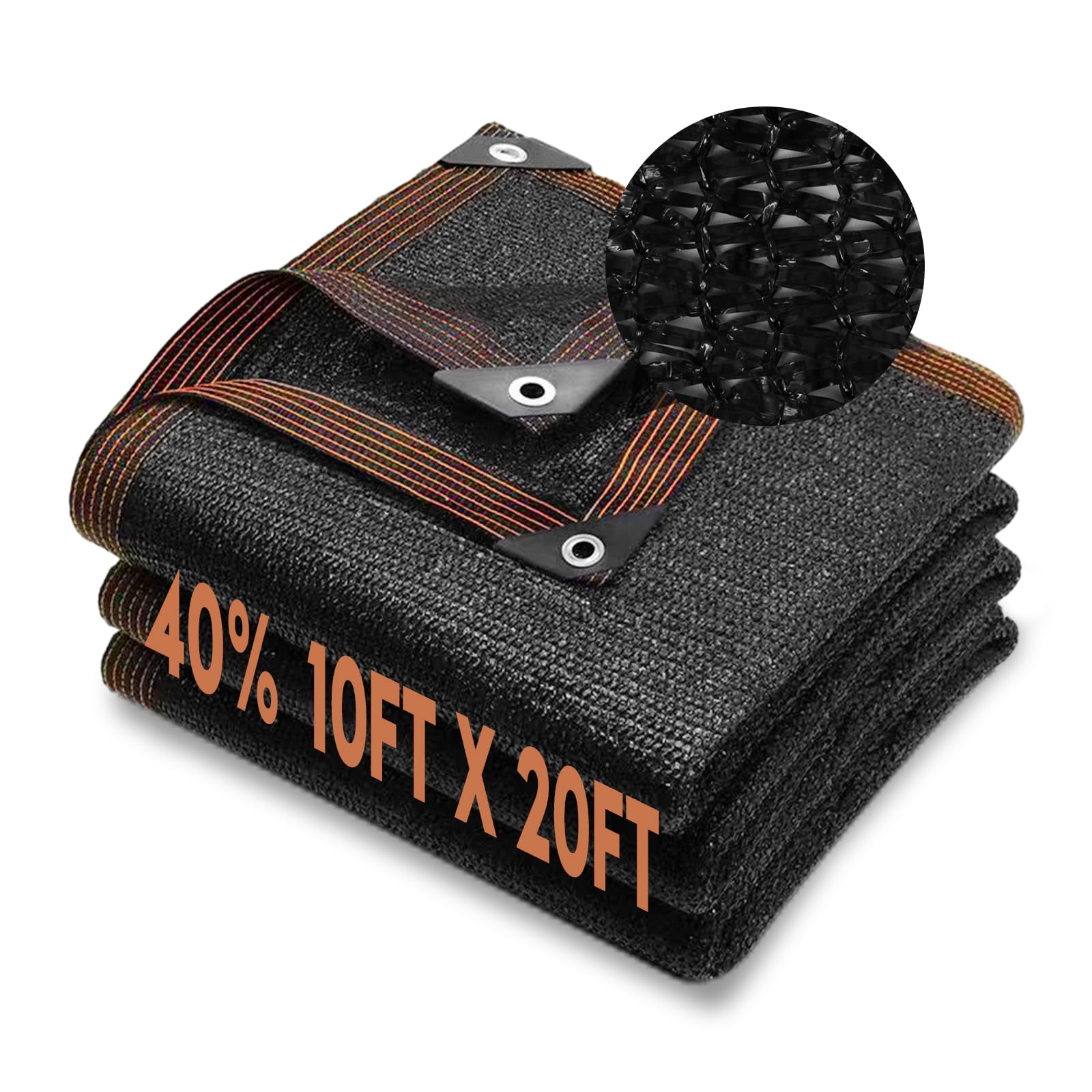
3. DGSL 40% Shade Cloth with Grommets, 10 x 20 ft
The sturdy workhorse with rustproof anchors spaced every 3.28 feet
This one leads with durability hardware: rustproof aluminum grommets placed every 3.28 feet, reinforced edges, and a tear-resistant high-density polyethylene (HDPE) weave. It’s the heaviest of the 40% options at 0.82 kg — about 21% more material than the LOVE STORY 55% net — and that extra heft shows up as a thicker, more consistent weave that owners call well-engineered.
The 40% shade rate hits what the maker calls the balance for most gardens: it cuts harsh midday sun while letting ample light through, so it’s not dark and cave-like under there. Customers note it saving overheated veggies during heat waves, with plants thriving and a potential bumper crop on the way. It also works over PVC hoop houses, and owners note the grommets are well-anchored for attaching with rope, zip ties, or bungee cords.
Despite the sturdy feel, this mesh is delicate—multiple reviewers point out weather damage within 4 to 6 months of sun, wind, and rain. If you need a net to last multiple seasons in harsh weather, this may not be the one — but for a season of serious protection it delivers.
Built for easy daily use
- Rustproof aluminum grommets every 3.28 feet for secure hanging
- Reinforced edges resist fraying and tearing
- Works on hoop houses, raised beds, and pergolas
Seasonal reality check
- Weather exposure can wear it out within 4-6 months
- Some owners note messy stitching on the edges
Reach for this if: you want a rugged 40% net with rustproof grommets and don’t mind replacing it after a tough season.
Look elsewhere if: you expect a multi-year investment — the weave is delicate in sustained harsh weather.
4. HOLAA 60% Shade Cloth, 6 x 14 ft

The heaviest blocker that drops temperatures by up to 15°F
This is the net you pick when the heat is genuinely punishing. The 60% density blocks more sun than any other pick here, and the maker claims the breathable knit reduces heat buildup by up to 15°F compared to direct sunlight. Owners in Texas confirm the cooling: one measured a 10°F drop under the net on a 97°F day, with plants sighing relief.
Construction is the other headline. The edges are triple-reinforced with binding tape and stitched with 6-line industrial-grade threading, and the corners are heavy-duty for anchoring against high winds. The open-weave HDPE design lets hot air escape and rainwater pass through, so unlike a solid tarp that turns into an oven, this stays cooler and drier underneath.
The main caveats are its smaller 6 x 14 ft footprint and sagging between grommets if not pulled taut. At 6 x 14 ft it covers less ground than the 10 x 20 ft options, and a few owners note the fabric sags between grommets if you can’t pull it taut. It’s also thinner than the “heavy duty” name suggests — while some praise its durability, others report tearing and deterioration over time. Treat it as a strong seasonal protector, not armor.
The coolest option here: a 60% block with triple-reinforced edges that owners in 100°F+ heat say keeps tomatoes thriving.
Worth knowing: the 6 x 14 ft footprint is smaller, and sections between grommets can sag without tight tension.
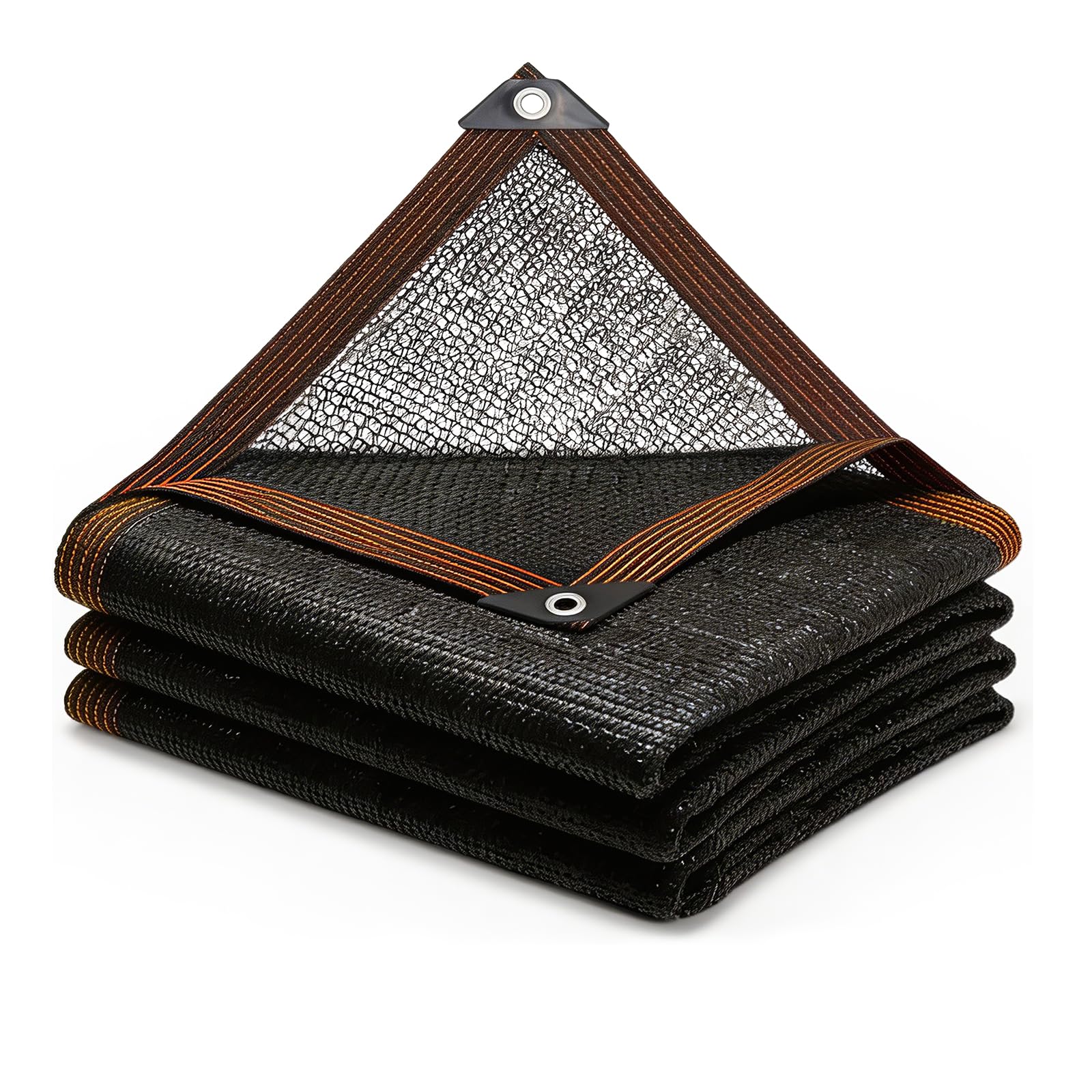
5. Storystore 40% Shade Cloth, 10 x 20 ft
The seedling-saver designed to prevent leggy, stretched growth
This 40% net is pitched specifically at greenhouse seedlings, succulents, and patio flowers — plants that need gentle, filtered light rather than harsh sun. The knob is that 40% shade rate allows 60% natural light transmission, which the maker says promotes healthy photosynthesis and prevents leggy growth, making it a gentler alternative to a 50% shade cloth.
The hardware is solid: aluminum grommets every 3.28 feet (about 1 meter) and four edges reinforced with strong stitching for tear resistance. Owners have been loyal across years — some report holding up several summers shading chickens and a small greenhouse, and one tomato grower who moved from the Northeast to the South finally got ripe fruit after years of crops splitting open in the heat. The breathable knitted structure lowers greenhouse temperatures in summer without the stuffiness of denser nets.
Durability splits owners: some report two-plus summers of use, while others see tears within a year. While several owners say theirs lasted two summers or more, a few report the fabric tearing in half within a year and grommets falling apart. The 40% density is also a deliberate choice — it’s too light for poultry areas where a darker 90% net might be preferred, so weigh your actual needs.
Made for young plants
- 60% light transmission prevents leggy, stretched seedlings
- Aluminum grommets every 3.28 feet for easy hanging
- Several shoppers say two-plus summers of use
Fair durability caveat
- Some units tore within a year
- Grommets occasionally fail over time
The right pick for: greenhouse growers and seedling starters who want gentle light for young, tender plants.
Think twice if: you need maximum darkness for poultry or long-term multi-season armor.
6. KAAOGITY 55% Sunblock Shade Cloth, 6 x 20 ft

The long 20-foot strip that cools coops and covers row after row of beds
The shape is the story here: at 6 x 20 ft, this is a long, narrow panel built for covering chicken yards, raised beds, and greenhouse rows in one sweep. The 55% sun block is a middle-ground density — heavier than a 40% net but not the near-blackout of a 90% — which owners find right for keeping plants productive without shutting them down.
Smart positioning from the maker: shade cloth doesn’t reduce sunlight hours, it softens the UV so plants keep receiving light without the full force of it. That translates to cooler soil, less water use, and warm crops like cucumbers, tomatoes, and peppers that keep producing instead of shutting down. Chicken buyers report noticeably calmer birds and steadier egg production once their yard is shaded.
This 55% density won’t suit delicate shade-loving plants, and the fabric requires a support frame to prevent sagging. Owners in Texas note that wind and rain pass through (which is good for drainage) but cause sagging between poles. The knitted high-density polyethylene (HDPE) construction resists tearing, though it will wear over time.
A natural fit for: chicken coops and long raised-bed rows where a 20-foot continuous panel saves setup time.
The fit note: plan a frame with multiple anchor points — sag between poles is the most common owner complaint.
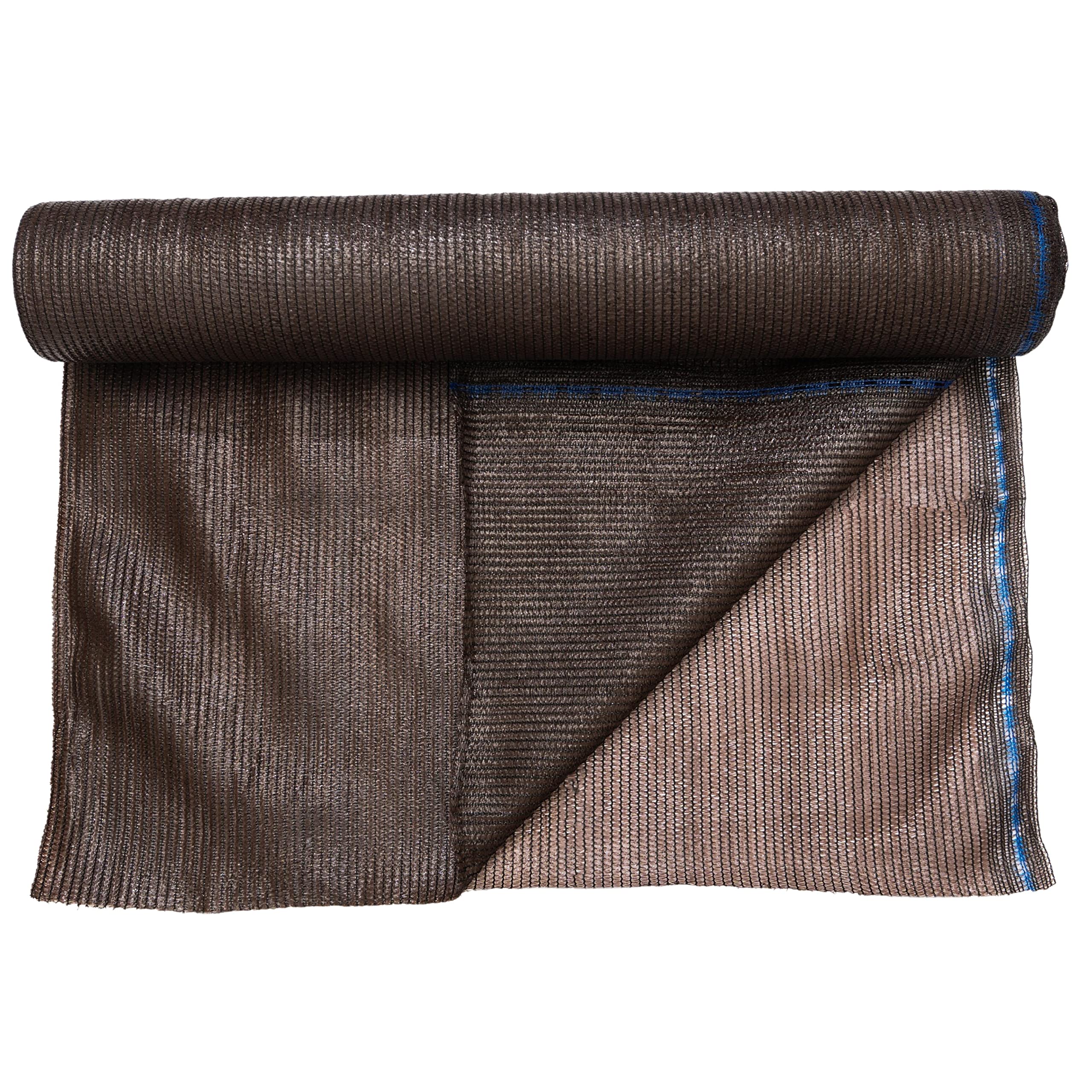
7. NCSNA 60% Shade Cloth Roll, 5’10” x 100 ft
A 100-foot roll that becomes whatever shade project you dream up
This is the buy when you have a big area or many small jobs, because it’s a 5-foot-10-inch by 100-foot roll you cut yourself. At 9.78 pounds, it’s the heavyweight of the group, and the 60% density delivers serious sun block. The maker designed it to be cut without fraying, so you can shape pieces for garden beds, kennels, fences, or pergola panels.
The clever detail is the blue-highlighted eyelets woven into the fabric — they stand out visually so you can spot anchor points fast during setup. Owners have used this for everything from overhead blackberry shade in 90°F+ heat (no sun-scald, no tearing after six months of direct sun) to economical horse stall curtains that survived sun, wind, rain, and horses without unraveling. It staples cleanly to wood planks and handles strong gusts.
Without pre-installed grommets, you’ll need to supply clips, staples, or bolts for anchoring. Some owners find the material thinner than expected, and the edge slits may not withstand severe storms or high winds. But for a flexible, cut-anywhere 60% roll, it’s the most versatile option in this lineup.
Total flexibility
- Cut to any size without fraying for custom projects
- Blue-highlighted eyelets make anchor points easy to find
- 100-foot length covers large or multiple areas in one buy
Bring your own hardware
- No grommets — needs clips, staples, or bolts
- Some owners find the material thinner than expected
Reach for this if: you’re fencing a yard, covering multiple beds, or building custom shade structures and want one roll to do it all.
Look elsewhere if: you want a ready-to-hang panel with grommets — this roll demands a little DIY effort.
Understanding the Specs
Shade percentage
The number tells you how much sunlight the mesh blocks. A 40% net lets 60% of light through — right for tomatoes, peppers, and other sun lovers that need strong light without the harsh midday burn. A 55% or 60% net blocks more, suiting leafy greens, seedlings, and animals like chickens that need heavier relief. Higher isn’t automatically better; it’s about matching density to what you’re protecting.
Grommets and anchoring
Grommets are the metal rings along the net’s edges that let you tie it down with rope, zip ties, or hooks. Pre-installed grommets mean setup in minutes. A plain roll without grommets gives total freedom to cut custom shapes, but you’ll need clips or staples to anchor it. Check the spacing — closer grommets (around every 3.28 feet) mean less sagging between anchor points.
FAQ
What shade percentage should I use for tomatoes and peppers?
Is a higher shade percentage always better for my garden?
Can I water my plants without removing the shade net?
How long does plant shade netting last?
Do I need grommets on my shade cloth?
Will shade cloth protect my chicken coop from heat?
What’s the difference between shade cloth and a solid tarp?
How do I hang shade cloth over a greenhouse or raised bed?
Final Thoughts: The Verdict
For most gardens, the plant shade netting winner is the vensovo 40% because it pairs an easy grommet setup with the balanced 40% shade rate that suits the widest range of vegetables. If your summers are truly brutal and you need heavier filtering, grab the LOVE STORY 55% for its see-through knit and proven hot-climate performance. And for a big DIY project or multi-area coverage, the NCSNA 100-foot roll is the one to reach for.
How We Picked
We do not accept paid placement. Every pick is matched to a real buyer and a real use-case; we do not hands-on test units.
Sources & Methodology
Specifications: manufacturer listings and product documentation. Review insights: verified customer reviews, as of August 2026. Pricing: not shown on this page (it changes often); check the current price via the retailer link.
As an Amazon Associate, Lawn Gear Lab earns from qualifying purchases. This does not affect which products we feature.