
The difference between a so-so rose bush and a head-turning display of abundant, fragrant blooms often comes down to one thing: what you feed it. A generic all-purpose fertilizer might keep a plant alive, but roses are heavy feeders with specific nutritional demands — they need a targeted formula that delivers the right balance of nitrogen, phosphorus, potassium, and critical micronutrients like calcium and magnesium to fuel vigorous canes and continuous flowering.
I’m Rikta — the co-founder and writer behind Lawn Gear Lab. I’ve spent countless hours cross-referencing NPK ratios, analyzing micronutrient profiles, and studying hundreds of owner reports to build this comparison of the most effective formulas on the market.
Whether you are nurturing hybrid teas, floribundas, or climbing varieties, the right plant food for roses delivers measurable improvements in bloom size, color intensity, and overall plant vigor within a single growing season.
How To Choose The Best Plant Food For Roses
Selecting the right rose food is not about picking the most expensive bottle. It is about matching the formula’s nutrient profile, release mechanism, and organic certification to your specific growing conditions and the life stage of your plants. Here are the three critical factors to evaluate before buying.
NPK Ratio and Secondary Nutrients
The three numbers on the label — nitrogen, phosphorus, and potassium — tell the core story. Roses benefit from a slightly higher middle number (phosphorus) to support root development and flower production, but the ratio should never be extreme. Look for formulas that also list calcium and magnesium, as these prevent common disorders like blossom-end rot and weak stems. A formula such as 2-6-4 or 4-3-2 is more appropriate for roses than a high-nitrogen lawn fertilizer that would push excessive leaf growth at the expense of blooms.
Liquid Concentrate vs. Granular Slow-Release
Liquid formulas, including emulsions like fish fertilizer and seaweed extracts, deliver nutrients immediately to the root zone and are ideal for weekly feeding during the active growing season. Granular organic options release nutrients more slowly as soil microbes break them down, providing a steady supply over several weeks with fewer applications. The best approach for many rose growers is to use a granular base at the start of the season and supplement with liquid feed every two to three weeks during peak blooming periods.
Organic Certification and Soil Biology
Roses grown in healthy, biologically active soil are more resistant to common diseases like black spot and powdery mildew. Organic plant foods that include humic acids, seaweed, fish solubles, and beneficial microbes feed the soil food web rather than just the plant. Look for OMRI-listed products or those with clear organic input material certifications. These formulas typically include trace minerals that synthetic counterparts omit, resulting in blooms with deeper pigmentation and stronger fragrance.
Quick Comparison
On smaller screens, swipe sideways to see the full table.
| Model | Category | Best For | Key Spec | Amazon |
|---|---|---|---|---|
| Growth Technology GT Rose Focus | Liquid Concentrate | Hydroponics and container roses | 5-10ml per litre dilution; 12 essential minerals | Amazon |
| Heirloom Roses Founder’s Fish Fertilizer | Liquid Emulsion | Organic soil gardens with new own-root roses | 4 oz per gallon dilution; acidulated fish solubles | Amazon |
| Espoma Organic Rose-Tone 4-3-2 | Granular Slow-Release | Monthly feeding in garden beds and borders | 4-3-2 analysis with 5% calcium; Bio-tone formula | Amazon |
| Dr. Earth Total Advantage Rose & Flower Fertilizer | Granular Organic | Non-GMO verified organic feeding | 1:1 mixing ratio; OMRI and CCOF certified | Amazon |
| Great Big Roses and Flowers Liquid Fertilizer Booster | Liquid Soil Activator | Reviving underperforming roses and boosting bloom count | 70 chelated trace minerals; humic acids and seaweed | Amazon |
| Farmer’s Secret Rose Booster Fertilizer | Super Concentrate | Weekly feeding for heavy-feeders and high-bloom goals | 2 teaspoons per gallon dilution; super concentrated | Amazon |
| Neptune’s Harvest Rose & Flowering Fertilizer 2-6-4 | Liquid Organic | Foliar and soil feeding for all rose types | 2-6-4 NPK; fish, seaweed, molasses, humic acids | Amazon |
In‑Depth Reviews
1. Growth Technology GT Rose Focus
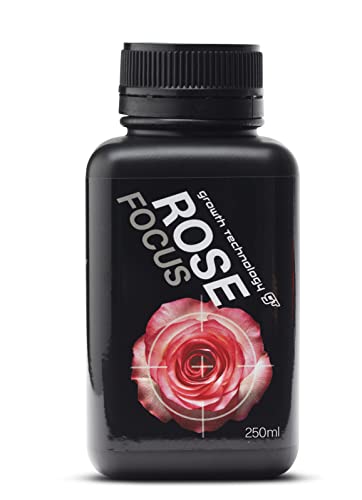
Growth Technology GT Rose Focus stands out because it was engineered from the ground up specifically for roses rather than adapted from a general-purpose formula. The NPK profile is supplemented with 12 essential minerals and an extra dose of soluble calcium, which directly contributes to stronger cell walls in canes and higher petal count per bloom. The 5-10ml per litre dilution rate for hydroponics and 3-7ml for soil gives growers exceptional flexibility across different growing mediums.
Owner reports consistently describe healthier foliage, larger leaf size, and significantly faster new growth after switching to this formula. The pH-buffered formulation ensures nutrients remain available even in suboptimal water conditions, and the compact 8.5 fl oz bottle goes further than its size suggests because of the concentrated dosing instructions. Users growing hybrid teas in containers report particularly dramatic improvements in flower density and stem thickness.
The one practical shortcoming is the bottle’s dispensing design — a few owners noted leakage during shipping, so inspecting the cap seal on arrival is advisable. The concentration also means careful measurement is required; a single cap equals 20ml, making it easy to overfeed if you do not follow the dilution chart. For anyone growing roses in containers or semi-hydro setups, this is the most scientifically formulated option on this list.
What works
- Complete mineral profile with extra calcium for structural strength
- pH-buffered for efficient absorption in various water conditions
- Highly concentrated; 250ml makes many gallons of working solution
What doesn’t
- Bottle cap seal can leak during shipping
- Requires precise measuring to avoid over-feeding
2. Heirloom Roses Founder’s Fish Fertilizer
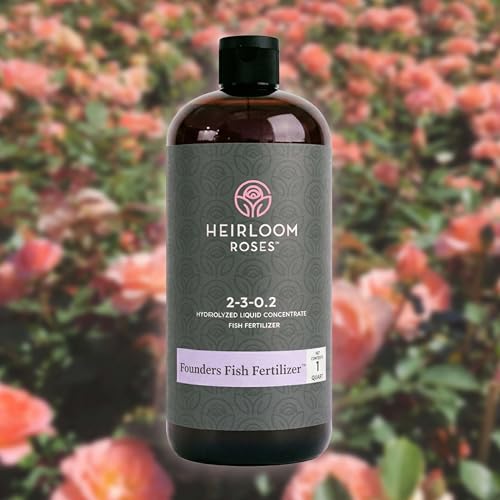
Heirloom Roses Founder’s Fish Fertilizer is a straight-ahead organic liquid emulsion derived from acidulated fish solubles stabilized with phosphoric acid. The key differentiator here is the variety of fish species used in the formulation — multiple species contribute a wider spectrum of micronutrients and amino acids than single-source fish fertilizers. At 4 ounces per gallon of water, the dilution rate is straightforward and one 32-ounce bottle stretches to cover 8 gallons of feeding solution.
Real-world feedback from growers in zone 7a confirms that this fish fertilizer triggers rapid new growth and healthier foliage within days of the first application. For new own-root roses, several owners reported that every plant bloomed in the first season — a notable achievement for young roses that often prioritize root establishment over flowering. The organic matter feeds mycorrhizal fungi in the soil, building long-term soil health beyond just the immediate nutrient delivery.
The glaring issue is the odor. Multiple reviewers explicitly warn that the smell is potent enough to disturb neighbors if applied during the day. Apply in the evening, use gloves, and store the bottle in a shed or garage. The smell dissipates quickly once the solution dries into the soil. For organic gardeners who prioritize soil biology over convenience, this is a top-tier choice for establishing young roses.
What works
- Multi-species fish blend provides broad micronutrient spectrum
- Feeds soil mycorrhizae for long-term soil structure improvement
- One bottle lasts a full season for 5-6 new rose plants
What doesn’t
- Extremely strong fish odor requires careful timing and storage
- Manual measurement of 4 oz per gallon is less precise than dropper-style bottles
3. Espoma Organic Rose-Tone 4-3-2

Espoma Organic Rose-Tone is a granular slow-release formula that has been a staple in organic rose gardens for decades. The 4-3-2 NPK analysis is deliberately weighted lower in nitrogen than many synthetic rose foods, which prevents the excessive vegetative growth that would come at the expense of bud formation. The inclusion of 5% calcium in the granular mix directly supports cell wall integrity in new canes and petal development. The Bio-tone formula adds beneficial microbes that colonize the root zone and improve nutrient cycling.
Application is as simple as sprinkling the granules around the drip line of the plant and watering in — no mixing, no measuring cups. For drift roses and knockout varieties that are heavy feeders, the recommended 1 cup per plant per month dramatically increases flower production, and multiple users report seeing growth popping up within days. The two-pack format provides 8 pounds total, which covers a medium-sized rose bed for an entire growing season with monthly applications from May through September.
Some users note the granulars have a noticeable odor, though it is less offensive than fish emulsion. The bag is physically small for its weight, which can be surprising at first glance. This formula works best when applied consistently on a monthly schedule rather than as a rescue treatment for struggling plants. For gardeners who prefer a set-it-and-forget-it approach without weekly mixing, Rose-Tone is the most practical mid-range granular option.
What works
- Slow-release granular format requires only monthly application
- 5% calcium strengthens stems and supports dense blooms
- Bio-tone microbes improve long-term soil health
What doesn’t
- Granules have a noticeable odor when first applied
- Requires consistent monthly schedule for best results
4. Dr. Earth Total Advantage Rose & Flower Fertilizer

Dr. Earth Total Advantage Rose & Flower Fertilizer occupies premium territory because it is the only Non-GMO Project Verified fertilizer sold in the U.S. at this price point. The granular blend is handcrafted from human-grade and feed-grade ingredients rather than industrial byproducts, and it is enriched with multi-minerals, proteins, carbohydrates, humic acids, and trace elements. The OMRI, CCOF, and NOP certifications provide the highest level of organic purity verification available.
Growers in South Florida and other challenging climates report that this formula keeps roses thriving through intense heat and humidity when other fertilizers cause salt buildup or leaf burn. The 1:1 mixing ratio recommendation is intentionally conservative — you sprinkle the granules around the root zone and water in, similar to Espoma Rose-Tone, but the ingredient quality is higher. The 4-pound bag is suitable for 8-10 established rose bushes with two seasonal applications (post-winter pruning and after the first bloom flush).
This product is not sold as a concentrate, so the 4-pound bag covers less area per dollar than bulk granular options. Some users also note that the granules can clump if stored in humid conditions. For organic purists who insist on Non-GMO Project verification and OMRI listing for every input in their garden, Dr. Earth provides the most transparent ingredient sourcing of any rose-specific fertilizer on this list.
What works
- Unique Non-GMO Project Verified certification for organic purity
- Enriched with humic acids and trace elements for soil biology
- Works well in high-heat, high-humidity environments
What doesn’t
- Granules can clump in humid storage conditions
- Lower coverage per bag compared to bulk competitors
5. Great Big Roses and Flowers Liquid Fertilizer Booster
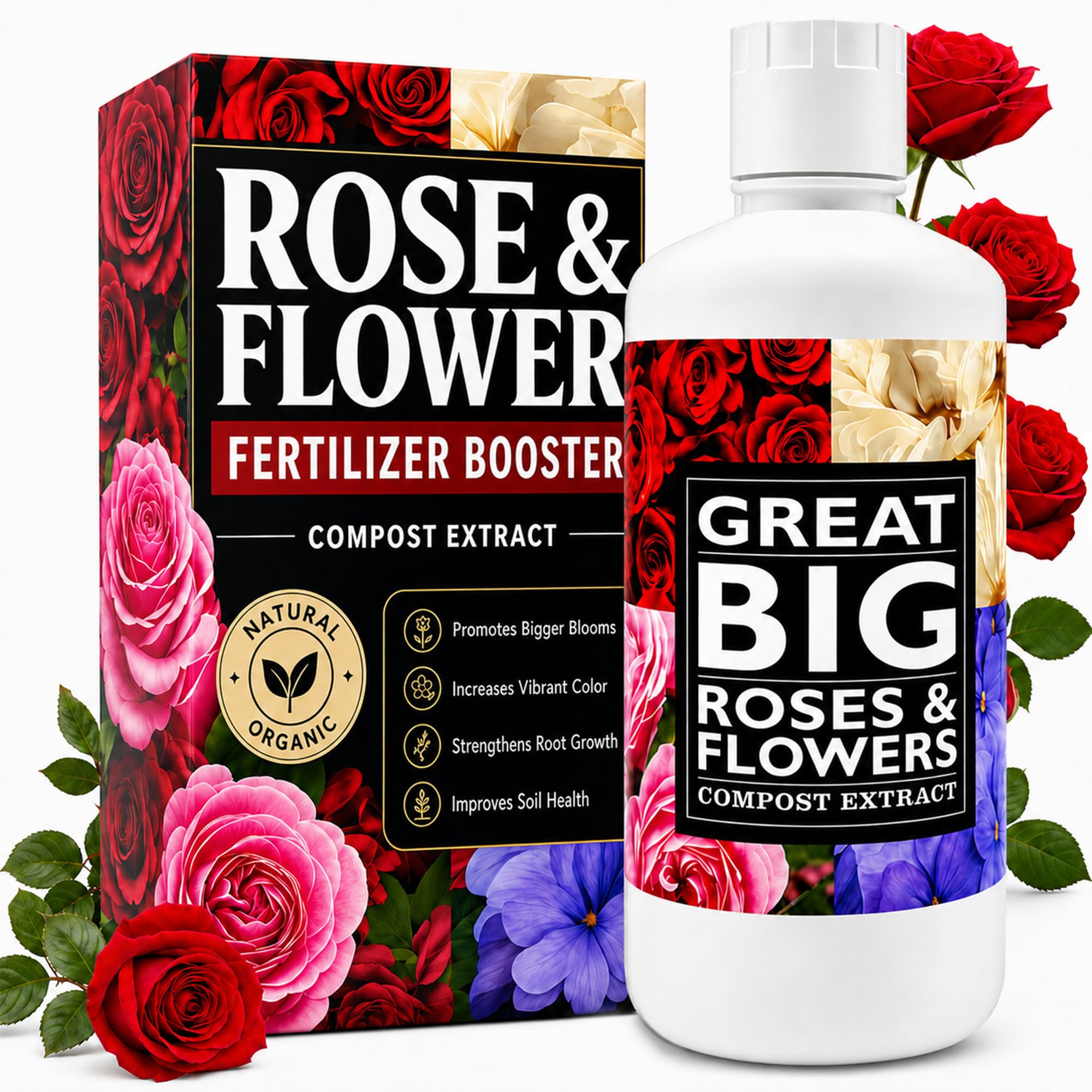
Great Big Roses and Flowers Liquid Fertilizer Booster is not a complete fertilizer on its own — it is a soil activator and nutrient unlocker designed to amplify the performance of your existing feeding program. The proprietary formula delivers humic acids, chelated iron, seaweed extract, and over 70 chelated trace minerals directly into the root zone. These components convert locked-up soil nutrients into plant-available forms, meaning it works synergistically with fish emulsion, bone meal, blood meal, and worm castings.
The most dramatic owner testimonials come from gardeners with underperforming rose bushes that had stopped blooming or were producing only small, pale flowers. Multiple reports state that rose bushes that had not bloomed in years produced large, colorful flowers within weeks of the first application. The 32-ounce bottle makes 8 gallons of feeding solution at 4 ounces per gallon, and one gallon typically covers a full season for an average home garden. The formula is also effective on hydrangeas, citrus trees, hibiscus, and succulents.
The jug design draws criticism from nearly every long-term user — the wide mouth makes it very easy to spill expensive concentrate when measuring into a watering can. Given the premium cost per ounce, any spillage feels wasteful. This product also works best when used alongside a base fertilizer rather than as a standalone feed. For anyone who has tried multiple fertilizers without seeing the bloom density they want, this booster is the missing piece.
What works
- 70 chelated trace minerals unlock soil nutrients for better absorption
- Works synergistically with existing organic and synthetic fertilizers
- Produces visible blooms even on historically underperforming bushes
What doesn’t
- Wide-mouth jug design causes frequent spills when measuring
- Not a complete fertilizer; best used as a booster alongside base feed
6. Farmer’s Secret Rose Booster Fertilizer
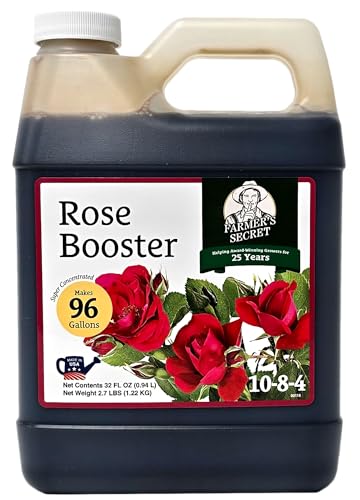
Farmer’s Secret Rose Booster Fertilizer is formulated with agricultural-grade concentration standards that bring commercial farming methodology to home rose gardens. The dilution ratio is exceptionally lean — just 2 teaspoons per gallon of water — and the manufacturer recommends weekly application during the growing season. This super-concentrated approach means a single 32-ounce bottle yields an enormous volume of working solution, making it one of the most cost-effective options when measured per gallon of feed.
Verified owner reports are striking: one grower reported over 500 blooms from approximately 50 rose bushes through late October, attributing the continuous flowering to this booster. Another reviewer revived three near-dead roses in a month, with the plants producing healthy leaves and multiple buds after appearing ready for disposal. The formula is formulated for all rose varieties throughout the full life cycle, from establishment through peak blooming, and users report it works effectively on mums, basil, and other garden plants as well.
The smell is a consistent complaint — owners describe it as sulfur-like, and it is strong enough to notice during mixing. A concerning quality-control issue appeared in one report where a customer received a used bottle with a hole in the seal and low volume, though customer service provided compensation. The super-concentrated nature also means that any measurement error has an outsized impact on nutrient strength. For high-volume rose gardens where weekly feeding is practical, this is the most efficient concentrate available.
What works
- Extremely high concentration; 2 tsp per gallon goes very far
- Proven to revive struggling roses and produce hundreds of blooms
- Formulated for all rose types across full life cycle
What doesn’t
- Strong sulfur smell during mixing and application
- Occasional packaging quality issues with seal integrity
7. Neptune’s Harvest Rose & Flowering Fertilizer 2-6-4
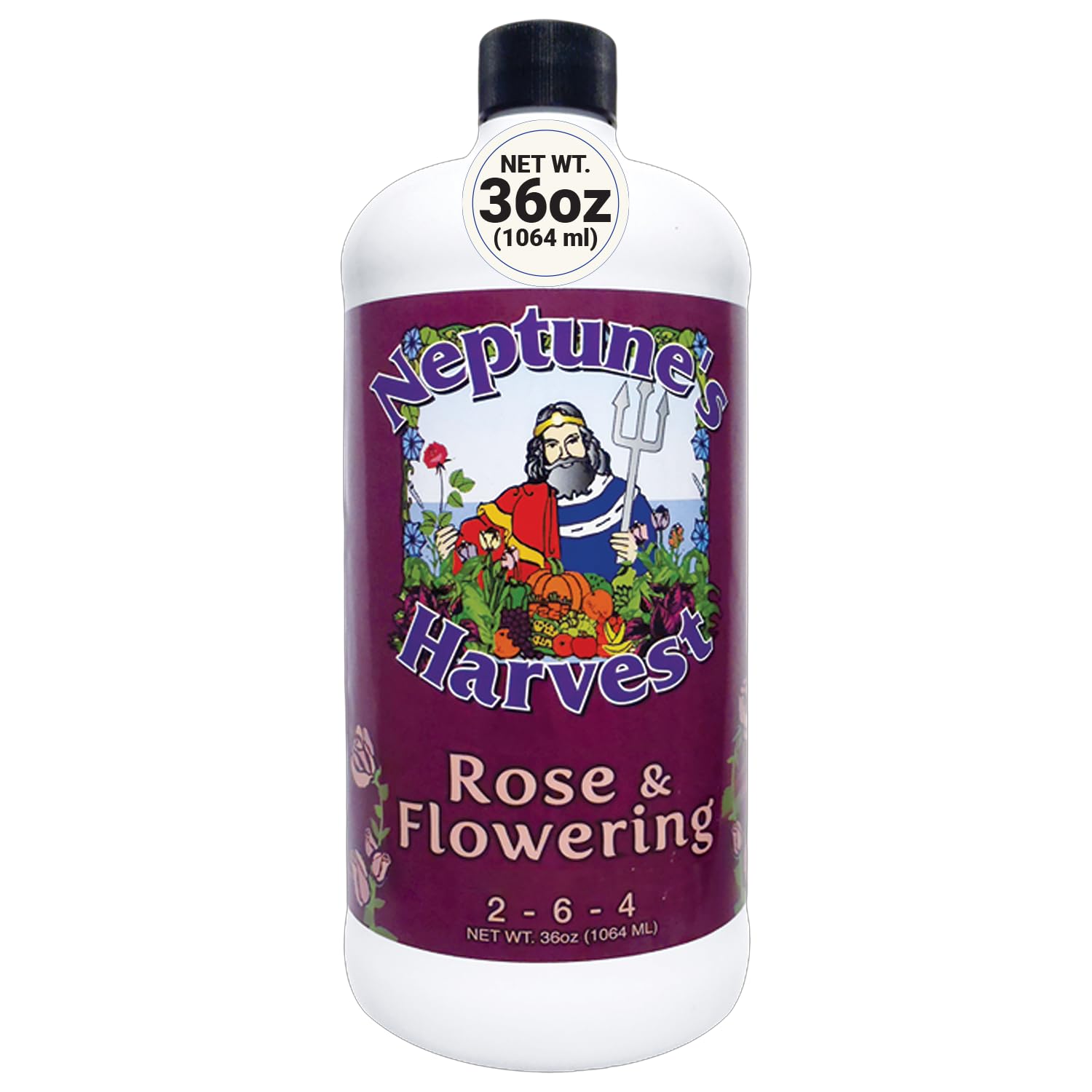
Neptune’s Harvest Rose & Flowering Fertilizer uses a 2-6-4 NPK ratio specifically designed to shift the plant’s energy allocation toward flowering rather than foliage production. The formula is made from cold-processed fish, seaweed, molasses, humic acids, yucca extract, biological microbes, and liquid calcium — a broader ingredient list than most organic liquids. The 36-ounce bottle is the largest liquid volume in this comparison, and the dual-application capability (soil drench and foliar spray) adds versatility that granular products cannot match.
Growers report that this formula raises Brix (sugar) levels in plant tissue, which naturally deters insect pests while producing blooms with deeper, richer colors. For indoor growers, the houseplant dilution of 1 tablespoon per gallon is gentle enough for weekly use without salt buildup, while outdoor roses get 1/8 cup per gallon for a stronger dose during peak bloom. The inclusion of yucca extract acts as a natural wetting agent, improving nutrient penetration into the soil and leaf surfaces during foliar application.
Like most fish-based fertilizers, there is a noticeable ocean-like odor during mixing, though it fades quickly once the solution dries. The measuring instructions require switching between tablespoons and cups depending on the plant type, which can be confusing for new growers. The price per bottle is the highest on this list, but the 36-ounce volume and the ability to use it across vegetables, houseplants, and flowers makes it the best multi-purpose option for gardeners who grow more than just roses.
What works
- 2-6-4 NPK ratio specifically optimized for bloom production
- Works as both soil drench and foliar spray for dual application
- Raises Brix levels to naturally deter insect pests
What doesn’t
- Higher price per bottle compared to smaller concentrates
- Measuring instructions vary between plant types, causing confusion for beginners
Hardware & Specs Guide
NPK Ratio and Application Timing
The NPK ratio is the most critical specification in any plant food for roses. Formulas like Neptune’s Harvest 2-6-4 prioritize phosphorus for bloom development, while Espoma Rose-Tone’s 4-3-2 offers a more balanced profile suitable for early-season growth. A higher middle number (phosphorus) is generally preferred from late spring through fall to support continuous bud formation. Avoid ratios above 10 in any single number, as these can burn roots in container-grown roses or cause excessive salt accumulation in garden beds.
Liquid Concentration and Dilution Rates
Liquid fertilizers vary enormously in concentration. Farmer’s Secret requires only 2 teaspoons per gallon, while Heirloom Roses Founder’s Fish Fertilizer requires 4 ounces per gallon — a 48x difference in dilution ratio. More concentrated formulas generally provide better value per gallon of working solution but require more precise measuring. Always check the “Unit Count” and “Liquid Volume” specifications to compare true concentration levels. A 250ml bottle of GT Rose Focus at 5ml per litre makes 50 litres of feeding solution despite its small physical size.
FAQ
How often should I feed my roses during the growing season?
Can I use tomato fertilizer on my roses instead of rose-specific plant food?
What is the best way to apply granular rose food to established bushes?
Should I use a foliar spray instead of soil application for my roses?
Final Thoughts: The Verdict
For most gardeners, the plant food for roses winner is the Growth Technology GT Rose Focus because it delivers the most complete and scientifically targeted mineral profile for roses in any growing medium. If you prefer a no-mix granular schedule, grab the Espoma Organic Rose-Tone 4-3-2. And for reviving underperforming bushes and maximizing bloom count, nothing beats the Great Big Roses and Flowers Liquid Fertilizer Booster.