
Specs are compiled from manufacturer listings and verified buyer reviews and can change over time — please confirm the key details on the product page before buying.
You want hibiscus flowers the size of dinner plates, but guessing the wrong fertilizer gives you a leafy bush with no color — or buds that drop before they open. The trick is the exact nutrient mix the plant craves. Too much nitrogen (N) and you get green leaves, zero flowers. The wrong balance and blooms fall off. This guide cuts through the confusion to find six formulas that actually deliver more blooms and healthier growth, whether your hibiscus lives in a pot on a patio or anchors a tropical garden bed.
I’m Rikta — the founder and writer behind Lawn Gear Lab. This guide is built by comparing the manufacturers’ published specifications and the patterns across verified customer reviews, so you get each pick’s real strengths and trade-offs instead of marketing spin.
You can use this article as a shortcut to find the right plant food for hibiscus that matches how much time you want to spend feeding and what kind of display you expect from your plants. I look at granular slow-release blends, liquid concentrates you mix with water, and organic options — all specifically designed to feed acid-loving plants.
Quick Picks
- BGI Fertilizers HIBISGAIN — Best Overall
- Fertilome (11045) Hibiscus — Top Performer
- Hibiscus Fertilizer – Liquid Plant Food — Premium Pick
- 16oz Hibiscus Fertilizer – Makes 16 Gallons of — Budget Champion
- Espoma Organic Palm-Tone 4-1-5 Natural & — Eco Choice
- BloomBiscus® Hibiscus 4LB Plant Food — Iron Rich
How To Choose The Best Plant Food For Hibiscus
Hibiscus plants are heavy feeders — they burn through nutrients fast, especially when they are in bloom. Picking the wrong fertilizer leads to either scorched roots or a plant that looks fine but won’t flower. Focus on these three areas to get the right bag or bottle.
Understand the N-P-K ratio your hibiscus needs
The three numbers on a fertilizer label stand for nitrogen (N), phosphorus (P), and potassium (K). Hibiscus needs a formula where the first number is moderate — too much nitrogen pushes green leaves at the expense of flowers. A medium first number paired with a high last number is the balance for continued blooming. A ratio like 10-4-12 or 17-7-10 gives the plant the right fuel for flower production without overwhelming it with leaf growth.
Granular vs liquid: Which fits your schedule
Granular fertilizers are sprinkled on the soil and break down slowly each time you water. They are a set-it-and-reapply-in-a-few-weeks option, great for garden beds and large pots. Liquid fertilizers are mixed with water and absorbed immediately by the roots. They give you faster results and more control, but you need to apply them every week or two during the growing season. Your choice depends on how often you want to be out there with a watering can.
Check for iron and micronutrients
Hibiscus, especially those grown in pots, frequently develop yellow leaves with green veins — a sign of iron deficiency (a lack of the mineral iron needed to make chlorophyll, the green pigment in leaves). A fertilizer with added iron (look for 1-2% on the label) prevents this problem and keeps leaves dark green so the plant can photosynthesize efficiently. The same goes for a broad micronutrient blend; it supports root strength and resistance to stress.
Quick Comparison
| Model | Best For | Form | Weight | N-P-K Ratio | Amazon |
|---|---|---|---|---|---|
| BGI HIBISGAIN 10lb | Commercial growers / heavy feeders | Granules | 10 lbs | — | Amazon |
| Fertilome 17-7-10 | Powerful bloom booster | Granules | 16 oz | 17-7-10 | Amazon |
| TPS 32 oz Liquid | Quick uptake for potted plants | Liquid | 32 oz | 1:28 | Amazon |
| HiThrive 16 oz Liquid | Budget starter / small collections | Liquid | 1.29 lbs | — | Amazon |
| Espoma Palm-Tone 4lb | Organic slow feeding / low-maintenance | Granules | 4 lbs | 4-1-5 | Amazon |
| BloomBiscus 4lb | Targeted tropical blooms / high iron | Granules | 4 lbs | 10-4-12 | Amazon |
In‑Depth Reviews
1. BGI Fertilizers HIBISGAIN, Hibiscus Fertilizer, 10lb Bag

The commercial-grade 10-pound bag that serious hibiscus growers reach for year after year.
This bag was developed and is still used by commercial hibiscus growers in Homestead, FL — real-world testing at scale, not marketing hype. The granules are applied dry on top of soil and mulch, so you can feed a whole row of potted plants or a garden bed in minutes. The 10lb bag comes with a resealable top and a cut-out handle, making it easy to store and pour. It is 7.8 times heavier than a standard 1.29-pound liquid bottle, so you are not reordering every few weeks during peak season.
Buyers report that their hibiscus produced noticeably more flower buds within two weeks of switching to this feed, and that the resealable bag keeps the granules dry even in humid climates. The trade-off for you: a 10-pound bag is overkill if you only have one or two small potted hibiscus. You might not use it all before the nutrients degrade, so it fits a larger collection or a garden bed with multiple plants instead.
What really stands out
- Developed by commercial hibiscus growers in Homestead, FL — real-world testing at scale
- Applied dry on top of soil and mulch — no mixing, no mess
- Resealable top and cut-out handle make storage and pouring practical
The honest catch
- 10-pound bag is overkill for a single small potted hibiscus
- No exact N-P-K ratio listed on the product data, which makes comparison harder
Who it really fits: Anyone with multiple hibiscus plants, a tropical garden bed, or a serious collection who wants a proven formula that is easy to apply and lasts for months.
What to consider: If you only have one or two small pots, a smaller granular bag or a liquid concentrate will cost less upfront and waste less product.
2. Fertilome (11045) Hibiscus and Tropical Plant Food 17-7-10 (4 lbs.)
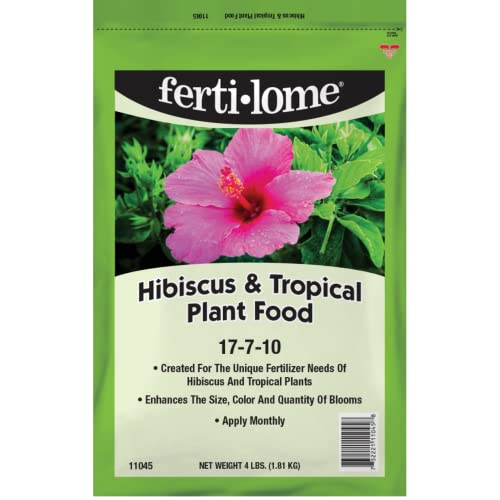
A high-nitrogen formula that punches blooms bigger, brighter, and more numerous.
If your hibiscus looks healthy but just won’t flower, this fertilizer’s 17-7-10 N-P-K ratio is a targeted push that knocks buds loose. The high nitrogen (N) content means careful measuring — too much can burn roots. But applied correctly, owners mention it noticeably enhances bloom size, color, and quantity. The label instructs you to apply every other week until blooms appear, then switch to once per month during bloom time. That gives you a defined schedule, not guesswork.
The bag is more compact than the BGI 10-pounder — it weighs 16 ounces, about the size of two standard yogurt cups. That makes it a better fit for a medium collection of pots or a couple of garden plants. Customers note the granular form is easy to sprinkle around the drip line, and they see a visible color boost to flowers within a couple of weeks. The catch is the high nitrogen: you must stick to the every-other-week schedule because overfeeding can cause leaf burn.
Why it earns its spot
- High 17-7-10 ratio delivers visible bloom size and color improvements
- Clear feeding schedule — every other week, then monthly once blooming starts
- Compact 16-ounce bag fits small to medium collections
One thing to know
- High nitrogen content means you must follow the schedule carefully to avoid leaf burn
- 16 ounces is small — you will reorder sooner than with a larger bag
Best for: Gardeners who have a few big hibiscus plants and want a quick, noticeable bloom boost with a clear feeding schedule to follow.
Not ideal if: You prefer a low-maintenance slow-release feed that you apply once every few months and forget about.
3. Hibiscus Fertilizer – Liquid Plant Food for More Blooms, Vibrant Color & Healthy Tropical Growth, 32 oz
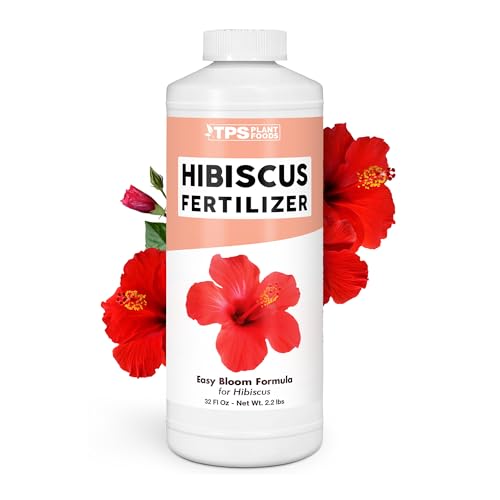
The liquid concentrate that acts fast for potted hibiscus that need a quick color boost.
When a potted hibiscus looks pale and sulking, liquid fertilizer gets nutrients into the root zone in hours, not days. This 32-ounce concentrate from TPS Nutrients is made for tropical flowering plants. You mix it at a 1:28 ratio with water — that means you use 1 part concentrate to 28 parts water, so a little goes a long way. At 32 fluid ounces, it is double the liquid volume of the HiThrive 16-ounce bottle, giving you twice as many feedings from one purchase.
Buyers mention they saw new growth and flower buds within a week of their first application, especially on potted tropical hibiscus that had struggled through a dry spell. The downside is that liquid feeding requires a weekly routine — you are out there mixing and watering more often than you would be with a granular product. If you travel or tend to forget, a slow-release granular might serve you better.
What makes it work
- Liquid form delivers nutrients instantly to the root zone — faster than granules
- 32-ounce bottle makes 32 gallons of fertilizer, stretching your dollar
- Works for both outdoor planted hibiscus and container-grown plants
The regular commitment
- Requires weekly mixing and watering during the growing season
- Not a “set and forget” product — you have to commit to the schedule
Reach for this if: You love caring for your plants weekly and want fast, visible results from a liquid feeding routine that is easy to adjust.
Look elsewhere if: You prefer a low-effort, slow-release granular that you sprinkle once and don’t think about for weeks.
4. 16oz Hibiscus Fertilizer – Makes 16 Gallons of Hibiscus Flowers Plant Food by HiThrive
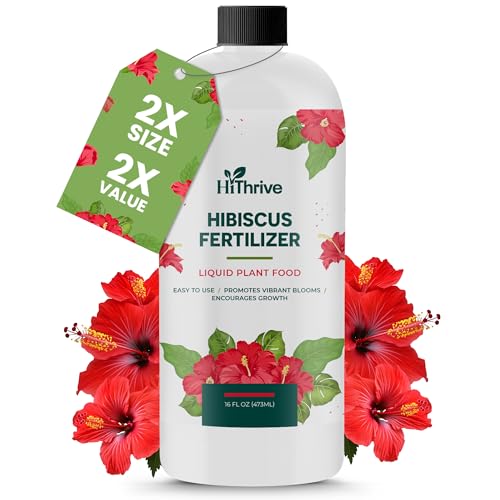
An entry-level liquid that punches above its price for small collections and first-time hibiscus owners.
If you are just getting started with hibiscus and only have one or two plants, the 16-ounce HiThrive bottle is a low-risk way to learn what your plants need. With a liquid volume of 16 fluid ounces, it makes 16 gallons of fertilized water — enough for many watering sessions. The formula delivers nitrogen (N) for lush leaves, phosphorus (P) for sturdy roots, and potassium (K) for vibrant blooms, plus essential micronutrients to reverse deficiencies like pale leaves and weak stems.
It is labeled for all hibiscus varieties — including Rose of Sharon, Tropical Hibiscus, and Confederate Rose — so you do not have to worry about matching a species-specific product. The recommended schedule is simple: apply every 1-2 weeks during spring and summer, then every 4 weeks during fall and winter. Reviewers point out it fixed yellowing leaves on their tropical hibiscus within two weeks, and the liquid mixes clear without clogging sprayers.
What you get for the price
- Makes 16 gallons of fertilized water from one 16-ounce bottle — good value for small collections
- Works on Rose of Sharon, Tropical Hibiscus, Confederate Rose, and more
- Simple seasonal schedule: every 1-2 weeks in summer, monthly in winter
The size limitation
- 1.29-pound bottle is small — you will reorder quickly with more than two plants
- Not the most concentrated option for heavy feeders with large pots
Perfect if: You have one or two potted hibiscus and want an affordable, effective liquid that is easy to mix and apply.
Pass on it if: You have a large garden bed or multiple big hibiscus — you will need a larger bottle or a granular to last the season.
5. Espoma Organic Palm-Tone 4-1-5 Natural & Organic Plant Food; 4 lb. Bag
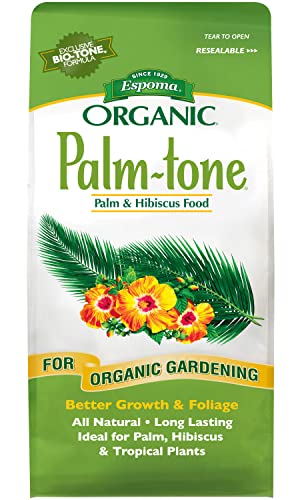
The organic granular that feeds hibiscus slowly and safely, with no synthetic chemicals.
Espoma’s Palm-Tone is a granular fertilizer with a 4-1-5 N-P-K analysis that includes 5% calcium. It is approved for organic gardening and registered as an Organic Input Material, meaning it meets standards for organic production. The formula uses natural ingredients enhanced with Espoma’s exclusive Bio-tone, a blend of beneficial microbes that break down nutrients in the soil. You apply it dry around the drip line of the plant and water it in, with no mixing required.
The feeding schedule differs between plants: for palms, apply every three months; for tropicals like hibiscus, apply monthly throughout the growing season. The 4-pound bag contains 64 fluid ounces of product by volume — four times the volume of the 16-ounce HiThrive liquid bottle, giving you many months of feedings for a small to medium collection. Buyers appreciate that the granules do not smell as strong as some organic fertilizers, and the slow-release nature means little risk of burning roots even if you apply a bit too much.
Why organic growers choose this
- Approved for organic gardening with registered Organic Input Material status
- Bio-tone microbes help feed the soil biology, not just the plant
- Simple monthly application — sprinkle and water in
The slower pace
- Results are gradual — not the quick fix you get from a high-nitrogen synthetic
- Feeding schedule differs for palms and tropicals, so keep the label handy
Best for: Organic gardeners who want a natural, slow-release feed that improves soil health over time and won’t burn the roots.
skip it if: You need fast results to revive a struggling plant or you are feeding a large collection that needs a stronger N-P-K kick.
6. BloomBiscus® Hibiscus 4LB Plant Food – 2% Iron Fertilizer by Cz Garden Supply
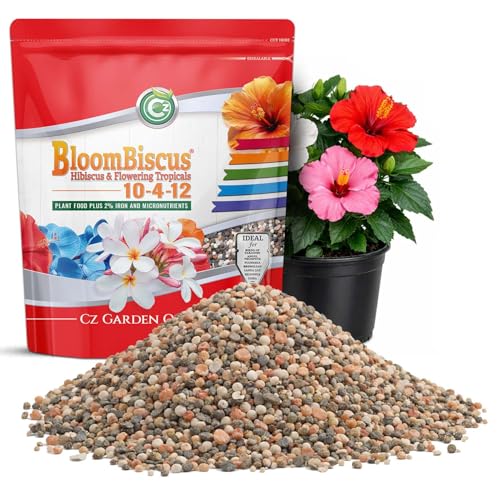
The 2% iron granular that keeps container hibiscus from turning yellow and dropping leaves.
If your potted hibiscus develops yellow leaves with green veins — a condition called chlorosis (iron deficiency) — this formula directly targets that problem. The BloomBiscus formula from Cz Garden Supply uses a 10-4-12 N-P-K ratio with 2% iron and a full set of micronutrients. The 2% iron content is the standout: it prevents chlorosis that happens when tap water locks up iron in the soil. Shoppers say the iron content quickly restored dark green color to previously yellowing leaves.
The 4-pound bag comes in a heavy-duty resealable pouch with an easy-pour design, so you can measure exactly what each pot needs and store the rest without a clip. It also works on Bird of Paradise, Angel Trumpets, Plumeria, Bromeliads, Canna Lily, Heliconia, and Ixora — making it versatile for a mixed tropical collection. The 10-4-12 ratio supports both growth and blooming, but you must apply at the recommended rate because pouring on extra can lead to salt buildup in pots.
What makes it different
- 2% iron directly targets and prevents yellow leaves (chlorosis) in potted hibiscus
- Optimal 10-4-12 ratio supports both lush growth and heavy blooming
- Resealable heavy-duty pouch keeps granules fresh between uses
Know before you buy
- Higher iron content means careful measuring to avoid salt buildup in containers
- Not organic — synthetic formulation for those who want precise nutrients
Reach for this if: Your hibiscus leaves repeatedly turn yellow, or you grow in pots and want a feed that keeps foliage dark green and flowers coming.
Look elsewhere if: You need an all-purpose organic feed or you are feeding only in-ground plants that rarely struggle with iron deficiency.
Understanding the Specs
N-P-K Ratio
The three numbers on a fertilizer label — nitrogen (N), phosphorus (P), and potassium (K) — tell you exactly what the plant gets. Nitrogen drives leaf and stem growth; phosphorus supports root development and flower formation; potassium boosts overall plant health and bloom quality. For hibiscus, a balanced ratio like 10-4-12 or 17-7-10 gives you blooms without excessive leafy growth. A very high first number (like 30-10-10) will push green leaves and fewer flowers, so check the ratio before you buy.
Granular vs Liquid
Granular fertilizers are dry pellets that you sprinkle on the soil and water in. They break down slowly, feeding the plant over several weeks. They are ideal for garden beds and large pots where you want to apply less frequently. Liquid fertilizers are concentrates you mix with water and apply as a drench. They work fast — nutrients reach the roots immediately — which is great for reviving a struggling plant or feeding container hibiscus that need regular small doses. The trade-off is that liquid requires a weekly or bi-weekly watering schedule.
FAQ
How often should I feed my hibiscus with plant food?
What N-P-K ratio is best for hibiscus blooms?
Can I use general all-purpose plant food on my hibiscus?
Why are my hibiscus leaves turning yellow even though I feed it?
Should I use liquid or granular fertilizer for potted hibiscus?
How much fertilizer does a single hibiscus plant need per feeding?
Can I feed my hibiscus during winter?
Is organic plant food better for hibiscus than synthetic?
Will BloomBiscus fertilizer work on other tropical plants besides hibiscus?
How do I apply granular fertilizer to my hibiscus without burning the roots?
Final Thoughts: The Verdict
For most buyers, the clear winner for plant food for hibiscus is the BGI HIBISGAIN 10lb Bag because it is the commercial-grade formula used by actual growers, it applies dry with no mixing, and a single bag lasts a long time even for a large collection. If you want a high-nitrogen boost that punches blooms fast, grab the Fertilome 17-7-10. And for an organic slow-feed that builds soil health, the Espoma Palm-Tone is the natural choice.
How We Picked
We do not accept paid placement. Every pick is matched to a real buyer and a real use-case; we do not hands-on test units.
Sources & Methodology
Specifications: manufacturer listings and product documentation. Review insights: verified customer reviews, as of July 2026. Pricing: not shown on this page (it changes often); check the current price via the retailer link.
As an Amazon Associate, Lawn Gear Lab earns from qualifying purchases. This does not affect which products we feature.