
Specs are compiled from manufacturer listings and verified buyer reviews and can change over time — please confirm the key details on the product page before buying.
You want to snip fresh basil, mint, or rosemary from your kitchen window, but the leaves turn yellow and the stems stay spindly. The usual problem isn’t sunlight or watering. It is what you are not feeding your plants. Herbs — especially in pots where the soil runs out of nutrients fast — need the right balance of food to smell and taste strong. Plant food for herbs that gives steady nutrition without burning tender roots is what turns a sad harvest into a kitchen that saves you money.
I’m Rikta, the writer behind Lawn Gear Lab. This guide compares manufacturers’ published specs and patterns across verified customer reviews. You get each pick’s real strengths and honest trade-offs, not marketing spin.
Quick Picks
- Espoma Organic Garden-Tone 3-4-4 — Best Overall
- Jobe’s Organics Granular Garden Fertilizer, 4 lbs — Top Performer
- Down To Earth All Natural Fertilizers All Purpose Mix 4-6-2 — Best Value
- Dr. Earth Home Grown Tomato, Vegetable & Herb Liquid Fertilizer — Fast Acting
- Back to the Roots Organic Worm Castings, 5 lb — Soil Builder
- Growth Technology GT Herb Focus Liquid Plant Food, 5 Liters — Hydroponics
How To Choose The Best Plant Food For Herbs
Use the wrong fertilizer, and you get weak stems or burnt roots. Because you grow herbs for their leaves, pick a formula with a higher first number in the NPK (Nitrogen-Phosphorus-Potassium — a label that shows the percentage of each nutrient). That extra nitrogen pushes out lush, flavorful growth without making the plant produce too many flowers or fruits.
Form: Granules vs. Liquids
A granular fertilizer — for example, a 4-3-3 or 3-4-4 blend — releases nutrients slowly over weeks. Use it for established outdoor beds or large pots where you can mix the pellets into the top layer of soil. A liquid concentrate gives you immediate control. It mixes with water and reaches the roots right away, a lifesaver for potted basil that has already turned pale. The trade-off is frequency: granules may last a month, and liquids often need to go in with every watering.
Organic Certification and Ingredients
For herbs you plan to eat, you want an OMRI-listed (Organic Materials Review Institute — an independent approval for organic gardening) product with no synthetic chemicals. Check for ingredients like fish bone meal, blood meal, kelp meal, and worm castings. These feed your plant and the beneficial microbes in the soil. A non-burning formula is important for tender herb seedlings. A concentrated dose of synthetic fertilizer can scorch young roots in a single day.
Quick Comparison
| Model | Best For | Form | NPK Ratio | Weight | Amazon |
|---|---|---|---|---|---|
| Espoma Garden-Tone | Large garden beds & heavy feeders | Granules | 3-4-4 | 18.2 lbs | Amazon |
| Jobe’s Organics Granular | Container herbs & beginners | Granules | 4-3-3 | 4 lbs | Amazon |
| Down To Earth All Purpose Mix | Versatile organic feeding | Granules | 4-6-2 | 5 lbs | Amazon |
| Dr. Earth Liquid Fertilizer | Quick pick-me-up for pots | Liquid | 3-2-2 | 24 oz | Amazon |
| Back to the Roots Worm Castings | Soil building & seed starting | Granules | — | 5 lbs | Amazon |
| Growth Technology GT Herb Focus | Hydroponics & serious enthusiasts | Liquid | — | 13 lbs | Amazon |
In‑Depth Reviews
1. Espoma Organic Garden-Tone 3-4-4

The bulk bag that feeds a whole garden for months, not weeks.
This is the pick for anyone with a serious vegetable-and-herb patch. Its NPK (Nitrogen-Phosphorus-Potassium) of 3-4-4 includes 5% calcium. That calcium stops blossom-end rot in your tomatoes while keeping basil leaves dense and green. Buyers report it works on leafy greens like lettuce and kale, too. At 18.2 lbs, it dwarfs the 4-lb bags you find at the garden center.
What separates it from a balanced granular like the Down To Earth 4-6-2 is Espoma’s own Bio-tone formula — a mix of beneficial microbes that unlock nutrients in the soil. You sprinkle the granules around your plants’ drip line once a month and water them in. One reviewer described it as a “powerhouse organic fertilizer” that built their soil health better than anything else they had tried. It is OMRI-listed (approved by the Organic Materials Review Institute for organic production), so it is safe for your kitchen herbs.
The trade-off is the size. At 18.2 lbs, it is much heavier and bulkier than the Jobe’s 4-lb bag or the Dr. Earth liquid bottles, making it a poor fit for small balcony gardens. But for garden space and enough plants to feed, the season-long value is tough to top.
Why it stands out
- Massive 18.2 lb bag feeds large gardens for several months without needing to restock.
- Bio-tone formula with beneficial microbes improves soil fertility naturally.
- 5% calcium prevents nutrient deficiencies that affect herbs and vegetables.
- OMRI-listed, made in the USA by a company founded in 1929.
The trade-offs
- Granular form needs monthly reapplication and does not rescue a sick plant instantly.
- Heavy and bulky to store — not great for small apartments or tiny container gardens.
Who it feeds best: Gardeners with multiple raised beds or large in-ground plots who want one bag to handle herbs, tomatoes, peppers, and leafy greens all season.
Not for tight spaces: If you only have a few pots on a windowsill, the 18.2 lb size is too much — pick a smaller granular or liquid instead.
2. Jobe’s Organics Granular Garden Fertilizer, 4 lbs
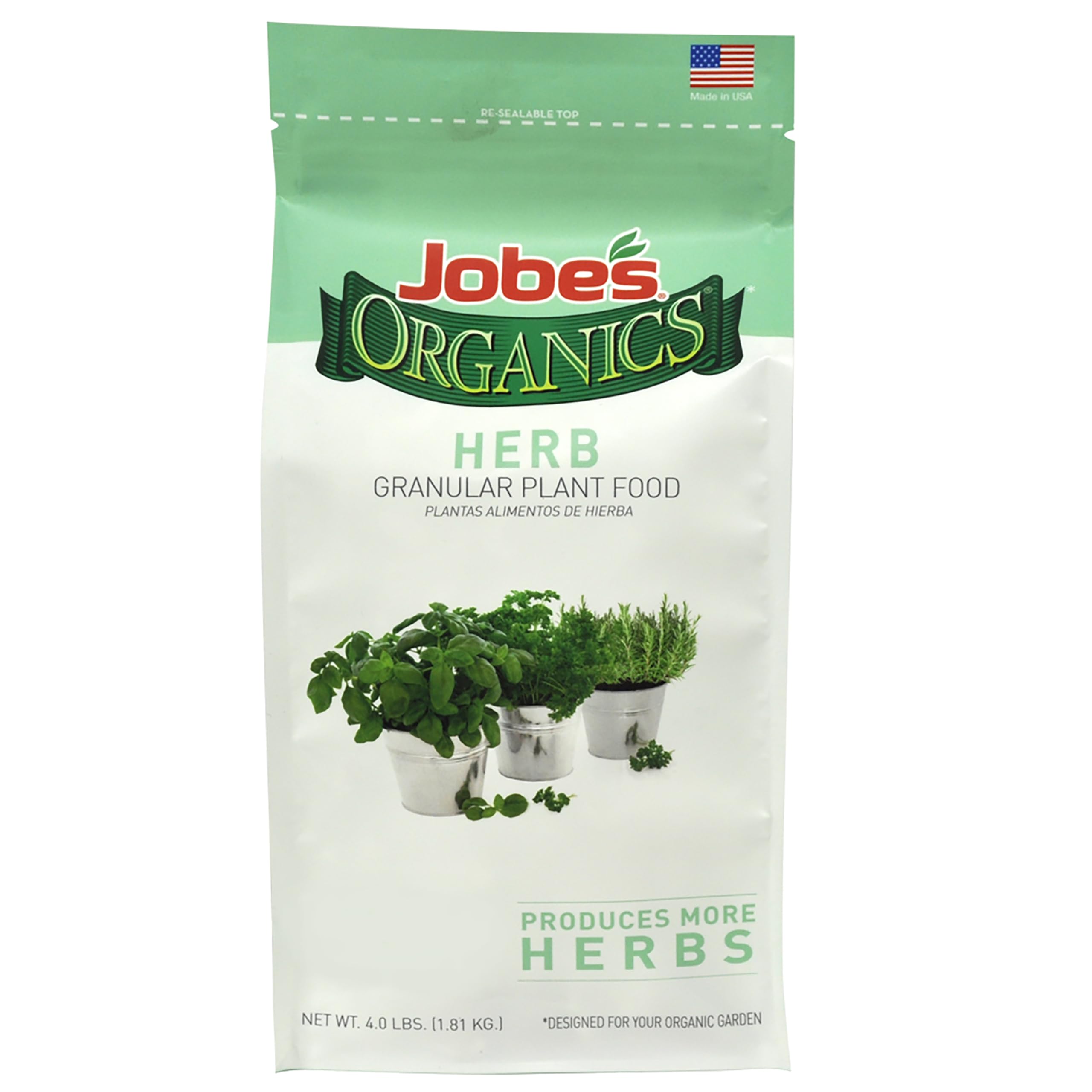
The compact granules that turned one beginner’s mint into a monster.
While the Espoma bag is the bulk champion, this 4-lb box from Jobe’s is the balance for container gardeners. Its 4-3-3 NPK (a higher first number means more leaf growth) is practically custom-made for basil, mint, thyme, and rosemary you want bushy, not leggy. Owners mention a quarter cup applied twice weekly revived their struggling herbs. One reviewer noted their basil grew past 3 feet and their mint became “invasive.” That is more leafy result than the Down To Earth 4-6-2 typically delivers on a pure leaf-grower.
The biggest catch is the odor. Multiple reviewers call it “horrid” or “stinky.” One said they could smell it through the bag before opening it. That smell is a common mark of high-quality organic fertilizers (blood meal and bone meal do not smell like roses). Customers note the smell fades a couple of days after you water it in. The fertilizer is OMRI-listed (approved for organic use) with no synthetic chemicals, and you reapply every 4-6 weeks during the growing season.
Unlike the massive 18.2 lb Espoma bag, this 4-lb box stores easily. The “no runoff, no mess” design means you can sprinkle it straight into containers. One reviewer summed it up: “Crack for my herbs.” They found it produced more dramatic results than other brands for their mint, thyme, rosemary, and peppers.
What works
- 4-3-3 NPK is ideal for pushing leaf and stem growth in culinary herbs.
- Simple granules with an easy every-4-to-6-weeks schedule.
- OMRI-listed with no synthetic chemicals.
- Reviewers point out basil grew past 3 feet with regular use.
What to expect
- Strong odor from the bag that some people dislike, but it fades after watering.
- Granular form needs consistent reapplication, unlike a liquid you can mix each watering.
Best for potted herb lovers: This is the go-to for anyone growing basil, mint, thyme, or rosemary in containers who wants a proven organic granular with visible results.
Not for the smell-averse: If you store your fertilizer indoors or have a sensitive nose, the odor may bother you — it is temporary, but it is real.
3. Down To Earth All Natural Fertilizers All Purpose Mix 4-6-2

Premium ingredients in a box that costs about the same as a bag of potting soil.
This 4-6-2 formula (Nitrogen-Phosphorus-Potassium) puts phosphorus higher to support strong roots and flower formation. That is great for herbs you let go to seed, like coriander or dill. But what separates it from the Jobe’s 4-3-3 is the ingredient transparency. The box lists seven specific organic components: Fish Bone Meal, Blood Meal, Feather Meal, Rock Phosphate, Langbeinite (a natural potassium source), Greensand, Humates, and Kelp Meal. That is more mineral variety than most all-purpose blends offer.
The 5 lb box is a useful middle ground between the small 4-lb Jobe’s and the massive 18.2 lb Espoma. It works for vegetable gardens, containers, houseplants, and row crops.
The catch is the nutrient profile. At 4-6-2, the higher phosphorus (the middle number) means it is not as leaf-focused as the Jobe’s 4-3-3. For basil, parsley, or mint where you want the biggest leaves, the Jobe’s or Espoma may perform better. However, for a mixed garden with flowering herbs like chamomile or fruiting plants like tomatoes, this is the more balanced all-rounder and a better value than buying two separate products.
Best for mixed gardens: If your plot has herbs, flowers, tomatoes, and shrubs, the 4-6-2 ratio supports leaf growth and root development across all of them.
Leaf-growers take note: For a single pot of basil that needs leaf growth, a higher-nitrogen formula like the Jobe’s 4-3-3 may work better.
4. Dr. Earth Home Grown Tomato, Vegetable & Herb Liquid Fertilizer

A liquid lifeline for a basil plant fading fast on a windowsill.
While the granular options above (Jobe’s, Espoma, Down To Earth) take days to break down, this Dr. Earth liquid concentrate feeds instantly. It has a 3-2-2 NPK (Nitrogen-Phosphorus-Potassium) with a moderate first number for leaf growth. You mix it at a 1:200 ratio — one part fertilizer to 200 parts water — and apply it right away. The 24 oz bottle is small enough for a kitchen cabinet, making it a solid choice for someone with three pots and no garden shed.
Dr. Earth claims this is a “100% Sustainable Fertilizer” made from recycled grocery produce, fish, and meat. It is OMRI-listed (safe for organic use) and labeled safe around family and pets. For container herbs where soil gets stripped of nutrients quickly, this liquid approach lets you feed every time you water, preventing yellow leaves.
The trade-off is convenience versus cost. A 24 oz bottle will not cover a large garden for a full season the way the 18.2 lb Espoma bag will. You also need to be consistent. Skip a week, and your plants may show stress faster than with a slow-release granular. But for a quick rescue for tired basil or cilantro that is bolting, this is the tool to grab.
Why you want it
- Immediate absorption — roots get food within hours, not days.
- Made from recycled grocery produce, fish, and meat; sustainably sourced according to the brand.
- OMRI-listed and safe around family and pets.
- Small bottle fits in the kitchen; no heavy bag to store.
The limitation
- Requires frequent mixing; it is not a “set and forget” solution.
- Small volume may not last a full season for a large garden or multiple pots.
Reach for this when: Your container herbs look pale and need immediate help — especially if you grow them indoors in small pots with limited soil.
Look elsewhere if: You want to feed a large garden bed all season. A granular like the Espoma 18.2 lb bag is far more practical.
5. Back to the Roots Organic Worm Castings, 5 lb

Pure worm castings that fix your soil first, so your herbs grow strong without risk.
This is not a traditional fertilizer with NPK numbers. It is a soil amendment. Back to the Roots Worm Castings is pure vermicompost (earthworm manure), packed with beneficial microbes and humic acids. Unlike the Jobe’s or Espoma granules that feed the plant directly, this works by improving the living ecosystem in your soil. Roots become healthier, the soil holds more moisture, and plants resist disease naturally.
Because it is pure castings, there is no synthetic smell and no risk of burning your seedlings. The brand guarantees no odor — a direct contrast to the Jobe’s fertilizer that many reviewers complain about. The 5-lb bag reseals, and you can use it as a top dressing for pots, mix it into potting soil before planting, or brew it into a compost tea. It is made in the USA, and the company runs a “Grow One Give One” program that donates a kit to a school when you share your garden photo.
The trade-off is that worm castings are gentle and slow. If you have a plant with yellow leaves or stunted growth, this will not give you the overnight turnaround that the Dr. Earth liquid can provide. But for long-term soil health without ever worrying about over-fertilizing, this is the most forgiving starting point, especially for new gardeners.
Why it is different
- Zero risk of burning roots — safe for the most delicate herb seedlings.
- Improves soil structure and microbial activity for long-term garden health.
- No odor at all — unlike many organic granular fertilizers.
- Versatile: works as a top dressing, soil mix-in, or compost tea ingredient.
When it falls short
- Very low immediate nutrient punch — not a rescue product for a starving plant.
- You need to use more volume than a concentrated liquid or granular for the same effect.
Perfect for new gardeners: If you have killed herbs before and want a low-maintenance way to build healthy soil, this is your starting point.
Not for emergencies: If your plant is actively yellowing and needs a quick nitrogen fix, choose the Dr. Earth liquid instead.
6. Growth Technology GT Herb Focus Liquid Plant Food, 5 Liters
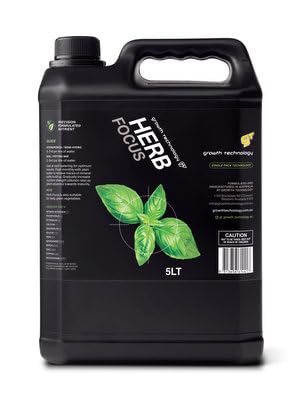
A professional liquid formula engineered for hydroponic basil, parsley, and oregano.
This is the most specialized product on this list. The Growth Technology GT Herb Focus is a complete single-part liquid nutrient that delivers all 12 essential minerals — including calcium — that culinary herbs need. It works in soil, potting mix, hydroponic, and semi-hydroponic systems, but it truly stands out in a water-based setup where granular fertilizers cannot be used.
Mixing is straightforward: 5 to 7 ml per liter of water for hydroponic systems, and 3 to 5 ml per liter for soil or potting mixes. Apply it with every watering. The formula encourages strong root systems and aromatic leaves from seedling to harvest. The 1.32-gallon bottle provides many applications, making it a reasonable value for dedicated growers.
The catch is that this is a premium, narrow-purpose product. It costs more upfront than any granular option here, and it is overkill if you are simply sprinkling Jobe’s on two mint pots. But if you run a hydroponic tower, an Aerogarden, or a serious indoor soil grow where flavor and leaf density matter most, this is the targeted solution none of the other products can match.
What makes it special
- Complete 12-mineral formula with calcium, designed specifically for culinary herbs.
- Works in soil, potting mix, hydroponic, and semi-hydroponic systems.
- Single-part liquid — no need to mix separate bottles.
- Large 1.32 gallon bottle provides many applications.
Who should pass
- High upfront cost compared to granular or entry-level liquid fertilizers.
- Unnecessary for a small container garden that a simple granular like Jobe’s can handle.
Go for it if: You grow herbs hydroponically or in a serious indoor soil setup and want the most targeted nutrition for your basil and thyme.
skip it if: You are a casual outdoor container gardener — the Jobe’s or Espoma are cheaper and simpler for traditional soil.
Understanding the Specs
NPK Ratio (Nitrogen-Phosphorus-Potassium)
The three numbers on the bag — for example, 4-3-3 or 3-4-4 — tell you the percentage of each macronutrient. The first number (Nitrogen) drives leafy, green growth. The higher it is, the better for herbs like basil, mint, and parsley where you want big, aromatic leaves. The second number (Phosphorus) supports root development and flowers. That matters if you grow cilantro and want it to go to seed for coriander. The third number (Potassium) helps overall plant health and disease resistance. For most culinary herb gardens, a higher first number and moderate second and third numbers work best.
OMRI Listing
OMRI stands for the Organic Materials Review Institute. A product with this label is independently reviewed and approved for use in certified organic gardening. This means it contains no synthetic chemicals, sewage sludge, or genetically modified ingredients. If you eat your herbs raw — say, basil on a caprese salad — choosing an OMRI-listed product like the Espoma Garden-Tone or Jobe’s Organics gives you confidence. The fertilizer is made from natural, plant- and mineral-based ingredients only.
FAQ
What is the best NPK ratio for growing herbs in containers?
Should I use liquid or granular plant food for herbs?
Can I use tomato fertilizer on my herbs?
How often should I feed my herb plants?
Are worm castings better than traditional fertilizer for herbs?
Will plant food make my herbs taste better?
Can I use herb plant food on other vegetables?
What if my herb plant food smells bad?
Can I use herb fertilizer in a hydroponic system?
When should I start feeding my herb seedlings?
Final Thoughts: The Verdict
For most home gardeners who want the best results for their money and effort, the plant food for herbs winner is the Jobe’s Organics Granular Garden Fertilizer. Its 4-3-3 ratio is perfectly tailored for leaf growth, it is OMRI-listed, and buyers have proven it turns struggling container herbs like basil and mint into thriving plants. If you have a larger garden bed or a mix of vegetables alongside your herbs, grab the Espoma Organic Garden-Tone — the 18.2 lb bag and Bio-tone microbes give the best season-long value. And for hydroponic growers or serious indoor enthusiasts, the Growth Technology GT Herb Focus is the only product here designed to deliver all 12 essential minerals in a liquid form for soilless systems.
How We Picked
We do not accept paid placement. Every pick is matched to a real buyer and a real use-case; we do not hands-on test units.
Sources & Methodology
Specifications: manufacturer listings and product documentation. Review insights: verified customer reviews, as of July 2026. Pricing: not shown on this page (it changes often); check the current price via the retailer link.
As an Amazon Associate, Lawn Gear Lab earns from qualifying purchases. This does not affect which products we feature.