
Daylilies are among the most forgiving perennials, but even these tough plants have a secret to unlocking their full potential for massive, continuous blooms. The difference between a so-so display and a show-stopping border often comes down to one strategic decision: what you feed them and when. Get the NPK ratio wrong, and you will get lots of leaves but sparse flowers.
I’m Rikta — the co-founder and writer behind Lawn Gear Lab. I spend hours comparing granular specifications, analyzing NPK ratios, studying horticultural data from university extensions, and combing through aggregated owner feedback to find which formulations actually deliver on their bloom-boosting promises for specific perennial categories.
This guide breaks down the critical nutrient ratios that trigger daylily scapes and evaluates seven top-tier formulations to help you find the best plant food for daylilies that will turn your garden into a summer-long color festival.
How To Choose The Best Plant Food For Daylilies
Daylilies are heavy feeders during their bloom cycle, but they respond poorly to excessive nitrogen. Selecting the right formulation requires understanding three core factors: the N-P-K ratio, the release mechanism, and the presence of secondary micronutrients.
Focus on the Middle Number: Phosphorus
Phosphorus (the middle number in the N-P-K ratio) is the primary driver of flower bud formation. For daylilies, a ratio where phosphorus is the highest element — such as 10-54-10 or 9-58-8 — encourages the plant to channel energy into producing scapes and buds rather than just foliage. Avoid high-first-number fertilizers (like 30-10-10) after early spring, as they promote lush leaves at the expense of blooms.
Water-Soluble vs. Granular Slow-Release
Water-soluble powders dissolve instantly and deliver nutrients directly to the root zone within hours — ideal for a quick boost when you see scapes emerging. Granular slow-release formulas feed over several weeks and are better suited for pre-season soil preparation. For daylilies in heavy bloom, a fast-acting water-soluble bloom booster is often the most effective strategy, allowing you to spoon-feed the plants precisely when they need it most.
Micronutrients Matter
Beyond the primary N-P-K, look for chelated iron, manganese, and zinc. Daylilies that are blooming heavily can show interveinal chlorosis (yellowing between leaf veins) if iron is unavailable. Formulations that include these trace elements keep foliage dark green and healthy, supporting the plant’s ability to photosynthesize and produce more flowers throughout the season.
Quick Comparison
On smaller screens, swipe sideways to see the full table.
| Model | Category | Best For | Key Spec | Amazon |
|---|---|---|---|---|
| Schultz Bloom Plus 10-54-10 | Water Soluble | Ultra-high phosphorus boost | 10-54-10 Ratio | Amazon |
| Jack’s Classic Blossom Booster 10-30-20 | Water Soluble | Premium balanced bloom formula | 10-30-20 + Micronutrients | Amazon |
| Grow More Super Bloomer 15-30-15 | Water Soluble | Versatile all-flower bloomer | 15-30-15 + Chelated Iron | Amazon |
| Carl Pool BR-61 9-58-8 | Water Soluble | Bloom booster and starter | 9-58-8 Ratio | Amazon |
| Dr. Earth Flower Girl 4-10-7 | Organic Granular | Organic & pet-safe feeding | 4-10-7, 4 lbs | Amazon |
| Peter’s Professional 20-20-20 | Water Soluble | General purpose maintenance | 20-20-20 Balanced Ratio | Amazon |
| Miracle-Gro LiquaFeed Bloom Booster | Liquid Concentrate | Convenient hose-end feeding | Liquid, 64 fl oz total | Amazon |
In‑Depth Reviews
1. Jack’s Classic Blossom Booster 10-30-20
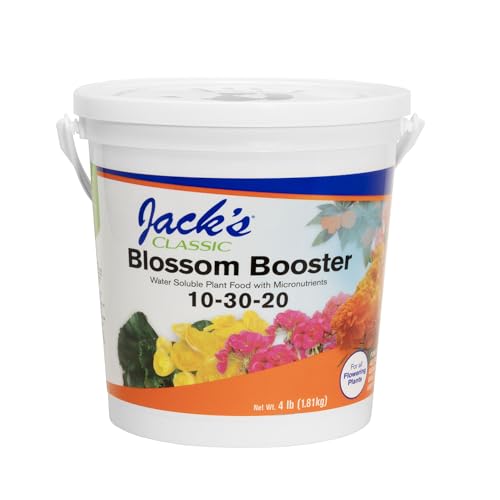
Jack’s Classic Blossom Booster delivers a 10-30-20 analysis that is nearly ideal for daylilies entering their bloom cycle. The elevated phosphorus (30) cues the plant to initiate more scapes, while the potassium (20) supports stem strength and overall plant health. The 10 percent nitrogen is low enough to avoid excessive foliage growth that could shade the flower stalks. The powder comes in a 4-pound bag with a convenient measuring spoon, and it dissolves completely in water without leaving sediment.
What sets this formulation apart from budget options is the inclusion of a full suite of micronutrients — chelated iron, manganese, zinc, and others — that prevent the interveinal chlorosis daylilies often develop during heavy flowering. Users consistently report that their daylilies produce thicker, stronger scapes that hold more buds per stalk after switching to this product. The water-soluble format allows you to apply it as a root drench or as a foliar spray, giving you flexibility during dry spells when daylilies need a quick nutrient hit.
Long-term users note that the formula works across a wide spectrum of flowering perennials, including hydrangeas and annuals like petunias, so a single bag covers your entire garden. Compared to the LiquaFeed or the balanced Peter’s 20-20-20, the Blossom Booster offers a more targeted phosphorus profile that directly addresses the daylily’s physiological demand during scape emergence. For the gardener who wants maximum bloom density without toxic salt buildup, this is the most complete package available.
What works
- Ideal bloom-boosting 10-30-20 ratio produces noticeably more scapes.
- Includes chelated iron and manganese to prevent yellowing during heavy bloom.
- Water-soluble powder dissolves cleanly for root or foliar application.
- Comes with a measuring spoon for consistent mixing.
What doesn’t
- Premium price point per pound compared to basic bloom boosters.
- Not an all-purpose feed — best used only during the pre-bloom and bloom window.
2. Grow More Super Bloomer 15-30-15

The Grow More Super Bloomer supplies a 15-30-15 blend that packs a slightly higher nitrogen charge than Jack’s Classic, which can be beneficial for daylilies growing in lean, sandy soil where green-up is needed alongside flower production. The phosphorus level of 30 matches the Blossom Booster, providing the same powerful signal for bud initiation. The product is formulated with chelated iron and manganese, two micronutrients that daylilies demand when pushing out multiple bloom cycles in a single season.
Users report that this fertilizer works remarkably fast — within a week of application, daylily fans look greener and emerging scapes appear thicker. The water-soluble powder mixes at a ratio of one tablespoon per gallon of water, and the 3-pound bag yields a significant volume of liquid feed. Gardeners using this on roses and other heavy-blooming perennials note that the bloom count and size improve noticeably compared to generic balanced fertilizers. The uniformity of nutrient distribution makes it suitable for use in drip irrigation systems and hose-end sprayers.
Where the Grow More stands out is its versatility: the 15-30-15 formula is high enough in potassium to help daylilies withstand summer heat stress, and the chelated micronutrients remain available in alkaline soils, which many daylily beds have. Compared to the Carl Pool BR-61, the Grow More offers a more complete nutrient package with additional trace elements. The only consideration is that the higher nitrogen may contribute to softer leaf growth in already rich soil, so it is best used on daylilies growing in moderately fertile ground.
What works
- High phosphorus (30) delivers strong bloom initiation signal.
- Contains chelated iron and manganese for deep green foliage.
- Fast-acting: visible improvement in leaf color and scape thickness within a week.
- Versatile formulation works on roses, perennials, and container flowers.
What doesn’t
- 15 percent nitrogen may be slightly high for daylilies in rich garden loam.
- 3-pound bag offers less total volume than the Jack’s Classic 4-pound option.
3. Schultz Bloom Plus 10-54-10

The Schultz Bloom Plus contains the highest phosphorus content in this lineup with a staggering 10-54-10 ratio. For daylilies that are already established in fertile soil and simply need a phosphorus jolt to trigger blooming, this is the most aggressive option available. The 54 percent phosphorus is not a typo — this is a specialized bloom spike that sends a clear biochemical signal to produce flower buds rather than foliage. The formula also contains vital micronutrients to support overall plant health during the intense bloom push.
Customer feedback consistently mentions that this product produces “envy of the neighborhood” flower displays, with users specifically noting larger blooms and extended bloom periods on perennials. The water-soluble granules dissolve evenly when mixed with water, and the manufacturer states that the formula feeds like nature by releasing nutrients gradually with each watering. This makes it an excellent choice for daylily beds that receive regular irrigation or rainfall, as the nutrients become available incrementally rather than all at once.
The main consideration with the Schultz Bloom Plus is that the extreme phosphorus concentration means you must use it sparingly — overapplication can lead to phosphorus buildup in the soil, potentially tying up iron and zinc availability. It is best deployed as a targeted bloom booster from late spring through summer rather than as a general maintenance feed. Compared to the Carl Pool BR-61 (9-58-8), the Schultz offers a similar high-phosphorus profile but in a smaller 1.5-pound package, which may be ideal for gardeners with smaller daylily collections.
What works
- Extremely high 10-54-10 ratio provides maximum bloom trigger for daylilies.
- Water-soluble formula dissolves evenly and releases gradually with moisture.
- Contains vital micronutrients to prevent deficiency during bloom.
- Users consistently report larger and more numerous flowers.
What doesn’t
- Very high phosphorus can cause soil buildup if used too frequently.
- 1.5-pound bag is smaller than many competing bloom boosters.
4. Carl Pool BR-61 9-58-8
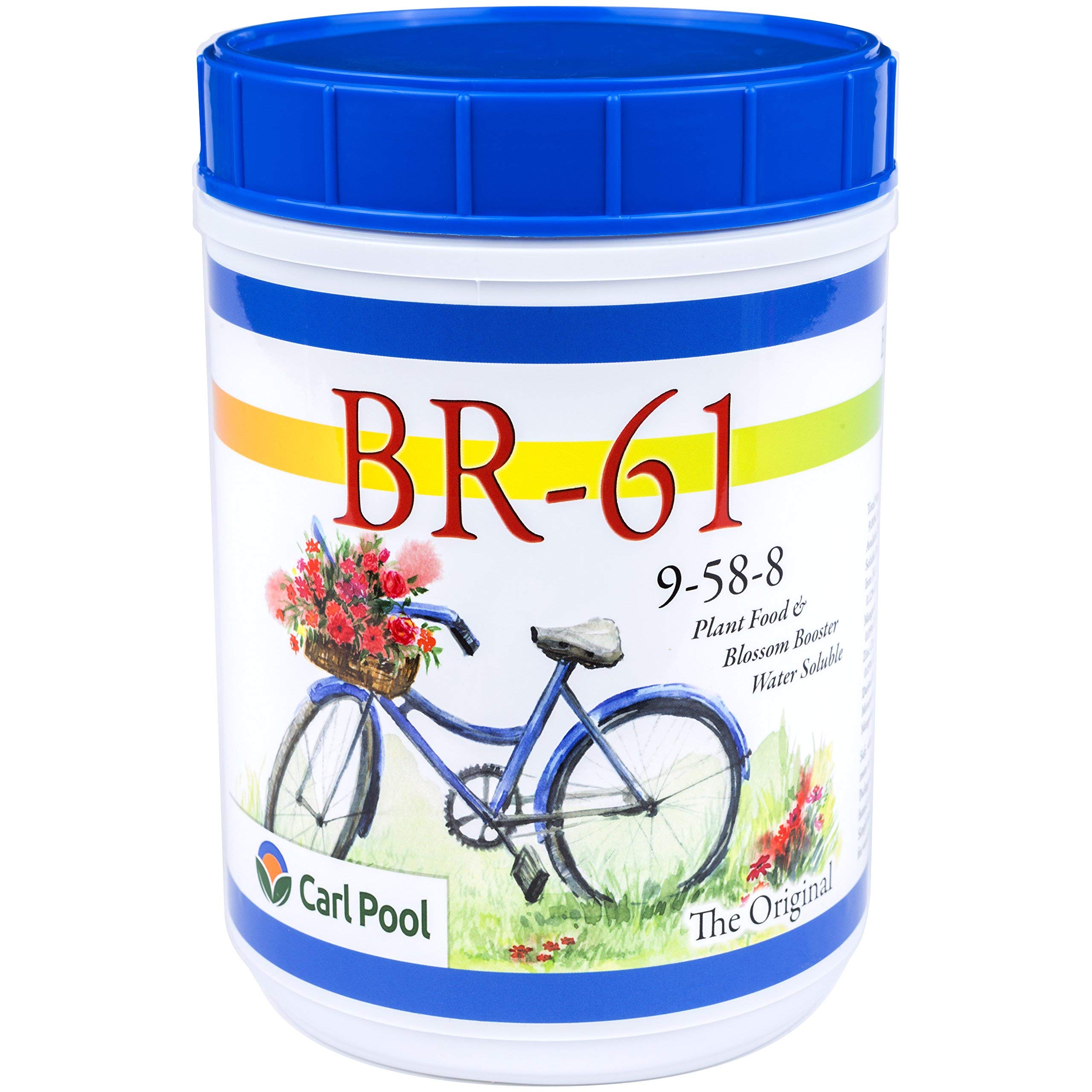
The Carl Pool BR-61 has been a staple in the flowering-perennial community for decades, and its 9-58-8 formulation explains why. With 58 percent phosphorus, it is the highest single-nutrient-concentration product in this review, specifically designed as a bloom booster and plant starter. The low nitrogen (9) ensures that daylilies do not waste energy on leaf production, while the potassium (8) is sufficient to support cell wall strength and disease resistance. The powder mixes at a simple rate of one tablespoon per gallon of water.
Long-time users of the BR-61 report that it is the go-to product for plumeria and other heavy-blooming ornamentals, and many have used it for years on their daylilies with consistent results. The 3-pound bag offers good value for the phosphorus concentration, and the formula is effective as both a root drench and a foliar feed. Gardeners who alternate this with a fish emulsion or seaweed-based feed every two weeks report that their daylilies produce an extended bloom period that lasts well into late summer.
Compared to the Schultz Bloom Plus, the Carl Pool BR-61 offers an even higher phosphorus percentage (58 vs. 54) in a larger 3-pound bag at a comparable price point. The main drawback is that the BR-61 has a more limited micronutrient profile than the Jack’s Classic or Grow More formulations. If your daylilies are growing in soil that is already rich in trace elements, this is not a problem, but for sandy or leached soils, you may need to supplement with a micronutrient blend. Overall, it remains a reliable, no-frills phosphorus hammer for daylily bloom induction.
What works
- Highest phosphorus ratio (9-58-8) in the entire lineup for aggressive bloom signaling.
- Simple mixing ratio of 1 tablespoon per gallon of water.
- Effective as foliar spray or root drench for daylilies.
- Large 3-pound bag provides excellent value for the phosphorus content.
What doesn’t
- Minimal micronutrient package compared to premium competitors.
- May require additional iron or manganese supplementation in poor soils.
5. Dr. Earth Flower Girl Bud & Bloom Booster 4-10-7

The Dr. Earth Flower Girl is a 100 percent organic and natural handcrafted blend with a 4-10-7 analysis. For gardeners who prioritize organic practices and need a product safe for people and pets, this is the clear choice. The 10 percent phosphorus is significantly lower than the synthetic bloom boosters, but it is derived from natural sources and releases slowly as soil microbial activity breaks down the granules. The low nitrogen (4) ensures daylilies focus on blooming without soft growth, and the potassium (7) supports root health and disease resistance.
Users report that this product works well for organic growing, with the caveat that the effects are slower and milder compared to chemical fertilizers. Experienced dahlia and dragon fruit gardeners recommend the Flower Girl for its consistent results, and daylily growers will appreciate that it will not burn roots even in hot weather. The 4-pound bag provides good coverage for a medium-sized daylily bed, and the OMRI-listed ingredients mean you can use it around vegetable gardens without concern. The product is also certified as non-GMO project verified.
The trade-off with organic granular formulas is that they rely on soil temperature and moisture to break down — in cool spring soils, the phosphorus may not be available in time for early-blooming daylily varieties. Gardeners should apply the Dr. Earth Flower Girl several weeks before the expected bloom period to allow microbial processing. Compared to the synthetic options like Schultz or Carl Pool, this formula offers a gentler, more sustainable approach that builds soil health over time rather than providing an instant nutrient spike.
What works
- 100% organic and natural — safe for people, pets, and pollinators.
- Slow-release granules build long-term soil health and microbial activity.
- Low nitrogen (4) prevents excessive leaf growth in daylilies.
- Non-GMO project verified and no sewage sludge or chicken manure.
What doesn’t
- Works slower than synthetic options — requires advance application before bloom.
- Phosphorus content (10) is much lower than chemical bloom boosters.
6. Peter’s Professional 20-20-20

Peter’s Professional 20-20-20 is the classic all-purpose water-soluble fertilizer that has been a staple in greenhouses and indoor gardens for decades. The balanced 1:1:1 ratio delivers equal parts nitrogen, phosphorus, and potassium, making it suitable for general plant maintenance rather than targeted bloom boosting. For daylilies in early spring before scapes emerge, this formula supports overall fan growth and root development, but it should be switched to a high-phosphorus formula once bloom buds appear.
Users praise this product for its consistent quality and ability to keep a wide variety of plants — from African violets to vegetables — healthy and productive. The water-soluble powder dissolves cleanly and mixes at a rate of half a tablespoon per gallon for houseplants, making it easy to adjust concentration for outdoor perennial beds. Gardeners report that their plants show improved leaf color and growth within a week of application, though the 20-20-20 formula will not produce the same scape density as a dedicated bloom booster.
The main limitation for daylily growers is the 20 percent nitrogen content. Applied during the summer bloom period, this high nitrogen level can push daylilies into vegetative growth at the expense of flowers, resulting in tall, lush fans with fewer scapes. This product is best positioned as a pre-season tonic or as a maintenance feed for daylilies grown primarily for foliage. Compared to the Dr. Earth organic option, the Peter’s 20-20-20 provides faster, more predictable results but lacks the targeted phosphorus that bloom-focused formulations deliver.
What works
- Classic balanced 20-20-20 formula suitable for early-season daylily growth.
- Water-soluble powder dissolves completely with no sediment.
- Trusted by experienced growers for consistent plant health across many species.
- Economical price point for a general-purpose fertilizer.
What doesn’t
- High nitrogen (20) can suppress blooming if used during scape development.
- Not a dedicated bloom booster — phosphorus content is too low for peak bloom.
7. Miracle-Gro LiquaFeed Bloom Booster

The Miracle-Gro LiquaFeed Bloom Booster is a liquid concentrate designed for use with the Miracle-Gro LiquaFeed feeder system, offering the ultimate in convenience for gardeners who want to feed their daylilies without measuring, mixing, or cleaning up powder residue. The liquid format delivers nutrients directly to the root zone as you water, and users report seeing visible improvements in flower health and blooming within days of the first application. The 64 fluid ounce total (from 4 refill bottles) provides a season’s worth of feeding for a medium-sized perennial border.
Gardeners using this product consistently note that their daylilies and other flowering plants bloom more vigorously and for a longer period compared to using no fertilizer or a general-purpose feed. The LiquaFeed system is especially convenient for those with large plantings, as you can simply attach the feeder to your hose and walk through the garden. The formula is specifically formulated for flowers, meaning the nutrient balance is shifted toward bloom support rather than leaf growth, though the exact N-P-K ratio is not published as a water-soluble analysis.
The primary trade-off with the LiquaFeed system is the ongoing cost of the refill bottles and the proprietary feeder hardware required for optimal application. For daylily growers who prefer to customize their feeding schedule with precise N-P-K ratios, the water-soluble powders offer more control. Compared to the Jack’s Classic or Grow More powders, the LiquaFeed is more expensive per gallon of mixed feed and offers less flexibility in application rates. However, for the gardener who values speed and ease of use above all else, this is the most straightforward way to consistently feed daylilies throughout the season.
What works
- Extremely convenient — no mixing, just connect the feeder and water.
- Fast-acting liquid formula shows visible bloom improvement in days.
- 4-pack provides a full season of feeding for a medium garden.
- Specifically formulated for flowers to support bloom production.
What doesn’t
- Requires proprietary LiquaFeed feeder for optimal application.
- Higher cost per gallon of mixed feed compared to powder concentrates.
Hardware & Specs Guide
N-P-K Ratio Decoded
The three numbers on a fertilizer label represent Nitrogen (N), Phosphorus (P), and Potassium (K) by percentage weight. For daylilies, phosphorus (the middle number) is the most critical element for bloom induction. A ratio like 10-54-10 means 10% nitrogen for leaf growth, 54% phosphorus for flower development, and 10% potassium for overall plant health. Formulas with a middle number above 30 are considered bloom boosters. Using a high-first-number fertilizer (like 20-20-20) during bloom season can divert energy away from flower production and toward leaf growth.
Water-Soluble vs. Granular vs. Liquid
Water-soluble powders (like Jack’s Classic or Schultz) require mixing with water before application but provide the fastest nutrient uptake — ideal for spoon-feeding daylilies during the active bloom window. Granular organic blends (like Dr. Earth) rely on soil microbes to break down the nutrients, offering slow-release feeding that builds soil structure but requires application weeks before peak bloom. Liquid concentrates (like Miracle-Gro LiquaFeed) are pre-dissolved and offer the highest convenience but typically have a higher cost per application and may include water weight in the purchase volume.
FAQ
When should I start feeding daylilies in spring?
Can I use a high-phosphorus fertilizer on newly planted daylily divisions?
How does the “10-54-10” ratio specifically benefit daylily bloom production?
Final Thoughts: The Verdict
For most gardeners, the plant food for daylilies winner is the Jack’s Classic Blossom Booster because it delivers an ideal 10-30-20 ratio with a full micronutrient package, producing maximum scape density without foliage overgrowth. If you want the absolute highest phosphorus concentration for a massive bloom push, grab the Schultz Bloom Plus 10-54-10. And for an organic, pet-safe option that builds long-term soil health while still supporting good bloom production, nothing beats the Dr. Earth Flower Girl.