
Cactus owners often make one critical mistake: they treat these desert dwellers like thirsty houseplants. The truth is, cacti have evolved to thrive in lean, dry conditions, so flooding them with general-purpose fertilizer is a sure path to root rot and weak, leggy growth. The right nutrition strategy is entirely different — low-nitrogen, highly diluted, and timed to the plant’s natural growing cycle.
I’m Rikta — the co-founder and writer behind Lawn Gear Lab. I’ve spent countless hours analyzing owner reports, comparing NPK breakdowns, and studying the absorption mechanics of liquid concentrates to understand exactly which formulas deliver compact growth without forcing moisture stress.
Whether you’re reviving a shriveled barrel cactus or coaxing blooms from a holiday cactus, this guide breaks down the top-rated liquids to help you find the best plant food for cactus that matches your specific collection and growing conditions.
How To Choose The Best Plant Food For Cactus
Selecting the right food for your spiny friends is not as simple as grabbing the first bottle off the shelf. Cacti have unique metabolic needs that differ sharply from tropical foliage plants. The three factors below will help you narrow the field to a formula that strengthens roots without causing rapid, weak top growth.
NPK Ratio — Low Nitrogen Wins
Cacti require a fertilizer with a notably low first number (nitrogen). A ratio like 2-7-7 or 1-2-2 is ideal because it supplies enough phosphorus for root development and potassium for overall resilience, while the minimal nitrogen prevents the plant from putting on soft, etiolated growth that cannot support itself. A standard 20-20-20 houseplant feed will often cause a cactus to stretch into an unnatural shape.
Liquid Concentrate vs. Spikes
Liquid concentrates offer far greater precision for potted cacti. You control the dilution, and you can apply it only during the active growing season (spring through early fall). Spikes and granules release nutrients continuously, which can overwhelm a dormant cactus in winter. Most of the top-rated products in this category are liquids that you mix with water and apply every second or third watering.
Mixing Ratio and Ease of Use
A concentrated formula that requires only a fraction of a teaspoon per quart is more economical and reduces the risk of overfeeding. Look for products with clear, simple instructions — a “½ cap per quart” direction is far better than one that requires a dropper and a calculator. The best cactus foods are forgiving enough for beginners but precise enough for experienced collectors.
Quick Comparison
On smaller screens, swipe sideways to see the full table.
| Model | Category | Best For | Key Spec | Amazon |
|---|---|---|---|---|
| HiThrive 16oz | Liquid Concentrate | Versatile Cacti & Succulents | Makes 32 Gallons | Amazon |
| Gardenera Superfood Spray | Ready-to-Spray | Foliar & Root Boost | Contains B1 & Glucose | Amazon |
| Baby Bio 3-Pack | Liquid Concentrate | Spine & Bloom Health | 5 drops per pint | Amazon |
| Schultz Cactus Plus 2-7-7 | Liquid Concentrate | Low-Nitrogen Precision | NPK 2-7-7 | Amazon |
| Espoma Organic Cactus! | Organic Liquid | Pet-Safe Organic Feeding | NPK 1-2-2 | Amazon |
| Growth Technology GT Succulent Focus | pH-Buffered Liquid | Hydro & Semi-Hydro Systems | 12 Essential Minerals | Amazon |
| TPS Nutrients Succulent Fertilizer | Liquid Concentrate | Compact Growth Focus | 32 oz, Makes 32 Gallons | Amazon |
In‑Depth Reviews
1. HiThrive 16oz Succulent Fertilizer
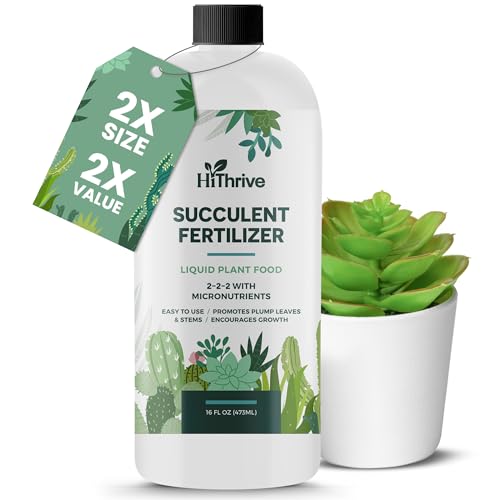
With a mixing ratio of just ¼ teaspoon per quart of water, this 16-ounce bottle stretches to create 32 gallons of finished feed — making it one of the most economical options in the category. The NPK formula is rich in micronutrients like calcium, magnesium, and zinc, which address common issues like shriveled leaves and dull coloration. Owners report noticeable improvements in leaf plumpness and root density within a few weeks of switching to this feed.
The formula is designed for all types of succulents and cacti, including aloe vera, jade plants, string of pearls, and burro’s tail. It applies easily via a capful measurement, and the instructions recommend feeding every other watering during the active growth months. This avoids the risk of over-fertilization that plagues inexperienced cactus owners.
What sets this product apart is the inclusion of secondary nutrients that many budget fertilizers omit. While the nitrogen level is not broken out as a simple 2-7-7 ratio, the balanced macro-and-micro approach has earned consistent praise from collectors with mixed indoor gardens who want one bottle that works across multiple species.
What works
- Extremely concentrated — 32 gallons per bottle
- Rich in calcium, magnesium, and zinc for leaf health
- Easy cap-based dosing for beginners
What doesn’t
- NPK ratio not explicitly printed on front label
- Some users prefer a dedicated cactus-only formula
2. Gardenera Plant Superfood Spray
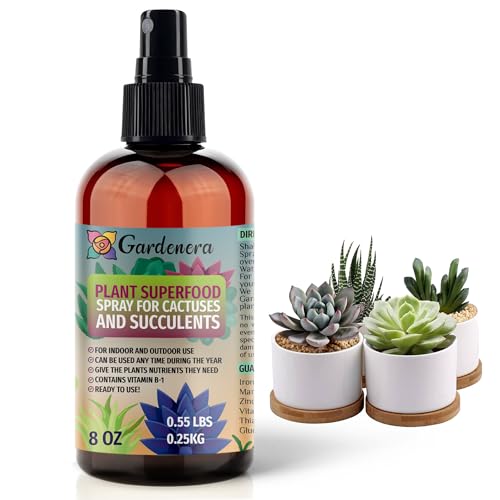
This product takes a unique approach by delivering nutrients via foliar spray rather than soil drenching. The liquid contains Vitamin B-1 to reduce transplant shock and stimulate root development, along with glucose for an immediate energy boost. For cacti recovering from repotting or shipping stress, this can be a faster route to recovery than traditional soil feeds.
The spray formulation includes iron, manganese, and zinc as essential micronutrients. Owners report that it works particularly well on plants that have been struggling with slow growth or pale coloration. The pump-action bottle makes application simple — a few spritzes on the leaves and stem base are enough for most potted specimens.
One caveat for cactus users: foliar spraying works best on species with smoother skins or those that benefit from leaf feeding, such as certain succulents. Heavily spined cacti may not absorb as efficiently through the skin. The product is best used as a supplement rather than a replacement for a balanced soil feed.
What works
- Vitamin B-1 reduces transplant shock effectively
- Ready-to-use spray bottle — no mixing required
- Includes glucose for quick metabolic support
What doesn’t
- Foliar spray may not suit heavily spined cacti
- Small 8 oz bottle covers fewer plants than concentrates
3. Baby Bio Succulent Food (3-Pack)
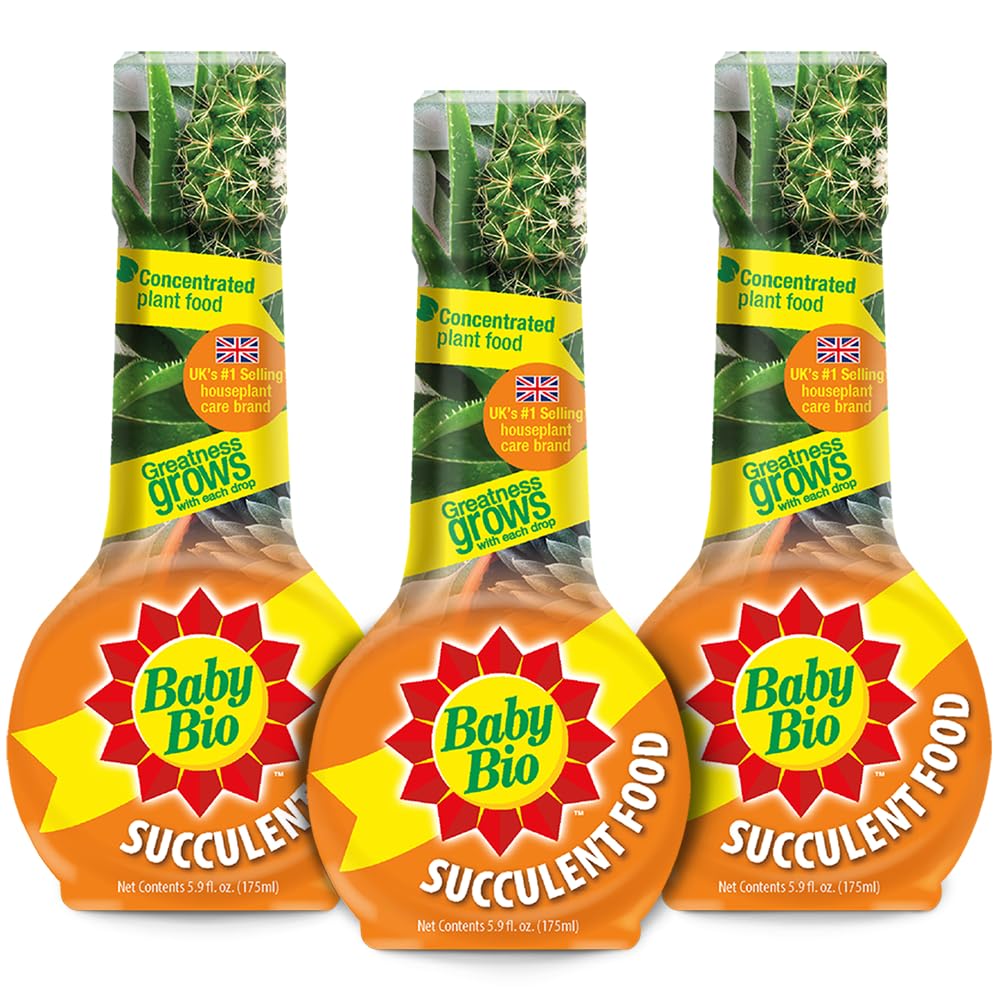
Baby Bio sells as a three-pack of 5.9-ounce dripper bottles, and the dosing is incredibly sparing — just 5 drops per pint of water. This makes the pack last through multiple growing seasons for a modest collection. The formula is advertised as improving spine health and supporting balanced growth and flowering, which is a specific claim that many cactus fertilizers avoid.
The product works on soil-based and hydroponic setups, covering mammillaria, sempervivum, aloe, and Christmas cactus. Users consistently note improved leaf color and growth within two to three weeks of starting the regimen. The dripper bottle design makes measuring precise amounts easy even for those with shaky hands.
However, because the concentrate is so strong, the actual number of feedings per bottle is comparable. The non-organic nature of the formula might also deter those seeking certified organic inputs.
What works
- Extremely concentrated — 5 drops per pint
- Designed for spine health and flowering
- Three-pack ensures long supply
What doesn’t
- Small individual bottle size
- Not certified organic despite the brand name
4. Schultz Cactus Plus 2-7-7 Liquid Plant Food (2-Pack)
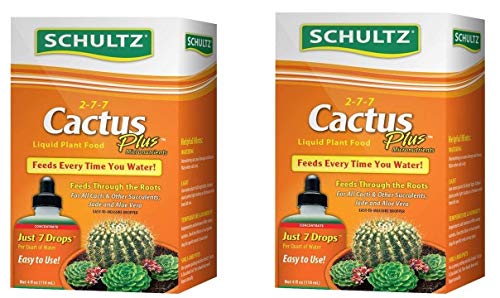
The 2-7-7 NPK ratio on this Schultz formula is exactly what cactus specialists recommend — low first number for nitrogen, high middle number for phosphorus to support blooming and root health, and high last number for potassium to strengthen cell walls and disease resistance. The 4-ounce bottle is highly concentrated: 1 teaspoon per gallon of water yields a solution that can be used bi-weekly during the growing period.
The low nitrogen content is especially beneficial for slow-growing desert species that store water and nutrients in their stems and cannot process heavy nitrogen loads.
The 2-pack format doubles the value, and the small bottles are easy to store. The lack of a measuring dropper in the cap is a minor inconvenience — you need a separate teaspoon to get the correct ratio. Still, the precise NPK targeting makes this a favorite among serious collectors.
What works
- Perfect 2-7-7 ratio for cacti and succulents
- Highly concentrated for long-lasting use
- Supports blooming and root strength
What doesn’t
- No measuring dropper included in cap
- Small bottle size per unit
5. Espoma Organic Cactus! Plant Food (2-Pack)

Espoma’s organic liquid fertilizer carries a gentle 1-2-2 NPK ratio and is OMRI-listed, so it is safe for use around kids and pets. It is formulated specifically for cactus, succulents, palms, and citrus — a broader range than a pure cactus food, but still low enough in nitrogen to avoid damaging desert plants. The recommended dose is ½ cap per quart of water, applied every 2-4 weeks during active growth.
Owners consistently report that this product revives struggling plants, producing greener coloration and new growth within a month. The organic ingredients do create a distinct natural odor that some describe as manurial, but the smell dissipates once diluted and has no lingering effect on indoor air quality. The 2-pack provides two 8-ounce bottles, enough for a medium-sized collection through the season.
However, some experienced cactus growers note that the 1-2-2 ratio may still be slightly high in nitrogen for very slow-growing desert cacti, recommending it more for faster-growing succulents and caudiciforms. For standard barrel cacti or mature saguaro, the Schultz 2-7-7 is the safer bet.
What works
- Certified organic and safe around pets
- Gentle NPK 1-2-2 for succulents
- Fast visible results in color and growth
What doesn’t
- Organic smell is noticeable before dilution
- Higher nitrogen than ideal for slow-growing cacti
6. Growth Technology GT Succulent Focus (8.5 oz)
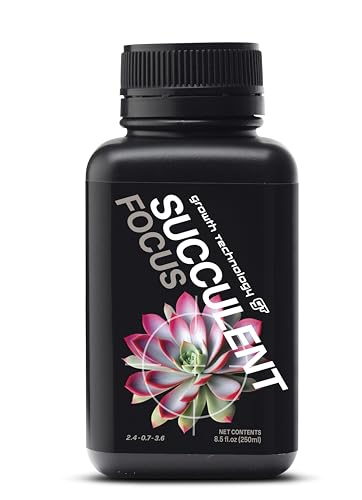
Growth Technology’s GT Succulent Focus is a pH-buffered liquid that contains all 12 essential minerals, including calcium, in a highly absorbable form. The pH buffering ensures that nutrients remain available to the plant even if your tap water is slightly alkaline or acidic — a common problem that locks out micronutrients in potted cacti. The manufacturer recommends 3-5 ml per liter for soil and 5-7 ml per liter for hydroponic setups.
This is the most technically advanced formula on the list, and it shows in the results. Owners report significantly larger leaf size and denser growth on succulents and some cacti. The lack of sodium, chlorides, and urea makes it a clean feed that does not leave salt buildup in the potting medium — a critical advantage for plants that are sensitive to mineral accumulation.
The premium positioning is reflected in the price per bottle, but because the dose is small and the efficiency is high, the cost per feeding is competitive with mid-range products. The bottle packaging has been noted as prone to leaking during shipping, so careful handling upon arrival is recommended. This product shines for collectors who grow in semi-hydro systems or want the most complete mineral profile available.
What works
- pH-buffered for consistent nutrient uptake
- Contains all 12 essential minerals including calcium
- Free of sodium, chlorides, and urea
What doesn’t
- Bottle cap may leak during shipping
- Higher upfront cost than standard fertilizers
7. TPS Nutrients Succulent Fertilizer (32 oz)
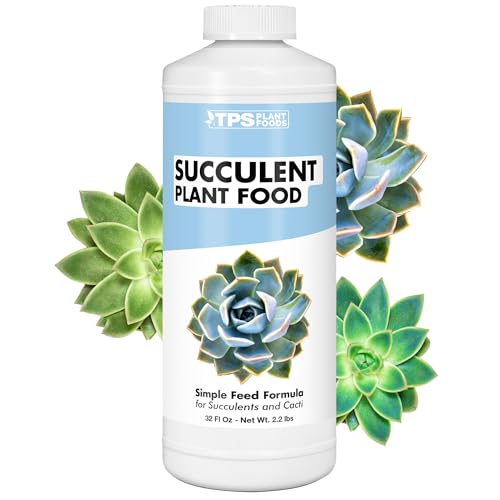
TPS Nutrients offers a generously sized 32-ounce bottle that mixes at a 1:200 ratio, making it one of the largest total-value packages in the category. The formula is specifically designed to prevent leggy succulents by encouraging compact growth, firm leaves, and strong root development. It is gentle enough for container plants, feeding without causing salt buildup or root stress over time.
The main selling point is the bottle size — at 32 ounces, this product will feed a substantial collection for many months. Users report that their succulents green up beautifully after just three applications, and the plants maintain a tighter, more natural form. The formula works well on aloe vera, snake plants, and pothos as well, making it a versatile choice for mixed indoor gardens.
Some owners note that while the product keeps cacti green and healthy, it has not reliably triggered blooming in species like Christmas cactus. Adequate sunlight is still the primary driver of flowering, and no fertilizer can fully substitute for proper light conditions. For users whose primary goal is compact, healthy foliage rather than blooms, this is a strong budget-friendly option.
What works
- Large 32 oz bottle offers great value
- Prevents weak, stretched growth effectively
- Gentle formula safe for regular use
What doesn’t
- May not stimulate flowering on its own
- Some users want a higher phosphorus ratio
Hardware & Specs Guide
NPK Ratio Demystified
The three numbers on any fertilizer label stand for Nitrogen (N), Phosphorus (P), and Potassium (K). For cacti, a low first number (2 or below) is essential — high nitrogen forces rapid, soft growth that cannot support the plant’s weight. The second number should be higher to support root development and flowering, and the third number should be moderate to high for disease resistance and water regulation. The best cactus foods stay under a 1-2-2 or 2-7-7 profile.
Liquid Volume & Dilution
Concentrated liquids are sold in volumes from 4 oz to 32 oz, but the total gallons of finished feed matters more than the bottle size. A 4-oz concentrate that mixes at 1 tsp per gallon can yield just as many feedings as a 16-oz bottle with a weaker concentration. Always check the mixing ratio: ¼ tsp per quart (HiThrive) vs. 5 drops per pint (Baby Bio) vs. ½ cap per quart (Espoma). The dosage determines how often you will need to reorder.
FAQ
How often should I feed my cactus?
Can I use regular houseplant fertilizer on cacti?
Should I use liquid or slow-release fertilizer for potted cacti?
Final Thoughts: The Verdict
For most gardeners, the plant food for cactus winner is the HiThrive 16oz Succulent Fertilizer because it combines extreme concentration with a broad micronutrient profile at a very accessible price per feeding. If you want a precise low-nitrogen ratio for triggering blooms, grab the Schultz Cactus Plus 2-7-7. And for certified organic feeding safe around pets and children, nothing beats the Espoma Organic Cactus! Plant Food.