
Specs are compiled from manufacturer listings and verified buyer reviews and can change over time — please confirm the key details on the product page before buying.
Is your arborvitae hedge looking tired, thinning out, or turning brown? The right plant food restores a lush, vibrant green wall — the wrong formula wastes money and time. This guide cuts through label confusion with straight answers on what works for arborvitaes — from slow-release spikes to fast-absorbing liquids to organic granules.
I’m Rikta — the founder and writer behind Lawn Gear Lab. This guide is built by comparing the manufacturers’ published specifications and the patterns across verified customer reviews, so you get each pick’s real strengths and trade-offs instead of marketing spin.
Whether nursing back neglected trees or feeding a long privacy hedge, you need a fertilizer that delivers the right nitrogen punch without burning roots. Here is everything you need to choose the best plant food for arborvitaes this season.
Our Picks at a Glance


How To Choose The Best Plant Food For Arborvitaes
Arborvitaes are evergreen conifers, so they need a fertilizer high in nitrogen to keep that rich green color and support steady growth. A formulation like 13-3-3 or 19-8-10 works well — the first number (nitrogen) is the most important for foliage. You also want a product that feeds slowly, so the roots get a steady supply without the risk of burning in hot weather.
Liquid vs Spike vs Granule
Liquid fertilizers soak into the root zone fast and show results the quickest — great for a mid-season boost or newly planted trees that need immediate nutrients. Spikes are the easiest option: you just hammer them into the ground around the drip line, and they release over 60 to 90 days. Granules (either slow-release or organic) need a little more work — you scatter them under the tree and water them in — but they often cover more ground per bag and feed for months.
Check for Slow-Release Nitrogen
A slow-release nitrogen source (often labeled as water-insoluble nitrogen or coated urea) prevents the classic mistake: dumping on too much fertilizer and scorching the roots. Arborvitaes have shallow, fibrous root systems, so a gentle, consistent feed is far safer than a sudden blast. Look for terms like “slow-release” or “controlled-release” on the bag or label.
Quick Comparison
| Model | Best For | N-P-K Ratio | Form | Coverage / Count | Amazon |
|---|---|---|---|---|---|
| Jobe’s Evergreen Spikes★ Best Overall | Overall Best | 13-3-4 | Spikes | 15 spikes | Amazon |
| Arborvitae Tree Fertilizer (TPS)Best Liquid Booster | Best Liquid Booster | — | Liquid | 32 oz | Amazon |
| Espoma Evergreen-ToneBest Organic | Best Organic | 4-3-4 | Granules | 18 lb | Amazon |
| Fertilome Tree & Shrub | Fast Results | 19-8-10 | Granules | 16 lb | Amazon |
| Nelson NutriStar | Premium Granular | 21-6-8 | Granules | 4 lb | Amazon |
| Old Farmer’s Almanac Spikes | Heavy-Duty Feeding | 13-3-3 | Spikes | 24 spikes | Amazon |
| TreeHelp Arborvitae Fertilizer | Species-Specific | — | Granules | ~3 lb | Amazon |
| Leaves and Soul Liquid 6-4-6 | Quick Foliage Boost | 6-4-6 | Liquid | 32 oz | Amazon |
| Thuja Green Giant Fertilizer | Thuja Green Giants | — | Liquid | 32 oz | Amazon |
In‑Depth Reviews
1. Jobe’s 01661 Evergreen Fertilizer Spikes, 15-Pack
Our pick — over 4.5★ from 250+ verified ratings; the strongest balance of quality and price.
The crowd-pleasing spike that turns lackluster evergreens into neighborhood showpieces.
If you want something that is nearly impossible to mess up, this is it. Each spike carries a 13-3-4 formulation — high on nitrogen (the first number) for green growth and deep root feeding. You just hammer them into the soft soil around the drip line of your arborvitae, and the slow-release mechanism feeds the tree for up to 90 days. One reviewer put it plainly: “The absolute BEST fertilizing spikes for my green giant trees.”
What wins people over is the simplicity. You do not mix anything, you do not measure scoops, and there is zero risk of splashing on yourself. The spikes hold together when you pound them in — they do not crumble — which matters more than you think when you are circling a row of trees. The crowd favorite here holds a rating that is among the very highest in the category, backed by hundreds of buyers who say the same thing: the trees perk up fast and stay green all season.
Why Owners Reach For These
- Ultra-easy application — no mixing, no mess, no digging holes
- Slow-release 13-3-4 formula feeds for up to 90 days without burning roots
- Spikes stay intact when hammered into hard or clay soil
One Real-World Caveat
- Best installed after rain when the ground is soft; very dry soil makes hammering a chore
Grab these if: you want a low-maintenance feeding routine that takes five minutes per tree and delivers reliable results for months.
Think twice if: you need to cover many trees on a tight budget — one 15-pack feeds a limited number of larger trees per season.
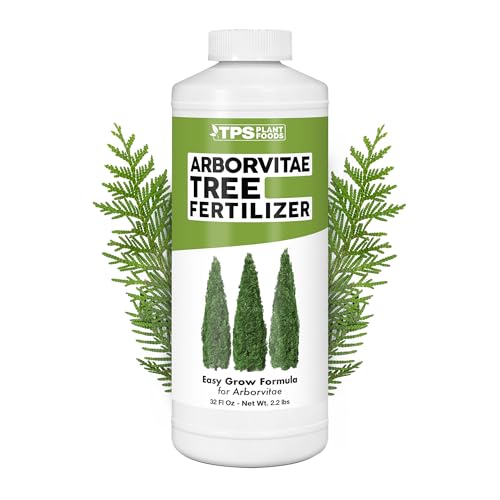
2. Arborvitae Tree Fertilizer – Liquid Plant Food, 32 oz
The liquid that saved a row of trees from a brutal Chicago winter while unfertilized neighbors’ trees died.
Compared to the Jobe’s spikes, this is the fastest-working option here because the liquid hits the roots immediately. You mix just 2 tablespoons per gallon of water and pour it around the base of each tree. One owner reported that their new arborvitae survived the harsh Chicago winter with this product, while the neighbor’s untreated trees did not make it. That is the kind of real-world edge that separates “maybe it helps” from “it made the difference.”
The feedback across hundreds of buyers is consistent: the fertilizer kickstarts new growth noticeably within a few weeks. It is especially strong on trees that look neglected, helping them green up and put out fresh shoots. If you have sandy soil that drains fast, owners say this liquid outperforms the Jobe’s spikes because the nutrients reach the roots before washing away. The honest trade-off — and it is a small one — is that value perception varies by buyer, since a 32-ounce bottle covers a modest number of trees per application.
What Stands Out
- Fast-absorbing liquid helps struggling trees green up quickly
- Easy mixing — 2 tablespoons per gallon and pour
- Buyers report trees surviving winter that would have been lost untreated
Something To Note
- A 32-ounce bottle goes fast if you have a long hedge; budget for repeat purchases across the growing season
Reach for this when: your arborvitaes need a rescue — they are browning, stunted, or recovering from a rough season, and you want results in weeks, not months.
Look elsewhere if: you prefer a “feed once and forget” approach; liquids require mixing and reapplication every few weeks.
3. Espoma Organic Evergreen-Tone 4-3-4, 18 lb
The organic feed loyal owners have used for years — and won’t switch from.
This is the bag you want if “organic” matters to you and you do not mind a little elbow grease. Evergreen-Tone is a 4-3-4 granular blend enhanced with Espoma’s Bio-tone formula, which uses natural ingredients (including chicken manure) to feed the soil biology. You sprinkle it around the drip line twice a year — early spring and late fall — and water it in. Owners consistently call it “the best fertilizer” they have used, with rich green color and abundant growth year after year.
The 18-pound bag goes a long way, making it a strong value for a row of arborvitaes or a mixed hedge of evergreens. The honest downside: it has a smell. The barnyard odor from the manure-based ingredients is noticeable after application, though it fades after a few days. A small number of buyers also reported that it did not agree with certain thujas, so if you have a sensitive variety, you might test it on one tree first.
What Loyal Fans Love
- Organic and OMRI-listed for organic gardening without synthetic chemicals
- Large 18 lb bag covers many trees per season — strong value per feeding
- Bio-tone microbes improve long-term soil health, not just a quick green-up
The Honest Trade-Off
- The barnyard smell is strong for a few days after application; not ideal if you garden near an open window
Best for: gardeners who prioritize organic ingredients and want to build healthy soil over the long term, not just green up the needles fast.
skip it if: the smell of natural manure-based fertilizer bothers you, or you need a quick fix for trees that are already browning.
4. Fertilome (13865) Tree and Shrub Food 19-8-10, 16 lb
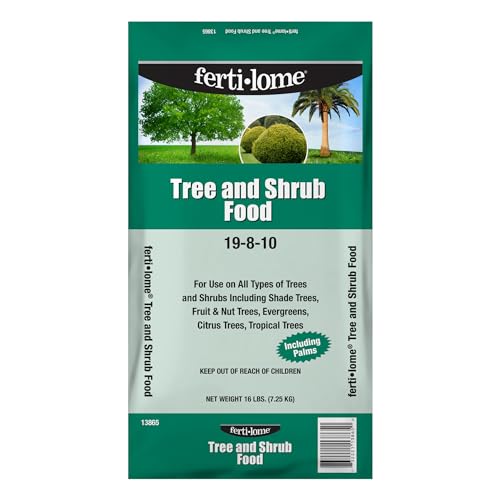
The granular powerhouse one landscape pro has recommended for years — with good reason.
This is the fertilizer for people who want to see a difference fast. The 19-8-10 ratio packs a high nitrogen level (19 percent nitrogen), which drives vigorous green growth in a matter of weeks. You simply sprinkle the granules around the drip line of the tree and water them in — no digging needed. One owner who applied it twice in early spring to oaks, holly, evergreens, and shrubs described the result as “incredible new growth” that was visibly healthier than untreated control trees.
The 16-pound bag is big enough to handle a substantial hedge or multiple specimen trees. The feeding schedule is straightforward: apply twice a year for best results. The big selling point is that it is safe enough not to burn roots — owners mention you do not have to be overly careful, though you should still water it in well. A small number of reviews note that results vary by soil type, but for a general-purpose tree food that also shines on arborvitaes, this one is tough to top.
What Makes It A Top Contender
- High-nitrogen 19-8-10 formula pushes fast, visible growth on evergreens and shrubs
- Easy sprinkle-and-water application — no digging or mixing
- Large 16 lb bag covers a long hedge or many trees per season
One Detail To Know
- For best results, apply before rain or water thoroughly; dry granules sitting on top of soil take longer to break down
Ideal for: anyone with a large privacy hedge who wants a quick, noticeable green-up and is comfortable following a twice-yearly schedule.
Not for: organic-focused gardeners who want a natural or OMRI-listed product; this is a conventional synthetic formula.
5. Nelson NutriStar Trees, Shrubs, & Evergreens Plant Food 21-6-8, 4 lb
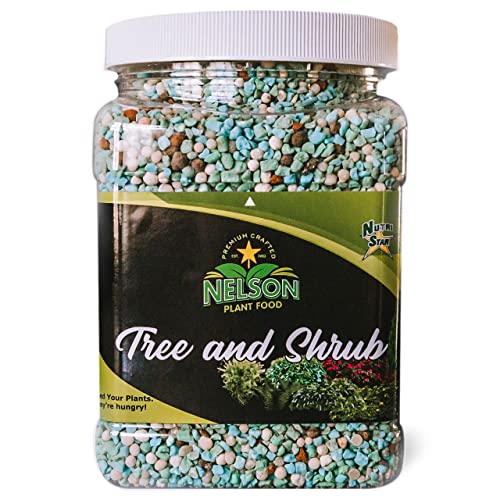
The granular that turned anemic yellow shrubs into thriving bright-green specimens in two weeks.
Nelson NutriStar uses a 21-6-8 ratio with five different nitrogen sources, each releasing at a different rate. That means your arborvitae gets an immediate boost from the fast-release fraction, plus a steady supply from the slower sources over time. One owner described the result as “magic”: anemic, yellow, dying plants transformed into “thriving, bright green, shiny shrubbery” within two weeks — and a houseguest stopped mid-walk to compliment them.
This is a 4-pound bag, so it costs more per pound than the Fertilome big bag above, but the concentrated formula and multi-release technology justify the premium for smaller yards or container-grown trees. It is also a favorite among landscapers who have used the brand for over 30 years. The application is simple — scatter around the drip line every 30 days during the growing season — and the results, especially on boxwoods and evergreens, are consistently excellent.
what separates it
- Five nitrogen sources with different release rates — immediate green-up + long-term feeding
- Customers note dramatic results in as little as two weeks on yellowing plants
- Trusted by professionals for three decades
The Catch
- 4 lb bag is pricier per pound than bulk options; better suited to smaller properties or targeted feeding
Grab this if: you want the fastest possible results from a granular and are happy to pay a bit more for a premium blend of timed-release nitrogen.
Pass if: you need to feed a long row of 50+ trees — you will run through the bag fast and should look at a bigger bulk option.
6. The Old Farmer’s Almanac Tree & Shrub Fertilizer Spikes, Box of 24
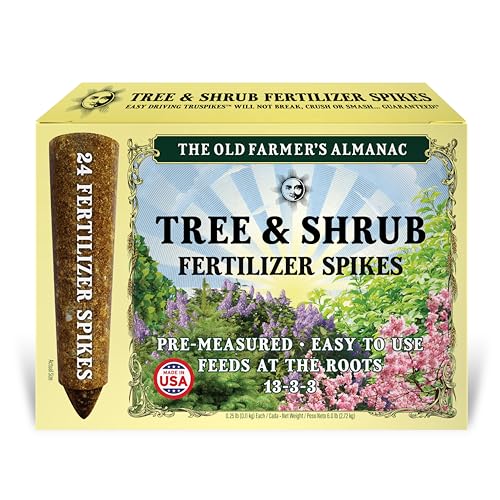
The 5-inch spikes that made a Stewartia tree put out more flowers than ever before.
These 5-inch TruSpikes pack a 13-3-3 formula with natural ingredients like molasses that release nutrition directly into the root zone. You feed once per season — early spring and late fall — and each box holds 24 spikes. One owner noted that their Japanese Stewartia produced more flowers after using these, and their fountain beech tree became fuller with leaves much sooner than usual.
What owners praise most is how easy they are to use compared to the Jobe’s spikes. The spikes do not break, crush, or shatter when you hammer them into tough clay soil. That said, some buyers in very hard soil still found them a struggle — the advice from experienced users is to pre-dig a small pilot hole with a screwdriver or a piece of rebar if the ground is too compact. For feeding a row of arborvitaes twice a year without mess or measuring, this is a top-tier choice.
Why Owners Keep Buying Them
- 24 spikes per box — enough for a substantial hedge or multiple specimen trees
- 5-inch spikes packed with 13-3-3 nutrients including natural molasses for root-zone feeding
- Durable construction won’t shatter on impact; stays intact during installation
Installation Note
- Hard clay soil can make hammering difficult; some owners pre-drill holes for best results
Best for: homeowners with several large trees or a long hedge who want the convenience of a spike without worrying about breakage.
Not ideal if: your soil is rocky or you need a budget-friendly option — the per-spike cost is higher than buying a bag of granules.
7. TreeHelp Premium Fertilizer for Arborvitae, ~3 lb
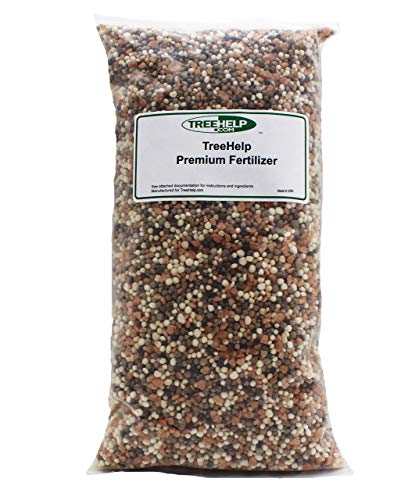
The granular that turned a row of 50 browning arborvitaes back to green.
This one is designed specifically for arborvitae trees, not just evergreens in general. The slow-release nitrogen feeds throughout the growing season, which is exactly what these shallow-rooted trees need. One owner with a long row of 50 arborvitaes sprinkled the granules under the trees just before heavy rain and watched the color return to green over time. The bag treats one large tree or 2-3 smaller or newly planted trees.
The downside is that the 3-pound bag is small for the price, and a few buyers questioned the recommended application rate (a full bag for one large tree sounds like a lot). The consensus from owners who used it successfully is that results take patience — this is not a fast-acting liquid like the TPS, but a slow, steady feed that builds root health over the season. Spring application seems to work best.
The Main Appeal
- Formulated specifically for arborvitae, not a generic evergreen blend
- Slow-release nitrogen feeds steadily without burning roots
- Owners with browning trees saw them return to green over the season
A Frustration
- The 3 lb bag is small; treating more than a couple of trees requires multiple boxes
Reach for this if: you have a small group of arborvitaes and want a fertilizer made just for them, with gentle, long-lasting root support.
Skip if: you have a long hedge or many trees — you will need multiple bags, and a general-purpose product may offer better value per pound.
8. Leaves and Soul Arborvitae Fertilizer 32 oz, Professional Liquid 6-4-6
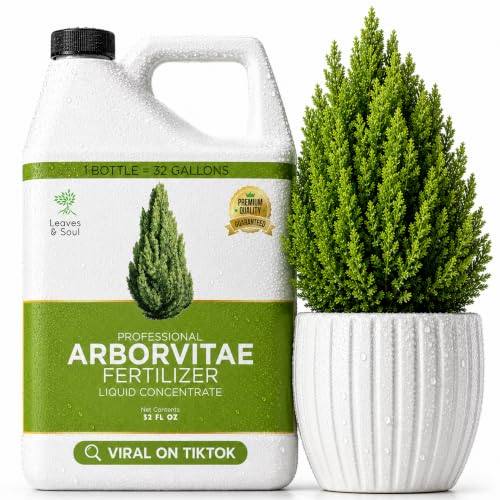
The only product one frustrated shopper could find made exclusively for arborvitae — and it works.
This liquid concentrate uses a balanced 6-4-6 formula designed to support dense foliage, strong roots, and year-round vigor. You mix 2 tablespoons per gallon of water and apply it to the root zone. It is fast-absorbing, so you see results quicker than with spikes or granules — reviewers point out that their arborvitae “look much better” after just a few applications.
The honest critique here concerns the instructions: they are printed in very small type on the label, and one owner had to use a magnifying glass to read the mixing ratio. There is also no guidance on whether it is a root drench or a foliar spray, so you have to use your best judgment (most people use it as a root drench, pouring around the base). If you can get past the tiny label, the liquid itself works well, especially on trees that are already established and just need a mid-season color boost.
What It Does Best
- Balanced 6-4-6 formula is gentle enough for regular use on established trees
- Liquid form is fast-absorbing — visible results sooner than slow-release options
- Shoppers say trees looking much healthier after consistent applications
Pain Point
- Label instructions are frustratingly small and lack clarity on application method (root drench vs. foliar)
Use this for: a quick seasonal pick-me-up on established arborvitaes that need greener foliage and denser branching.
Look past it if: you prefer clear, readable instructions without guessing — the tiny label on this bottle is a genuine annoyance.
9. Thuja Green Giant Fertilizer – Liquid Plant Food, 32 oz
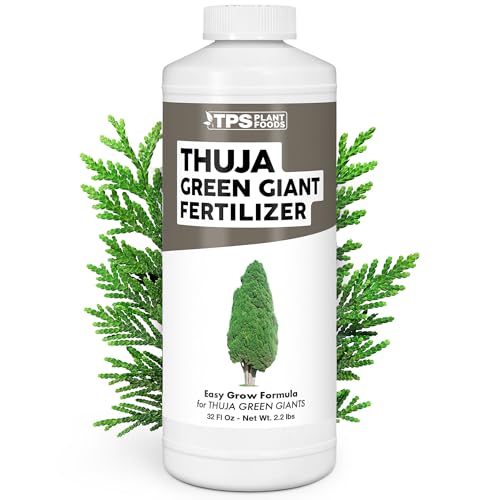
The weekly feed that one owner says their Thuja “loves” — no root burn, just happy growth.
If you are growing Thuja Green Giants (a very popular fast-growing arborvitae variety), this liquid is tailored to them. The formula supports vigorous vertical growth and thick foliage without the harsh burn that some high-nitrogen products can cause. One owner who feeds weekly described it as mild and easy to use — “not super strong as in burn roots” — and their plants react extremely well. The mixing ratio is 2 tablespoons per gallon.
This product is also suitable for other evergreens like cypress and standard arborvitae. Compared to the TPS Arborvitae liquid above, this one is explicitly labeled for Thuja and emphasizes gentle, frequent feeding rather than a single rescue dose. A small critique: the instructions could be clearer about how much to use per tree, but the general approach of feeding weekly during the growing season works well for most people. The 32-ounce bottle is the same size as the other liquids here, so plan for repeat purchases if you have a full hedge.
The Strong Points
- Mild formula that owners use weekly without fear of burning roots
- Designed specifically for Thuja Green Giants but works on all arborvitaes
- Easy to mix and apply — 2 tablespoons per gallon, no fuss
The Weak Points
- Instructions lack specific volume-per-tree guidance; some guesswork involved
- 32 oz bottle gets used up quickly for weekly feeding of a long hedge
Perfect for: Thuja Green Giant owners who want a gentle, reliable weekly liquid feed that supports fast, healthy growth.
Not the best fit if: you want a one-time seasonal application — this product works best as part of a weekly routine during the growing season.
Understanding Arborvitae Fertilizer Specs
N-P-K Ratio — The Three Numbers Explained
The three numbers on any fertilizer bag tell you the percentage of nitrogen (N), phosphorus (P), and potassium (K). Nitrogen is the most important for arborvitaes — it drives green foliage growth. A ratio like 13-3-3 or 19-8-10 means the first number (nitrogen) is highest, which is exactly what evergreens need. A lower first number, like 4-3-4, is gentler and better for organic soil-building but works more slowly.
Slow-Release vs Fast-Release
Slow-release fertilizers (coated granules or spikes) break down over weeks or months, feeding the tree steadily without overwhelming it. This is much safer for arborvitaes, which have shallow root systems. Fast-release liquids or high-nitrogen synthetics can cause a quick green-up but risk burning the roots if over-applied. For most homeowners, a slow-release or timed-release product is the better everyday choice.
FAQ
How often should I fertilize my arborvitaes?
Can I use a general evergreen fertilizer on arborvitaes?
Will fertilizer spikes burn my arborvitae roots?
What is the best N-P-K ratio for arborvitaes?
Should I water after applying granular fertilizer?
Can I fertilize newly planted arborvitaes?
What causes brown patches on arborvitaes?
Is liquid or spike fertilizer better for arborvitaes?
How many fertilizer spikes do I need per tree?
Final Thoughts: The Verdict
Across the board, the best plant food for arborvitaes winner is the Jobe’s Evergreen Fertilizer Spikes because they are simple to use, last 90 days, and deliver a perfect