
Specs are compiled from manufacturer listings and verified buyer reviews and can change over time — please confirm the key details on the product page before buying.
When holes show up in your leaves overnight or caterpillars strip your tomato plants, you want a spray that hits the pest—not your whole garden. Your choice depends on matching the pest (caterpillar, aphid, or fungus) to the right active ingredient. Below, we break down nine popular options so you can pick the one that works.
I’m Rikta — the founder and writer behind Lawn Gear Lab. This guide is built by comparing the manufacturers’ published specifications and the patterns across verified customer reviews, so you get each pick’s real strengths and trade-offs instead of marketing spin.
Whether you’re protecting tomatoes from hornworms or roses from aphids, this roundup of the pesticide spray for plants cuts through the noise to find the one that fits your specific garden battle.
Our Picks at a Glance


How To Choose The Best Pesticide Spray For Plants
Before you buy, you need to identify the enemy. A spray that wipes out caterpillars might do nothing against spider mites, and a general insecticide often won’t touch a fungal disease like powdery mildew.
Match the Active Ingredient to the Pest
Bacillus thuringiensis (Bt) is a bacterium that only affects caterpillars and worms, making it a precision tool. Spinosad tackles a wider chewing-insect menu. Horticultural oil and neem oil smother or disrupt soft-bodied pests like aphids, mites, and scale, and often help with fungus too. If you’re dealing with everything at once, a 3-in-1 formula combines insect, disease, and mite control.
Consider the Safety Profile
If you have pollinators buzzing around, check for an OMRI Listed label, which means the product meets organic standards. Bt is famously harmless to honeybees and earthworms, while some broad-spectrum sprays are not. Always read the label for “bee safe” claims before spraying open blooms.
Quick Comparison
| Model | Best For | Primary Target | Volume | Format | Amazon |
|---|---|---|---|---|---|
| Monterey Bt★ Best Overall | Caterpillars & worms | Caterpillars | 16 oz | Concentrate | Amazon |
| Bonide All SeasonsBest Value | Year-round smothering | Insects & disease | 32 oz | Ready-to-Spray | Amazon |
| Ortho Rose & FlowerTop Performer | Rose & bloom protection | Broad insects | 24 oz | Ready-to-Use | Amazon |
| Earth’s Ally 3-in-1 | Indoor & outdoor soft bugs | Soft-bodied insects | 32 oz | Ready-to-Use | Amazon |
| Fertilome Spinosad | Chewing insects & leaf miners | Chewing insects | 32 oz | Ready-to-Use | Amazon |
| BioAdvanced Tree & Shrub | Large trees & shrubs | Broad insects | 32 oz | Ready-to-Spray | Amazon |
| Botanical Tradesman Neem | Budget concentrate | Soft-bodied & fungus | 3.4 oz | Concentrate | Amazon |
| BioAdvanced 3-in-1 Fruit | Edible gardens pre-harvest | Insects, disease, mites | 32 oz | Ready-to-Spray | Amazon |
| Athena IPM | Indoor grows & mildew | Soft-bodied & mildew | 32 oz | Concentrate | Amazon |
In-Depth Reviews
1. Monterey Bt Caterpillar Killer
Our pick — over 4.5★ from 350+ verified ratings; the strongest balance of quality and price.
The precision sniper that takes out hornworms while leaving your bees alone.
This is the go-to for the classic garden emergency: fat green caterpillars demolishing your tomatoes overnight. Its active ingredient, Bacillus thuringiensis (a naturally occurring soil bacterium), targets only worm-type insects like cabbage loopers, bagworms, and gypsy moths, so it won’t touch your beneficial pollinators.
Buyers report saving their entire tomato crop from “nasty, big tomato worms” with just a couple of applications, and they love that it’s labeled organic. The 16 oz concentrate mixes instantly with water, but note that the bottle cap can be stubborn — a few owners had to cut the bottle open to get to the product.
The one catch is concentration: this is a concentrate, not a ready-to-spray bottle, so you’ll need a separate sprayer. But that also means a little goes a long way, which is why owners call it “VERY much worth the cost” despite the higher upfront price.
Owner consensus: Quality and effectiveness are the two things buyers praise most, and the “doesn’t hurt the plants, fruits or beneficial pollinators” feedback is consistent across the board.
The pick if: you’ve spotted caterpillars or worms actively chewing your vegetables or ornamentals.
Look elsewhere if: you need a broad-spectrum spray for aphids and mites too — this only targets worms.
2. Bonide All Seasons Horticultural Oil
The year-round smotherer that handles bugs and fungus without harsh chemicals.
Unlike a poison that kills on contact, this 32 oz ready-to-spray oil works by enveloping and smothering insects like aphids, scale, mites, and mealybugs, plus it helps control powdery mildew and rust. The active ingredient is mineral oil, which leaves no toxic residues and is approved for organic gardening.
Owners mention saving a 25-foot Spanish Broom from black bean aphids and clearing bark scale off an azalea within days of hosing it down. The hose-end attachment is a standout — it makes treating tall trees and large shrubs easy, and the 32 oz bottle is twice the volume of the Monterey concentrate at a lower weight.
One honest note: a few owners found the leaf health results mixed, so it’s not a magic cure-all for every leaf issue. The recurring gripe is the latch — treat it gently.
What wins people over: Effectiveness earns the most praise by far, with ease of use a distant second — the hose attachment is a big part of that.
Reach for this if: you want one simple hose-end spray for both pests and fungus across a large yard.
Think twice if: you need a targeted caterpillar killer — this smothers, it doesn’t selectively poison worms.
3. Ortho Rose and Flower Insect Killer
The bloom-saver that brings roses back from the brink of being stripped bare.
If your roses are the priority, this is the spray that’s been saving them for years. It kills 100+ listed insects fast with a dual-action formula that works by contact and systemically (meaning it gets absorbed into the plant to protect from the inside), and it protects for up to 4 weeks per application.
“By this time last year the roses had no leaves left,” is the kind of turnaround customers note after using this. One owner noted they didn’t even need to reapply after a heavy rain, which is a major plus for outdoor blooms. At 1.5 pounds, this 24 oz bottle is a bit lighter than the Bonide 2-pound jug, but it’s ready to use straight from the bottle with no mixing.
The feedback on duration is mixed — some find the 4-week protection holds, others say it fades faster. If you’re treating a massive rose bed, the smaller 24 oz size means more frequent repurchases.
The standout: Effectiveness is the #1 thing owners rave about, and the “won’t harm plants or blooms” promise holds up in practice.
Perfect for: rose enthusiasts and flower gardeners who want a ready-to-use, no-fuss spray.
Who it’s not for: vegetable gardeners worried about systemic chemicals on edibles — check the label first.
4. Earth’s Ally 3-in-1 Plant Spray

The botanical blend that works inside on houseplants and outside on fruit trees.
This 32 oz ready-to-use spray is built around a synergistic blend of thyme, rosemary, clove, and peppermint oils, making it a natural alternative to chemical pesticides. It targets soft-bodied insects like spider mites, aphids, whitefly, and mealybugs while providing residual repellency, and it’s independently tested and proven safe for bees.
Reviewers point out it eliminated aphids on an orange tree overnight and brought a zucchini plant back to thriving in humid climates. It’s labeled safe for use on houseplants, fruit trees, vegetables, and ornamentals, which is rare versatility.
The trade-off is the scent — reactions are mixed, with some finding the botanical oils pleasant and others noting it’s quite strong. Also, the spray bottle loses suction when half-empty, which is annoying for large jobs. You can’t use this on harmful pests like ants either; it’s strictly for soft-bodied insects.
The praise: Owners value it as a natural alternative that actually works, and the bee-safe claim is a big deal for pollinator-conscious gardeners.
Choose this if: you want a single spray for both your houseplants and your vegetable garden.
skip it if: you’re dealing with caterpillars or hard-shelled beetles — this won’t touch them.
5. Fertilome Spinosad Soap Insecticide
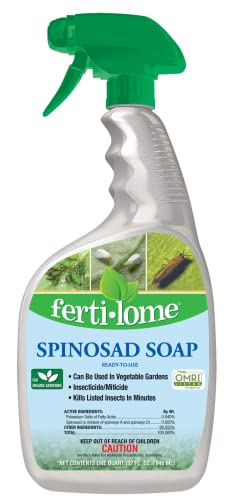
The contact-killer that wipes out leaf miners and bagworms in days.
When you need a heavy hitter that’s still OMRI Listed for organic gardening, this Spinosad + soap combination is a top contender. It controls a huge list of chewing insects — adelgids, armyworms, caterpillars, codling moth, earwigs, gypsy moth, and more — by hitting them right on contact.
Shoppers say it cleared bagworms from a tree in a couple of days and “did the trick” on columbine leaf miners. It’s designed for outdoor use on vegetables, trees, shrubs, flowers, fruits, and citrus, and the ready-to-use spray bottle makes application simple.
The honest caveat: one owner noted you need to alternate with an oil spray to prevent insect resistance, so this shouldn’t be your only tool forever. Also, you must remove damaged leaves first for the best results on miners.
Owner take: Effectiveness and quality are the twin pillars here, with buyers calling it a “Great Pro” for stubborn infestations.
Get this if: you want an organic-approved spray that crushes a wide range of chewing bugs.
Heads up if: you’re a strictly-no-chemicals gardener — while OMRI listed, Spinosad is still an insecticide.
6. BioAdvanced Tree & Shrub Insect Killer

The hose-end giant that defends tall trees from Japanese beetles and aphids.
For mature trees and shrubs, this 32 oz ready-to-spray formula is the most practical choice because it connects directly to your garden hose. It kills listed insects like aphids, Japanese beetles, caterpillars, and whiteflies on contact, and continues controlling them for up to 2 weeks.
Buyers report it cleared white flies from front bushes after two sprays and kept insects off apple trees all season. One owner’s dogwood tree went from dying leaves to “bright green and much larger with no sign of bugs” the year after using this.
The standout spec is the rainproof-in-1-hour claim, which means a sudden shower won’t wash away your work. It weighs 2.1 pounds, making it the heaviest of the spray bottles, but that heft comes with the hose-end convenience.
The word on the street: Owners consistently call it a “great product” for trees specifically, with the spray throw adequate for a 20-foot silver maple.
Best for: homeowners with established trees and tall shrubs that need thorough coverage.
Not ideal if: you have a small container garden — this is built for scale.
7. Botanical Tradesman Neem Oil Spray

The budget-friendly refill kit that turns 3.4 oz into 338 oz of spray.
If you already trust neem oil, this kit saves you money per spray. You get one 3.4 fl oz bottle of 100% cold-pressed neem oil concentrate plus a 16 oz trigger spray bottle. That small bottle dilutes into roughly 338 fl oz of spray—enough for up to 20 refills—so each application costs far less than a ready-to-use spray.
Owners mention it saved a rosemary bush from a mold or fungus infestation and helped keep beetles away when sprayed every couple of days. The citrus leaf miner crowd swears by it, though they warn you must reapply frequently.
The honest trade-off is the oil itself: it’s very thick and “not easily mixed with water,” so you’ll need to shake vigorously. It’s also a concentrate, so you have to do the dilution math yourself.
Why it earns its place: The sheer volume you get from one tiny bottle is the standout value, and the nontoxic-to-kids angle is a bonus.
Reach for this if: you want the lowest cost per spray and don’t mind mixing your own.
Pass if: you want a grab-and-go ready-to-use bottle — this requires effort.
8. BioAdvanced 3-in-1 Fruit, Citrus & Nut Tree Spray
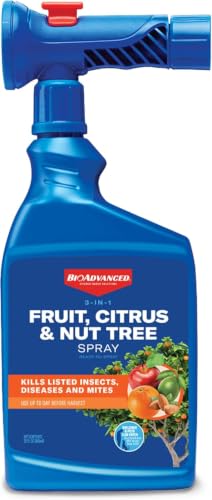
The three-way defender for fruit trees that you can use right up to harvest day.
This 32 oz ready-to-spray formula is the complete package for edible gardens: it kills listed insects (caterpillars, aphids, mites), controls listed diseases (black spot, powdery mildew, rust), and manages mites all in one application. The key spec is the ability to use it up to the day before harvest, a standout for fruit and vegetable growers.
Customers note it dramatically cut rust on apple trees and drove away wasps that were eating the fruit. Another noted their peach trees and blackberry plants stayed pest-free with applications every 3-4 weeks. The spray reaches up to 8 feet, making it viable for small to medium trees.
The honest catch: one owner “doesn’t know if it works yet” after applying, so results can take time. It also weighs 2.2 pounds, the heaviest in this roundup, but the hose-end design makes that weight manageable.
The consensus: Effectiveness and insect control are the top two things owners praise, with ease of use close behind.
Choose this if: you grow fruit, citrus, or nut trees and want one spray for bugs plus fungus.
Skip if: you only grow ornamentals — you’re paying for the edible-garden safety you won’t use.
9. Athena IPM Insecticide & Fungicide
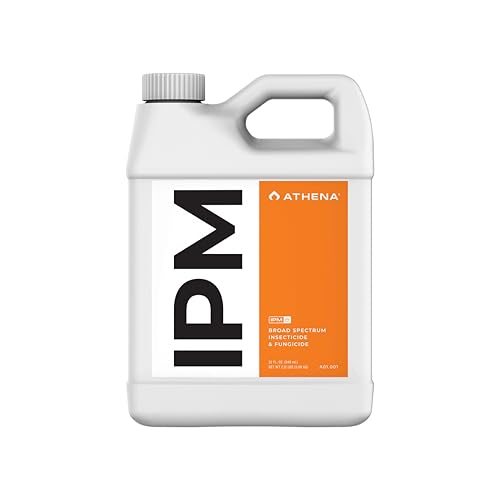
The grow-room favorite that zaps spider mites and powdery mildew on contact.
This 32 oz concentrate is the most premium pick here, and it earns it by covering both pests and fungus with natural oils. It kills spider mites, aphids, and thrips while treating powdery mildew, and it’s made with EPA 25(b) minimum risk ingredients — a designation that means it’s safe around pets, people, and children when used as directed.
Owners in the grow community call it “the best of the best” for battling mites and critters that come out of the grow medium. It’s equally at home in greenhouses, grow rooms, raised beds, and traditional gardens, and the pleasant scent is a recurring point of praise.
The premium price tag is the main hurdle, but as a concentrate it lasts longer than ready-to-use options. Just add water, shake, and spray with any pump sprayer — no special equipment needed.
The rave: Effectiveness is the top mention, and the “smells great” feedback is an unusual bonus for a pesticide.
Invest in this if: you run an indoor grow or hydroponic setup and need broad pest + mildew control.
Look elsewhere if: you’re on a tight budget or only need a simple caterpillar fix.
Understanding the Specs
Concentrate vs. Ready-to-Use
A concentrate (like the Monterey Bt or Athena IPM) requires you to mix it with water before spraying, which gives you more control over strength and a much lower cost per application. A ready-to-use or ready-to-spray bottle (like the Ortho or Bonide options) works straight out of the bottle or hooks to your hose, saving time but costing more per ounce.
OMRI Listed
This label means the Organic Materials Review Institute has verified the product complies with organic standards under the USDA’s National Organic Program. It’s your shortcut to knowing a spray is acceptable for organic gardening, though it doesn’t mean the product is “chemical-free” — it just means the ingredients meet organic rules.
FAQ
Will Bacillus thuringiensis (Bt) hurt my bees or earthworms?
How long does Ortho Rose and Flower Insect Killer protect my plants?
Can I use Earth’s Ally 3-in-1 spray on my vegetable garden?
What’s the difference between Spinosad and Bt?
How does horticultural oil kill insects?
Is the BioAdvanced 3-in-1 safe to use close to harvest?
How long does neem oil take to work?
What does “EPA 25(b) minimum risk ingredients” mean?
Can I use these sprays on indoor houseplants?
Why do I need to remove damaged leaves before spraying?
Final Thoughts: The Verdict
For most gardeners, the pesticide spray for plants winner is the Monterey Bt because it precisely targets the most destructive garden pests (caterpillars and worms) while leaving your bees and earthworms untouched. If you want a broad-spectrum, hose-end solution for a whole yard, grab the Bonide All Seasons Oil. And for edible gardens where you need insect, disease, and mite control up to the day before harvest, the BioAdvanced 3-in-1 Fruit Tree Spray is the one to reach for.
How We Picked
We do not accept paid placement. Every pick is matched to a real buyer and a real use-case; we do not hands-on test units.
Sources & Methodology
Specifications: manufacturer listings and product documentation. Review insights: verified customer reviews, as of August 2026. Pricing: not shown on this page (it changes often); check the current price via the retailer link.
As an Amazon Associate, Lawn Gear Lab earns from qualifying purchases. This does not affect which products we feature.