
Specs are compiled from manufacturer listings and verified buyer reviews and can change over time — please confirm the key details on the product page before buying.
If your African violet’s leaves look fine but it refuses to bloom, or the crown sits in soggy soil that never dries, the problem is almost always the growing medium. These plants need a loose, acidic, fast-draining mix that stays lightly moist — not the dense garden soil they often arrive in. This guide helps you choose between ready-to-use peat mixes and pure sphagnum for healthy, forgiving violet roots.
I’m Rikta — the founder and writer behind Lawn Gear Lab. This guide is built by comparing the manufacturers’ published specifications and the patterns across verified customer reviews, so you get each pick’s real strengths and trade-offs instead of marketing spin.
Comparing ready-to-use blends with pure sphagnum reveals how pH, drainage, and ingredient balance determine success. Find your best fit among these top-rated choices for peat moss for african violets.
Our Picks at a Glance

How To Choose The Best Peat Moss For African Violets
African violets are pickier about soil than almost any other houseplant. Their fine, delicate roots need air as much as water, and they hate sitting in heavy, soggy media. A proper peat-based mix stays light and fluffy after watering, never collapsing into mud.
Start with the right pH
Violets thrive in a slightly acidic environment. Sphagnum peat moss is naturally acidic, which is why it shows up in nearly every violet formula. A mix that includes garden lime balances that acidity to keep the pH in the range violets love without you having to test anything yourself.
Check the ingredient list for drainage
Peat alone holds too much water for a violet. Serious mixes pair it with perlite (the little white pumice bits) or vermiculite to create air pockets and let excess water escape. If you buy pure sphagnum, expect to blend in perlite yourself at about a 50/50 ratio for the texture violets need.
Decide: ready-to-use mix or DIY base
A complete mix means open the bag and repot — no measuring, no guesswork, and it usually comes already pH-balanced. Pure sphagnum gives you total control over the blend and costs less per quart if you have many plants, but it requires effort and extra ingredients to be violet-safe on its own.
Quick Comparison
| Model | Best For | Volume | Key Ingredient | Format | Amazon |
|---|---|---|---|---|---|
| Hoffman Organic African Violet Soil Mix★ Best Overall | Long-blooming, busy growers | 4 quarts (2-pack) | Sphagnum Peat Moss | Ready-to-use mix | Amazon |
| Espoma Organic Violet MixRevival Pick | Reviving neglected plants | 4 quarts | Sphagnum Peat Moss | Ready-to-use mix | Amazon |
| Perfect Plants African Violet SoilPine-Bark Blend | Small pots and quick repots | 2 quarts | Pine bark & peat | Ready-to-use mix | Amazon |
| Leaves and Soul Violet Mix | Root health and aeration | 2.2 quarts | Coco coir & peat | Ready-to-use mix | Amazon |
| Miracle-Gro African Violet Mix | Large collections, single bags | 8 quarts | Peat-based | Ready-to-use mix | Amazon |
| Espoma Organic Peat Moss | Custom-blend DIYers | 8 quarts | 100% Sphagnum Peat Moss | Pure peat | Amazon |
| Hoffman Canadian Sphagnum Peat Moss | Bulk mixed-soil projects | 18 quarts | 100% Canadian Sphagnum | Pure peat | Amazon |
| Miracle-Gro Violet Mix (2-Pack) | Multiple plants, stockpiling | 8 quarts (2-pack) | Peat-based | Ready-to-use mix | Amazon |
In‑Depth Reviews
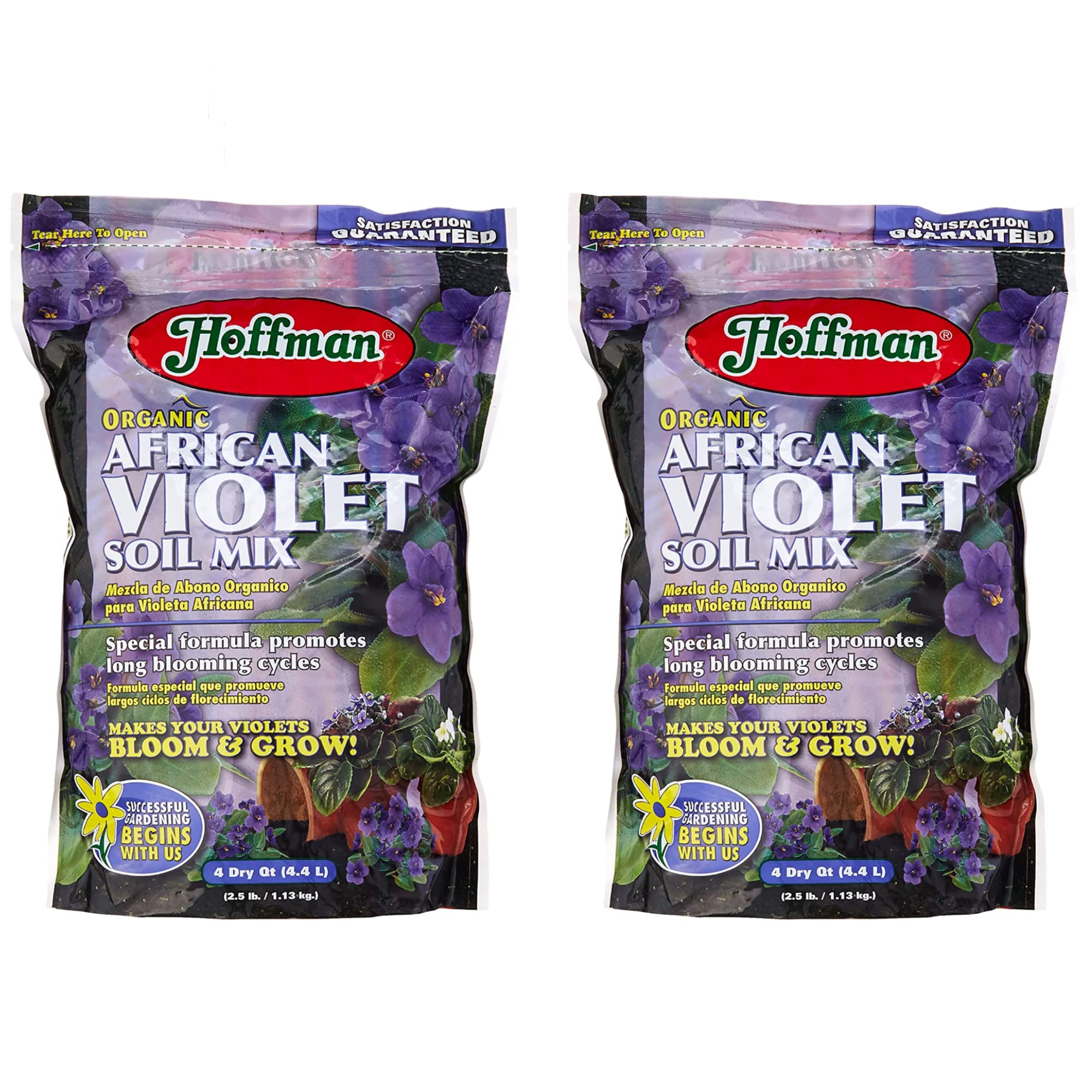
1. Hoffman Organic African Violet Soil Mix
Our pick — over 4.5★ from 900+ verified ratings; the strongest balance of quality and price.
The crowd favorite that keeps a 23-year-old violet blooming and throwing out offsets.
Quality is the standout feature, praised by owners more than any other aspect. This is the bag that delivers two 4-quart bags per order, giving you 297.84 ounces of mix total, which is more than 2.3 times the volume of the single 128-ounce Espoma bag.
You get a plant that keeps blooming for decades, not just a season. One reviewer reports their 23-year-old African violet “flowers repeatedly, produced 30+ offsets” with this mix. The formula uses Sphagnum Peat Moss and Vermiculite (a mineral that holds air and water) to keep drainage and aeration right for violets, and it arrives moist, ready to use with no measuring. It also mixes cleanly with perlite for self-watering pots.
Lightweight and fluffy in the bag, it also absorbs and distributes water quickly, which is exactly what you want if you have a tendency to forget a weekly watering. The honest trade-off is that moisture retention divides opinion — it is the most-discussed negative aspect, so some growers find they need to water a bit more often than they expected, especially in dry rooms.
What wins people over
- Massive 2-pack volume saves repeat orders
- Moist, fluffy texture that mixes easily
- Proven long-term bloom performance
What to watch
- Moisture retention splits opinion among owners
- May need extra perlite for self-watering setups
The long-haul pick: buy this if you want a proven mix for established plants and propagation projects that keeps paying off for years.
Think twice if: you prefer a drier, more perlite-heavy blend straight from the bag — you will likely add your own.
2. Espoma Organic African Violet Mix
The bag that brought a 20-year-old neglected violet back to life.
Espoma’s claim to fame here is revival. Soil quality and plant health lead praise, with a recurring story of a neglected veteran violet reviving after repotting. Buyers report: “A couple years ago, my 20+ year old African Violet was pretty sad because I’d neglected to re-pot it or feed it on a regular basis.” This mix is the reason that plant bounced back.
The recipe is a rich blend of sphagnum peat moss, humus, perlite, and yucca extract, all organic with no synthetic plant foods. The yucca extract is a natural wetting agent that helps the peat re-hydrate evenly, which matters because dry peat can be stubborn about absorbing water. It is made in the USA by a company that has been in natural organics since 1929.
The recurring gripe is value — the bag is a 4-quart, 128-ounce unit, and some owners feel the price is steep for the size. There are also scattered reports of insect infestation in a few bags, so it is worth inspecting the mix before you pot. As a base that you can adjust to your varieties’ needs, it is a genuinely strong start.
Rescue artist: this is the mix to reach for when a beloved old plant is fading and needs a fresh, organic start with gentle, natural ingredients.
Size reality check: at 4 quarts it is on the smaller side for the price, so it suits single-plant rescues more than big repotting sessions.
Grab it for: reviving struggling violets and anyone who wants an organic, no-synthetic blend from a trusted American brand.
Look elsewhere if: you need bulk volume for a large collection — the per-quart cost adds up.
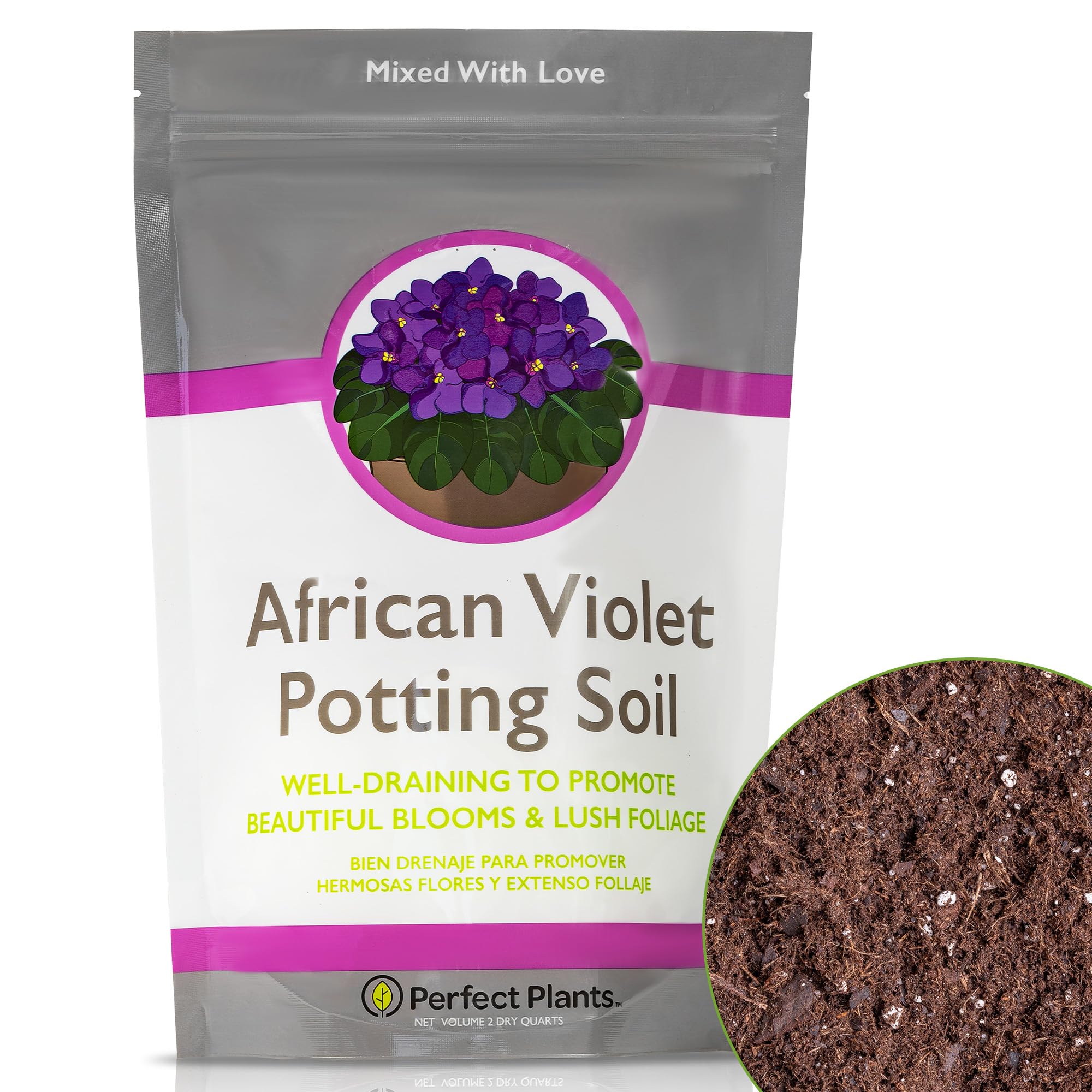
3. Perfect Plants African Violet Potting Soil
A light, fast-draining rescue blend that brought dying plants back from the brink.
What makes this mix different is the pine bark. The formula combines pine bark compost, perlite, peat moss, and garden lime for a slightly acidic blend that drains fast. This is the bag you reach for when a violet has been overwatered and the roots are struggling — the chunky bark creates air pockets that heavy soil lacks, and the garden lime keeps the pH steady.
Owners mention real turnarounds on nearly dead plants. One owner who lost plants to a cheaper brand switched to this and watched the survivors recover. Another repotted a dying violet and says the nutrients made a huge difference, the plant “so alive and healthy now.” The light, well-draining texture suits small decorative pots, and quality plus soil content are the two most-praised points.
The honest note is that this is a 2-quart bag — exactly half the volume of the 4-quart Espoma — so it suits a single repotting or a small collection, not a big project. It is also a very basic mix; one practical reviewer called it “not anything special that would distinguish it” from other brands, just good, light, well-draining soil that gets the job done.
Why it works
- Pine bark chunks boost aeration for troubled roots
- Slightly acidic, pH-balanced with garden lime
- Fast drainage ideal for small decorative pots
Keep in mind
- Half the volume of the Espoma bag at 2 quarts
- Very basic, no standout extras
Best suited to: single-plant rescues and anyone whose violets suffered from soggy, compacted soil.
Not ideal if: you are repotting a large collection and need volume — you would buy several bags.
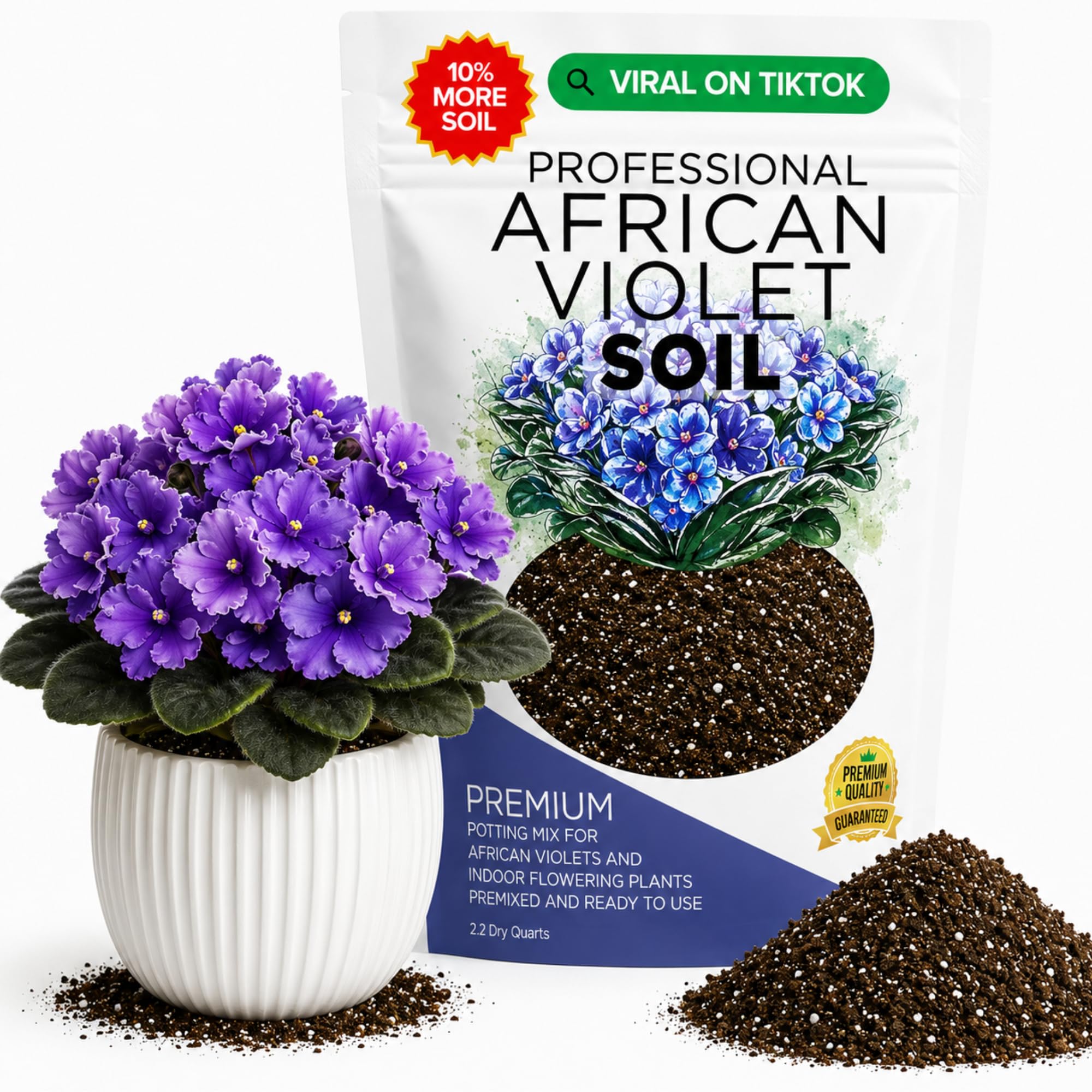
4. Leaves and Soul African Violet Soil Mix
Aeration-first formula that keeps roots supplied with oxygen and prevents overwatering rot.
Leaves and Soul builds its mix around coco coir and peat moss, with perlite and dolomite for strong roots. The coco coir is the standout here — it holds moisture more evenly than peat alone while still letting excess water drain, and it does not compact over time the way soil can. The blend is designed around optimum drainage and root health, which is the real job of any violet mix.
Quality is the top praise, with owners reporting thriving plants and constant blooms. One first-time violet owner found this soil had “everything included” their plant needed, adding extra perlite only as a personal preference for even more aeration. The bag comes in a durable, resealable package that keeps the mix fresh between uses, and it is proudly made in the USA.
At 2.2 quarts, this is a small bag, and the value math is the sticking point — some owners find it pricey for the size, though others say it feels like good value for the quality. It is a great choice for a single repotting or a few plants, especially if you like the moisture-handling of coco coir.
Airflow specialist: this is the pick for growers who tend to overwater and want a medium that forgives that habit while keeping roots oxygenated.
Portion control: the 2.2-quart size and premium positioning mean it fits small jobs — budget for multiple bags for a big collection.
Reach for this if: you want coco coir’s moisture balance and a resealable bag that stores cleanly, made in the USA.
skip it if: you need the lowest cost per quart for a large number of plants.
5. Miracle-Gro African Violet Potting Mix

A generous 8-quart bag that holds moisture well for once-a-week watering schedules.
Miracle-Gro’s single 8-quart bag is the volume play for growers who are tired of tiny 2-quart packages. That is double the volume of the 4-quart Espoma and four times the 2-quart Perfect Plants bag, which makes it the practical choice for anyone with several violets or a habit of propagating. The built-in plant food with an NPK of 0.21-0.11-0.16 means you are not starting from zero nutrition.
Quality leads owner praise, with plant growth as the second most-cited benefit. Customers note violets that are “thriving, happy & healthy” on a once-a-week watering schedule, and the mix keeps a good moisture balance without compacting. It was even recommended on a specialist site for self-watering pots, which is a strong signal for wick-watering setups. One experienced grower has repotted every 6-12 months with never a burn issue and consistent blooms.
This is a straightforward, well-loved mix with no real downside beyond the fact that it is a classic peat-based formula rather than anything exotic. If you want the convenience of an 8-quart bag with proven performance and room to grow your collection, this is the one.
The strengths
- 8 quarts — the biggest single-bag volume here
- Moisture retention suits weekly watering
- Built-in feed supports consistent blooms
The trade-off
- Classic formula, nothing exotic in the blend
Choose it for: larger collections and anyone who wants one bag that covers multiple repots without reordering.
Pass if: you prefer organic ingredients — this is a standard fertilized mix, not organic.
6. Espoma Organic Peat Moss

Pure, all-natural sphagnum for growers who want total control over their own blend.
This is not a ready-to-use violet mix — it is 100% peat moss with no additives, approved for organic gardening. That makes it the DIY foundation for growers who like to mix their own media. The classic recipe is a 50/50 blend of this peat with perlite, which buyers confirm works wonders for carnivorous plants like Venus fly traps and gives violets the airy, acidic base they crave.
Quality and plant health are the two most-praised aspects, and drainage gets strong positive mention too — owners note it helps prevent overwatering, which is the single biggest killer of African violets. The soft texture is appreciated, and it is a registered Organic Input Material, meaning it meets certified organic production requirements. Beyond violets, it earns praise for growing wheat grass for cats and loosening heavy potting soils.
The recurring complaints are the flimsy bag — the zipper broke within minutes for some — and mixed opinions on consistency, with the occasional twig showing up. The value debate is real: some find it pricey for what is essentially raw peat, while others say it is worth it. If you enjoy mixing your own soil, this is a high-quality base; if you want open-and-pot convenience, a complete mix serves you better.
Why DIYers love it
- 100% pure, organic-approved sphagnum
- Blends perfectly with perlite at 50/50
- Soft texture and strong drainage benefits
Watch out
- Flimsy packaging with weak zipper
- Occasional twigs in the mix
- Not a complete violet mix on its own
For the mix-it-yourself crowd: this is a clean, organic base that gives you full control over texture and moisture.
Not for you if: you want a bag that is ready to pot straight away — you will need perlite and patience.
7. Hoffman Canadian Sphagnum Peat Moss

A coarse 18-quart bag of premium Canadian sphagnum for serious mixed-soil projects.
If you are blending soil for a whole windowsill of violets plus other houseplants, this 18-quart bag from Hoffman is the bulk option that beats buying small bags repeatedly. It is a premium New Brunswick quality grade of coarse Canadian sphagnum peat moss, and it is the biggest volume in this lineup — more than double the 8-quart Espoma peat bag.
After quality, moisture retention is the next most-praised feature, and owners confirm it pairs well with vermiculite and coco coir (a coconut-husk fiber that holds water). It is clean of debris, which several buyers appreciated, and it is fertile — one seed-starter adds dried creek mud for outstanding results, another found it perfect for new grass seed. The moisture control also works well when spread over fresh seeding.
The coarse texture is the defining trait here. That makes it excellent for mixing your own soilless potting blend with perlite and vermiculite, but it is not a finished violet mix. You will need to do the blending yourself, and you should expect to add lime to balance the natural acidity for violets. If you want pure volume and quality raw material, this is the value king of the peat bags.
Project scale: this is the pick for multi-plant repotting days and anyone who mixes soil in bulk rather than buying one bag at a time.
DIY commitment: expect to blend in perlite, vermiculite, and lime yourself — this is raw material, not a finished product.
Buy it if: you have many plants and want the best cost per quart of pure, clean, coarse sphagnum.
pass on it if: you would rather open a bag and pot immediately without any mixing.
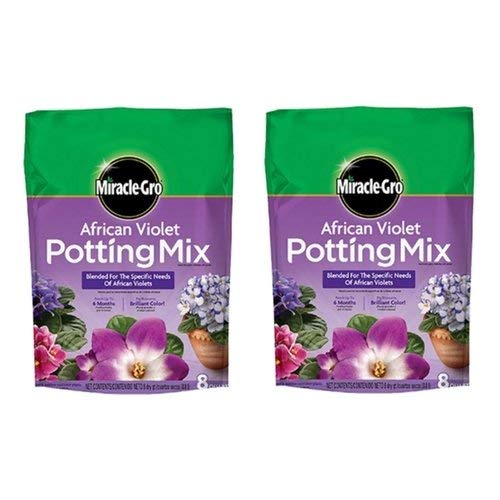
8. Miracle-Gro African Violet Potting Mix (2-Pack)
Two 8-quart bags of the classic feed-enriched mix for growers who never want to run out.
This is the stockpiler’s version of the Miracle-Gro mix — two 8-quart bags per order, totaling 256 ounces of potting mix. That means enough for multiple plants or a full repotting session without a second order. Note the label: it ships only to select Northeastern and Midwestern states, so availability is regional, but if you can get it, the two-bag format is a solid value for bulk buyers.
The mix is enriched with plant food and formulated for African violets and other flowering houseplants. Its lightweight, well-draining texture prevents soil compaction while holding the right moisture. Quality and plant health top owner praise, with violets blooming “almost all the time” and growing “fast and blooming” after repotting. The absence of insects in the mix was noted by one pleased grower who made this their go-to soil.
The one catch is the regional shipping restriction, which makes this a non-option for buyers outside the listed states. For everyone else, the two-bag value plus the proven Miracle-Gro performance makes it a strong, low-fuss choice for keeping a healthy violet collection going year-round.
Why it stands out
- Two full 8-quart bags for extended use
- Enriched with plant food for blooms
- Lightweight, non-compacting texture
The catch
- Only ships to select Northeastern and Midwestern states
Grab it if: you live in the shipping zone and want two bags of proven, feed-enriched mix at once.
Look elsewhere if: you are outside the regional delivery area or prefer an organic formula.
Understanding the Specs
Volume in Quarts
Bag size matters more here than in most categories because violets need repotting every 6-12 months and a single mature plant uses a surprising amount of mix. A 2-quart bag fits one or two repots, while an 8-quart or 18-quart bag covers a whole collection. Buying bigger reduces the per-quart cost, but only if you will actually use it before it dries out.
Ready-to-Use Mix vs. Pure Peat
A complete mix already balances pH, drainage, and nutrition, so you can pot straight from the bag. Pure sphagnum peat is a raw ingredient that needs perlite for aeration and lime for pH before it is violet-safe. Ready mixes cost more per quart but save effort and guesswork — pure peat is for growers who want control over their recipe.
FAQ
Can I use pure peat moss alone for African violets?
How often should I repot my African violet into fresh mix?
Why does my African violet soil need to be slightly acidic?
What is the difference between a complete mix and pure sphagnum?
How do I fix soil that holds too much water for my violet?
Is organic peat moss better for African violets?
Why did my African violet stop blooming after repotting?
Can I mix peat moss with perlite for a cheaper violet medium?
What causes fungus gnats in violet soil?
How much soil does a single African violet need?
Final Thoughts: The Verdict
For most growers, the peat moss for african violets winner is the Hoffman Organic African Violet Soil Mix because it pairs a proven, quality-first formula with a 2-pack volume that keeps a collection going for a long time. If you want an organic, revival-focused blend from a trusted American brand, grab the Espoma Organic Violet Mix. And for budget-minded DIYers who mix their own media and want the lowest cost per quart, the Hoffman Canadian Sphagnum Peat Moss in its 18-quart bag is the one to reach for.
How We Picked
We do not accept paid placement. Every pick is matched to a real buyer and a real use-case; we do not hands-on test units.
Sources & Methodology
Specifications: manufacturer listings and product documentation. Review insights: verified customer reviews, as of August 2026. Pricing: not shown on this page (it changes often); check the current price via the retailer link.
As an Amazon Associate, Lawn Gear Lab earns from qualifying purchases. This does not affect which products we feature.