
Specs are compiled from manufacturer listings and verified buyer reviews and can change over time — please confirm the key details on the product page before buying.
Peas climb vigorously, but a weak trellis can collapse under mature vine weight. A sturdy trellis must withstand wind and rain while offering tendrils a secure grip. This guide compares metal frames, bamboo ladders, and netting rolls to match your garden’s needs.
I’m Rikta — the founder and writer behind Lawn Gear Lab. This guide is built by comparing the manufacturers’ published specifications and the patterns across verified customer reviews, so you get each pick’s real strengths and trade-offs instead of marketing spin.
Keeping pea vines off the ground prevents rot and makes harvesting easier. The right pea plant trellis does that, whether you have a few pots on a balcony or a long raised bed. Your choice hinges on available space, soil type, and pea variety height.
Our Picks at a Glance


How To Choose The Best Pea Plant Trellis
Pea tendrils wrap around thin vertical lines, so the trellis design matters more than it does for bushy tomatoes. Squash trellises often have gaps too wide for delicate pea tendrils to bridge. Consider your pea’s mature height and if you need a permanent or portable trellis.
Match the height to your pea variety
Short bush peas stay under two feet, while climbing and sugar snap varieties can push well beyond four feet. A 32-inch metal panel suits compact pots, but a 53-inch A-frame gives tall vines real room to stretch. Measure your row length beforehand to avoid mid-season extensions.
Pick a material that survives your weather
Iron frames with a rust-resistant coating stand up to full sun and rain for years. Bamboo blends into the garden but needs a sheltered spot to last several seasons. Nylon and polyester netting resist UV rays and weathering, and a heavy-duty mesh shrugs off strong wind without snapping.
Decide between rigid frames and flexible netting
A freestanding A-frame or ladder needs no fence and moves easily between beds. Netting rolls are the budget-friendly pick for long rows, since you cut them to size and stretch them between posts or along a fence. The trade-off is setup: netting can tangle while unrolling, while a frame is ready the moment you push it into the soil.
Quick Comparison
| Model | Best For | Width | Height | Material | Amazon |
|---|---|---|---|---|---|
| ARIFARO 4 Pack★ Best Overall | Pots and small beds | 13.4″ | 32″ | Iron | Amazon |
| HHTHH NettingBudget Champion | Budget long rows | 5 ft | 100 ft | Polyethylene | Amazon |
| LifeisLuck A-FrameTall Climber Pick | Tall climbing peas | 45″ | 53″ | Metal | Amazon |
| Avalution Bamboo | Indoor pots | 16″ | 16″ | Bamboo | Amazon |
| Mininfa Ladder | Container gardens | 12″ | 24″ | Bamboo | Amazon |
| Dalen Gardeneer | Heavy vine crops | 5 ft | 60 ft | Nylon | Amazon |
| Tenax Hortonova | Lightweight vines | 48″ | 100 ft | Plastic | Amazon |
| Toolazy Netting | Large greenhouses | 5 ft | 350 ft | Nylon | Amazon |
| AlpineReach Netting | High-yield setups | 5 ft | 350 ft | Polyester | Amazon |
In‑Depth Reviews
1. ARIFARO 4 Pack 32″ Metal Garden Trellis
Our pick — over 4.5★ from 400+ verified ratings; the strongest balance of quality and price.
Four sturdy iron panels that go straight into the soil with zero assembly.
This four-pack is the pick for anyone who wants support in minutes, not an afternoon of building. Each panel measures 13.4″ wide by 32″ tall, a mid-size that suits pots, planters, balconies, and raised beds without towering over small spaces. The iron build carries a rust-resistant black coating, so it can live outdoors through dew and drizzle without spotting.
The house-shaped design earns the “support plus décor” label — it adds a tidy, structured look while vines weave upward. Owners consistently call it sturdy, and the top praise centers on that solid feel; 38 buyers highlight sturdiness, with 14 more noting the size is right for garden boxes. As buyers report: “Sturdy, nothing to put together.” You get four in the box, so you can line them across one bed or spread them across multiple containers.
Value is where opinions split. A few owners feel the quality-to-price ratio is off, and some units arrive with a spot where the metal was not fully connected. Those handful of cases got a quick super-glue fix and kept working, so treat it as a rare blemish rather than a pattern.
What makes it the top pick
- Four panels per box stretch your budget across several pots
- Rust-resistant black coating survives outdoor dampness
- No tools needed — just push the legs into the soil
The honest trade-offs
- Some owners find it pricey for the build quality
- An occasional unit has a metal joint that is not fully connected
- 32-inch height suits bush peas, not tall climbers
Reach for this if: you want a ready-to-use metal frame for containers and small raised beds.
Look elsewhere if: you are growing tall vining peas that need a 5-foot climb.
2. Green Garden Trellis Netting 5×100 ft
One 100-foot roll that you cut to fit any row, bed, or fence line.
This netting is the budget play for gardeners covering long stretches. The roll measures 100 feet long by 5 feet wide, with a 5.9 x 5.9 inch mesh opening — a grid that pea tendrils grab easily. Since you can cut it to any size, one roll outfits a whole plot or just a single raised bed, and the polyethylene build shrugs off heat and cold for years of reuse.
Wind is where this netting proves itself. Owners mention it “held up my fully grown zinnia crop through a bad windstorm,” and durability is the second-most-praised trait after functionality, with 25 owners calling it out. The green color disappears against foliage, so your support structure stays visually quiet while vines do the talking. Functionality earns the top spot with 37 positive mentions, and owners use it for cucumbers, dahlias, and vine vegetables alike.
The recurring gripe is tangling — 22 owners mention the net catches on itself while unrolling. The fix is simple: take your time and unwind rather than pull. Material quality draws mixed notes, with some saying it beats white fiber netting and others wishing it felt sturdier.
Cut-and-stretch verdict: The best value for long rows where you control the frame, as long as you patience-unroll the mesh instead of yanking it.
3. Cucumber Trellis for Raised Beds, 45 x 53 Inch A-Frame
An adjustable A-frame that towers over the competition for true climbing varieties.
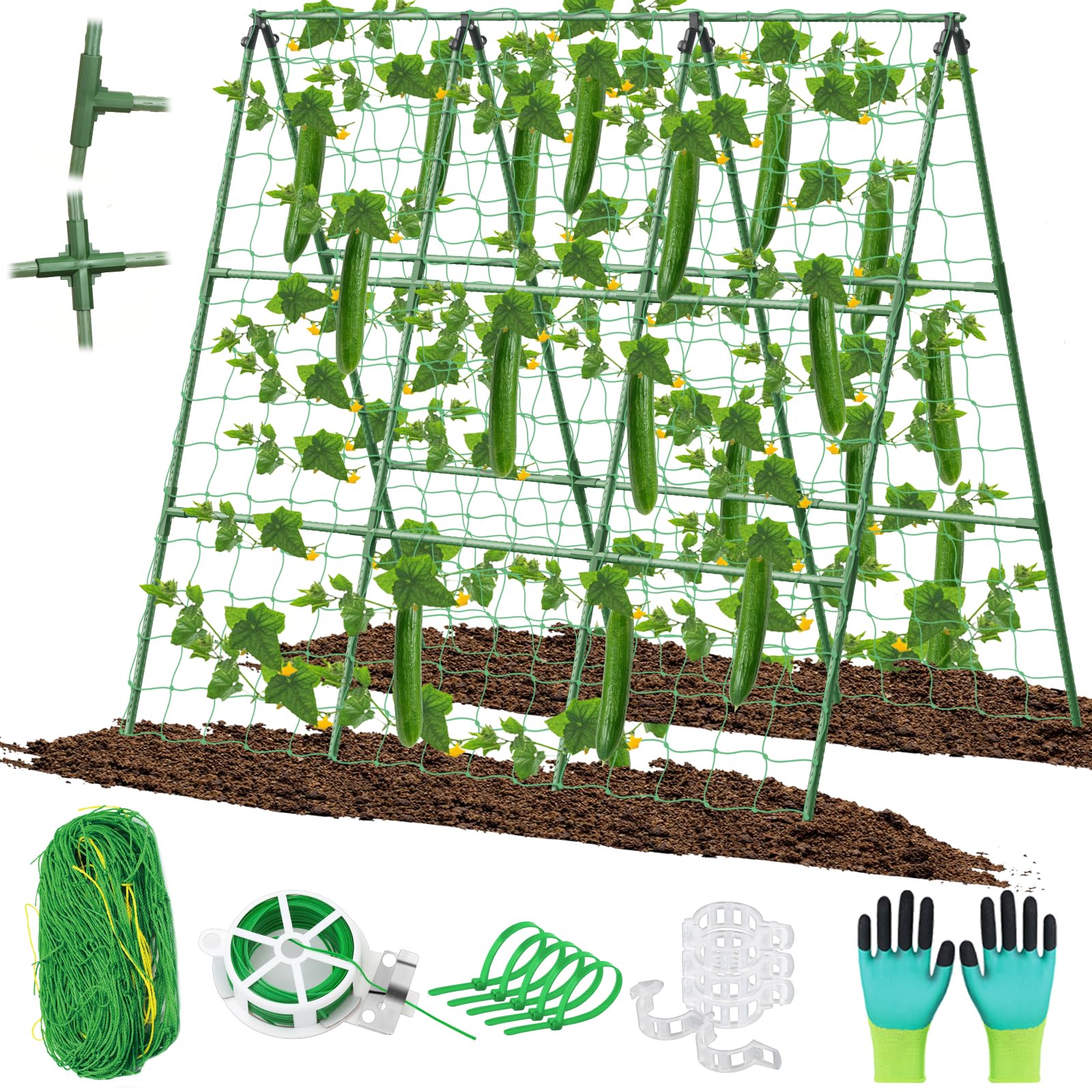
This is the frame for peas that refuse to stay small. It stands 53 inches high with a 45-inch width, giving you a 66% height advantage over the ARIFARO panels above — real headroom for sugar snap and tall climbing peas. The kit builds from 37 straight stakes at 15.74 inches, two longer stakes at 18.1 inches, and a set of Tee and Cross connectors that let you reshape the frame to your bed.
Assembly is the crowd favorite — 106 owners praise how easy it goes together, with clear instructions and 30 cable zip ties plus a climbing net included in the box. It is strong enough for cucumbers to hang off, and one grower reports pumpkins “thriving on it so far,” calling the frame very stable. A buyer even runs large Niagara grapes across it, which tells you the 1.8 kg metal build takes real weight. The included net offers a 1.8 x 2.7 meter climbing surface you can trim to size.
Sturdiness and the color draw the honest caveats. The poles are fiberglass, and buyers warn that the strands can irritate skin — wear the gloves included, or bring thicker ones. A few owners find the green color garish, and one had a top bar arrive cut into pieces that needed a bamboo-and-tape fix. Durability and fit both sit mixed, so check your pole assortment early.
Where it wins
- 53-inch height supports tall pea and bean varieties
- Easy assembly praised by over 100 owners
- Climbing net and zip ties included in the box
Know before you buy
- Fiberglass poles can irritate skin — wear the gloves
- Some owners find the green color ugly
- An occasional pole set arrives with wrong sizing
Best if: you grow climbing peas or beans in a raised bed and want a tall, reconfigurable frame.
Think twice if: you dislike the bright green finish or prefer a frame with zero assembly.
4. Avalution 10 Pack Bamboo Trellis 16″

Ten natural bamboo fans that turn patio pots into a climbing garden.
This fan-shaped trellis gives quick, natural support for container peas. Each piece is 16 inches tall and 16 inches wide, built from flexible bamboo that hides in your garden rather than looking like hardware. Set it in a pot and let peas, ivy, or morning glory climb the ladder — no tools, no fasteners, no fuss.
Functionality is what wins people over, with 41 owners praising how well these work for peas, mini cucumbers, philodendrons, and young tomatoes. The quality follows at 17 mentions, and the 10-pack price means you can dot trellises across a whole balcony or a row of patio pots without rationing. Owners note the natural look is a big part of the appeal, with 9 calling out its appearance.
Size and sturdiness are the mixed signals here. At 16 inches, these are shorter than many expect — tomatoes and tall plants outgrow them quickly, and some owners say the smaller bamboo pieces break when pushed into firm soil. They work best for lightweight vines, and two used together give heavier plants more backbone.
Perfect for pots only: A charming, low-cost support for short peas and houseplants, but not a frame for heavy or tall crops.
5. Mininfa Natural Bamboo Trellis 24 Inches, 3 Pack

Hand-selected bamboo ladders that give container peas a sturdy, natural climb.
This ladder-style trellis splits the difference between the tiny 16-inch fans and the tall metal frames. Each piece reaches 24 inches tall, with a 12-inch top width that tapers to 4.3 inches at the base — a shape that steadies itself inside a pot while giving climbing plants a broad surface. The bamboo comes hand-selected from a subtropical monsoon climate region, chosen for strength and flexibility across several seasons.
Size is the trait owners praise most, with 38 calling out the 24-inch height as just right for small to medium plants. It shines in container gardens, and one happy owner calls it perfect for a collection of vining Hoya plants, noting the natural color adds a pretty aesthetic. The three-pack gives you flexibility to spread them across multiple pots or cluster them for a fuller screen.
Sturdiness splits opinion at 30 mentions — some find it firm and wind-resistant, while others describe the build as flimsy. Value also divides buyers, with 15 mixed takes on whether the price matches what arrives. For sweet peas and bush varieties in sheltered spots, these hold up well; for exposed rows or heavy vines, the metal frames above are the safer bet.
What owners love
- 24-inch height fits small and medium container plants
- Hand-selected bamboo with a natural, attractive look
- Three per pack for flexible placement
The catch
- Sturdiness earns mixed reviews — some find it flimsy
- Opinions split on whether the price matches the build
- Not built for tall climbing peas or heavy vines
Choose this for: small container gardens where natural looks and a 2-foot climb are enough.
Pass on it if: your peas grow past 2 feet or your pots sit in exposed, windy spots.
6. Dalen Gardeneer Trellis Netting 5ft x 60ft
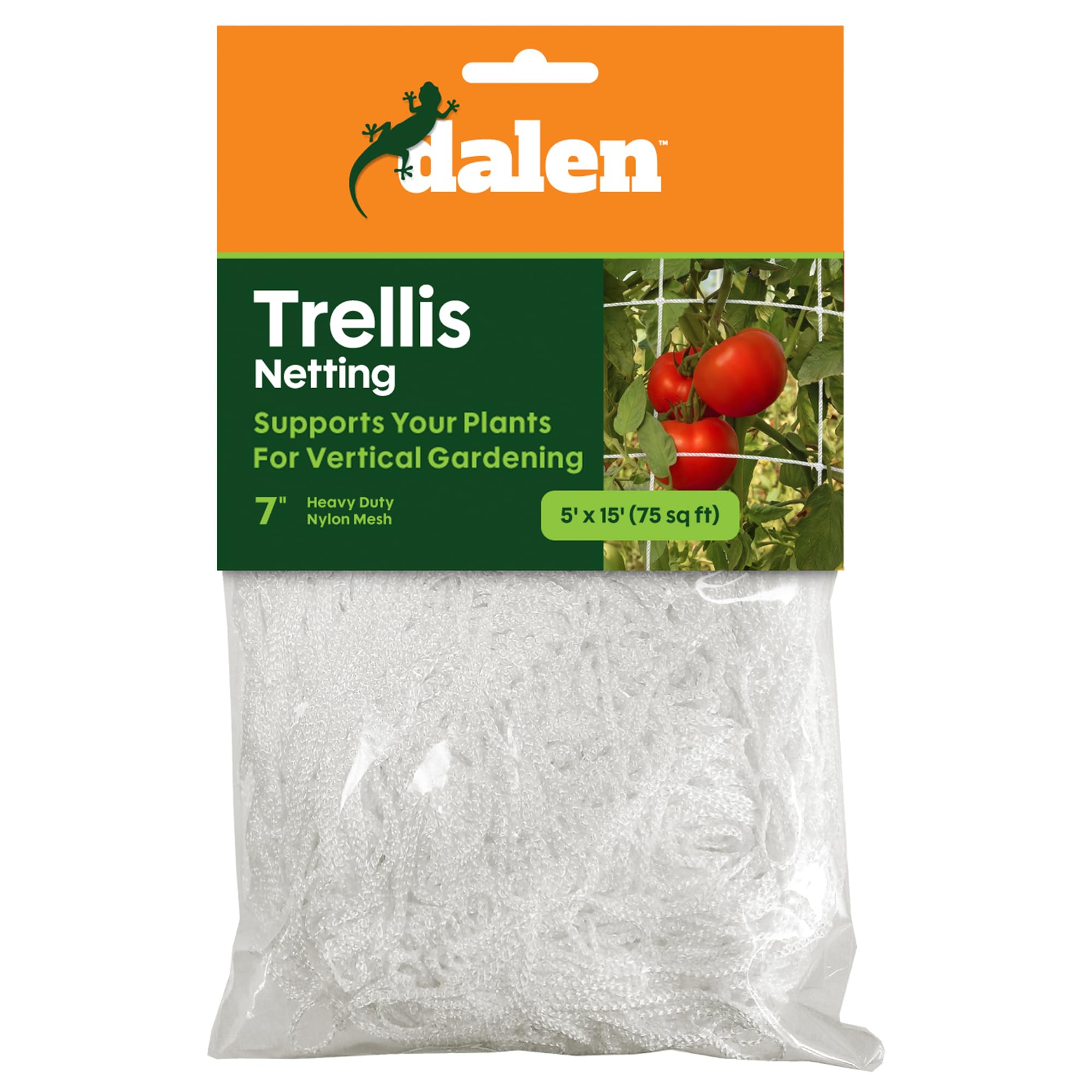
Nylon mesh with 7-inch openings that hold heavy vines and still let you reach through.
Dalen’s netting is the durability benchmark of this list. The nylon mesh spans 5 feet by 60 feet, and the generous 7-inch reach-through openings make harvesting peas and beans a one-handed job — no untangling vines to get at the pods. Owners call it strong enough to suspend large squash, with the weight capacity earning a top mark among the praised traits.
This is the netting with serious pedigree on the review floor. Durability leads the praise with 192 mentions, followed by functionality at 140 and ease of use at 90 — a rare triple-threat across the three traits that matter most. It lasts year after year, works for snow pea vines, green beans, zucchini, and cantaloupe, and one owner calls it a reliable, affordable alternative to cattle panels. A 10-plus-year grower reports it survives tornado-alley wind without bending stems.
The honest notes: some customers note the roll measures closer to 4 x 25 feet than the advertised 5 x 60 feet, which costs it a star. Size and tangling both sit mixed, though most find the mesh easy to unravel with U-posts. Reusable if you store it properly between seasons.
The long-haul netting: Built to hold through windstorms and heavy crops, with the reach-through mesh making harvest genuinely easier — just verify the delivered dimensions.
7. Tenax Hortonova Trellis Net 48″ x 100′

The “invisible” trellis that disappears behind vines while holding them steady.
Tenax built its name on this Hortonova net, a 48-inch by 100-foot roll that owners call the reference point for lightweight vine support. It is ideal for clematis, morning glories, and peas, and reviewers point out it supports heavier vines too when secured properly. The white plastic mesh is UV-resistant, so it stays strong through a full season of sun without turning brittle.
Sturdiness leads the praise at 46 mentions, and ease of use follows at 17. The “invisible” quality is the defining trait — the fine mesh nearly vanishes behind foliage, which is exactly what you want if you prize the look of your peas over the structure holding them. One skeptical owner admits it looked so flimsy they doubted it, then found it far cheaper than metal fence trellis and easy to install solo. Lay it in the sun to relax, cut with scissors, and secure at the crosshair unions.
Durability and value both land mixed. Some owners find the plastic flimsy, and a few question the price per roll. The white color shows until plants fill in, so it suits gardeners who train peas densely rather than those with sparse rows.
Why it stands apart
- Nearly invisible against mature vines
- UV-resistant plastic holds up in full sun
- One person can install the full roll alone
Fair warning
- Some owners describe the plastic as flimsy
- White color is visible until plants fill in
- Value for money draws mixed reviews
Ideal for: gardeners who want a near-invisible, UV-stable net for light pea and vine crops.
skip it if: you need a mesh that holds heavy fruit without extra bracing.
8. Toolazy Trellis Netting 5 x 350 ft

A monster 350-foot roll with 6-inch mesh for gardeners covering serious ground.
This is the netting for big projects. The roll measures 5 feet by 350 feet with a 6-inch square mesh, enough to outfit a greenhouse, multiple raised beds, or a long fence line — one roll covers several growing seasons. The high-strength nylon fibers resist UV rays, chemicals, and weathering, so it keeps its integrity through wind, rain, and sun without fraying.
Functionality leads the praise at 31 mentions, and durability follows at 23. Owners rave about how it performs in greenhouses, with one calling it “a fantastic addition to our greenhouse setup” for supporting climbing plants. It holds up with heavy cucumbers, and another buyer uses it to keep critters away from plants entirely. The 6-inch mesh boosts yield by lifting plants off the ground for better air circulation and sunlight.
The netting comes pre-wound on a 6.9 x 9.8 inch cardboard reel for tangle-free unrolling, though stability earns mixed marks — some owners note knots slip slightly in 30 mph winds. The soft mesh works with zip ties, garden clips, or twine, so mounting is flexible. A few find it pricey for netting, but the sheer coverage per roll is hard to match.
The big-project workhorse: This reel gives you 350 feet of trellis netting, enough for greenhouses and long rows. The tangle-free reel and multi-season nylon strength mean you set it up once and reuse it for years.
9. AlpineReach Trellis Netting 5 x 350 ft

Premium polyester mesh that keeps plants off the ground for cleaner, easier harvests.
AlpineReach brings a 5 x 350 foot roll of polyester netting with a 6-inch mesh, built for high-yield setups across A-frames, SCROG, and vertical gardens. The polyester fibers resist sun damage, keeping the net supple season after season. It supports tomatoes, beans, peas, cucumbers, zucchinis, eggplants, and even blueberries and herbs.
Quality is the standout trait, with 26 owners praising the build, and functionality follows at 18. The netting keeps cucumber plants off the ground effectively, and one buyer notes it is “not as distracting as tomato cages” — a win for gardeners who want the garden to look like a garden. Another owner uses it every year to support home-grown crops, and a greenhouse grower calls it “exactly what I needed” for plants to climb. One cucumber grower reports it is strong enough for the job, period.
The honest trade-offs: some owners say it needs rigid support at the top, and several report a tangled mess on the first unroll. One buyer spent longer untangling than installing, securing it with tent stakes and twine. Stability and value both land mixed, so expect to add framing and patience on setup day.
What stands out
- Quality build praised by 26 owners
- 6-inch mesh suits a wide range of climbing crops
- Less visually distracting than rigid cages
Plan around these
- Needs rigid top support to hold heavy vines
- Tangling on first unroll is a common complaint
- Value and stability both draw mixed notes
Go with this if: you run a high-yield vertical garden and want a quality polyester mesh with huge coverage.
Reconsider if: you want a no-fuss setup — this one rewards preparation and sturdy framing.
Understanding the Specs
Mesh opening size
The gap between netting strands decides how easily pea tendrils grip and how simple harvesting becomes. A 6-inch square mesh gives tendrils plenty to grab while leaving room for your hand to reach pods. A 7-inch opening like the Dalen net makes harvesting even easier, but a wider gap means you need to train vines more deliberately early on.
Height and footprint
The height of a trellis must match your pea variety. A 32-inch panel suits bush peas and pots, while a 53-inch A-frame gives climbing varieties real room. The footprint matters too — a 13.4-inch-wide panel fits a single container, but a 45-inch-wide frame spans a raised bed. Match the width to your row length so every vine gets support.
FAQ
Will a 32-inch trellis support tall climbing peas?
What mesh size is best for pea tendrils to grab?
Can one netting roll cover a whole raised bed?
How do I keep netting from tangling while I unroll it?
Is bamboo or metal better for pea trellises outdoors?
How much weight can trellis netting hold?
Can I use a pea trellis for other vegetables?
Do I need tools to set up a metal trellis?
Final Thoughts: The Verdict
Across the board, the pea plant trellis winner is the ARIFARO 4 Pack because it delivers four sturdy, rust-resistant iron panels that go straight into the soil with zero assembly. If you want tall climbing varieties with real headroom, grab the LifeisLuck A-Frame at 53 inches. And for long rows or greenhouse coverage, the Toolazy 350-foot netting is the one to reach for.
How We Picked
We do not accept paid placement. Every pick is matched to a real buyer and a real use-case; we do not hands-on test units.
Sources & Methodology
Specifications: manufacturer listings and product documentation. Review insights: verified customer reviews, as of August 2026. Pricing: not shown on this page (it changes often); check the current price via the retailer link.
As an Amazon Associate, Lawn Gear Lab earns from qualifying purchases. This does not affect which products we feature.