
Specs are compiled from manufacturer listings and verified buyer reviews and can change over time — please confirm the key details on the product page before buying.
Forget the black plastic sheeting that rips, looks awful, and piles up in landfills. A paper weed barrier does the same job — blocking sunlight so weed seeds never sprout — but it lets air and water reach your soil, then breaks down into organic matter at the end of the season. The real question is thickness and durability, because the thinnest rolls can tear the moment you drag a wheelbarrow across them.
I’m Rikta — the founder and writer behind Lawn Gear Lab. This guide is built by comparing the manufacturers’ published specifications and the patterns across verified customer reviews, so you get each pick’s real strengths and trade-offs instead of marketing spin.
Here is how to find the right paper weed barrier for your garden beds and vegetable rows, based on the specs and owner feedback that actually matter.
Our Picks at a Glance
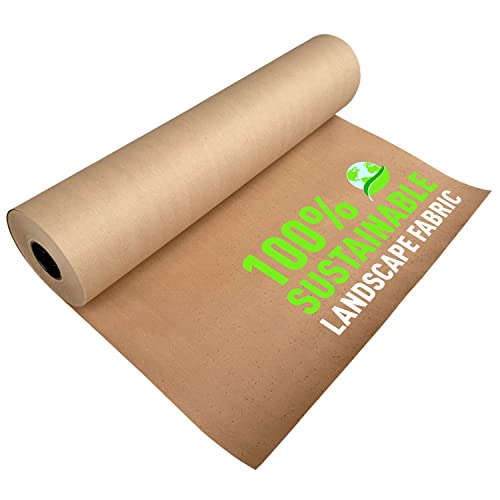
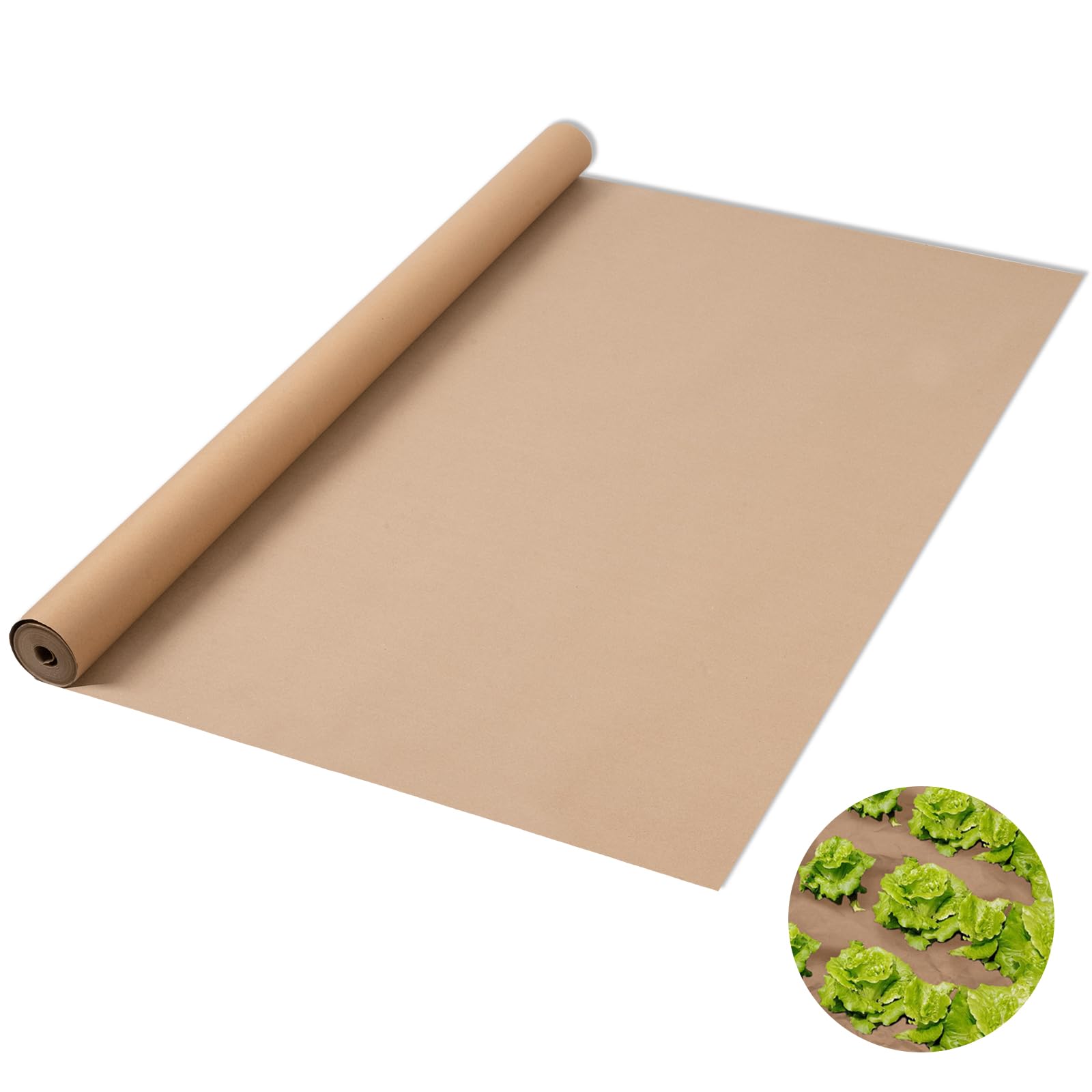
How To Choose The Best Paper Weed Barrier
Paper weed barriers all look alike from the end of the roll, but they perform very differently once they meet rain, wind, and a wheelbarrow tire. The three things that separate a great roll from a frustrating one are thickness, roll size, and how you install it.
Thickness decides the season
A 10 mil sheet (mils are a thousandth of an inch, so this is about the thickness of a sturdy card) holds up to foot traffic and mulch. Thinner paper acts more like mulch itself — it smothers weeds for a few weeks then breaks down, which is fine for a quick spring bed but not for a full-season vegetable patch.
Coverage matches the project
Rolls come in widths from 2 feet up to 4 feet, and lengths from 40 feet to 300 feet. A 2 x 40 ft roll fits narrow vegetable rows, while a 4 x 100 ft roll covers big flower beds or a small farm. Matching the roll to your plot saves both money and frustration from stitching strips together.
Installation is half the battle
Every roll needs anchoring — landscape pins or U-shaped ground nails every few feet, plus a layer of mulch on top. The reviews agree on this: paper left exposed curls up in the wind and tears when wet, but paper weighed down with wood chips holds all season. Plan to overlap the edges by a few inches so weeds can’t sneak through the seams.
Quick Comparison
| Model | Best For | Thickness | Coverage | Weight | Amazon |
|---|---|---|---|---|---|
| Sandbaggy Garden Paper★ Best Overall | Durable beds & soil health | 10 mils | 3 x 50 ft | — | Amazon |
| 4×50 Kraft Paper BarrierBest Value | Value & medium beds | Heavy-duty | 4 x 50 ft | 6.59 lbs | Amazon |
| AGEGOMIC 4×100 Barrier | Large plots & ease | Thickened | 4 x 100 ft | 11.48 lbs | Amazon |
| DECOHS 4×100 Barrier | Big beds & durability | Heavyweight | 4 x 100 ft | — | Amazon |
| Dewitt 2×40 Paper | Small veggie rows | Standard | 2 x 40 ft | 2 lbs | Amazon |
| FULEIYA 60×3 Barrier | Quick beds w/ nails | Thick | 60 x 3 ft | 7.19 lbs | Amazon |
| Dewitt 3×300 Black | Large-scale coverage | Standard | 3 x 300 ft | — | Amazon |
In‑Depth Reviews
1. Sandbaggy Biodegradable Landscape Fabric (3 ft x 50 ft)
Our pick — over 4★ from 50+ verified ratings; the strongest balance of quality and price.
The thickest pick here, built from recycled cardboard that holds up to a full season of foot traffic.
This is the one to beat if durability tops your list. At 10 mils it is noticeably thicker than most paper barriers, and owners describe walking on it dry without a problem — one 130-pound gardener does it regularly. The material is recycled cardboard, so it starts out tough and still breaks down into soil nutrients by season’s end.
Weed control is where this roll earns its keep. The crowd favorite detail here is unmistakable: with 2-3 inches of wood chips on top, only milkweed pushed through after six weeks — a strong endorsement for anyone fighting persistent weeds. It also lets air flow through to the soil, so plant roots keep breathing while the top stays shaded.
The honest trade-off is that paper is still paper. One owner found it weak when wet, noting it held a few puddles after days of rain, and the seller recommends circle-top landscape pins rather than standard staples for the best hold. Plan for a few inches of overlap and a layer of mulch, and this should carry your beds through the season.
What wins owners over
- 10 mil construction resists tears and foot traffic when dry
- Zero plastic — made from recycled cardboard in the USA
- Breathable design keeps soil moist and cool for seedlings
- Decomposes into organic matter that feeds the soil
Installation realities
- Gets weak when wet, so avoid walking on it after rain
- Needs significant overlap and anchor pins to stay put
- Best results require a mulch layer on top
Reach for it when: you want a single-season barrier that survives real use and enriches the soil afterward.
Think twice if: you need a massive 100-foot roll — the 50-foot length means buying two for large plots.
2. 4 x 50 Ft Heavy Duty Biodegradable Kraft Paper Weed Barrier
The wheelbarrow test: durable enough for a new garden liner, with a wide 4-foot sheet that covers fast.
This roll leans on width — at 4 x 50 feet it lays down a wide sheet that covers raised beds and farm rows quickly. It weighs 6.59 pounds, a 3.3x gap over the 2-pound Dewitt roll, and that heft translates into a barrier owners describe as working “very well as the liner” for a new garden.
What sets this apart from the thinner rolls is its real-world resilience. One gardener who tore it with a wheelbarrow simply cut a strip to patch the spot and kept going — a repair-friendly quality you don’t get with paper that shreds on contact. It also blocks sunlight to stop weed seeds while letting air and water flow through to plant roots.
The catch is consistency. Owners praise it as “one of the best weed prevention I’ve used” and note it “works well under mulch,” but a few found it broke down before summer ended or tore easily. Treat this as a season-long barrier rather than a permanent fix, and keep a patch strip handy.
Why it earns its place
- Wide 4-foot sheet covers beds faster than narrow rolls
- Heavyweight at 6.59 lbs with no plastic at all
- Decomposes easier than cardboard but holds long enough
- Simple to cut and lay in vegetable or flower beds
Where it can disappoint
- Some units tear when dragged under a loaded wheelbarrow
- A few owners saw it break down before the season closed
- Needs round-cap nails and mulch for best performance
Best for: gardeners who want broad coverage and a paper that decomposes faster than cardboard yet survives the season.
Who should pass: anyone planning to walk the beds after rain — wet kraft paper is not a load-bearing surface.
3. AGEGOMIC Biodegradable Weed Barrier (4 x 100 Ft)
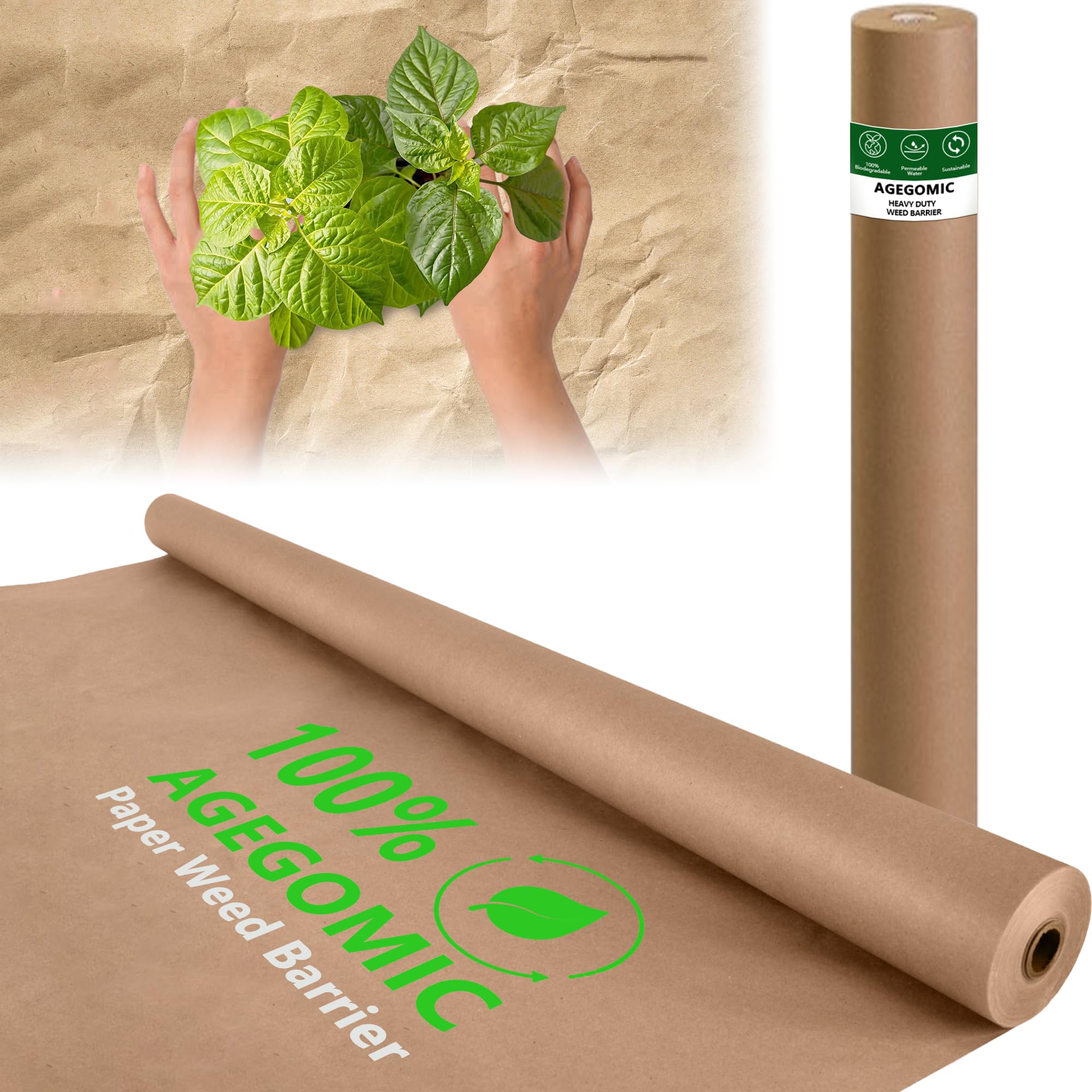
A 100-foot heavy-duty roll that owners find “more durable than expected” for big beds.
At 11.48 pounds, this is the heavy-hitter of the mid-range — a thickened sheet of unbleached kraft paper that holds up to moderate rain and wind, according to the maker. On the scale of this list, it sits in a different weight class than the 2-pound Dewitt roll, and that bulk shows up as tear resistance in the reviews.
The thing owners praise most is how easy it is to lay down. Couples report using it in flower beds with no weeds and minimal effort, and the durability mentions outpace every other aspect. Pre-printed guidelines on the paper make cutting around curved beds simple, and it stays intact across seasonal transitions.
The one mixed note is coverage math. A few owners found it didn’t cover as much ground as they hoped, with some weeds pushing through 3 inches of mulch by late season. It still beats having no barrier at all, and the maker suggests ordering a single unit for a trial run before buying in bulk for a large project.
What owners consistently love
- Thick kraft paper resists tearing better than expected
- 100-foot length suits large vegetable plots and farms
- Open-fiber structure lets air and water reach the soil
- Breaks down into organic matter that feeds the soil
The mixed reports
- Coverage can run short of expectations on irregular beds
- Weeds may still push through if the mulch layer is thin
- Needs biodegradable stakes on slopes for stability
Grab this for: a large-scale project where you want one roll to stretch far and survive moderate weather.
skip it if: you only have a couple of small raised beds — the 100-foot roll is more than you need.
4. DECOHS Biodegradable Paper Weed Barrier (4 x 100 Ft)
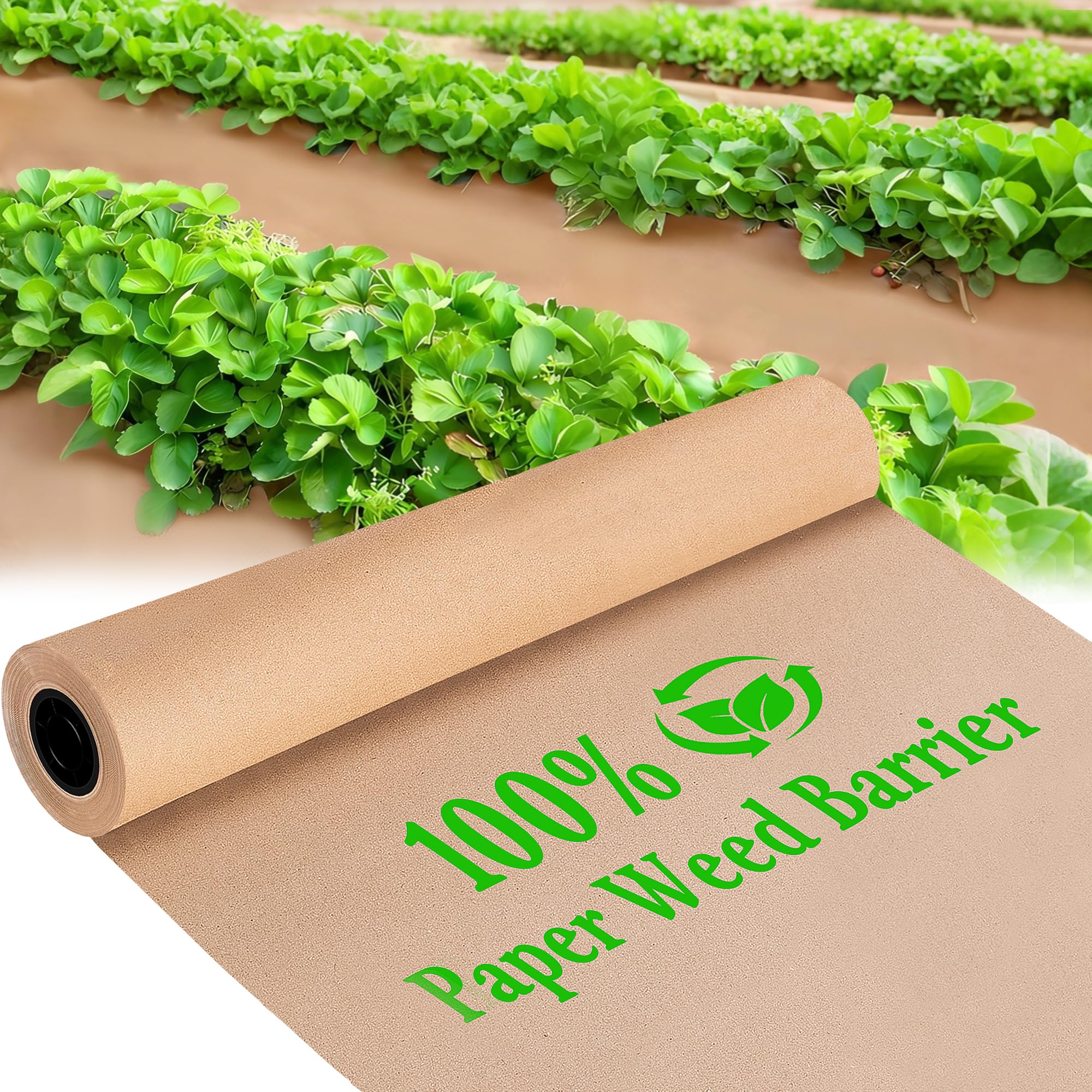
The heavyweight kraft roll that holds up through the whole gardening season without tearing.
Owners consistently call this one thick and sturdy, with the durability and weed resistance each drawing the most praise. The eco-friendly angle is the headline: unlike plastic barriers that get pulled up and tossed, this kraft paper gets plowed into the soil at season’s end, feeding the earth as it breaks down.
It covers serious ground at 4 x 100 feet, and the width fits standard 4×12 beds cleanly. One gardener using it in a planter box found it held up well on a windy day with disc stakes — a good sign for exposed sites. It blocks weed seeds by cutting off sunlight while letting air and water pass through to the plants.
The recurring caution is rain. Water makes the paper tear much more easily, which one owner flagged as making gardening in wet weather a challenge. A couple of reviewers found it rips in a stiff breeze before it’s anchored, so weigh it down promptly and you should get the season-long performance most buyers report.
The strengths owners cite
- Thick heavyweight paper resists tearing all season
- 100-foot roll covers roughly four 4×12 beds
- Breathable barrier keeps soil warm and moist
- Fully biodegradable — till it in when done
Handling notes
- Tears easily when waterlogged, so avoid working it wet
- Needs weighing down immediately in windy spots
- Edges can still sprout weeds without full anchoring
The verdict: a premium heavyweight roll for gardeners who want full-season weed control and don’t mind anchoring it well.
The catch: this is a fair-weather install — get it down and mulched before any rain hits.
5. Dewitt Paper Weed Barrier (2 x 40 ft)

The lightweight entry roll — just 2 pounds — that kills weeds in vegetable rows all summer.
This is the lightest roll on the list and the budget-friendly way to test whether paper mulching works for you. It weighs just 2 pounds for a 2 x 40 ft roll, making it easy to handle solo, and it’s sized for narrow vegetable rows and small raised beds. The primary praise is weed reduction, with owners reporting “NO WEEDS in my vegetable and flower gardens” two weeks after laying it down.
It equals roughly 1-2 inches of eucalyptus mulch in effect, and the smart install trick from the reviews is to lay two layers crosswise with a half-inch to an inch of mulch on top — that combo lasted six months for one gardener. It lets air and water reach the soil and tills straight in at season’s end.
The trade-off is fragility. Some owners found it too fragile for vegetable gardens, noting it curls up if not covered with plenty of soil and won’t tolerate being stepped on over soft tilled ground. It’s a seasonal solution that rewards careful installation, not a set-and-forget barrier.
Where it shines
- Ultra-light 2-pound roll is easy to carry and cut
- Strong weed reduction in vegetable and flower beds
- Breaks down and tills into the soil after the season
- Budget-friendly way to start paper mulching
What to expect
- Tears and curls if not covered with plenty of soil
- Too fragile for walking on after tilling
- Best results demand pins every 6 inches and mulch on top
Perfect starter: small vegetable plots and first-time paper mulch users who want a cheap, easy test.
Not for: large beds or anyone who wants to walk on the barrier — this one needs mulch cover to survive.
6. FULEIYA Biodegradable Paper Weed Barrier (60 x 3 Ft)
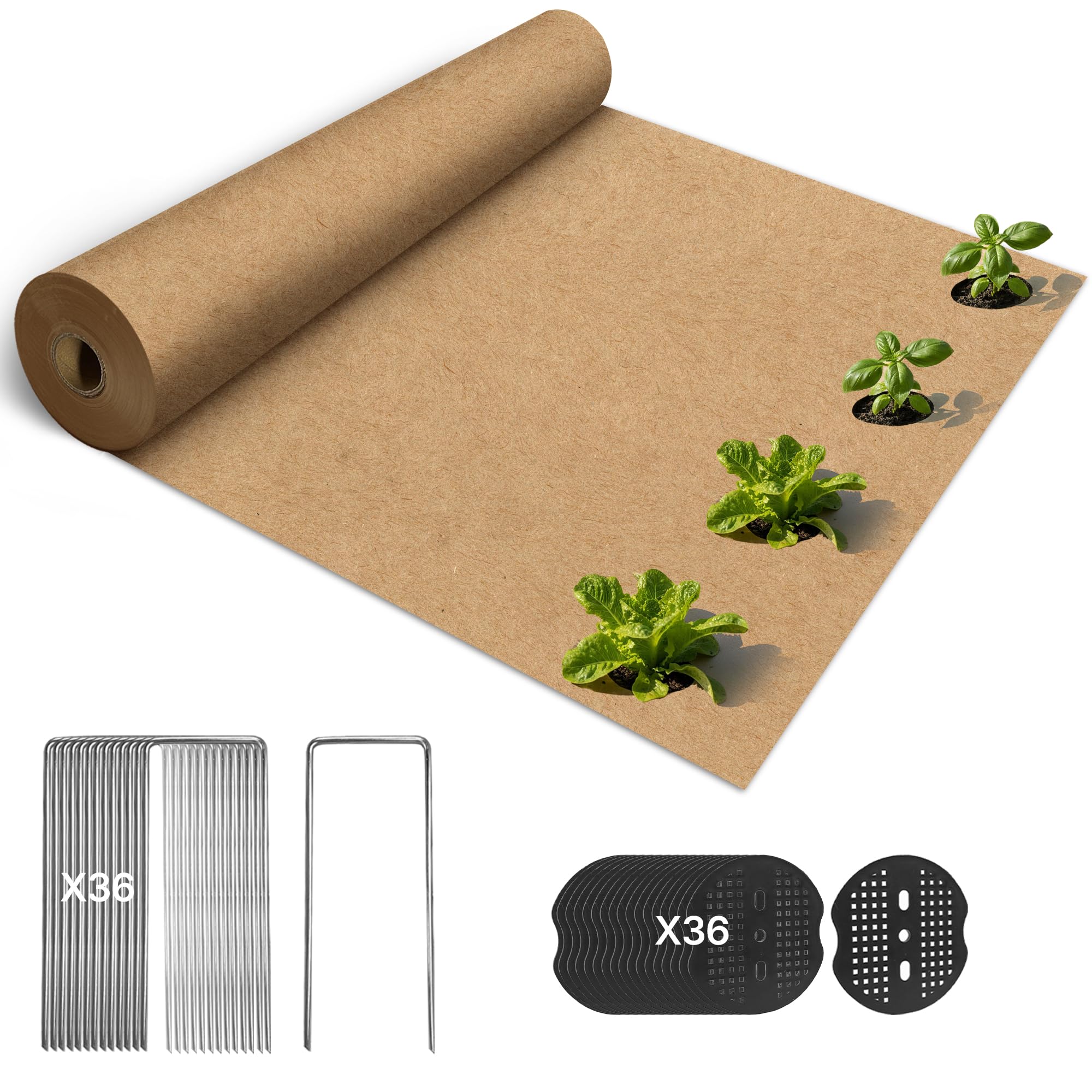
A 3-foot-wide roll with U-shaped ground nails bundled in — a ready-to-go kit for garden paths.
This one stands out because the roll ships with U-shaped ground nails tucked inside, so you don’t have to buy anchoring hardware separately. It weighs 7.19 pounds for a 60 x 3 ft roll, and the maker pitches it as thick enough to block weeds while still letting water reach the soil — a balance that matters for plant health.
Buyers describe it as a “great biodegradable option to reduce plastic,” finding it thick, high quality, and easy to use for pathways and beds. It blocks weeds as expected and composts into the soil for next year’s crop. As a compact 3-foot width, it suits paths and narrow strips where a 4-foot roll would waste material.
The honest limits show up in wind and rain. One owner watched it rip loose from its fasteners in a 7 mph breeze, and the included staples drew criticism for being only 4 inches and smaller than the standard 11 gauge. Another noted it biodegrades “pretty quickly.” This is a decent-weather, well-anchored product.
What it does well
- Ships with U-shaped ground nails and gaskets included
- Thick paper blocks weeds while water still penetrates
- 3-foot width fits paths and narrow planting strips
- Composts into soil nutrients for next season
Fair warnings
- Fails in wind and rain if the fasteners are undersized
- Included staples are only 4 inches, smaller than 11 gauge
- Biodegrades quickly — not a long-season barrier
Good for: gardeners laying down paths or beds who want a self-contained kit with nails in the roll.
Think again if: you garden in an exposed, windy field — the stock staples won’t hold there.
7. Dewitt Garden Weed Barrier Natural Paper Mulch (3 x 300 Feet, Black)
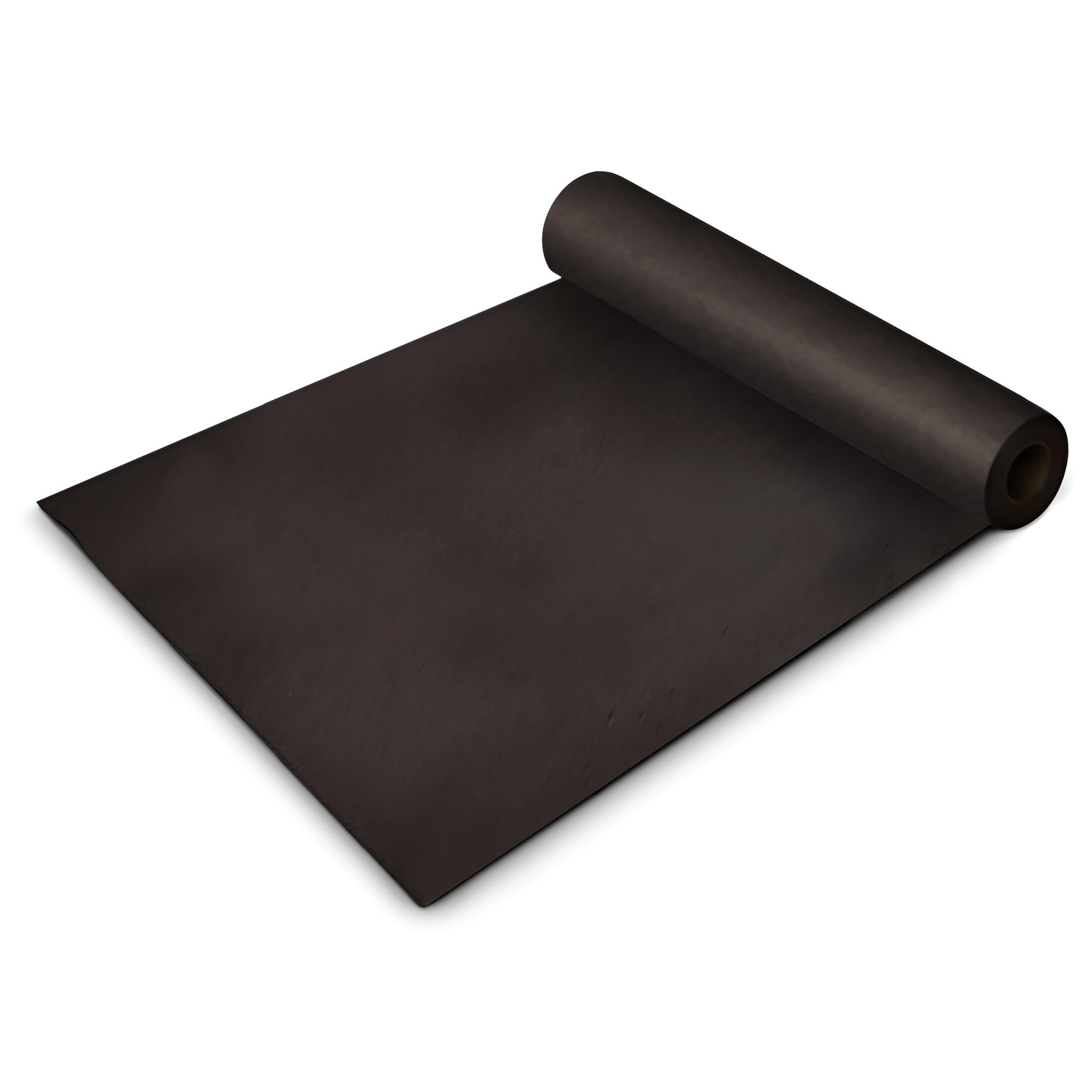
The longest roll on the list at 300 feet — a serious ground cover for converting grass to beds.
At 3 x 300 feet with 900 square feet of total coverage, this is the roll you buy when you’re converting a lawn or laying out a large vegetable plot. Owners call it “the easiest way to convert grass to a flower bed,” and weed control is the most-praised aspect by a wide margin. One gardener used it to line a garden, covered it with bark chip mulch, and found it did exactly what it should.
The paper is made from cellulose and designed to be tilled into the soil at season’s end, returning organic matter without leaving residue. It allows air, water, and nutrients to move into the soil while suppressing weeds, and the black color blends neatly under a layer of mulch — though a few owners expected brown and got black instead.
The durability reports split sharply. Some owners found it “nice and thick” and used it for years in a wind-protected garden, while others saw it fail in under a week. The pattern points to installation: this paper rewards a sheltered site, good anchoring, and a mulch layer, and punishes exposed, windy beds.
The scale advantage
- 300-foot roll covers 900 square feet in one shot
- Weed control is the standout, most-praised trait
- Easy way to convert grass into a flower bed
- Tills into soil as organic matter when done
What to weigh
- Tears extremely easily in exposed, windy gardens
- Color is black, not the brown some owners expected
- Needs wind protection and anchors to last a season
Choose it when: you’re covering a large area and want one continuous roll instead of stitching many short ones.
Pass if: your garden sits in open wind — this paper needs a sheltered spot to thrive.
Understanding the Specs
Thickness (mils)
Thickness is measured in mils, where one mil equals one-thousandth of an inch. A 10-mil sheet behaves like sturdy card stock and takes foot traffic, while thinner paper acts more like mulch — smothering weeds briefly before breaking down. The thicker the sheet, the longer it survives rain and wheelbarrow tires, but the slower it decomposes at season’s end.
Roll dimensions and weight
Rolls range from 2 feet wide by 40 feet long up to 4 feet by 300 feet. A heavier roll — like 6.59 or 11.48 pounds — generally signals denser, more durable paper. Match the width to your beds: 2-foot rolls fit narrow rows, 4-foot rolls cover raised beds in fewer strips, and 300-foot rolls handle whole fields in one pass.
FAQ
How long does a paper weed barrier last before it breaks down?
Do I need to put mulch on top of the paper?
Will a paper barrier stop weeds as well as plastic landscape fabric?
Can I walk on the paper after it’s installed?
What’s the best way to anchor the paper down?
Is a paper weed barrier safe for vegetable gardens?
How much overlap do I need between strips?
What’s the difference between paper mulch and a paper weed barrier?
Will the paper blow away in the wind before I mulch it?
Which roll size do I need for my garden?
Final Thoughts: The Verdict
For most gardeners, the paper weed barrier worth starting with is the Sandbaggy Garden Paper, because its 10-mil recycled-cardboard build survives real use while still feeding the soil. If your project is a large vegetable plot or field, the AGEGOMIC 4×100 Barrier gives you the length and tear resistance to get the job done in fewer rolls. And if you’re testing paper mulching on a small bed for the first time, the lightweight Dewitt 2×40 is the low-commitment way to see if this approach fits how you garden.
How We Picked
We do not accept paid placement. Every pick is matched to a real buyer and a real use-case; we do not hands-on test units.
Sources & Methodology
Specifications: manufacturer listings and product documentation. Review insights: verified customer reviews, as of August 2026. Pricing: not shown on this page (it changes often); check the current price via the retailer link.
As an Amazon Associate, Lawn Gear Lab earns from qualifying purchases. This does not affect which products we feature.