
Specs are compiled from manufacturer listings and verified buyer reviews and can change over time — please confirm the key details on the product page before buying.
Every outdoor planter has the same hidden problem: the bottom half is wasted on soil that gets waterlogged, turns into mud, and makes the pot so heavy you can’t move it. A planter filler — lightweight clay pebbles, perlite, or foam — solves that by taking up space, improving drainage, and cutting the weight, so your plants’ roots stay healthy and your patio pots stay portable.
I’m Rikta — the founder and writer behind Lawn Gear Lab. This guide is built by comparing the manufacturers’ published specifications and the patterns across verified customer reviews, so you get each pick’s real strengths and trade-offs instead of marketing spin.
Whether you’re refreshing tired patio pots or starting fresh, finding the best outdoor planter filler means balancing drainage, weight, and how much bag you actually need for your containers.
Our Picks at a Glance


How To Choose The Best Outdoor Planter Filler
Filler sits in the lower part of a planter, doing three jobs at once: it stops soil from washing out, it lets excess water drain away from roots, and it takes up space so you buy less expensive potting mix. Match the filler to your pot size and how much weight you can lift.
Drainage vs. Water Retention
Clay pebbles and perlite create air pockets so water flows out instead of pooling around roots. Foam filler also drains well but never absorbs water, so it adds no weight when wet. If your plants need consistent moisture, a porous clay option can hold a little water and release it slowly.
Weight and Portability
A bag of perlite is drastically lighter than gravel, and foam is almost weightless. For large patio planters you move seasonally, cutting weight is a huge win. For small pots that stay put, heavier clay pebbles are fine and feel more solid.
Quick Comparison
| Model | Best For | Weight | Volume | Material | Amazon |
|---|---|---|---|---|---|
| Hydroton Original★ Best Overall | Versatile all-around LECA | 9.5 lbs | 10 Liter | Clay | Amazon |
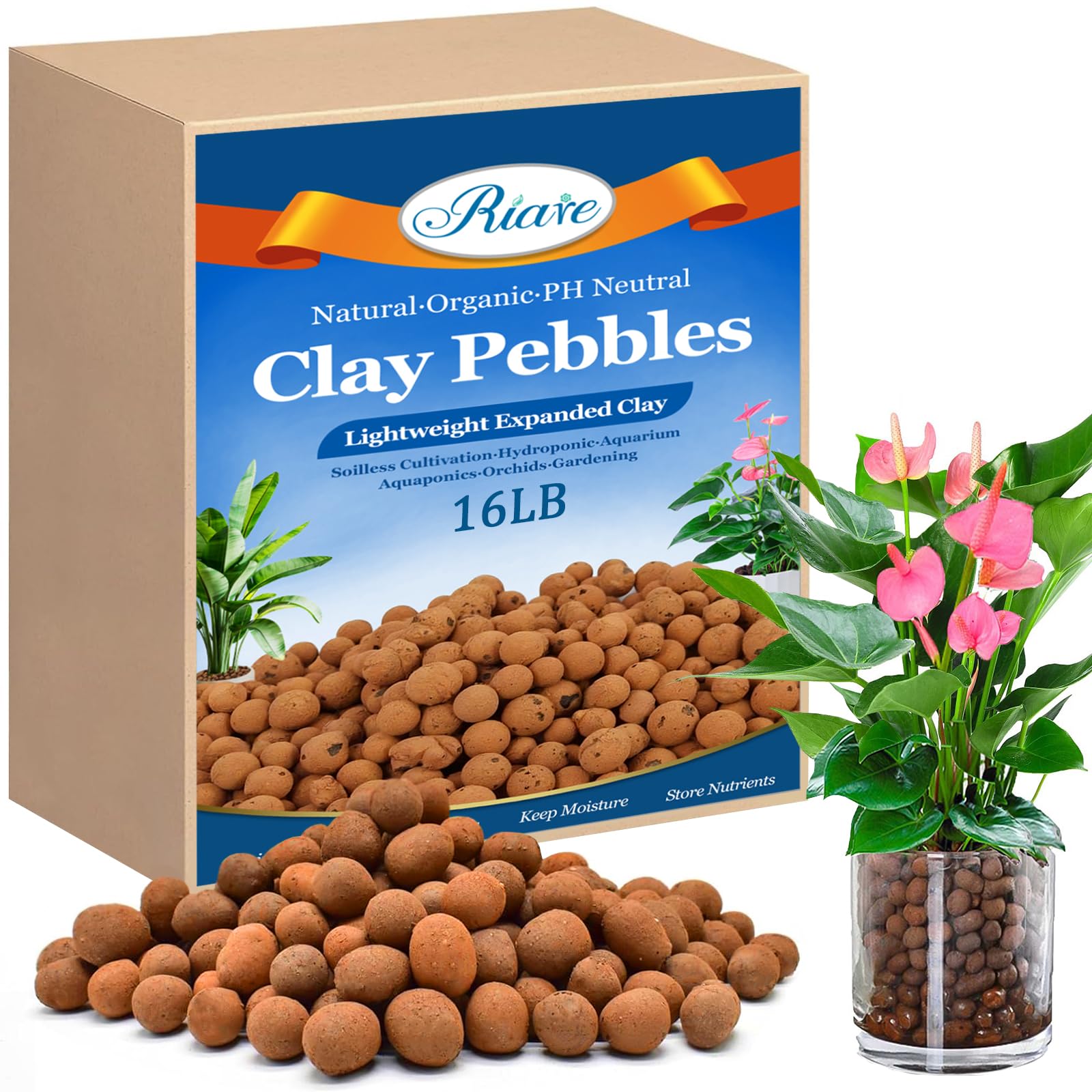
| Riare 16LBPremium Pick | Big value LECA bag | 6.97 kg | 20 liters | Clay | Amazon |
| Voulosimi 12LBTop Performer | Chunky uniform clay balls | 11.4 lbs | — | Clay | Amazon |
| Pulovin 10 lbs | Entry-level clay pebbles | 10 lbs | 16000 cc | Clay | Amazon |
| D’vine Dev 12qt | Drainage plus bonus mesh circles | 8 lbs | 12 quarts | Clay | Amazon |
| MDPQT 20 Qt Perlite | Lightweight soil amendment | — | 20 quarts | Perlite | Amazon |
| MDPQT Perlite Large | Chunky perlite for orchids | 4.62 kg | 20 quarts | Perlite | Amazon |
| Bubblefast EcoFoam | Ultra-light large planter fill | 12.96 oz | 3.5 cu. ft. | Foam | Amazon |
| Better Than Rocks | Cut-to-fit planter mesh roll | 2.3 lbs | 16″x96″ | Recycled plastic | Amazon |
In‑Depth Reviews
1. Hydroton Original Clay Pebbles
Our pick — over 4.5★ from 8,000+ verified ratings; the strongest balance of quality and price.
The crowd favorite that balances drainage, weight, and reuse across every pot you own.
Hydroton is the name serious gardeners trust, and this 10-liter bag is the perfect starting point. The clay is mined, formed into pellets, then kiln-fired at high temperatures, which makes each ball tough and lightweight while keeping a semi-porous surface that naturally wicks water. At 9.5 pounds for the bag, it’s noticeably lighter than a bag of rocks doing the same job.
What wins people over is the quality — owners consistently call these the best clay pebbles they’ve tried, praising the uniform terra cotta color and the fact that they rarely float like cheaper products can. The versatility is real too: hydroponics, potted plants, and orchid propagation all work here, and the 8-16 mm size spec means you get consistent balls that drain evenly. Buyers report they’re reusable as long as you rinse them thoroughly between uses, making this a one-time purchase rather than a yearly one.
The trade-off shows up before you even plant: these arrive dusty and need a good rinse first, and mixed sizes mean you might sort through them by hand if you want a perfectly even layer. Compared to the Pulovin bag below, Hydroton runs slightly heavier at 9.5 pounds versus 10, but the brand reputation and proven germination success — owners mention 100% germination with watercress in these pebbles — justify the nod.
Why it leads the list
- Kiln-fired German clay that holds shape for years
- Semi-porous surface holds moisture without staying soggy
- Reusable between plants with a simple rinse
Before you buy
- Arrives dusty and needs rinsing before use
- Pebble sizes vary and may need manual sorting
Reach for this if: you want a proven, reusable clay filler that works in anything from a patio pot to a hydroponic setup.
Look elsewhere if: you’d rather skip the rinsing chore and want a no-prep filler you can pour straight in.
2. Riare 16LB Leca Clay Pebbles
A generous 16-pound bag that fills more pots than you expect and reseals for next season.
Riare packs serious value into this 20-liter bag, and the numbers back it up: 16 pounds of mixed 4-16 mm clay balls that owners say fill three spirit bottles and six vases in one go. The high-temperature fired clay is inert, odorless, and pH-neutral, which means it won’t change your soil chemistry or break down into chalky mush when it stays wet.
The resealable bag is a quiet winner here — unlike cheaper options that come in flimsy sacks, you can close this up and store leftover pebbles clean and dry between projects. Drainage is the core strength: the rounded balls create open spaces that let water flow out and oxygen reach the roots, which is why owners pair it with moisture-sensitive plants like orchids and succulents. It also pulls double duty as a decorative soil topping, with a red-brown color that blends naturally with mulch.
The honest catch is dust. A few customers note some powder from shipping, though a quick wash in a tub clears it, and there’s minor breakage in the mix. Compared to the Hydroton above, this bag weighs more at 6.97 kg, so you’re getting more material for a similar footprint — a smart pick if you have several large planters to fill at once.
Best for heavy fillers
- 16-pound bag stretches across many pots
- Resealable packaging keeps leftovers fresh
- pH-neutral and won’t break down in water
Keep in mind
- Some dust and minor breakage in the mix
- Mixed sizes may need sorting for even layers
Best for: anyone with several planters or a terrarium who wants one big bag that lasts and stores well.
Think twice if: you need a perfectly uniform pebble size for a single decorative pot.
3. Voulosimi Clay Pebbles 12LB
Consistent, chunky clay balls that keep patio pots tidy and stop soil from splashing.
Voulosimi earns its spot with consistency. At 11.4 pounds, this 12-pound bag is the heaviest clay option here, but owners repeatedly praise the uniform size — a refreshing change from bags full of dust and tiny fragments. The 0.3-0.5 inch spec delivers balls that are all roughly the same, so your drainage layer looks clean and works evenly.
The patio-pot use case is where this shines. Reviewers point out these “keep dirt from splashing” during watering, and the natural clay’s capillary action pulls moisture into the root zone while letting excess drain away. It works as a soil additive, a hydroponic medium, or a top dressing, and the 36-pound deliveries some owners received show the volume stretches further than the label suggests.
There’s a split verdict on dustiness — some shoppers say almost none, others say a good rinse outside is required, plus a 24-hour soak for best results. Next to the Hydroton above, this bag is heavier at 11.4 pounds versus 9.5, so you get more material, but you pay for it in prep time if you hit a dusty batch.
Solid performer: uniform chunky clay balls that keep soil from splashing, ideal for patio pots and DWC hydroponics in 6-inch net pots — just budget time to rinse and soak first.
4. Pulovin 10 lbs LECA Clay Pebbles
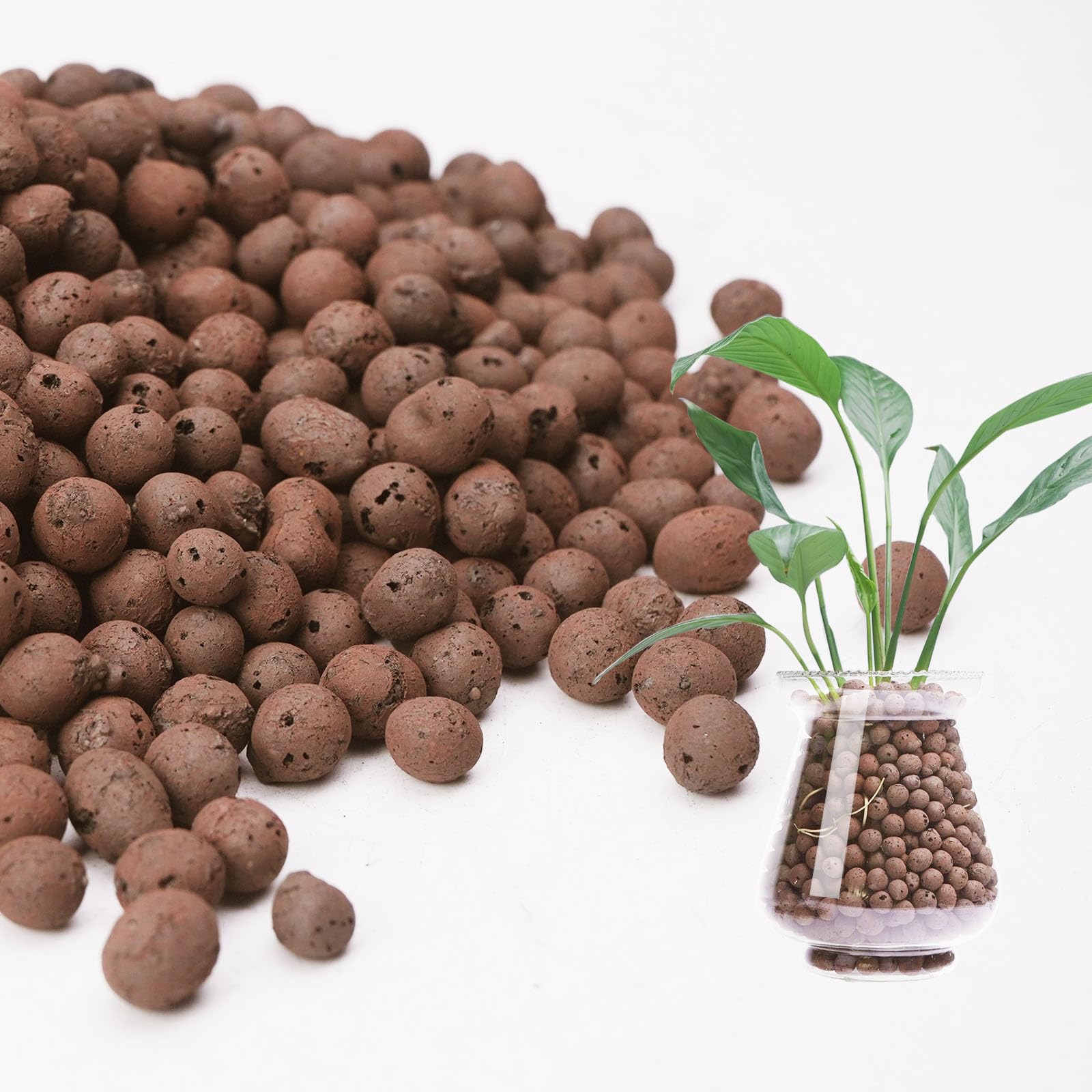
An entry-level clay pebble that proves you don’t need a famous brand for great drainage.
Pulovin is the budget-friendly gateway into clay pebbles, and the 10-pound bag goes further than you’d think. One owner used it in three hanging baskets, a 5-gallon bucket, and several pots with a 1-2 inch drainage layer — and still had half the bag left. The 4-16 mm size range fits small to medium pots, making it a flexible choice for a first-time filler buyer.
What wins people over is the versatility: it works for hydroponic orchids, aquaponics, soilless culture, and even fresh-cut flower arranging in clear vases, where buyers report visible root growth. The lightweight, well-ventilated structure stimulates root development while the excellent drainage prevents waterlogging, so roots avoid rot. One owner summed it up plainly: the leca is “perfect” regardless of the price.
The catch is consistency. Some owners find the pieces smaller than expected, and others note cracked balls that break off when handled — a reminder that budget clay can be rougher than premium kiln-fired options. Compared to the Voulosimi above, this bag is lighter at 10 pounds versus 11.4, but you trade a bit of uniformity for the lower entry cost.
Smart starter: a flexible clay pebble that handles hydroponics and potted plants alike, best for anyone testing LECA for the first time without a big investment.
5. D’vine Dev 12qt Expanded Clay Pebbles

A tidy 12-quart bag that comes with handy mesh circles to cover pot drainage holes.
D’vine Dev stands out for a small detail that saves you a trip to the hardware store: the bag includes metal mesh circles to cover the hole in the bottom of your pot, so soil stays put while water flows out. The 12-quart bag covers a lot of ground — it replaces 1.7 gallons of houseplant soil, fits up to ninety-six 2-inch pots, thirty-two 3-inch pots, or eight 5-inch pots.
The brown clay balls are naturally porous, creating air circulation around roots and protecting roots from rot and acidic soil conditions. Owners say “a little goes a long way” and use them in “just about all my planters,” both as a drainage layer and a moisture-retaining mix-in. The durable kraft bag is neatly packaged and reusable, keeping leftover pebbles contained between projects.
This is a solid mid-range choice that beats cheaper competition on quality, per owners. It’s not the biggest bag here, so measure your planters first — but for a handful of houseplants or small outdoor pots, the 8-pound weight makes it easy to handle and store.
Tidy all-rounder: quality clay pebbles with a bonus mesh circle for drainage holes, perfect for houseplant owners potting up several small containers.
6. MDPQT 20 Qt Professional Grade Perlite

A lightweight white perlite that mixes into soil to stop compaction and heavy waterlogging.
If you want to lighten your existing potting mix rather than build a drainage layer, perlite is the classic answer, and this 20-quart bag is professional grade. The porous structure prevents soil from compacting and lets excess water drain away from roots, which is why one owner uses it to improve drainage in clay-based soil. At only 640 ounces for the whole bag, it’s dramatically lighter than any clay option.
The quality earns consistent praise, with one owner calling it better than what’s available at big chain garden centers and another repurchasing it twice. It’s a “large quantity, good pricing” play that works for making your own grow medium or simply mixing into store-bought potting soil. The white color also reflects light, which can benefit root development in clear containers.
The recurring note is dust — perlite is dusty by nature, though owners say this brand is “not as bad as other brands.” Plan to mix it outdoors or wear a mask. Compared to clay pebbles, perlite holds less moisture and is more fragile, so it’s best as a soil amendment rather than a structural planter filler.
Why choose perlite
- Extremely lightweight for easy soil mixing
- Prevents soil compaction and improves drainage
- Large 20-quart bag at a good price
Fair warning
- Dusty — mix outdoors and wear a mask
- More fragile than clay, so it breaks down faster
Choose this if: you’re amending heavy garden soil and want a light, affordable aerator you can mix straight in.
skip it if: you need a chunky structural filler for a deep planter base.
7. MDPQT 20 QT Large Perlite

Big, chunky perlite chunks that orchids love and that crush-resistant structure keeps year after year.
This is the chunky version of perlite, and the size difference matters. Owners call the pieces “gigantor” and praise them for plants that need a chunky soil mix, like orchids and other epiphytes. The 20-quart bag weighs 4.62 kg, and the larger pieces mean better air pockets around roots — exactly what moisture-sensitive plants need.
What sets this apart is durability. One owner compares it to the discontinued Growstones, noting it’s very lightweight but crush-resistant, and unlike fine perlite, it won’t break down over time. That makes it a genuine soil aerator that keeps working season after season. Owners mention it visibly improves plant drainage and is easy to cut or size for different pots.
The downside is real prep work. This is dusty — one owner had to clean it outside with a mask, and another found debris like styrofoam and grass mixed in. Don’t rinse it in the sink; the fine dust can clog pipes. Compared to the standard MDPQT perlite above, this bag is heavier at 4.62 kg but delivers the chunky texture that serious orchid growers want.
The chunky advantage
- Large pieces create big air pockets for roots
- Crush-resistant and durable over time
- Ideal for orchids and chunky-soil plants
Prep required
- Very dusty — clean outside with a mask
- May contain small debris like styrofoam
Best for: orchid and epiphyte growers who want a long-lasting, chunky aeration medium.
Not ideal if: you want a pour-and-go filler with zero prep or dust.
8. Bubblefast EcoFoam 3.5 cu. ft.

An ultra-light foam filler that makes massive planters feel like empty pots.
For a huge patio planter that’s a pain to move, this is the standout. The brown foam peanuts weigh just 12.96 ounces for a 3.5 cubic foot bag — essentially nothing — yet they take up the same space as gravel. Customers note it provides the same aeration as gravel but at a fraction of the weight, so you can fill huge pots and still lift them when it’s time to rearrange.
The key spec here is that the foam never absorbs water, so it adds no weight when wet. That’s a major advantage over clay and perlite in rainy climates. Owners use it to fill the bottoms of large planters and flower pots, and the “LARGE bag” fills many pots at once. It’s also made in the USA by a veteran-owned company, and it’s plant-safe and sustainable.
The trade-off is that foam doesn’t hold moisture or nutrients like clay does, so it’s purely a space-filler, not a growing medium. You’ll want a landscape fabric or mesh layer between the foam and your soil to keep things tidy. Compared to the clay options above, this is the clear weight champion, but it won’t improve drainage the same way porous clay does.
The weight advantage
- Almost weightless at 12.96 oz per bag
- Never absorbs water, so no added weight
- Huge 3.5 cu. ft. bag fills many pots
What it’s not
- No moisture or nutrient retention like clay
- Needs a mesh barrier to separate from soil
Reach for this if: you’re dealing with oversized planters that are too heavy to move once filled with soil.
Look elsewhere if: you want a filler that also wicks water or feeds roots.
9. Better Than Rocks Planter Drainage

A cut-to-fit mesh roll that replaces rocks entirely for light, reusable planter drainage.
This is a genuinely different approach: instead of pouring pebbles, you roll out a 16-inch by 96-inch sheet of recycled plastic mesh and cut it to fit your planter’s base. It weighs just 2.3 pounds for the whole roll, making it dramatically lighter than a bag of rocks doing the same job. Owners say it “really does rock” for lightening planters and reducing deck staining.
The material is thick and spongy, so it drains well while preventing overwatering, and it filters soil so nothing washes out. It’s reusable across multiple pots — one owner lined 12 ten-inch pots with just two rolls — and it’s easy to cut with regular scissors, even for older gardeners. Made in Canada from recycled plastic, it’s an eco-friendly choice that holds up for years.
The honest catch is the price, which owners call “pricey but worth it.” It’s the most expensive option here, but the reusability and weight savings justify it for serious gardeners. Compared to the EcoFoam above, this is denser and more structured, but it serves a similar purpose: cutting planter weight while keeping drainage working.
Cut-to-fit winner: a reusable plastic mesh that cuts planter weight dramatically, ideal for large patio pots and raised beds — the upfront cost is higher, but it lasts for years.
Understanding the Specs
Drainage and Aeration
Drainage is the whole point of a planter filler. Clay pebbles and perlite create air pockets so excess water flows out instead of pooling around roots, which prevents root rot. Foam filler lets water pass through but doesn’t hold any, so it’s purely structural. The key question is whether your plants need constant moisture or prefer to dry out between waterings.
Weight and Volume
Weight per bag decides how many planters you can fill and whether you can move them once full. A 10-pound bag of clay pebbles covers a few medium pots, while a 3.5 cubic foot bag of foam is nearly weightless and fills many large planters. Always match the bag volume to your container sizes before you buy.
FAQ
How much planter filler do I need for a large pot?
Can I reuse clay pebbles between plants?
Will clay pebbles float in water?
Is perlite or clay pebbles better for drainage?
Do I need to rinse clay pebbles before using them?
Will foam filler absorb water and add weight?
Can I use planter filler for hydroponics?
What’s the difference between standard and chunky perlite?
Final Thoughts: The Verdict
For most people, the best outdoor planter filler is the Hydroton Original because it combines proven German quality, excellent drainage, and reusability in one bag. If you want the biggest bag for your money, grab the Riare 16LB. And for ultra-light large planters or budget-conscious gardeners, the Bubblefast EcoFoam or Better Than Rocks roll are the ones to reach for.
How We Picked
We do not accept paid placement. Every pick is matched to a real buyer and a real use-case; we do not hands-on test units.
Sources & Methodology
Specifications: manufacturer listings and product documentation. Review insights: verified customer reviews, as of August 2026. Pricing: not shown on this page (it changes often); check the current price via the retailer link.
As an Amazon Associate, Lawn Gear Lab earns from qualifying purchases. This does not affect which products we feature.