
Choosing an outdoor greenhouse is a commitment to protecting your seedlings, perennials, and harvest from frost, wind, hail, and deer. The wrong frame collapses under the first winter snow load, and a flimsy cover shreds into ribbons after a single season of UV exposure — leaving your plants exposed and your wallet lighter. Today’s market offers everything from pop-up shelters that assemble in minutes to rigid polycarbonate structures built for year-round, heavy-duty use, and the difference between them is measured in frame thickness, panel density, and true wind resistance.
I’m Rikta — the co-founder and writer behind Lawn Gear Lab. My process for this guide involved comparing over a dozen frame materials, cover thicknesses, and ventilation designs, cross-referencing technical specs against hundreds of aggregated owner reports to identify which kits actually survive real outdoor conditions.
Whether you need a budget-friendly starter unit for patio vegetables or a permanent aluminum-and-polycarbonate structure for all-season propagation, the list below breaks down the key specs and real-world performance of the current best outdoor greenhouse options on the market.
How To Choose The Best Outdoor Greenhouse
Every outdoor greenhouse is a compromise between cost, size, and structural resilience. Knowing which specification matters most for your climate and planting goals will prevent a painful collapse.
Frame Material: Galvanized Steel vs. Aluminum
Galvanized steel offers the highest strength-to-cost ratio for hoop houses and tunnel-style greenhouses, but it is heavier and can eventually rust if the coating is scratched. Aluminum frames are lighter, corrosion-proof, and easier to assemble, but they typically cost more and may flex under extreme snow loads unless reinforced with additional cross-bracing.
Cover Type: Polyethylene (PE) vs. Polycarbonate (PC)
PE covers are lightweight, affordable, and replaceable — look for a density of at least 150 GSM and a UVI rating of 4 or higher to survive more than one season. Polycarbonate panels are rigid, shatter-resistant, and provide superior insulation due to double-wall construction, but they add significant weight and require a stronger frame. A 4mm twin-wall PC panel offers a good balance of light transmission and heat retention for four-season use.
Ventilation Strategy
Adequate ventilation prevents lethal heat spikes. Pop-up models rely on zippered mesh windows and roll-up doors, which work well in mild climates. Larger rigid greenhouses need roof vents or adjustable side louvres to exhaust hot air at the peak, where it naturally collects. At minimum, aim for two opposing openings to create cross-flow.
Anchoring & Wind Resistance
Even the best frame will tumble in 40 MPH gusts without proper anchoring. Pop-up greenhouses typically include ground stakes and guy ropes — upgrade to auger-style anchors or sandbags for serious wind. Rigid polycarbonate greenhouses should be bolted to a concrete base or heavy paver foundation. Always check the rated wind speed and snow load specification before purchasing.
Quick Comparison
On smaller screens, swipe sideways to see the full table.
| Model | Category | Best For | Key Spec | Amazon |
|---|---|---|---|---|
| FLY BY YAN 8×14 FT | Rigid PC | Permanent all-season growing | 720g/m² PC + 3 roof vents | Amazon |
| WUKHG 10×12 FT | Rigid PC | Heavy snow & wind zones | 720g PC + 20 PSF snow load | Amazon |
| Sylviera 8×10 FT | Rigid PC | Mid-size rigid build | 4mm twin-wall + hygrometer | Amazon |
| WUKHG 6×7.5 FT | Compact PC | Small yards & patio use | 5mm panels + thermometer | Amazon |
| KING BIRD 15x7x7 Tunnel+ | Hoop House | Hot climate with shade net | 0.7mm steel + 8 windows + net | Amazon |
| KING BIRD 15x7x7 FT | Hoop House | Length & budget value | UVI 6 cover + #10 zippers | Amazon |
| Yardsight 8.5×7 FT | Pop-up | Quick setup + dual doors | Reinforced steel roof + 4 doors | Amazon |
| CROWN SHADES 8×6 FT | Pop-up | Tool-free pop-up convenience | Center-lock hub + 3 heights | Amazon |
| Benass 8×6 FT | Pop-up | Entry-level walk-in space | Alloy steel frame + 2 vents | Amazon |
In‑Depth Reviews
1. FLY BY YAN 8×14 FT Polycarbonate Greenhouse
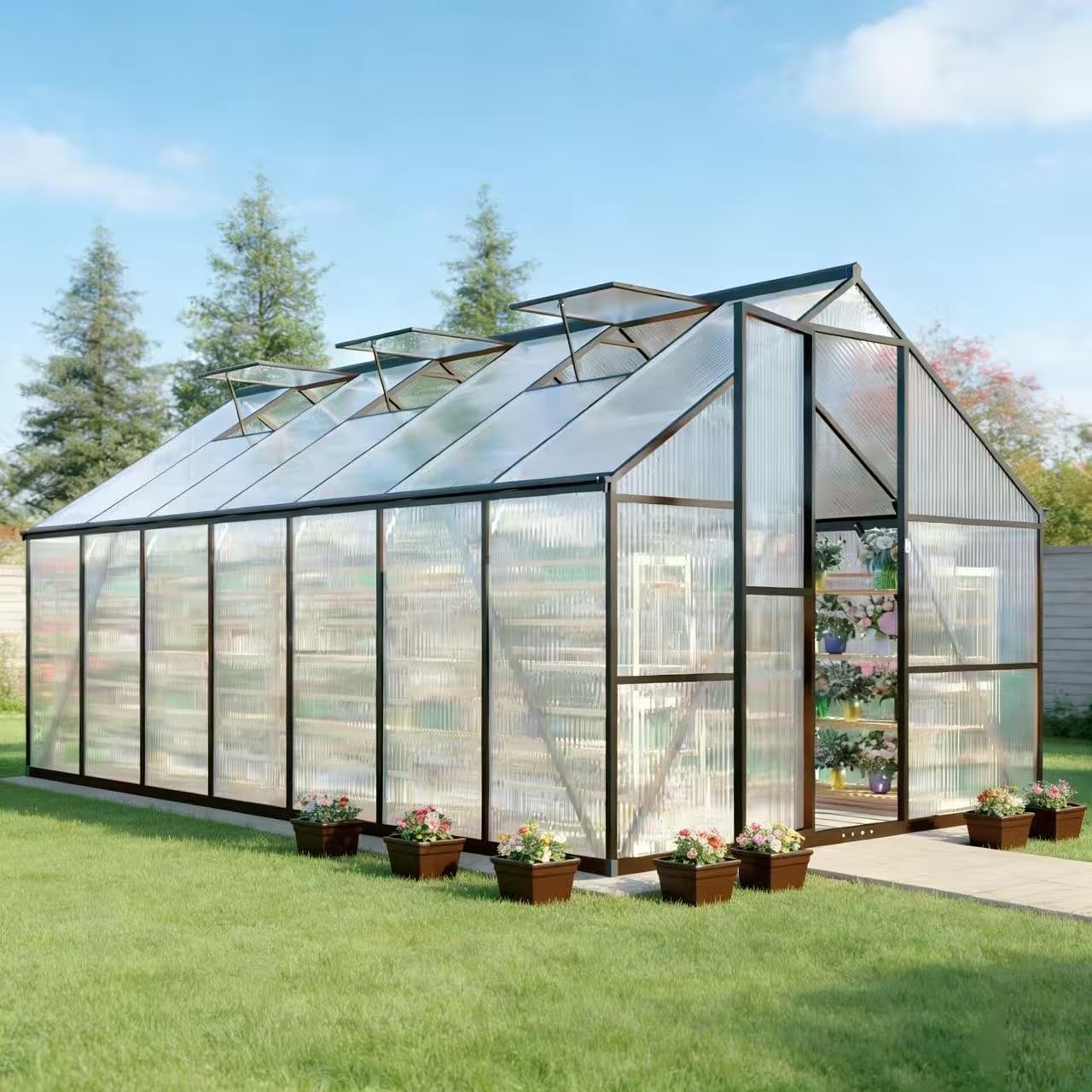
The FLY BY YAN 8×14 FT strikes the hardest balance between footprint and permanence. Its 720g/m² polycarbonate panels are among the heaviest in this class — nearly 30% denser than standard 4mm twin-wall sheets — and the reinforced aluminum frame is engineered with a slide-in, no-cut assembly system that shaves hours off build time. The integrated rain gutter system channels water away from the base, preventing erosion and keeping the interior dry during heavy downpours.
Owner reports consistently praise the structural rigidity; several users noted the greenhouse survived 60 MPH gusts with only minor adjustments to the anchoring stakes. The three adjustable roof vents provide excellent passive exhaust — critical for preventing temperatures from spiking above 100°F on summer afternoons. The lockable single door feels solid, and the scratch-resistant charcoal black finish hides dirt better than glossy alternatives.
Assembly is the primary friction point. The roof peak assembly requires careful alignment of multiple channels, and several owners described the process as tedious without four hands. A few units arrived with slightly misaligned roof peak holes, though the manufacturer’s fast-response replacement service resolved those issues quickly. For serious gardeners who want a permanent structure that holds up to real weather, this kit delivers exceptional value.
What works
- Heavy 720g/m² PC panels resist hail and UV degradation
- Slide-in assembly system requires no drilling
- Integrated rain gutters protect the foundation
What doesn’t
- Complex roof channel alignment slows assembly
- Requires 4-5 people for efficient setup
2. WUKHG 10×12 FT Polycarbonate Greenhouse
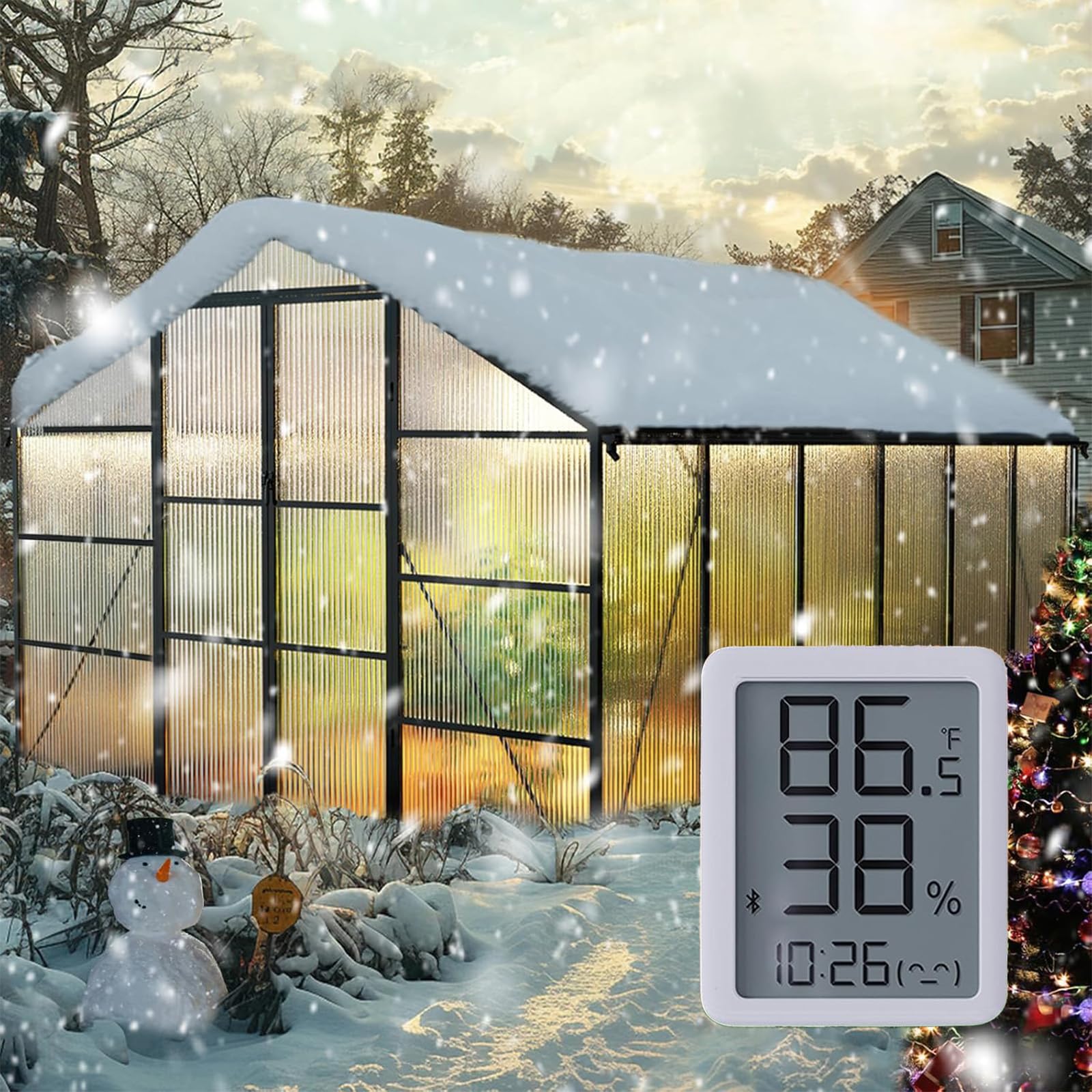
If snow load is your primary concern, the WUKHG 10×12 FT is the clear contender. The manufacturer rates this unit for 20 PSF snow load and 35 MPH winds — numbers that match many permanent backyard sheds. The twin-wall 4mm polycarbonate panels (rated at 720g/m²) diffuse sunlight evenly across the planting area, reducing the risk of leaf scorch while still transmitting enough PAR for vigorous growth. The built-in gutter system doubles as a rainwater collection channel, which serious propagators will appreciate.
User feedback highlights the spacious 10×12 footprint — enough room for tiered shelving, a potting bench, and still comfortable standing room at the center peak. The adjustable roof vent and lockable door provide adequate airflow, though several users added a battery-powered exhaust fan for extra circulation during July heat waves. The aluminum alloy frame is corrosion-proof and feels rigid when properly anchored to a flat base.
Assembly complexity is the recurring theme. The instruction manual uses labeled symbols, but multiple owners described the process as taking a full weekend with three people. Some panels arrived with slightly crushed edges from shipping, though the panel material itself is robust enough to function even with cosmetic imperfections. For anyone building in a region with real winter accumulation, the WUKHG 10×12 provides structural confidence that pop-up kits simply cannot match.
What works
- Rated for 20 PSF snow load and 35 MPH winds
- 720g/m² double-wall PC provides excellent insulation
- Spacious interior fits full shelving and workspace
What doesn’t
- Assembly requires 2-3 people and careful instruction reading
- Some panels arrive with minor edge crushing from shipping
3. Sylviera 8×10 FT Polycarbonate Greenhouse
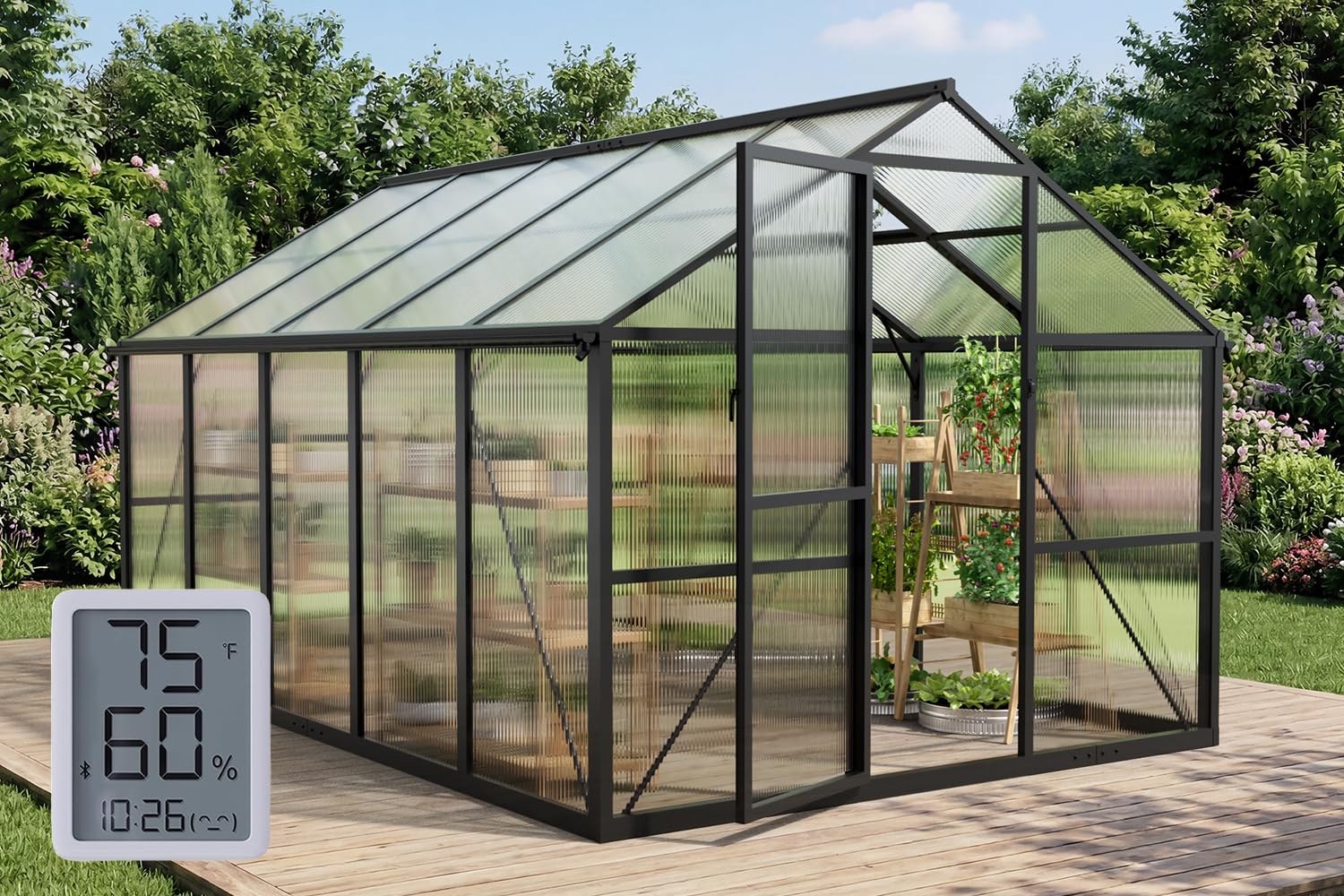
The Sylviera 8×10 FT is built for the gardener who values structural refinement. The aluminum frame is reinforced at every corner junction with gusseted brackets — a detail often omitted from budget kits — and the 4mm twin-wall polycarbonate panels fit flush into extruded channels that seal tightly without excessive silicone. The included hygrometer lets you monitor humidity at a glance, which is useful for tropical seedlings and propagation cuttings that need consistent moisture levels.
Owner reviews consistently note the excellent instruction manual with enlarged diagrams and parts grouped in labeled bags. Most two-person teams completed assembly in about four hours, and several owners mentioned the frame stayed square during panel installation — a sign of precise manufacturing tolerances. The adjustable roof vent works smoothly, though some users found the vent flap needed a rubber band or small latch to stay open in breezy conditions.
The key trade-off is panel density. At 580g/m², the polycarbonate is lighter than the 720g panels used in the FLY BY YAN and WUKHG units, so insulating performance is adequate for three-season use but may require supplemental heating for deep winter propagation in hardiness zones 6 and colder. The door frame on a small number of units arrived slightly out of square, but the aluminum material is forgiving enough to shim during installation.
What works
- Reinforced corner brackets provide exceptional frame rigidity
- Clear, well-organized instruction manual speeds assembly
- Built-in hygrometer aids humidity management
What doesn’t
- 580g/m² panels offer less insulation than 720g alternatives
- Roof vent needs a secondary latch for windy days
4. WUKHG 6×7.5 FT Polycarbonate Greenhouse
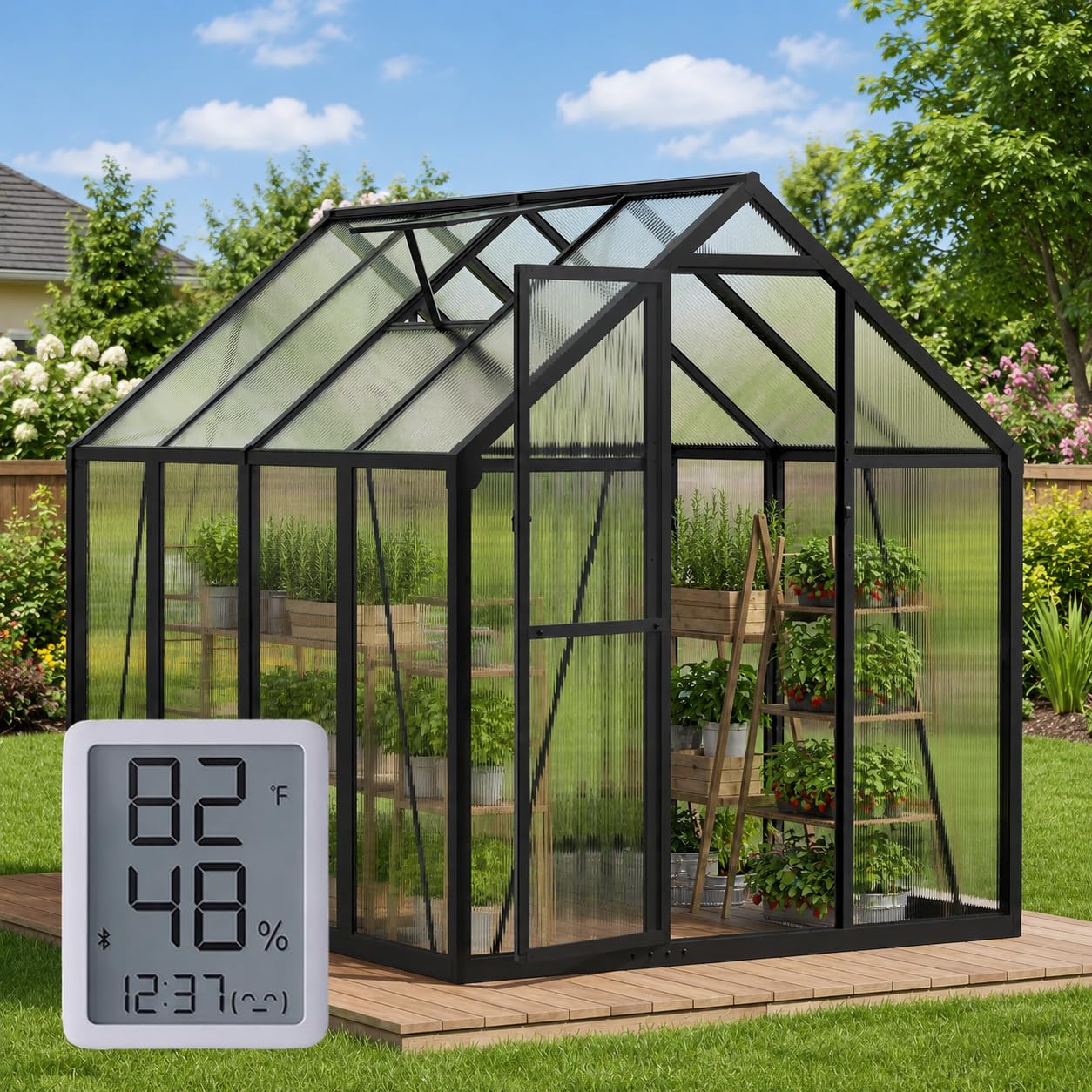
The WUKHG 6×7.5 FT is the smallest rigid greenhouse in this guide, but its build quality punches above the footprint. The 5mm polycarbonate panels are thicker than the 4mm sheets found on most comparably priced units, providing noticeably better heat retention during cool spring nights. The aluminum alloy frame holds the structure tight, and the built-in electronic thermometer gives an instant read of interior conditions without needing an external sensor.
Gardeners with limited patio or deck space will appreciate the compact dimensions — roughly 6 feet wide by 7.5 feet long — which still leave room for two or three tiered shelving units and a narrow walkway. The lockable door and single roof vent provide basic airflow, though owners in hot-summer climates recommend adding a small solar-powered exhaust fan to prevent temperatures from climbing above 110°F on cloudless days.
Assembly is the biggest caveat. Multiple owners described the process as difficult for two people, and a significant number of reviews mention that the roof window detached during the first windy night. The instructions received mixed feedback: some found the labeled symbols helpful, others reported mislabeled parts that required trial-and-error fitting. For a permanent cold-frame or season extender on a compact budget, the build quality justifies the effort, but prospective buyers should budget a full day for setup.
What works
- Thicker 5mm PC panels improve insulation vs 4mm competitors
- Compact footprint fits patios and small urban yards
- Integrated electronic thermometer for instant monitoring
What doesn’t
- Roof vent can detach in gusty winds
- Assembly instructions contain some part-labeling errors
5. KING BIRD Premium 15x7x7 FT Tunnel+ Greenhouse
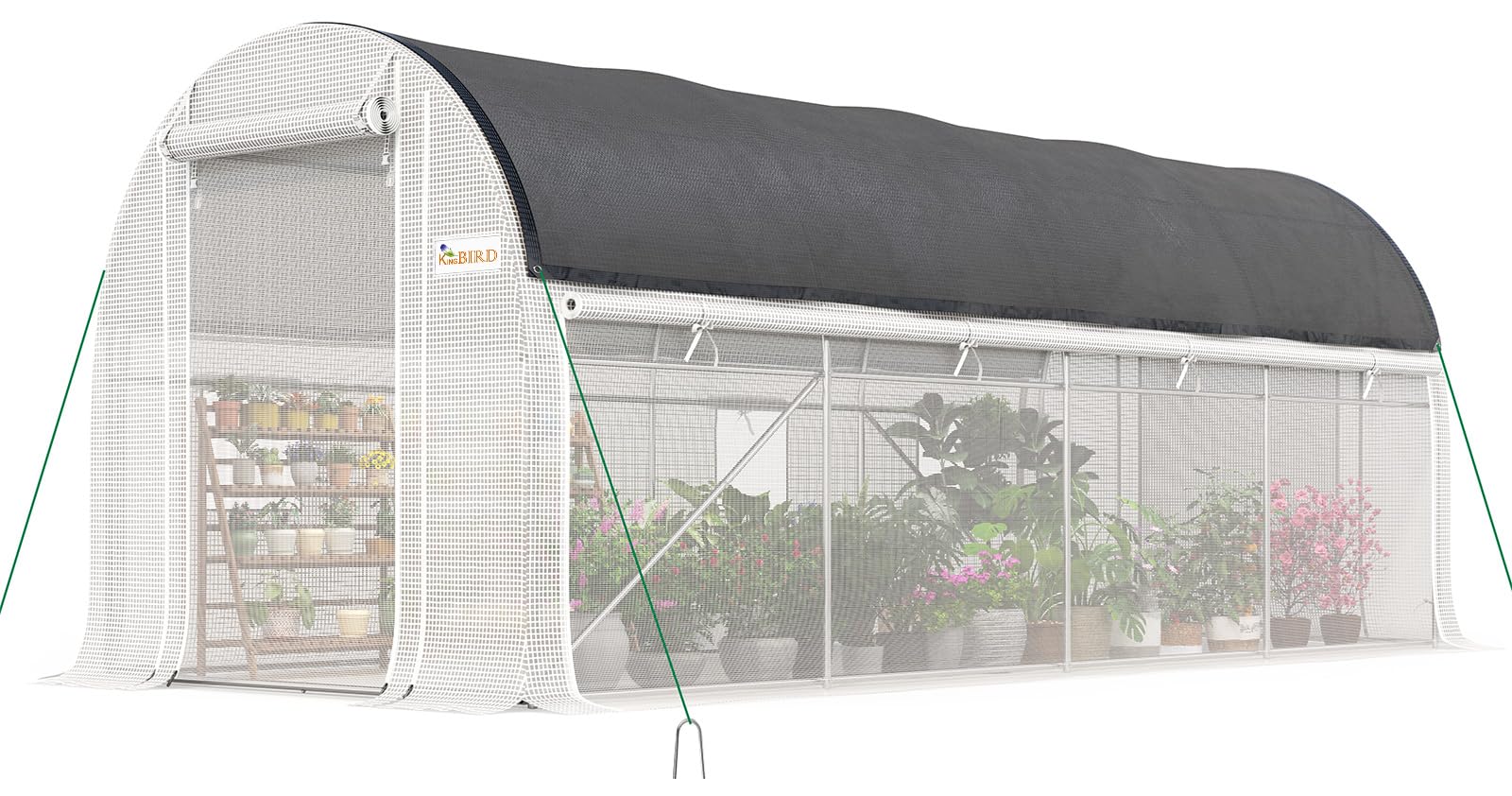
The KING BIRD Premium Tunnel+ is designed specifically for hot climates where excess heat is the primary threat to plant health. The 15x7x7 foot hoop house includes eight roll-up screen windows along both sides plus a full-length mesh side panel that can be zipped open, creating unprecedented cross-ventilation. The included sunshade net is rated to block roughly 80% of harmful UV rays, which prevents leaf burn for shade-loving crops like lettuce, spinach, and orchids during peak summer months.
The 0.7mm galvanized steel frame is the same heavy-gauge material used in the standard KING BIRD 15-footer, and the upgraded #10 zippers on the dual end doors are less prone to jamming than standard #8 zippers. Owners in Texas and Arizona reported that the tunnel maintained manageable interior temperatures even on 100°F days when all windows and the shade net were deployed. The PE cover is reinforced at stress points with double-stitched seams, reducing the risk of tearing along the ridge line.
Durability concerns center on the screen material. Several owners noted that the mesh on the windows and doors began to develop small tears within a few months of daily use in full sun. The manufacturer’s customer service team was responsive in replacing screens under warranty, but the mesh is clearly the weakest component. The shade net is a separate piece that must be draped over the frame and tied down — it is not permanently attached. For heat-prone regions or for gardeners who need maximum airflow, this is the most ventilated option in the lineup.
What works
- Eight roll-up windows plus full side mesh for exceptional airflow
- Included shade net blocks 80% of harmful UV rays
- Heavy 0.7mm galvanized steel frame with reinforced seams
What doesn’t
- Screen mesh is prone to tearing with extended UV exposure
- Shade net is a separate add-on, not integrated into the cover
6. KING BIRD Premium 15x7x7 FT Greenhouse
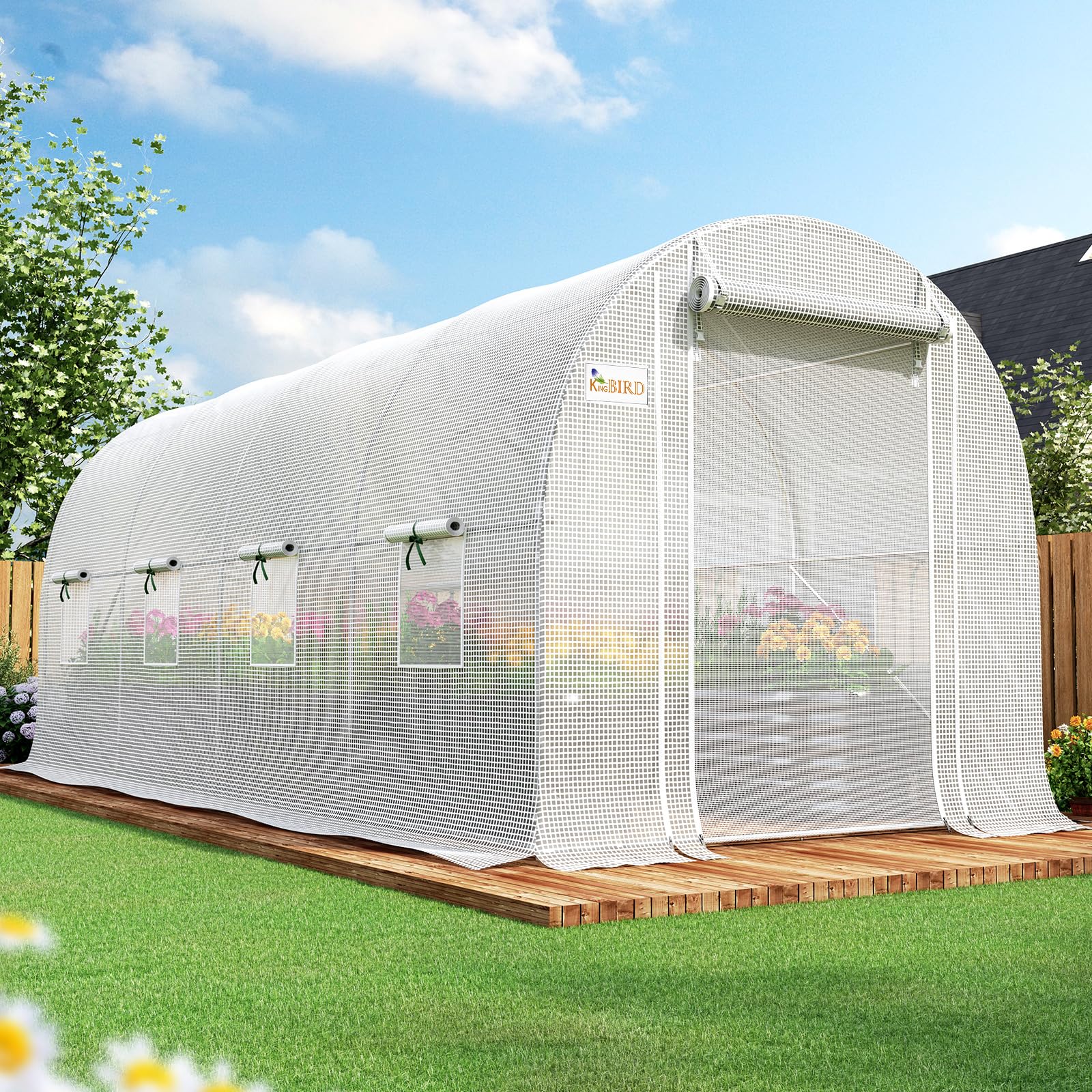
The standard KING BIRD 15x7x7 FT greenhouse is a direct competitor to tunnel-style kits, but it differentiates itself with a PE cover rated at UVI 6 — nearly double the UV resistance of typical budget covers rated at UVI 1-3. The 150 GSM PE grid material feels substantial in hand, and the manufacturer claims a useful life of over two years in direct sun, which aligns with owner reports of the cover surviving one full season without brittle cracking. The 0.7mm galvanized steel frame is noticeably thicker than the 0.35-0.6mm frames found on cheaper pop-up alternatives.
The eight roll-up screen windows plus a mesh inner door provide solid passive ventilation, and the dual end doors make it easy to move through the long tunnel without backtracking. Several owners mentioned that the interior runs 10-15°F warmer than ambient, which is ideal for early spring starts. The included ground stakes and guy ropes are adequate for mild exposure, though most users upgraded to 12-inch auger anchors for real wind security.
Zipper reliability is the most frequent complaint. While KING BIRD upgraded to #10 zippers for this model, a subset of owners experienced zipper separation at the curve points after a few months of daily use. The manufacturer’s KING CARE+ warranty covers free replacement covers, but the replacement process requires the owner to re-cover the frame, which is a multi-hour job. For the price per square foot of covered growing space, this is one of the most economical options, provided you are comfortable with potential zipper maintenance.
What works
- UVI 6 cover resists UV degradation far longer than budget PE
- 15-foot length provides abundant growing space for the cost
- 0.7mm galvanized steel frame is thicker than most competitors
What doesn’t
- Zippers can bind or separate at curve points over time
- Cover replacement is labor-intensive even with warranty support
7. Yardsight 8.5×7 FT Pop-up Greenhouse

The Yardsight 8.5×7 FT pop-up greenhouse offers a generous footprint with an unusual feature set: four separate zippered doors — two on each long side — plus two rolling windows. This configuration makes it one of the few pop-up models that allows true cross-ventilation by opening opposing doors simultaneously. The frame uses a reinforced steel ceiling roof, which adds rigidity at the center point where most pop-up domes sag under light snow.
Owner feedback is strongly positive regarding ease of assembly: the pre-attached brackets and tool-free push-lock design mean most users had the structure fully erected in under 20 minutes with two people. The PE cover is transparent enough to pass good sunlight for seedling development, and the included waterproof potting mat is a thoughtful addition for keeping the floor clean during transplant work. Several users noted that the greenhouse maintained above-freezing temperatures inside when outside temps dropped to 25°F, protecting roses and tender perennials.
The structural weakness is the same one that plagues all pop-up greenhouses: the frame is not designed for significant snow or sustained high winds. Multiple owners reported that the roof caved under 3-4 inches of wet snow and that the side panels collapsed when winds exceeded 30 MPH. The cover is also slightly short at the bottom at maximum height, leaving a gap that small animals can squeeze under. Users managed this by adding a layer of plastic sheeting and tape along the base perimeter. For temperate climates with mild winters, the convenience and ventilation design are excellent; for heavy weather, plan on reinforcing or removing the cover seasonally.
What works
- Four doors and two windows provide excellent cross-ventilation
- Tool-free pop-up assembly in under 20 minutes
- Reinforced steel roof adds center rigidity
What doesn’t
- Frame collapses under wet snow or sustained high winds
- Cover gap at lower edge allows pest entry
8. CROWN SHADES 8×6 FT Pop-up Greenhouse
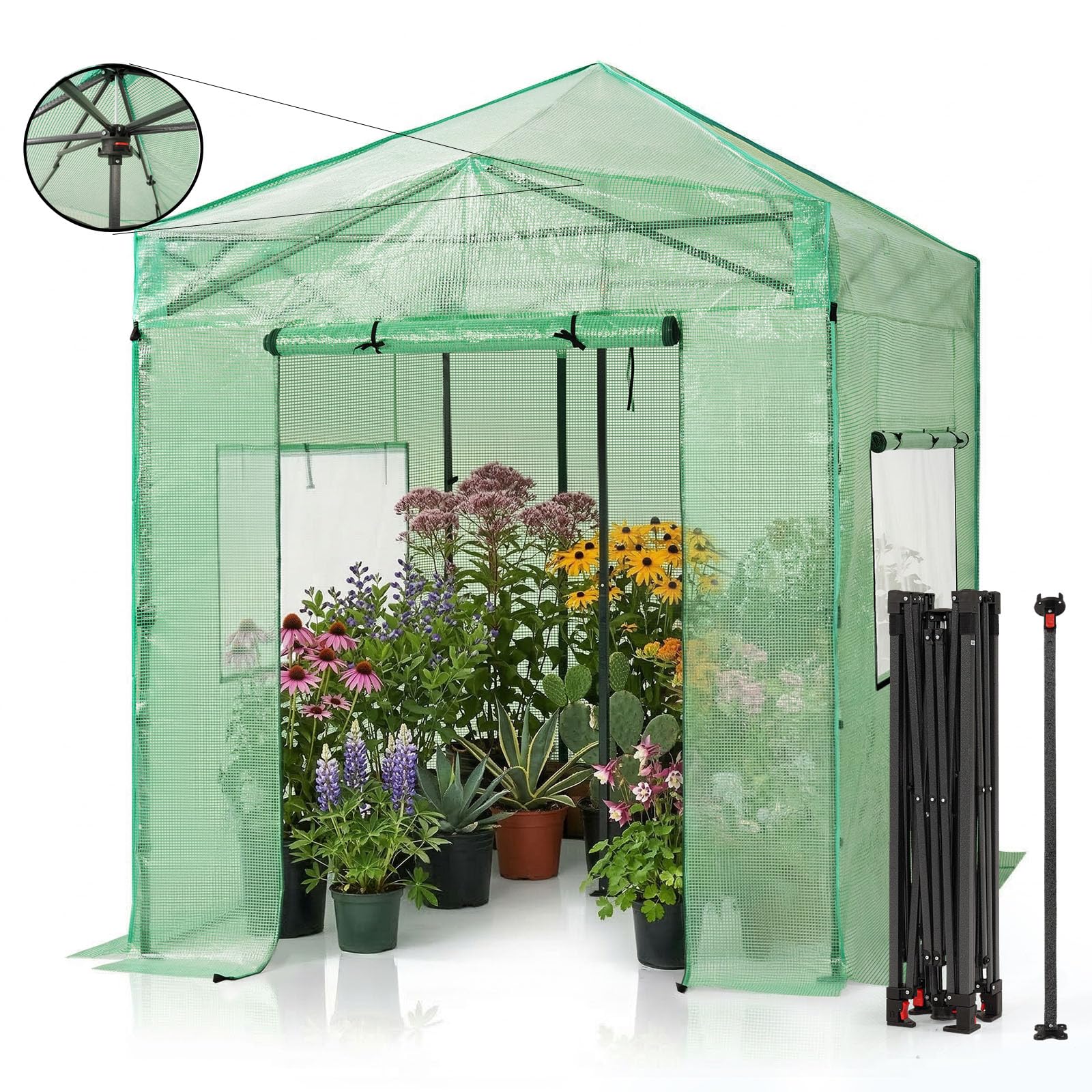
The CROWN SHADES 8×6 FT model targets the gardener who wants the absolute fastest setup. Its patented one-push center lock system lets a single person pop the frame into shape in seconds — no tools, no brackets, no guesswork. An internal support pole under the central hub adds stability beyond typical one-touch designs, and the frame includes three adjustable height settings, so you can lower the roof in high wind or raise it as plants grow taller.
Real-world testing confirms the stability advantage. Multiple owners reported the greenhouse survived 50-60 MPH storms without collapse when properly secured with sandbags and ground stakes — an impressive result for a pop-up unit. The roll-up zippered door and two mesh windows provide decent airflow, and the upgraded anti-aging PE cover resists cracking longer than basic polyethylene. The 8×6 foot interior fits four half-barrel raised beds comfortably, making it a solid choice for deck or patio growers.
The trade-off is material refinement. A few owners reported small tears in the cover at the corner stress points shortly after installation, and the zippers, while functional, feel lighter than those on the KING BIRD models. The frame is sturdy for a pop-up but still uses thin-wall tubing that will eventually fatigue after repeated setup and takedown cycles. For a seasonal greenhouse that you can deploy in minutes and store away during the off-season, the convenience factor is unmatched.
What works
- One-push center lock enables instant tool-free deployment
- Three adjustable height settings adapt to plant growth and weather
- Survives 50+ MPH winds when properly anchored
What doesn’t
- Cover may develop small tears at stress points during deployment
- Zippers feel lighter than mid-range hoop house models
9. Benass 8×6 FT Pop-up Greenhouse
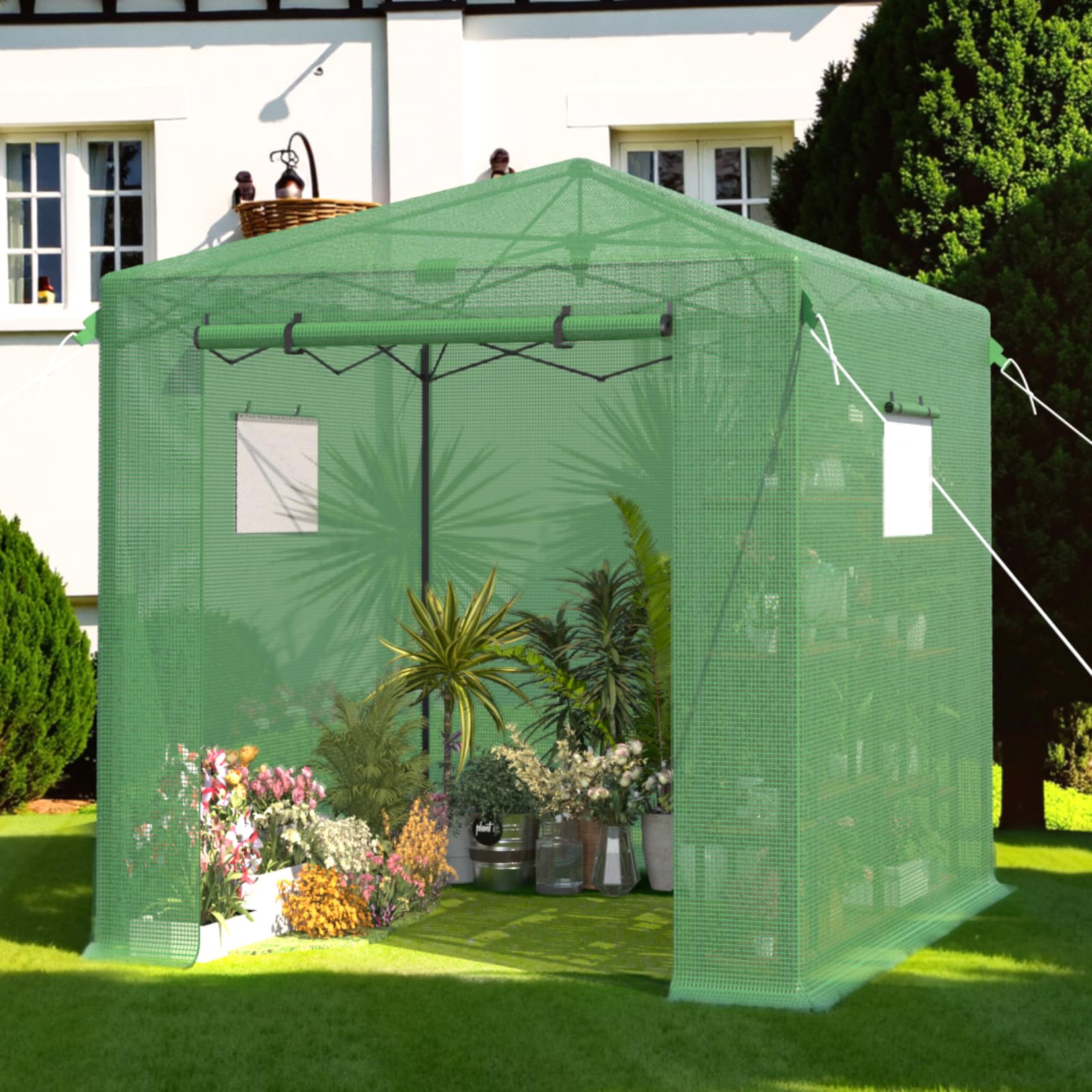
The Benass 8×6 FT pop-up greenhouse is the most budget-friendly walk-in option in this guide, and it delivers the core function of protecting plants from light frost and pests without demanding a large investment. The alloy steel frame is pre-assembled and unfolds into shape with two people in about 15 minutes — no tools required. The PE cover is thick enough to handle intermittent rain and moderate wind, and the roll-up zipper door provides easy access for watering and harvesting.
Owner reports confirm that the greenhouse works well for starting seedlings and protecting early-season vegetables from late frosts. The transparent cover allows good light penetration, and the two side mesh windows provide enough ventilation to prevent condensation buildup during the shoulder seasons. Several users mentioned that the greenhouse performed admirably through a mild winter, keeping plants alive during overnight temperatures in the mid-20s Fahrenheit.
The structural limitations are clear. Multiple owners reported that the frame collapsed under the weight of accumulating wet snow because the roof angle is not steep enough to shed snow naturally. The frame is also susceptible to bending in sustained winds over 30 MPH unless heavily anchored. The PE cover fits well initially but may sag in the center after a few weeks if not supported by the frame’s cross-poles. For a first-time greenhouse buyer in a region with mild winters or for temporary season extension, the Benass 8×6 offers genuine value — just plan to take down the cover before the first heavy snowfall.
What works
- Fast 15-minute no-tool setup ideal for beginners
- Thick PE cover resists rain and moderate wind
- Spacious walk-in interior for pots and shelves
What doesn’t
- Frame collapses under wet snow accumulation
- Cover may sag without proper cross-pole support
Hardware & Specs Guide
Frame Gauge & Coating
Frame thickness is measured in millimeters or gauge (lower gauge = thicker steel). Most pop-up greenhouses use 0.35-0.6mm steel tubing; serious hoop houses like the KING BIRD models use 0.7mm. Galvanized coating (hot-dip or electro-galvanized) resists rust far better than painted steel. Aluminum frames are naturally corrosion-proof but cost more per square foot.
Cover Density & UV Protection
PE cover quality is rated by weight (GSM — grams per square meter) and UV Index (UVI). A 120 GSM cover is entry-level; 150 GSM or higher offers better tear resistance. UVI 6 protection blocks six times more UV radiation than UVI 1, extending cover life from months to years. Polycarbonate panels use thickness (4mm is standard, 5-10mm for premium) and double-wall construction for insulation.
Ventilation & Temperature Control
Passive ventilation relies on roll-up side windows, mesh end doors, and roof vents. A minimum of two opposing openings creates cross-flow. Rigid greenhouses benefit from a dedicated roof vent at the peak, which exhausts the hottest air without creating drafts at plant level. For active cooling, consider adding a solar-powered fan to any greenhouse larger than 8×10 feet.
Snow Load & Wind Ratings
Manufacturers may rate their greenhouses in PSF (pounds per square foot of snow load) or MPH (wind resistance). A 10 PSF rating is the minimum for occasional light snow; 20 PSF is required for northern climates. Wind ratings of 30-35 MPH are typical for rigid kits; pop-up models rarely carry official wind ratings and should be reinforced or taken down during storms.
FAQ
What is the best outdoor greenhouse size for a beginner?
Will a polycarbonate greenhouse survive winter snow better than a PE cover greenhouse?
How do I prevent my outdoor greenhouse from overheating in summer?
Can I leave my pop-up greenhouse up year-round?
Final Thoughts: The Verdict
For most gardeners, the best outdoor greenhouse winner is the FLY BY YAN 8×14 FT because its 720g/m² polycarbonate panels and reinforced aluminum frame deliver permanent-structure durability at a price that undercuts most comparably sized kits. If you need the highest snow load rating available, grab the WUKHG 10×12 FT with its 20 PSF capacity. And for the fastest seasonal setup with genuine wind resistance, nothing beats the CROWN SHADES 8×6 FT and its one-push center lock system.