
Winter doesn’t have to mean the end of your gardening season. A dedicated outdoor greenhouse for winter creates a protected microclimate that keeps tender perennials alive, lets you start seedlings weeks early, and even allows cold-hardy vegetables to produce through the frost. The challenge is finding a structure that can actually handle snow loads, biting winds, and temperature swings without collapsing or leaking heat.
I’m Rikta — the co-founder and writer behind Lawn Gear Lab. I’ve spent hundreds of hours analyzing frame materials, panel densities, ventilation designs, and hundreds of verified owner reports to identify which models genuinely hold up under winter conditions and which are only suited for mild-season use.
Whether you need a compact space for overwintering potted plants or a large walk-in structure for season extension, the right choice depends on panel thickness, frame reinforcement, and sealing strategy. This guide breaks down the key specs and real-world performance of the best outdoor greenhouse for winter options available today.
How To Choose The Best Outdoor Greenhouse For Winter
Winter greenhouses face a different set of demands than their spring-summer counterparts. Snow accumulation, sub-freezing temperatures, and sustained wind require specific construction choices that cheaper models simply don’t address. Here are the critical factors to evaluate before purchasing.
Panel Material and Thickness
Single-layer polyethylene covers offer the least insulation and are prone to tearing under snow weight or UV degradation. Twin-wall polycarbonate panels — typically 4mm to 6mm thick — trap an air pocket between layers, dramatically reducing heat loss. Measured in GSM for film covers (150 GSM is a minimum winter baseline) or mm for rigid panels, higher numbers mean better thermal retention. UV coating also prevents the panels from becoming brittle and cracking after one season of intense winter sun.
Frame Construction and Anchoring
The frame must resist both vertical snow loads and lateral wind forces. Galvanized steel with a minimum 0.7mm wall thickness offers a good strength-to-weight ratio for larger structures. Aluminum frames resist corrosion but may require thicker extrusions or additional bracing to match steel’s rigidity. Anchoring is non-negotiable — most kits include ground stakes, but many owners find that cinder blocks, screw-in earth anchors, or a treated lumber perimeter base are essential for withstanding winter storms.
Ventilation and Condensation Control
Winter greenhouses trap moisture, and condensation on cold panels can drip onto plants, encouraging fungal diseases. Adjustable roof vents, side roll-up panels, or screened windows allow you to bleed out humid air even on cold, sunny days. A minimum of one operable vent per 50 square feet of floor space is a good rule of thumb. Models with netted vents also provide summer ventilation without pest intrusion.
Size and Interior Clearance
Taller greenhouses retain heat more effectively because warm air stratifies above the plants, but they also present larger targets for wind. The ideal height for a winter walk-in greenhouse is around 7 feet at the peak — enough to stand comfortably without excessive wind profile. Width should accommodate your planned shelving or raised beds with enough aisle space to move freely while wearing winter layers. Measure your available ground space carefully and resist the temptation to buy a model that leaves no room for thermal mass (water barrels or stone) which helps stabilize overnight temperatures.
Quick Comparison
On smaller screens, swipe sideways to see the full table.
| Model | Category | Best For | Key Spec | Amazon |
|---|---|---|---|---|
| Palram – Canopia 4×8 | Premium | Permanent Lean-To Structure | Twin-wall PC roof + clear PC walls | Amazon |
| Sylviera 12×12 T-Shape | Premium | Large All-Season Growing Space | 6mm twin-wall PC panels | Amazon |
| FLY BY YAN 8×14 | Premium | Rigid Quick-Install System | 720g/m² PC panels | Amazon |
| YITAHOME 12x6FT | Mid-Range | Long Narrow Spaces | 4mm UV-blocking PC | Amazon |
| Outsunny 6×6 | Mid-Range | Backyard Seedling Nursery | 0.16″ polycarbonate panels | Amazon |
| WUKHG 6×7.5 | Mid-Range | Season Extension with Thermometer | 4mm twin-wall PC | Amazon |
| KING BIRD 15x7x7FT | Mid-Range | Budget Walk-In Value | 0.7mm galvanized steel frame | Amazon |
| ShelterLogic 10×20 | Value | Large Temporary Growing Space | 6mil UV-treated PE cover | Amazon |
| DGSL 14-Pack Panels | Utility | Replacement or DIY Covers | 0.24″ twin-wall PC sheets | Amazon |
In‑Depth Reviews
1. Palram – Canopia 4×8 Lean-To Greenhouse

Palram’s lean-to design is a smart solution for winter gardeners who have a solid wall (house, garage, or shed) to mount against. The wall acts as a massive thermal mass that absorbs daytime solar gain and radiates heat back at night, significantly reducing nighttime temperature drops compared to freestanding models of the same volume. The combination of twin-wall polycarbonate roof panels and crystal-clear polycarbonate walls gives you both insulation overhead and maximum light transmission on the sides — a hybrid approach that compromises on neither.
The powder-coated aluminum frame resists oxidation, while the galvanized steel base provides a corrosion-proof foundation that you can bolt directly into a concrete slab or a treated lumber frame. Winter owners consistently report that this greenhouse holds up through Northeast winters with the addition of tie-down straps for high wind events. The adjustable roof vent and magnetic door catch give you fine-grained control over humidity without requiring you to leave the door cracked open in sub-freezing weather.
Assembly is a multi-hour project best done with two people, and owners note that the manual requires careful attention to the roof bracket numbering. Once anchored to a 4×6 base with lag bolts, the structure feels locked in. The built-in gutter system is a practical addition for collecting rainwater in the spring, though in winter its primary function is preventing ice dams from forming on the frame. For anyone with a suitable wall, this is the most thermally efficient standard kit available.
What works
- Lean-to design leverages wall thermal mass for frost protection
- Galvanized steel base resists ground-level corrosion
- Hybrid twin-wall roof and crystal-clear wall panels
What doesn’t
- Assembly is tedious and roof brackets can be misnumbered
- Clear wall panels feel thin and may need caulk for windproofing
- Limited to 4×8 footprint — not for large-volume growers
2. Sylviera 12×12 FT T-Shape Greenhouse
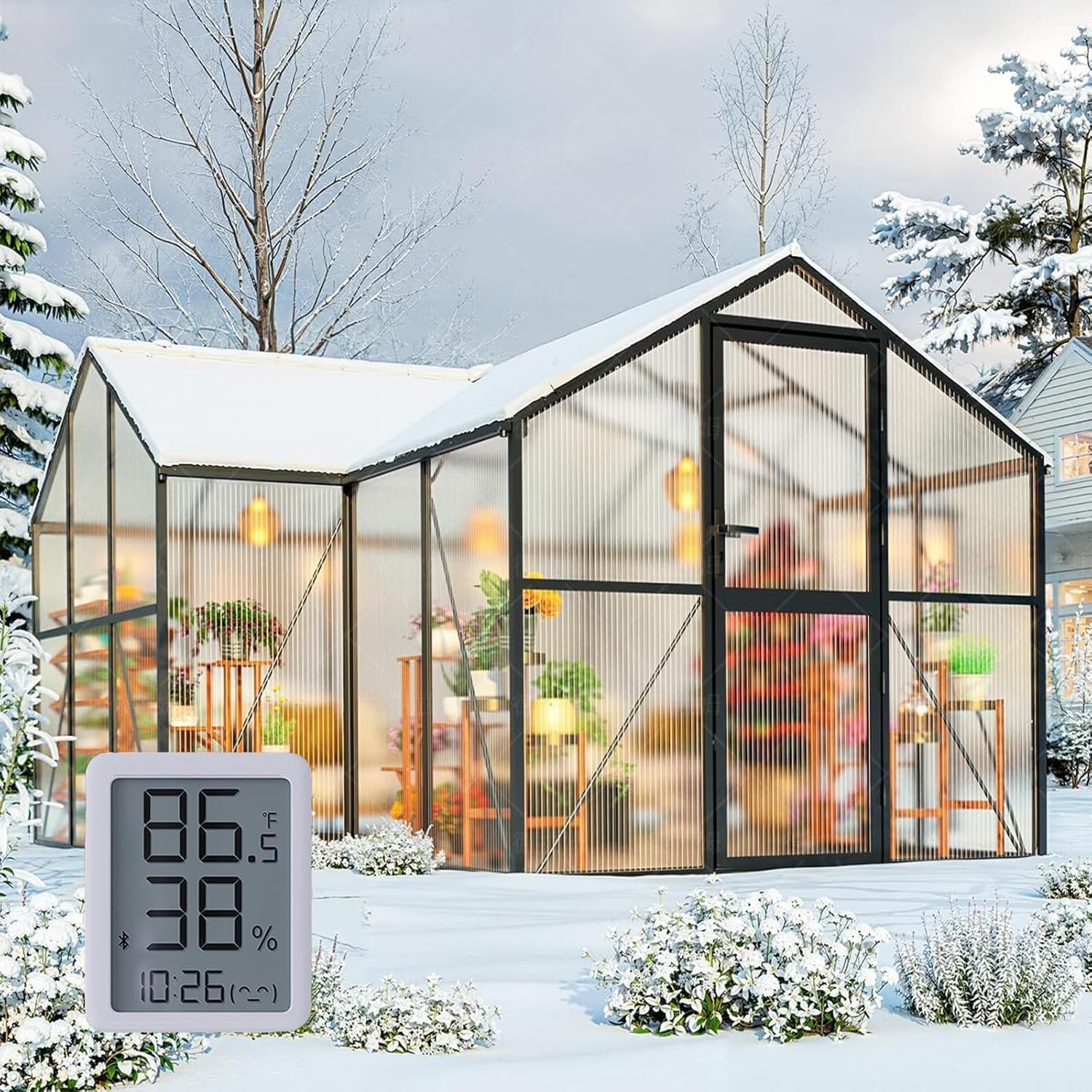
The Sylviera 12×12 is built for gardeners who want a true permanent structure without moving into DIY shed territory. Its 6mm twin-wall polycarbonate panels — significantly thicker than the 4mm standard — provide superior insulation per square foot, which directly translates to fewer overnight temperature swings. The T-shape design adds structural bracing at the corners where most freestanding greenhouses fail under snow accumulation. At 84 inches of peak height, it offers comfortable standing room while keeping the wind profile lower than taller arch-style units.
Winter performance reports consistently praise its ability to stay 15 to 20 degrees warmer than outside temperatures without supplemental heat, especially when the bottom edges are sealed with silicone and the frame is anchored to a 2×4 base. The inclusion of an app-connected thermometer is a welcome modern touch, letting you track temp drops remotely. The adjustable roof vents have support arms that benefit from a small rubber band to prevent wind from unhooking them — a minor DIY fix that experienced greenhouse owners apply preemptively.
Assembly is not quick — expect a full weekend with two people, and the instructions contain errors that require careful cross-referencing with the parts layout. Some owners report that panel slots don’t perfectly align with the frame channels, requiring tape or gentle persuasion to seat properly. Despite these build frustrations, the finished structure provides a wind-resistant, well-lit, and thermally stable environment that justifies the investment for serious winter growers who need square footage.
What works
- 6mm twin-wall panels offer best-in-class insulation for a kit
- App-connected thermometer enables remote temperature monitoring
- T-shape corner bracing improves snow-load resistance
What doesn’t
- Assembly instructions have errors and need careful interpretation
- Panel-to-frame fit can be inconsistent
- Roof vent support arms need DIY security bands
3. FLY BY YAN 8×14 FT Greenhouse
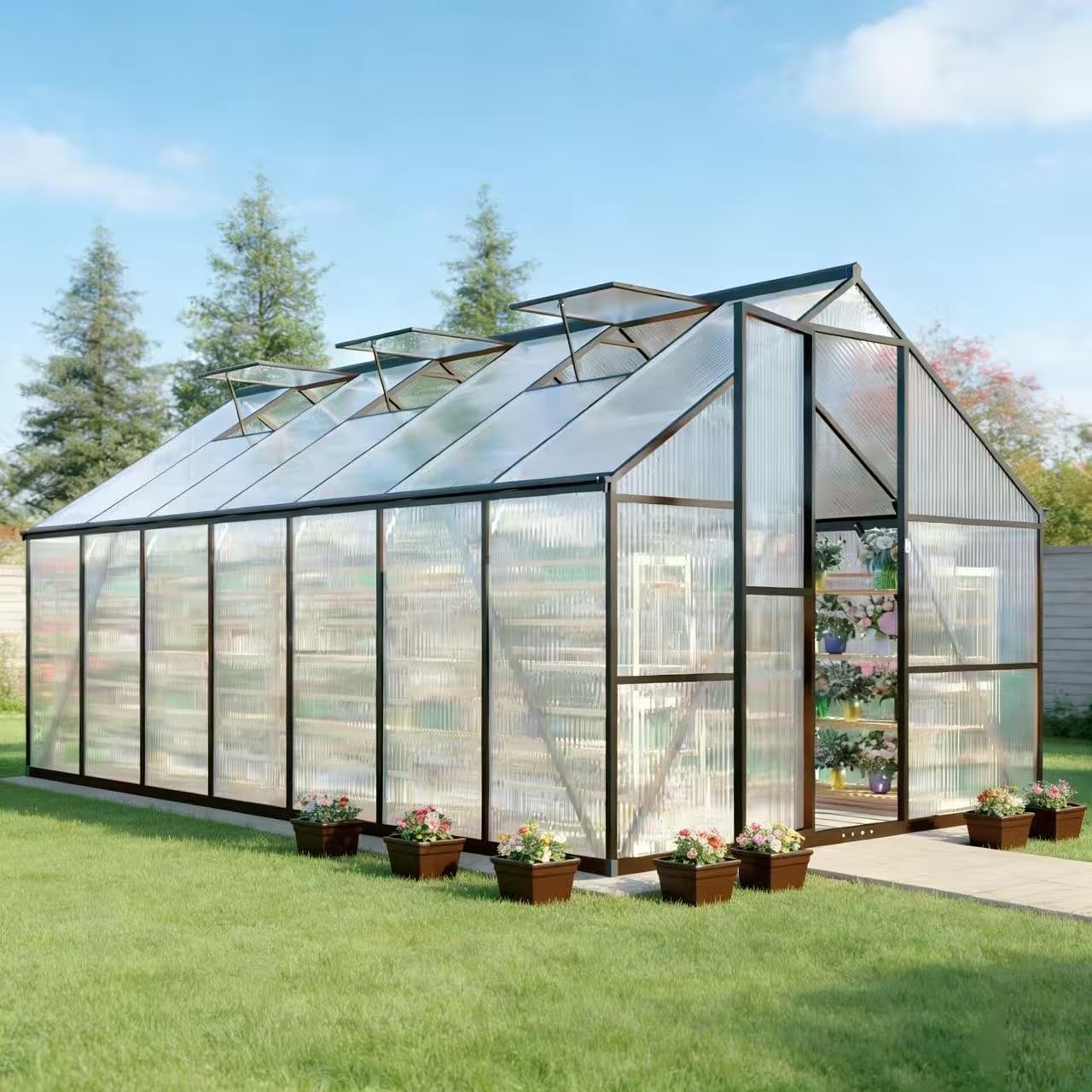
FLY BY YAN engineered the 8×14 with a specific focus: reduce assembly time without sacrificing structural rigidity. Their quick-install system and slide-in panel design, refined through over 500 tests, claims a 40-percent speed improvement over traditional kits. In practice, owners confirm that the panel insertion is smoother than most, though total assembly with four people still takes a full day. The 720g/m² polycarbonate panels are denser than the standard 580g sheets used by many competitors, providing noticeably better impact resistance and light diffusion.
The charcoal black finish is a practical choice — it absorbs solar heat during winter days, slightly raising the ambient temperature inside the frame before the sun even hits the panels. The reinforced aluminum frame, combined with extra structural fittings at stress points, took 60-mph winds with only minor damage in owner tests. Three adjustable vents give you granular airflow control, and the lockable doors offer security for high-value plants or tools stored inside.
That said, the sheer size of this unit demands serious commitment. Assembly with fewer than three people is frustrating, and the instruction manual has gaps that require you to figure out some sub-assembly sequences on your own. The panels, while denser than budget options, are still thin enough to require glass-glue sealing at the joints for full weatherproofing. Owners who anchor it to a level, treated lumber base and seal all seams get a greenhouse that competes with units costing significantly more.
What works
- Slide-in panel system reduces assembly headache
- 720g/m² PC panels are denser than industry standard
- Charcoal frame adds passive solar heat gain
What doesn’t
- Still requires 3-4 people and a full day to build
- Instructions lack clarity on some assembly steps
- Panel joints need aftermarket sealing for full weatherproofing
4. YITAHOME 12x6FT Polycarbonate Greenhouse
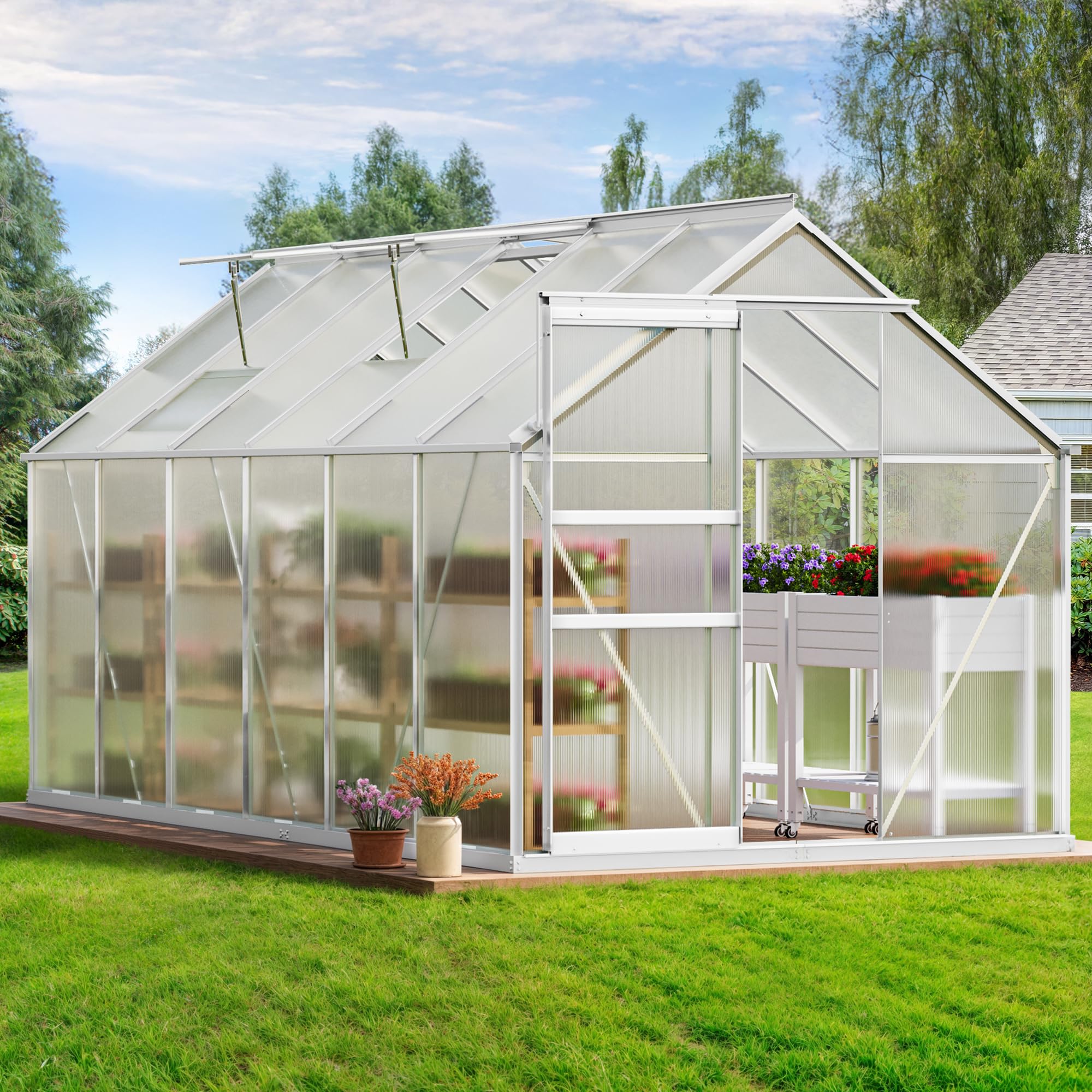
The YITAHOME 12×6 is a strong mid-range contender for winter use, offering 72 square feet of floor space in a long, narrow footprint that fits neatly against a fence or property line. Its aluminum alloy frame and 4mm twin-wall polycarbonate panels block 99 percent of UV radiation while diffusing light evenly across the growing area. The sliding door is a standout feature for winter — no outward-swinging door to block with drifted snow, and the track keeps the seal tight against cold drafts.
Owners report that the interior runs 10 to 15 degrees warmer than outside air with the bottom edges sealed, making a significant difference for over-wintering tender perennials. The two adjustable skylights provide essential moisture release on sunny winter days, and the included expansion screws allow you to anchor the base directly into the ground or a concrete pad. The reinforced rods and diagonal bracing give the frame noticeably less flex than cheaper aluminum models, which directly translates to better wind survivability.
Assembly is manageable for a single person over a few hours, though some pieces arrive with off-center holes that require minor field adjustment with duct tape or a file. The recommendation to bury the bottom frame in a trench for added stability is worth following — it prevents ground-level air infiltration and adds anchor points. The primary risk is that some owners report the structure collapsing under extreme winds if not fully anchored, so this is not a set-it-and-forget-it purchase; it rewards proper installation.
What works
- Sliding door prevents snow blockage and seals tight
- Two adjustable skylights for winter moisture control
- Diagonal bracing reduces frame flex in wind
What doesn’t
- Some frame holes are off-center and need adjustment
- Requires trenching or brick sealing for full winter performance
- Flimsy under extreme winds without deep anchoring
5. Outsunny 6×6 Greenhouse

The Outsunny 6×6 is a compact polycarbonate greenhouse that prioritizes functionality over size. Its 6×6 footprint fits into tight backyard corners, and the 6.4-foot peak height provides enough clearance for shelving and small trellises. The included rain gutter system is a practical addition for spring water collection, and the adjustable roof vent gives you humidity control on sunny winter days when condensation builds up rapidly inside a sealed structure.
The aluminum frame is lightweight, which is a double-edged sword in winter. On one hand, assembly is straightforward with a drill and rubber mallet, and the silver finish resists corrosion. On the other, several owners have reported that the entire structure can lift or flip in strong winds if not adequately anchored. The kit does not include anchoring hardware, which is a significant omission for a winter greenhouse. Experienced owners recommend bolting it to a concrete base or weighing down the bottom frame with cinder blocks and sealing all seams with caulk.
The polycarbonate panels are on the thinner side at 0.16 inches, and some owners have experienced cracking under light snow loads. The Dutch door is a nice feature for transitional weather — you can open the top half to vent while keeping the bottom closed against small animals. For mild-winter climates or gardeners willing to add significant anchoring and seam sealing, this is a functional and affordable starter greenhouse. For heavy-snow regions, it requires substantial reinforcement to be reliable.
What works
- Compact 6×6 footprint fits small spaces
- Rain gutters included for water collection
- Dutch door allows partial venting
What doesn’t
- No anchoring hardware included for wind resistance
- Thin polycarbonate panels prone to cracking under snow
- Lightweight frame can lift or flip in storms
6. WUKHG 6×7.5 Greenhouse with Thermometers
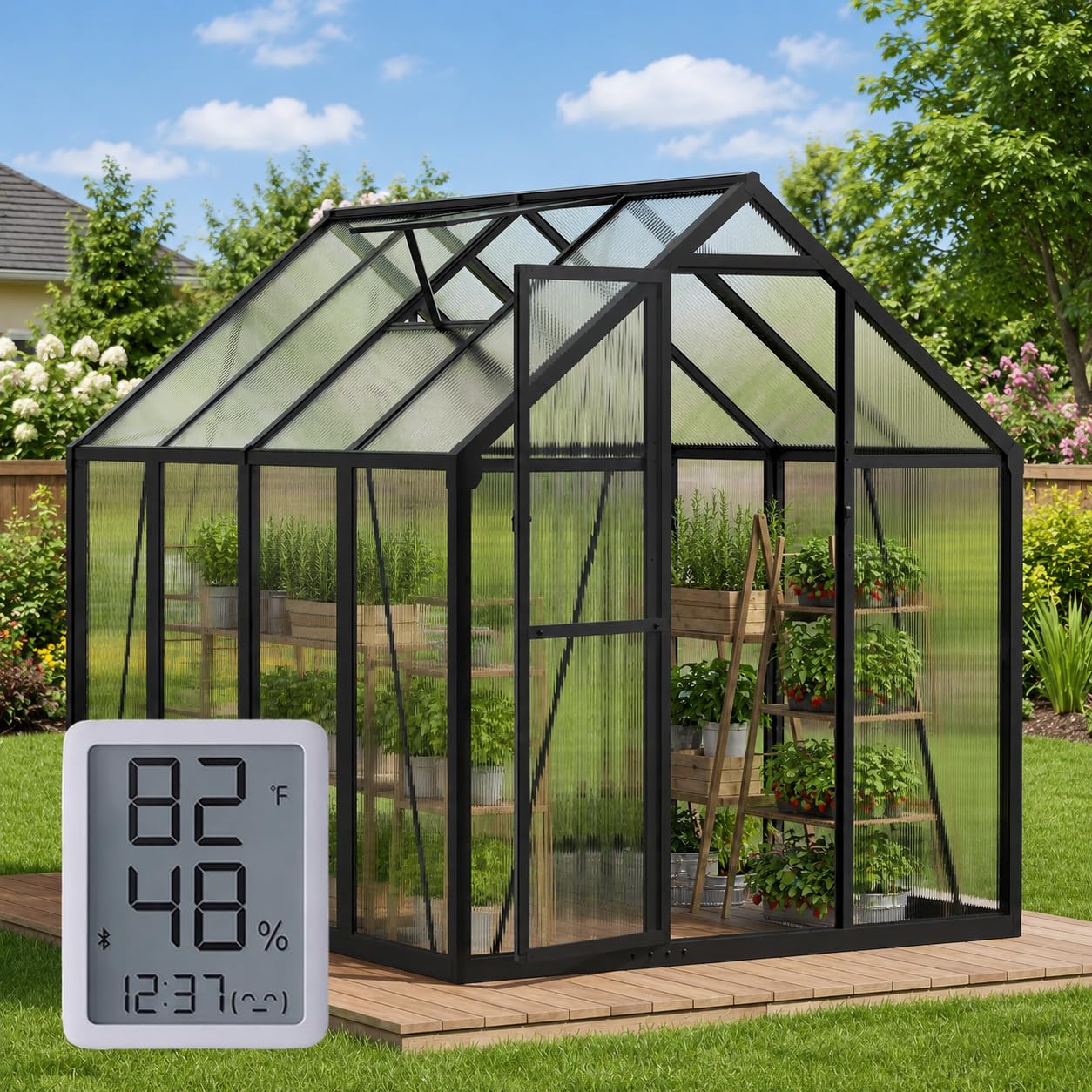
The WUKHG 6×7.5 is an entry-level polycarbonate greenhouse that includes an electronic thermometer — a genuinely useful feature for monitoring overnight lows without stepping outside. The 4mm twin-wall panels and aluminum frame provide basic winter protection, and owners consistently report interior temperatures 40 to 50 degrees warmer than outside on sunny winter days. For season extension — starting seedlings a few weeks early or hardening off transplants — this is a capable tool at a manageable price point.
However, the winter limitations are clear. The single roof vent is small and can blow open in high winds, and the frame lacks the structural bracing needed for heavy snow loads. Several owners report that the greenhouse heats up rapidly during the day but cools to ambient outdoor temperatures by midnight, meaning it cannot reliably protect plants from hard frosts without an additional heat source. The panels are thin enough that hail or heavy sleet can cause damage over time.
Assembly requires patience — the parts are labeled with symbols, but the manual is sparse on sequence details. Three people are recommended, and some owners note that the roof window detached during installation. Pre-drilling holes for the frame connections and using a level base are essential steps that the instructions under-emphasize. For gardeners in USDA zones 7 and warmer who want a budget-friendly way to get a jump on spring, this works well. For deep-winter growing, it needs a heater and aggressive windproofing.
What works
- Built-in thermometer for remote temperature checks
- 4mm twin-wall panels provide decent light diffusion
- Affordable entry point for season extension
What doesn’t
- Rapid nighttime heat loss without supplemental heating
- Single roof vent can blow open in wind
- Insufficient bracing for heavy snow loads
7. KING BIRD 15x7x7FT Walk-In Greenhouse
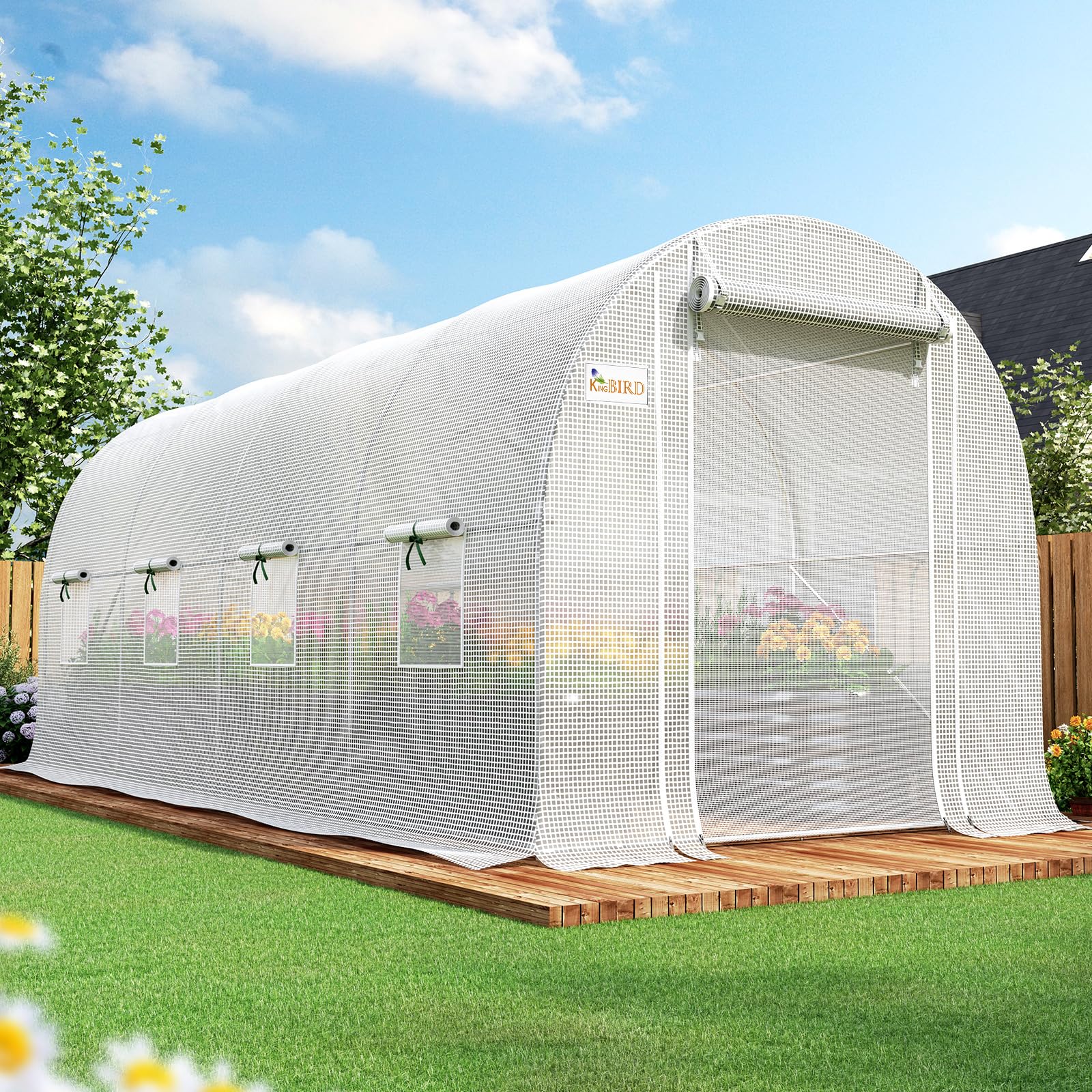
The KING BIRD 15×7 is the surprise winter performer in the budget-adjacent range, offering a galvanized steel frame with 0.7mm wall thickness — roughly double the material gauge of typical pop-up greenhouses. This makes a real difference when snow accumulates: the frame doesn’t rack or twist under the first real storm. The 150 GSM PE grid cover with UVI 6 protection is a significant upgrade from the UVI 1-3 covers that degrade within months, and owners confirm it survives multiple seasons without becoming brittle or tearing at stress points.
Ventilation is handled by eight roll-up screen windows plus a door with both plastic and mesh layers, giving you fine-grained control over moisture even in winter. The upgraded #10 zippers are a noted improvement over the #8 zippers that fail on cheaper hoophouses, though some owners still experienced zipper issues that the company resolved under the included KING CARE+ service plan. The structure is 7 feet tall at the peak, providing enough clearance for a 5-foot-6-inch person to stand comfortably.
The key winter caveat is that the PE cover is loud in high winds and should be removed or reinforced during severe storms. Owners in extreme wind areas report that the cover flapping can create enough force to damage the zipper channels. Additionally, there are no roof vent flaps — all ventilation is at ground and door level, which limits hot-air release at the peak. For mild-to-moderate winter climates (zones 7-9) and for budget-conscious growers who need a large enclosed space, this is the strongest value proposition in the lineup.
What works
- 0.7mm galvanized steel frame is nearly 2x thicker than competitors
- UVI 6 PE cover resists UV degradation for multiple seasons
- Excellent ventilation with eight roll-up screens and dual-layer door
What doesn’t
- PE cover is loud in high winds and may need removal in storms
- Zipper quality is improved but still a potential failure point
- No roof-level venting for hot air escape
8. ShelterLogic 70658 Greenhouse-in-a-Box 10×20

The ShelterLogic 10×20 is a polyethylene-covered hoop house designed for maximum volume at a minimal price point. The 1.34-inch alloy steel frame with patented ShelterLock stabilizers provides a rigid skeleton that, with proper anchoring, can withstand 40-mph winds. The translucent PE cover is UV-treated to allow diffused light transmission, and the 8-foot peak height creates a genuinely usable interior space where you can stand upright and move entire shelving units without stooping. This is the model for gardeners who need to cover a lot of ground — think 20-foot rows of overwintering greens.
Winter performance depends entirely on your willingness to reinforce the stock anchoring system. The included 18-inch ground stakes are better than most, but owners uniformly recommend adding cinder blocks or earth auger anchors, especially in zones where snow accumulation creates lateral pressure on the frame. The cover itself is 6mil thickness and UV-blocking, but it is not clear — it creates a bright, diffused interior perfect for starting seedlings but not for high-light-demand winter crops like full-size tomatoes without supplemental lighting.
The primary winter weakness is the cover’s zipper and seam durability. Multiple owners report that cover seams begin to separate after one or two seasons, and the warranty process requires extensive photographic documentation. The roll-up side panels provide excellent ventilation control, and the half-moon screen vents at each end allow passive airflow that reduces condensation. For heavy-snow regions, the peaked roof design sheds snow reasonably well, but you should plan on clearing accumulations after major storms to prevent frame stress.
What works
- Massive 10×20 footprint provides 200 sq ft of growing space
- 1.34-inch steel frame with ShelterLock stabilizers is rock solid
- Roll-up side panels enable fine-grained winter vent control
What doesn’t
- Cover seams are prone to separation within 1-2 years
- Warranty process requires excessive photo documentation
- Arching frame requires manual snow clearing in heavy storms
9. DGSL 14-Pack Polycarbonate Greenhouse Panels
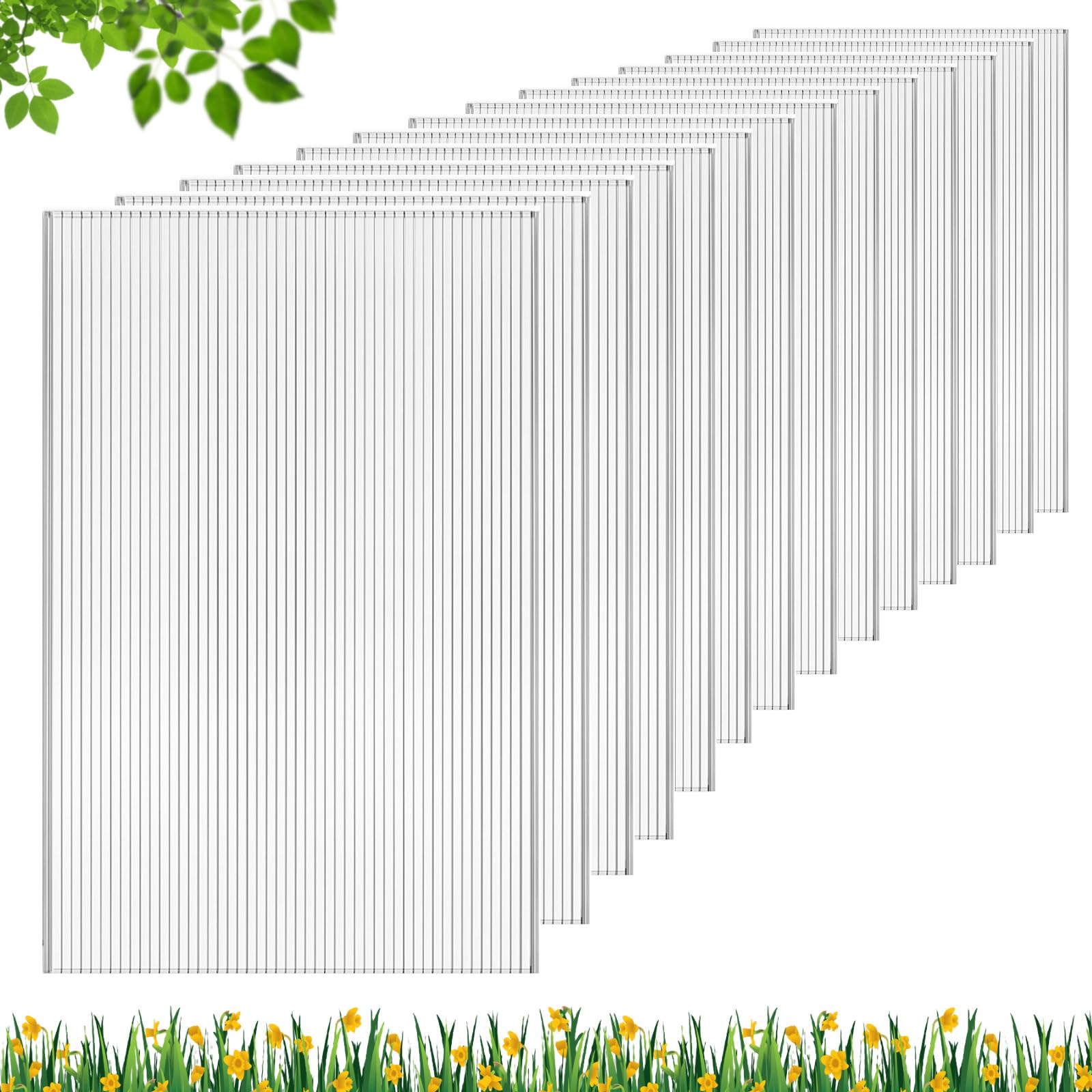
The DGSL panel pack is not a complete greenhouse — it is a 14-pack of 6×2-foot twin-wall polycarbonate sheets designed for replacing damaged panels on existing greenhouses or for custom DIY builds. At 0.24 inches thick, these panels sit between standard 4mm and 6mm options, offering a middle-ground insulation value that is noticeably better than the thin sheets found on budget kits. The panels transmit roughly 80 percent of light, which is ideal for winter when every lumen counts, while the UV coating prevents yellowing and brittleness over time.
Winter users have successfully used these to wrap chicken runs, replace broken panels on Palram and other name-brand greenhouses, and even board up house windows for extra storm protection. The panels cut easily with a fine-tooth saw blade or a sharp utility knife, and the protective film peels off cleanly — but you must store the sheets away from direct heat and sunlight before installation to prevent the film from bonding permanently. The working temperature range of -44°C to 120°C confirms they won’t crack in extreme cold.
The main consideration for winter use is that these panels are not a standalone solution — you need an existing frame or the willingness to build one from lumber. The panels also require proper mounting with washer screws and sealing compound at the joints to prevent convective heat loss. For the DIY gardener who wants to upgrade a flimsy cover or build a custom-sized cold frame, this pack provides high-quality raw material at a reasonable per-panel cost. The price per panel is moderate, but the utility of having spares for winter breakage is considerable.
What works
- 0.24-inch twin-wall construction provides solid insulation
- Cuts easily with standard tools for custom sizing
- UV-coated to resist yellowing and brittleness
What doesn’t
- No frame included — requires existing structure or DIY build
- Protective film can bond permanently if stored in heat
- Cost adds up when covering a full-sized greenhouse
Hardware & Specs Guide
Polycarbonate Thickness
The single most important spec for winter heat retention in rigid-wall greenhouses. Measured in millimeters, twin-wall sheets (4mm to 6mm) trap air between layers for insulation. Thicker panels (6mm) reduce nighttime heat loss by roughly 30 percent compared to 4mm panels. For PE-covered greenhouses, look for material weight above 150 GSM and UV Index ratings of 6 or higher to prevent the cover from degrading under winter sun.
Frame Gauge and Material
Galvanized steel with a wall thickness of 0.7mm or greater provides the best strength-to-weight ratio for winter snow loads. Aluminum frames are lighter and corrosion-proof but require thicker extrusions (1.5mm+) or additional cross-bracing to match steel’s rigidity. Frame connectors that use interlocking or bolted joints (rather than simple pin-and-sleeve designs) are less likely to fail under repeated freeze-thaw cycles. Always add your own anchoring — stock stakes are rarely sufficient for winter conditions.
Ventilation Area
Winter greenhouses create a sealed environment that can reach 100°F on sunny days even when it’s freezing outside. This thermal swing causes massive condensation that drips onto leaves, promoting botrytis and powdery mildew. Look for at least one operable vent (roof or wall) per 50 square feet of floor space. Roll-up side panels are more effective than small roof vents because they create cross-flow ventilation at plant level. Automatic vent openers that trigger at a set temperature are a worthwhile upgrade for winter.
Thermal Mass Potential
A winter greenhouse’s ability to stay warm overnight depends partly on the thermal mass inside it. Heavy materials like concrete floors, stone pavers, or 55-gallon water barrels absorb solar heat during the day and radiate it back at night. A greenhouse with a strong foundation (treated lumber skid or concrete slab) allows you to add this mass. Lightweight structures sitting directly on grass cannot support significant thermal mass and will experience sharper overnight temperature drops — plan your base accordingly.
FAQ
Can I keep plants alive in an outdoor greenhouse all winter without a heater?
How do I anchor a winter greenhouse to prevent wind damage?
Should I remove the cover from my greenhouse in winter?
Final Thoughts: The Verdict
For most gardeners, the best outdoor greenhouse for winter winner is the KING BIRD 15x7x7FT because its heavy-duty 0.7mm galvanized steel frame and UVI 6 PE cover deliver exceptional cold-weather durability at a mid-range investment that doesn’t break the bank. If you want the thermal efficiency of rigid polycarbonate panels against a thermal-mass wall, grab the Palram Canopia 4×8 lean-to. And for serious all-season growers who need 200 square feet of protected growing space, nothing beats the value and volume of the ShelterLogic 10×20 hoop house with proper anchoring reinforcement.