
Specs are compiled from manufacturer listings and verified buyer reviews and can change over time — please confirm the key details on the product page before buying.
You want fresh basil, mint, or cilantro from your kitchen window, but the wrong soil can turn a pot into a swamp or a desert. Finding the right mix means picking something that drains fast enough to avoid soggy roots while holding just enough moisture so you are not watering twice a day. This guide cuts through the claims to help you match the best organic soil to your specific herbs and containers.
I’m Rikta — the founder and writer behind Lawn Gear Lab. This guide is built by comparing the manufacturers’ published specifications and the patterns across verified customer reviews, so you get each pick’s real strengths and trade-offs instead of marketing spin.
organic soil for herbs in pots needs to balance aeration (air flow in the soil), drainage, and nutrient density, and the six blends here represent the best options available for window sill, patio, and container herb gardens.
Quick Picks
- Coast of Maine Organic & Natural Bar Harbor — Best Overall
- Espoma Organic Potting Soil Mix — Large-Project Choice
- Espoma Organic Potting Soil Mix (8 qt. 2-Pack) — Versatile Performer
- Back to the Roots All-Purpose Potting Mix 6 — Top Value
- Miracle-Gro Organic Indoor Potting Mix — Moisture Manager
- Herbs and Leafy Greens Soil — Targeted Herb Mix
How To Choose The Best Organic Soil For Herbs In Pots
The biggest mistake is grabbing any bag labeled “potting mix” without checking the texture. Herbs need a light, fluffy mix that lets roots breathe and water move through freely. A dense, waterlogged soil will cause root rot (where roots turn brown and mushy from too much moisture), which kills basil and mint faster than neglect.
Drainage and Aeration Matter Most
Look for ingredients like perlite (those small white rocks that create air pockets), coir (coconut husk fiber), or sand that create air pockets in the soil. These prevent the mix from compacting into a brick, allowing water to flow out the bottom of the pot and oxygen to reach the roots.
Check for Organic Certification
An “organic” label on a soil bag usually means the ingredients were grown without synthetic pesticides or fertilizers. OMRI (Organic Materials Review Institute) listing is the most reliable seal you will find. It means the mix meets strict organic standards.
Match Volume to Your Pots
A small 2-quart bag is perfect for one or two small pots on a window sill. A 16-quart or 2-cubic-foot bag is what you need if you are filling several large patio containers. Buying too much means storing damp, open bags; buying too little means an extra trip to the store.
Quick Comparison
| Model | Best For | Volume | Item Weight | Key Ingredient | Amazon |
|---|---|---|---|---|---|
| Coast of Maine Bar Harbor Blend | Premium container gardens | 16 Quarts | 14 Pounds | Lobster & crab shell meal | Amazon |
| Espoma Organic Potting Mix (2 cu ft) | Large planting projects | 2 Cubic Feet | — | Myco-Tone mycorrhizae | Amazon |
| Espoma Organic Potting Mix (8 qt 2-Pack) | Versatile indoor/outdoor use | 8 Quarts (2-Pack) | — | Worm castings & kelp meal | Amazon |
| Back to the Roots All-Purpose Mix | Everyday potting value | 6 Quarts (2-Pack) | 4.4 Pounds | Coconut coir & yucca extract | Amazon |
| Miracle-Gro Organic Indoor Mix | Houseplant & herb moisture control | 8 Quarts (2-Pack) | 9 Pounds | Sphagnum peat moss & coir | Amazon |
| Top Tier Genetics Herbs & Greens | Targeted herb & leafy green growth | 2 Quarts | — | Moisture-retaining organic matter | Amazon |
In‑Depth Reviews
1. Coast of Maine Organic & Natural Bar Harbor Blend Potting Soil (16 QT)
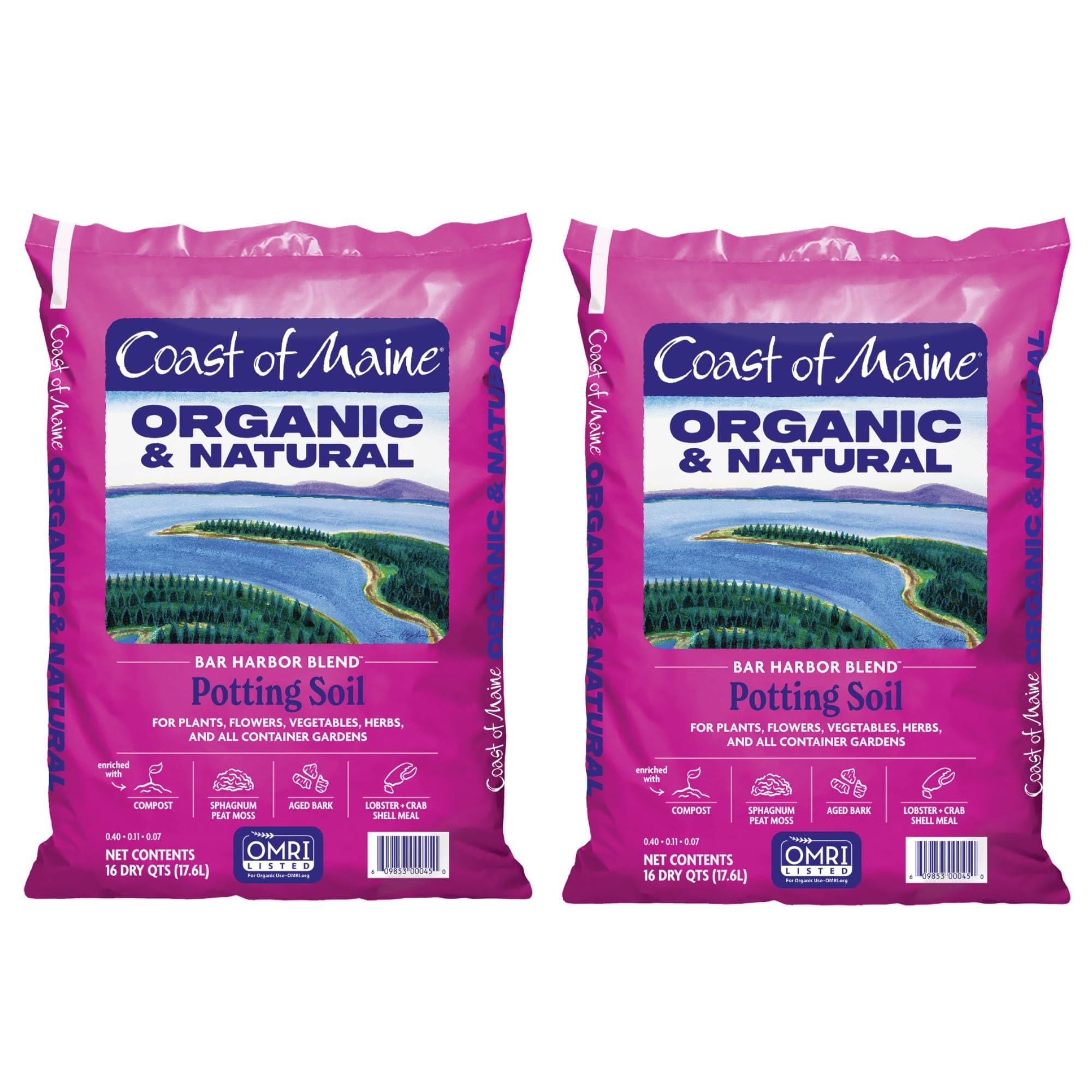
A premium, nutrient-dense mix with lobster shell meal that herbs love.
This is the heavyweight of the list — delivering a 16-quart bag that weighs 14 pounds. That gives it a weight of 14 pounds versus the Back to the Roots 4.4 pounds, and a volume of 16 quarts versus the Back to the Roots 6 quarts. The weight comes from a rich blend of sphagnum peat moss (decomposed moss that holds moisture), compost, perlite (those white rocks for drainage), kelp meal, and the standout ingredient: lobster and crab shell meal. Buyers report the soil is “rich and not full of sticks like some others,” giving you a consistently textured base that drains well without turning into mud.
The Bar Harbor Blend includes slow-release nitrogen (a nutrient released gradually over time) that feeds herbs like basil, mint, and parsley without burning them. At this volume and weight, it is the best pick for a serious patio herb garden with multiple large containers. It is approved for organic gardening, and owners mention their tomatoes and potatoes grew beyond expectations in containers, a strong sign the aeration (air pockets) and drainage work for herbs too.
One honest trade-off: at 14 pounds per 16-quart bag, it is heavier than many alternatives. If you are moving pots around on a balcony, the extra heft is something to plan for. But if you want a soil that feels substantial and contains marine-based nutrients your herbs will not get from standard peat-perlite blends, this is the top choice.
Why It Stands Out
- 16-quart volume offers the most soil per bag in this guide
- Contains lobster and crab shell meal for unique, natural slow-release nutrients
- Customers note it is “rich and not full of sticks” — a clean, consistent texture
One Thing to Consider
- 14-pound weight makes it heavy to lift and move around the patio or balcony
Perfect for: The gardener with a big container setup who wants a rich, nutrient-packed organic soil that delivers sustained feeding without synthetic additives.
Think twice if: You only have a few small pots and do not want to store an open 16-quart bag or haul the 14-pound weight up stairs.
2. Espoma Organic Potting Soil Mix (2 Cubic Foot bag)

The biggest bag on the list — 2 cubic feet — for serious, large-scale container planting.
Espoma is a trusted name in organic gardening, and this 2-cubic-foot bag (which is the largest single volume here) gives you enough soil to fill multiple large patio pots or a small raised bed section. It contains a blend of sphagnum peat moss, humus (decayed organic matter), perlite, earthworm castings (worm waste that feeds plants), alfalfa meal, and kelp meal. The key differentiator is Myco-Tone, a proprietary blend of endo and ecto mycorrhizae (beneficial fungi that attach to roots and help them absorb water and nutrients more effectively).
Reviewers point out the mix is “loamy, chunky” and does not get dense or crusty over time, which is exactly what herbs need — roots can spread easily without hitting compacted soil. One reviewer who transplanted 25-year-old houseplants said the soil seemed to be doing the job, indicating long-term reliability. The organic certification means no synthetic plant foods or chemicals are used.
The trade-off is that Espoma’s texture can run dry. One buyer of the smaller Espoma packs mentioned the soil was “too dry, though, to actually absorb water on a new-plant.” Pre-moistening this mix before potting can help avoid hydrophobic (water-repelling) spots, a common issue with peat-heavy soils that sit on a shelf.
Strengths
- Massive 2-cubic-foot volume for large-scale planting projects
- Myco-Tone mycorrhizae blend aids root nutrient uptake
- Loamy, chunky texture that resists compaction and crusting
Limitation
- Can arrive very dry and may need pre-moistening to absorb water properly
Grab this if: You are filling multiple large containers or a small raised bed and want a proven organic mix with root-boosting mycorrhizae at the biggest volume available.
Consider another option if: Your herb garden is just a few small pots on a window sill, where a smaller bag would be more manageable and cheaper.
3. Espoma Organic Potting Soil Mix (8 qt. 2-Pack)

The two-bag pack gives you flexibility to pot a few plants now and save one for later.
This is the same trusted Espoma Organic formula — a mix of sphagnum peat moss, humus, perlite, earthworm castings, alfalfa meal, kelp meal, and feather meal — but in a more practical 8-quart two-pack. It is designed for both indoor and outdoor container plants, including herbs and vegetables. The Myco-Tone mycorrhizae are included here as well, giving your herb roots a boost.
Shoppers say their plants “growing tall and green” after transplanting, and one noted an African violet responded “very quickly.” This points to a balanced nutrient profile that supports a range of plants. The organic ingredients are all natural, with no synthetic chemicals. Each 8-quart bag fills about two 8-inch containers, per the manufacturer, so this 2-pack gives you enough for four medium pots.
Some buyers flag the same dryness issue as the larger bag — the soil can be too dry on arrival and needs thorough watering to rehydrate. It also costs a bit more than basic peat-based mixes, which is a trade-off for the premium ingredients like worm castings and kelp meal. For a mid-range herb garden of 3-5 pots, this two-pack is a practical, high-quality choice.
What Works Well
- Two separate 8-quart bags offer convenient storage and use
- Rich in organic worm castings, alfalfa, and kelp meal for natural feeding
- Buyers report strong, fast growth after transplanting
A Note
- Arrives very dry; you need to pre-moisten or water thoroughly to avoid water-repelling soil
Solid mid-range pick: For the gardener who wants the Espoma formula in a manageable size, with enough volume for 3-5 medium containers and the flexibility of two separate bags.
Skip it for: A single small pot — the 2-quart Top Tier Genetics bag is cheaper and the right size for that job.
4. Back to the Roots All-Purpose Potting Mix 6 Quarts (2-Pack)
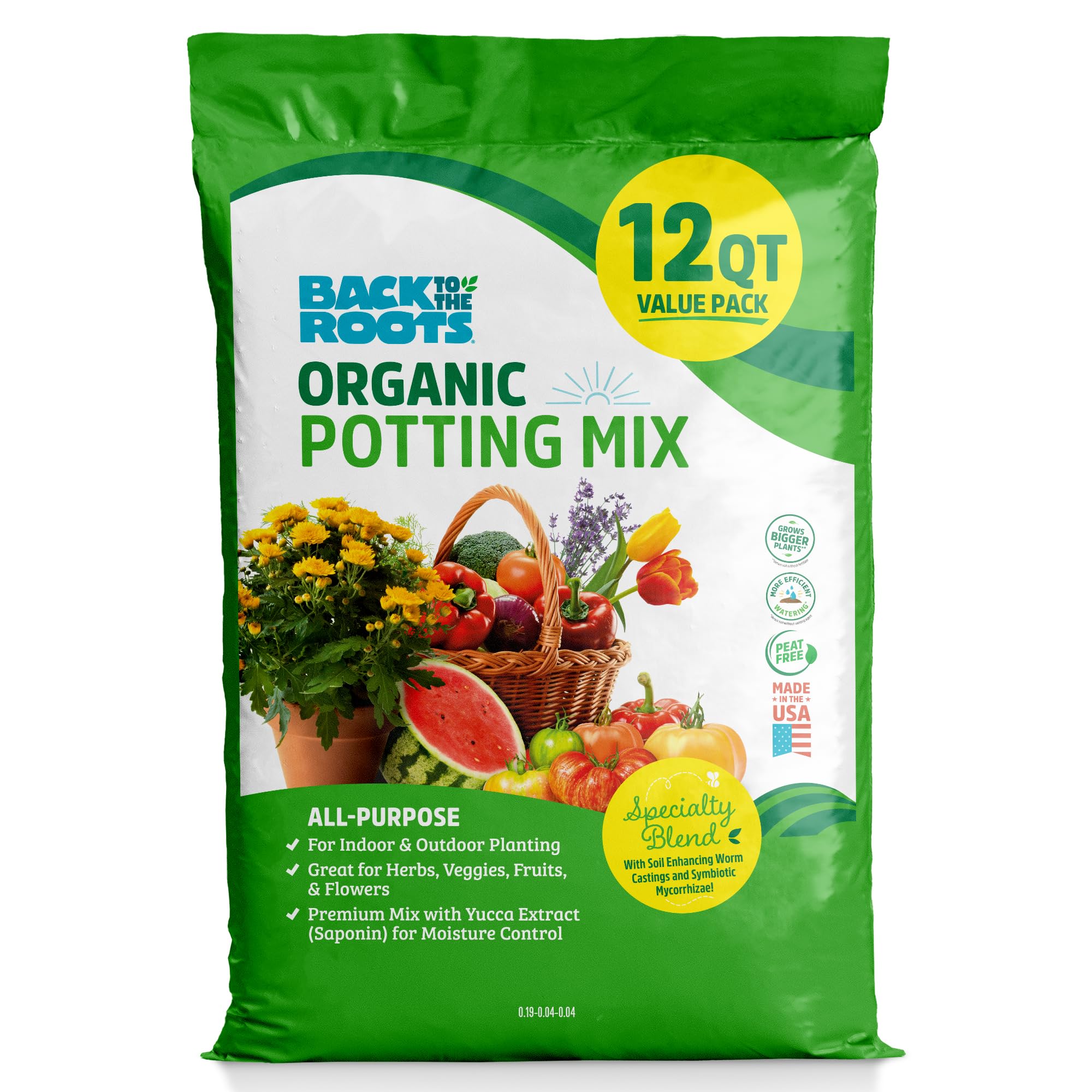
A peat-free, 100% organic mix that is light, affordable, and great for a range of pots.
This is one of the best value propositions on the list. At a 192-ounce total unit count, it delivers 192 ounces by unit count versus the 64-ounce Top Tier Genetics herbs-and-greens bag, and at a very accessible price point. The 2-pack of 6-quart bags gives you 12 quarts total, which is a solid amount for a small-to-medium herb garden. The bag weighs just 4.4 pounds — making it far lighter to handle than the 14-pound Coast of Maine option.
The mix is 100% peat-free, using coconut coir (coconut husk fiber) for moisture retention and yucca extract (a natural wetting agent from the yucca plant) as a natural wetting agent. It includes mycorrhizae and pH-balancing dolomitic limestone. Owners mention it is “great value and just what I need for @24 pots.” One reviewer noted it contains “bark particles that hinder seedlings,” so for tiny seeds you might want to sift the soil first. For transplanting established herb starts, it works perfectly.
Because it is peat-free, it has a lighter, fluffier feel than peat-based mixes. That is good for drainage and root growth, but it also means you may need to water a bit more often in very hot or dry conditions. The trade-off is an eco-friendly product that avoids the CO2 emissions associated with mined peatlands.
Reasons to Buy
- 100% peat-free — more sustainable and lighter than peat-based soils
- 192-ounce total unit count provides generous volume at a budget-friendly price
- Buyers love it for small to medium pots; one reported it was perfect for 24 pots
Keep in Mind
- Contains bark particles that some customers note can hinder very small seedlings
Best for: The eco-conscious gardener who wants an affordable, peat-free organic mix for transplanting established herb plants into several pots.
Look elsewhere if: You are starting herbs from tiny seeds that need a very fine starting mix without bark chunks.
5. Miracle-Gro Organic Indoor Potting Mix, 8 qt. (2-Pack)

A trusted brand that helps take the guesswork out of watering your indoor herbs.
Miracle-Gro designed this mix with a specific goal: helping you avoid both over-watering and under-watering. It combines responsibly sourced sphagnum peat moss, coir, and a quick-start natural fertilizer. The two-pack gives you two 8-quart bags (16 quarts total), with a combined item weight of 9 pounds. That is 9 pounds versus the 4.4-pound Back to the Roots mix, reflecting the denser, moisture-holding peat content.
Buyers consistently praise its moisture retention. One reviewer called out “excellent moisture retention” and noted their “plants grew much better, healthier, and faster.” Another said it “drains well but retains moisture” and has a “nice texture.” This balance is ideal for herbs like basil and mint that like consistent moisture without sitting in a puddle. The OMRI listing confirms it meets organic standards.
Because it is peat-based, it is heavier than the peat-free alternatives. If you are carrying multiple bags up stairs or across a large patio, the weight is noticeable. The mix is also formulated primarily for indoor container plants, so it may need to be mixed with extra perlite if you are using it outdoors in heavy rain and want faster drainage.
High Points
- Designed to protect against both over-watering and under-watering
- Reviewers point out “excellent moisture retention” and faster, healthier plant growth
- OMRI listed for organic gardening, with responsibly sourced peat
Low Point
- Peat-heavy formula makes it denser and heavier than peat-free mixes
Best for the indoor herb grower: This pick takes the watering worry away, giving you a consistent, moisture-balanced home for basil, mint, and other moisture-loving herbs.
Step back if: You want a peat-free, ultra-sustainable option — the Back to the Roots bag is a better fit for that goal.
6. Herbs and Leafy Greens Soil – Premium Organic Nutrient-Rich Potting Mix (2 QTS)
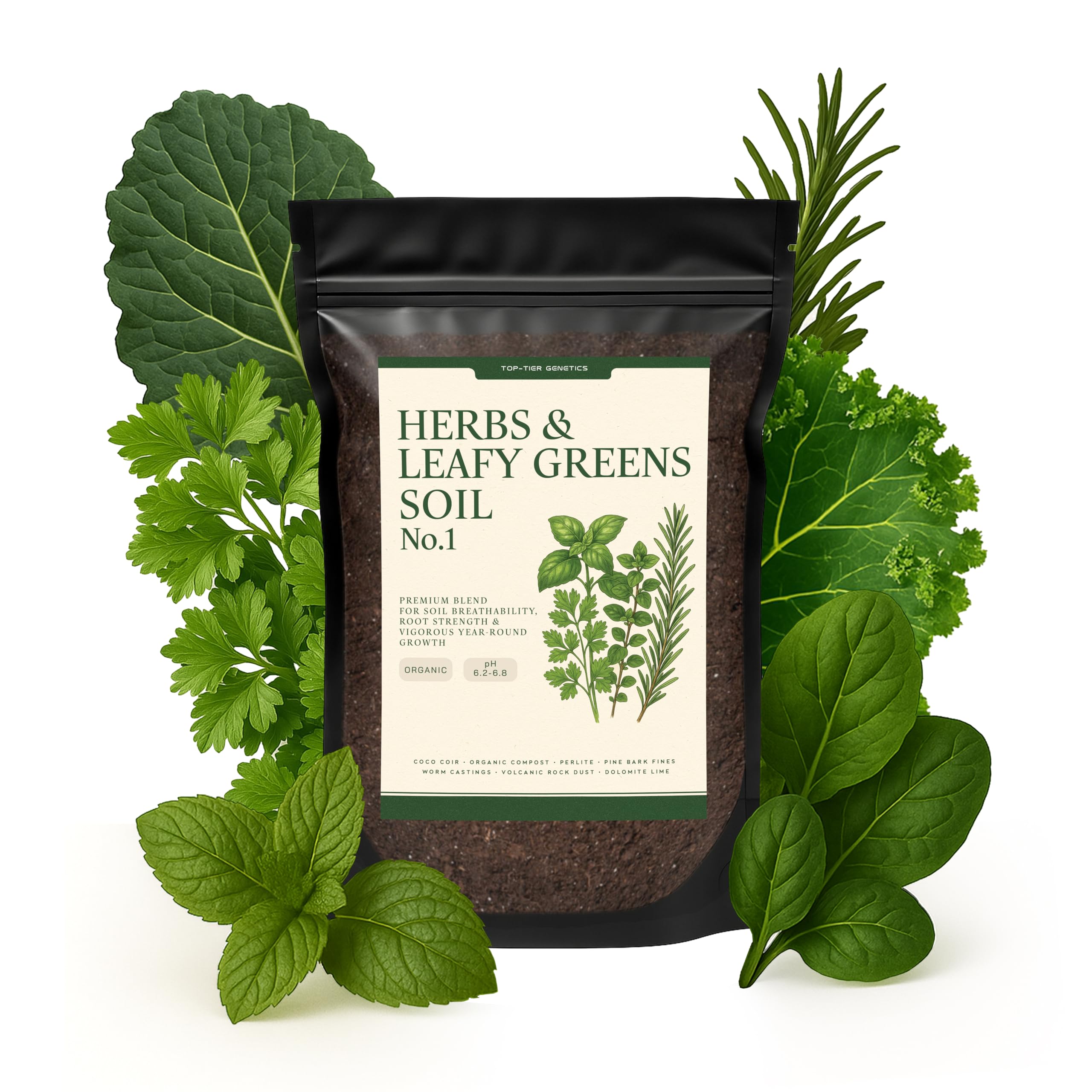
A small-bag specialist blend formulated specifically for growing basil, mint, and lettuce.
Most potting soils are general-purpose. This one is different — it is formulated specifically for herbs and leafy greens like basil, mint, parsley, spinach, and arugula. The 2-quart bag (64 ounces) is the smallest volume in this guide, compared to the 192-ounce Back to the Roots pack. That makes it ideal if you are only potting a couple of small containers or starting a windowsill garden.
Buyers see results quickly. One wrote it “improved basil/mint health in 2 weeks,” and another noted it “promotes airflow, prevents compaction” and is “ideal for small plants/containers.” The texture is light and fluffy, described as “non-clumpy” and “rich,” which helps roots spread without resistance while maintaining proper moisture levels without causing root rot.
The small bag size and higher per-unit cost mean that for large-scale planting, you are better off with something like the Espoma 2-cubic-foot bag or the Coast of Maine 16-quart bag. This is strictly a niche product for targeted use. One reviewer summed it up honestly: “small bag for large projects, lacks fertilizing schedule info.” If your ambition is just two or three herb pots, this is an excellent, focused choice.
What Makes It Special
- Formulated specifically for herbs and leafy greens, not general plants
- Shoppers say healthier basil and mint within two weeks of use
- Light, fluffy texture promotes airflow and prevents soil compaction
Honest Constraints
- 2-quart size is very small — suitable for 2-3 pots only
- Expensive per ounce compared to larger multipurpose bags
Reach for this if: Your herb garden is a single windowsill or a couple of small pots, and you want a soil that is carefully tailored to basil, mint, and leafy greens.
Move on if: You are filling a patio full of large containers — the per-ounce cost is much higher than larger bulk options.
Understanding the Specs
Volume (Quarts and Cubic Feet)
This is how much soil you get in the bag. A 2-quart bag is roughly enough for one medium pot. A 16-quart bag fills about four large pots or one small raised bed. A 2-cubic-foot bag (which is about 60 quarts) is your bulk option for serious container gardening. Always match the volume to the number and size of pots you plan to fill — buying too much means storing an open, damp bag that can grow mold.
Key Organic Ingredients
Look for ingredients that do two jobs: feeding the plant and keeping the soil structure light. Worm castings, kelp meal, alfalfa meal, and feather meal provide slow-release nutrients. Perlite, coconut coir, and sand create air pockets for drainage and root breathing. Mycorrhizae (beneficial soil fungi) help roots absorb water and nutrients, which is especially helpful in confined pots where the root ball can get crowded.
FAQ
What does “organic” mean for potting soil?
Can I use garden soil from my yard for herbs in pots?
How much soil do I need for one herb plant in a pot?
Should I add perlite or sand to an organic potting mix?
Why does my potting soil repel water instead of absorbing it?
How often should I replace potting soil in herb pots?
Is peat-free potting soil better for herbs?
Can I mix different organic potting soils together?
Does organic potting soil expire or go bad?
What is the difference between potting mix and potting soil?
Final Thoughts: The Verdict
For most people, the organic soil for herbs in pots winner is the Coast of Maine Bar Harbor Blend because it offers the best depth of nutrient-rich ingredients and the largest volume for serious container herb growers. If you want a lighter, peat-free, eco-friendly value, grab the Back to the Roots All-Purpose Mix. And for a small windowsill setup with a soil designed specifically for basil and mint, the Top Tier Genetics Herbs and Greens Soil is the targeted pick.
How We Picked
We do not accept paid placement. Every pick is matched to a real buyer and a real use-case; we do not hands-on test units.
Sources & Methodology
Specifications: manufacturer listings and product documentation. Review insights: verified customer reviews, as of July 2026. Pricing: not shown on this page (it changes often); check the current price via the retailer link.
As an Amazon Associate, Lawn Gear Lab earns from qualifying purchases. This does not affect which products we feature.