
Choosing an organic slow release fertilizer means navigating a pile of NPK ratios, ingredient lists, and microbial claims—all while hoping your tomatoes don’t yellow by August. The difference between a bag that builds soil and one that merely salts it comes down to the raw ingredients and how they break down in the root zone.
I’m Rikta — the co-founder and writer behind Lawn Gear Lab. I’ve spent hundreds of hours cross-referencing spec sheets, studying horticultural data on nutrient mineralization rates, and analyzing aggregated owner feedback to produce this guide.
After comparing granular blends, fish emulsions, and pure worm castings across seven top contenders, this roundup of the best organic slow release fertilizer options breaks down exactly which formula suits your garden’s needs and your feeding schedule.
How To Choose The Best Organic Slow Release Fertilizer
Not all slow release fertilizers feed your soil the same way. The release rate depends on particle size, microbial activity, and the source of nitrogen—whether it comes from feather meal, fish emulsion, or worm castings. Matching the right formula to your planting style prevents salt buildup and gives you steady vegetative growth all season long.
Read the NPK Ratio and the Nitrogen Source
The three numbers tell you the percentage of nitrogen, phosphorus, and potassium by weight. For slow release organic fertilizers, the nitrogen source determines how fast the plant can use it. Feather meal and blood meal break down relatively fast, while fish bone meal and alfalfa meal release more gradually. A balanced ratio like 4-4-4 works universally; a high-nitrogen 5-1-1 is best for leafy greens during vegetative phases.
Check for OMRI Listing and Ingredient Transparency
OMRI (Organic Materials Review Institute) listing means the product meets USDA organic production standards. Beyond the seal, look at the ingredient list—kelp meal, humates, greensand, and langbeinite are signs of a well-rounded mineral profile. Products listing only “compost” or proprietary blends without specific sources may deliver inconsistent results.
Choose Between Granular, Liquid, and Worm Castings
Granular fertilizers (like Down To Earth or Espoma) are easiest for monthly top-dressing and build soil structure over time. Liquid concentrates (like Alaska Fish) give faster visible results but require reapplication every two to three weeks. Worm castings offer the gentlest feeding, zero burn risk, and improve soil aeration through microbe-rich organic matter.
Quick Comparison
On smaller screens, swipe sideways to see the full table.
| Model | Category | Best For | Key Spec | Amazon |
|---|---|---|---|---|
| Wiggle Worm Worm Castings | Pure Castings | Living soil & seedlings | 40 lbs, 100% organic matter | Amazon |
| Jobe’s Organics 4-4-4 | Granular All Purpose | Large gardens & lawns | 16 lbs, 4-4-4 NPK | Amazon |
| Alaska Fish Fertilizer | Liquid | Fast green-up & containers | 115 fl oz, 5-1-1 NPK | Amazon |
| Espoma Garden-tone | Granular Vegetable | Tomatoes, peppers & herbs | 4 lbs (2-pack), 3-4-4 + 5% Ca | Amazon |
| Sustane Flower & Vegetable | Granular All Natural | Raised bed soil building | 5 lbs, pelleted chicken manure | Amazon |
| FoxFarm Happy Frog | Granular + Microbes | Container & ornamental plants | 4 lbs, 6-4-5 + mycorrhizae | Amazon |
| Down To Earth Tomato & Vegetable | Granular All Purpose | Edible gardens & transplants | 5 lbs, 4-6-2 multi-ingredient | Amazon |
In‑Depth Reviews
1. Wiggle Worm 100% Pure Worm Castings Plus Worm Egg Material, 40lbs
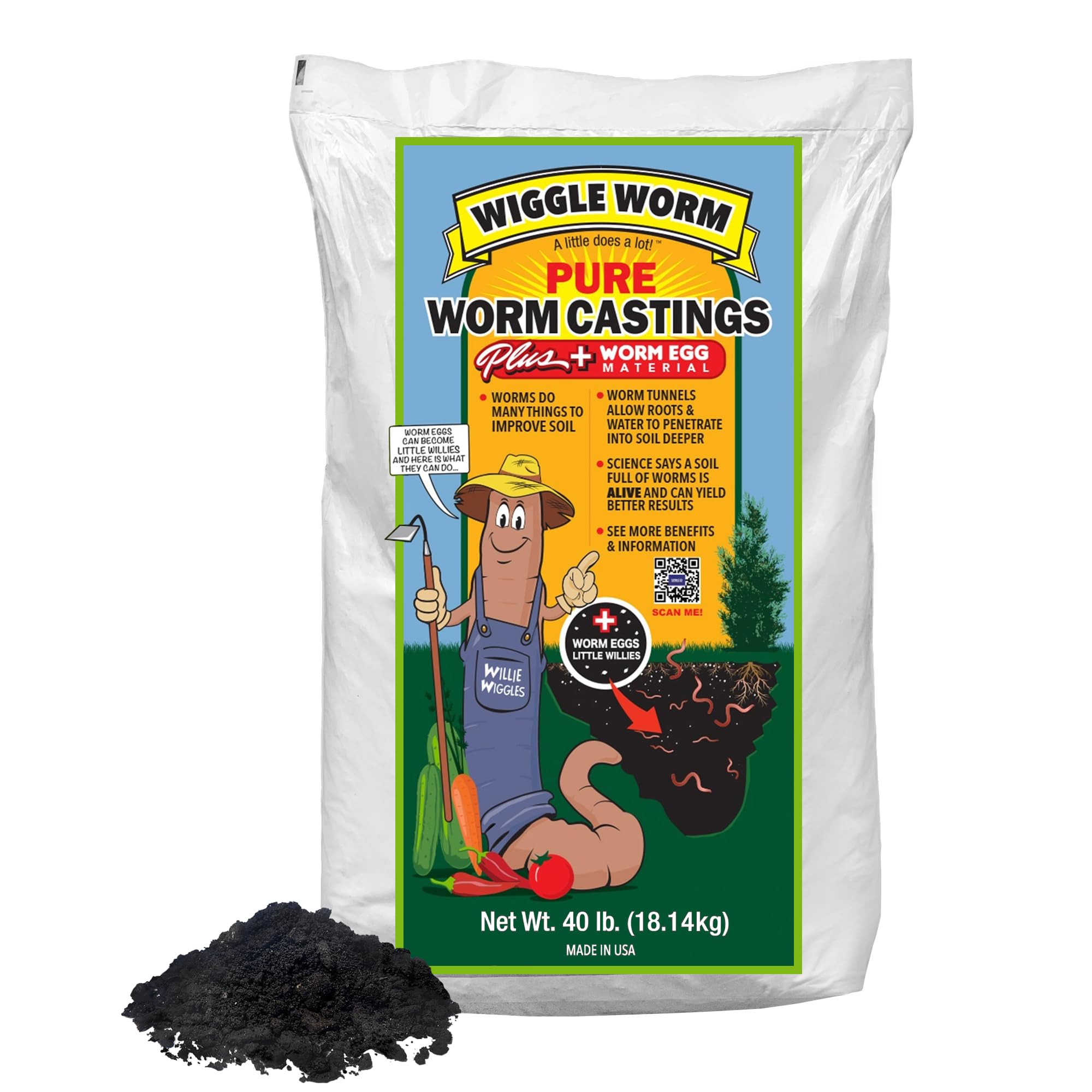
Wiggle Worm delivers 40 pounds of pure worm castings blended with worm egg material—a combination that builds living soil from the ground up. The finely textured, odorless granules mix easily into garden beds and container media without any risk of burning tender roots. Gardeners in challenging climates, including desert heat and freezing winters, report that this product enables growth of demanding plants like gardenias and strawberries where conventional fertilizers fail.
The worm egg material adds a unique self-sustaining dimension: live worms may hatch, continue tunneling, and produce fresh castings over time. This natural tillage improves aeration, drainage, and microbial diversity far beyond what a standard granular fertilizer provides. Users consistently note healthier leaf color and steady growth across herbs, vegetables, and flowers without the weekly feeding schedule required by liquid alternatives.
Because castings contain balanced nutrients at very low NPK concentrations, you can apply them liberally as a soil amendment or top-dress without calculating precise rates. The 40-pound bag covers extensive raised beds and multiple container gardens—making the per-pound value exceptional for serious soil builders.
What works
- Zero burn risk allows heavy applications even on seedlings
- Odor-free indoor use without ventilation concerns
- Worm eggs create ongoing soil improvement over months
What doesn’t
- Very low NPK won’t correct acute nutrient deficiencies fast
- Bag is heavy and requires physical effort to handle
2. Jobe’s Organics Granular All Purpose Fertilizer, 16 lbs

Jobe’s Organics 4-4-4 provides a balanced, OMRI-listed granular formula in a 16-pound bag that suits both garden beds and lawn spreading. The dark green, friable granules break down quickly once watered in, making them effective for shrubs, trees, vegetables, and edible crops. Users report visible bloom color improvement and increased squash and cucumber yields within weeks of regular feeding.
The resealable bag keeps the product dry between uses, and the granule size works well with hand-crank broadcast spreaders without creating dust clouds. While the smell is pungent—typical of organic nitrogen sources—it blends into the soil rapidly and fades within a day. Gardeners appreciate the simple 2-3 week application interval that doesn’t require measuring or mixing.
One notable strength of the 4-4-4 ratio is its versatility for plants at different growth stages. It supports leafy development without overloading phosphorus, and the OMRI certification gives organic growers confidence in compliance. For large-scale feeding where price per pound matters most, Jobe’s delivers strong results without premium pricing.
What works
- Large 16-pound bag covers extensive garden and lawn area
- Balanced 4-4-4 NPK works for vegetables, flowers, and shrubs
- Granules spread uniformly with standard hand spreaders
What doesn’t
- Strong initial odor requires outdoor storage
- Some users report the formula runs out fast on heavy feeders
3. Alaska Fish Fertilizer OMRI Listed 5-1-1, 115 fl oz
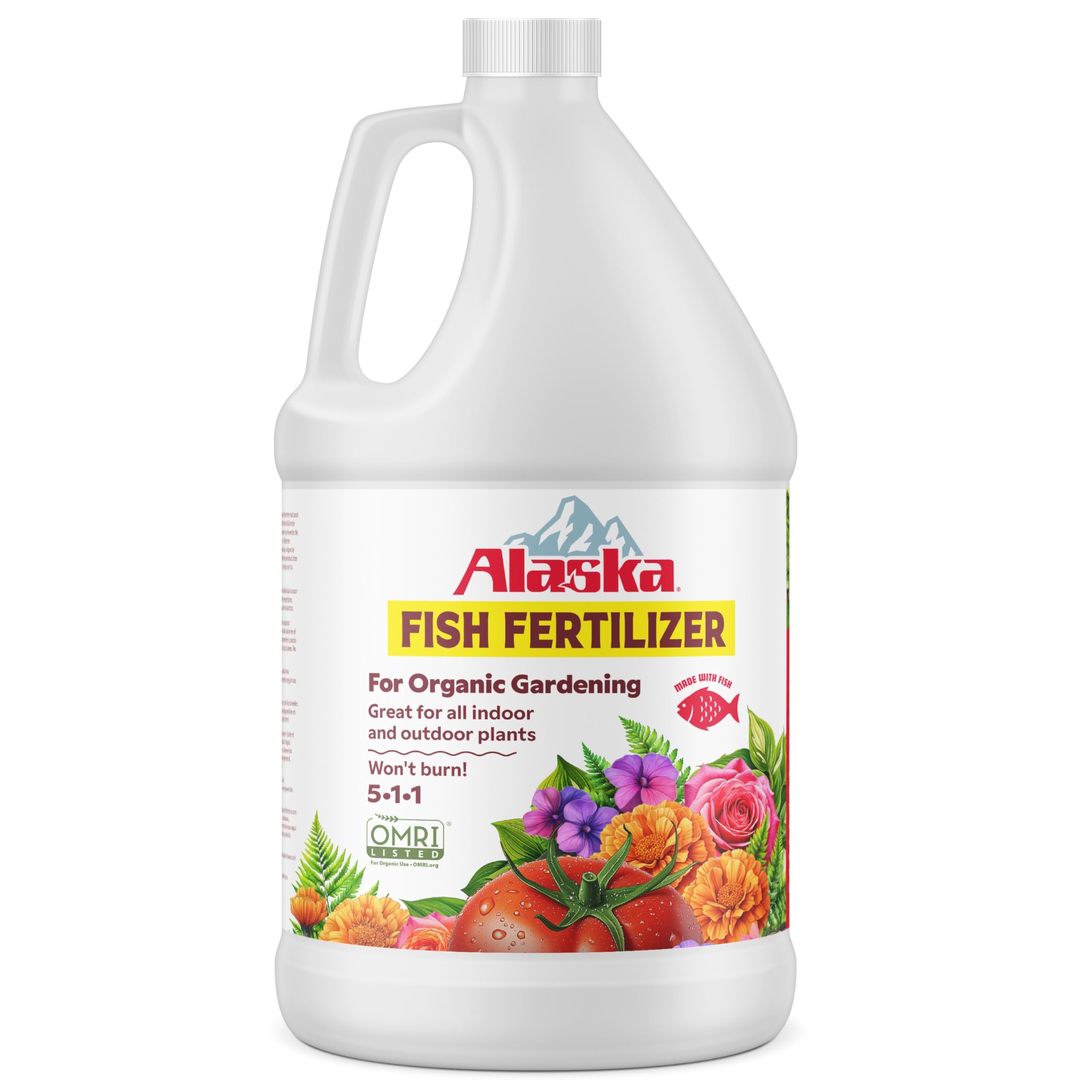
Alaska Fish Fertilizer concentrates liquid fish emulsion into a high-nitrogen 5-1-1 formula ideal for pushing vegetative growth on leafy greens, herbs, and transplants. The OMRI-listed, cold-processed liquid retains micronutrients that support soil microbial activity. Gardeners report rapid results—pale houseplants revive in weeks, and tomato stems thicken noticeably after two applications.
The liquid format allows precise dilution for every watering cycle, making it effective for greenhouse starters and container plants where granular fertilizer can be difficult to incorporate. Users note that the fishy smell, while potent during mixing, dissipates within a day after the soil absorbs the solution. The 115-fluid-ounce bottle covers approximately 1,000 square feet per full treatment cycle.
Because the nitrogen content is high and phosphorus-pottasium levels are low, you may need a supplemental bloom booster during fruiting and flowering stages. The three-week application schedule is manageable, but more frequent feeding may be required for heavy feeders in poor soil conditions.
What works
- Fast-absorbing liquid delivers nitrogen within days
- Cold processing preserves natural micronutrients
- Won’t burn plants when diluted according to directions
What doesn’t
- Low P and K require supplemental feeding for flowers/fruit
- Strong fish odor lingers until soil dries
4. Espoma Organic Garden-tone 3-4-4, 4 lb 2-Pack

Espoma Garden-tone is formulated specifically for cool and warm season vegetables, with a 3-4-4 NPK ratio plus 5% calcium to prevent blossom end rot in tomatoes and peppers. The Bio-tone microbial blend enhances nutrient uptake and root development, making it a targeted choice for vegetable gardens where consistent harvest quality matters. Users report that Garden-tone delivers noticeably larger fruit sets and deeper green foliage compared to generic all-purpose organic fertilizers.
The two-pack provides a total of 8 pounds of granular formula, enough for a full season of monthly top-dressing on an average home vegetable plot. Garden-tone is OMRI-listed and registered as an Organic Input Material, satisfying organic production requirements without synthetic additives. Experienced gardeners emphasize that the calcium content is a standout feature for managing blossom end rot in high-production tomato varieties.
Application is straightforward: sprinkle around the drip line and water in. The granules have a mild organic odor that fades quickly after watering. Some users note the 3-4-4 ratio may be slightly low in nitrogen for extremely leafy crops like kale and cabbage during peak growth, but it works well as a balanced maintenance feed throughout the fruiting season.
What works
- 5% calcium directly targets blossom end rot prevention
- Bio-tone formula boosts microbial activity in root zone
- Two-pack covers a full season for most home gardens
What doesn’t
- Nitrogen level may be insufficient for heavy leaf feeders
- Small bag size means more frequent purchases for large beds
5. Sustane All Natural Flower and Vegetable Plant Food, 5-Pound

Sustane is a naturally pelleted chicken manure fertilizer with a nutrient profile that independent research indicates can produce more fruits and blooms than both organic and synthetic competitors. The formula enhances soil structure while feeding beneficial microbes, making it especially effective for breaking up compacted garden beds over time. Users report dramatic growth responses in raised bed vegetables, with onions regrowing roots in water setups and grass establishing rapidly on poor granite-based soil.
The 5-pound bag covers about 80 ounces of material, and the pellets disperse evenly without dust. When mixed into the top few inches of soil, Sustane releases nutrients steadily without the sharp ammonia spike typical of fresh manure. Gardeners appreciate that it can be used sparingly—half a cup per 2×6-foot bed yields visible results without over-application.
One notable strength is the product’s ability to improve microbial biodiversity in soil that has been depleted by synthetic fertilizers. The chicken manure base provides both macro and micronutrients in a form that soil organisms readily process, gradually building a self-sustaining nutrient cycle in the root zone.
What works
- Pelleted form applies cleanly without dust or mess
- Research-backed yield improvement over synthetic fertilizers
- Enhances soil structure and microbial activity progressively
What doesn’t
- Chicken manure base has a noticeable barnyard odor
- Not suitable for indoor or enclosed space application
6. FoxFarm Happy Frog All Purpose Fertilizer 6-4-5, 4 lb

FoxFarm Happy Frog combines a 6-4-5 nutrient analysis with active soil microbes and mycorrhizal fungi to support both immediate feeding and long-term root health. The higher nitrogen content makes it effective for plants in active growth phases, and OMRI listing confirms compliance for organic production. Users report that yellow tomato and zucchini plants returned to deep green within a week of a single application, and monthly feeding sustains the healthiest garden results they’ve seen.
The granular format works well for containers and ornamental beds, though the product’s strong manure-based smell is a consistent note in customer feedback. Indoor gardeners should plan for open windows or ventilation during and after application. Some users caution that overwatering after application can cause white mold or mildew on the soil surface, so measured watering is important.
Monstera and houseplant enthusiasts specifically praise Happy Frog for tropical foliage plants, calling it safe for sensitive varieties like Thai Constellation. The microbial inoculants help prevent nutrient lockout in potting mixes that lack natural soil biology, making it a solid choice for container growers who want a biological boost along with their nutrient application.
What works
- Mycorrhizal fungi improve nutrient uptake in container media
- High nitrogen content revives yellowing plants quickly
- Safe for sensitive tropical varieties like Monstera
What doesn’t
- Very pungent odor unsuitable for indoor use without ventilation
- May cause surface mold if overwatered after application
7. Down To Earth All Natural Fertilizers Organic Tomato & Vegetable Mix 4-6-2, 5 lb

Down To Earth’s Tomato & Vegetable Mix brings together fish bone meal, blood meal, feather meal, rock phosphate, langbeinite, greensand, humates, and kelp meal into a 4-6-2 granular formula that covers nearly every mineral bases for edible crops. The deliberately higher phosphorus content supports flowering and fruit set, while the gentle non-burning formula makes it safe for transplants and container plants alike. Users report that pale, flimsy tomato plants rebounded within two weeks of application.
The 5-pound box is small enough to fit on a shelf but provides enough material for multiple seasons of targeted feeding in smaller gardens. OMRI listing ensures compliance for organic production, and the ingredient transparency—every component named on the label—gives growers full control over what goes into their soil. The mild natural odor dissipates within days of application.
Gardeners who prefer a simple single-bag solution instead of mixing multiple amendments find this blend saves time without sacrificing nutrient diversity. The inclusion of langbeinite supplies potassium and magnesium, while greensand adds trace minerals often missing in synthetic alternatives. For those just switching to organic growing, this is an accessible starting point that won’t overwhelm with complexity.
What works
- Comprehensive ingredient list covers macro and micronutrients
- Gentle 4-6-2 formula won’t burn sensitive transplants
- OMRI listed with full ingredient transparency
What doesn’t
- Lower nitrogen ratio may require supplementary feeding for leafy greens
- 5-pound bag is modest for large-scale vegetable plots
Hardware & Specs Guide
NPK Ratio and Release Behavior
The NPK numbers (nitrogen-phosphorus-potassium) are the primary driver of feeding performance. Granular organic fertilizers with ratios in the 4-4-4 to 6-4-5 range provide balanced feeding for both foliage and fruit, while high-nitrogen liquids like 5-1-1 target rapid leaf growth. Slow release occurs because organic nitrogen sources (feather meal, blood meal, fish bone meal, chicken manure) must first be broken down by soil bacteria into plant-available forms—this microbial digestion is what creates the slow, steady feeding curve that prevents salt burn.
Ingredient Diversity and Mineral Content
The breadth of raw ingredients directly affects soil health beyond simple NPK delivery. Blends containing greensand provide trace potassium and iron; langbeinite supplies potassium, magnesium, and sulfur; rock phosphate adds long-term phosphorus; kelp meal contributes growth hormones and micronutrients. Fertilizers with fewer ingredients may feed adequately but won’t correct underlying mineral deficiencies in depleted soil. Worm castings offer the widest spectrum of nutrients and beneficial bacteria without any need for microbial preconditioning.
FAQ
How often should I apply organic slow release granular fertilizer?
Can I mix different organic fertilizers together?
Final Thoughts: The Verdict
For most gardeners, the organic slow release fertilizer winner is the Wiggle Worm Worm Castings because it builds living soil from the ground up without any burn risk or odor. If you want a quick vegetative boost for leafy greens and transplants, grab the Alaska Fish Fertilizer. And for large-scale vegetable production where balanced NPK and calcium matter most, nothing beats the Espoma Garden-tone two-pack.