
A bag of organic potting soil is only as good as its first handful. If it clumps into a brick or sheds water on the surface, your plants start life in a deficit. The real test is crumble — the mix should fall apart in your fingers, not stick together like clay. This guide breaks down the seven most reliable blends on the market, ranked by aeration, moisture retention, and the absence of hidden debris that chokes roots.
I’m Rikta — the co-founder and writer behind Lawn Gear Lab. I’ve spent many hours cross-referencing ingredient labels, studying NPK amendments, and compiling owner feedback from dozens of independent sources to identify which organic potting soil recipes actually deliver consistent results.
Whether you are repotting a Monstera, starting tomatoes from seed, or refreshing a raised bed, choosing the right blend determines how fast roots colonize and how often you need to water. This guide evaluates each mix on drainage, organic certification, and texture to help you match the perfect bag to your specific planting scenario — our curated list of the best organic potting soil covers everything from succulent-specific formulas to multipurpose compost blends.
How To Choose The Best Organic Potting Soil
Organic potting soil is not a single formula — the right mix depends on what you are planting, whether it lives indoors or outdoors, and how often you are willing to water. Below are the three factors that separate a high-performing blend from a bag of shredded bark.
Aeration and Drainage
Roots need oxygen as much as they need water. A mix that stays soggy for days promotes root rot, while a mix that drains too fast forces you to water daily. Look for ingredients like perlite, pumice, coarse sand, or horticultural charcoal — these create air pockets that let excess water escape. A good organic potting soil should feel fluffy and light when you squeeze it, not dense or muddy.
Organic Matter and Nutrient Source
Organic certification means the nutrients come from natural sources — compost, worm castings, kelp meal, alfalfa meal, or feather meal — rather than synthetic salts. These ingredients release nutrients slowly as soil microbes break them down. Avoid mixes that list only peat moss and bark as the primary ingredients without any compost or meal amendments; those are growing media, not complete soils.
Texture and Filler Content
Not all organic potting soil is created equal on texture. Some budget-oriented blends contain large wood chips or bark chunks that take up bag volume without providing any nutrient value. Pour a scoop onto a tray and look for uniform particles — a mix dominated by fine peat or coir with evenly distributed perlite is ideal. Excessive sticks or bark indicate a product designed for mulch, not potting.
Quick Comparison
On smaller screens, swipe sideways to see the full table.
| Model | Category | Best For | Key Spec | Amazon |
|---|---|---|---|---|
| Espoma Organic Potting Mix (2-Pack) | All-Purpose | Containers & Herbs | Myco-Tone + Worm Castings | Amazon |
| Coast of Maine Bar Harbor Blend (2-Pack) | Multipurpose | Vegetables & Raised Beds | Lobster & Crab Shell Meal | Amazon |
| Perfect Plants Indoor Plant Soil 4qt | Indoor | Houseplants & Tropicals | Coco Coir + Perlite + Sand | Amazon |
| Coast of Maine Tomato & Veg (20 Qt) | Vegetable | Tomatoes & Edible Gardens | Composted Manure Blend | Amazon |
| Midwest Hearth Cactus Succulent Mix 8qt | Specialty | Succulents & Cacti | pH Controlled for Succulents | Amazon |
| Jiffy Natural & Organic Seed Starting Mix 10qt | Seed Starting | Germination & Seedlings | Fine Texture / No Bark Chunks | Amazon |
| Back to the Roots Worm Castings 5lb | Soil Amendment | Enriching Existing Soil | Pure Vermicompost / No Odor | Amazon |
In‑Depth Reviews
1. Espoma Organic Potting Mix (2-Pack, 8qt each)

Espoma’s AP8-2 formulation is the closest thing to a universal organic potting soil for indoor and outdoor containers. The blend features sphagnum peat moss, humus, perlite, and a proprietary Myco-Tone inoculant that contains both endo and ecto mycorrhizae — beneficial fungi that colonize root systems and improve nutrient uptake. Owners consistently report fast transplant response, with African violets and variegated ivy showing visible growth within two weeks of repotting.
The 8-quart bags come as a two-pack, giving you 16 total quarts of material that works well for herbs, vegetables, and general houseplants. The texture is consistent and clean — no large bark chunks or compaction issues — though a few users noted the mix can arrive very dry, requiring thorough pre-moistening before potting to ensure the peat rehydrates evenly. Once wet, it holds moisture without becoming waterlogged.
What sets this apart from other premium blends is the inclusion of worm castings, alfalfa meal, and kelp meal, which provide a slow-release nutrient profile that sustains plants for several weeks without additional fertilizer. For a grower who wants one bag that handles everything from a Monstera to a basil plant, this is the most flexible organic potting soil on the list.
What works
- Mycorrhizae inoculant improves root vigor and nutrient absorption
- Clean, uniform texture with no visible bark or sticks
- Worm castings and kelp meal provide balanced slow-release nutrition
What doesn’t
- Can arrive excessively dry and needs thorough wetting
- Higher price per quart than commodity peat-based blends
2. Coast of Maine Bar Harbor Blend (2-Pack, 16qt total)
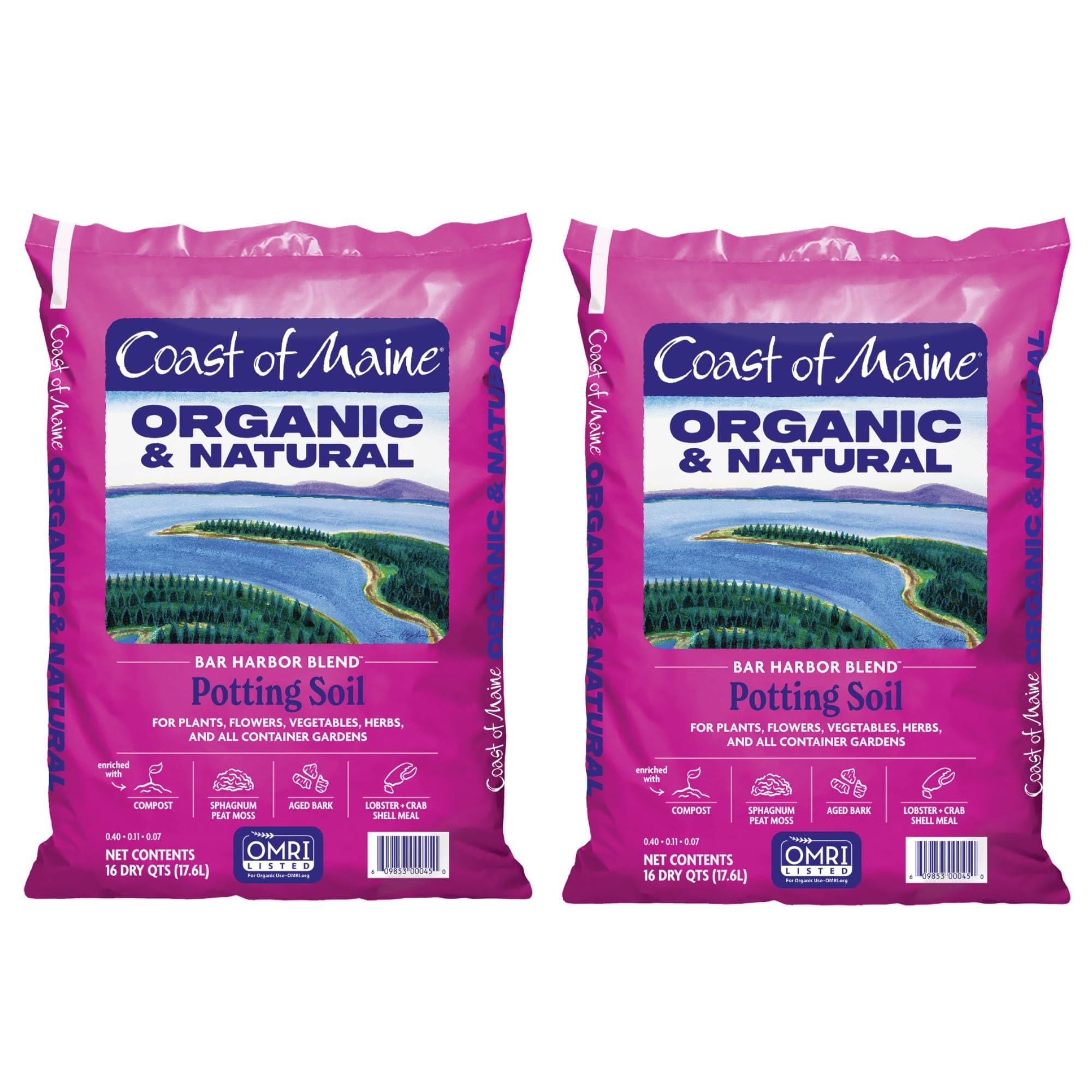
Coast of Maine’s Bar Harbor Blend is a heavy hitter for container gardeners who prioritize nutrient density. The formula uses sphagnum peat moss, compost, perlite, and two marine-based amendments — lobster and crab shell meal plus kelp meal — that deliver a steady supply of slow-release nitrogen and trace minerals. Multiple owners report that tomatoes and potatoes planted in this mix outgrew those grown in standard commercial brands within the same season.
The texture is noticeably darker and richer than typical peat-heavy mixes, thanks to the compost content. It feels loamy and crumbly, not dusty, and the perlite distribution is generous enough to prevent compaction even in plastic nursery pots. The two 8-quart bags provide enough material to mound up around eight potato plants or fill three to four medium garden planters, making it a strong value proposition for serious vegetable growers.
One consistent observation from the feedback is the absence of weed seeds or funky smells — a sign that the compost was properly cured. The biggest downside is the weight; the composted ingredients make each bag heavier than a comparable peat-based mix, which matters if you are hauling it up stairs or across a yard. For edible gardens and container vegetables, this is the most nutrient-rich organic potting soil in the lineup.
What works
- Marine-based meals provide robust slow-release nitrogen and micronutrients
- Excellent crumb structure with balanced moisture retention and drainage
- No weed seeds or unpleasant odors — compost was properly processed
What doesn’t
- Heavier bag weight due to compost content makes transport harder
- Premium pricing compared to all-purpose peat mixes
3. Perfect Plants Indoor Plant Soil (4qt)

Perfect Plants formulated this indoor-specific organic potting soil with pine bark, coco coir, perlite, sand, and garden lime, creating a lightweight mix that drains quickly while retaining enough moisture for houseplants like Monstera, Aloe, and African Violets. The 4-quart resealable bag is tailored for smaller repotting jobs — ideal for someone with three to five houseplants who does not want to store a giant open bag for months.
Users consistently highlight the absence of fungus gnats, a common complaint with mass-market indoor soils that arrive contaminated with larvae. The mix arrives dry and clean, and the combination of perlite and sand ensures that water flows through the pot within seconds rather than pooling on the surface. One owner noted that their Aglaonema pushed new leaves in low light after transplant, suggesting the initial nutrient load is adequate for a month or two of growth.
The main limitation is the small bag size — 4 quarts goes fast if you have multiple large pots. Several buyers wished they could purchase an 8-quart or 12-quart version. If you are maintaining a small indoor jungle and prioritize bug-free, well-draining soil, this is the most reliable organic potting soil for houseplants in this guide.
What works
- No fungus gnats — clean, pest-free growing medium
- Excellent drainage from the perlite/sand blend
- Resealable bag keeps unused soil fresh for future repots
What doesn’t
- Small 4-quart size limits use to a few pots
- Slower to dry in plastic nursery pots than terracotta
4. Coast of Maine Tomato & Vegetable Soil (20qt)

This 20-quart bag from Coast of Maine is a composted manure-based organic potting soil designed specifically for heavy-feeding vegetables and tomatoes. The blend uses sphagnum peat moss and composted manure to create a rich, dark medium that retains moisture well and provides a strong initial nutrient boost. Owners report that heirloom tomatoes planted in this mix grew vigorously and required less supplemental fertilizer than plants in standard potting soils.
The soil has a noticeable cedar-wood aroma that many users associate with its insect-deterring properties — a bonus for outdoor container gardens. However, a few buyers reported encountering fungus gnats shortly after opening the bag, which suggests the compost may not have been pasteurized at a high enough temperature. One owner controlled the issue with neem oil drenches, but it is a point to consider if you are growing indoors where gnats are harder to manage.
For gardeners running a small vegetable patch in containers or raised beds, the 20-quart volume is a practical sweet spot — enough for two to three large tomato pots or a single raised bed section. If you are price-sensitive and need a large volume of organic soil for edibles, this offers the best cost-per-quart ratio among the premium options.
What works
- Composted manure provides a strong nutrient base for heavy feeders like tomatoes
- 20-quart bag offers good value for edible gardeners
- Cedar-wood components help deter insect pests
What doesn’t
- Some bags have live fungus gnat larvae requiring disinfection
- Best suited for edibles — less ideal for finicky houseplants
5. Midwest Hearth Cactus Succulent Mix (8qt)
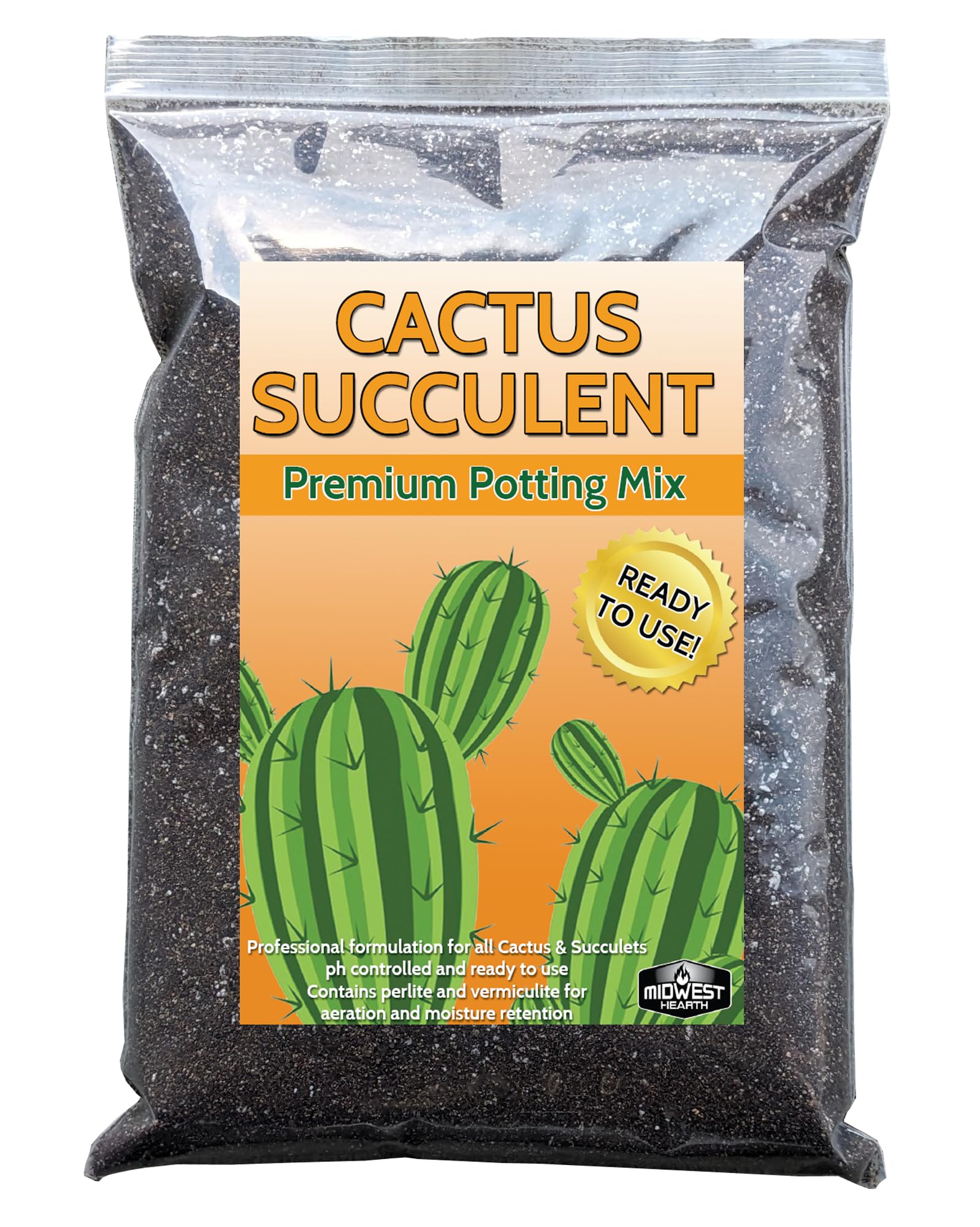
Succulents and cacti require a fundamentally different organic potting soil than tropical houseplants — they need fast drainage and a pH range that matches native desert conditions. Midwest Hearth’s 8-quart mix is pH-adjusted specifically for succulents and uses a combination of peat moss, perlite, and vermiculite to create a porous structure that dries out between waterings rapidly. Owners report that Echeveria, Haworthia, and other rosette succulents held their shape and color better after repotting into this blend.
The texture is fine enough to work in small propagation trays but loose enough to prevent root suffocation. One user pointed out a practical drawback: the dry particles are lightweight enough to blow out of the pot if you keep an open window nearby, creating a minor dust mess that requires daily cleaning. This is not a problem in closed terrariums or greenhouses, but worth noting if your succulents sit on a breezy windowsill.
For succulent collectors who repot regularly, the 8-quart bag provides enough material to refresh a dozen 4-inch pots. If you prefer a custom blend, many owners mix this 1:1 with additional coarse sand or pumice for even sharper drainage. For a ready-to-use product that eliminates the guesswork of pH and aeration, this is the most consistent organic potting soil for desert plants.
What works
- pH balanced specifically for succulents and cacti
- Fine, porous texture prevents root rot in sensitive species
- Ready to use — no additional ingredients needed for most succulents
What doesn’t
- Dry top particles can blow out of open pots near windows
- Smaller bag size requires frequent repurchasing for large collections
6. Jiffy Natural & Organic Seed Starting Mix (10qt)

Jiffy’s seed starting mix is the finest-textured product in this roundup, composed of sphagnum peat moss, vermiculite, and lime — no bark chunks, no perlite shards, nothing that could obstruct a tiny emerging root. The 10-quart bag is a staple among greenhouse growers who need a consistent, sterile medium for germination trays. Multiple users report germination rates above 90% for tomatoes, peppers, and flowers when using this mix in standard seed-starting cells.
The vermiculite provides enough capillary action to wick moisture upward, keeping the surface damp without drenching the seed. The lime addition ensures the pH stays in the 5.5–6.5 range that most seedlings prefer. One experienced grower noted that the fine texture holds together during transplant — seedlings lifted from the tray keep their root ball intact, reducing transplant shock when moved to larger containers.
Because this is a soilless mix, it contains virtually no nutrients — you must begin feeding with a diluted organic fertilizer once the first true leaves appear. Some buyers mix it 50/50 with a general-purpose organic potting soil to extend volume while retaining the fine texture. For anyone starting seeds indoors under lights, this is the most predictable organic potting soil for germination.
What works
- Ultra-fine texture with zero bark or large particles
- Excellent moisture wicking via vermiculite for even germination
- Peat-lime blend maintains stable pH for sensitive seedlings
What doesn’t
- No built-in nutrients — requires liquid feeding after cotyledons appear
- Higher price per quart than all-purpose potting mixes
7. Back to the Roots Organic Worm Castings (5lb)

While not a standalone potting soil, Back to the Roots’ worm castings are the most versatile amendment for any organic potting soil on this list. The 5-pound bag contains pure US-sourced vermicompost — the nutrient-rich end product of earthworm digestion — with no fillers, synthetic additives, or strong ammonia odor. Owners use it as a 1:4 ratio amendment mixed into their existing potting soil, or as a top-dress for established plants in the garden.
The granules are consistently sized and blend easily into chunky mixes containing coco chips, perlite, and charcoal without compacting the structure. Users growing milkweed for monarchs reported that a single application at planting time eliminated the need for synthetic fertilizers through the entire growing season. The slow-release nature of worm castings means you get gentle feeding over several weeks without the risk of nutrient burn.
The primary limitation is that castings hold significant moisture — one owner noted that their container mix stayed wetter longer after adding a high ratio of castings, requiring them to adjust watering frequency. As a pure amendment, this product is best used sparingly and mixed thoroughly. For anyone looking to boost the fertility of an existing organic potting soil without switching brands, this is the most effective organic soil enhancer available.
What works
- Pure worm castings with no synthetic additives or foul smell
- Granular texture mixes easily without compacting soil
- Slow-release feeding eliminates need for frequent fertilization
What doesn’t
- Can increase water retention if over-applied
- Not a complete potting soil — requires a base medium
Hardware & Specs Guide
Aeration Components
Perlite, pumice, coarse sand, and vermiculite are the primary aeration agents in organic potting soil. Perlite provides sharp drainage and prevents compaction; vermiculite adds capillary moisture movement for seed germination. A premium mix usually contains at least 10–15% aeration media by volume.
Organic Amendments
Worm castings, kelp meal, alfalfa meal, feather meal, and crab/lobster shell meal are common slow-release nutrient sources. These break down via microbial action over weeks to months. Products listing only peat moss and bark with no amendments are growing media, not complete organic potting soils.
FAQ
How do I know if an organic potting soil is truly OMRI listed?
Can I use seed starting mix for repotting mature houseplants?
Why does my bag of organic potting soil smell like ammonia?
Final Thoughts: The Verdict
For most gardeners, the best organic potting soil winner is the Espoma Organic Potting Mix (2-Pack) because its Myco-Tone inoculant, worm castings, and consistent texture handle everything from indoor houseplants to outdoor herbs. If you want a nutrient-dense formula for heavy-feeding vegetables, grab the Coast of Maine Bar Harbor Blend. And for seed starting and propagation, nothing beats the fine texture and predictable germination of the Jiffy Natural & Organic Seed Starting Mix.