
Specs are compiled from manufacturer listings and verified buyer reviews and can change over time — please confirm the key details on the product page before buying.
The difference between a tomato that tastes like summer and one that tastes like nothing starts with the handful of soil you bury it in. A bag of organic potting soil for vegetables is not all the same — the wrong one fills your pots with bark chips and poor drainage, while the right one feeds your plants from the moment you open the bag. This guide cuts through the marketing to show you which mixes actually deliver nutrients, moisture control, and healthy root growth for your edible garden.
I’m Rikta — the founder and writer behind Lawn Gear Lab. This guide is built by comparing the manufacturers’ published specifications and the patterns across verified customer reviews, so you get each pick’s real strengths and trade-offs instead of marketing spin.
Whether you are starting seeds in trays or filling large containers with peppers and tomatoes, choosing the best organic potting soil for vegetables depends on knowing which ingredients matter and which claims are just hot air.
Quick Picks
- Brut Organic Potting Soil 1 CU FT — Best Overall
- Espoma Organic Potting Soil Mix 8qt. 2-Pack — Top Performer
- Coast of Maine Organic & Natural Planting — Best for Tomatoes
- Vermont Compost Company Fort Vee Organic — Premium Seed Starter
- Black Gold 1302040 8-Quart All Organic Potting — Fungus-Gnat Safe
- Back to the Roots All-Purpose Potting Mix 6 — Budget Champion
How To Choose The Best Organic Potting Soil For Vegetables
Vegetables are heavy feeders — they pull more from the soil than a flower or a fern ever could. The right mix gives your plants a steady supply of nutrients, holds just enough moisture without getting waterlogged, and stays loose so roots can spread. The wrong mix turns into a dense, wet brick that suffocates roots and invites disease. Here is what to look for.
Start With the Ingredient Panel
Look for organic matter like composted manure, worm castings, sphagnum peat moss, or coconut coir. These hold water and release nutrients slowly. Avoid unnamed “forest products” or mystery fillers that act like cheap stuffing in a pillow — they break down fast and do not feed your plants. Certified organic labels like OMRI (Organic Materials Review Institute) confirm the mix meets organic standards.
Match the Texture to What You Are Growing
Seedlings need a fine, light texture so tiny roots push through easily. Larger transplants like tomatoes or peppers tolerate bigger bark pieces and need better drainage. A mix that works for a 4-inch seedling pot may be too coarse for a seed tray, and one designed for seeds may drain too quickly for a mature squash plant.
Quick Comparison
| Model | Best For | Volume | Key Ingredient | Bag Weight | Amazon |
|---|---|---|---|---|---|
| Back to the Roots 2-Pack | Value & Peat-Free | 6 Quarts | Coconut Coir / Yucca | 4.4 lbs | Amazon |
| Coast of Maine 20 Qt | Tomatoes & Containers | 20 Quarts | Composted Manure / Peat Moss | — | Amazon |
| Black Gold 8 Qt 2-Pack | Containers & Seedlings | 8 Quarts | Organic Compost / Peat Moss | — | Amazon |
| Espoma 8 Qt 2-Pack | Indoor & Outdoor Containers | 8 Quarts | Peat Moss / Earthworm Castings | 512 oz (total) | Amazon |
| Brut Organic 21 Qt | Heavy Feeders & Purity | 21 Quarts | Worm Castings / Azomite | 480.0 oz | Amazon |
| Vermont Compost Fort Vee | Seed Starting & Soil Blocks | 20 Quarts | Composted Manure / Vermiculite | — | Amazon |
In‑Depth Reviews
1. Brut Organic Potting Soil 1 CU FT
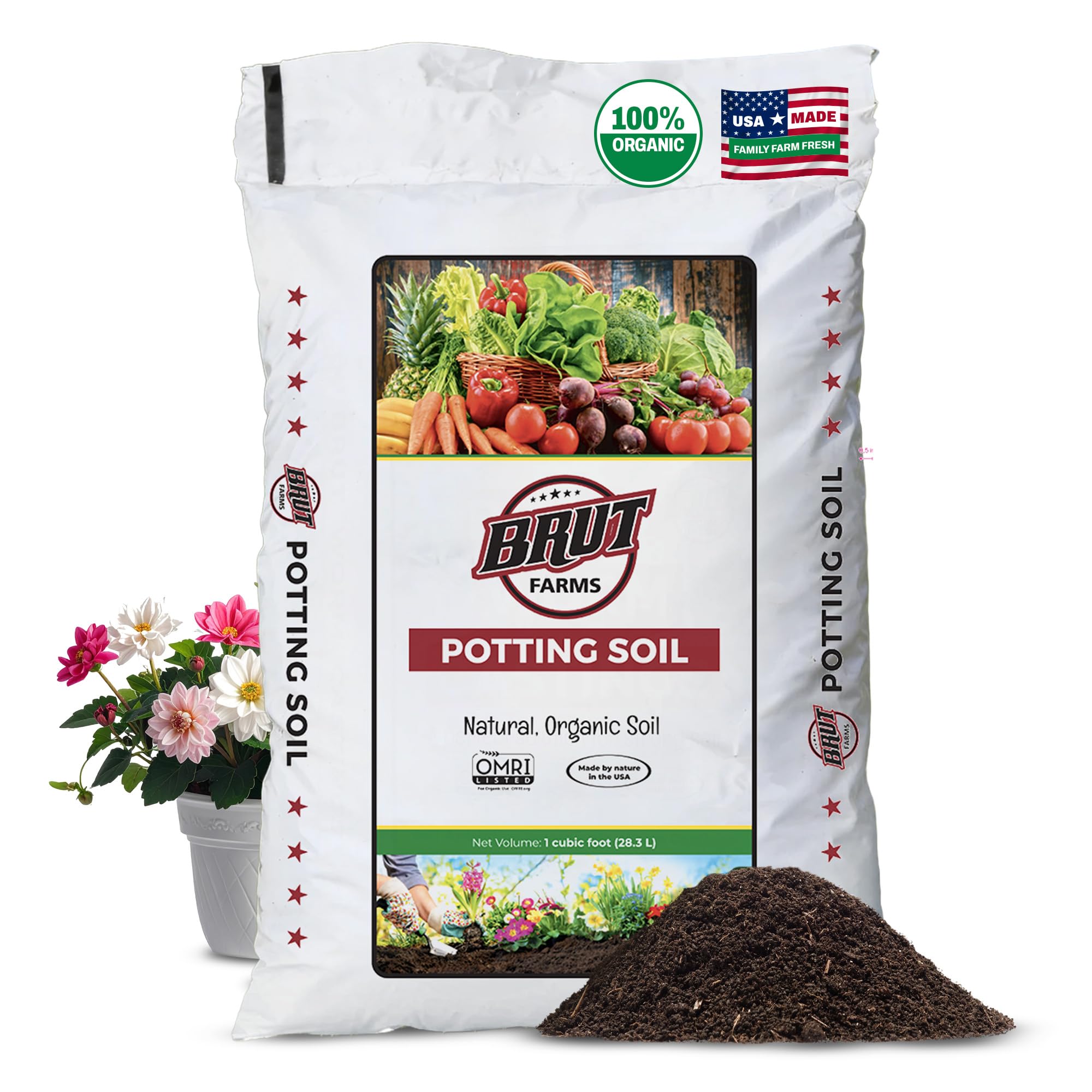
The filler-free powerhouse that woke a cherry tree in two days.
Brut skips the sticks and wood chips that clog other mixes — it is pure organic ingredients with microbe-rich worm castings and trace minerals like Azomite and kelp that feed roots directly. At 21 Quarts, it offers 21 Quarts versus the Back to the Roots 6-quart bag, making it a strong choice for larger containers and heavy-feeders like tomatoes and peppers. The soil is naturally pH balanced between 6.3 and 6.5, so you do not need to adjust pH before planting.
Buyers report that Cara Cara orange and Lapins cherry trees showed deep green leaves and new growth within 2 days of transplanting. A few reviewers mention the fish and bone meal in the mix attracted flies, which they solved by topping the soil with a layer of sand or gravel. It is a premium price, but every buyer who tried it calls it some of the best soil they have ever handled — the shipping can be slow, so order ahead of planting day.
Filler-Free Edge: No sticks, no mystery additives — just certified OMRI organic ingredients that feed from root level up. The 21-quart bag holds a commanding volume lead over the 6-quart Back to the Roots, which is useful when you are filling multiple pots.
The Real Catch: The nutrient-rich blend can attract flies if left uncovered; a simple top-dressing of sand or gravel fixes it.
Grab this if: You want the purest organic mix with the highest volume per bag and do not mind paying a premium for filler-free quality.
Look elsewhere if: You need a fine-textured soil for seed starting — the loose, chunky texture is better for established transplants.
2. Espoma Organic Potting Soil Mix 8qt. 2-Pack

The science-backed blend that makes transplanting feel like a cheat code.
Espoma packs its 8-quart bag with sphagnum peat moss, humus, perlite, earthworm castings, alfalfa meal, kelp meal, and feather meal. That is a dense nutrient lineup, especially for a mix that is still lightweight enough for indoor containers. It also includes Myco-Tone — a blend of endo and ecto mycorrhizae (beneficial fungi that attach to roots and help them absorb more water and nutrients).
Most owners mention plants take to it immediately and grow fast. One reviewer noted the mix arrived “too dry… to actually absorb water on a new-plant,” so you may need to moisten it before potting. It works for both indoor and outdoor containers, including herbs and vegetables, but it is not the cheapest option per quart — the value is in the nutrient density, not the sheer volume.
Why It Stands Out
- Myco-Tone mycorrhizae for stronger root uptake.
- Earthworm castings plus alfalfa and kelp meals provide layered feeding.
- Versatile for indoor and outdoor containers.
One Thing to Watch
- Bag arrives very dry and needs pre-wetting before use.
- More expensive per quart than bulkier options.
Reach for this if: You want a nutrient-dense, mycorrhizae-boosted mix for containers where every root needs a boost — indoor herbs or patio tomatoes.
skip it if: You need to fill large raised beds on a budget — you will burn through bags fast.
3. Coast of Maine Organic & Natural Planting Soil for Vegetables & Tomatoes 20 Qt

The lightweight compost blend built for the hungriest tomatoes and peppers.
Coast of Maine mixes composted manure and sphagnum peat moss into a lightweight formula that balances moisture retention and drainage. It is OMRI listed for organic use, so you can trust what is in the bag. One bag fills a standard 5-gallon pot, making it easy to plan for a container garden. Customers note the soil is “lightweight, high-quality” and that vegetables thrive with no transplant stress.
Compared to the Espoma mix, the Coast of Maine bag is over twice the volume at 20 Quarts versus 8 Quarts per bag, so it stretches further for outdoor container gardens. Some buyers mention that it may contain undecomposed twigs that need removal if you want a finer texture for tiny seeds like carrots. The aromatic wood content also seems to naturally deter some insects around the container area.
What You Get
- Lightweight, easy to carry and pour.
- Formulated for heavy-feeding vegetables like heirloom tomatoes.
- Excellent moisture retention without puddling.
Potential Downsides
- Undecomposed twigs may need sifting for fine seed work.
- Bag is heavy despite being lightweight soil — plan for carrying.
Ideal for: Container tomato growers who want a ready-to-go, naturally composted mix that feeds throughout the growing season.
Not for: Starting carrots or other tiny seeds — the occasional twig piece can disrupt fine root growth.
4. Vermont Compost Company Fort Vee Organic Potting Mix 20 Quarts

The fluffy, compost-based mix that pushes seed germination to 100 percent.
Vermont Compost blends composted manure and plant materials, blonde sphagnum peat moss, crushed granite and basalt, blood meal, kelp meal, steamed bone meal, mined gypsum, vermiculite, and washed coconut coir into a mix that holds its shape perfectly for soil blocks. Gold specks of vermiculite (a light, absorbent mineral expanded by heat) show up throughout the bag — they improve aeration and drainage while keeping the soil from compacting. One buyer mentioned 100 percent germination on seeds, and another noted that it held water well even in 90°F Florida heat, cutting down on daily watering.
It is the most expensive pick here, and the texture still contains some large bark and twigs that make it less ideal for the finest seed trays. Rosemary and lavender were slow to sprout in it, according to one reviewer. But for heavy feeders like peppers and tomatoes, and for anyone making soil blocks, this is the most purpose-built soil in the lineup.
High-Nutrient Compost Base: The composted manure and plant material layer feeds plants from day one, and the added rock minerals (crushed granite and basalt) supply slow-release trace elements all season long.
The Price Premium: At almost for 20 quarts, it is the most expensive per quart of any pick — worth it for dedicated seed starters, but overkill for casual container gardeners.
Buy this if: You start seeds indoors in soil blocks or trays and want the highest-quality organic base that gives nearly 100 percent germination.
Pass if: You are topping off large raised beds — the cost per quart is too high for bulk filling.
5. Black Gold 1302040 8-Quart All Organic Potting Soil 2 Pack

The rich, moist mix that did not invite a single fungus gnat.
Black Gold’s 8-quart 2-pack is a straightforward organic potting soil without the flashy extras — just good compost and peat that plants respond to. One owner reported, “I tried this potting soil while keeping my fingers crossed that it wouldn’t introduce fungus gnats to my houseplants. Guess what? It didn’t.” That is a huge relief for anyone bringing soil indoors. The mix is rich and moist right out of the bag, and it does not compact or leave standing water.
It works well as a straight potting soil or as a booster when mixed into cheaper filler soils. Reviewers point out vegetables grow beautifully in it, and it revives old soil quickly. At 8 quarts for a 2-pack, it is a smaller purchase than the 20-quart options, making it a solid trial size before committing to a bigger bag. It is mid-range in price, but not the best value per quart compared to the larger bags above.
The Biggest Win
- No fungus gnat issues reported — a critical advantage for indoor potting.
- Rich moisture content without waterlogging.
- Revives old container soil quickly when mixed in.
Consider This
- Small bag size means you will need several for a full container garden.
- Not as nutrient-dense as the Espoma or Brut mixes.
Reach for it if: You are potting indoor houseplants or seedlings and need absolute confidence that the soil will not bring fungus gnats into your home.
Look elsewhere if: You need to fill multiple large outdoor pots — the smaller volume makes it less economical for big jobs.
6. Back to the Roots All-Purpose Potting Mix 6 Quarts 2-Pack
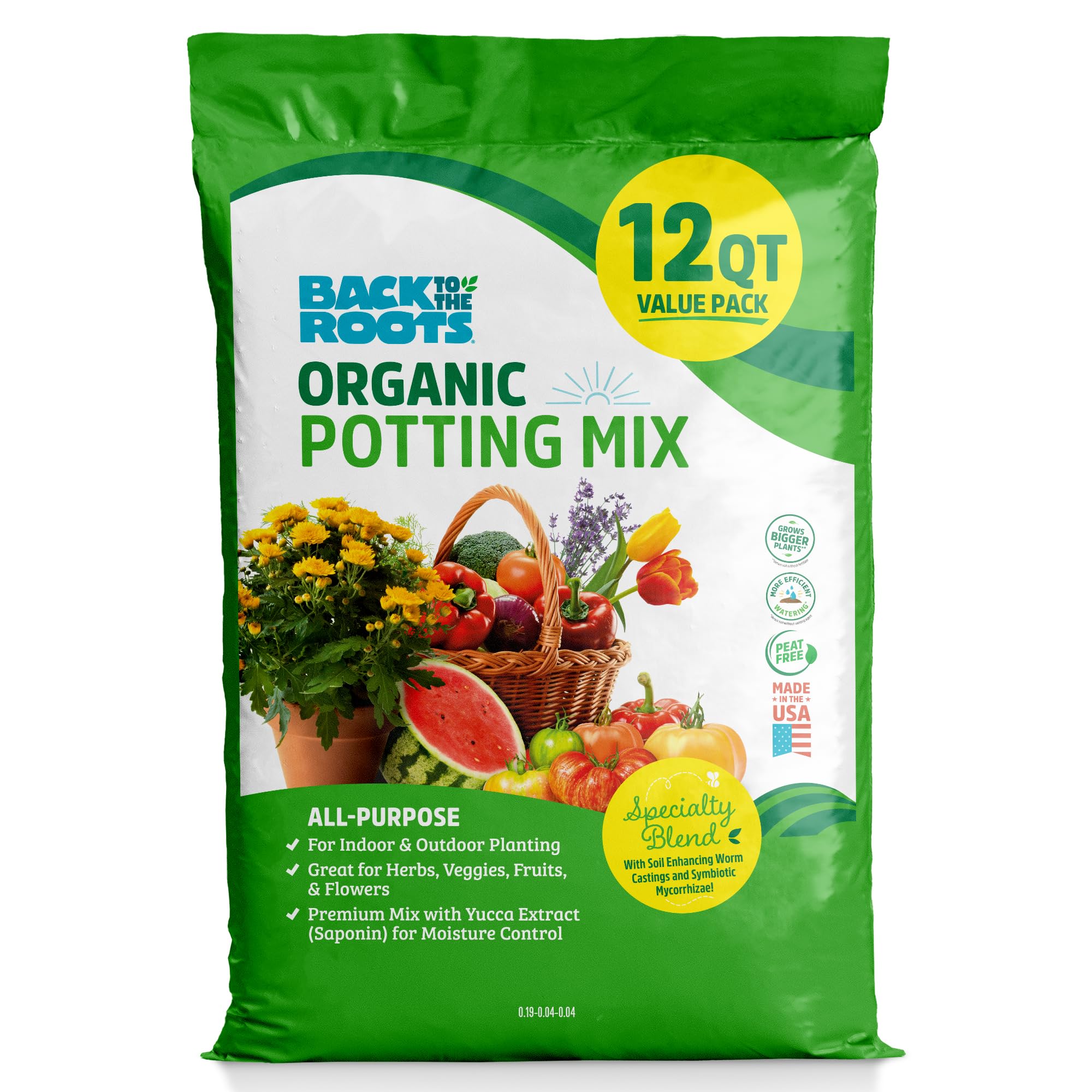
The first peat-free potting mix that proves eco-friendly can also be affordable.
Back to the Roots made a strong promise — 100 percent peat-free soil, using coconut coir instead, and it delivers. The mix also includes mycorrhizae, yucca extract, and pH-balancing dolomitic limestone. Yucca extract is a natural wetting agent that helps water soak into the soil evenly, so dry spots are less likely. Shoppers say it is good for transplanting larger plants like tomatoes and stays aerated well. It contains large bark particles, however, so it is not the best for seedlings — the pieces can bury a tiny seed too deep or block root growth.
The 2-pack gives you 6 quarts total, which is the smallest volume in this lineup. The Brut bag at 21 Quarts is larger than the Back to the Roots 6-quart bag. If you are filling a few small pots for herbs or a single tomato container, this is a fine entry-level buy. For anyone committed to a full vegetable garden, you will need several packs to get the job done, making the larger bags a better value.
What Makes It Different
- 100 percent peat-free, so it is better for the environment.
- Yucca extract and mycorrhizae help roots absorb water and nutrients efficiently.
- Affordable price for a 2-pack — easy to try without a big commitment.
One Limitation
- Large bark chunks make it unsuitable for starting seeds.
- By volume, it is 6 Quarts versus the Brut bag’s 21 Quarts., so you will buy more bags for larger gardens.
Best for: New gardeners who want an affordable, peat-free mix for a small container of tomatoes, peppers, or herbs without needing a giant bag.
Not ideal for: Seed starting or filling large raised beds — the coarse texture and small bag size limit its applications.
Understanding the Specs
Volume (Quarts)
This is the bag size — bigger numbers mean fewer trips to the store. A 20-quart bag fills roughly four to five standard 5-gallon pots. Smaller 6- or 8-quart bags are fine for a few houseplants or a single window box, but you will need multiple bags for a container vegetable garden. Check your plant count before picking a bag size.
Organic Certification (OMRI)
OMRI stands for Organic Materials Review Institute. It is a third-party seal that tells you the soil meets USDA organic standards for use in organic gardening. Not every bag marked “natural” or “organic” on the front has the OMRI seal — look for the label on the bag to be sure. It matters if you avoid synthetic fertilizers and want your vegetables grown in truly certified organic soil.
FAQ
Can I use organic potting soil for vegetables directly from the bag?
What is the difference between potting soil and garden soil for vegetables?
How much organic potting soil do I need for a 5-gallon bucket?
Is peat-free potting soil better for vegetables?
What does OMRI listed mean for organic soil?
Can I start vegetable seeds directly in organic potting soil?
Why does some potting soil attract fungus gnats?
How long does organic potting soil stay nutrient-rich?
Can I mix two different organic potting soils together?
What is vermiculite and why is it in some organic potting soils?
Final Thoughts: The Verdict
For most people, the best organic potting soil for vegetables winner is the Brut Organic Potting Soil because it is pure, filler-free, and packed with worm castings and trace minerals that feed heavy-feeding vegetables for weeks. If you want a nutrient-dense mix with mycorrhizae for root health, grab the Espoma Organic Potting Soil. And for seed starting and soil blocks, the standout is the Vermont Compost Fort Vee for nearly perfect germination every time.
How We Picked
We do not accept paid placement. Every pick is matched to a real buyer and a real use-case; we do not hands-on test units.
Sources & Methodology
Specifications: manufacturer listings and product documentation. Review insights: verified customer reviews, as of July 2026. Pricing: not shown on this page (it changes often); check the current price via the retailer link.
As an Amazon Associate, Lawn Gear Lab earns from qualifying purchases. This does not affect which products we feature.