
Specs are compiled from manufacturer listings and verified buyer reviews and can change over time — please confirm the key details on the product page before buying.
Organic mulch should keep your soil moist, feed your plants, and save you from endless watering — but the wrong bag can dump weed seeds into your beds or turn into a dust bomb. You need a clean option that holds moisture, feeds the soil, and saves your back. This guide cuts straight to the real specs and real buyer feedback so you pick the exact right one.
I’m Rikta — the founder and writer behind Lawn Gear Lab. This guide is built by comparing the manufacturers’ published specifications and the patterns across verified customer reviews, so you get each pick’s real strengths and trade-offs instead of marketing spin.
Pick a lightweight straw for vegetable beds or a compressed coconut block that expands into fluffy mulch. Either way, here is everything you need to choose the best organic mulch for your garden.
Our Picks at a Glance

How To Choose The Best Organic Mulch
Choosing the right organic mulch depends on what you are planting, how much space you need to cover, and how long you want it to last before breaking down. Not all mulches are equal, and a mistake here means extra work later.
Cleanliness is king
A “clean” mulch has been filtered to remove weed seeds, dust, and rocks. Straw mulches vary wildly — some batches sprout grass in your beds, so look for brands that explicitly filter their product. Coconut coir products are more consistent because they are screened through small filters before packing, but some blocks still have a stray plastic piece or two.
Expanded volume vs compressed weight
A compressed brick of coconut coir that weighs 10 pounds can puff up to 15 gallons of fluffy mulch once you add water. That saves you from hauling heavy bags across the yard. On the flip side, a bale of straw is already loose and ready to spread, but it can weigh a lot more for the same coverage area. Think about your back as much as your plants.
Moisture retention and soil impact
Some mulches — like coconut husk chips — can absorb up to 10 times their own weight in water, meaning you water less often. Others, like straw, create a breathable blanket that lets water through but slows evaporation. Both are great, but one fits a dry climate better than a damp one.
Quick Comparison
| Model | Best For | Expanded Volume | Weight (lbs) | Material Type | Amazon |
|---|---|---|---|---|---|
| HealthiStraw GardenStraw★ Best Overall | Large beds, lawn seeding | 3 cu ft (up to 100 sq ft at 2–3″) | 20 | Wheat Straw | Amazon |
| Plantonix Coco Coir Bricks (6-Pack)Best Value | Potting mix, seed starting | 12.5 Gallons | 8.4 | Coco Coir | Amazon |
| Plantonix Organic Coco Chips (10lbs) | Mulching, aeration, large planters | 15 Gallons | 10 | Coco Chips (Husk) | Amazon |
| Back to the Roots Coco Mulch | Small beds, pots, easy application | 2 Cubic Feet (approx 58 Quarts) | 10 | Coco Husk | Amazon |
| Blue Mountain Hay Organic Garden Straw | Raised beds, composting, grass seed | — | 10 | Wheat Straw | Amazon |
In‑Depth Reviews
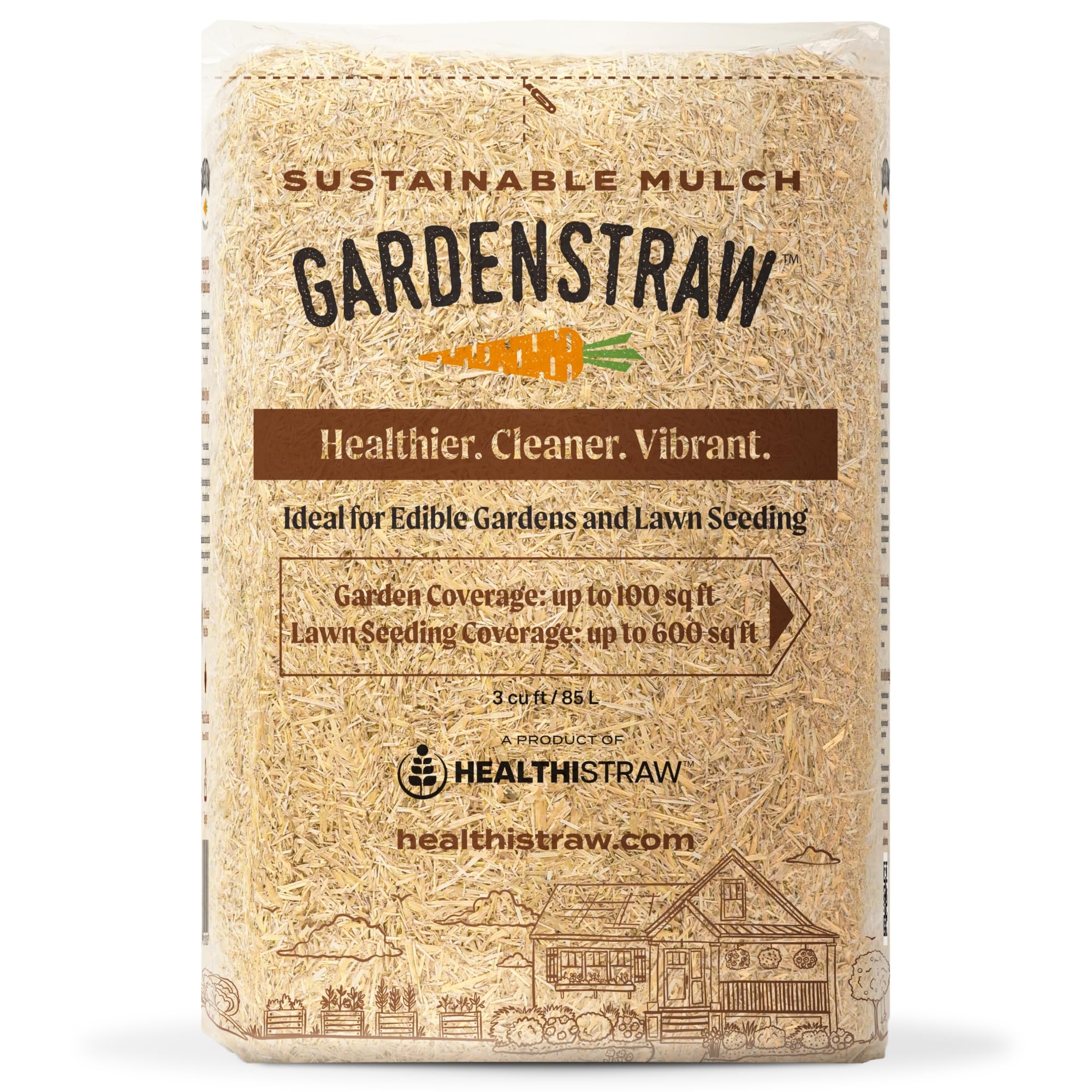
1. HealthiStraw GardenStraw, 3 cu ft (20 lbs)
Our pick — over 4★ from 800+ verified ratings; the strongest balance of quality and price.
The straw that stays put and actually keeps seeds out of your beds.
This is the best option to keep weeds at bay without chemicals and cover a large area in one go. The compressed bale weighs 20 pounds and expands to cover up to 100 square feet at a 2–3 inch layer for beds, or up to 600 square feet if you spread a quarter-inch for grass seed. Buyers report this straw prevents plants and flowers from drying out in heat.
Unlike cheap straw bales, this version has been naturally filtered to remove dust, dirt, and as many weed seeds as possible. Several reviewers mention they had no wheat seed germination issues — the number one headache with straw mulch. The straw fibers interlock when you water them, so wind and rain do not blow your work away, and there are no chemical binders. The main downside: at 20 pounds it is heavier than the coconut blocks in this list, and a few reviews say some grass seeds still sneak through.
If you have wide open beds and hate weeds, this is worth the money. The straw breaks down quickly after the season and adds carbon to your compost, much like the coconut options do. One thing to know — for carrying across the yard, the Plantonix coconut blocks at 10 pounds will be much easier on your back than this 20-pound bale.
Why it leads
- Naturally filtered for fewer weed seeds than most straw bales
- Interlocking fibers resist wind and rain without glue
- Breaks down fast and adds carbon to your compost pile
The trade-offs
- Heavier than compressed coconut blocks at 20 lbs for the 3 cu ft bale
- A small number of grass seeds can still appear in some batches
Reach for this if: you have a large veggie patch or a lawn to seed and want one bale that does most of the work cleanly.
Look elsewhere if: you need a very lightweight option to carry across a yard — the coconut blocks below are much easier on your back.
2. Plantonix Coco Coir 650gm Bricks (6-Pack)
The coconut coir that expands in minutes, not overnight, and stays clean.
This six-pack is the most cost-effective choice if you want a brick that puffs up fast with easy handling. Each 650-gram brick has been rinsed and screened through a very small filter to remove fiber, sand, and rocks — buyers call this out as setting it apart from cheaper coir.
Buyers specifically say it “expands super fast (minutes, not overnight),” so you are not waiting around. It is fluffy and fine enough for chicken dust baths as well as gardening. The coir also has a high CEC (cation exchange capacity — how well it holds onto plant nutrients) and a neutral pH, which keeps fertilizer from washing away. The catch is that a few people still found an occasional plastic piece, so “pre-screened” is not 100% guaranteed. For fine seed-starting texture rather than chunky surface mulch, this beats the Coco Chips hands down — the chips stay too large for mixing into a seedling tray.
Smart for small-scale mixing: the fine, screened texture makes it ideal for seed starters or blending into potting mix — not just for topping beds.
Grab this for: potting mix, seed starting, or smaller garden projects where cleanliness and fast expansion matter.
skip it if: you want big chunky mulch that sits on top of beds for a long time — the Coco Chips are better for that surface layer.
3. Plantonix Organic Coco Chips (10lbs)

Big coconut chips that stay chunky, aerate soil, and hold 10x their weight in water.
Gardeners who want a visible surface mulch that does not turn to mush should choose this. Each 10-pound block expands to 15 gallons — that is 20% more volume than the Coco Coir 6-Pack above — and the chips stay in good-sized pieces when you add water. Owners mention the block is compact, breaks into good-sized chips, and has no unpleasant smell — a real plus if you have ever opened a bag of funky bark mulch.
Because these are husk chips rather than fine coir, they create air pockets that improve drainage and prevent soil compaction in large raised planters where roots need oxygen. The chips also absorb up to 10 times their own weight in water, which cuts down how often you water. A few reviewers warn about buying “buffered” coco coir to avoid bacteria and nutrient absorption issues for sensitive plants. Unlike the finer coir bricks, these are heavier and chunkier to spread, but they last longer on the surface. One big difference vs the Back to the Roots block: the chips stay chunkier and more textured, while the Back to the Roots block breaks down into a finer, fluffier consistency.
Chunky and long-lasting: the coarse chips are ideal for topping raised beds and large pots where you want visible texture and aeration.
Choose this if: you are mulching a large planter or garden bed and want chips that hold their shape and let water and air move freely.
Pass on it if: you need a fine-textured soil mix for seedlings — the Coco Coir Bricks are better for that purpose.
4. Back to the Roots 100% Organic Mulch, 58 Quart (2 Cubic ft)
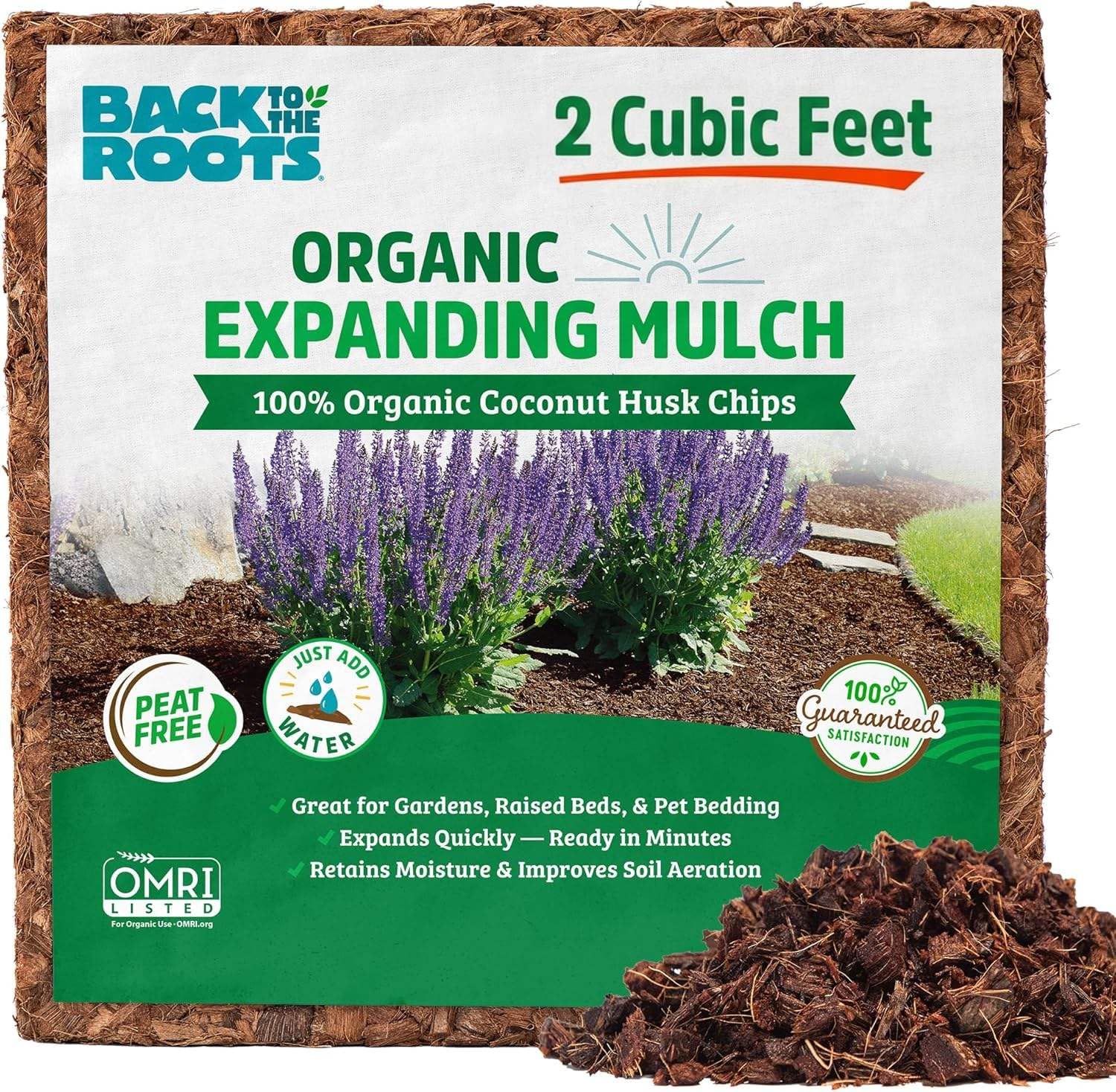
A simple 10-pound block that fills a wheelbarrow with coconut husk mulch.
This is the most straightforward pick if you want a single compressed block you can hydrate right in a wheelbarrow. The 10-pound block expands to 2 cubic feet (about 58 quarts), which customers note is enough to fill a wheelbarrow three-quarters full. One reviewer used a kiddie pool to soak the block because it expands so much — a sign of how much water this stuff holds.
The OMRI-listed (Organic Materials Review Institute) certification confirms it meets organic production standards, so it is safe for vegetable gardens. Reviewers also say it retains moisture longer than other mulches even in full sun, and the chip size is perfect for small spaces and pots. The flip side: a few buyers mention the block is very tightly compressed and vacuum-sealed, making it hard to break apart by hand before you add water. Compared to the 15-gallon Coco Chips block from Plantonix, this expands to a similar total volume (2 cubic feet vs 15 gallons, which is about 60 quarts), but the Back to the Roots block holds together in a single piece — some find that easier to manage, others prefer the Plantonix chunkiness.
Why people buy it
- 10 lbs block expands to 2 cu ft — saves your back from hauling heavy wet bags
- OMRI-listed organic certification for confidence in veggie gardens
- Retains moisture well even under full sun, reviewers point out
The one complaint
- Vacuum-sealed block is tough to break apart before adding water; you need a strong hand or a tool
Best for beginners and pot-gardeners: one block, one soak, and you have fluffy mulch ready to spread with no mess or heavy lifting.
Consider another option if: you need to mulch a very large garden (multiple blocks get costly) or you want chunkier chips that stay visible on the surface.
5. Blue Mountain Hay Organic Garden Straw (10 lb)
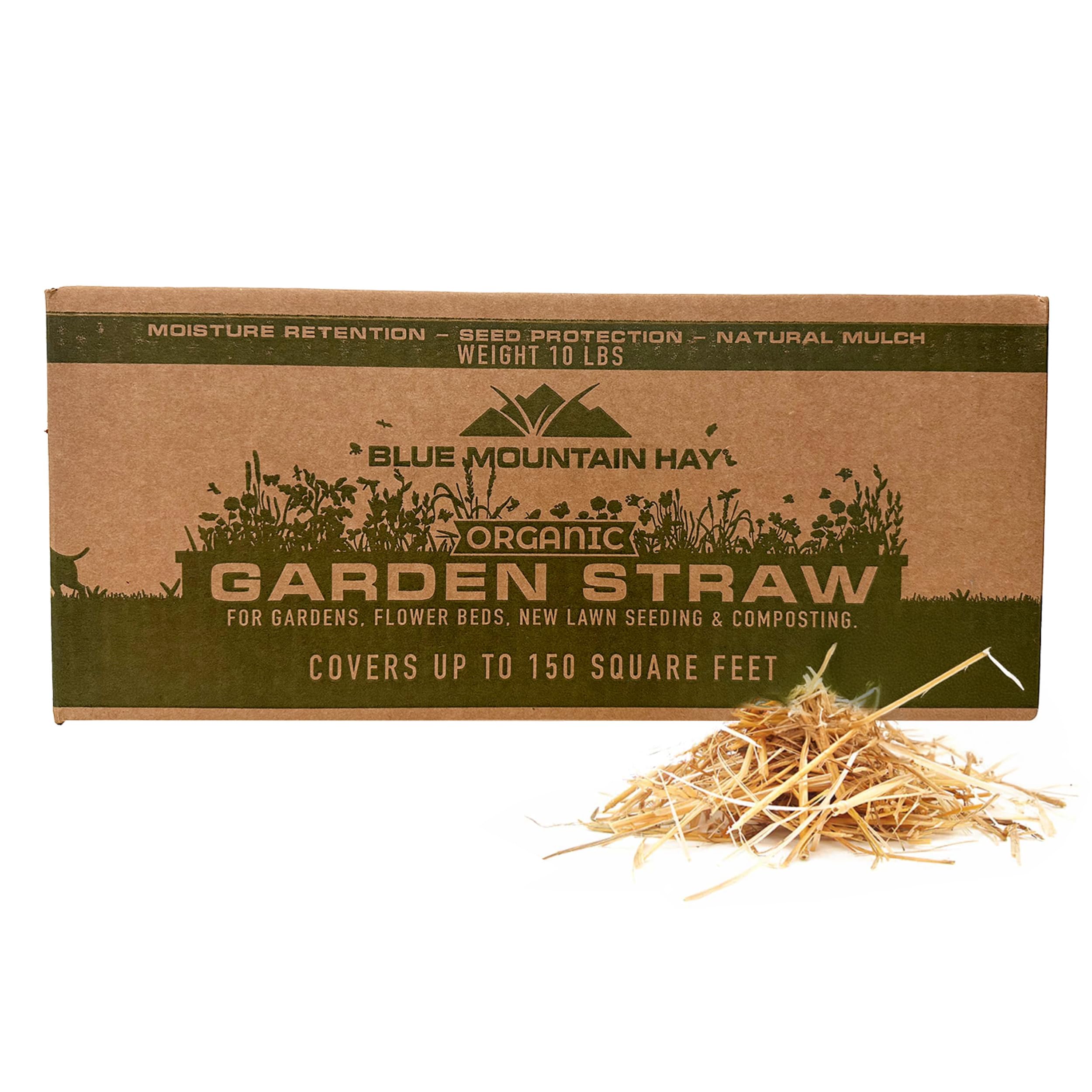
Clean, low-dust organic straw for raised beds — but watch out for seed surprises.
This box of organic wheat straw is a solid choice if you want a lightweight, low-dust straw that is easy to handle and naturally dried. It weighs 10 pounds and is compressed for convenient storage — far less bulky than a full bale. Buyers specifically note it is “very clean, no dirt or bugs,” and the straw is soft and easy to spread around plants. It works well for raised garden beds, flower beds, compost layering, and cat grass growing kits.
The main issue in reviews is inconsistency on seeds. Some shoppers say perfect results, but one reviewer wrote that the straw caused massive grass shoots across all their raised beds, ruining vegetables and strawberries. Another noted the box covers about 100 square feet at a 1-inch depth, not the advertised larger coverage, and it is expensive if you need a lot. Compared to the HealthiStraw, this comes in a 10-pound box versus the 20-pound bale, so it is less economical per square foot for a big garden.
Good for small projects: the 10 lb box is easy to store and spread, perfect for a few raised beds or a compost pile — but test a small patch first if seed contamination worries you.
Pick this if: you have a modest garden area and want a very clean, low-dust organic straw that is easy to transport and handle.
pass on it if: you have a large garden or cannot risk any weed seeds — the coconut mulches above are far more consistent in that regard.
Understanding the Specs
Expanded Volume (Gallons / Cubic Feet)
This is the actual amount of mulch you get after adding water. A compressed block can look small but puff up to 15 gallons or 2 cubic feet, so always check the expanded volume rather than the dry weight. A higher number means more coverage per purchase, but also means you need more water and a larger container to hydrate it.
Water Retention (Absorption Multiplier)
How much water the material can hold relative to its own weight. Coconut husk chips absorb up to 10 times their weight, which means fewer watering sessions. Straw, on the other hand, lets water pass through while slowing evaporation. If you live in a dry area, the higher absorption of coir saves you time. If you get heavy rain, straw is better at letting excess water drain.
Cation Exchange Capacity (CEC) and pH
A measure of how well the material holds onto nutrients for your plants. Coconut coir has a high CEC and a neutral pH, so it does not mess with your soil’s acidity and retains fertilizer longer. Straw is also beneficial but breaks down faster, adding organic matter sooner. If you are growing plants that need a very stable nutrient environment, coir with high CEC is a safer bet.
Cleanliness and Filtration
The biggest complaint among organic mulch buyers is weed seeds. Wheat straw is particularly risky — even “clean” batches can carry grass seeds that sprout in your beds. Coconut products are typically screened through small filters, making them more consistent. Look for “pre-rinsed” or “pre-screened” labels, and read recent reviews for any seed complaints before buying.
FAQ
Will organic mulch attract bugs or pests?
How long does coconut mulch take to break down?
Can I use organic mulch for potted indoor plants?
How much mulch do I need to cover my garden bed?
Is organic mulch safe for pets?
What is the difference between coconut coir bricks and mulch chips?
Why does my straw mulch have so many seeds?
Do I need to wet the mulch block before applying it?
Can I compost organic mulch after use?
How do I store an unused organic mulch block?
Final Thoughts: The Verdict
For most people, the organic mulch winner is the HealthiStraw GardenStraw because it covers large areas cleanly, resists weed seeds better than most straw, and stays put in wind and rain. If you want the lightweight convenience of a block that expands in minutes, grab the Plantonix Coco Coir 6-Pack. And for chunky surface mulch that aerates soil and lasts all season, the standout is the Plantonix Organic Coco Chips.
How We Picked
We do not accept paid placement. Every pick is matched to a real buyer and a real use-case; we do not hands-on test units.
Sources & Methodology
Specifications: manufacturer listings and product documentation. Review insights: verified customer reviews, as of July 2026. Pricing: not shown on this page (it changes often); check the current price via the retailer link.
As an Amazon Associate, Lawn Gear Lab earns from qualifying purchases. This does not affect which products we feature.