
Specs are compiled from manufacturer listings and verified buyer reviews and can change over time — please confirm the key details on the product page before buying.
Feeding a vegetable bed, a row of tomatoes, or a ring of shrubs is easiest with a slow-release granular fertilizer you scatter and water in — no mixing, no measuring cups. The right bag for you depends on the NPK ratio (the three numbers for nitrogen, phosphorus, and potassium), how often you want to reapply, and whether the product is truly organic. Below, we break down the best organic granular fertilizer into clear picks for tomatoes, all-purpose beds, lawns, and heavy feeders.
I’m Rikta — the founder and writer behind Lawn Gear Lab. This guide is built by comparing the manufacturers’ published specifications and the patterns across verified customer reviews, so you get each pick’s real strengths and trade-offs instead of marketing spin.
We compared nine granular organic fertilizers, looking at their N-P-K ratios, ingredients, and what gardeners actually say about results to find the best organic granular fertilizer for your garden.
Our Picks at a Glance


How To Choose The Best Organic Granular Fertilizer
Picking a granular fertilizer isn’t about grabbing the biggest bag. It’s about matching the nutrient blend to what you’re actually growing, because tomatoes, leafy greens, and flowers all want different food.
Read the NPK ratio first
The three numbers on the bag — like 5-7-3 — tell you the percentage of nitrogen (N), phosphorus (P), and potassium (K) inside. Nitrogen pushes leafy green growth, phosphorus drives blooms and fruit, and potassium builds strong roots and overall vigor. A high first number like 12-0-0 is a nitrogen powerhouse for green growth, while something like 4-12-0 feeds bulbs and flowering plants.
Check for organic certification
Look for the OMRI Listed seal (a stamp from the Organic Materials Review Institute that confirms the product meets organic standards) or a “registered Organic Input Material” label. This guarantees what you’re spreading is genuinely organic, not just marketed that way.
Consider your feeding schedule
Granular fertilizers release nutrients slowly as soil microbes break them down, so they typically need reapplying every few weeks or monthly during the growing season. If you want a set-and-forget option for a whole season, a slow-release blend with a balanced ratio like 4-4-4 is a smart starting point.
Quick Comparison
| Model | Best For | NPK Ratio | Weight | Organic Status | Amazon |
|---|---|---|---|---|---|
| FoxFarm Happy Frog Tomato & Vegetable★ Best Overall | Tomatoes & fruiting vegetables | 5-7-3 | 4 lb | Organic (OMRI-style) | Amazon |
| Espoma Garden-Tone (2-Pack)Best Value | Vegetables & herbs | 3-4-4 | 4 lb (x2) | Organic Input Material | Amazon |
| FoxFarm Happy Frog All PurposeTop Performer | Flowers, veggies & ornamentals | 6-4-5 | 4 lb | OMRI Listed | Amazon |
| Espoma Plant-Tone (2-Pack) | All-purpose feeding | 5-3-3 | 4 lb (x2) | Organic Input Material | Amazon |
| Down To Earth Blood Meal | Heavy feeders & green growth | 12-0-0 | 4 lb | OMRI-Certified | Amazon |
| Jobe’s Organics All Purpose | Large beds & long season | 4-4-4 | 16 lb | OMRI Listed (USDA) | Amazon |
| MicroLife Multi-Purpose | Soil health & microbial boost | 6-2-4 | 7 lb | 100% Organic | Amazon |
| Down To Earth All Purpose | Kitchen gardens & containers | 4-6-2 | 15 lb | OMRI Listed | Amazon |
In-Depth Reviews
1. FoxFarm Happy Frog Tomato & Vegetable Fertilizer
Our pick — over 4.5★ from 600+ verified ratings; the strongest balance of quality and price.
The tomato whisperer that turns heavy feeders into heavy producers.
This 4 lb bag of FoxFarm Happy Frog is built specifically for “vigorous feeders” — think tomatoes, peppers, berries, and leafy greens. Its 5-7-3 blend (the numbers stand for nitrogen, phosphorus, and potassium) leans heavily on phosphorus, which is exactly what fruiting plants crave during the flowering stage to set more blossoms. It’s the reason buyers report “Easy to use & helped my tomato harvest be my best ever!”
This pick adds calcium, which helps prevent blossom end rot — that ugly black sunken patch on the bottom of tomatoes — plus mycorrhizal fungi (beneficial soil fungi that attach to roots and help them pull in more water and nutrients). Gardeners consistently cite healthier plants and better harvests as the top reason they return, with over 35 people highlighting these benefits. It comes in a single 4 lb bag, making it a focused tool rather than a whole-garden solution, but for the vegetable patch, it’s the strongest performer.
At 4.8 stars from over 600 owners, this is the crowd favorite for good reason. The one thing it’s not is a general-purpose feed — if you’re also feeding ornamentals and shrubs, you’d pair it with something broader. Buyers also mention the lack of unpleasant smell is a nice bonus compared to other organic options.
What wins people over
- Calcium prevents blossom end rot on tomatoes
- Mycorrhizal fungi boost root efficiency
- 5-7-3 ratio targets fruiting plants
Think twice if
- Single 4 lb bag only — not for big beds
- Focused on feeders, not all-purpose
Reach for it: if tomatoes, peppers, and berries are the heart of your garden and you want bigger harvests.
Look elsewhere: if you need one bag for the whole yard — grab an all-purpose blend instead.
2. Espoma Organic Garden-Tone (Pack of 2)
Two bags of steady, no-fuss nutrition for everything leafy and fruity.
You get two 4 lb bags here, which instantly doubles your coverage compared to a single bag of the FoxFarm pick above. The 3-4-4 ratio is gentler and more balanced, making it a forgiving choice for cool-season greens like lettuce and kale as well as warm-season crops like tomatoes, peppers, squash, and melons. It’s a registered Organic Input Material, so it meets the requirements for organic production, and it’s made in the USA by a company that’s led natural organics since 1929.
Effectiveness is the overwhelming theme in buyer feedback — gardeners note it works “very well for my tomatoes & peppers” and call it a “standout.” The 64-ounce unit count per bag means you get a full 4 lb of feed in each, and because it’s ready to use with no mixing, you just sprinkle it around the drip line and water. One reviewer noted it has a smell, but the results outweigh the odor for most.
With a 4.7-star average from over 900 owners, it edges out the competition on breadth of use. It’s boosted with Espoma’s exclusive Bio-tone formula (a blend of beneficial microbes) and contains 5% calcium, so you’re not sacrificing root health for convenience.
The big pluses
- Two bags for double the feeding area
- Bio-tone microbes enrich soil
- Works for cool and warm season crops
Fair warnings
- Has a noticeable organic smell
- Lower nitrogen than heavy feeders want
Best for: gardeners juggling greens and fruiting crops who want a respected organic brand in bulk.
Who it misses: anyone needing a high-nitrogen green-up boost — that’s a different product.
3. FoxFarm Happy Frog All Purpose Fertilizer
The all-rounder that wakes up tired plants within a single week.
If you want one bag that feeds everything from monsteras indoors to zucchini outdoors, this is it. The 6-4-5 ratio is noticeably higher in nitrogen than the two picks above, so it pushes lush, green foliage growth while still supporting flowers and fruit. It’s OMRI Listed (meaning an independent institute verified it meets organic standards), and it’s packed with beneficial soil microbes and mycorrhizal fungi to help roots absorb more.
This is a slow-release fertilizer, so it nurtures plants gently over time rather than shocking them. Owners mention: “Within a week of sprinkling this Fertilizer onto the soil, the plants became green and healthy.” The quality and effectiveness are the two most-discussed strengths, which tracks with a 4.7-star rating from over 700 owners. It’s a favorite for houseplant lovers too, with Monstera owners reporting explosive growth when mixed into their soil.
The honest downside is the smell — it’s organic, and organics can be pungent. For a 4 lb bag you get good coverage for containers and small beds, but heavy feeders might want the tomato-specific formula from the same brand for fruiting.
Fast-acting and forgiving: the gentle slow-release feeding plus OMRI certification make this the safest pick for mixed plantings, and the week-to-green results speak for themselves.
4. Espoma Organic Plant-Tone (Pack of 2)

One formula, the whole landscape — flowers, vegetables, trees, and shrubs.
This is the broadest-feeding pick in the list. Plant-Tone’s 5-3-3 blend is designed for everything from annuals and perennials to roses, tomatoes, peppers, squash, lettuce, trees, and shrubs — the label literally covers the entire yard. With two 4 lb bags (a 128-ounce total), it stretches further than most single-bag options, and the 5% calcium content supports strong cell walls and helps prevent common fruiting issues.
Because it’s a registered Organic Input Material, you can use it confidently in organic beds. Gardeners describe it as “simple to use” and praise the “immediate response in spring and summer.” The natural organics break down slowly, creating a long-lasting reservoir of nutrients, which is ideal for feeding trees and shrubs just twice a year in spring and fall, then monthly for flowers and veggies.
The fair trade-off is the odor. Multiple buyers describe it as “foul smelling as chicken poop” and advise standing upwind when applying. It’s a classic organic smell that fades after watering, but it’s worth knowing before you open the bag. That said, the effectiveness and plant-growth feedback are overwhelmingly positive, holding a solid 4.7-star record from nearly 700 owners.
Whole-yard coverage: the two-bag pack and tree-to-rose compatibility make this the easiest way to feed everything with one product. The catch: brace for a strong organic odor at application time.
5. Down To Earth Organic Blood Meal

A rapid green-up tonic for nitrogen-starved leaves, corn, and heavy feeders.
When your plants look pale and stalled, this is the pick-me-up. The 12-0-0 ratio is the highest nitrogen concentration on this list, and nitrogen is the nutrient that drives chlorophyll — the stuff that makes leaves green and fuels vegetative growth. It’s the right tool for corn, broccoli, cauliflower, leafy greens, and lawns that need a fast, visible response. Down To Earth certifies this through OMRI (the Organic Materials Review Institute), so it meets strict organic standards.
Customers note “quick vegetative growth” and say their “plants responded instantly to the addition.” It’s also been used to revive heat-stressed plants by top dressing and watering. The box size gets mixed feedback — some find it smaller than expected — but that’s a packaging quibble, not a product flaw. The 4 lb bag is best treated as a targeted supplement rather than a season-long feed.
One practical tip from the data: it comes with bonus feather meal, another nitrogen source, so you’re getting a little extra value. At 4.7 stars from over 600 owners, it’s a respected specialist in the premium tier.
For green growth fast: the highest nitrogen ratio here makes it unbeatable for leafy green-ups. The trade-off: zero phosphorus and potassium, so pair it with a balanced feed for fruiting crops.
6. Jobe’s Organics Granular All Purpose Fertilizer

The 16-pound workhorse that feeds the whole garden, not just a single bed.
Here’s where the value shifts from ounces to pounds. At 16 lb, this Jobe’s bag dwarfs the 4 lb options above — it’s designed for gardeners with actual ground to cover. The 4-4-4 NPK ratio is perfectly balanced, making it a true all-purpose feed for vegetables, flowers, shrubs, and trees. It’s OMRI listed for organic gardening by the USDA (the United States Department of Agriculture’s organic program), and it contains no synthetic chemicals.
The application rhythm is simple: every 2-3 weeks or as needed during the growing season. The granules are designed to avoid wasteful runoff, mess, and hazards, and they’re measured easily to prevent over-fertilizing. Gardeners report fantastic harvests — one family “got really sick of eating squash” from the yield — and neighbors kept asking how they did it. A 1-tbsp-per-gallon liquid tea steeped for 24 hours also works if you prefer watering.
Effectiveness leads the buyer feedback, with quality and plant health close behind. The odor is the most-discussed drawback, described as a “strong chicken-house smell” that lingers a couple of days. The 4.6-star record from nearly 900 owners shows broad satisfaction, though the 16 lb commitment means it’s not for small container gardens.
Best for: serious backyard growers with multiple beds who don’t want to repurchase mid-season.
Think twice if: you only have a few containers — the bulk size is overkill and the smell is strong.
7. MicroLife Multi-Purpose (6-2-4) Granular Fertilizer
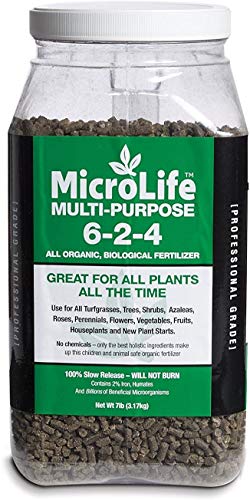
Billions of soil microbes in every scoop — this feeds the earth, and the earth feeds the plants.
This is the most biology-heavy fertilizer in the lineup. Beyond the 6-2-4 NPK ratio, MicroLife packs in over 100 minerals, vitamins, natural plant hormones, essential sugars, amino acids, and billions of beneficial microorganisms — including both Endo and Ecto mycorrhizal fungi (two types of root-friendly fungi that extend the plant’s reach for water and nutrients). It’s a soil-building product as much as a plant feeder.
The 7 lb bag is heavier than the 4 lb options, and the manufacturer says it’s been making organic biological fertilizers for over 30 years. It’s 100% slow-release with 2% iron, won’t burn plants, and only needs reapplying every 3-4 months — the longest interval on this list. Gardeners report a “3X increase in blooms” and say it revived hail-damaged flowers and vegetables within days.
Quality leads the feedback with 36 mentions, and effectiveness is right behind. The one honest complaint is value — some reviewers point out it’s priced higher on Amazon than in local stores. At 4.7 stars from over 350 owners, it’s a premium choice for gardeners who care as much about soil life as about visible growth.
Why it’s special
- 100+ minerals and microbes build soil health
- Reapply only every 3-4 months
- 2% iron for deep green color
Why it’s not for everyone
- Premium price tag for the 7 lb size
- More bio-complexity than casual growers need
Choose this for: revitalizing tired soil and getting maximum biological activity from a single product.
pass on it if: budget is the priority — simpler blends feed plants fine at lower cost.
8. Down To Earth Organic All Purpose (4-6-2)
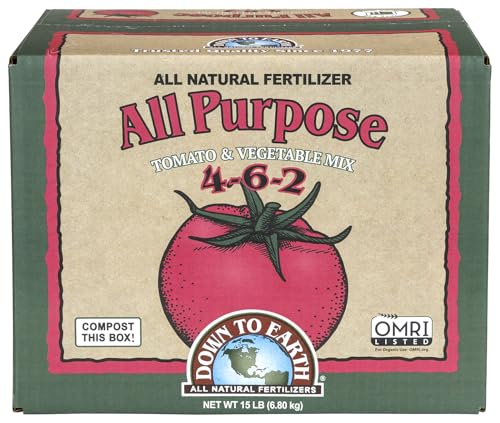
A 15-pound economical bag that simplifies a whole season of vegetable feeding.
If you’re tired of mixing a dozen different soil amendments, this 15 lb bag is the shortcut. Down To Earth’s 4-6-2 blend is formulated for tomatoes, peppers, eggplant, squash, herbs, flowers, and container plants — essentially the entire kitchen garden. The slightly improve middle number (6) tips it toward flowering and fruit development, so it’s not just leaf growth, and it’s OMRI Listed for certified organic gardens with no synthetic chemicals.
Shoppers say it “revived pale, flimsy tomato plants within 2 weeks of application,” and one gardener notes the 15 lb bag lasts about a year. It boosts microbial activity in the soil, supporting long-term health rather than just quick green-up. The quality feedback is the strongest here at 48 mentions, making it the clear winner for gardeners who value proven results.
The trade-offs are honest: opinions split on odor (some say mild, others “nasty”), and value for money is divided — though the sheer 240-ounce weight per bag is undeniably economical per feeding. At 4.7 stars from nearly 1,000 owners, it’s the most-reviewed pick in this list and a deserving budget-tier champion.
Reach for this: if you want one huge, proven bag to power a full season of vegetables, raised beds, and containers.
Look elsewhere: if odor sensitivity is a concern, or you need a higher-nitrogen green-up formula.
Understanding the Specs
NPK Ratio decoded
The three numbers on every fertilizer bag — like 5-7-3 — represent the percentage of nitrogen (N), phosphorus (P), and potassium (K) by weight. Nitrogen fuels leafy green growth. Phosphorus drives root development, blooms, and fruit. Potassium builds overall plant strength and disease resistance. A balanced 4-4-4 suits general feeding, while a skewed ratio like 12-0-0 targets a specific need.
Organic certification matters
An OMRI Listed stamp means the Organic Materials Review Institute has independently verified the product for use in organic production. “Registered Organic Input Material” is a similar guarantee. These seals confirm there are no synthetic chemicals hiding inside — important if you’re growing food you plan to eat.
FAQ
How often should I apply granular organic fertilizer?
What does the NPK ratio on the bag mean for my vegetables?
Can I use granular fertilizer on potted plants and containers?
Why does organic granular fertilizer smell so strong?
What is blossom end rot and how does calcium prevent it?
Is granular or liquid organic fertilizer better?
Can I mix different granular fertilizers together?
What is mycorrhizal fungi and why should I care?
How long does a bag of granular fertilizer last for a typical garden?
Is a higher NPK number always better?
Final Thoughts: The Verdict
For most buyers, the organic granular fertilizer winner is the FoxFarm Happy Frog Tomato & Vegetable because its 5-7-3 ratio with calcium and mycorrhizal fungi delivers the strongest results for the heavy feeders that dominate home gardens. If you want a whole-season, whole-yard solution, the Jobe’s Organics 16 lb bag is the bulk value pick with a balanced 4-4-4. And for gardeners who care most about soil biology and microbial life, the MicroLife Multi-Purpose with its 100+ minerals and billions of beneficial organisms is the one to reach for — a proven crowd favorite across thousands of owners who consistently report healthier, greener, more productive plants.
How We Picked
We do not accept paid placement. Every pick is matched to a real buyer and a real use-case; we do not hands-on test units.
Sources & Methodology
Specifications: manufacturer listings and product documentation. Review insights: verified customer reviews, as of August 2026. Pricing: not shown on this page (it changes often); check the current price via the retailer link.
As an Amazon Associate, Lawn Gear Lab earns from qualifying purchases. This does not affect which products we feature.