
Specs are compiled from manufacturer listings and verified buyer reviews and can change over time — please confirm the key details on the product page before buying.
The best organic gardening soil feels like dark, crumbly cake — not dust, not bark chips — and it feeds your plants from the first root down. The wrong bag packs into concrete or floats away. The right one holds moisture, drains well, and lets roots spread freely. This guide breaks down five proven mixes, so you know which one suits your tomatoes, peppers, or raised bed, and which one will leave you disappointed.
I’m Rikta — the founder and writer behind Lawn Gear Lab. This guide is built by comparing the manufacturers’ published specifications and the patterns across verified customer reviews, so you get each pick’s real strengths and trade-offs instead of marketing spin.
Picking the best organic gardening soil means choosing what lives in the bag — and what does not. Here is the honest breakdown of five proven mixes for raised beds, containers, and in-ground patches.
Our Picks at a Glance

How To Choose The Best Organic Gardening Soil
Organic gardening soil is not just dirt — it is a blend of composted organic matter (decayed plant and animal material), aeration agents (materials like perlite that create air pockets), and often living organisms. The buyer who knows what to look for reads the ingredient list, not the brand name. Three specs separate a great mix from a mediocre one: volume and bag size, ingredients and texture, and the organic certification or claim.
Volume and Bag Size — Cubic Feet vs. Quarts
Bags are sold in cubic feet, quarts, or both. A 2-cubic-foot bag holds roughly 15 gallons — enough to fill a small raised bed or several large containers. If you see quarts, do the mental math: 20 quarts is about two‑thirds of a cubic foot. Matching bag size to your project prevents buying too little or hauling more than you need.
Ingredients and Texture — What Is Actually in the Bag
Look for the short list. Top mixes rely on sphagnum peat moss (a spongy, water‑holding moss), composted manure (aged animal waste for nutrients), worm castings (earthworm manure, packed with microbes), kelp meal (dried seaweed for trace minerals), and perlite or pumice (volcanic rocks that keep soil loose) for drainage. Avoid bags where the first ingredient is bark, wood chips, or “forest products” — those break down slowly and steal nitrogen (a key plant nutrient) from your plants. The ideal texture is “light and fluffy,” which lets roots spread freely and water drain without pooling.
Quick Comparison
| Model | Best For | Volume | Key Ingredients | Item Weight | Amazon |
|---|---|---|---|---|---|
| Coast of Maine Castine Blend★ Best Overall | Raised Beds & Containers | 2 Cubic Feet | Worm Castings, Mycorrhizae, Biochar, Kelp Meal | 40.25 Pounds | Amazon |
| Espoma Organic Raised Bed MixTop Performer | Raised Garden Beds | 1.5 Cubic Feet | Worm Castings, Alfalfa Meal, Kelp Meal, Myco-Tone | — | Amazon |
| Coast of Maine Tomato & Veggie | Tomatoes & Container Veggies | 20 Quarts | Composted Manure, Sphagnum Peat Moss | — | Amazon |
| Espoma Vegetable & Flower Garden Soil | In-Ground Planting & Transplanting | 1 Cubic Foot (Two Pack) | Worm Castings, Rice Hulls, Peat Moss | — | Amazon |
| Sun Gro Black Gold Natural & Organic | All-Purpose & Containers | 2 Cubic Feet | Earthworm Castings, Sphagnum Peat Moss, Perlite, Pumice | — | Amazon |
In‑Depth Reviews
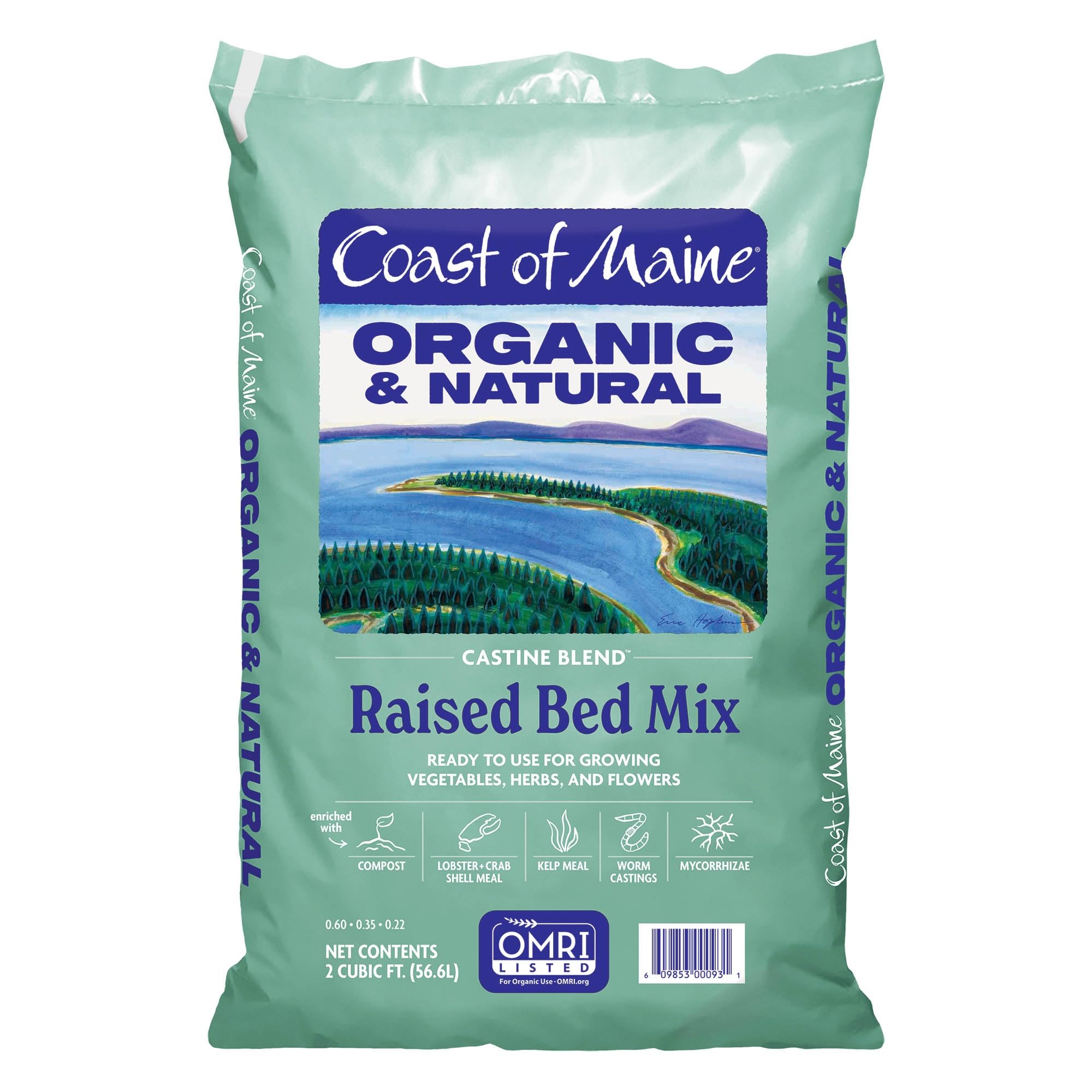
1. Coast of Maine Castine Blend Soil — 2 cu ft
Our pick — over 4.5★ from 400+ verified ratings; the strongest balance of quality and price.
This mix delivers the highest owner satisfaction in the lineup because its ingredient list — worm castings, mycorrhizae (beneficial fungi that extend root reach), biochar (a charcoal‑like material that holds nutrients), green sand (a mineral deposit for trace elements), kelp meal (dried seaweed), and lobster and crab shell meal — feeds plants and improves drainage simultaneously.
Open the bag and you find dark, soft, rich dirt — owners describe it as “fluffy” and free of twigs or bugs. At 2 cubic feet and 40.25 pounds, the bag is substantial, but the texture stays light enough for roots to push through easily. Buyers report growing “pretty awesome tomatoes and sunflowers” straight out of the bag, and several have been using this mix for three straight seasons. The honest trade-off is value: while many call it worth the money, a smaller group feel the price runs high for the volume. For raising beds and large containers, this is the crowd favorite — backed by the highest owner satisfaction in this lineup, outpacing the Espoma Organic Raised Bed Mix in overall soil quality according to owner ratings.
What wins over owners
- True “open and plant” readiness — no mixing, no recipes needed
- Biochar and mycorrhizae give roots a head start on nutrient access
- Light, aerated texture even straight from the bag
The honest fit check
- Premium priced; some find it steep for large-scale projects
- Debris quantity draws mixed opinion — a few bags have small bits
Best for serious raised-bed gardeners: Buy this if you want a ready-to-use mix that feeds all season and you value soil biology over bag savings.
Think twice if you need bulk: For amending a whole in-ground garden, you will want a cheaper-per-cubic-foot blend.
2. Espoma Organic Raised Bed Mix — 1.5 cu ft
This mix packs a nutrient-dense formula — worm castings, alfalfa meal, kelp meal, and the brand’s own Myco-Tone (a blend of endo and ecto mycorrhizae) — into a 1.5‑cubic‑foot bag that owners describe as perfectly sealed, with no mold or dry spots.
Because it is 33% smaller than the Coast of Maine Castine Blend, you get less volume, but the blend delivers sturdy growth that growers in subtropical Florida and cool SoCal Februarys both praise. One owner grew 9 vegetables and 12 flowering plants from seed with no issues. The smell is notably fresh, with no manure odor, unlike some compost-heavy mixes. The one caution is size versus price: a few buyers found the bag small for the cost and had to supplement with fertilizer later. Another noted the mix was mostly wood pieces, though that review appears to be a minority experience.
Clean, consistent, and proven: Perfectly suited for new raised beds where you want a ready-to-use mix that will not stink up your yard. skip it if you need to fill very deep beds on a tight per-cubic-foot budget — the volume runs smaller than the Coast of Maine options.
3. Coast of Maine Tomato & Vegetable Soil — 20 Qt

At 20 quarts (about 0.67 cubic feet), this bag is noticeably smaller and lighter than the 2‑cubic‑foot Castine Blend, making it ideal for 5‑gallon pots and single raised beds where you want fast, visible results.
The formula uses composted manure and sphagnum peat moss, creating a lightweight mix that owners say supports “visible growth within days” for tomatoes and zucchini. One grower noted it is excellent for heirloom tomatoes that need sharp drainage. The quality and plant health rank as the top two aspects owners mention — the vast majority see thriving results. The catch? A significant number of owners mention the soil arrives with fungus gnats (tiny flies that breed in moist, organic matter) or mold. That is a common risk with compost-heavy organic mixes, and it is the main reason this pick does not top the list. Still, for a small-scale grower who handles a gnat issue easily, the plant performance is tough to top at this tier.
Container champion with a caveat: Grab this for a handful of tomato pots or a starter raised bed where light weight and quick results matter most. Pass if you are sensitive to gnats or need bulk volume — the 20-quart size runs out fast.
4. Espoma Organic Vegetable & Flower Garden Soil — 2-Pack (2 cu ft total)

This Espoma mix is built for in‑ground use — you dig a hole, mix it with your native dirt, and plant — and the two‑pack gives you 2 cubic feet total (two 1‑cubic‑foot bags), which is ideal for multiple planting holes or a small garden patch.
Mushrooms have been spotted growing in the soil after use, which owners interpret as a sign of healthy soil biology. The texture is soft and easy to work, and the peanut‑free formulation is a plus for those with allergies. Soil quality and plant health are the top two aspects by owner count, and it has been a repeat buy for one grower since 2022 — he uses it for tomatoes, beans, corn, garlic, turnips, and cabbage. The main honest knock is consistency: some bags have noticeable wood pieces, and infestation (gnats) is a recurring mention.
Built for the ground, not the pot: Best for planting and transplanting in native soil beds where you want to boost organic matter. Not ideal for pure container use — the wood bits are more noticeable there, and a container-specific mix would drain better.
5. Sun Gro Black Gold Natural & Organic Potting Soil — 2 cu ft

Sun Gro’s Black Gold is a classic all‑purpose mix — its base of screened earthworm castings (microbe‑rich worm manure), Canadian sphagnum peat moss, perlite (a lightweight volcanic rock that creates air pockets), and pumice (a porous volcanic rock for drainage) creates a texture that owners call “light and fluffy” and note stays that way even after years in a container.
One grower describes it as “not even too hot for seedlings” — meaning the nutrient level is gentle enough for young roots but rich enough to fuel basil, lettuce, and tomatoes through harvest. The 2‑cubic‑foot bag gives you the same volume as the top pick, but the blend is more all‑purpose than the coast‑specific Coast of Maine Castine Blend. Quality is the most‑mentioned aspect by far, followed by value for money. The recurring trade-off is the same as many organic mixes: fungus gnats. Owners are clear — the gnats are common and annoying, but they are also fixable with mosquito bits (a natural bacteria that kills gnat larvae), and the soil itself is “more than worth it.” For a single bag that works for seeds, cuttings, and mature plants alike, this is the most versatile pick on the list.
The gentleman’s all-rounder: Reach for this when you need one soil that does everything — starting seeds, potting up houseplants, or topping off outdoor containers. pass on it if you want a raised‑bed‑specific formula or are unwilling to deal with the occasional gnat arrival.
Understanding the Specs
Mycorrhizae and Myco-Tone
These are beneficial fungi that attach to plant roots and basically act as a root extension — they help the plant pull more water and nutrients from the soil. A bag that lists “mycorrhizae” or “Myco-Tone” gives your seedlings a head start on root development. Not all organic soils include them, so check the ingredient list if you want that bonus.
Biochar and Worm Castings
Biochar is a charcoal-like material that holds onto nutrients and water, releasing them slowly as the plant needs them. Worm castings are exactly what they sound like — earthworm manure, packed with microbes and gentle nutrients. Together they create a “living soil” that feeds all season without synthetic fertilizers.
FAQ
How much organic garden soil do I need for a 4×8 raised bed?
Is organic soil worth the extra cost over regular potting mix?
Can I use raised bed soil in pots and containers?
Why does my organic potting soil have fungus gnats?
What does OMRI listed mean on a bag of soil?
Should I add fertilizer to organic garden soil right away?
Can I reuse organic garden soil from last season?
What is the difference between potting soil and garden soil?
Final Thoughts: The Verdict
For most people, the organic gardening soil winner is the Coast of Maine Castine Blend because it combines the highest owner rating with proven ingredients — mycorrhizae, biochar, and worm castings — in a 2-cubic-foot bag that is ready to pour straight into a raised bed. If you want a container-specific mix that is lightweight and fast-acting on tomatoes, grab the Coast of Maine Tomato & Vegetable Soil. And for an all-purpose living soil that handles seeds, pots, and in-ground spots with equal grace, the Sun Gro Black Gold is the one to reach for — just be ready to handle the occasional fungus gnat with a gentle hand instead of panic.
How We Picked
We do not accept paid placement. Every pick is matched to a real buyer and a real use-case; we do not hands-on test units.
Sources & Methodology
Specifications: manufacturer listings and product documentation. Review insights: verified customer reviews, as of July 2026. Pricing: not shown on this page (it changes often); check the current price via the retailer link.
As an Amazon Associate, Lawn Gear Lab earns from qualifying purchases. This does not affect which products we feature.