
Specs are compiled from manufacturer listings and verified buyer reviews and can change over time — please confirm the key details on the product page before buying.
Filling a raised bed with the wrong bagged soil is the fastest way to watch seedlings stall and leaves turn yellow — the mix needs to drain fast enough to avoid drowning roots, yet hold enough moisture that you are not watering twice a day. The best organic garden soil for raised beds does not just feed your plants this season; it builds a living, biodiverse soil web that gets better every year you add it.
I’m Rikta — the founder and writer behind Lawn Gear Lab. This guide is built by comparing the manufacturers’ published specifications and the patterns across verified customer reviews, so you get each pick’s real strengths and trade-offs instead of marketing spin.
We sorted through the key specs — volume (in cubic feet), weight (in pounds), ingredient list, and certifications — to find the mixes that actually deliver the organic, nutrient-dense environment your vegetables and herbs need. Whether you are topping off an existing bed or filling a organic garden soil for raised beds from scratch, the right bag makes all the difference.
Quick Picks
- Coast of Maine Organic & Natural Castine Blend Soil — Best Overall
- Espoma Organic Raised Bed Mix — Best Value
- Gaia Green Organic Living Soil — Premium Living Mix
- BuildASoil Light Garden Soil — High Castings
- Home and Country USA All Purpose Topsoil — Budget Top-Up
How To Choose The Best Organic Garden Soil For Raised Beds
Not every bag labeled “organic” is built the same. For raised beds, you need a mix that balances aeration (air pockets for roots), drainage (water flow to prevent root rot), and nutrition (food for plants) so roots can spread deep. Here is what separates a good bag from a dud.
Check the Ingredient List, Not Just the Label
A true organic soil relies on natural nutrient sources — worm castings (worm manure, rich in nutrients), compost (decomposed organic matter), kelp meal (dried seaweed for trace minerals), alfalfa meal (dried alfalfa for nitrogen and growth hormones), and feather meal (ground feathers for slow-release nitrogen). Avoid bags where the first ingredient is cheap filler like large wood chips or bark, which rob nitrogen from your plants as they decompose.
Look for Living Biology
Ingredients like mycorrhizae (a beneficial fungus that helps roots take up water and phosphorus) and biochar (a charcoal-like material that holds onto nutrients and feeds soil microbes) create a thriving ecosystem right in your bed. These ingredients reduce the need for constant liquid feeding.
Match the Volume to Your Bed Size
Raised beds are measured in cubic feet. A standard 4×4-foot bed that is 12 inches deep needs roughly 16 cubic feet of soil. Buying smaller 1-cubic-foot bags means you will need many bags to fill a single bed, so larger bags like 2 cubic feet can save you trips and money.
Quick Comparison
On smaller screens, swipe sideways to see the full table.
| Model | Best For | Volume | Item Weight | Key Organic Inputs | Amazon |
|---|---|---|---|---|---|
| Coast of Maine Castine Blend | Best Overall Mix | 2 cu ft | 40.3 lbs | Worm castings, biochar, kelp meal | Amazon |
| Espoma Organic Raised Bed Mix | Best Value with Mycorrhizae | 1.5 cu ft | 1.5 kg (approx 3.3 lbs) | Earthworm castings, alfalfa meal, feather meal | Amazon |
| Gaia Green Organic Living Soil | Premium Living Mix | 1728 cu in (approx 1 cu ft) | 35 lbs | Worm castings, insect frass, glacial rock dust | Amazon |
| BuildASoil Light Garden Soil | High Worm Castings | 1 cu ft | 30 lbs | Worm castings, compost | Amazon |
| Home and Country USA Topsoil | Budget-Friendly Topup | 24 lb Pail (approx 0.5 cu ft) | 24 lbs | General organic mix | Amazon |
In‑Depth Reviews
1. Coast of Maine Organic & Natural Castine Blend Soil
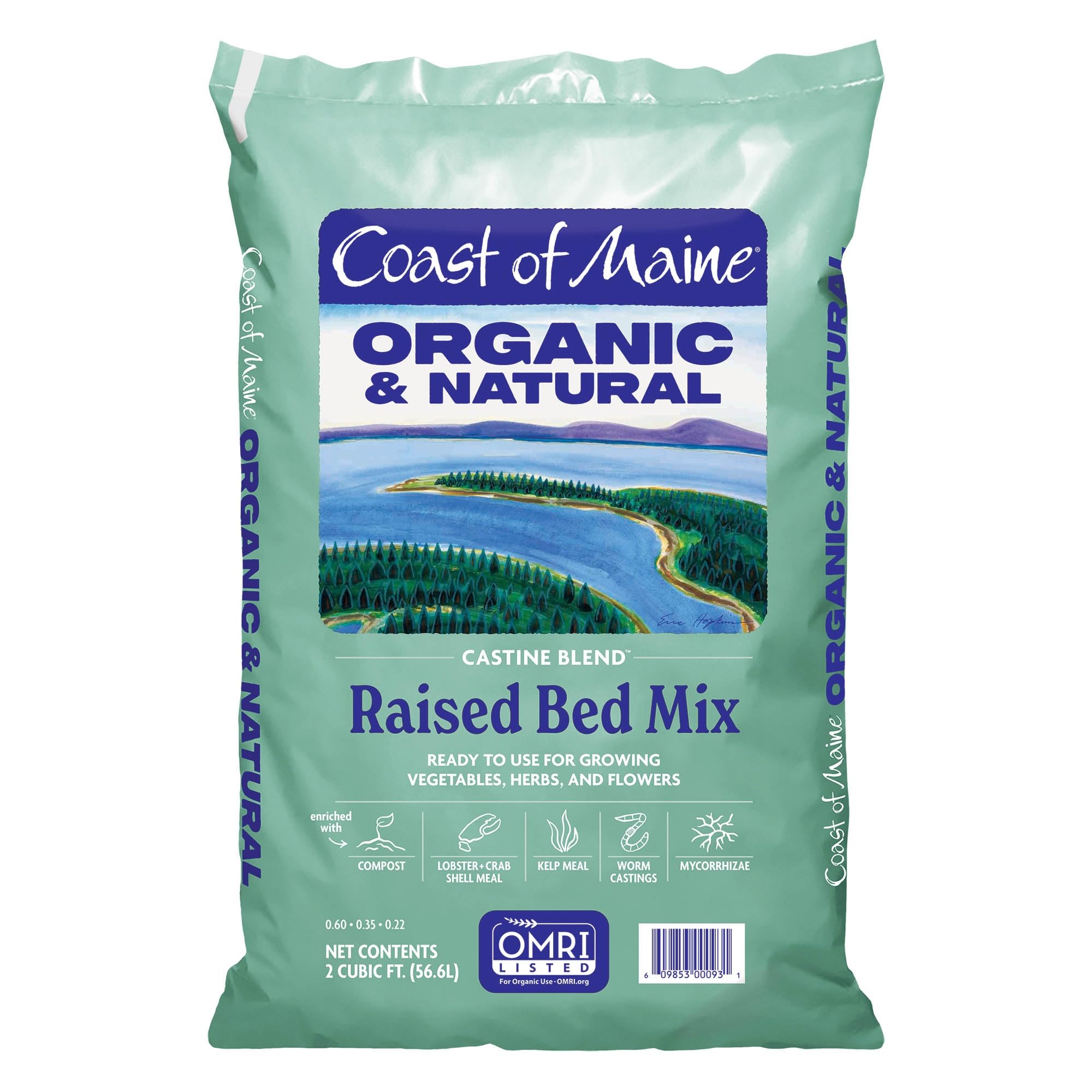
The coastal heavyweight that packs twice the volume of most competitors without skimping on biology.
That extra heft comes from a deep ingredient list: worm castings, mycorrhizae (a beneficial root fungus), biochar (a charcoal-like nutrient holder), green sand, kelp meal, and a signature addition of lobster and crab shell meal. Buyers report the mix is “light, fluffy soil” that they have been using for over 3 years in their raised beds. The 2-cubic-foot bag gives you roughly 16 cubic feet to fill a standard 4×4-foot bed in just 8 bags — half the number you would use from a 1-cubic-foot option like the BuildASoil Light Garden Soil.
The texture is a clear advantage here. Multiple reviewers mention it is “dark, rich, soft dirt” with no twigs or bugs — meaning you can open the bag and pour it straight into a new bed without screening out debris. It also includes mycorrhizae, a living fungus that attaches to plant roots and helps them pull more water and phosphorus from the soil, which is a feature the budget-friendly Home and Country USA pail does not offer.
The main trade-off is price — this is a premium mix for gardeners who want a complete, biodiverse soil rather than a simple base to amend themselves. If you are filling several large beds at once, the higher cost per bag adds up, but the 2-cubic-foot size means you use fewer bags overall than going with a 1-cubic-foot option like the BuildASoil.
Biodiversity Boost
- Largest bag volume at 2 cu ft saves trips and fills beds faster
- Rare coastal ingredients (lobster and crab shell meal) add trace minerals
- Ready-to-use with no mixing — buyers confirm it is clean, soft, and free of debris
The Catch
- Premium price per bag is higher than entry-level options
- May be overkill for simple container potting where a lighter mix works
Ideal bed-filler: Go for this if you want the biggest bag with the richest, most diverse organic ingredient list — perfect for filling a new raised bed with a single, ready-to-use mix.
Consider something else if: You are on a tight budget for a single raised bed and need a lower cost-per-bag option.
2. Espoma Organic Raised Bed Mix

The mycorrhizae-packed value pick that gives you premium biology without a premium price tag.
Espoma brings a proprietary blend called “Myco-Tone” — a mix of both endo and ecto mycorrhizae (the two main types of beneficial root fungi) — into a 1.5-cubic-foot bag at a price that sits below the premium Coast of Maine and BuildASoil options. The ingredient list is rich: earthworm castings, alfalfa meal, kelp meal, and feather meal. Owners mention the soil has a “fresh, clean smell, no manure odor” and that it supports “sturdy root growth for vegetables, herbs, flowers from seed.” One buyer grew 9 vegetables and 12 flowering plants in a wet, cool California February with no dry spots.
The catch is that a few buyers experienced a problem where seedlings sprouted but then stalled. One reviewer noted “the seeds came up 3 weeks ago and they are not growing now they are turning yellow,” suggesting this mix may be light on long-term fertility and might need a liquid fertilizer boost a few weeks after planting, though the brand claims it contains organic fertilizer already.
The 1.5-cubic-foot bag is a middle-ground size — larger than the 1-cubic-foot BuildASoil bag but smaller than the Coast of Maine. It pours well and is uniformly blended, though a few reviews mention the mix contains a lot of wood-like mulch filler.
Perfect Starter Mix
- Includes both endo and ecto mycorrhizae for strong root development
- Light, clean texture with no manure odors reported by buyers
- Balanced 1.5 cu ft size fits most standard beds
Watch For
- Some customers note seedlings stalling out after germination, needing extra fertilizer
- A few reviews mention the mix contains a lot of wood-like mulch filler
Smart start: Choose this if you want the biological edge of mycorrhizae at a price that is easier on the wallet than the top-tier coastal blends, and you are happy to top up with a liquid feed later in the season.
Skip this if: You want a single-bag, no-amending-ever solution — the Coast of Maine bag is more nutrient-dense from the start.
3. Gaia Green Organic Living Soil

A dense, biologically active mix that comes pre-loaded with slow-release nutrients for low-maintenance growing.
Weighing 35 pounds for a 1728-cubic-inch bag (roughly 1 cubic foot), this is the densest soil in the roundup — heavier per scoop than the lighter, fluffier Coast of Maine or Espoma bags. It is labeled a “living soil,” which means it is packed with worm castings, insect frass (a nutrient-rich insect waste), glacial rock dust, oyster shell, kelp meal, alfalfa meal, and bone meal, plus peat, perlite (a lightweight volcanic rock that helps aeration), and coco coir (a fiber from coconut husks that holds moisture). Reviewers point out the soil is “nice and fresh” and say it works great for organic growing right out of the bag.
The big advantage here is that it is pre-charged with slow-release organic nutrients, so you do not need to mix in your own amendments for the first month or two. One reviewer called it “one of the best out of the bag soils on the market.” The density also means a single bag feels heavier than the 30-pound BuildASoil bag even though the volumes are similar, giving you more nutrient mass per cubic foot.
On the downside, buyers mention the price is “a little high” for the bag size, and the weight makes it harder to carry around the yard compared to lighter, fluffier mixes like the 1.5-cubic-foot Espoma. It is a dense, rich mix — great for one deep raised bed, but expensive if you are filling multiple beds.
Pre-Charged Power
- Slow-release organic nutrients mean less early fertilizing work
- Dense nutrient profile with rock dust, insect frass, and oyster shell
- Fresh, biologically active — buyers confirm it works great for organic growing
The Trade-Off
- Heavy bag at 35 lbs for roughly 1 cu ft — not ideal for carrying far
- Premium price per cubic foot compared to mid-range options
Rich in biology: Pick this if you want the densest, most nutrient-packed living soil that feeds plants on its own for weeks — set-and-forget organic growing.
Look at the Coast of Maine instead if: You need more volume for your money to fill larger beds and are willing to add your own slow-release amendments.
4. BuildASoil Light Garden Soil
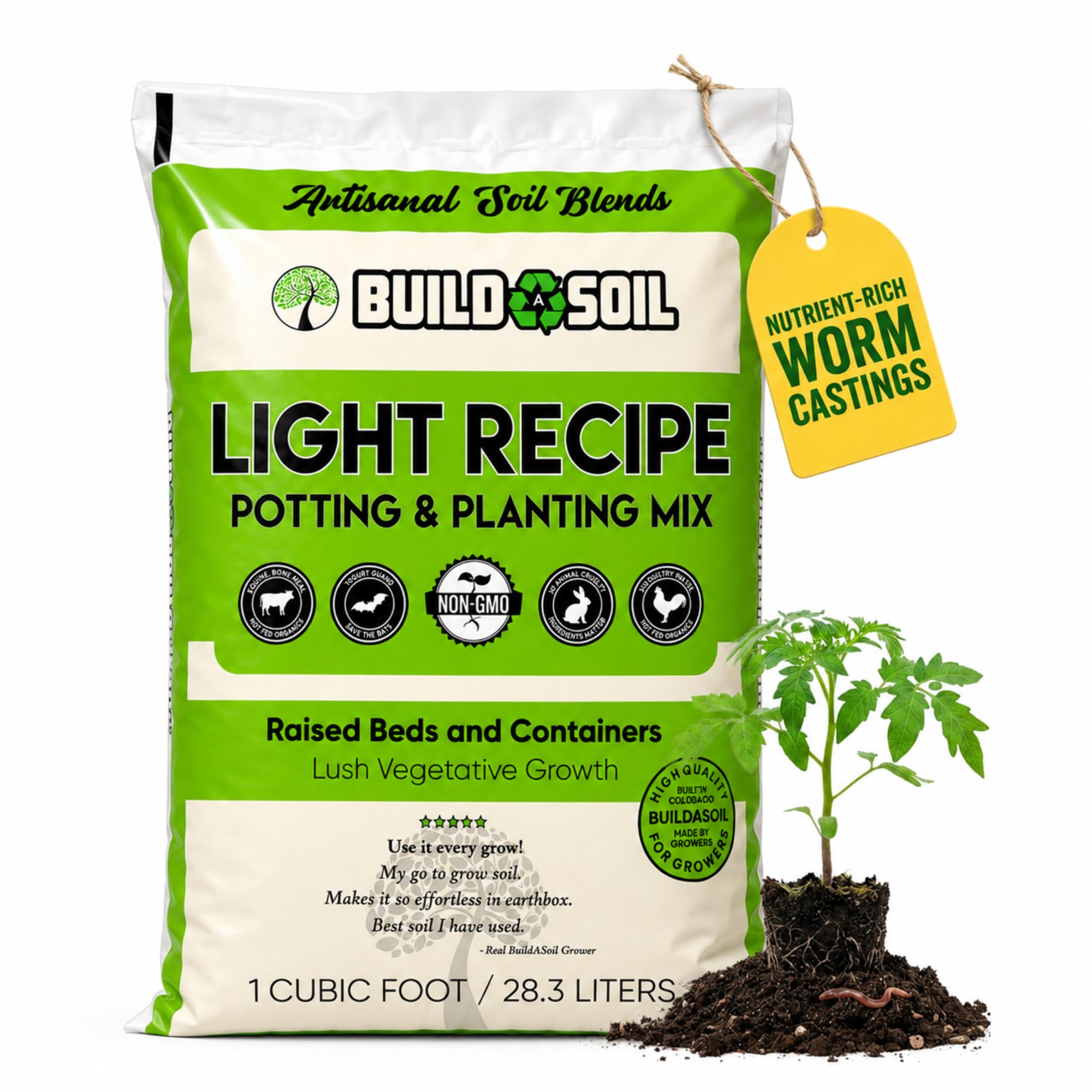
A worm-casting-heavy mix designed for growers who want clean, low-sodium soil for sensitive roots.
BuildASoil positions this as their “most popular recipe,” and the big story is the ingredient transparency — it is made with certified organic inputs and a low sodium formula that helps prevent salt stress from building up in containers and raised beds. At 30 pounds for 1 cubic foot, it is noticeably lighter than the 35-pound Gaia Green bag at a similar volume, reflecting a fluffier, more aerated texture with worm castings and compost as the main nutrient drivers. Shoppers say the soil is “amazing and won’t burn your plants,” which is a strong sign that the nutrient levels are well-balanced for direct planting.
The downside is the volume: 1 cubic foot is half what you get in the Coast of Maine bag. If you are filling a new 4×4-foot raised bed, you will need around 16 of these bags versus 8 of the Coast of Maine bags, making this a more expensive choice for large-scale bed filling. The label says it is a “loamy soil structure for excellent aeration, drainage, and moisture retention,” which makes it an excellent finishing or potting mix for smaller containers and top-dressing, but not the most economical choice for a big bed.
Compared to the Espoma mix, which also contains mycorrhizae, BuildASoil focuses more on the worm castings and compost content rather than a proprietary fungal blend, making it a great option for gardeners who want a simpler, transparent ingredient list without extra “proprietary” formulas.
Root-Friendly Formula
- Low sodium design reduces salt stress for sensitive seedlings and transplants
- Certified organic inputs with full ingredient transparency
- Loamy, light texture with excellent aeration for container growing
Size Limitation
- Small 1 cu ft bag means you need many bags for large raised beds
- Higher cost per cubic foot compared to larger value bags
Perfect for small beds and containers: Reach for this if you want a clean, low-sodium organic mix with high worm casting content that is gentle on young roots and great for top-dressing existing beds.
Choose the Coast of Maine if: You are filling a large new raised bed and need a bigger bag at a better volume-to-price ratio.
5. Home and Country USA All Purpose Topsoil
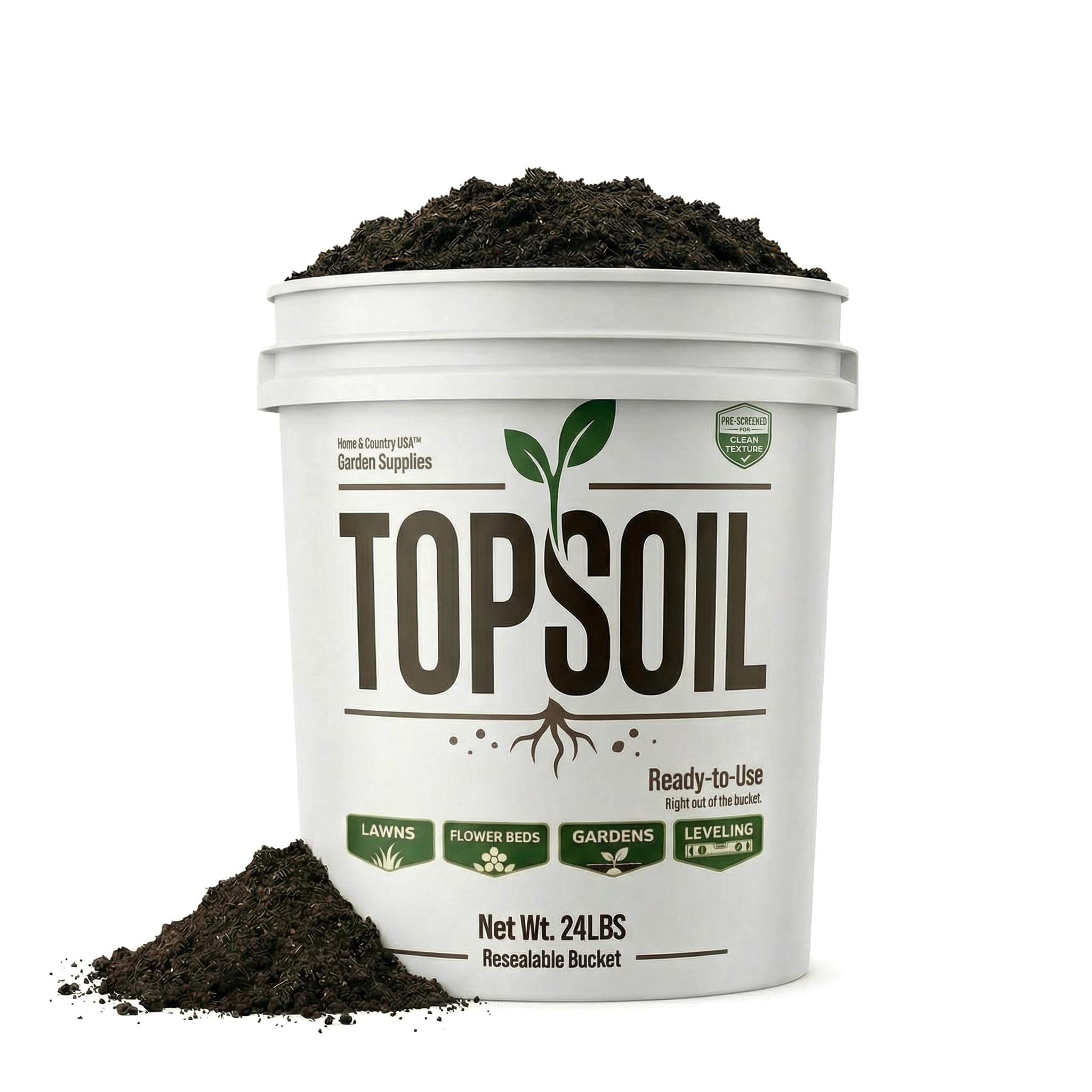
A compact pail that is better suited for patching a small pot than filling a new raised bed.
The smallest option in the lineup, this 24-pound pail of topsoil is targeted at indoor and outdoor container use — and it comes in a bucket rather than a bag. Buyers report a serious issue with the packaging: “the bucket tear away tab is impossible to remove” and the soil itself “has a very foul odor.” The quantity is a big sticking point too, with multiple reviewers saying the container is “way too small” and not worth the price. One buyer called it “great soil, just not enough of it.”
While the product description claims it can be used for raised beds, the reality is that this is a luxury top-soil pail designed for spot-patching or a single houseplant, not for filling any meaningful sized raised garden bed. Compared to the 2-cubic-foot Coast of Maine bag, this pail offers a fraction of the volume at a price that is in the same neighborhood, making it poor value for large-scale bed filling. The foul odor complaint from a verified buyer is also a red flag that many organic topsoil blends face when they are not properly aerated or composted before bagging.
If you need a small amount of topsoil for a single pot or to top-dress a small indoor herb planter, this pail might work. But for raised bed gardening, the other options on this list deliver far more volume and nutrient value per dollar.
Small Batch Use
- A compact bucket form factor is easy to store on a shelf
- All purpose organic mix for indoor and outdoor container plants
Not for Raised Beds
- Too small and expensive per cubic foot for raised bed filling
- Owners mention a foul odor and a difficult-to-remove tear-away tab
- Low quantity means poor value compared to standard bagged soil
Emergency top-up only: Grab this pail if you need a tiny amount of organic topsoil for a single houseplant or a very small container — not for any raised bed project.
Skip it entirely if: You are filling or even just topping off a raised bed, where any of the larger bagged options deliver far more value.
Understanding the Specs
Bag Volume (Cubic Feet)
This is the single most important number when buying raised bed soil. A standard 4×4-foot raised bed that is 12 inches deep needs about 16 cubic feet of soil. Smaller bags like 1 cubic foot mean you will carry 16 bags to fill that bed. Larger bags at 1.5 or 2 cubic feet cut that number to 10 or 8 bags, saving you time, money, and a lot of heavy lifting. Some bags are sold by weight (pounds) instead of volume, but weight is misleading — a dense, heavy mix might have less actual soil volume than a lighter, fluffier one.
Mycorrhizae & Living Biology
Mycorrhizae are beneficial fungi that form a partnership with plant roots. The fungi extend far into the soil, acting like extra root hairs that pull water and phosphorus into the plant. Endo mycorrhizae penetrate the root cells, while ecto mycorrhizae wrap around the root surface. A soil mix that lists “mycorrhizae” on the bag is already giving your plants a head start without you needing to buy a separate fungal inoculant. Biochar and worm castings also feed the soil food web, keeping the biology alive for months.
FAQ
How much organic garden soil do I need to fill a raised bed?
Can I use organic potting mix from a bag instead of garden soil in my raised bed?
Why does my raised bed soil need mycorrhizae?
What does biochar do in organic garden soil?
How often should I replace the soil in a raised bed?
Is organic garden soil safe for growing vegetables?
What if my seedlings are turning yellow after planting in organic raised bed soil?
Why does some organic soil have a foul smell?
Final Thoughts: The Verdict
For most people, the organic garden soil for raised beds winner is the Coast of Maine Castine Blend because it delivers the most volume at 2 cubic feet with the richest, most diverse organic ingredient list including mycorrhizae and biochar. If you want the biological edge of mycorrhizae at a lower price point, grab the Espoma Organic Raised Bed Mix. And for a dense, pre-charged living soil that needs no early amending, the Gaia Green Organic Living Soil is your go-to for smaller beds and high-value containers.
How We Picked
We do not accept paid placement, and we did not hands-on test every unit. Instead, we match each pick to a real buyer and use-case by comparing the manufacturers’ published specifications against the patterns in verified customer reviews — so you get each pick’s real strengths and trade-offs instead of marketing copy.
Sources & Methodology
Specifications: manufacturer listings and product documentation. Review insights: verified customer reviews, as of July 2026. Pricing: not shown on this page (it changes often); check the current price via the retailer link.
As an Amazon Associate, Lawn Gear Lab earns from qualifying purchases. This does not affect which products we feature.