
Specs are compiled from manufacturer listings and verified buyer reviews and can change over time — please confirm the key details on the product page before buying.
Banana trees are actually giant herbs that are famously hungry, and most general-purpose plant foods leave them looking pale and slow. The fix is a fertilizer built around their singular obsession: potassium, the nutrient that drives those broad, lush leaves and heavy fruit. This guide sorts through the liquid concentrates and granular blends that deliver it without synthetic chemicals.
I’m Rikta — the founder and writer behind Lawn Gear Lab. This guide is built by comparing the manufacturers’ published specifications and the patterns across verified customer reviews, so you get each pick’s real strengths and trade-offs instead of marketing spin.
You will see which formulas revive struggling plants fastest, which stretch furthest per bottle, and which one earns the crown as the best organic fertilizer for banana trees for most backyard growers.
Our Picks at a Glance
How To Choose The Best Organic Fertilizer For Banana Trees
Bananas are heavy feeders, meaning they pull a lot of nutrients from the soil as they push out new leaves and fruit. You want a feed that replaces what they use, with an emphasis on potassium, the nutrient that fuels fruit quality and those big leaves.
Read the N-P-K numbers first
The three numbers on any fertilizer label stand for nitrogen, phosphorus, and potassium in that order. For bananas, potassium is the star, so a ratio like 3-1-6 puts the biggest number on the nutrient your tree actually craves.
Liquid versus granular
Liquid concentrates get absorbed quickly, which makes them ideal for reviving a struggling plant or feeding potted trees on a regular schedule. Granular, slow-release feeds work for the long haul, breaking down over weeks so you apply less often, but they take longer to show results.
Quick Comparison
| Model | Best For | N-P-K Ratio | Form | Weight | Amazon |
|---|---|---|---|---|---|
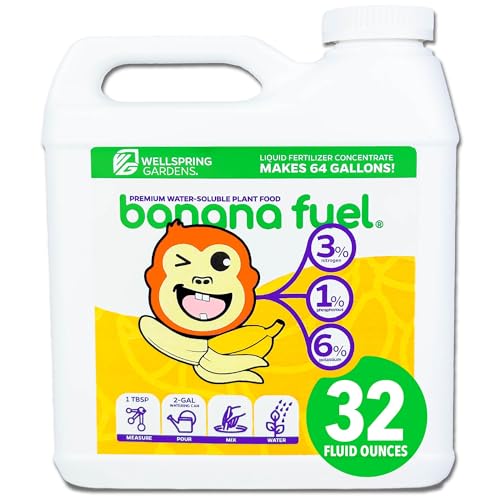
| Banana Fuel by Wellspring Gardens★ Best Overall | Fast revival & potted plants | 3-1-6 | Liquid | 2.2 lb | Amazon |
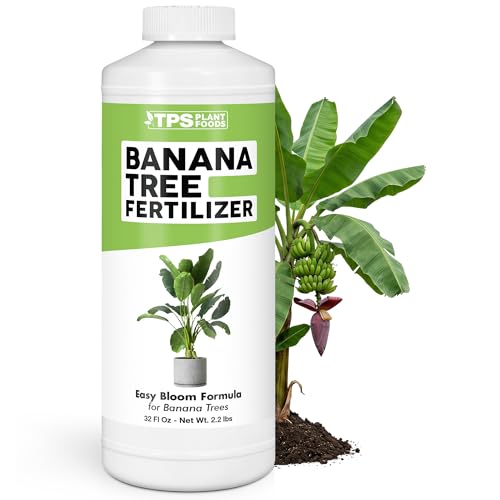
| TPS Nutrients Banana Tree FertilizerTop Performer | Indoor & outdoor use | — | Liquid | 2 lb | Amazon |
| HiThrive 32oz Plant Food | Value & lasting care | — | Liquid | 2.6 lb | Amazon |
| EB Stone Organics Citrus & Fruit Tree Food | Long-lasting granular feed | 7-3-3 | Powder | 15 lb | Amazon |
| Down To Earth Organic Fruit Tree | Backyard orchards | 6-2-4 | Powder | 25 lb | Amazon |
In‑Depth Reviews
1. Banana Fuel Liquid Fertilizer by Wellspring Gardens
Our pick — over 4.5★ from 350+ verified ratings; the strongest balance of quality and price.
The potassium-heavy concentrate that pulls heat-stressed plants back to life within a week.
This liquid feed is built around a 3-1-6 formula, meaning the potassium number sits at 6, the highest of the three nutrients and exactly the ratio the University of Florida flags as ideal for bananas. That potassium focus is what makes it the crowd favorite — 4.7 stars across 300+ owners — because it targets the nutrient that drives leaf size and fruit development.
What wins people over is the speed of the turnaround. Buyers report that in hot climates, stressed plants showed “remarkable improvement” within a week of application.. Potted banana growers saw lush green leaves and promising fruit development after about a month of use, and the simple recipe — 1 tablespoon of concentrate mixed into 2 gallons of water — makes it an easy addition to a weekly routine.
The 32 fluid ounce bottle weighs just 2.2 pounds, making it light to lift and easy to store. It is heavier than the 2-pound TPS Nutrients bottle below, but the extra weight comes with a formula that banana growers clearly trust as a staple in their gardening routine.
The fast-acting appeal
- 3-1-6 ratio matches the University of Florida’s ideal for bananas
- High potassium (the “6”) targets leaf and fruit growth
- Simple mix: 1 tbsp per 2 gallons of water
- Well-suited for potted plants in small spaces
Who should hold off
- Some buyers saw no drastic change, just steady acceptance
- Liquid form means you reapply regularly rather than set and forget
Reach for this if: you want the fastest visible recovery for a struggling or heat-stressed banana plant and you do not mind a weekly mixing routine.
Think twice if: you want a feed-and-forget granular option that sits in the soil for weeks at a time.
2. TPS Nutrients Banana Tree Fertilizer
A kelp-enriched liquid that helps potted pups shoot up a foot in two weeks.
This one earns its reputation on measurable growth. Owners mention a pinky-sized banana tree gaining three leaves in weeks, and others seeing a foot of growth in two weeks.. At 4.6 stars across 400+ owners, it is the most-reviewed banana-specific liquid on this list, and the consensus is clear: it works.
The 32 oz bottle weighs just 2 pounds, and its kelp-enriched formula is designed to support leaf development and strong roots while helping reduce leaf yellowing. It is flexible about where you use it — the maker says it suits garden beds, containers, and tropical growing environments, indoors or out. The mixing instructions are precise: 2 teaspoons per gallon in a watering can, or 1 teaspoon per quart if you are misting leaves.
Unlike the granular EB Stone option later in this list, this is a liquid you apply every two weeks during active growth, which is why owners describe it as “easy to use” and note that “a little goes a long way.” The trade-off is that you have to stay on schedule to keep seeing results.
Growth on command: the effectiveness is the most-praised trait here, and the review pattern backs it up with stories of foot-tall growth in a fortnight.
Grab it for: indoor or outdoor banana plants, especially small pups and transplants that need steady, visible progress.
skip it if: you prefer a one-time granular application over a biweekly liquid routine.
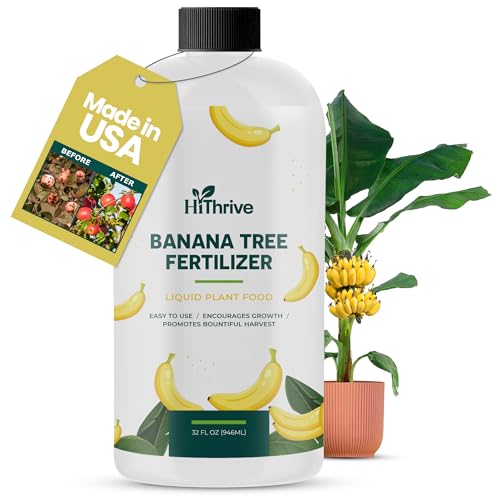
3. HiThrive 32oz Plant Food for Banana Trees
The 32-ounce bottle that stretches to 32 gallons of feed for the long game.
This is the value pick because the math is on your side: the 32 oz bottle makes 32 gallons of liquid fertilizer, giving you a season of feeding from a single purchase.
The formula targets the big three — nitrogen for leafy growth, phosphorus for root strength, and potassium for fruit quality — plus micronutrients like calcium, magnesium, and zinc. That makes it a rescue option too: Customers note a seemingly dead banana tree “started putting out leaves” after one application post-transplant..
Use it every 1-2 weeks during the growing season, then every 4 weeks in cooler months, according to the maker. Local banana growers have endorsed it too, with one owner applying it to a young Blue Java tree in a planter on the recommendation of a grower.
The long-haul value
- 32 oz makes 32 gallons of feed
- Great for Dwarf Cavendish, Plantain, Goldfinger, Lady Finger, Red Banana
- Revives trees that look dead after transplanting
- Clear seasonal feeding schedule
The honest limits
- No stated N-P-K ratio, so you cannot verify potassium levels
- Some buyers noted it takes time to judge full results
Choose it when: you want the most feed per bottle and a formula that works across many banana varieties.
Look elsewhere if: you need a specific, published N-P-K ratio to match your soil test.
4. EB Stone Organics Citrus & Fruit Tree Food 7-3-3

A 15-pound granular feed that keeps working for up to 8 weeks without burning roots.
This is the set-and-forget option for the gardener who does not want a weekly mixing ritual. The 7-3-3 formula is a slow-release granular that the maker says feeds trees for up to 6–8 weeks, with a 15 lb bag that suits home orchards, raised beds, and multiple fruit trees. It is 100% natural and organic, and it has been made by EB Stone since 1922.
What makes it useful for bananas is the added calcium, which helps prevent blossom end rot and leaf curl while feeding beneficial soil microbes. Reviewers point out it “made my lemon, elderberry, olive and avocado trees so happy” in pots, and one described it as saving a Meyer lemon tree that another fertilizer had left with yellowing leaves.
At 4.6 stars, it is a proven performer, though the target species is listed as citrus, so banana growers should treat it as a general fruit-tree option rather than a banana-specific blend. Buyers do warn about the smell: it has “a very strong fishy odor,” so it is best applied outdoors.
The long-game grip: slow-release feeding means fewer applications, and the calcium bonus protects against common fruit-tree issues.
The smell factor: the fishy odor is real, so plan to use it outside.
Best for: potted fruit trees and small backyard orchards where you want weeks of feeding from one application.
Not ideal if: you are sensitive to strong odors or you need a banana-specific potassium-heavy ratio.
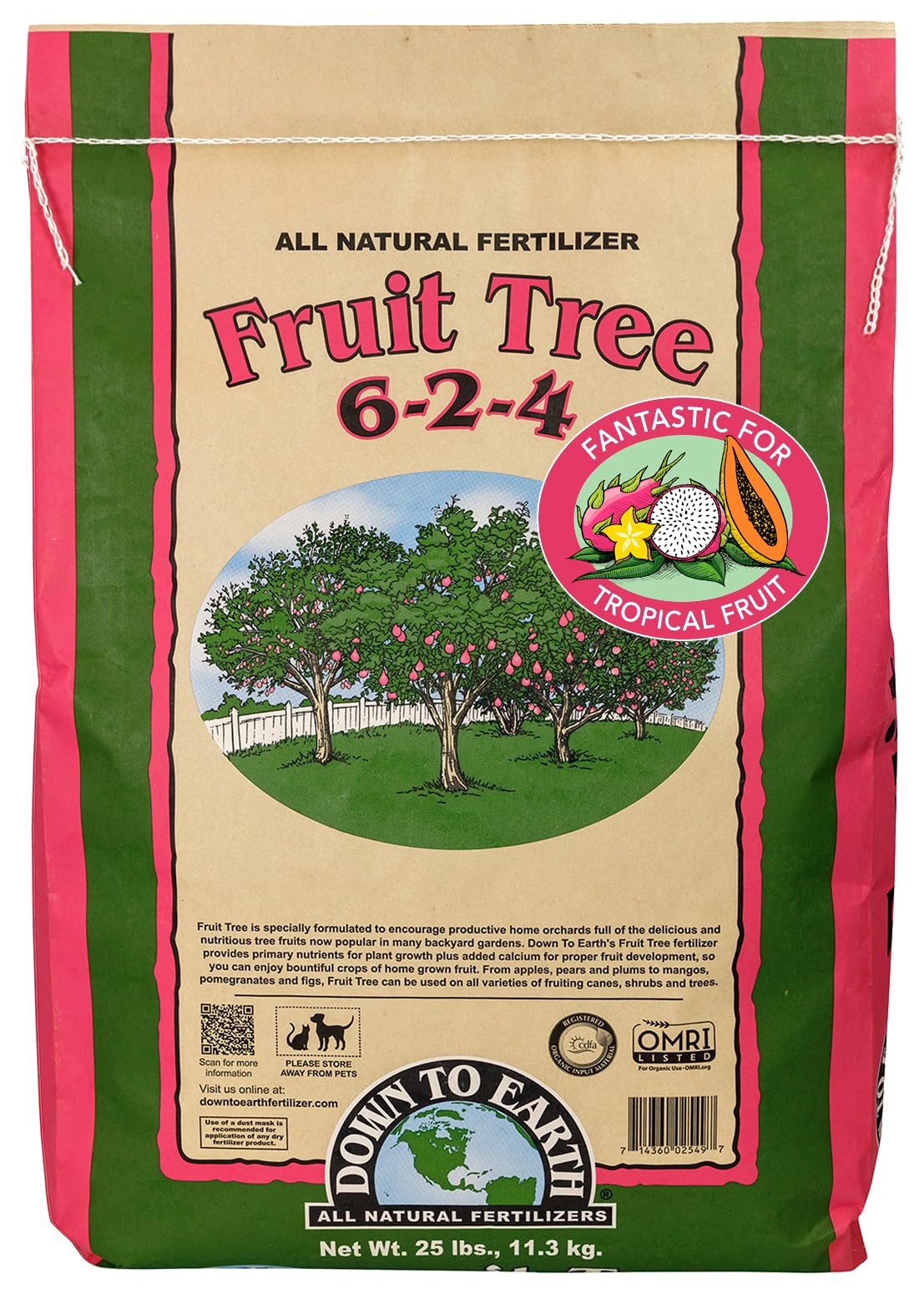
5. Down To Earth Organic Fruit Tree 6-2-4
A 25-pound OMRI-listed granular that fuels entire backyard orchards for a season.
This is the biggest bag on the list at 25 pounds, and it is listed by the Organic Materials Review Institute (OMRI), meaning it is verified for use in organic production. The 6-2-4 formula is built around a 3-1-2 ratio at double strength, so owners often use half the recommended amount and get the same effect. It is designed for productive home orchards full of tree fruits.
The ingredient list reads like a soil builder’s wish list: feather meal, fish bone meal, calcium carbonate, langbeinite, potassium sulfate, alfalfa meal, and kelp meal. Owners mention fruit trees “tripled in size” with sweeter fruit when fed every 3 weeks from June through September.. The added calcium supports proper fruit development, which matters for heavy banana bunches.
At 4.7 stars across 69 ratings, it is the highest-rated granular here, but the feedback points to a limitation: some trees respond brilliantly while others show little effect, with pears specifically called out as pickier. It is a general fruit-tree feed, not a banana-specific formula, so match it to your orchard’s needs.
Orchard-scale value: the 25 lb bag and OMRI listing make it the serious organic grower’s choice.
The variable response: not every tree variety responds equally — pears in particular showed little effect for some owners.
Reach for this if: you run a backyard orchard with multiple fruit trees and want one organic granular for everything.
Look elsewhere if: you only have a single potted banana and do not want to store a 25-pound bag.
Understanding the Specs
N-P-K Ratio
The three numbers on the label stand for nitrogen, phosphorus, and potassium in that order. For banana trees, potassium is the nutrient that drives leaf size, fruit quality, and overall vigor, so you want the third number to be the highest — like the 3-1-6 ratio on the Wellspring Gardens pick or the 16-8-24 on the Grow-More bag.
Liquid vs. Granular Form
Liquid concentrates get absorbed quickly, which makes them ideal for reviving a struggling plant or feeding potted trees on a regular schedule. Granular, slow-release feeds break down over weeks, so you apply less often, but results take longer to appear. Your choice depends on whether you prefer a weekly mixing routine or a seasonal set-and-forget application.
FAQ
How often should I fertilize my banana tree with a liquid feed?
What N-P-K ratio is best for banana trees?
Can I use a citrus or fruit tree fertilizer on my banana tree?
How do I mix liquid banana fertilizer concentrate?
Is the Grow-More 16-8-24 fertilizer organic?
How much fertilizer does a 32 oz bottle make?
Why are my banana tree leaves turning yellow?
Can I use these fertilizers on potted banana trees?
How should I store granular banana fertilizer?
How long does slow-release granular fertilizer last?
Final Thoughts: The Verdict
For most growers, the organic fertilizer for banana trees winner is the Banana Fuel by Wellspring Gardens because its 3-1-6 ratio targets the potassium bananas crave and delivers visible recovery within a week. If you want the most feed per bottle, grab the HiThrive 32oz Plant Food that stretches to 32 gallons. And for a low-maintenance granular option that keeps working for weeks, the EB Stone Citrus & Fruit Tree Food is the one to reach for.
How We Picked
We do not accept paid placement. Every pick is matched to a real buyer and a real use-case; we do not hands-on test units.
Sources & Methodology
Specifications: manufacturer listings and product documentation. Review insights: verified customer reviews, as of August 2026. Pricing: not shown on this page (it changes often); check the current price via the retailer link.
As an Amazon Associate, Lawn Gear Lab earns from qualifying purchases. This does not affect which products we feature.