
Specs are compiled from manufacturer listings and verified buyer reviews and can change over time — please confirm the key details on the product page before buying.
If your hydrangeas stay stubbornly pink, your blueberry bushes look sickly, or your azaleas refuse to bloom, the soil is almost certainly the culprit — not your watering habit. Plants like these crave acidic soil, and a standard all-purpose feed can make the problem worse. The fix is a fertilizer made specifically to lower pH and deliver the nutrients acid-lovers need, and this guide breaks down the best organic options so you can stop guessing and start seeing greener leaves and fuller harvests.
I’m Rikta — the founder and writer behind Lawn Gear Lab. This guide is built by comparing the manufacturers’ published specifications and the patterns across verified customer reviews, so you get each pick’s real strengths and trade-offs instead of marketing spin.
To get lush blooms or a heavy berry harvest, you need to match the organic fertilizer for acid loving plants to your plant’s needs, and the NPK ratio (the three numbers showing nitrogen, phosphorus, and potassium percentages) tells you exactly what each product delivers.
Our Picks at a Glance

How To Choose The Best Organic Fertilizer For Acid Loving Plants
Before you buy, understand that acid-loving plants don’t just want food — they want food that keeps their soil in the right pH range. A fertilizer with sulfur or other acidifying ingredients does double duty: it feeds the plant and conditions the soil so nutrients stay available.
Match the NPK to the Goal
The three numbers on the bag (like 5-4-4) are nitrogen, phosphorus, and potassium. Nitrogen pushes leafy green growth, phosphorus supports roots and blooms, and potassium builds overall hardiness and fruit quality. For berries, look for balanced formulas like 5-4-4 or 4-3-6; for shrubs you want steady, slow-release feeding.
Check the Form and Application
Granules are ready to use and need no mixing — you sprinkle them around the drip line and water in. Powders may require measuring a specific amount per gallon of water. Slow-release options feed over a whole season, which means fewer applications and less risk of burning delicate roots.
Quick Comparison
| Model | Best For | NPK Ratio | Form | Bag Size | Amazon |
|---|---|---|---|---|---|
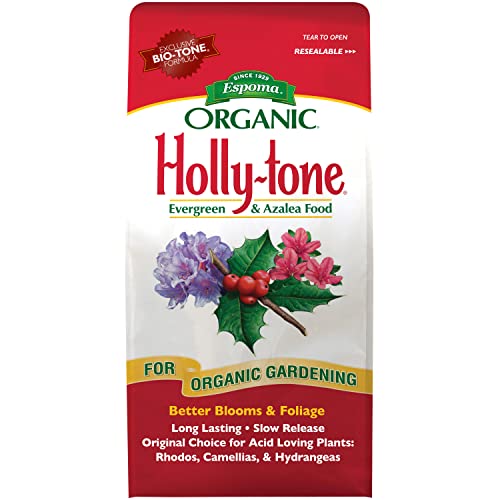
| Espoma Holly-Tone (4 lb)★ Best Overall | All-around shrubs & evergreens | 4-3-4 | Granules | 4 lb | Amazon |
| True Organic Berry FoodBerry Booster | Blueberries & strawberries | 5-4-4 | Granules | 4 lb | Amazon |
| FoxFarm Happy Frog (4 lb) | Gentle feeding for azaleas | 1/16 cup per gallon | Powder | 4 lb | Amazon |
| Down To Earth Cottonseed Meal | High-nitrogen soil builder | 6-2-1 | Granules | 5 lb | Amazon |
| FoxFarm Japanese Maple (2 Pack) | Maples & ornamental trees | 4-3-4 | Powder | 4 lb (2 pack) | Amazon |
| Espoma Holly-Tone (50 lb) | Large gardens & heavy feeders | 4-3-4 | Granules | 50 lb | Amazon |
| Down To Earth Acid Mix | Big berry patches & orchards | 4-3-6 | Granules | 25 lb | Amazon |
In‑Depth Reviews
1. Espoma Organic Holly-Tone (4 lb)
Our pick — over 4.5★ from 750+ verified ratings; the strongest balance of quality and price.
The original acid-lover’s feed that keeps entire shrub borders thriving for decades.
Espoma calls this the original plant food for acid-loving plants, and the 4-3-4 analysis with 5% sulfur explains why it’s been trusted since 1929. The sulfur is what helps lower soil pH naturally, while the slow-release organics create a long-lasting nutrient reservoir in the soil. You don’t mix anything — just sprinkle the ready-to-use granules around the drip line and water thoroughly.
This is the crowd favorite here, holding a strong 4.7-star rating from hundreds of gardeners. What wins people over is the plant benefits — owners consistently report hydrangeas blooming in vivid colors, evergreens staying deep green, and azaleas outlasting the neighbors’ fading blooms. The reviews sum it up: “We used it on our 25 yr old Holly tree and Holly bushes. They greened up fast and bright red berries now!”
It’s approved for organic gardening as a registered Organic Input Material, and it contains no sludges or toxic ingredients. The only real debate among buyers is value — many call it a fair price for what it delivers, while a few find it a bit pricey for a 4-pound bag.
Why owners stick with it
- Proven on hydrangeas, azaleas, camellias, blueberries and evergreens
- Slow-release granules feed for a full season
- Registered Organic Input Material, safe for organic gardening
- No mixing required — sprinkle and water
Who should look elsewhere
- Budget shoppers may find the per-pound cost higher than bulk bags
- Big gardens will need several bags
Grab this if: you want one reliable feed for a mixed border of shrubs, evergreens, and berries without measuring anything.
Think twice if: you’re feeding a large berry patch and want the lowest cost per pound.
2. True Organic Berry Food
A berry-specific feed with a higher nitrogen kick and a serious smell problem.
True Organic Berry Food carries a 5-4-4 ratio — a 25% bigger nitrogen number than Espoma’s 4-3-4 — which pushes leafy growth alongside fruit production. It’s made with seabird guano, shrimp and crab shell meal, so it’s genuinely rich in natural organics. The 4-pound bag covers up to 58 square feet, and you apply it monthly during the growing season.
Berry production is the thing everyone raves about here. Buyers report strawberries and blueberries tripling in size with abundant harvests, and blackberry plants loaded with fruit by early summer. The recurring trade-off is the odor — this stuff smells strongly enough that several buyers wear a mask while applying it.
The sulfur in the blend helps lower soil pH over time, which is exactly what blueberries need. It works for both in-ground beds and container plants, making it flexible for patio gardeners. If you can tolerate the smell for a few minutes of application, the berry yield payoff is real.
What the harvest shows
- Berries reported tripling in size with abundant fruit
- Sulfur lowers soil pH for blueberry health
- Works in containers and in-ground beds
- Monthly application keeps feeding consistent
The honest catch
- Strong odor during application — a mask helps
- Mixed reports on growth for some plants
Reach for this if: your main goal is maximum berry size and yield from blueberries, strawberries, or blackberries.
Look elsewhere if: you’re sensitive to strong smells or mostly grow flowering shrubs rather than fruit.
3. FoxFarm Happy Frog Acid Loving Plants Fertilizer

The gentlest feed here, packed with living soil biology that revives stressed plants.
FoxFarm’s Happy Frog is built for low-pH lovers like azaleas, rhododendrons, and blueberries, and its edge is biology: it packs beneficial soil microbes and mycorrhizal fungi (root-friendly fungi that boost nutrient and water uptake). You mix this powder at 1/16 cup per gallon, so it’s a different application style than the ready-to-use granules above. Owners mention it gives a noticeable green-up within a week on potted azaleas.
This pick shines brightest in recovery stories. Customers note frosted Katsura bushes bouncing back with healthy leaves after feeding, and container raspberry and rose plants thriving. One standout result: a gardenia produced 2 buds within 10 days, and a strawberry plant followed with abundant flowers and fruit. It’s OMRI Listed, so it’s certified for organic gardening.
The gentle feeding philosophy means it won’t overwhelm sensitive plants, which is ideal if you’ve burned plants before with stronger feeds. It carries a stellar 4.8-star average, the highest in this lineup, from nearly 200 dedicated gardeners.
Why it wins on recovery
- Soil microbes and mycorrhizal fungi boost root efficiency
- OMRI Listed for certified organic gardening
- Gentle formula won’t overwhelm stressed plants
- Visible results in as little as 10 days
What to know
- Powder requires measuring per gallon of water
- Smaller 4 lb bag may not suit large gardens
Best for: gardeners with delicate or recovering plants who want a gentle, biology-boosting feed.
Not ideal for: anyone who wants a no-measuring sprinkle-and-go granule.
4. Down To Earth Organic Cottonseed Meal
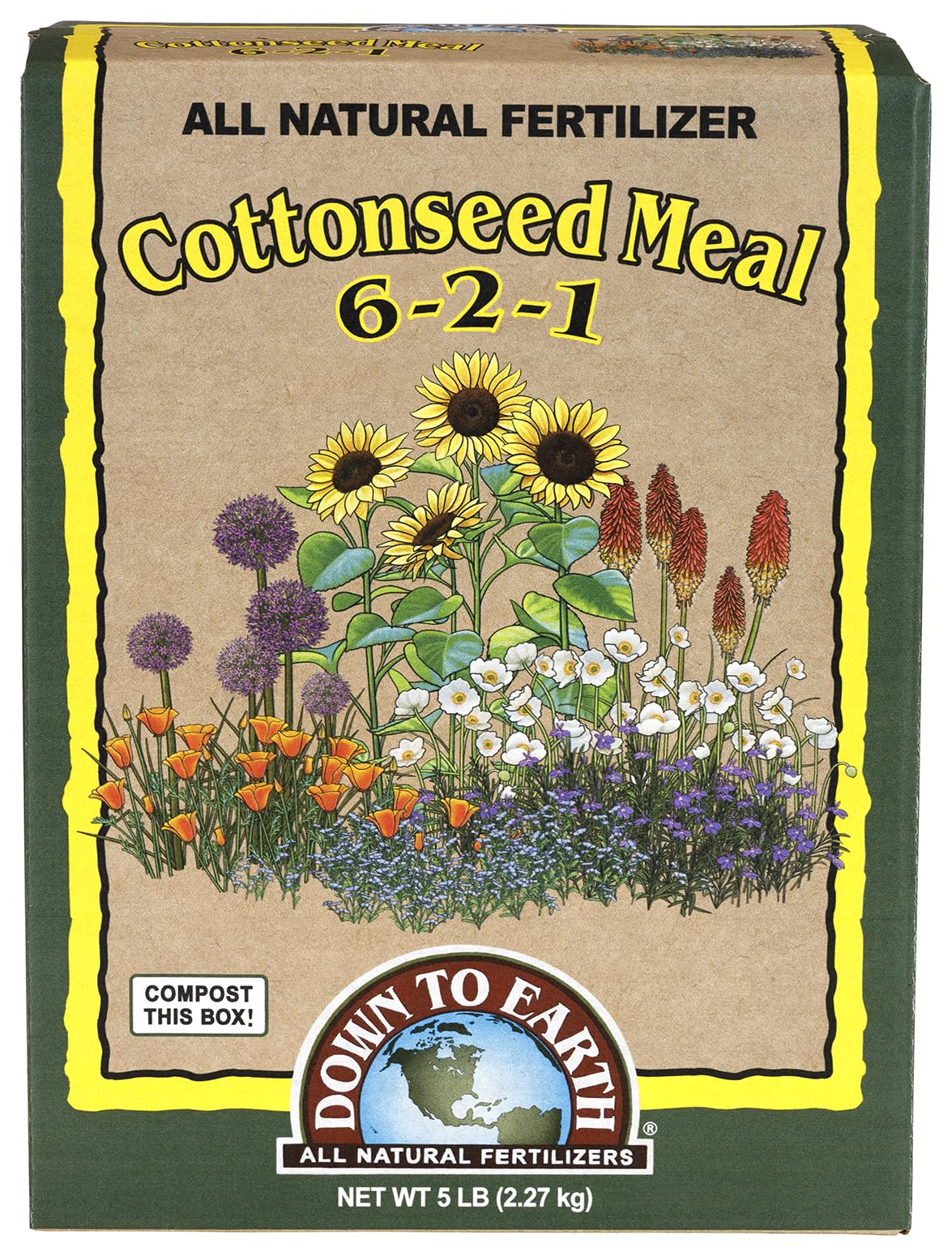
A high-nitrogen 6-2-1 classic that conditions soil while feeding leafy growth.
Cottonseed meal is an old-school organic staple, and Down To Earth packages it at a 6-2-1 ratio — the highest nitrogen of any pick here. That makes it excellent for pushing deep green foliage and strong root development, which is why blueberry growers often use it as their go-to. The slow-release granules improve soil structure over time, not just feed the plant once.
This is the only product many blueberry growers use, and it earns praise for azaleas too. The 5-pound bag is granulated and easy to spread, and it’s OMRI Listed for organic gardening. One Florida owner even pairs it with used coffee grounds around their Xiora bushes, which love the slightly acidic boost — a smart trick for keeping pH low.
The trade-off is the high nitrogen: it’s better for leafy growth and soil conditioning than for pushing blooms or fruit. If your hydrangeas are lush but refusing to flower, this isn’t the feed you want. But for blueberries and acid-loving shrubs that need steady green growth, it’s a proven, simple choice.
Why growers trust it: it’s a single-ingredient, OMRI-listed meal that feeds plants and improves soil texture at once.
The limitation: the 6-2-1 ratio leans heavily on leaf growth, so it’s not the pick for flower or fruit production.
Choose it if: you want a no-fuss, high-nitrogen soil builder for blueberries and leafy acid-lovers.
Pass on it if: you’re trying to boost hydrangea blooms or berry yields specifically.
5. FoxFarm Happy Frog Japanese Maple Fertilizer (2 Pack)
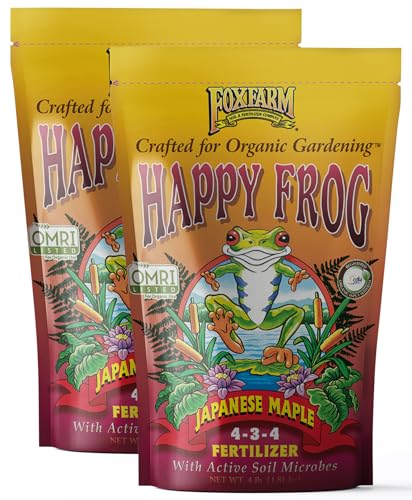
The maple specialist with a 7-foot growth story that owners can’t stop repeating.
FoxFarm formulated this 4-3-4 blend specifically for Japanese maples and other low-pH feeders like hydrangeas and dogwoods. It’s a 2-pack at 4 pounds each, giving you 128 ounces total. The phosphorus and potassium in the mix support strong branch development, while the soil microbes and mycorrhizal fungi improve root efficiency and water uptake.
The growth results are borderline legendary here. One owner planted a 1-foot Japanese maple and, feeding with this for two years, watched it reach over 7 feet tall and 5 feet round with intense color. Another brought a poorly maintained, hard-trimmed maple back to health. Effectiveness is the most-discussed trait by a wide margin, and owners find the 2-pack worth the cost.
It’s a fine powder rather than pellets, so apply it close to the soil to avoid wind drift. You can mix it into soil or top-dress, and it’s designed for monthly feeding through the growing season. If you’re serious about ornamental trees, this is the specialist pick.
What the growth proves
- Documented 7-foot growth on a 1-foot maple over two years
- Phosphorus and potassium build strong branches
- Works for container and in-ground plantings
- 2-pack offers good value for dedicated growers
Handle with care
- Powder form can drift in wind — apply low
- Monthly feeding schedule requires consistency
Built for: Japanese maple enthusiasts and ornamental tree lovers who want visible, fast growth.
skip it if: you only grow berries or vegetable beds — this targets trees.
6. Espoma Organic Holly-Tone (50 lb)
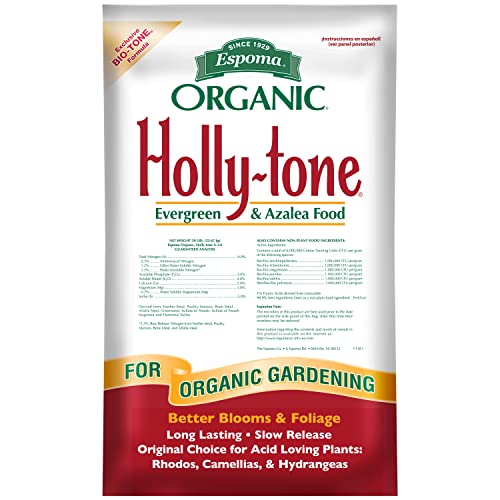
The same legendary 4-3-4 formula, scaled up for serious gardeners with big beds.
This is the identical Holly-Tone formula as the top pick — the original plant food with a 4-3-4 analysis and 5% sulfur — but in a massive 50-pound bag. For anyone with multiple shrubs, a long hedge line, or a whole row of evergreens, this is the economical way to buy it. The slow-release organics keep feeding for a full season, and it’s ready to use with no mixing.
Owners with large properties love the size and the price per bag. Azaleas “have never looked so good,” and hydrangeas reportedly bloomed twice as much after application — even holding up in 100+ degree heat. It’s a registered Organic Input Material, so it meets organic production requirements, and a landscaper even recommended it to one owner. Quality and plant performance are the most-praised traits.
The recurring note is the odor — this much organic material has a distinct smell that some find unpleasant. But for the scale and results, most owners consider that a minor issue. The 50-pound bag arrives in a sturdy shipping box, so delivery is reliable.
Why big gardens love it
- 50 lb bag lasts multiple seasons for large beds
- Same proven formula as the 4 lb winner
- Registered Organic Input Material
- Hydrangeas reported blooming twice as much
Before you commit
- Noticeable odor with this much organic material
- Storage space needed for a 50 lb bag
Reach for this if: you have a large garden, hedge rows, or multiple beds that need seasonal feeding.
Look elsewhere if: you garden in containers or want to try the formula before committing to bulk.
7. Down To Earth Organic Acid Mix
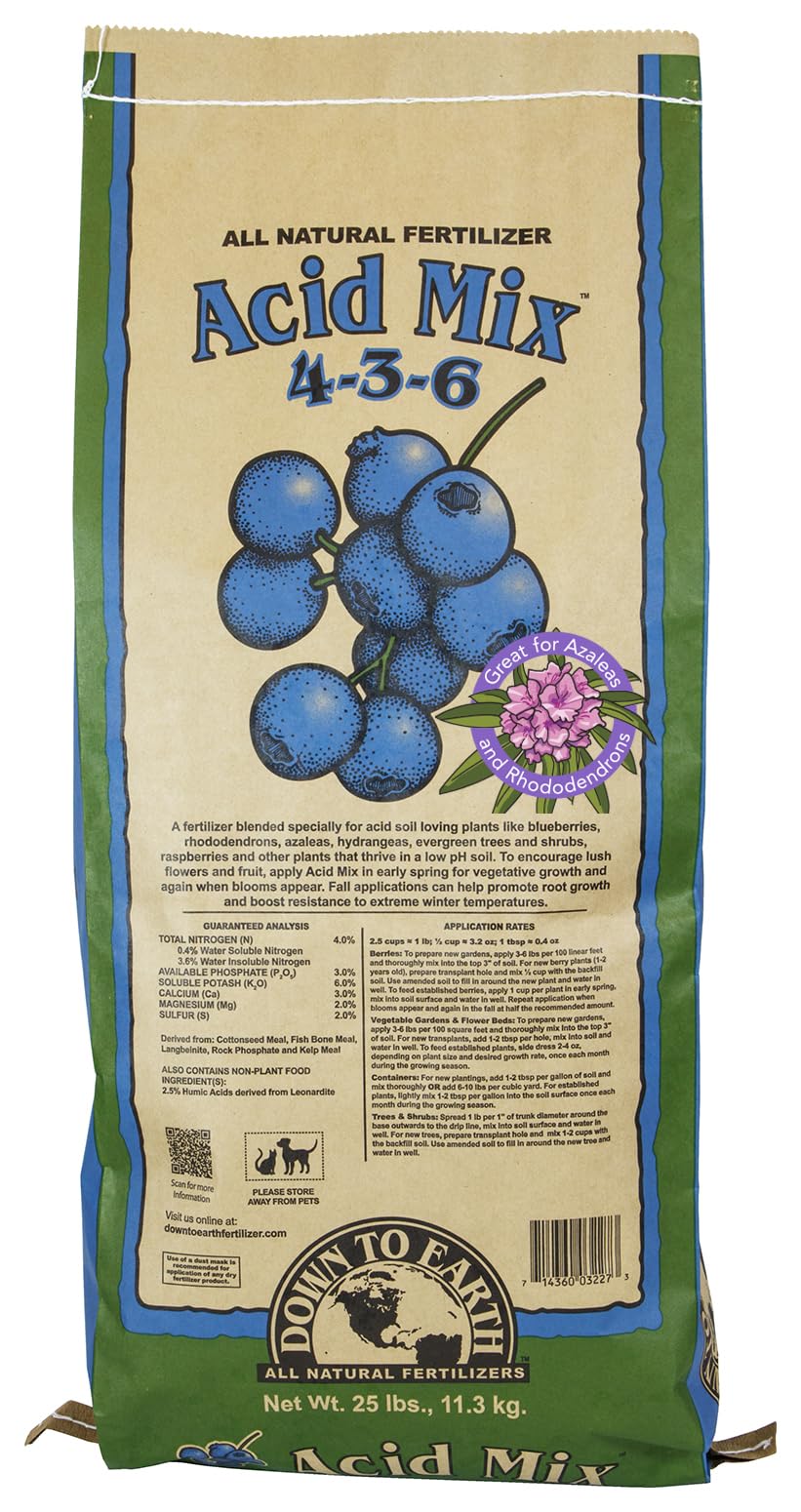
A potassium-heavy 4-3-6 blend built for berry patches that need fruit, not just foliage.
If fruit is your goal, Down To Earth’s Acid Mix leads this guide in potassium at 4-3-6 (the third number, which fuels fruit quality and plant hardiness). That makes it a smart pick for blueberries, raspberries, and even potatoes. The 25-pound bag is the second-largest here, and its blend spans cottonseed meal, langbeinite, fish bone meal, rock phosphate, humates, and kelp meal — a genuinely diverse organic mix. Reviewers point out it’s easy to work into soil and doesn’t burn young plants.
Berry growers are the loudest fans. Owners with 8 blueberry bushes plus raspberries have used it for years, noting it “will last a couple of seasons” in the larger bag. Blueberry patches fed well, and rhododendrons reportedly grow “like crazy.” Effectiveness is the most-praised aspect by far, with plant growth close behind. It’s designed to maintain pH around 4.5 for blueberries after an initial soil acidifier does the heavy lifting.
The application timing is flexible — early spring for vegetative growth, again when blooms appear, or in fall for root development and winter hardiness. For a serious berry patch, this is the workhorse choice.
The standout: a 4-3-6 ratio that prioritizes fruiting, backed by years of loyal blueberry growers.
The note: new blueberry beds may need an initial soil acidifier first; this mix maintains pH rather than dramatically lowering it.
Choose it if: you run a serious berry patch or orchard and want a large, fruit-focused organic feed.
Pass if: you have just a couple of shrubs — the 25 lb bag is more than you’ll need.
Understanding the Specs
NPK Ratio — the three numbers that decide everything
The NPK ratio (like 4-3-4 or 5-4-4) tells you the percentage of nitrogen, phosphorus, and potassium. Nitrogen drives leafy green growth, phosphorus supports roots and blooms, and potassium builds fruit quality and hardiness. Higher first numbers (like 6-2-1) mean more leaf growth; higher last numbers (like 4-3-6) mean more fruit.
Sulfur and pH — the acidifying engine
Sulfur is the ingredient that actively lowers soil pH, making nutrients more available to acid-lovers. Espoma’s 4-3-4 contains 5% sulfur for this purpose. If your soil isn’t acidic enough, even the right NPK won’t help — the plant can’t access the nutrients locked in alkaline soil.
FAQ
What is the best NPK ratio for blueberries?
Will this fertilizer actually lower my soil pH?
How often should I apply fertilizer to acid-loving plants?
What is the difference between granules and powder fertilizer?
Can I use this fertilizer on hydrangeas to change their color?
Is OMRI Listed the same as organic?
Why does organic fertilizer smell bad?
Can I use acid-loving fertilizer on container plants?
What’s the difference between cottonseed meal and a blended acid mix?
How much fertilizer do I need for a large garden?
Final Thoughts: The Verdict
For the majority of shoppers, the organic fertilizer for acid loving plants winner is the Espoma Holly-Tone 4 lb bag because it’s the proven, ready-to-use original that handles nearly every acid-loving plant in your garden. If your focus is maximum berry size and yield, grab the True Organic Berry Food with its 5-4-4 berry-specific blend. And for large properties or serious berry patches, the Down To Earth Acid Mix 25 lb bag delivers the best cost-per-pound value without sacrificing fruit production.
How We Picked
We do not accept paid placement. Every pick is matched to a real buyer and a real use-case; we do not hands-on test units.
Sources & Methodology
Specifications: manufacturer listings and product documentation. Review insights: verified customer reviews, as of August 2026. Pricing: not shown on this page (it changes often); check the current price via the retailer link.
As an Amazon Associate, Lawn Gear Lab earns from qualifying purchases. This does not affect which products we feature.