
Specs are compiled from manufacturer listings and verified buyer reviews and can change over time — please confirm the key details on the product page before buying.
A so-so tomato crop and one that makes your neighbors jealous often start below ground level. You can buy the healthiest starts and water them on a perfect schedule, but lifeless soil that lacks the right nutrients will still make your vegetables struggle. The right organic compost feeds the microscopic life in your soil, which in turn feeds your plants — it is the single most effective change you can make to a bed or a container, provided you pick a compost that matches what you are growing and how you garden.
I’m Rikta — the founder and writer behind Lawn Gear Lab. This guide is built by comparing the manufacturers’ published specifications and the patterns across verified customer reviews, so you get each pick’s real strengths and trade-offs instead of marketing spin.
You are amending a new raised bed, refreshing the soil in a 27-gallon planter, or top-dressing a row of peppers. This roundup of the best organic compost for vegetable garden growers helps you sort the nutrient-dense powerhouses from the filler, so you do not waste a single dollar on the wrong bag.
Our Picks at a Glance


How To Choose The Best Organic Compost For Vegetable Garden
Picking a compost is not as simple as grabbing the cheapest bag at the garden center. For a vegetable garden, you need a product that delivers steady nutrition without burning tender roots. The key variables are the source of the organic matter, the texture of the finished compost, and the certification or testing that backs up the label.
Worm Castings vs. Composted Manure
Worm castings are the nutrient-rich waste produced by earthworms. They are gentle enough to use as a direct soil additive without burning plant roots, and they carry a high load of beneficial microbes. Composted cow manure, on the other hand, is a broader soil amendment that improves soil structure and adds organic matter. It must be fully composted to be safe — raw manure can carry pathogens and will burn plants. The choice depends on if you want a concentrated biological boost (castings) or a general soil builder (composted manure).
Texture and Sifting
A good compost for vegetables should have a consistent, crumbly texture without large chunks of undecomposed wood or bark. Fine-textured compost mixes easily into potting soil and raised beds, and it allows delicate seedling roots to spread without hitting obstructions. Some bags, especially soil blends from regional producers, may contain small twigs or bits of material that did not fully break down — this is normal but can be annoying if you are direct-sowing small seeds like carrots.
Certification and Purity
Look for an OMRI (Organic Materials Review Institute) listing on the bag. OMRI listed products have been reviewed and deemed compliant for use in organic farming. That certification is your best guarantee that the compost contains no synthetic additives, sewage sludge, or prohibited chemicals. Some brands also publish lab test results showing the nutrient profile — nitrogen, phosphorus, potassium — which is a strong sign of quality control.
Quick Comparison
| Model | Best For | Weight | Volume | Form | Amazon |
|---|---|---|---|---|---|
| Back to the Roots Worm Castings★ Best Overall | Targeted biological boost | 5 lbs | 80 oz | Granules | Amazon |
| Coast of Maine Vegetable SoilTop Performer | Complete potting mix | — | 20 qt | Soil blend | Amazon |
| Harris Worm Castings | Liquid fertilizer or amendment | 5 lbs | 148.92 oz | Powder | Amazon |
| R&M Organics Premium Compost | Reviving struggling plants | 10 lbs | 160 oz | Solid | Amazon |
| Brut Cow Compost | General garden amendment | 10 lbs | 10 qt | Fine Sifted | Amazon |
| Espoma Land and Sea Compost | Nutrient diversity | 24 lbs | 1 cu ft | Granules | Amazon |
| Wiggle Worm Castings 40lb | Large gardens and heavy feeders | 40 lbs | 640 oz | Granules | Amazon |
In‑Depth Reviews
1. Back to the Roots Organic Worm Castings
Our pick — over 4.5★ from 900+ verified ratings; the strongest balance of quality and price.
The microbial punch in a resealable bag that feeds your garden without a single synthetic chemical.
These worm castings deliver a concentrated dose of biology to your soil. At 5 pounds with an 80.0-ounce unit count, buyers report using Buyers report using “a ton of this for my garden” and relying on it as a safe fertilizer around pollinator plants like milkweed, where synthetic products would be harmful. The resealable bag means you do not have to transfer the contents to a storage bin after opening.
Unlike the R&M Organics compost below, which is based on composted cow manure and works as a general soil builder, this product is pure vermicompost. That means it carries beneficial microbes that protect seedlings from soilborne pathogens, and it integrates into chunky soil mixes (coco chips, perlite, charcoal) without compacting the air pockets that roots need. The manufacturer backs it with a 100% satisfaction guarantee, and each purchase lets you tag #GrowOneGiveOne to donate a gardening kit to a school.
What Makes It Worth It
- Pure worm castings with no filler, safe for all plants including edibles
- Resealable bag keeps product fresh and easy to store
- Strong community program ties purchase to school garden donations
The Trade-Offs
- At 5 lbs, the bag is smaller than a full cubic-foot soil blend, so heavy top-dressing jobs require multiple bags
- Granular form can be dusty when poured directly from the bag in wind
the balance: Perfect for gardeners who want a concentrated biological fertilizer that works in raised beds, containers, and around sensitive plants without any risk of burn.
One Real Limitation: If you need several cubic feet of bulk organic matter to fill a new 4×8 bed, you will want a larger volume product like the Coast of Maine soil or Wiggle Worm 40lb bag instead.
2. Coast of Maine Organic & Natural Planting Soil
A ready-to-use soil blend from a regional producer that makes container growing as simple as opening a bag.
This is not a concentrated compost additive — it is a complete organic potting soil that you can pour directly into a 5-gallon pot for your tomatoes or zucchini. The 20-quart bag provides a 2.0x larger volume than the 10-quart bags in this roundup, giving you enough material to fill multiple large containers without mixing in additional ingredients. Owners mention that “one bag per pot, approximately” works for a 5-gallon container, and several reviewers mention visible plant growth within days of transplanting. The texture is lightweight compared to standard potting mixes, which makes moving pots around your patio or yard much easier on your back.
Unlike the Back to the Roots castings, which are a pure amendment you mix into existing soil, this Coast of Maine product is a standalone growing medium. It contains composted manure and sphagnum peat moss, so it holds moisture well while still draining enough to prevent root rot. The OMRI listing ensures it is compliant for organic vegetable production. Some bags may contain small twigs or bits of uncomposted material — reviewers suggest picking these out if you are direct-sowing tiny seeds like carrots, but for transplants it is not a concern.
Why It Stands Out
- OMRI listed for organic gardening — no synthetic chemicals or sewage sludge
- Lightweight texture makes container handling and root growth easier
- Balanced moisture retention and drainage for in-ground and potted use
A Small Annoyance
- May contain small twigs or partially decomposed material that needs sifting for fine-seed beds
- Bag weight is substantial — moving it from the car to the garden requires some effort
Reach for This When: You are planting up containers or a small raised bed and want a complete soil that needs zero mixing or additional amendments before planting.
Look Elsewhere When: You only want a concentrated biological additive to boost existing soil — a worm casting product like the Back to the Roots bag will give you more microbial activity per pound.
3. Harris Worm Castings Organic Fertilizer
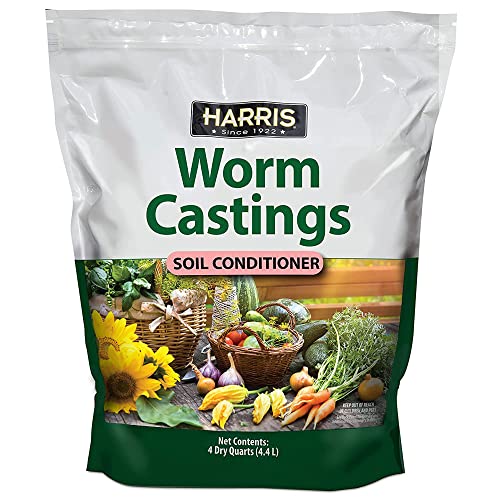
A finely ground powder that works both as a dry soil amendment and as a steeped liquid fertilizer to revive flagging plants.
Harris Worm Castings come in a powdered form that gives you two application methods. You can mix the granules directly into your potting soil for slow release, or you can follow the buyer-tested method to “mix 3/4 cup with 1 gallon water for liquid fertilizer.” One reviewer specifically used this to “revived houseplants with poor soil retention,” and another reported that a few cups mixed into the bottom soil layer before repotting improved transplant success dramatically. The 148.92-ounce unit count makes this bag significantly larger than the 80-ounce bags of some competitors, even though both are labeled as 5 pounds — the density difference means you get more actual volume of material.
Where this product differs from the Espoma Land and Sea compost is in its singular focus: it is pure worm castings with no added mycorrhizae or shellfish meal. That makes it a safer choice if you are sensitive to shellfish allergens or want to control exactly what goes into your soil. The fine powder texture means it blends into the top layer of soil very quickly, but it can be slightly dusty when poured directly from the bag. The manufacturer lists a mixing ratio of 1:7 for soil incorporation.
The Big Advantage
- Dual-use: works as a dry soil amendment and as a liquid fertilizer tea
- Fine powder texture blends easily into existing soil without clumping
- High unit count (148.92 oz) gives more volume per pound than denser granule products
The Catch
- Powder form can produce dust when pouring — use a scoop rather than tipping the bag
- Not a complete potting mix; must be blended with existing soil or a base medium
Best For: Gardeners who want the flexibility to brew compost tea for quick foliar or root feeding in addition to mixing castings into the soil at planting time.
One Thing To Note: If you prefer a chunkier texture that holds more air pockets in a very fine potting mix, the granular Back to the Roots or Wiggle Worm products may integrate better.
4. R&M Organics Premium Organic Compost
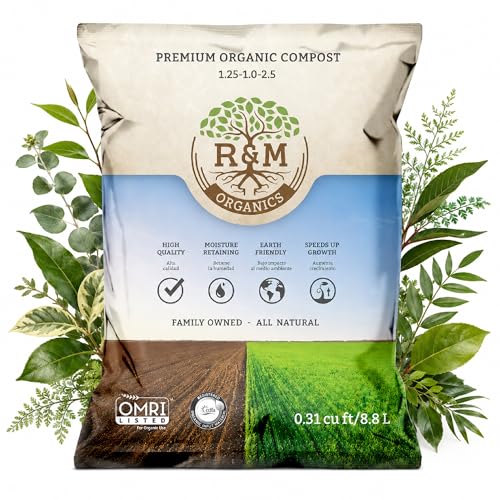
The manure-based compost that turned yellow leaves green within a week in a 27-gallon planter, according to buyers.
R&M Organics delivers a fully composted dairy cow manure with a fine, topsoil-like texture that spreads easily without clumps. The 10-pound bag holds 160.0 ounces — exactly 2.0x the volume of the 80-ounce worm-casting bags in this guide — so you get more bulk material for the weight. One buyer documented a specific rescue: the “compost revived ailing tomato plant: yellow leaves turned green, new growth and flower buds appeared within a week of mixing into 27-gallon planter.” Another reviewer described how the compost saved azaleas damaged by a roof-washing enzyme cleaner, following a Master Gardener’s recommendation. The product states a mixing ratio of 5:1 (soil to compost), and a quarter-inch layer applied as a top dressing is sufficient for established plants.
The key difference between this compost and the Brut Cow Compost below is the texture and the odor control. R&M Organics uses a continuous aeration composting method that reduces odors to a clean, earthy scent, making it suitable for indoor use if you are top-dressing houseplants. The material holds moisture well, which can reduce the frequency of watering in containers. It is an all-purpose amendment suited for vegetables, fruit trees, flowers, and lawns, but the 0.31 cubic foot volume is modest — you will need multiple bags for a large in-ground bed.
What Stands Out
- Low-odor, fully composted texture that works indoors and out
- Proven ability to revive stressed plants based on multiple verified buyer reports
- Fine, consistent texture — no large chunks, no manure smell
The Downside
- At 0.31 cubic feet, the bag is small for large-scale garden amendments
- Premium price point relative to the volume delivered per bag
Perfect For: The gardener who has a specific plant in trouble (yellowing leaves, poor growth) and wants a reliable, gentle compost to turn it around without harsh chemicals.
skip it if: You need to amend a large bed or several cubic yards of soil — the per-bag volume is better suited for targeted use in containers or small patches.
5. Brut Cow Compost – Nutrient-Rich Composted Cow Manure

Uncompromisingly pure composted cow manure with an OMRI stamp and a finely sifted texture that first-time growers trust.
Brut Cow Compost is built on a single ingredient: fully composted cow manure. There are no additives, no filler, and no synthetic nutrients — just organic matter that has been aerated and tested for safety. The 10-quart bag gives you half the volume of the 20-quart Coast of Maine soil but provides a purer compost concentrate that you mix into your existing soil at ratios like 3:2 (compost to soil), which one first-time grower used to start tomato seeds that grew rapidly from March 1st to April 22nd. The manufacturer claims it is packed with nitrogen, calcium, and iron, and the OMRI listing backs up the organic claim. Buyers mention it works excellently for roses and that vegetable plugs mixed with this compost and standard potting soil grew “very fast.”
Unlike the R&M Organics compost, which is also cow-manure-based but emphasizes odor control for indoor use, the Brut product markets itself as odor-free and safe for all plants including delicate seedlings. The finely sifted texture makes it an ideal compost for mixing into potting soil for indoor container gardening, where large bark chunks would be a problem. The 10-pound weight of this bag matches the R&M Organics bag, but the volume is 10 quarts versus 0.31 cubic feet — these are different ways of measuring, so the actual coverage depends on how densely the material is packed.
Why It Works
- OMRI listed with a pure, single-ingredient compost — no hidden additives
- Finely sifted texture integrates into potting mixes without large particles
- Gentle enough for seedlings and delicate plants, with no risk of burn
Keep In Mind
- 10-quart bag covers less area than larger-volume blends when used alone
- Fewer verified customer reviews (235) compared to more established brands in this guide
Good For: The organic gardener who wants the simplest possible product — composted cow manure with nothing else added — and appreciates the OMRI certification for confidence.
Not For: Gardens that need a complete potting soil with built-in drainage and moisture-retention components, like the Coast of Maine or Espoma blends provide.
6. Espoma Organic Land and Sea Gourmet Compost

A marine-enriched compost that brings trace minerals from lobster and crab shells to your vegetable beds and ornamental plants.
Espoma combines land-based organic ingredients with lobster and crab meal to create a compost richer in trace minerals than standard manure-based products. The 24-pound bag (1 cubic foot) is the heaviest non-worm-casting option here, and it includes a proprietary blend of endo and ecto mycorrhizae — beneficial fungi that attach to plant roots and help them absorb more water and nutrients. This makes it a dual-purpose amendment: it feeds the soil immediately with organic matter while also introducing beneficial fungi that build long-term soil health. One reviewer noted using Espoma Land and Sea for three years straight, applying it for both indoor basement vegetable gardens and outdoor beds.
The lobster and crab meal gives this compost a different nutrient profile than the cow-manure-based products from R&M Organics and Brut. Shellfish meal is naturally high in chitin, which some gardeners believe helps suppress certain soilborne pests, and it adds calcium and phosphorus. If you have a shellfish allergy, you should be cautious about handling this product. The granular form works best when mixed into the soil at planting or transplanting time, or used as a top dressing around established plants. With 986 ratings and a 4.7 average, it is among the most-reviewed compost products in this roundup.
The Unique Edge
- Lobster and crab meal provide trace marine minerals not found in standard composts
- Includes mycorrhizae (beneficial root fungi) for enhanced nutrient uptake
- Large 1-cubic-foot bag at 24 lbs offers substantial coverage per purchase
Consider This
- Not suitable for gardeners with shellfish allergies due to the crustacean meal content
- Scent from the marine ingredients may be noticeable when first opening the bag
Reach For This If: You want to give your soil a broad spectrum of nutrients beyond the standard N-P-K — the marine minerals and mycorrhizae make this a more complete biological amendment.
Pass On It If: You have a shellfish sensitivity or want a completely neutral-smelling compost for indoor use.
7. Wiggle Worm 100% Pure Worm Castings 40lb
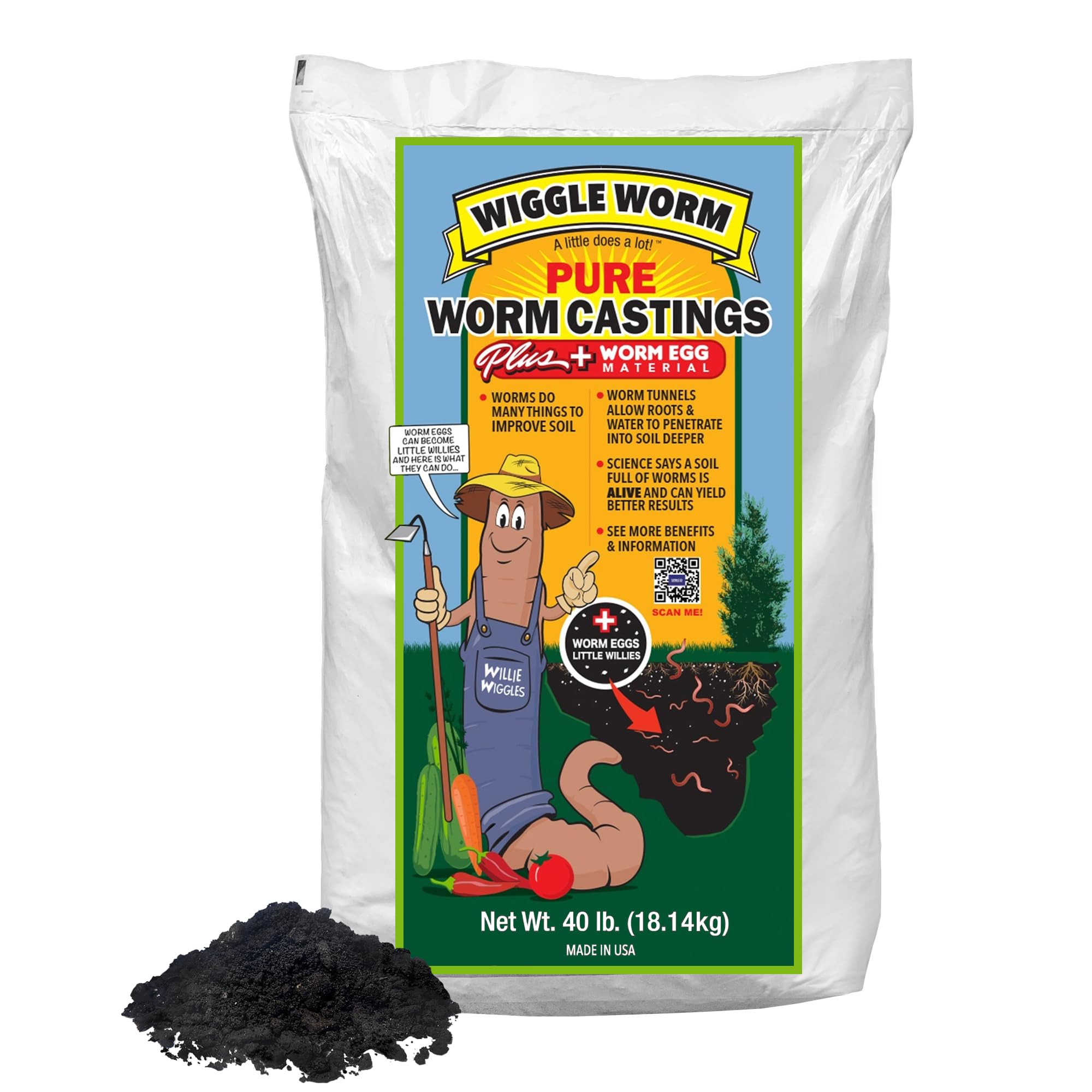
A 40-pound bag of pure worm castings with added egg material that keeps on giving as eggs hatch into living worms.
This is the heavyweight option in both literal and metaphorical terms. At 40 pounds with a 640-ounce unit count, the Wiggle Worm bag contains exactly 8.0x the material of a 5-pound worm casting bag, making it the most cost-effective choice for serious gardeners with large vegetable beds. The product combines pure worm castings with worm egg material — the cocoons that worms lay, mixed with tiny soil balls and bedding bits. These eggs can hatch in your soil, producing live worms that create tunnels for oxygen and drainage, and those worms will produce more castings over time. Customers note that plants show “dark vivid green, dense lush foliage in under a month” and that the product is “crucial for living soil in harsh Mohave desert” conditions.
The texture is finely sifted with no filler, though the manufacturer notes that some small rocks or debris may occasionally make it through the screening process. This is an honest disclosure that most bagged composts do not make. Unlike the Espoma compost, which relies on marine ingredients and mycorrhizae, the Wiggle Worm product is pure vermicompost enhanced with the potential for ongoing biological activity as eggs hatch. It is odor-free and safe for all plants, including vegetables. The shipping bag is a simple black-and-white printed pouch — do not judge the product by the packaging.
The Big Win
- 40 lbs of pure castings at a per-pound value that beats every smaller bag in this guide
- Worm egg material can hatch into live worms, creating ongoing soil improvement
- Clean, finely textured castings with no trash or filler odor
The Practical Issue
- 40-pound bag is heavy to lift, carry, and pour — have a scoop ready and a sturdy cart
- Small rocks or debris may occasionally be present despite sifting
Best For: The dedicated vegetable gardener who goes through compost by the bucketful and wants the lowest per-pound cost for pure, certified worm castings without synthetic additives.
Not For: Small-space gardeners who only need a few cups of compost at a time — the bag is too large to store conveniently in an apartment or on a small balcony.
Understanding the Specs
Weight vs. Volume
Compost bags list both weight (in pounds) and volume (in quarts, cubic feet, or fluid ounces). Weight tells you how much material you are carrying home. Volume tells you how much space that material will fill in your garden bed. A 5-pound bag of dense worm castings takes up less volume than a 5-pound bag of light, fluffy potting soil. Always compare volume numbers when figuring out how many bags you need to cover a given area. For example, 20 quarts (0.67 cubic feet) will fill one large 5-gallon container, while 1 cubic foot will fill about one and a half of those pots.
OMRI Listing
The Organic Materials Review Institute, or OMRI, is an independent nonprofit that evaluates products to confirm they meet organic farming standards. When you see an OMRI listed label on a compost bag, it means the product has been reviewed and contains no synthetic pesticides, sewage sludge, genetically modified organisms, or prohibited chemical fertilizers. This is the closest thing to a guarantee that the compost is safe for an organic vegetable garden. Not all good composts carry the OMRI seal — some small producers cannot afford the certification process — but it is a strong signal of purity when present.
Microbial Additives: Mycorrhizae and Worm Eggs
Some compost products go beyond basic organic matter and include living organisms that improve soil biology. Mycorrhizae (fungi that attach to plant roots and help them absorb water and nutrients) are often added to premium composts. Worm egg material — the tiny cocoons that contain baby worms — can hatch in your soil, creating live worms that aerate the ground and produce more castings. These biological additives are not necessary for a good harvest, but they can accelerate soil improvement in degraded or compacted garden beds.
Nutrient Sources: Manure, Castings, and Shellfish Meal
The primary ingredient determines how the compost feeds your plants. Composted cow manure adds bulk organic matter that improves soil structure and provides a balanced but moderate nutrient release. Worm castings are more concentrated in beneficial microbes and enzymes, and they release nutrients slowly without burning roots. Shellfish meal (lobster and crab shells) adds calcium, phosphorus, and chitin, which some research suggests may help plants resist certain fungal diseases. Your choice should match your soil’s current condition: degraded clay soil benefits from the volume of manure compost, while a well-structured bed that just needs a microbial boost is better served by worm castings.
FAQ
Can I use worm castings instead of compost in my vegetable garden?
How much organic compost should I mix into my vegetable soil?
Is OMRI listed compost necessary for a vegetable garden?
Will worm castings burn my vegetable plants like synthetic fertilizer can?
How long does a 40-pound bag of worm castings last in a vegetable garden?
Can I use composted cow manure in containers and raised beds?
What is the difference between worm castings and worm compost tea?
Will lobster meal compost attract pests to my vegetable garden?
Final Thoughts: The Verdict
For most buyers, the organic compost for vegetable garden winner is the Back to the Roots Organic Worm Castings because it delivers a concentrated, safe microbial boost that works across containers, raised beds, and in-ground gardens without any risk of burning your plants. If you want a ready-to-use potting soil that you can pour straight into pots without mixing, grab the Coast of Maine Organic Planting Soil. And for the large-scale gardener who needs volume without sacrificing purity, the standout is the per-pound value of the Wiggle Worm 40lb Worm Castings — it simply costs less per pound than any smaller bag on this list.
How We Picked
We do not accept paid placement. Every pick is matched to a real buyer and a real use-case; we do not hands-on test units.
Sources & Methodology
Specifications: manufacturer listings and product documentation. Review insights: verified customer reviews, as of July 2026. Pricing: not shown on this page (it changes often); check the current price via the retailer link.
As an Amazon Associate, Lawn Gear Lab earns from qualifying purchases. This does not affect which products we feature.