
The market is flooded with synthetic poisons that wipe out colonies but leave behind residues that worry any pet owner or parent. Finding a solution that actually eliminates the problem without introducing harsh chemistry into your living spaces requires filtering through the marketing noise to the formulations that deliver real knockdown power from plant-based active ingredients.
I’m Rikta — the co-founder and writer behind Lawn Gear Lab. I’ve spent dozens of hours digging through EPA registration data, active ingredient concentration levels, mode-of-action studies, and verified buyer experiences across seven top contenders to separate the truly effective natural ant killers from the diluted sprays that merely smell nice.
This guide evaluates sprays, powders, and granular baits that rely on essential oils, diatomaceous earth, and spinosad rather than synthetic neurotoxins, helping you choose the most effective organic ant killer for your specific invasion level and household safety needs.
How To Choose The Best Organic Ant Killer
Not every natural formula works the same way. Some kill on contact by overwhelming the insect’s sensory receptors; others rely on ingestion or physical desiccation. Matching the delivery method to your ant species and infestation severity determines whether you solve the problem or just delay it.
Active Ingredient: Contact Kill vs. Bait vs. Desiccant
Essential oil sprays (peppermint, rosemary, citronella, orange peel extract) work by overstimulating the insect’s nervous system or dissolving its waxy cuticle, causing rapid dehydration. These are excellent for visible ants but rarely reach the queen. Granular baits containing Spinosad—a fermentation byproduct of a soil bacterium—are carried back to the nest and shared, collapsing the colony from within. Diatomaceous earth (DE) is a mechanical killer: microscopic sharp edges lacerate the exoskeleton, causing fatal fluid loss, but it must remain dry to work and is less effective against mature colonies that nest inside walls.
Application Format: Spray, Powder, or Granule
Ready-to-use spray bottles offer immediate gratification and precise targeting of baseboards, windowsills, and entry points, but the effect is temporary—most essential oil sprays lose repellent power within a few days. Powders and granules provide longer residual activity: DE can remain effective as long as it stays dry, and Spinosad pellets last up to four weeks outdoors. For perimeter defense around the foundation, granules win. For quick kitchen cleanup, a spray is the right tool.
Pet and Child Safety Considerations
“Organic” does not automatically mean zero-risk. Concentrated peppermint oil can irritate a dog’s respiratory tract, and DE powder is a respiratory irritant if inhaled in large quantities by humans or pets during application. Look for products explicitly tested for use around animals and children when used as directed, and always keep application areas ventilated. Spinosad-based products typically allow re-entry once the granules are watered in or dry.
Quick Comparison
On smaller screens, swipe sideways to see the full table.
| Model | Category | Best For | Key Spec | Amazon |
|---|---|---|---|---|
| Neudorff Outdoor Ant Killer | Granular Bait | Colony elimination outdoors | Spinosad 0.25% | Amazon |
| Bonide Diatomaceous Earth | Desiccant Powder | Large-area perimeter defense | 5 lbs food grade DE | Amazon |
| Orange Guard Home Pest Control | Contact Spray | Indoor contact kill + scent | d-Limonene 5.75% | Amazon |
| Wondercide Ant & Roach Aerosol | Aerosol Spray | Fast knockdown indoors | Lemongrass & Geraniol | Amazon |
| BugMD Multi-Insect Killer | Essential Oil Spray | Dual-purpose insect/rodent | Peppermint 4% | Amazon |
| RobiGuard DE + Peppermint | Desiccant Blend | DE + repellent scent | 1 lb food grade DE | Amazon |
| Waspika Peppermint Spray | Essential Oil Spray | Budget indoor repellent | Peppermint oil 16 oz | Amazon |
In‑Depth Reviews
1. Neudorff Outdoor Ant Killer
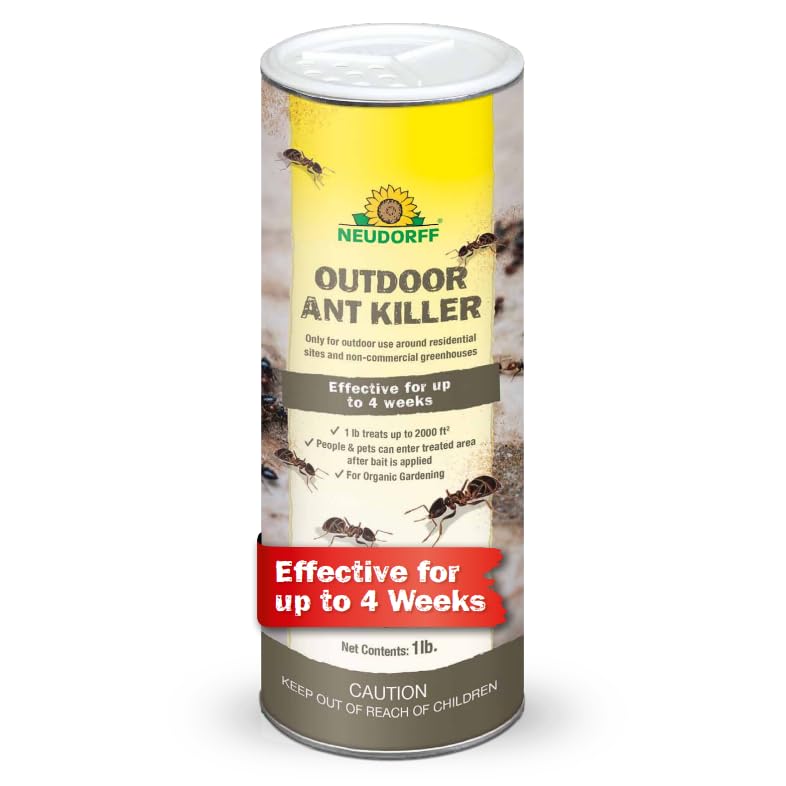
The Neudorff Ant Killer earns the top spot because it addresses the root cause—the colony—rather than just the visible scouts. Its active ingredient is Spinosad, a naturally derived compound from a soil bacterium that ants ingest and carry back to the nest. The pelletized formulation covers up to 2,000 square feet and remains active for four weeks, making it the most strategic outdoor defense in this lineup.
Users report visible elimination of sugar ants, pavement ants, and field ants within 48 hours, with colony activity ceasing inside the home shortly after perimeter application. The compressed granules are clean to handle and spread easily using the included shaker. A small number of users noted that fire ants and carpenter ants are excluded from the target list, so confirm your species before committing.
For anyone dealing with a persistent outdoor ant presence that keeps migrating indoors, this is the only product here built on a true bait-and-share mechanism rather than temporary surface repellency. It combines OMRI-listed organic gardening compatibility with genuine colony-level control.
What works
- Spinosad bait kills the colony, not just surface ants
- Lasts up to 4 weeks without reapplication
- Easy-to-use shaker for perimeter treatment
What doesn’t
- Not effective on fire ants or carpenter ants
- Occasional reports of bait refusal by certain colonies
2. Bonide Diatomaceous Earth Crawling Insect Killer

The Bonide DE bag is the volume king of the group, offering five pounds of food-grade diatomaceous earth at a per-ounce cost that undercuts every other product in this review. Diatomaceous earth works through physical abrasion—microscopic silica shards slice through insect exoskeletons, causing fatal dehydration within 48 hours. Insects cannot develop resistance to a mechanical action, making this a permanent tool in your arsenal.
Buyers consistently praise its effectiveness on ants, fleas, bedbugs, slugs, and even garden caterpillars. It can be applied as a dry dust along baseboards, in crawl spaces, or around garden beds, and you can also mix it into a slurry for spray applications. The main tradeoff is moisture sensitivity: after rain or heavy humidity, the powder clumps and loses its desiccating power, requiring reapplication.
The bag lacks a resalable zipper, so store it in a sealed container to keep it dry. For homeowners with large properties or multiple infestation points, this bulk option delivers the lowest cost per treatment and the broadest target spectrum of any entry here.
What works
- Mechanical kill—no chemical resistance possible
- One bag covers enormous areas indoors and outdoors
- Safe around crops, livestock, stored grain
What doesn’t
- Ineffective when wet; needs dry conditions
- No resealable closure on the original bag
3. Orange Guard Home Pest Control Spray

Orange Guard leverages d-Limonene, the naturally occurring compound in orange peel extract, as its active insecticide. When sprayed directly on ants, roaches, or fleas, d-Limonene dissolves the waxy coating on their respiratory system, causing death within seconds. The two-pack provides a generous 64 total ounces, and the citrus scent is noticeably more pleasant than peppermint-based alternatives.
Verified buyers report instant knockdown on ants and centipedes indoors, and the spray leaves a shiny residue on plant leaves that repels aphids, leaf miners, and cabbage worms in the garden. It is EPA-registered and certified for use on edible plants, making it the only product here that doubles as an organic garden spray. The orange smell dissipates within 24 hours, so there is no lingering odor.
On the downside, several users note that it is not a long-term residual killer like a bait; ants that avoid the direct spray survive. Outdoor applications wash off with rain, as the formula is water-soluble. This is best used as a fast-acting spot treatment rather than a preventive barrier.
What works
- Kills on contact within seconds via d-Limonene
- Safe for edible plants and organic gardening
- Pleasant orange scent with no chemical fumes
What doesn’t
- No residual colony-killing effect
- Washes off easily outdoors after rain
4. Wondercide Ant & Roach Aerosol Spray

Wondercide’s aerosol delivers plant-powered active ingredients (lemongrass and geraniol) in a pressurized format that reaches cracks and crevices better than a trigger sprayer. The 10-ounce two-pack is specifically marketed for kitchens and indoor use, with a fast knockdown that kills ants and roaches on contact. Users report that the light lemongrass scent fades quickly and does not linger on surfaces.
What sets Wondercide apart is its lab-proven efficacy against over 20 common household pests, including stink bugs and carpet beetles, making it a broad-spectrum indoor tool. It leaves no artificial colors or fragrances, and the formula is cruelty-free. Buyers with small dogs appreciate that the residue is non-toxic to pets once dry.
The aerosol format has a notable drawback: multiple long-term reviews mention that the nozzle clogs halfway through the can, leaving as much as 50% of the product inaccessible. Some users also note that the spray leaves a slippery, oily residue on hard floors, so avoid wide-area coverage on tile or laminate. Best used as a precision tool for targeted indoor ant trails.
What works
- Lab-proven efficacy against 20+ bug types
- Safe around pets and kids when used as directed
- Penetrates cracks and crevices effectively
What doesn’t
- Nozzle tends to clog before can empties
- Oily residue can make floors slippery
5. BugMD Pet Safe Multi-Insect Killer & Repellent
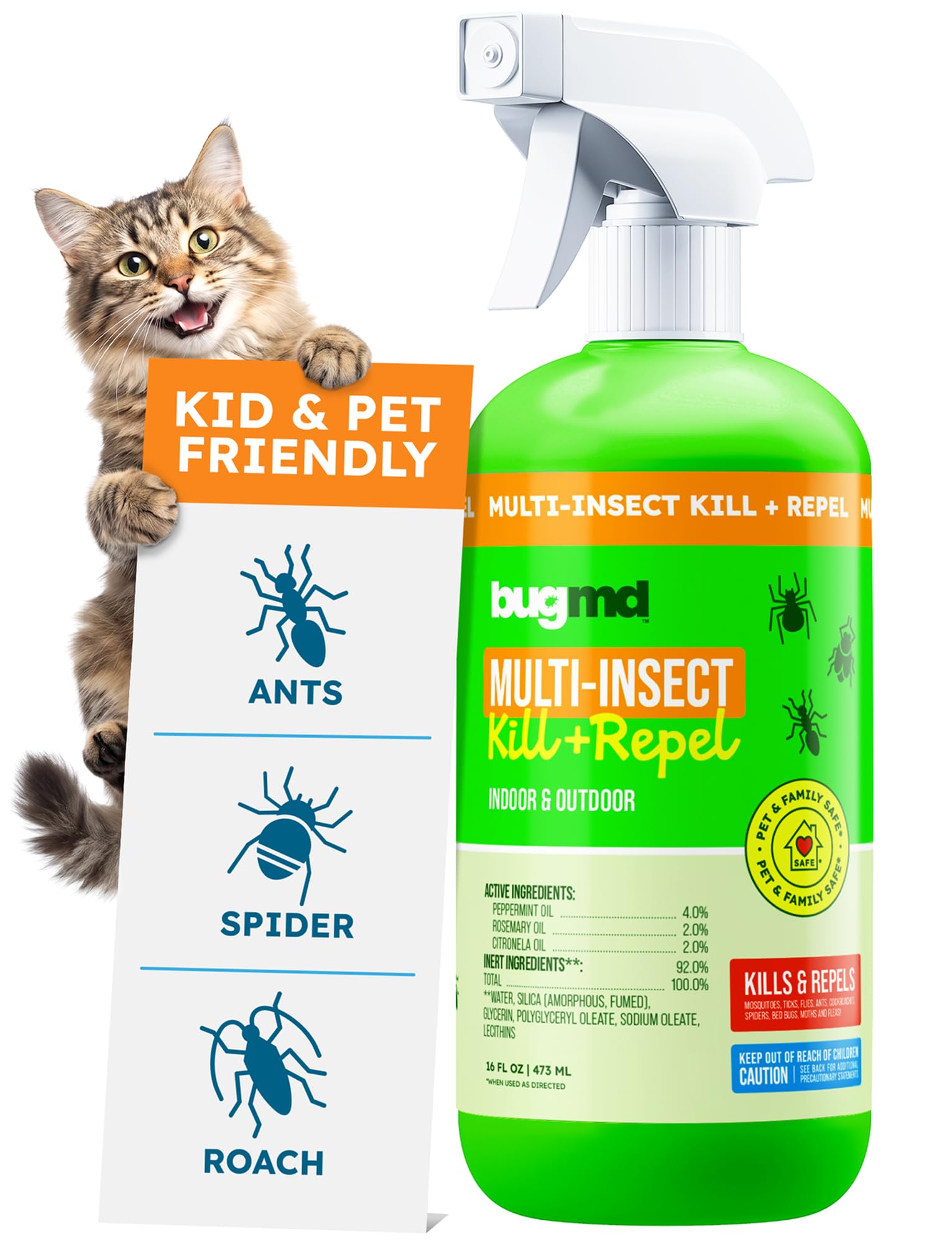
BugMD positions itself as an all-in-one solution with 4% pure peppermint essential oil as its primary active ingredient—a concentration high enough to overstimulate insect sensory receptors and cause rapid knockdown upon contact. The formulation also includes rosemary and citronella oils, and the strong mint scent acts as a rodent deterrent in garages and basements, giving it a secondary function that no other product here can claim.
Customer feedback highlights its effectiveness on spiders, ants, and roaches, with many users noting a significant reduction in springtail and mosquito presence as well. The ready-to-use spray works on non-porous surfaces and leaves a fresh scent that most people find tolerable. A three-to-five-day reapplication schedule is recommended for maintaining a repellent barrier.
Some buyers report skin irritation after handling sprayed surfaces, which suggests the 4% peppermint oil concentration may cause mild allergic reactions in sensitive individuals. The formula is not a bait, so it will not eliminate hidden colonies. It is best suited for light infestations where you want a natural repellent that also works as a rodent deterrent.
What works
- High 4% peppermint oil concentration for strong knockdown
- Deters rodents in addition to insects
- Pleasant mint scent after application dries
What doesn’t
- May cause skin irritation in sensitive individuals
- Requires frequent reapplication for maintained effect
6. RobiGuard Diatomaceous Earth Food Grade & Peppermint Powder

RobiGuard combines food-grade diatomaceous earth with peppermint oil, creating a dual-action powder that physically desiccates insects while also repelling them through scent. The 16-ounce pouch is compact enough for apartment dwellers, and the resealable packaging makes storage and reapplication convenient. It targets ants, roaches, fleas, silverfish, and bedbugs.
Verified buyers report excellent results against ants and even fleas on dog bedding, with the peppermint scent adding a noticeable repellent layer that plain DE lacks. The powder is fine enough to require a small electric blower for outdoor application, but for indoor use, a measuring cup or spoon works fine. Users also note that it absorbs odors in trash cans and litter boxes, adding value beyond pest control.
The primary limitation is the same as all DE products: moisture renders it ineffective. The peppermint oil component does not extend its wet-weather performance. Additionally, the fine dust can be irritating if inhaled during application, so a mask is recommended. For small spaces or targeted indoor use, this blend outperforms plain DE by adding an olfactory repellent barrier.
What works
- Food-grade DE plus peppermint for dual action
- Absorbs odors in trash and pet areas
- Resealable pouch for easy storage
What doesn’t
- Fine dust requires careful application to avoid inhalation
- Loses effectiveness when exposed to moisture
7. Waspika Peppermint Oil Insect and Spider Repellent Spray

Waspika offers a straightforward entry-level essential oil spray built around peppermint oil. The 16-ounce bottle is ready to use out of the box, with a trigger that delivers a fine, even mist. It is marketed as extra-strength, though it does not list a specific peppermint oil concentration percentage, so the actual active level is unknown compared to the 4% BugMD formulation.
Buyer feedback is overwhelmingly positive on the fresh peppermint scent and the non-staining, no-residue formula. Users report noticeable reductions in spider and ant activity within days of spraying door thresholds, window frames, and baseboards. The spray is non-toxic when used as directed, making it suitable for homes with children and pets.
The limitation here is longevity: most users find the repellent effect fades within a day or two, requiring frequent reapplication. It is a purely repellent spray with no bait or desiccant mechanism, so it is best for maintenance prevention rather than active infestation elimination. For the price point, it is a fine introductory organic spray for those who want to test essential oil repellents before committing to a more robust system.
What works
- Non-staining, quick-drying formula
- Pleasant peppermint scent with no harsh fumes
- Safe for use around children and pets
What doesn’t
- Requires frequent reapplication for maintained effect
- No colony-killing mechanism; purely repellent
Hardware & Specs Guide
Active Ingredient Concentration
For essential oil sprays, higher concentration does not always mean better safety. BugMD uses 4% pure peppermint oil, which provides strong knockdown but also carries a higher risk of skin irritation. The Neudorff granules use Spinosad at an unspecified percentage optimized for bait acceptance without repellency. Orange Guard formulates d-Limonene at 5.75%, a level proven to dissolve insect cuticles while remaining safe for plant foliage.
Residual Activity Window
Spinosad baits like Neudorff offer the longest residual—up to four weeks. Diatomaceous earth products remain effective indefinitely as long as they stay dry, but require reapplication after every rain. Essential oil sprays typically lose repellent power within 1 to 3 days. Matching the residual window to your infestation cycle is critical: weekly maintenance calls for a spray; monthly protection calls for a bait or DE barrier.
Application Equipment
Trigger spray bottles (BugMD, Waspika, Orange Guard) offer the most control for indoor spot treatment. Aerosol cans (Wondercide) reach tight crevices but risk nozzle clogging. Granules require only a shaker or gloved hand. DE powders work best with a duster or a bulb applicator for even coverage. No product here requires mixing or dilution—all are ready-to-use.
Target Species Compatibility
Not every organic ant killer is formulated for every ant species. Neudorff explicitly excludes fire ants, harvester ants, Pharaoh’s ants, and carpenter ants—so check your ant identification before buying. Orange Guard and Wondercide kill a broader range on contact but rely on direct application. DE is species-agnostic: any insect with an exoskeleton is vulnerable, making it the most versatile option for mixed infestations.
FAQ
How fast does Spinosad kill an ant colony?
Can I use diatomaceous earth around my vegetable garden?
Why do some essential oil sprays fail against large ant infestations?
Final Thoughts: The Verdict
For most gardeners, the organic ant killer winner is the Neudorff Outdoor Ant Killer because its Spinosad bait reaches the colony and delivers up to four weeks of outdoor protection without synthetic chemicals. If you want a contact spray that doubles as an edible-plant-safe garden treatment, grab the Orange Guard Home Pest Control Spray. And for large-area, long-term perimeter defense at the lowest per-ounce cost, nothing beats the Bonide Diatomaceous Earth.