
Specs are compiled from manufacturer listings and verified buyer reviews and can change over time — please confirm the key details on the product page before buying.
Phalaenopsis orchids are surprisingly picky about their homes. Their roots need air, a chance to dry out between waterings, and light reaching them — which is why a standard flowerpot usually drowns them. The trick is picking a pot that handles drainage and air flow without guesswork on your part.
I’m Rikta — the founder and writer behind Lawn Gear Lab. This guide is built by comparing the manufacturers’ published specifications and the patterns across verified customer reviews, so you get each pick’s real strengths and trade-offs instead of marketing spin.
This guide focuses on the best orchid pots for phalaenopsis, covering materials, sizes, and key features that help your plant thrive without rotting or drying too fast.
Quick Picks
- HOLANHING 6-Pack 6.1″ Clear Orchid Pots — Best Overall
- YOPIKUU 8-Pack 3-6 Inch Clear Orchid Pots — Variety Value Set
- vensovo 6 Inch Terracotta Orchid Pots — Clay Classic
- T4U 6-Pack 7.5 Inch Clear Orchid Pots — Large Orchid Size
- JGB 9-Pack 7 Inch Clear Orchid Pots with Saucers — Collection Haul
- Orceler 6 Inch Terracotta Orchid Pots with Holes — Premium Terracotta
- BUYMAX Ceramic 2-Pack (5 & 6 Inch) Orchid — Display Ready
How To Choose The Best Orchid Pots For Phalaenopsis
The biggest mistake new orchid owners make is picking a decorative ceramic pot with no drainage. Phalaenopsis roots need to breathe and dry quickly. The right pot gives you air movement, visible roots, and a way to drain excess water without turning your plant into a swamp.
Material matters: clear plastic vs. terracotta vs. ceramic
Clear plastic lets you check root color and soil moisture without pulling the plant out. Terracotta is porous and wicks moisture away, making it great for over-waterers but faster-drying for forgetful ones. Glazed ceramic looks nicer but needs side holes and a drain to work for orchids.
Holes and ventilation are non-negotiable
Look for pots with side slots or holes — not just a single hole at the bottom. The more air reaching the roots, the less chance of root rot. Some pots even have raised slots so the potting medium doesn’t fall out.
Size and depth that match a Phalaenopsis root system
A pot that is too large holds excess moisture that rots roots. A pot too small constricts the root ball. Phalaenopsis typically need a pot about six inches wide for a mature plant. Measure the root mass and add roughly an inch around it.
Quick Comparison
| Model | Best For | Material | Size | Pieces | Amazon |
|---|---|---|---|---|---|
| HOLANHING 6-Pack 6.1″ | Best Overall | Clear PP Plastic | 6.1 x 6.1 x 5.5 in | 6 pots + saucers | Amazon |
| YOPIKUU 8-Pack (3-6″) | Variety Pack | Clear Plastic | 3 to 6 in | 8 pots + saucers | Amazon |
| vensovo 6″ Terracotta 3-Pack | Terracotta Classic | Terracotta | 4.6 x 6 x 5 in | 3 pots + saucers | Amazon |
| T4U 7.5″ 6-Pack | Large Mature Orchids | Clear PP Plastic | 7.44 x 7.44 x 6.5 in | 6 pots + saucers | Amazon |
| JGB 7″ 9-Pack | Big Collection | Clear Plastic | 6.97 x 5 x 5 in | 9 pots + saucers | Amazon |
| Orceler 6″ Terracotta 3-Pack | Premium Terracotta | Terracotta | 5 x 6 x 5 in | 3 pots + saucers | Amazon |
| BUYMAX Ceramic 2-Pack (5″ & 6″) | Style & Display | Glazed Ceramic | 6.1 x 6.1 x 4.7 in | 2 pots + saucers | Amazon |
In‑Depth Reviews
1. HOLANHING 6-Pack 6.1″ Clear Orchid Pots with Saucers
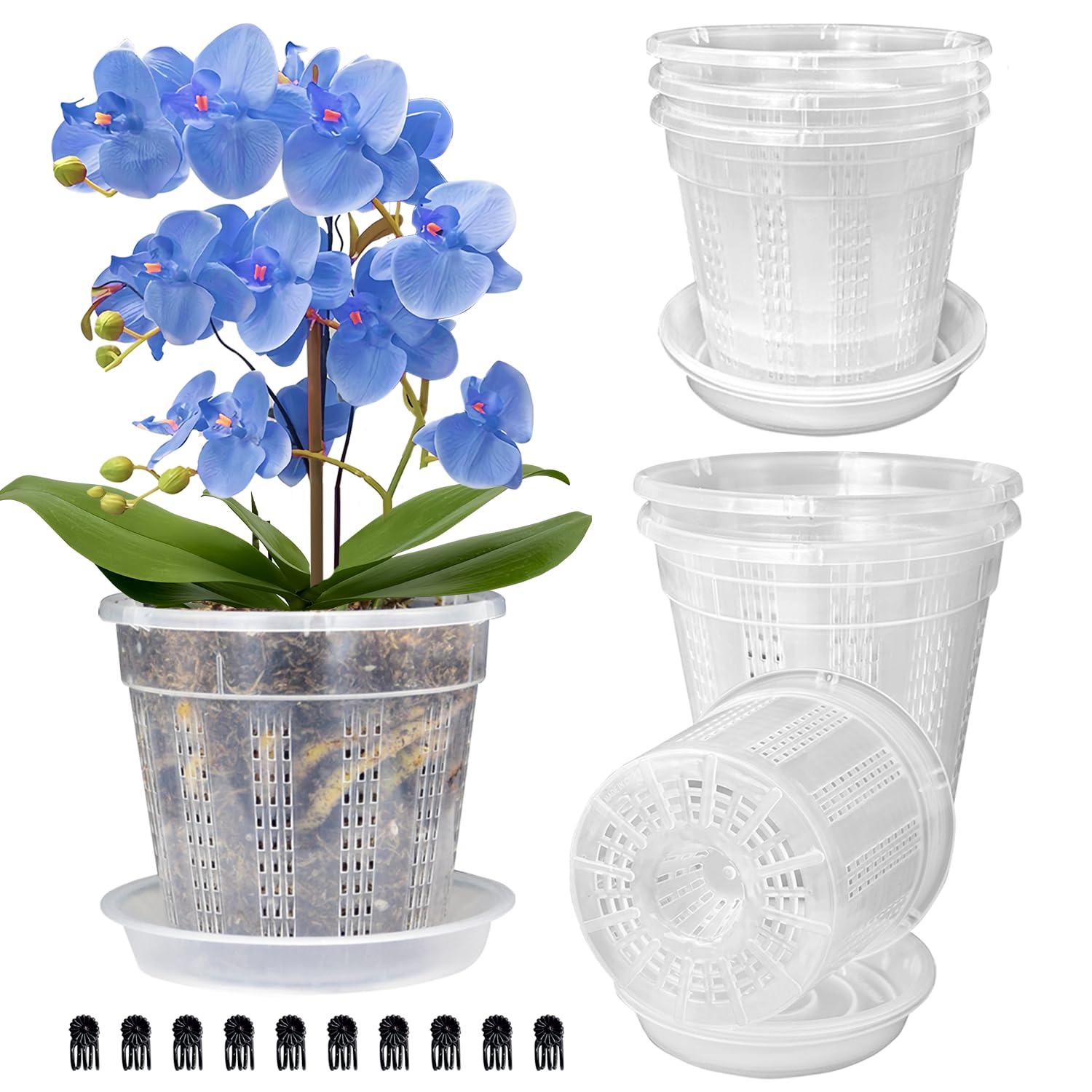
Clear sides and smart holes mean you watch roots heal without guessing
The first thing you notice is the upgraded hole design. Instead of letting roots creep out through gaps, the slots are sized to keep the potting medium inside while still giving air circulation all around the root ball. Each pot is made from thicker PP (polypropylene) plastic so it feels sturdier than typical nursery pots and won’t crack when dropped. Buyers report reviving a struggling orchid with these, noting weekly watering and fertilizer combined with the air circulation got the plant growing again. One reviewer specifically mentioned the pot looks good all on its own without needing a decorative outer shell.
At 6.1 x 6.1 x 5.5 inches, these sit comfortably on a windowsill and include six saucers and ten clips. For most Phalaenopsis owners starting fresh or repotting a whole collection, this set covers the bases without going overboard on size. It’s lighter than terracotta but still feels solid in hand.
Where this falls short vs the vensovo terracotta option is material — if you want natural moisture wicking, plastic won’t pull water away the way clay does. Also, reviewers in arid climates noted the many holes can dry out the bark medium faster, so you may water more often.
Smart design details
- Upgraded slot shape keeps roots inside the pot
- Thick PP plastic resists breaks and deformation
- Comes with 6 matching saucers and clips
Trade-offs to know
- Plastic doesn’t wick moisture like terracotta
- Many holes can dry medium faster in dry climates
Reach for these if: you want a sturdy, clear plastic pot with cleverly shaped holes that let you see roots without roots escaping — ideal for most Phalaenopsis setups.
Look elsewhere if: you prefer the natural moisture-wicking feel of fired clay; these are pure plastic.
2. YOPIKUU 8-Pack 3-6 Inch Clear Orchid Pots with Saucers

Four sizes in one set let you match every orchid’s stage exactly
This eight-piece bundle is the widest range in the list — you get pots measuring 3, 4, 5, and 6 inches, each with its own saucer. The clear plastic design means sunlight reaches the roots and you can see soil moisture at a glance. One reviewer noted “nice drainage and airflow” along with a chunky orchid mix saved three store-bought orchids and helped them bloom a second time, so the ventilation slots clearly work. The plastic is described as sturdy but lightweight, easy to move around.
The trade-off compared to the T4U 7.5-inch set is depth. Some reviewers noted the pots are shorter than expected — about 1.5 inches shorter than the pot they replaced at the same width. If your Phalaenopsis has a deep root system, the tallest 6-inch pot might still feel shallow. But for smaller orchids, keikis, or plants in early growth stages, having the whole size ladder is genuinely useful.
At 3 x 6 x 2.6 inches for the smallest and scaling up, the set works for almost any indoor spot. Just note these are designed for outdoor use per the label, though the plastic holds up fine indoors.
Size ladder advantage
- Four pot sizes in one purchase — 3, 4, 5, 6 inches
- Clear plastic lets you monitor root health and moisture
- Buyers confirm strong airflow helped orchids rebloom
Size caveats
- Shorter than expected — up to 1.5 inches less depth than standard pots
- Not self-watering; requires weekly schedule
Smart buy for: people with multiple orchids at different stages who want one kit that covers many sizes.
skip it if: your Phalaenopsis has a deep root mass that needs a taller pot; these run shallow.
3. vensovo 6 Inch Terracotta Orchid Pots with Holes and Saucers — 3 Pack
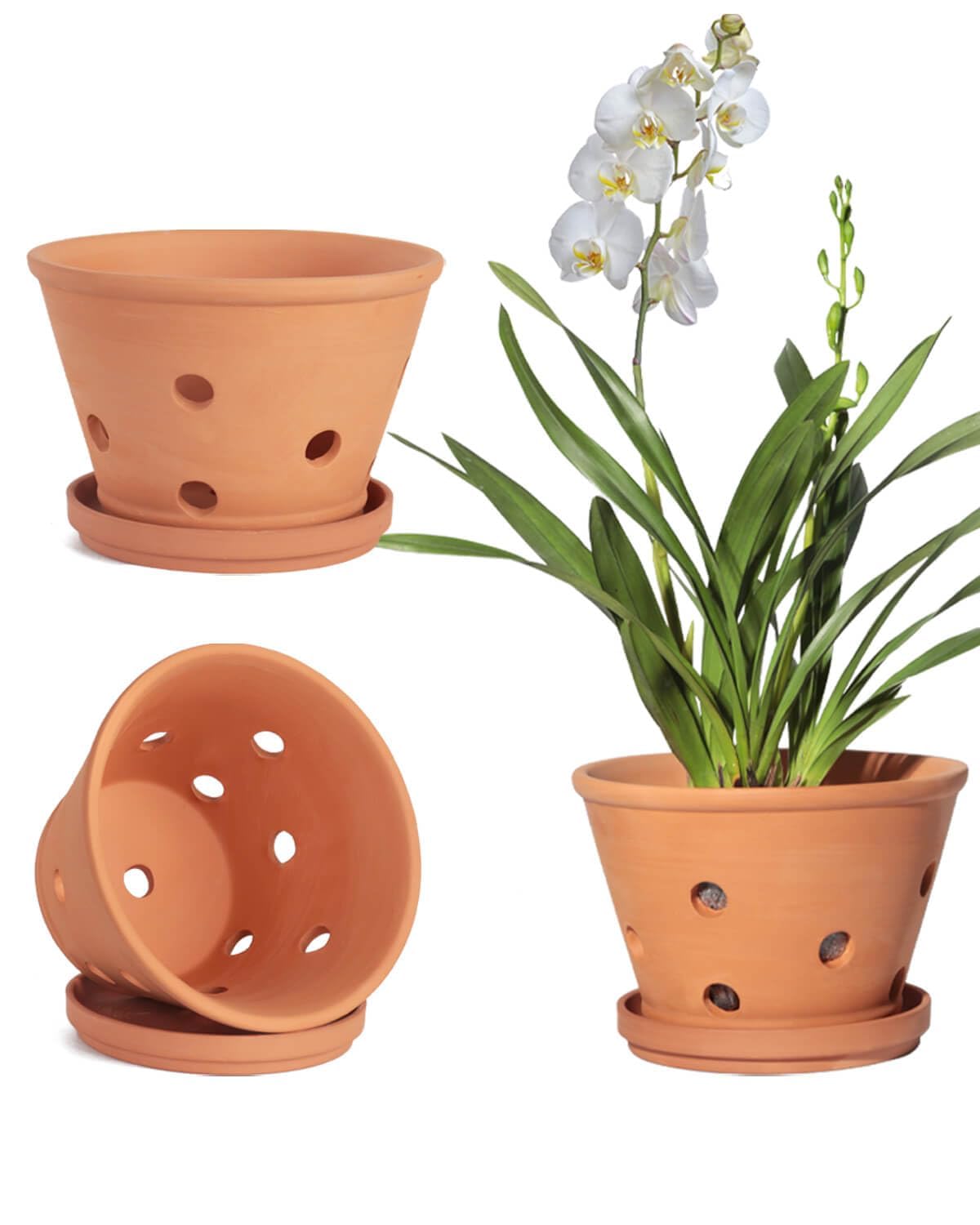
Fired clay breathes for you, wicking moisture away from sensitive roots
The vensovo pots are made from quality clay baked at 1796°F — high enough that the terracotta resists cracking. Multiple side holes plus a bottom drain give the air circulation orchids crave, and the natural clay surface pulls excess water out of the potting medium. One buyer mentioned these were “perfect for repotting my larger orchids” and noted the packaging was so secure that all three pots and saucers arrived intact.
At 4.6 inches tall with a 6-inch outer diameter, these are a slightly shorter profile than the Orceler terracotta set, but the same width. The unglazed finish keeps them breathable. Unlike the clear plastic picks above, you can’t see the roots, so checking moisture means lifting the pot or feeling the weight.
One reviewer did report that every orchid they tried in these pots did poorly, recommending them only for green leafy plants instead. That’s a minority view, but note that terracotta dries faster than plastic — if you already underwater, clay might make it worse.
Why choose fired clay
- High-temperature firing at 1796°F for durability and crack resistance
- Side holes + bottom drain for exceptional airflow
- Porous material wicks moisture away naturally
Consider this
- No root visibility — you can’t see moisture levels
- Dries faster than plastic; not ideal if you often forget to water
Best for: orchid owners who tend to overwater — the terracotta pulls moisture away and reduces rot risk.
Not for you if: you already struggle to keep orchids hydrated; clay makes drying even quicker than plastic.
4. T4U 6-Pack 7.5 Inch Clear Orchid Pots with Saucers
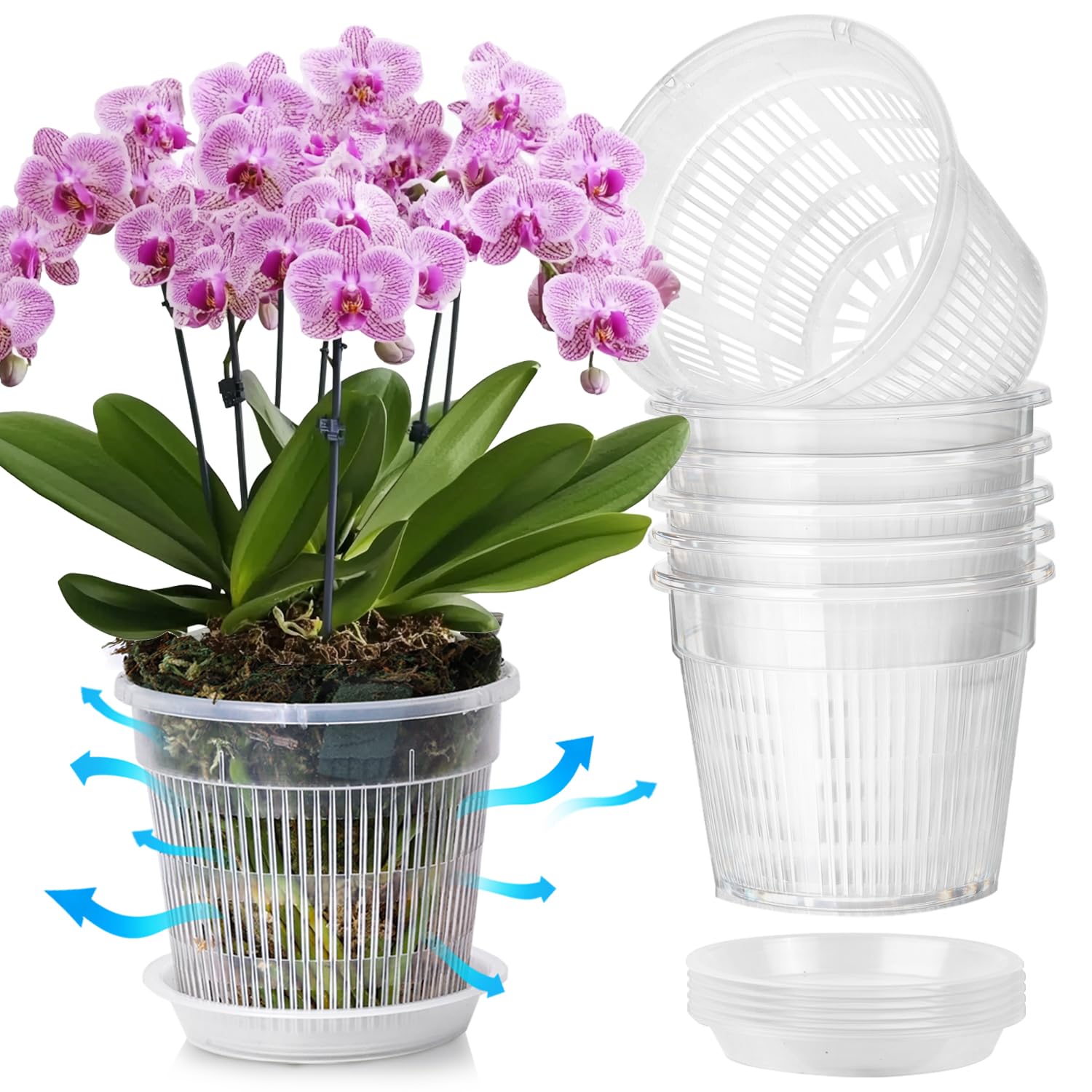
Extra width for mature Phalaenopsis that have outgrown standard 6-inch pots
At 7.44 x 7.44 x 6.5 inches, these are the largest clear plastic pots in this lineup — a full 2.5 times the cubic volume of the YOPIKUU set’s biggest size. The extra space matters when you have a mature orchid with a sprawling root system. Reviewers consistently praise the size: one specifically said “got the 7.5inch pot and is perfect size for it” and that their orchid is happy. The 360° airflow holes and bottom drainage work together to keep roots from suffocating.
The clear PP plastic is thick and sturdy, and the pots come with matching saucers to catch runoff. However, some reviewers found them too tall for their setup — one mentioned needing a 1-inch gap between an inner mesh pot and a cover pot, which these didn’t accommodate. If you plan to slip these inside a decorative cachepot, measure your outer container’s depth first.
The brand also includes features like “weather resistant” and “orchid friendly” in their specs, and the material holds up well outdoors as well as indoors.
The big pot advantage
- 7.5-inch width fits larger, established Phalaenopsis with room to grow
- Sturdy PP plastic resists breakage
- Lots of drainage openings keep roots aerated
Fit considerations
- Tall profile may not fit shallow decorative cachepots
- Too large for small or newly divided orchids
Perfect for: a mature orchid with a big root ball that needs more horizontal space than a 6-inch pot provides.
Pass on this if: your orchid is still in a 4-inch pot — the jump to 7.5 inches will hold too much moisture.
5. JGB 9-Pack 7 Inch Clear Orchid Pots with Saucers

Nine pots at once, each 7 inches, for anyone repotting a whole shelf of orchids
If you need to repot a large collection in one go, this set is the highest-count option here. Each pot measures about 7 inches wide and comes with a saucer. The side slotted design provides breathable air circulation, and the bottom drainage hole sends water into the tray to prevent root rot. Owners mention the holes are sized well so the bark medium stays inside, which is a common frustration with cheaper slotted pots.
One reviewer called them “perfect” for submerging the whole pot to water orchids — the side slots let water flow in and out easily. The clear design helps beginners judge when to water by checking root color. At roughly the same price as the T4U set but with more pots, this one wins on quantity, though each pot is slightly narrower at 6.97 inches vs 7.44 inches.
The main complaint is that some buyers felt the price was high for plastic pots. If you only have one or two orchids, nine pots is overkill.
Quantity and quality
- 9 pots with saucers — highest count in the list
- Side slots allow submerging for bottom watering
- Sturdy plastic with medium-friendly hole size
Where it stumbles
- Some find the per-pot price high compared to other plastic sets
- 9 pots is excessive if you have only a few orchids
Buy these if: you have a large orchid collection and need to standardize all your pots at once.
Too much if: you’re just starting with one or two plants — you’ll have extras sitting unused.
6. Orceler 6 Inch Terracotta Orchid Pots with Holes — 3 Pack

Fired hotter and drop-tested from three feet — this clay pot is built to last
The Orceler terracotta pots are fired at 1922°F — about 126°F hotter than the vensovo set — which gives them extra density and crack resistance. Each package undergoes a 3-foot drop test before shipping, and buyers confirm the packaging is nearly bulletproof. The side holes are substantial and the porous clay mimics the natural growing conditions orchids evolved in. One reviewer described the pots as “solid, heavy, durable” and said they’re the same quality as their local nursery but cheaper.
With a 4.7-inch height and 6-inch width, these are close in size to the vensovo set, but the saucers are smaller at 4.6 inches in diameter. A buyer creatively solved that by pairing the pot with a separate 8-inch terracotta saucer and adding pebbles. Reviewers especially liked how the clay composition deters bacteria and fungus compared to plastic pots.
If you use a 5.5-inch clear slotted inner pot, these terracotta shells may be slightly too small to fit it — check dimensions before buying. One reviewer bought these for Phalaenopsis and noted that a bigger size would have worked better with their inner liner.
Fired for quality
- Fired at 1922°F for superior density and crack resistance
- 3-foot drop test ensures safe delivery
- Natural clay breathability deters bacteria and fungus
Fit details
- Saucers are only 4.6 inches — smaller than the pot base
- May not accommodate a 5.5-inch inner slotted pot
Go with these if: you want the most durable terracotta option with a higher firing temperature and proven packaging protection.
Hold off if: you plan to use a clear inner pot — measure your liner against the 5-inch inner diameter first.
7. BUYMAX Ceramic 2-Pack (5 & 6 Inch) Orchid Pots with Saucers

Glazed white ceramic with leaf-shaped holes that looks good sitting out
Unlike every other pick here, the BUYMAX pots are glazed ceramic with a polished white finish — they’re designed to be the pot you actually display, not hide inside a cover pot. The leaf-shaped ventilation holes on the sides plus bottom drainage let air through while keeping a decorative look. You get two pots — one 5-inch and one 6-inch — each with its own saucer. One creative “review from the orchid” on Amazon joked that the roots finally have enough airflow and “no more soggy roots.”
The ceramic is nicely made and packed in foam, though one buyer did find a small chip on arrival. Unlike the clear plastic options, you cannot see root color or moisture through glazed ceramic, so you’ll need to rely on weight and feel. Also, the saucers aren’t very deep — one reviewer pointed out they don’t hold much water dripping from the side holes, and a larger saucer underneath solved the problem.
If aesthetics matter and you want orchid pots that sit on a desk or shelf without a cover, this is the most visually polished set in the list.
Looks and function
- Glazed white ceramic with decorative leaf-shaped ventilation holes
- Two sizes (5 and 6 inches) in one set
- Saucers included; foam-packed for shipping safety
Functional trade-offs
- No root visibility — you can’t see moisture or root color
- Saucers are small; side-hole drips may overflow a shallow tray
Pick these for: a living room or office where the pot itself is part of the decor — the ceramic finish beats plastic or clay for looks.
Skip them if: you rely on seeing your orchid’s roots to know when to water; ceramic blocks all visibility.
Understanding the Specs
Clear Plastic vs. Terracotta vs. Ceramic
The material dictates how water behaves. Clear plastic (PP polypropylene) lets light reach roots and keeps moisture in longer — helpful if you tend to underwater. Terracotta is porous and pulls water out of the bark mix, so it’s safer if you overwater. Glazed ceramic looks decorative but doesn’t breathe, so it only works well with dedicated side ventilation holes like the BUYMAX set.
Side Holes and Drainage Design
Orchids need air around their roots — a single bottom hole is not enough. Look for pots with multiple side slots or holes. The shape and size of these holes matter too: if they’re too large, bark falls out; too small, air doesn’t flow. The best designs (like HOLANHING’s upgraded slots or T4U’s 360° pattern) balance airflow with medium retention.
Pot Size and Depth for Phalaenopsis
A pot that’s too wide or deep holds moisture that roots can’t reach, leading to rot. Most mature Phalaenopsis do well in a 6-inch pot. The YOPIKUU set includes sizes from 3 to 6 inches, so you can match the pot to each plant’s root mass. The T4U 7.5-inch pot is only needed for very large root systems — using it on a small orchid risks stagnant wet medium in the unused space.
Number of Pots Per Set
Single pots vs. multi-packs change the math. A 3-pack of terracotta (vensovo or Orceler) covers a few orchids at a reasonable price. A 9-pack (JGB) is economical if you’re repotting a whole collection, but wasteful if you only have two plants. Match the count to your actual orchid shelf, not to the “best deal.”
FAQ
Why do Phalaenopsis orchids need special pots with holes?
Should I use a clear plastic pot or a terracotta pot for my orchid?
What size pot should I use for a mature Phalaenopsis?
Can I put a clear orchid pot inside a decorative ceramic pot?
How often should I water an orchid in a slotted plastic pot vs. terracotta?
Will the bark medium fall out through the side holes?
Do ceramic glazed pots work for Phalaenopsis orchids?
Can I use these pots for other plants besides orchids?
How do I clean reusable orchid pots between repottings?
What does PP plastic mean for orchid pots?
Final Thoughts: The Verdict
For most people, the best orchid pots for phalaenopsis winner is the HOLANHING 6-Pack because it combines upgraded hole design, thick clear PP plastic, and enough saucers and clips to repot a small collection right away. If you want terracotta breathability that fights overwatering, grab the vensovo 3-Pack. And for a large mature orchid that needs more horizontal space, the standout is the T4U 7.5-inch set.
How We Picked
We do not accept paid placement. Every pick is matched to a real buyer and a real use-case; we do not hands-on test units.
Sources & Methodology
Specifications: manufacturer listings and product documentation. Review insights: verified customer reviews, as of July 2026. Pricing: not shown on this page (it changes often); check the current price via the retailer link.
As an Amazon Associate, Lawn Gear Lab earns from qualifying purchases. This does not affect which products we feature.