
A bag of fertilizer is just a bag of numbers until you understand what your soil actually craves. Pouring random nutrients onto your garden beds often leads to leggy growth, blossom-end rot, or nutrient lockout — waste that frustrates even experienced growers. Selecting the right amendment means reading the NPK ratio, recognizing your soil texture (sandy, clay, loam), and matching the release speed to your plant’s growth stage.
I’m Rikta — the co-founder and writer behind Lawn Gear Lab. I’ve spent countless hours cross-referencing soil science data, comparing NPK profiles, parsing organic certification standards, and synthesizing real-world owner feedback to ground this guide in measurable performance, not marketing claims.
This research cuts through the shelf noise to deliver a shortlist of the most effective, category-specific amendments you can buy today — the definitive best nutrients for soil on the market, ranked by their ability to feed both the plant and the living microbiology beneath it.
How To Choose The Best Nutrients For Soil
Selecting a soil amendment isn’t about picking the highest nitrogen number on the shelf. It’s about diagnosing what your soil lacks — which requires understanding the three primary macronutrients, the role of secondary elements, and the delivery method that fits your growing style.
Decoding the NPK Ratio
The three numbers on every fertilizer label represent Nitrogen (N), Phosphorus (P), and Potassium (K). Nitrogen drives leafy green growth, phosphorus supports root development and flowering, and potassium strengthens overall plant health and disease resistance. A balanced 4-4-4 formulation is ideal for general garden maintenance, while a high-N formula like 5-1-1 works best during the vegetative phase of leafy greens and lawns.
Granular vs. Liquid Delivery
Granular fertilizers — like those from FoxFarm and Jobe’s — release nutrients slowly as soil microbes and moisture break them down. They feed the soil food web over weeks and reduce the risk of over-application. Liquid concentrates, such as the Alaska Fish Fertilizer or TPS Cal-Mag, deliver nutrients directly to the root zone within hours, making them ideal for correcting acute deficiencies or for use in hydroponic systems where granulars would clog the lines.
The Role of Organic Matter and Microbes
Pure chemistry is only half the equation. Products containing worm castings (Wiggle Worm), kelp extract (FoxFarm Bush Doctor), or humic acids (The Andersons Humic DG) improve soil structure, boost cation exchange capacity, and feed beneficial bacteria and fungi. A nutrient-rich soil without a thriving microbial population will struggle to make those nutrients plant-available. Always prioritize amendments that build soil biology, not just feed the plant.
Quick Comparison
On smaller screens, swipe sideways to see the full table.
| Model | Category | Best For | Key Spec | Amazon |
|---|---|---|---|---|
| FoxFarm Happy Frog | Granular | All-purpose garden feeding with microbial boost | NPK 6-4-5 with mycorrhizae | Amazon |
| Alaska Fish Fertilizer | Liquid | High-nitrogen vegetative growth | NPK 5-1-1 OMRI organic | Amazon |
| FoxFarm Bush Doctor Kelp | Liquid | Stress recovery and root stimulation | NPK 0.5-0-0.5, Ascophyllum nodosum | Amazon |
| TPS Cal-Mag Complete | Liquid | Preventing blossom-end rot and Ca/Mg deficiency | 1:100 mixing ratio, 1 gallon | Amazon |
| Jobe’s Organics Granular | Granular | High-volume beds and lawns | NPK 4-4-4, 16 lb resealable bag | Amazon |
| Wiggle Worm Castings | Granular | Building living soil microbiology | 40 lbs, odor-free, worm egg material | Amazon |
| The Andersons Humic DG | Granular | Improving nutrient efficiency in clay soil | 70% humic acid, 11 lb covers 10,000 sq ft | Amazon |
In‑Depth Reviews
1. FoxFarm Happy Frog All Purpose Fertilizer

FoxFarm’s Happy Frog All Purpose Fertilizer lands at the top of this list because it delivers a genuinely balanced 6-4-5 NPK alongside live soil microbes and mycorrhizal fungi — a combination that feeds the plant and the soil ecosystem simultaneously. The granular format simplifies application for in-ground beds, containers, and raised rows. Users report visible greening in yellowing tomato and zucchini plants within a week of application. The 4-pound bag covers a modest urban garden without overwhelming the shelf.
The OMRI listing provides organic certification confidence, which matters when you’re feeding edible crops. The inclusion of beneficial soil microbes (not just synthetic salts) means this product improves nutrient cycling over time rather than just force-feeding the plant. Multiple reviewers note explosive growth when using Happy Frog alongside worm castings, reinforcing its compatibility with a living-soil approach.
The primary trade-off is the smell — the manure-based ingredients produce a strong, pungent odor that lingers indoors. Users applying in enclosed spaces should ventilate thoroughly and wear gloves. Despite the scent, the consistency of results and the microbial component make this the most versatile all-purpose soil nutrient in the lineup.
What works
- Balanced 6-4-5 NPK plus mycorrhizal fungi for root health
- OMRI listed for organic gardening with edible crops
- Fast visible results on yellowing vegetables within a week
What doesn’t
- Pungent manure smell requires ventilation for indoor use
- White mold can form if sprinkled too thickly on top of soil
2. Jobe’s Organics Granular All Purpose Fertilizer

Jobe’s Organics Granular Fertilizer earns its position as the volume champion with a 16-pound bag of 4-4-4 balanced nutrition. This size is ideal for covering large raised beds, multiple flower borders, or a small lawn area without needing multiple purchases. The resealable bag keeps moisture out and granules fresh between applications, which is a practical advantage over paper sacks that tear. Users across vegetable beds, shrubs, and trees report stronger stems and more vibrant blooms within a few weeks of use.
The 4-4-4 ratio is intentionally moderate — it provides steady nourishment without the risk of nitrogen burn that comes with higher-N formulas. Customers have successfully used it to produce bumper crops of squash, cucumbers, and peppers. The OMRI listing and absence of synthetic chemicals align with organic growing practices. Many gardeners also soak the granules in water to make a liquid tea, an efficient trick that speeds up the nutrient release for young transplants.
The main disadvantage is the faint barnyard odor typical of organic granular fertilizers, although reviewers note it is milder than raw manure. The granules can also be somewhat fine, creating a light dust if applied with a broadcast spreader on windy days. Neither issue detracts from the outstanding cost-per-square-foot value this product delivers.
What works
- Massive 16-pound bag provides excellent coverage for large gardens
- Balanced 4-4-4 NPK safe for repeated use without burning
- Resealable packaging preserves freshness between uses
What doesn’t
- Fine granules can create light dust in windy spreader applications
- Odor, though mild, will still be noticeable near the garden
3. TPS Cal-Mag Complete
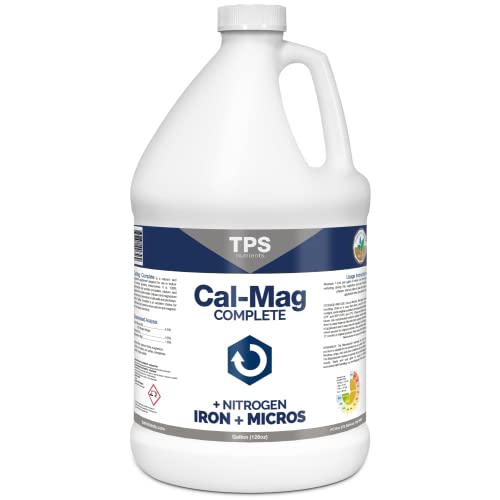
TPS Cal-Mag Complete is not a standalone fertilizer — it’s a targeted supplement designed to correct calcium and magnesium deficiencies that cause blossom-end rot in tomatoes, peppers, and squash. With a 1:100 to 1:200 dilution ratio, the gallon bottle treats a substantial number of plants over multiple seasons. Users who grow indoors or in hydroponic setups report this product fills a gap left by balanced NPK bases that often lack sufficient secondary nutrients.
The formulation includes chelated micronutrients that improve overall plant structure and nutrient uptake efficiency. Indoor growers have documented zero cases of blossom-end rot after switching to this brand, with some harvesting Brandywine tomatoes exceeding one pound each. The liquid format mixes cleanly with water and can be applied via drip irrigation or foliar spray, making it flexible for soil and soilless environments alike.
On the downside, the 1:100 mixing ratio requires careful measurement — over-applying can lead to nutrient imbalances. Some first-time users find the small recommended dose counterintuitive and risk under-dosing. But for anyone battling blossom-end rot or growing calcium-hungry crops, this is the most effective corrective tool on the list.
What works
- Eliminates blossom-end rot when used consistently on tomatoes and peppers
- Compatible with hydroponic, drip, and soil systems
- Cost-effective per ounce in the gallon size
What doesn’t
- Very concentrated — requires precise measurement to avoid over-application
- Not a standalone fertilizer; must be used alongside a complete NPK base
4. FoxFarm Bush Doctor Kelp Me Kelp You

FoxFarm’s Bush Doctor Kelp Me Kelp You is a liquid seaweed extract sourced from Ascophyllum nodosum, a cold-water kelp species renowned for its natural auxins, cytokinins, and betaines. This is not a high-NPK feed — the 0.5-0-0.5 ratio is negligible — but the hormonal compounds within the kelp significantly improve root development, transplant shock recovery, and stress tolerance during heat waves or drought. Gardeners using this product report noticeable vigor gains in the first week after transplanting.
Application is straightforward: mix 1-2 teaspoons per gallon of water and drench the root zone every two weeks. It works equally well in soil, hydroponic reservoirs, and drip irrigation systems. The quart bottle lasts a long time given the low dosage rate. Reviews frequently mention this product as a “lifesaver” for seedlings and stressed plants, particularly for combating transplant shock and heat stress that slow down growth.
The downside is the relatively high cost per ounce compared to conventional fertilizers — this is a supplement, not a primary nutrient source. Some users mistake it for a complete feed and expect NPK results. When used as directed alongside a balanced fertilizer, it delivers biological benefits that no synthetic salt can replicate.
What works
- Natural plant hormones reduce transplant shock and heat stress
- Works in soil, hydroponics, and drip irrigation systems
- Highly concentrated — small doses treat many plants
What doesn’t
- Higher per-ounce cost than synthetic additives
- Very low NPK — must be paired with a complete fertilizer
5. Alaska Fish Fertilizer OMRI Listed 5-1-1
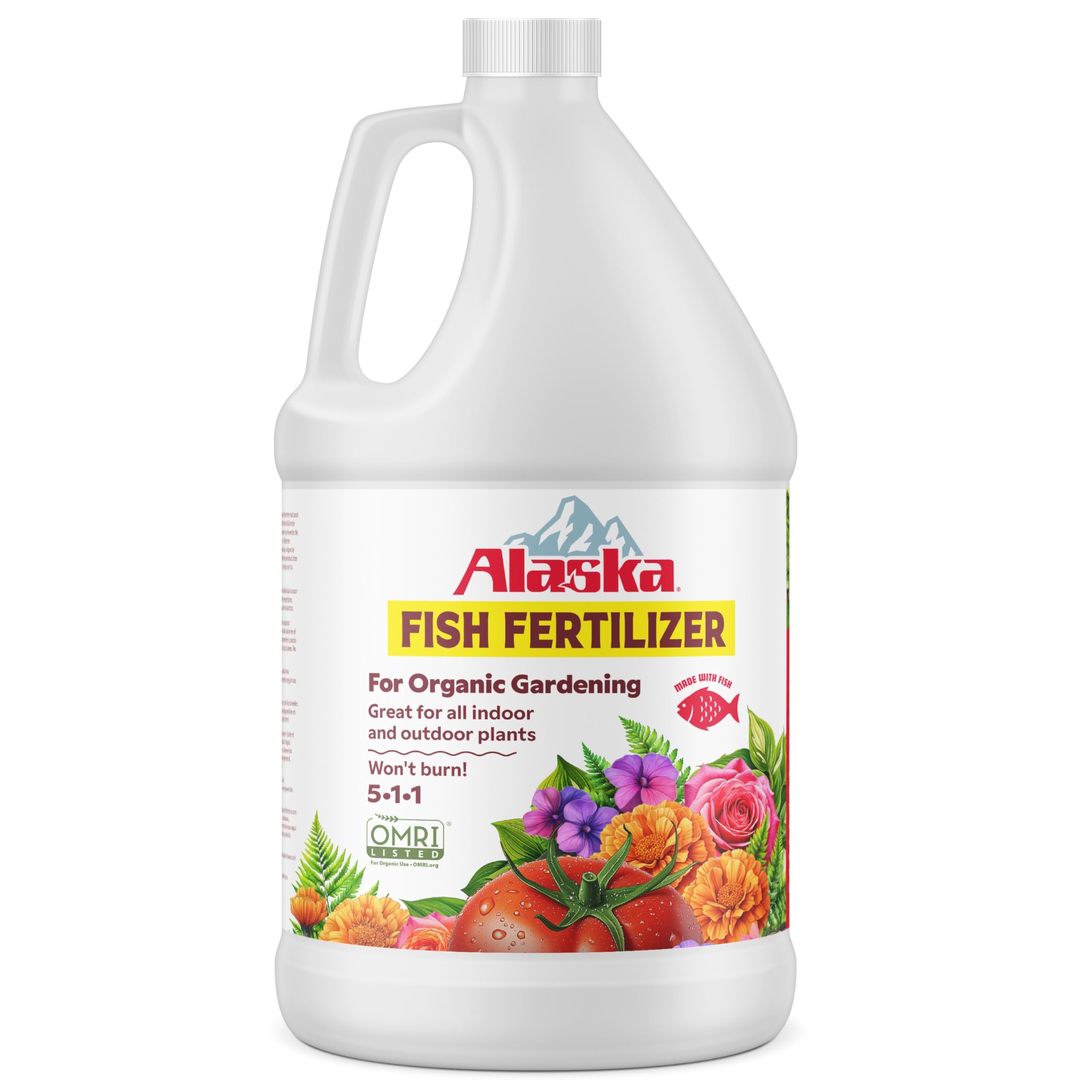
Alaska Fish Fertilizer has been a trusted organic nitrogen source for generations, and the 5-1-1 ratio makes it a powerhouse for vegetative growth in leafy greens, lawns, roses, and perennials. The cold-processed fish emulsion preserves micronutrients that are often destroyed by heat processing. Users who apply this during the spring growth flush see rapid, deep-green foliage development and stronger stems within two weeks. The 115-ounce jug provides excellent coverage for medium to large gardens.
OMRI listing confirms its suitability for organic production. The formula is safe for vegetables, fruits, and ornamentals, and it won’t burn plants when used at the recommended dilution. Because it’s a fish-based liquid, it also feeds soil microbes, contributing to long-term soil health. Reviewers with years of experience report that this product is a non-negotiable staple in their feeding rotation, with results that consistently outperform synthetic alternatives for leafy vigor.
The obvious catch is the smell — concentrated fish emulsion carries a pungent odor that lingers for up to 24 hours after application, even in well-ventilated areas. Pets may be attracted to the scent. Additionally, the high nitrogen and low phosphorus/potassium ratio means you will need a bloom-boosting supplement for fruiting and flowering stages. For pure green growth, however, this remains the benchmark.
What works
- High nitrogen content drives fast, lush vegetative growth
- Cold-processed to preserve beneficial micronutrients
- Long-standing organic reputation with proven results
What doesn’t
- Strong fish odor lingers indoors for up to 24 hours
- Low P and K require a separate bloom formula for flowering
6. Wiggle Worm 100% Pure Worm Castings
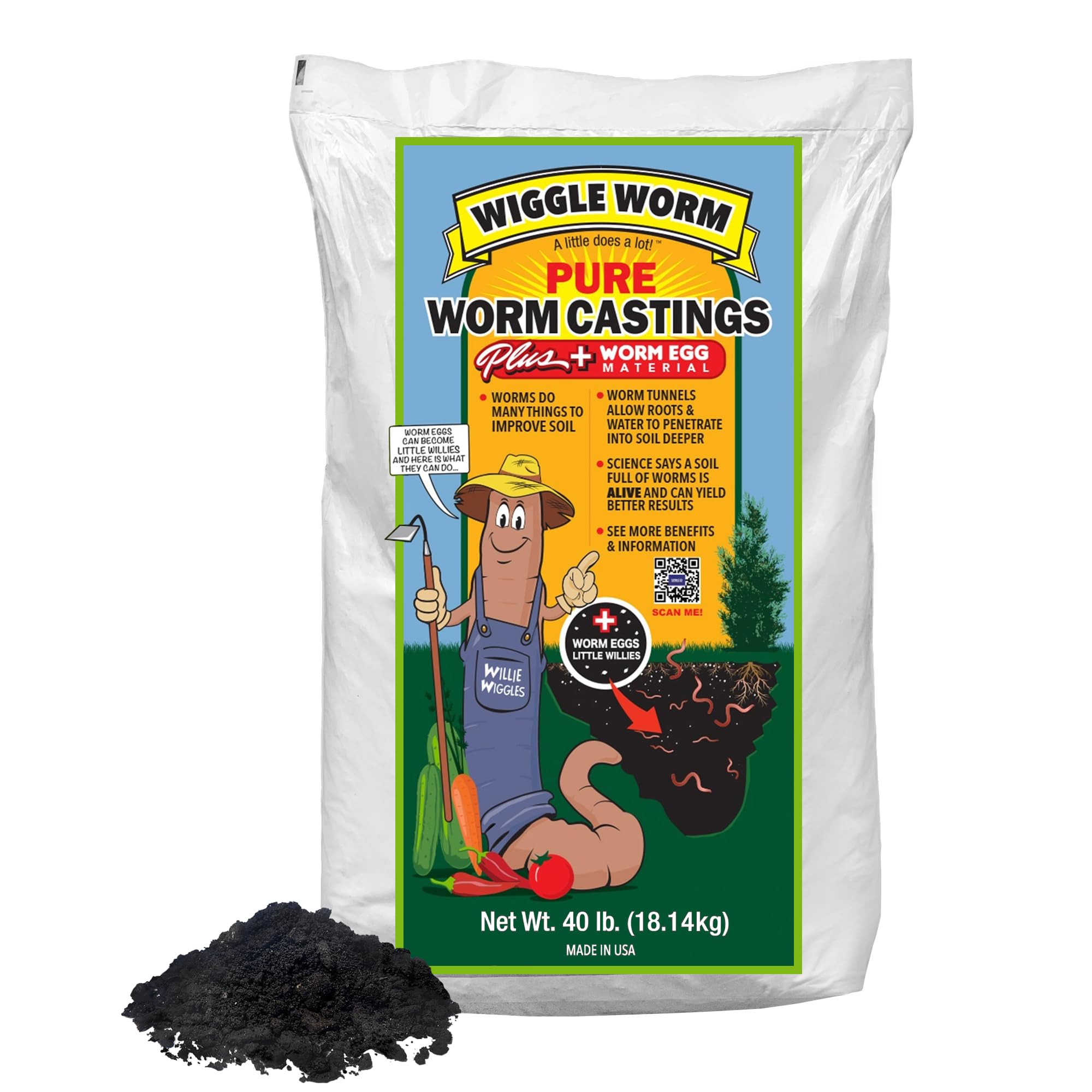
Wiggle Worm’s 40-pound bag of pure worm castings offers something no synthetic fertilizer can: a self-sustaining soil ecosystem. The castings are odor-free and finely textured, making them pleasant to handle even in enclosed spaces. Unlike chemical fertilizers, worm castings cannot burn roots regardless of quantity applied. They improve soil aeration, water retention, and drainage simultaneously — a trifecta that supports healthier root architecture. Users in extreme climates (desert heat, freezing winters) report that castings help non-native plants survive where standard fertilizer failed.
The inclusion of worm egg material is a clever biological feature — if conditions favor hatching, live worms will continue aerating the soil and producing additional castings indefinitely. This turns a one-time soil amendment into a long-term biological investment. Gardeners using castings for both seed starts and mature plants note faster germination rates and deeper root expansion compared to unamended soil.
The primary limitation is that castings have a low, variable NPK — they are a soil conditioner first and a nutrient source second. Heavy-feeding crops like corn or tomatoes will still need a supplemental fertilizer during peak production. The bag is also heavy (40 pounds), which can be a logistical challenge for gardeners without easy access to their beds.
What works
- Odor-free and 100% safe — cannot burn roots regardless of quantity
- Worm eggs may hatch to create a self-sustaining soil system
- Improves aeration, drainage, and microbial activity simultaneously
What doesn’t
- Low variable NPK — not sufficient as sole nutrient for heavy feeders
- 40-pound bag is heavy and awkward to transport
7. The Andersons Humic DG Organic Soil Amendment
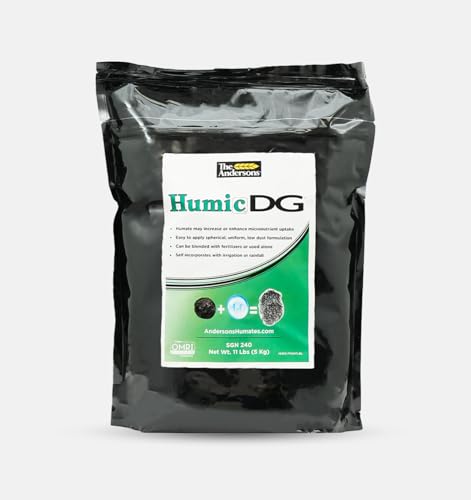
The Andersons Humic DG is not a fertilizer in the traditional sense — it is a carbon-rich soil amendment that feeds soil microbes and enhances the plant’s ability to absorb existing nutrients. With a 70% humic acid content (measured via the A&L method), this product chelates nutrients in the root zone, preventing them from leaching out of sandy soils or binding up in clay soils. Users with heavy clay report dramatic improvements in soil workability and grass health after two seasons of use.
The 11-pound bag covers up to 10,000 square feet, making it the most area-efficient product in the lineup. The Dispersible Granule (DG) technology allows it to dissolve quickly into the soil when watered in, regardless of soil type. It can be applied alone or blended with any fertilizer program. The OMRI listing and environmentally friendly profile make it a safe choice for lawns, gardens, and turf. Lawn care enthusiasts appreciate that it helps reverse soil compaction without tilling.
The main drawback is that humic acid is a long-game investment — it improves nutrient efficiency but does not add NPK. Users expecting immediate foliar greening will be disappointed. Results build incrementally over months and years as soil biology expands. For gardeners aiming to build truly fertile soil rather than just feed plants, it is an essential tool.
What works
- 70% humic acid content chelates nutrients for better absorption
- Covers 10,000 sq ft — ideal for lawns and large beds
- Safe for all soil types and compatible with any fertilizer program
What doesn’t
- Provides zero NPK — not a standalone fertilizer
- Results take months to become visible; requires patience
Hardware & Specs Guide
NPK Ratio – The Three Numbers That Matter
Every soil nutrient product displays three numbers representing Nitrogen (N), Phosphorus (P), and Potassium (K). A high first number (like 5-1-1) drives leafy green growth and is ideal for lawns, lettuce, and herbs. A balanced ratio (like 4-4-4) supports both foliage and root development for general garden feeding. Avoid matching a high-N ratio with flowering plants — excess nitrogen promotes leaves at the expense of blooms and fruit set.
OMRI Listing – Organic Certification Signal
The Organic Materials Review Institute (OMRI) listing means the product has been reviewed and approved for use in certified organic production. This is not a marketing seal — it assures that no synthetic pesticides, sewage sludge, or prohibited chemicals were used. For gardeners growing edible crops who want to avoid synthetic inputs, OMRI-listed products like the FoxFarm Happy Frog and Jobe’s Organics are a reliable starting point.
Humic Acid Content – The Chelation Factor
Humic acids are large carbon molecules that bind to mineral nutrients in the soil, preventing them from washing away or reacting with clay particles. Products like The Andersons Humic DG, with a 70% humic acid rating, increase the cation exchange capacity of your soil — meaning more nutrients remain available for root uptake over a longer period. This is especially valuable in sandy soils that drain quickly or in heavily leached container mixes.
Microbial Additives – Living vs. Sterile Feeding
Some granular fertilizers, such as FoxFarm Happy Frog, include added mycorrhizal fungi and beneficial soil bacteria. These microbes form symbiotic relationships with plant roots, extending the root system’s reach and improving phosphorus uptake. Products without microbial additives (like most synthetic salts) feed the plant directly but do not improve soil biodiversity. For long-term soil fertility, choose a product that includes or supports microbial life.
FAQ
Should I use a liquid or granular nutrient for my vegetable garden?
Can I use a high-nitrogen fertilizer on flowering plants like tomatoes?
How often should I apply humic acid to my lawn or garden soil?
What is the advantage of using worm castings over chemical fertilizer?
Final Thoughts: The Verdict
For most gardeners, the nutrients for soil winner is the FoxFarm Happy Frog All Purpose Fertilizer because its 6-4-5 NPK plus mycorrhizal fungi delivers immediate visible growth while building long-term soil biology. If you want a massive, cost-effective supply for large beds and lawns, grab the Jobe’s Organics 4-4-4 Granular. And for preventing blossom-end rot in tomatoes and peppers, nothing beats the precision of TPS Cal-Mag Complete.