
Specs are compiled from manufacturer listings and verified buyer reviews and can change over time — please confirm the key details on the product page before buying.
The numbers are the NPK ratio — the balance of nitrogen (N), phosphorus (P), and potassium (K) — and it decides whether your plant makes big leaves or big fruit. This guide breaks down the best tomato fertilizers by what their NPK actually does in your soil.
I’m Rikta — the founder and writer behind Lawn Gear Lab. This guide is built by comparing the manufacturers’ published specifications and the patterns across verified customer reviews, so you get each pick’s real strengths and trade-offs instead of marketing spin.
You want a fertilizer that fuels fruit, not just foliage, and that starts with understanding the ratio. Find the right npk for tomatoes so you stop feeding leaves and start growing a harvest you can taste.
Our Picks at a Glance


How To Choose The Best NPK For Tomatoes
Tomato plants are “heavy feeders” — they pull a lot from the soil, and if the balance is off, you get a jungle of green stems and almost no fruit. The NPK ratio is your main steering wheel: nitrogen powers leaf growth, phosphorus builds roots and flowers, and potassium drives fruit size and flavor.
Read the Middle Number First
The second number, phosphate, is what triggers flowering and fruit set. A ratio like 5-7-3 or 4-18-38 puts the emphasis on phosphorus and potassium, telling the plant to spend its energy on producing fruit rather than expanding foliage. A balanced or nitrogen-heavy feed like 17-18-28 still works, but you need to know when to apply it.
Match the Feed to the Growth Stage
Early in the season, young tomato plants need nitrogen to build a strong, leafy structure. Once you see flowers forming, you want to shift to a phosphorus-and-potassium-forward formula so the plant channels its energy into fruit. Some fertilizers, like the 4-18-38 powder, are designed specifically for this fruiting stage.
Quick Comparison
| Model | Best For | NPK Ratio | Form | Weight | Amazon |
|---|---|---|---|---|---|
| FoxFarm Happy Frog★ Best Overall | Vigorous feeders & soil health | 5:7:3 | Granules | 4 lbs | Amazon |
| Jobe’s SpikesSet & Forget | Set-and-forget feeding | 6:18:6 | Spikes | 54 count | Amazon |
| Schultz Water SolubleFast Boost | Quick fruiting boost | 17:18:28 | Water Soluble | 16 oz | Amazon |
| Cz Garden 5-10-10 | Late-season fruiting | 5:10:10 | Granules | 4 lbs | Amazon |
| Bloom City Liquid | Containers & raised beds | 2 oz/gal mix | Liquid | 32 oz | Amazon |
| True Organic | Organic harvests with calcium | 4:5:6 | Granules | 8 lbs | Amazon |
| GreenGro Pride Lands | Flowering & fruiting boost | 2:5.5:5.5 | Powder | 2 lbs | Amazon |
| Greenway Biotech | Hydroponics & soil | 4:18:38 | Water Soluble | 16 oz | Amazon |
| Espoma Tomato-tone | Large organic gardens | 3:4:6 | Granules | 18.1 lbs | Amazon |
In-Depth Reviews
1. FoxFarm Happy Frog Tomato & Vegetable Fertilizer
Our pick — over 4.5★ from 600+ verified ratings; the strongest balance of quality and price.
The crowd-pleasing granule that makes tomatoes prosper without the stink
This 4-pound bag of granules uses a 5:7:3 blend — lower on nitrogen, heavier on the phosphorus that fuels flowering and fruit set. The standout feature for most gardeners is the added calcium, which helps prevent blossom end rot, the black, sunken patch that ruins the bottom of otherwise perfect tomatoes.
The formula also includes mycorrhizal fungi (beneficial soil organisms that team up with roots to grab more water and nutrients). Buyers report “Easy to use & helped my tomato harvest be my best ever!” — and the lack of a chemical or fishy smell is a recurring point of relief. Gardeners using it on zucchini saw happier plants with more blooms after a single application.
It earns high marks for plant health more than any other trait, and it is versatile enough for peppers, leafy greens, and root crops in both containers and rows. It holds a 4.8-star rating from over 600 owners, the highest trust score in this guide.
What wins people over
- Calcium fights blossom end rot
- Mycorrhizae strengthen root uptake
- No offensive odor
Worth noting
- 4 lb bag is modest for large plots
- Granular form needs working into soil
Reach for this if: you want a balanced, organic-friendly granule that covers the whole season with one bag.
Look elsewhere if: you need a huge coverage area and want to avoid re-buying mid-season.
2. Jobe’s Tomato Fertilizer Spikes
The time-release spikes that feed tomatoes for weeks with zero mixing
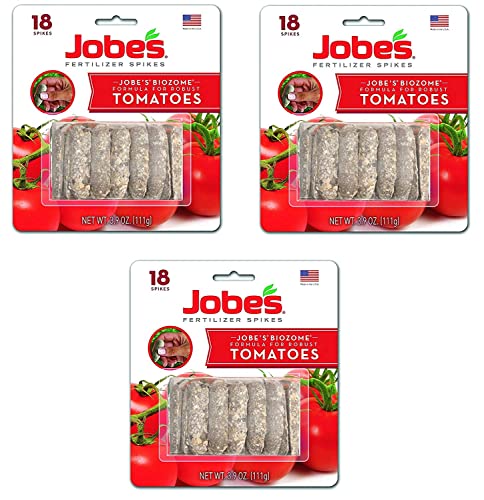
If you want to feed without measuring or mixing, these pre-formed spikes are the easiest path. The 6-18-6 ratio is heavy on phosphorus, which targets root development and flower production — exactly what tomato plants need. You get 54 spikes total across a 3-pack, each one pushed into the soil near the plant.
Owners mention easy use with strong growth on tomatoes and peppers, needing only to push spikes in and water. The time-release design means the nutrients break down slowly, so you don’t have to reapply every week. They work well for tomatoes and squash, with effectiveness being the most-discussed trait.
The honest catch: a few spikes arrive broken, so check the package when it lands. That minor fragility aside, it is a solid choice for gardeners who want a hands-off approach and strong root growth.
Best for: gardeners who want a true plant-and-forget feed with strong phosphorus for roots and fruit, and who accept that some spikes may chip in transit.
3. Schultz Water Soluble Tomato Food 17-18-28
The water-soluble kick that gave one grower their best crop in 7-8 years
This 16-ounce water-soluble powder offers a 17-18-28 ratio — notably high in potassium, which drives fruit size and flavor during the ripening stage. It differs sharply from the FoxFarm and Jobe’s options above in mixing ratio: a 17:18:28 versus 5:7:3 is a 3.4x gap in concentration. You dissolve it in water and feed, making it a quick-acting option for a mid-season boost.
Customers note their best tomato crop in 7-8 years, with one gardener seeing 50% new growth within 3 weeks. It covers 150 square feet, and one box lasts a full year for about a dozen pepper plants. Pumpkins also responded well to the high potassium, especially after fruit set.
The recurring mixed note is the formula itself: some praise the main nutrient combination, while others wish it included more micronutrients. It is a brilliant finisher for fruiting, but you may want soil amendments alongside it for trace elements.
Why it stands out: the potassium punch is unmistakable — expect bigger, riper fruit quickly, provided you accept the missing micronutrients.
4. Cz Garden 5-10-10 Tomato & Vegetable Fertilizer

The fruiting-stage specialist with 2% iron for deep, rich leaf color
This 4-pound resealable pouch holds a 5-10-10 blend designed for the fruiting phase, with double the phosphorus and potassium relative to nitrogen. It includes 2% iron plus micronutrients, which keeps leaves a healthy dark green while the plant focuses on producing fruit. It works for indoor and outdoor flowers, lawns, and garden vegetables.
Effectiveness is the trait buyers praise most, with huge tomatoes and thriving peppers and yellow squash being common results. The application is simple — a spoonful around the dripline after the soil is wet — and the colored beads make it easy to see where you’ve fed. One gardener used it once every two weeks during fruiting with great success.
The recurring debate is value: some find it a good deal, while others call it pricey for the bag size. It is a targeted finisher, not an all-season feed, so pair it with a balanced fertilizer early in the season.
What it delivers
- 2% iron keeps foliage deep green
- Resealable pouch for easy storage
- Won’t burn plants when directions are followed
The trade-off
- Opinions split on cost per feed
- Best paired with a nitrogen feed early on
Choose this for: a dedicated fruiting-stage feed that pushes tomatoes, peppers, and squash to full size.
Think twice if: you want one single fertilizer for the entire growing season.
5. Bloom City Tomato & Veggie Liquid Fertilizer

The liquid concentrate that made a first-timer’s beefsteak tomatoes explode
This 32-fluid-ounce liquid concentrate is made for raised beds, backyard gardens, and potted vegetables — perfect if you grow in containers, where watering leaches nutrients fast. Mix 2 oz per gallon of water and feed, which makes it easy to apply with a watering can or hose sprayer.
First-timers report tons of delicious beefsteak tomatoes, with one bottle feeding many plants. It strengthens roots and encourages steady growth without overstimulating the plant, which means less risk of nitrogen burn.
The honest note from a side-by-side test: against a granule feed, there was no noticeable difference in yield or size — both worked equally well. So this is about convenience and ease of use rather than a miracle yield boost. It is a reliable, no-mess liquid feed that pairs well with container gardening.
Best fit: container gardeners who want an easy, quick-acting liquid feed that won’t burn plants — if you prioritize convenience over raw yield gains.
6. True Organic Tomato & Vegetable Food

The organic granule with 6% calcium and a smell you’ll tolerate for the harvest
This 8-pound bag of granules uses a 4:5:6 blend and covers 140 square feet, making it a strong mid-size option for serious gardens. It is enriched with 6% calcium to prevent blossom end rot — a major selling point for tomato growers — along with 4% nitrogen (3% of it slow-release), 5% phosphate, 6% potash, and 1% sulfur.
Reviewers point out tomatoes growing like crazy, with strong growth persisting through a hot, humid July in containers. It is ideal for in-ground and container plants, applied monthly during the growing season. Small doses with every watering worked brilliantly for a balcony gardener with 5+ years of experience, including heirloom varieties.
Effectiveness is the trait praised most, but the odor is the elephant in the room — 31 owners flagged the smell as unpleasant, making it the most-discussed negative. The results are worth it for many, but if you are smell-sensitive, you’ll want to work it into the soil quickly.
Why it earns its spot
- 6% calcium blocks blossom end rot
- Slow-release nitrogen feeds steadily
- Covers a generous 140 sq ft
The honest catch
- Strong odor that lingers
- Needs monthly reapplication
Pick this if: you want an organic, calcium-rich feed for bigger yields and can handle a pungent smell.
skip it if: you garden on a balcony or indoors where the odor would be intrusive.
7. GreenGro Pride Lands Bloom 2-5.5-5.5
The microbial-rich bloom powder that pushes fruit size for serious growers
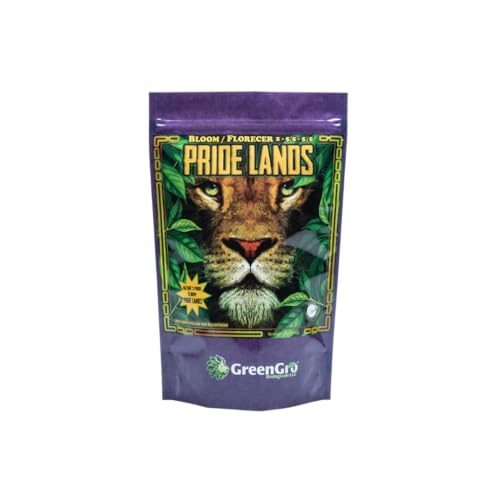
For bigger, more plentiful tomatoes, this 2-pound organic dry top dress uses a 2-5.5-5.5 NPK — a ratio high in phosphorus and potassium, which fuels fruit set and size in tomatoes, peppers, squash, and berries. Unlike most dry amendments, it also includes beneficial microbes, biochar, and mycorrhizae (fungi that help roots absorb more nutrients).
Shoppers say healthier plants with more blooms, noting visible changes in flower color and count after one use. You can use it as a standalone bloom base — top dress once per week, water in, and let the organic biology work, with no extra P/K boosters or pH adjustments. Long-term users of the full GreenGro line call it a standout for bloom production.
Quality is the most-praised trait, and it is CDFA-approved and non-GMO. Apply as a top dress every 7-14 days during the flowering and fruiting stage. It is a pricier system, but the results — bigger, denser fruit — justify the cost for dedicated gardeners.
What impresses
- Microbes + biochar + mycorrhizae included
- Standalone bloom base, no extra bottles
- CDFA-approved, non-GMO
Consider this
- 2 lb bag covers less area than granules
- Premium positioning for serious growers
Best for: dedicated gardeners who want a complete organic bloom base with living soil biology.
Not ideal for: casual growers who just want one cheap bag for the season.
8. Greenway Biotech Tomato Fertilizer 4-18-38
The concentrated 4-18-38 powder that grows 8-foot tomato plants
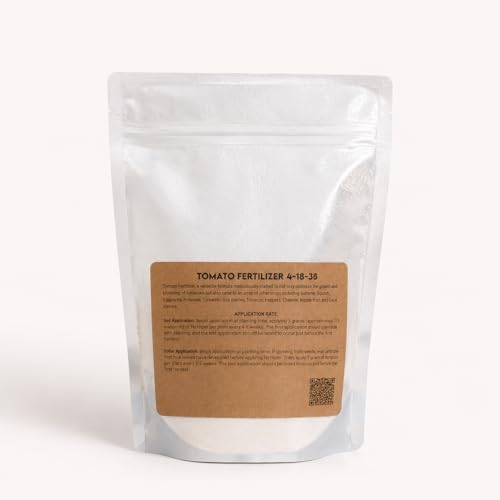
This 16-ounce water-soluble powder is built for the nightshade family — tomatoes, peppers, eggplants, and potatoes — with a 4-18-38 ratio. The high potassium (38%) boosts fruit size, flavor, and shelf life, while the low nitrogen (4%) keeps the plant from wasting energy on excess foliage. The 18% phosphorus supports strong root development and abundant flower set.
It includes chelated micronutrients — Iron, Manganese, Zinc, Copper, plus Boron and Molybdenum — for better uptake across a wide pH range. It is 100% water-soluble and clog-free, performing in soil, coco coir, perlite, rockwool, and DWC hydroponics. Buyers report tomato plants over 8 feet tall, with more blossoms and larger, sweeter fruit.
The critical warning: this is highly concentrated. One buyer burned 3 of 13 plants by using 0.75-1.5 tbsp per plant in a 3-foot planter — the correct rate is 1 tsp per gallon. Follow the dosage exactly and it is a powerhouse for hydroponics and soil alike.
Strength
- Chelated micronutrients for full uptake
- Works in soil and hydroponics
- High potassium for bigger, sweeter fruit
Caution
- Extremely potent — easy to over-apply
- Measure precisely or risk burning plants
Reach for this if: you are comfortable measuring precisely and want a powerhouse feed for soil or hydroponics.
Look elsewhere if: you prefer a forgiving, set-and-forget fertilizer.
9. Espoma Organic Tomato-tone 3-4-6

The 18-pound organic veteran that produces bumper tomato harvests
This 18.1-pound bag of granules is the biggest value here, using a 3-4-6 blend with 8% calcium to prevent blossom end rot. It is formulated for all types of tomatoes — heirloom and hybrid — and produces plump, abundant fruit rather than unwanted foliage. The low nitrogen means no risk of burning the plant with too much leaf growth.
Owners mention “bumper amounts of tomatoes” and use it year after year as an all-around garden fertilizer. One gardener grows 40-60 pepper plants annually and uses Tomato-tone as the starter fertilizer, finding it easy to apply without worry of nitrogen burn. It is approved for organic gardening and is a registered Organic Input Material.
Quality is the trait buyers mention most, and it is ready to use with no mixing required — just apply to the soil around the drip line and water thoroughly. Apply every two weeks through the growing season. It is priced higher per bag, but the 18-pound size covers a large garden for the whole season, making it the best bulk buy for serious growers.
Why it leads the big leagues
- 8% calcium prevents blossom end rot
- Huge 18.1 lb bag covers the season
- Approved for organic gardening
Trade-off
- Higher upfront cost per bag
- Requires biweekly reapplication
Best for: serious gardeners with large plots who want a trusted organic feed that lasts all season.
pass on it if: you only have a few containers and don’t need 18 pounds of fertilizer.
Understanding the Specs
The NPK Ratio
The three numbers on the bag — nitrogen, phosphorus, potassium — tell you what the plant will do with the food. Nitrogen (N) drives leafy green growth, phosphorus (P) builds roots and flowers, and potassium (K) powers fruit size, flavor, and disease resistance. For tomatoes, you want a ratio where the middle and last numbers are higher than the first, like 5-10-10 or 4-18-38, to push energy into fruiting rather than foliage.
Calcium & Blossom End Rot
Blossom end rot is the dark, sunken patch on the bottom of tomatoes, caused by a calcium deficiency in the fruit. Fertilizers with added calcium, like the 6% in True Organic or the 8% in Espoma, help prevent it. Look for the word “calcium” on the label if you have dealt with this problem before.
Form Factor: Granules vs. Spikes vs. Liquid
Granules are slow-release and worked into the soil, feeding your plants over weeks. Spikes are pre-formed and pushed into the ground — the ultimate set-and-forget option. Liquids and water-soluble powders act fastest, getting nutrients to the roots immediately, which is ideal for a mid-season boost or container feeding. Your choice depends on if you want to feed once or fertilize with every watering.
Micronutrients & Soil Biology
Beyond the big three, micronutrients like iron, manganese, zinc, and boron support enzyme function and nutrient uptake. Chelated micronutrients (bonded to a carrier for easier absorption) work across a wider pH range. Some fertilizers also add mycorrhizal fungi or biochar — living or carbon-based amendments that help roots access more water and nutrients, effectively extending the root system.
FAQ
What does NPK stand for in tomato fertilizer?
What is the best NPK ratio for tomato fruit production?
Will high nitrogen fertilizer hurt my tomato plants?
Should I use spikes, granules, or liquid fertilizer for tomatoes?
What causes blossom end rot and how does fertilizer prevent it?
Can I use the same fertilizer for peppers and other vegetables?
How often should I fertilize my tomato plants?
Is water-soluble fertilizer better for hydroponic tomatoes?
How much fertilizer does an 8-pound bag cover?
What is the difference between organic and synthetic tomato fertilizer?
Final Thoughts: The Verdict
For most gardeners, the NPK for tomatoes winner is the FoxFarm Happy Frog because its 5-7-3 blend balances calcium for blossom end rot prevention, mycorrhizae for root health, and a trusted 4.8-star reputation. If you want a set-and-forget option, grab the Jobe’s Spikes with their 6-18-6 root-focused ratio. And for hydroponics or a precise fruiting-stage feed, the Greenway Biotech 4-18-38 is the one to reach for — just measure carefully, because it is potent.
How We Picked
We do not accept paid placement. Every pick is matched to a real buyer and a real use-case; we do not hands-on test units.
Sources & Methodology
Specifications: manufacturer listings and product documentation. Review insights: verified customer reviews, as of August 2026. Pricing: not shown on this page (it changes often); check the current price via the retailer link.
As an Amazon Associate, Lawn Gear Lab earns from qualifying purchases. This does not affect which products we feature.