
If your vegetable plants look pale, stunted, or just won’t take off, they are almost certainly starving for nitrogen — the one nutrient that drives green leafy growth and strong stalks. The problem is that picking the wrong nitrogen fertilizer can burn your plants, lower your soil pH (a measure of acidity or alkalinity) to a dangerous level, or simply fail to release nutrients fast enough for hungry crops like corn, tomatoes, and peppers. This guide breaks down the seven best options on Amazon, sorted by nitrogen strength, release speed, and the real-world vegetable-growing scenarios where each one actually shines.
I’m Rikta — the co-founder and writer behind Lawn Gear Lab. This guide is built by comparing the manufacturers’ published specifications and the patterns across verified customer reviews, so you get each pick’s real strengths and trade-offs instead of marketing spin.
Whether you need a fast green-up for your tomatoes, a gentle slow-release option for your raised beds, or a precise calcium-nitrate combo to stop blossom-end rot (a black, leathery spot on the bottom of fruit caused by calcium deficiency), the best nitrogen fertilizer for vegetables comes down to matching the N-P-K ratio (the percentages of nitrogen, phosphorus, and potassium by weight) to your soil’s exact needs and your crop’s growth stage.
How To Choose The Best Nitrogen Fertilizer For Vegetables
Selecting the right nitrogen source means understanding your soil, your crop’s appetite, and the release speed that matches your growing season. These three factors will guide you to the perfect pick.
Match the N-P-K Ratio to Your Crop Stage
The first number in the N-P-K ratio (for example, 46-0-0) is the percentage of nitrogen. For leafy greens, corn, and young transplants, a high first number like 21 or 46 delivers the fast green-up you need. For fruiting crops like tomatoes and peppers already producing flowers, a balanced blend with lower nitrogen (like a 12-0-0) prevents excessive leaf growth at the expense of fruit.
Understand Release Speed: Fast vs. Slow
Synthetic nitrogen sources like urea (46-0-0) and ammonium sulfate (21-0-0) release nitrogen almost immediately after watering, so your plants can use it right away. This makes them ideal for a quick rescue of pale plants. Organic options like blood meal (12-0-0) or feather meal (12-0-0) break down more slowly as soil microbes work on them. They provide a steadier supply over weeks — lowering the risk of burning your plants but requiring planning ahead by a few weeks.
Watch for Secondary Nutrients
Some high-nitrogen fertilizers bring extra benefits. Ammonium sulfate (21-0-0) contains sulfur to lower soil pH for acid-loving plants like blueberries. Calcium nitrate (15.5-0-0) adds calcium to prevent blossom-end rot in tomatoes and zucchini. If your soil test shows a specific deficiency, a multi-nutrient nitrogen fertilizer can solve two problems at once.
Quick Comparison
On smaller screens, swipe sideways to see the full table.
| Model | Category | Best For | Key Spec | Amazon |
|---|---|---|---|---|
| Ammonium Sulfate 21-0-0 | Best Overall | All-around vegetable feeding + soil acidifying | 21-0-0 ratio with 24% sulfur | Amazon |
| Nitrogen Fertilizer Urea 46-0-0 | Pure Nitrogen | Rapid green-up for heavy feeders like corn | 46-0-0 ratio | Amazon |
| 5 lb. Urea Fertilizer 46-0-0 | Top Performer | Maximum nitrogen for corn and fast-growing veggies | 46-0-0 ratio | Amazon |
| Calcium Nitrate 15.5-0-0 | Best Value | Preventing blossom-end rot in tomatoes & zucchini | 15.5-0-0 with 19% calcium | Amazon |
| Amino Power Powder 14-0-0 | Premium Pick | Gentle, fast-acting organic nitrogen for seedlings | 14-0-0 with 18 L-Amino Acids | Amazon |
| Espoma Blood Meal 12-0-0 | Organic Choice | Organic nitrogen for flowers + vegetable gardens | 12-0-0, all-natural blood meal | Amazon |
| Down To Earth Feather Meal 12-0-0 | Budget Champion | Large gardens needing slow-release, organic N | 12-0-0, 20 lb bag | Amazon |
In‑Depth Reviews
1. Ammonium Sulfate 21-0-0 Fertilizer, High Nitrogen for Rapid Plant Growth & Deep Green Color

The Ammonium Sulfate 21-0-0 earns the top spot because it delivers a strong 21% nitrogen punch while also bringing 24% sulfur — a combination that both feeds your vegetables and gently lowers soil pH for plants that prefer slightly acidic conditions. Compared to the straight 46-0-0 urea options, this is more forgiving and offers a built-in pH adjustment. One buyer reports their “peppers and tomatoes were struggling to grow last season… within a few days plants were bright green and growing amazing,” which matches the fast-acting granular formulation. The 4-pound bag covers 100 square feet easily, and the sulfur content is a genuine bonus if your soil leans alkaline (high pH), helping unlock other nutrients your vegetables need. At this mid-range price point, you get two soil benefits — nitrogen feeding and pH correction — in one product.
The one honest limit is that ammonium sulfate can acidify soil more than other nitrogen sources, so you should test your pH if you plan to use it season after season. If your soil already runs acidic (below 6.0), this may require occasional lime to balance things. For most vegetable growers on neutral or alkaline soil, this is simply the most practical all-rounder you can buy. If you want a fast, safe nitrogen boost for tomatoes and peppers without the burn risk of 46-0-0, this is your pick — but skip it if your soil is already acidic.
For vegetable gardeners on neutral or alkaline soil, this is the most practical all-rounder you can buy.
Why it’s great
- 21% nitrogen plus 24% sulfur for greener leaves and lower pH
- Fast-acting granules show results within days
- Covers 100 sq ft per bag for small to medium gardens
Good to know
- Repeated use can overly acidify soil
- At 4 pounds, it may run out quickly for large plots
2. Nitrogen Fertilizer Urea 46-0-0, 5 Pounds

Compared to the top pick’s 21-0-0 Ammonium Sulfate, this urea fertilizer jumps to a massive 46-0-0 ratio — more than double the nitrogen concentration — so you need far less product to achieve the same green-up effect. That extreme potency makes it a specialty tool rather than an everyday fertilizer: it is the best choice for rescuing pale, nitrogen-starved vegetable beds or feeding heavy feeders like corn, but it requires careful handling because getting the dose wrong can burn foliage and roots quickly. One buyer reports applying it “weekly in the spring and fall on the lowest spreader setting” for an “amazingly green thick lawn,” and the same principle applies to vegetables. The 5-pound bag of pure prilled urea (small, granular pellets) spreads easily in most broadcast spreaders, and because it is straight nitrogen with zero phosphorus or potassium, you maintain complete control over your soil’s N-P-K balance.
Urea’s 46-0-0 ratio means a single pound delivers more than twice the nitrogen of a pound of 21-0-0, so you measure by the tablespoon rather than the cup. This concentration demands precise application: over-apply by even a small margin and you risk yellowing leaf tips or root damage, especially in hot weather. For vegetable gardeners, it works best as a side-dressing for heavy feeders like sweet corn or as a rescue treatment for pale, nitrogen-deficient beds, but it should never touch wet foliage or sit in a pile on the soil.
Choose this over the top pick if you already understand nitrogen burn risks and you want the fastest, most concentrated nitrogen boost possible for crops like sweet corn, leafy greens, or spring brassicas. For anyone uncertain about measuring tiny amounts precisely, the 21-0-0 option is more forgiving and safer for general vegetable use.
Where it shines
- 46% nitrogen — the highest concentration available for fast results
- Works well with broadcast spreaders for even coverage
- No added phosphorus or potassium, giving you full control
Worth noting
- Burns plants easily if unevenly applied
- Requires thorough watering to dissolve and avoid leaf scorch
3. 5 lb. Urea Fertilizer 46-0-0, High Nitrogen Fertilizer for Plants
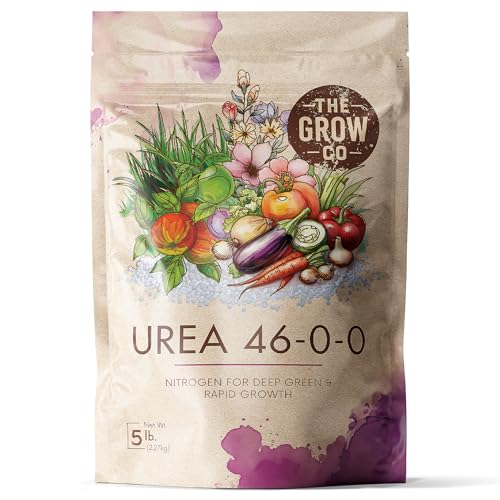
If you are growing sweet corn, tomatoes, or squash and want to see dramatic results fast, this high-nitrogen urea is purpose-built for those hungry crops. One buyer applied it to their sweet corn “at 6 inches tall and 12 inches tall” and reports “I have never had such big beautiful corn. The stalks are as big around as my arm.” That kind of testimonial tells you this is serious fuel for heavy feeders that demand steady, strong nitrogen during their rapid-growth phase. The 46-0-0 ratio provides nearly half its weight in pure nitrogen, so a little goes a long way — the manufacturer recommends just 1/2 teaspoon near the drip line for vegetables. The prilled granules (small, uniform pellets) are highly soluble and quickly absorbed, so you see greener leaves and faster growth within days of application.
Gardeners with small raised beds or container vegetables who need precision should stick with the 21-0-0 Ammonium Sulfate instead, since it is harder to over-apply. But if you are growing corn, pumpkins, or other heavy feeders that demand the highest nitrogen concentration available, this is the product you want in your shed.
The 5-pound bag at 46-0-0 delivers more nitrogen per dollar than just about any other option on the list.
What stands out
- 46-0-0 ratio delivers maximum nitrogen per application
- Highly soluble granules get absorbed fast for visible results
- Excellent for side-dressing corn, tomatoes, and squash
The trade-offs
- Very potent — measuring precisely is critical to avoid burn
- Needs thorough watering to dissolve into the root zone
4. Calcium Nitrate 15.5-0-0 Fertilizer – Made in USA – 5LB

The single number that matters most to tomato and zucchini growers is 19% — the calcium content in this calcium nitrate fertilizer. Blossom-end rot (that black, leathery spot on the bottom of your tomatoes) is almost always a calcium deficiency, and this product delivers 15.5% nitrogen plus 19% calcium in one water-soluble, greenhouse-grade formula. One reviewer noted it “fixed blossom end rot in bucket-grown tomatoes within 1.5 weeks via foliar spray and watering,” which is about as fast a fix as you will find. The catch you accept is that this is not a high-nitrogen fertilizer in the traditional sense — the 15.5-0-0 ratio is moderate compared to 46-0-0 urea, so if your primary need is just a nitrogen boost for pale leaves, the sulfur-free formula will green things up but not as explosively as the higher-N options.
However, if you are dealing with blossom-end rot, the calcium makes this product indispensable. It is also 100% water-soluble (greenhouse grade), meaning no oily residue left in your irrigation equipment. For the vegetable gardener growing tomatoes, peppers, zucchini, or squash in containers or raised beds — where calcium leaches out through drainage holes — this is the most cost-effective way to prevent blossom-end rot and feed nitrogen simultaneously.
If you don’t have blossom-end rot issues, the 21-0-0 Ammonium Sulfate delivers more nitrogen for less money, which gives this product a price-to-value read that depends entirely on whether you need that 19% calcium fix.
The upsides
- 15.5% nitrogen + 19% calcium prevents blossom-end rot
- 100% water-soluble greenhouse grade leaves no oily residue
- Works as foliar spray or soil drench for fast results
Keep in mind
- Moderate nitrogen content compared to 46-0-0 options
- Not an organic product — synthetic formulation
5. GS Plant Foods Amino Power Powder Nitrogen Fertilizer 14-0-0
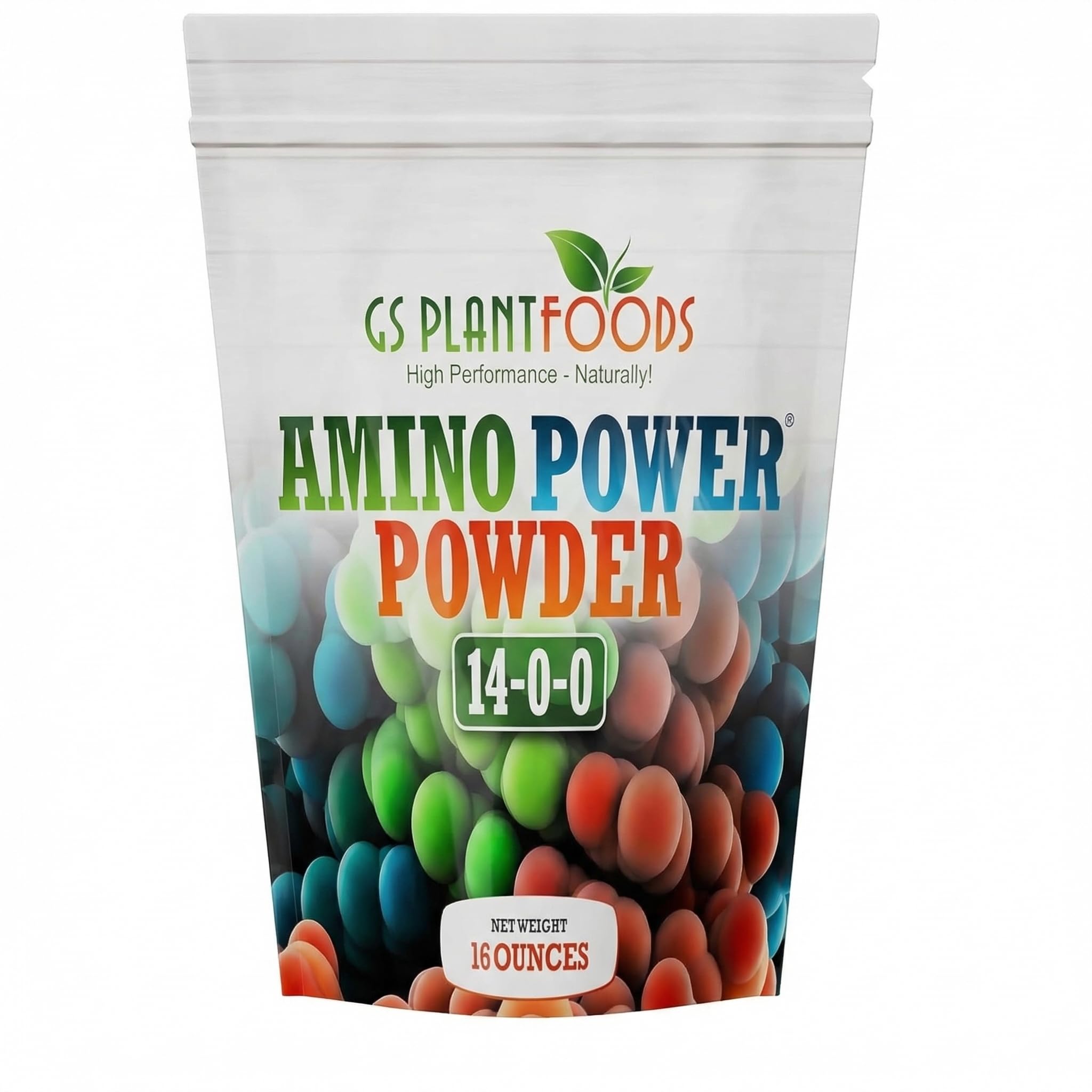
What you actually get at this lower price is a 16-ounce container of 14-0-0 plant-based nitrogen powder that delivers 18 L-Amino Acids—protein building blocks that boost chlorophyll concentration and photosynthesis for greener leaves without the harsh chemical shock of synthetic urea. Buyers report it “works faster than expected; plants visibly greener and growing more robustly within a day.” The downside for this gentleness is lower raw nitrogen power than a 46-0-0 urea, meaning you need more product per application, and the small container is designed for targeted use rather than covering large vegetable beds.
The powder dissolves 100% in water and can be applied as a foliar spray directly onto leaves for near-instant nitrogen absorption. It also acts as a chelating agent to help plants absorb micronutrients more efficiently, pairing well with other organic fertilizers. This is the perfect choice for the organic-minded vegetable grower who grows from seed and wants a reliable, non-burning nitrogen boost for seedlings or container vegetables.
Gardeners with large in-ground beds will get more value per dollar from the Down To Earth Feather Meal, making this product the exact budget buyer it is perfect for: the small-scale or container grower who prioritizes gentle, fast-acting organic nitrogen over volume and cost-per-pound.
Why we’d pick it
- Plant-based amino acids (18 L-Amino Acids) boost photosynthesis
- 100% water-soluble, works as a foliar spray for fast uptake
- Gentle formulation safe for seedlings and sensitive plants
A few caveats
- Only 16 ounces — smaller quantity for targeted use
- Premium pricing per pound of nitrogen compared to synthetic options
6. Espoma Organic Blood Meal Fertilizer 12-0-0, 3 lb. Bag (3 Pack)
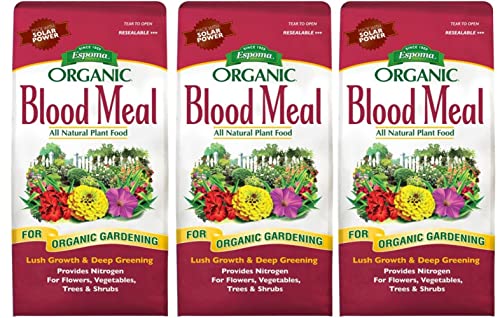
Espoma’s Blood Meal is perfect for the organic vegetable gardener who wants a 100% natural, OMRI-listed nitrogen source that also repels deer and rabbits. With a 12-0-0 ratio from all-natural domestic blood meal and no fillers, it feeds nitrogen while its scent deters pests around tender plants. The 3-pack provides three 1-pound bags (48 ounces total) for convenient portioning, and long-time users say it “gets results” when mixed with bone meal for a complete feeding program.
One honest limit: blood meal has a strong, distinctive odor (it is dried animal blood), and some gardeners find the smell unpleasant during application. Also, the 12-0-0 ratio means you need more product by volume compared to synthetic 46-0-0 options, so for very large gardens the cost per application is higher. If you are committed to organic methods and want a trusted brand with a century-long reputation (since 1929), this is your pick.
For bulk organic nitrogen that goes further, the Down To Earth Feather Meal offers better value per pound — but a gentle caution: blood meal’s strong scent can attract unwanted attention from dogs or wildlife if not worked into the soil immediately, so always water it in right after application.
Strong points
- 100% all-natural blood meal with no fillers or additives
- OMRI-listed for organic production
- Naturally deters deer and rabbits from vegetable beds
Before you buy
- Strong odor during and after application
- Lower nitrogen concentration means you apply more per feeding
7. Down To Earth All Natural Fertilizers Organic Feather Meal 12-0-0, 20 lb
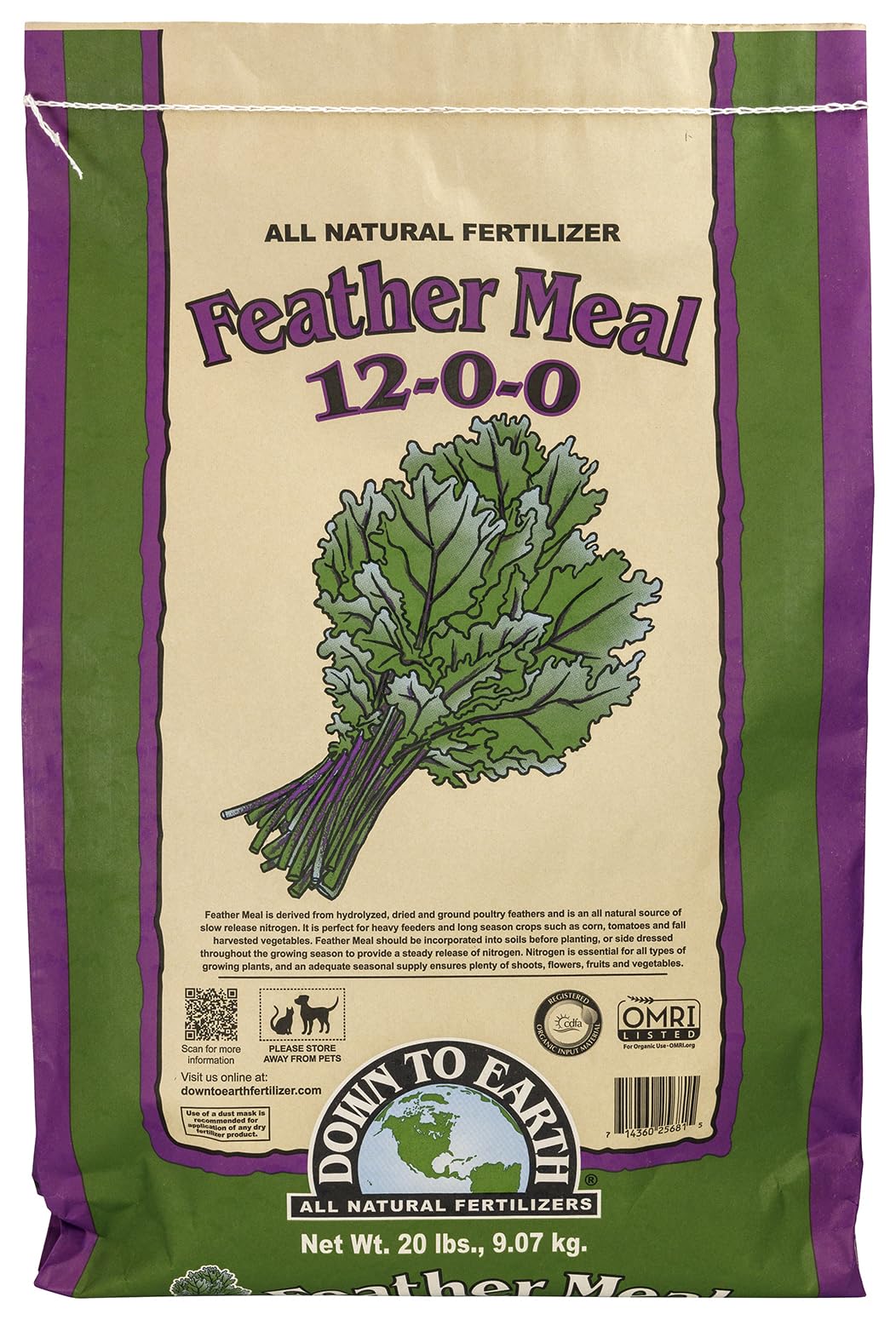
Compared to the rest of the field, the Down To Earth Feather Meal delivers the most nitrogen per dollar — a 20-pound bag of OMRI-listed, slow-release organic fertilizer at a lower per-pound cost than any other product in this guide. The 12-0-0 formula comes from ground and hydrolyzed poultry feathers, providing a steady supply of nitrogen that won’t burn plants, even if you accidentally apply a bit too much. What that money actually gets you is a season’s worth of organic nitrogen for heavy feeders like corn, tomatoes, and fall-harvested vegetables. The slow-release mechanism means microbes in warm, moist soil gradually break down the feather meal, releasing nitrogen over 4-6 weeks rather than all at once. Owners mention it “worked great in the garden” and it doubles as an effective deer repellent — one buyer mentioned “product on leaves does not dissolve” but that it “is excellent deer repellent for weeks” protecting hostas, tulips, and lilies.
The one reason to choose this over the Espoma Blood Meal is scale. If you are managing a large vegetable garden, a 20-pound bag of slow-release organic nitrogen that lasts an entire growing season and costs less per pound than any other organic option is simply unbeatable value. Be aware that the smell is strong — described as “extremely foul” and “unbearable” by some reviewers — so store it in a sealed container away from your house. Gardeners with small raised beds who want faster results should pick the 21-0-0 Ammonium Sulfate instead.
The one clear reason to choose it is scale: a 20-pound bag of slow-release organic nitrogen that lasts an entire growing season and costs less per pound than any other organic option here.
What we like
- 20 pounds of slow-release organic nitrogen — best value per pound
- OMRI-listed for organic production
- Naturally deters deer; safe for plants even if over-applied
The downsides
- Very strong odor that some find overwhelming
- Slow release requires planning — not for instant green-ups
Understanding the Specs
N-P-K Ratio: The Three Numbers That Matter
The three numbers on a fertilizer bag — like 21-0-0 or 46-0-0 — stand for Nitrogen (N), Phosphorus (P), and Potassium (K). The first number is the percentage of nitrogen by weight. For vegetables, a high first number (21 or above) drives green leafy growth and strong stalks. Zeroes mean no phosphorus or potassium is added, which is fine if your soil test shows those nutrients are already adequate. A balanced fertilizer like 12-0-0 gives you nitrogen without extras, but at a lower concentration that is gentler on plants.
Release Speed: Fast-Acting vs. Slow-Release
Synthetic nitrogen sources like urea (46-0-0) and ammonium sulfate (21-0-0) are water-soluble and become available to plant roots within hours of watering — ideal for a quick rescue of pale, nitrogen-starved vegetables. Organic sources like blood meal (12-0-0) and feather meal (12-0-0) rely on soil microbes to break down the material, releasing nitrogen gradually over 3-6 weeks. Slow-release options reduce the risk of nitrogen burn but require you to apply them a few weeks before your plants need the boost, so timing is everything.
FAQ
What N-P-K ratio should I look for in a nitrogen fertilizer for vegetables?
Can I use lawn fertilizer with high nitrogen on my vegetable garden?
How do I apply nitrogen fertilizer without burning my plants?
Final Thoughts: The Verdict
Across the board, the best nitrogen fertilizer for vegetables winner is the Ammonium Sulfate 21-0-0 because it combines a strong 21% nitrogen boost with 24% sulfur for pH correction, making it the most versatile and forgiving option for the average backyard vegetable garden. If you want a fast, concentrated green-up for heavy feeders like corn and tomatoes, grab the Urea 46-0-0. And for preventing blossom-end rot in tomatoes and zucchini while feeding moderate nitrogen, the standout is the Calcium Nitrate 15.5-0-0.