
The single most frustrating moment for a fruit grower is walking out to the tree on harvest day and finding half-eaten peaches, stripped branches, or a swarm of spotted-wing drosophila ruining the crop. Whether it’s birds, squirrels, deer, or insects, the solution comes down to one physical barrier: the right netting. Choosing the wrong mesh size or material means either trapping pests inside or watching birds peck right through.
I’m Rikta — the co-founder and writer behind Lawn Gear Lab. I’ve spent hundreds of hours cross-referencing mesh densities, material weights, UV resistance ratings, and real-world owner reports to identify which netting designs actually hold up season after season without entangling wildlife or tangling themselves.
This guide compares bag-style covers with zippered enclosures, heavy-duty woven sheets, and reinforced perimeter fencing so you can pick the exact netting for fruit trees that matches your orchard size, pest pressure, and installation patience.
How To Choose The Best Netting For Fruit Trees
Fruit tree netting is not one-size-fits-all. The most common mistake is buying a mesh that is too large (birds poke through) or too fine without a zipper (you trap pollinating insects inside after bloom). You also need to match the product format — bag, sheet, or fence — to your tree’s size and whether you need seasonal or permanent coverage.
Mesh Opening Size Matters First
A ½-inch square mesh stops most birds and squirrels but allows small insects like aphids and moths to pass through. If your primary threat is birds and deer, ½-inch is sufficient. For spotted-wing drosophila, leafrollers, and other small pests, you need ultra-fine mesh (0.5–1 mm openings), which also blocks light penetration slightly more. Ultra-fine mesh also requires a zipper or drawstring seal so you can access the tree without tearing the fabric.
Material Weight and Weave Density
Look at the grams-per-square-meter (gsm) rating. Budget netting often comes in at 6–8 gsm, which tears easily and degrades after one season in full sun. Premium options use HDPE (high-density polyethylene) or woven polyester at 28 gsm or higher. Heavier material resists UV degradation better and can support over 100 pounds of tension without snapping. A diamond-weave pattern also gives the net stretch, which helps it conform to irregular tree canopies without sagging.
Enclosure Format: Bag vs Sheet vs Fence
Bag-style covers (with zipper and drawstring) are best for individual trees up to about 15 feet tall. They create a total enclosure that ground-crawling pests cannot breach. Sheets require you to drape and stake the material, which works for rows of bushes or multi-tree plots but leaves gaps at the trunk if not tied off properly. Fence-style netting stands vertically on stakes and works as a perimeter barrier for larger orchards, but deer can jump over anything under 8 feet.
Quick Comparison
On smaller screens, swipe sideways to see the full table.
| Model | Category | Best For | Key Spec | Amazon |
|---|---|---|---|---|
| Homoda 15×15 ft (Prod 7) | Bag with Zipper | Large individual trees | Ultra-fine HDPE mesh | Amazon |
| JUNKOGO 25×25 ft (Prod 5) | Woven Sheet | Heavy-duty coverage | 28 gsm / ½-inch diamond weave | Amazon |
| ORIVOGAS Deer Fence (Prod 6) | Perimeter Fence | Multi-tree / beds | 55 gsm reinforced edges | Amazon |
| Homoda 2-Pack 8×8 ft (Prod 1) | Bag with Zipper | Small trees / bushes | Ultra-fine HDPE | 2-pack | Amazon |
| RIFNY 13×40 ft (Prod 4) | Cut-to-Fit Sheet | Versatile / raised beds | 5/8-inch HDPE | -58°F to 212°F | Amazon |
| ATICCA Heavy Duty 13×40 ft (Prod 3) | Cut-to-Fit Sheet | Large trellis / support | ½-inch nylon | 10 stakes incl. | Amazon |
| Acostop 6-Pack 3.3×5 ft (Prod 2) | Drawstring Bag | Blueberries / small shrubs | Polyester | 6 count | Amazon |
In‑Depth Reviews
1. Homoda 15ft x 15ft Fruit Tree Netting Cover (Prod 7)
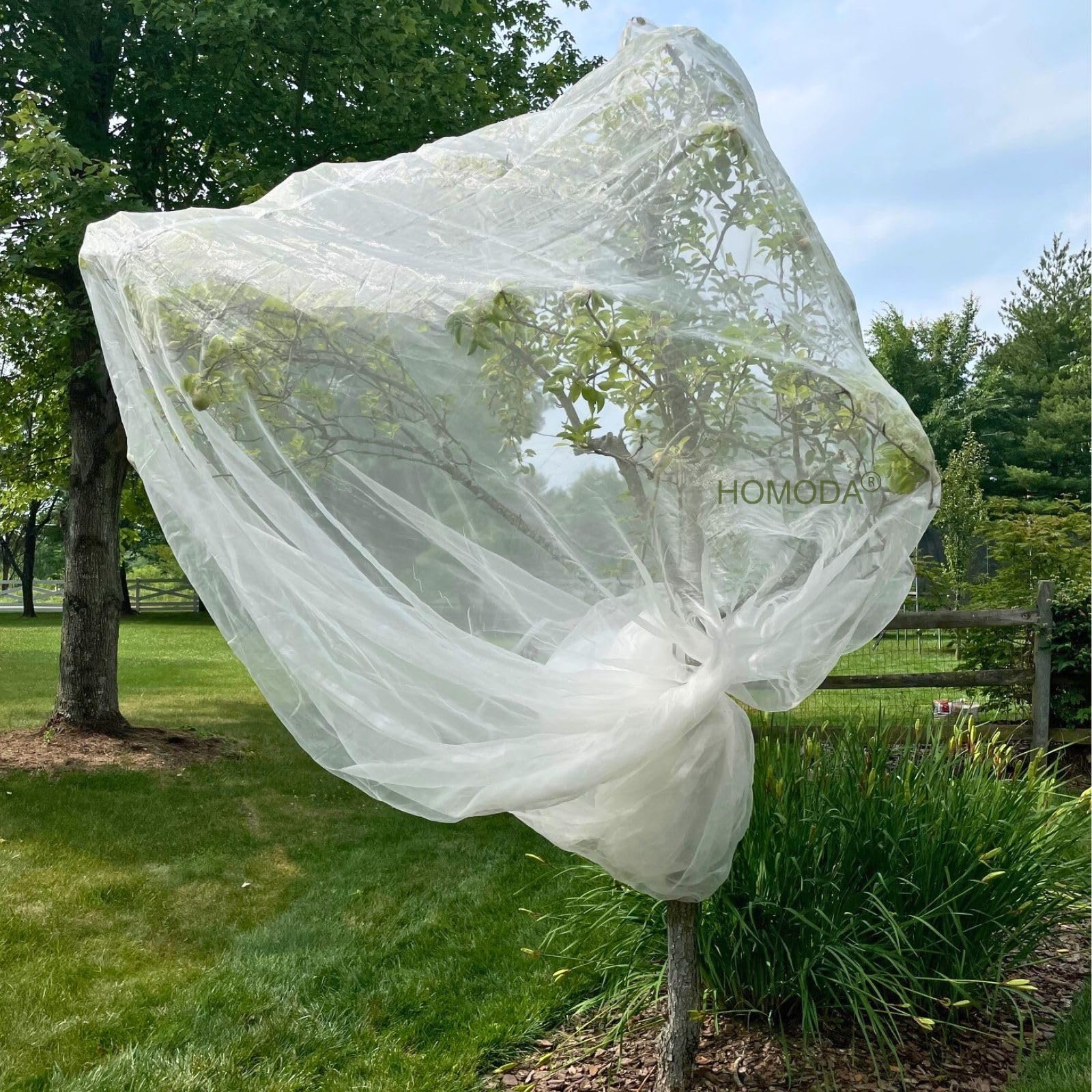
This 15×15-foot bag-style cover from Homoda is the most practical solution for single large fruit trees — think mature peach, apple, or citrus. The ultra-fine HDPE mesh blocks spotted-wing drosophila and other tiny insects while still allowing rain and filtered sunlight to reach the canopy. The side zipper is a standout feature: it lets you check fruit development, thin overcrowded branches, and harvest without lifting the entire cover and compromising the seal.
Owners consistently report that the drawstring at the bottom, when cinched tight around the trunk with an extra rope, stops ground-level pests like squirrels and rabbits from sneaking in. The material feels noticeably denser than bargain-bin netting; multiple reviewers confirm it lasts several seasons when stored dry after harvest. Several users recommend using a ladder or long pole for initial placement, but note that one person can manage installation with patience.
The only real limitation is the single-bag format — you get one cover, so this is best for a tree or two, not an entire orchard. A few owners also note that the zipper pull could be slightly larger for glove-handed operation. If you have a tall or wide-spreading tree, measure the canopy circumference before ordering; the 15×15 size fits most 10–12 foot trees with some slack remaining for tying off.
What works
- Side zipper provides easy access without untying the whole cover
- Ultra-fine mesh blocks both birds and small insects effectively
- Drawstring and rope tie create a pest-proof seal against the trunk
What doesn’t
- Single-pack format limits coverage to one large tree per purchase
- Requires a ladder or long pole to drape over a tall canopy
2. JUNKOGO Bird Netting 25×25 ft (Prod 5)

This is the sheet-style netting that sets the standard for durability. At 28 gsm, the woven HDPE diamond pattern is nearly four times heavier than typical budget netting, and the manufacturer claims it can support over 100 pounds of tension. That density translates directly into real-world tear resistance: reviewers use it to cover multi-tree blueberry patches, grape arbors, and even as a ground barrier under bird feeders without puncturing.
The ½-inch mesh stops birds, squirrels, raccoons, and opossums while remaining safe — animals don’t get tangled in the woven strands the way they do with thin monofilament nets. Several owners note that that the netting survived 60 MPH windstorms with no visible stress. It is easy to cut with scissors to custom-fit odd-shaped areas, and the diamond weave stretches slightly to conform to contours without sagging into a saggy mess.
The main drawback is that the netting arrives as a single large sheet; covering a tree requires creative draping and staking. A few buyers point out the actual dimensions run slightly larger than advertised (closer to 25×36 ft), which is actually helpful for coverage but can be confusing if you are planning a precise layout. Not ideal if you need a total bag enclosure, but unmatched for open-canopy or row-crop protection.
What works
- Extremely high tear resistance due to 28 gsm woven construction
- Diamond weave stretches to fit irregular shapes without sagging
- Safe for wildlife — animals don’t get tangled in the mesh
What doesn’t
- Sheet format requires stakes or frames for tree coverage
- Actual dimensions may vary from listed 25×25 ft
3. ORIVOGAS Deer Fence Netting 6.5x50ft (Prod 6)

When the threat is deer — which can jump 6 feet and will shred thin netting — this 55 gsm HDPE fence is the right tool. This is not a bag or a drape cover; it is a vertical barrier meant to be staked around a bed, orchard section, or individual tree perimeter. At 6.5 feet tall, it deters most deer, and the reinforced top and bottom edges include an integrated rope drawstring that lets you tighten the fence around posts or trees for a sag-free fit.
The 5/8-inch square mesh is small enough to block rabbits, groundhogs, and large birds while allowing pollinators through, which is a key advantage over fine-mesh bags during the bloom period. The package includes 50 zip ties and 8 ground stakes, so you can get the fence up immediately. Owners report that it handles heavy wind without collapsing and rolls up neatly for off-season storage without tangling.
The trade-off is that this is an enclosure system, not a tree bag. It requires at least two people for initial installation, and you need additional stakes if you are fencing a large perimeter. A few owners mention that the netting unravels slightly when cut (the woven edge needs to be heat-sealed or taped to prevent fraying). Best suited as a permanent or semi-permanent barrier for small orchards and berry patches.
What works
- 55 gsm density is nearly twice as heavy as standard woven netting
- Reinforced edges with drawstring prevent sagging between posts
- 5/8-inch mesh blocks deer, rabbits, and groundhogs but lets pollinators pass
What doesn’t
- Two-person installation recommended for proper tensioning
- Cut edges may fray without sealing or taping
4. Homoda 2-Pack 8ft x 8ft Fruit Tree Netting Cover (Prod 1)
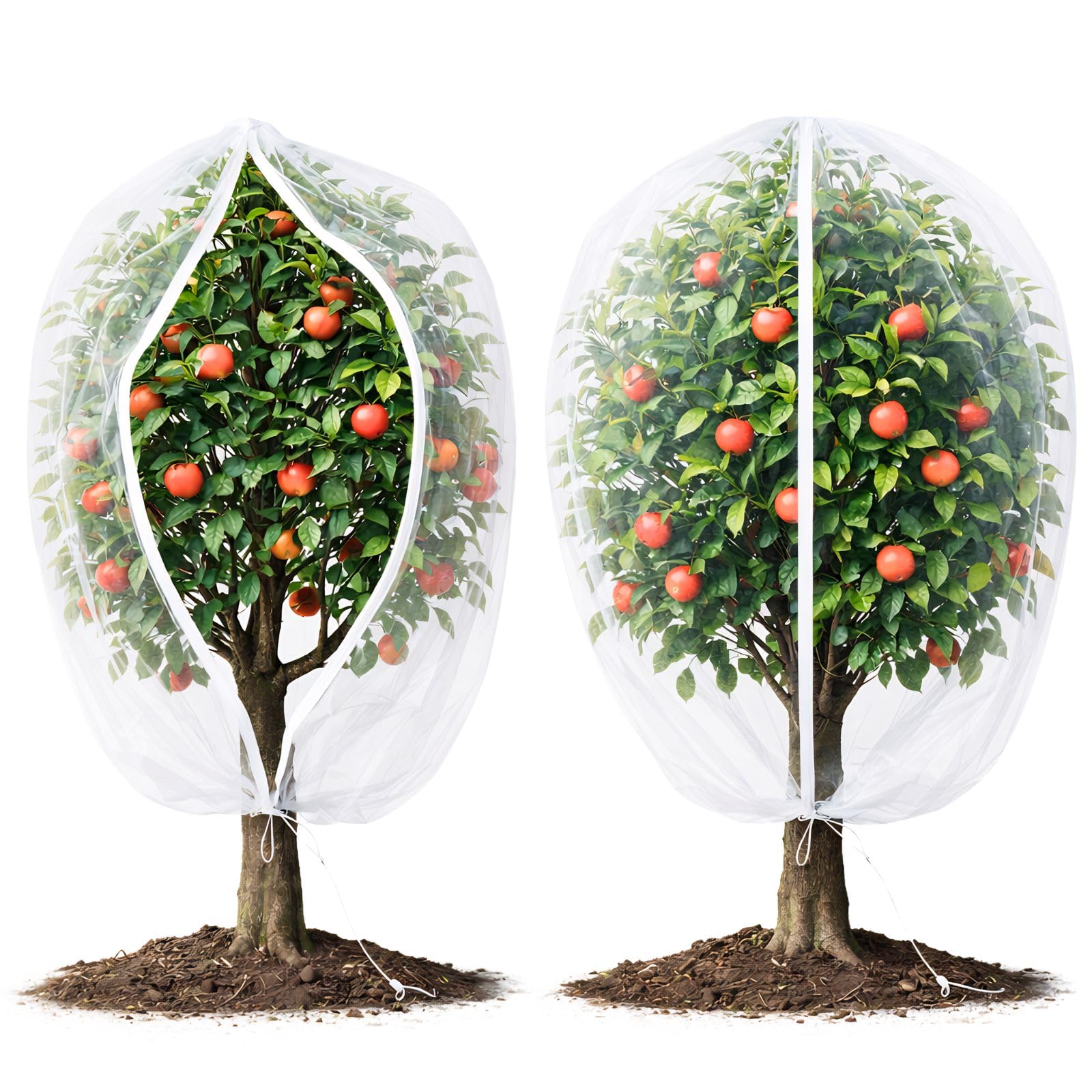
This two-pack of 8×8-foot bag covers hits a sweet spot for gardeners with multiple small- to medium-sized trees or large bushes. Each bag uses the same ultra-fine HDPE mesh as the bigger 15×15 version, with a side zipper and bottom drawstring closure. The mesh is dense enough to exclude insects like flies and moths while still allowing water and sunlight through — owners report leaving it on during rain without any pooling issues.
Reviewers frequently mention the zipper makes placement and removal far easier than drawstring-only bags, especially when working solo. The 8×8 size fits standard peach, plum, and dwarf citrus trees, and the two-pack means you can cover a pair of trees or use one for a fig bush and the other for blueberries. The HDPE material feels sturdy in hand, and the stitched edges resist fraying in wind.
The limit is the 8-foot span: taller or wider trees will outgrow this size quickly. If you have semi-dwarf or standard-sized apples, you will need the 15×15 version instead. Also, the zipper track, while functional, is not as heavy-duty as the woven netting used in sheet-style products — gentle handling during zipping and unzipping will extend its lifespan.
What works
- Two covers included at a very practical price per tree
- Side zipper makes solo installation and access easy
- Ultra-fine mesh is effective against insects and small birds
What doesn’t
- 8×8 ft size limits coverage to smaller trees or large bushes
- Zipper track requires careful handling to avoid jamming
5. RIFNY Bird Netting 13 x 40 FT (Prod 4)
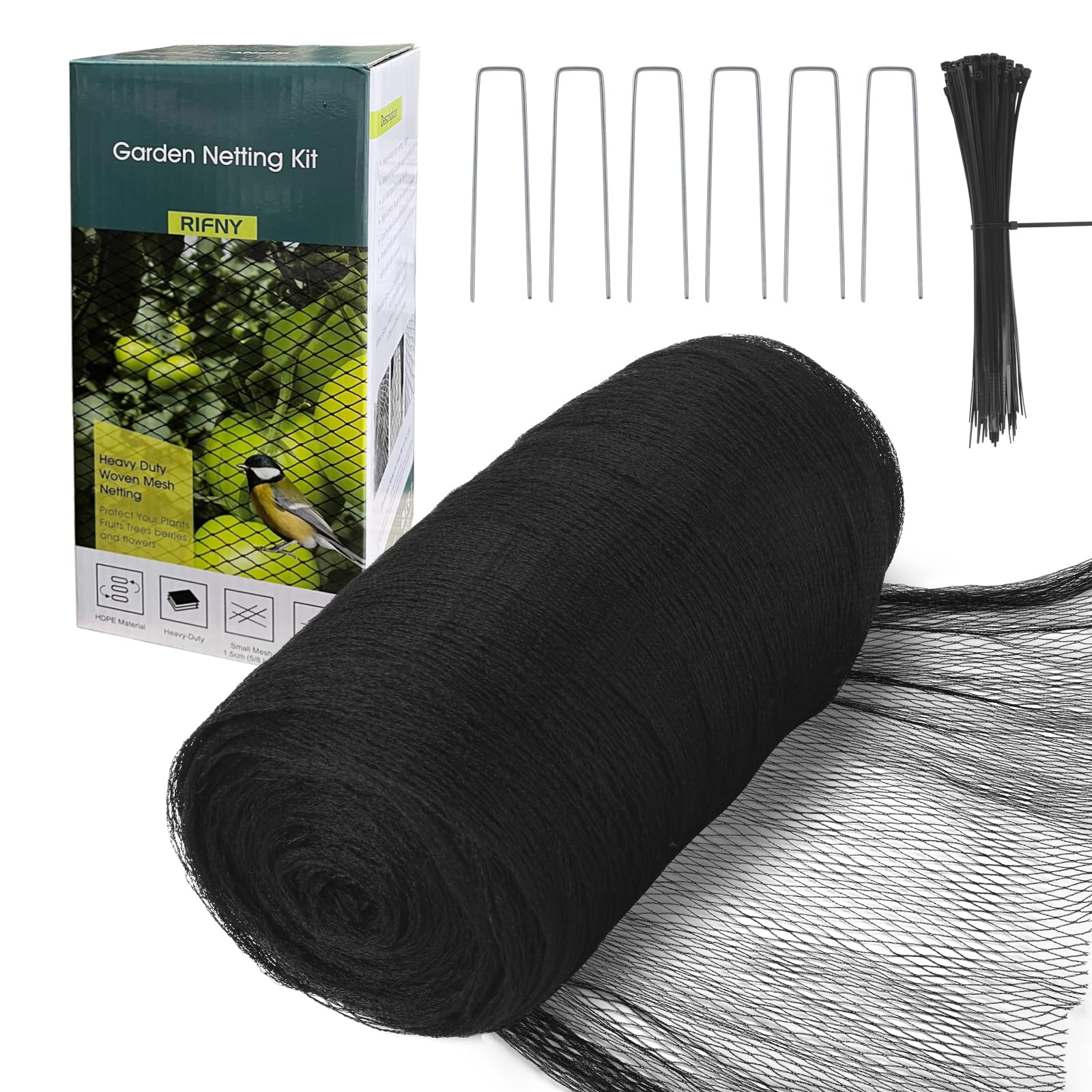
RIFNY’s 13×40-foot sheet is a versatile cut-to-fit net with a unique material advantage: HDPE that remains flexible across an extreme temperature range from -58°F to 212°F. For orchardists in cold climates who worry about netting becoming brittle and shattering in winter winds, this is a durable option that lays flat without memory curling. The 5/8-inch mesh stops birds and most mammals while remaining large enough to avoid blocking significant sunlight for the tree canopy.
The package includes 6 landscape staples and a pack of twist ties, so you can start staking immediately. Owners consistently praise how little the netting tangles: it unrolls and cuts cleanly with scissors, and it does not snag on itself during storage the way plastic monofilament nets do. Several reviewers mention using it to cover grape vines and raised vegetable beds in addition to fruit trees, repurposing it across different seasons.
The lower mesh density means this net is not suitable if your primary pest is tiny insects like thrips or spotted-wing drosophila. It is a bird-and-mammal barrier, not a total insect exclusion screen. A few buyers also note that the gsm weight is relatively light — it works beautifully for drape protection but can tear if stretched over sharp branch stubs without a cushion layer.
What works
- Extreme temperature tolerance (-58°F to 212°F) without cracking
- HDPE material resists tangling and unrolls cleanly for cutting
- Lightweight enough to drape directly onto tree canopies
What doesn’t
- Does not exclude small insects — designed for birds and mammals
- Lightweight material can tear if snagged on sharp twigs
6. ATICCA Heavy Duty Bird Netting 13×40 Ft (Prod 3)
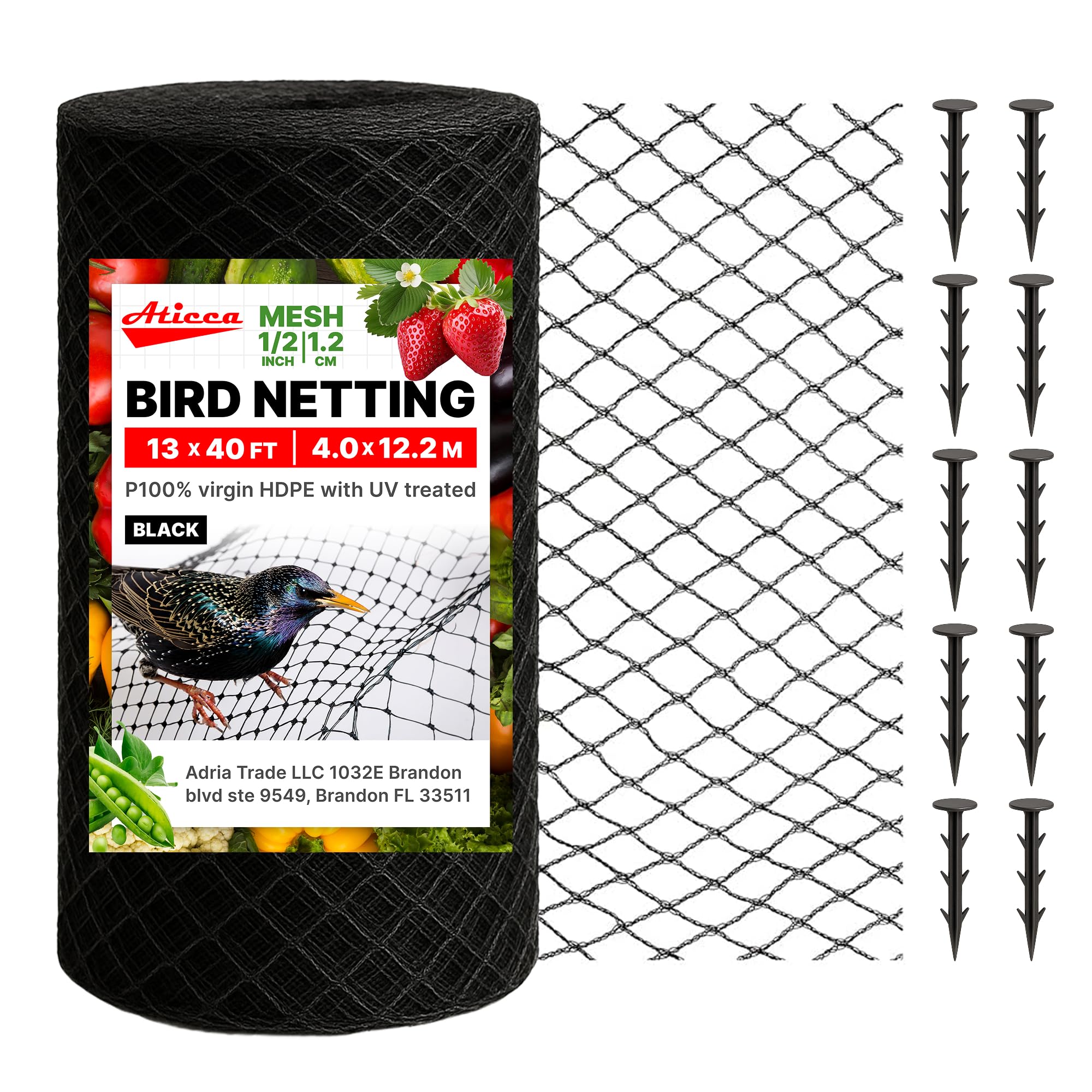
This ATICCA netting uses UV-resistant nylon with a ½-inch mesh, making it a strong bird and deer deterrent that also doubles as a trellis support for heavy vining crops. The 13×40-foot sheet covers a wide area, and the included 10 plastic stakes make ground anchoring simple. Reviewers mention using it vertically as a pea and cucumber trellis, horizontally as a ground barrier for squash, and draped over fruit trees — the nylon holds up under the weight without sagging excessively.
The material is noticeably non-stretchy compared to HDPE woven nets, which is an advantage when you need a rigid trellis but a slight disadvantage when trying to conform to an irregular tree canopy. Several owners report using it for multiple seasons in full sun without visible UV degradation. The ½-inch openings are small enough to block starlings, robins, and squirrels, though larger deer may still push through if the net is not staked tightly at ground level.
The main limitation is the included stakes: they are plastic and break if hammered into hard or rocky soil. Owners recommend substituting metal landscape staples for permanent installations. Additionally, the netting does not include a drawstring or zipper, so covering a single tree requires careful draping and tying off at the trunk, and ground-crawling pests may find gaps.
What works
- UV-resistant nylon holds up well across multiple growing seasons
- Non-stretchy material works great as a heavy crop trellis
- Large 13×40 ft sheet with stakes included for quick deployment
What doesn’t
- Plastic stakes break easily in hard ground; metal stakes recommended
- No drawstring or zipper — requires creative tying for bag-style coverage
7. Acostop 6-Pack 3.3x5FT Netting Covers (Prod 2)
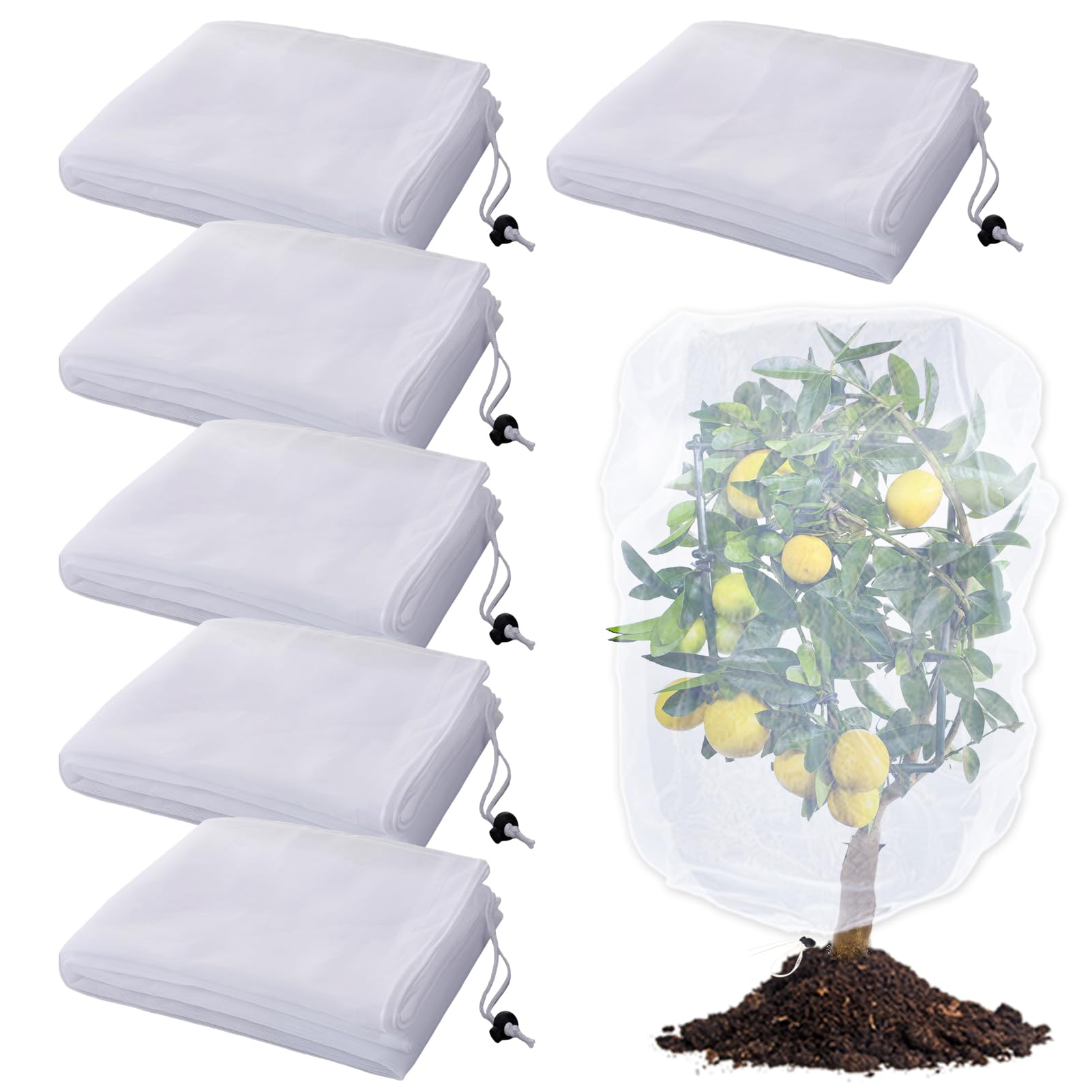
If your fruit-growing operation revolves around bushes — blueberry, raspberry, dwarf citrus, or low-bush cherries — this six-pack of 3.3×5-foot polyester bags is the most targeted solution. Each bag features a heavy-duty woven drawstring that cinches the bottom shut, and the ultra-fine white polyester mesh blocks insects, chipmunks, and small birds while letting through plenty of light. The polyester material is softer than HDPE, which means it slides over prickly blueberry branches without snagging or tearing.
Owners consistently report that the drawstring mechanism is robust and does not break after repeated tightening and loosening. The 6-count pack allows you to cover an entire row of blueberry bushes or protect a collection of potted citrus trees. Several reviewers use the bags over tomato cages as a double-duty insect barrier, noting that the fine mesh excludes hornworms and whiteflies effectively.
These bags are not meant for full-sized fruit trees — at 3.3×5 feet, they fit bushes and small shrubs only. The polyester fabric, while soft and non-abrasive, is less UV-resistant than HDPE; owners in high-sun areas report the material begins to show wear after two seasons. You may need to replace bags sooner in intense climates, though the low per-unit cost makes that trade-off acceptable.
What works
- Six bags per pack provide comprehensive coverage for multiple bushes
- Soft polyester material slides over thorns and branches without tearing
- Sturdy drawstrings hold tight against wind and curious animals
What doesn’t
- Too small for standard fruit trees — best for blueberries and dwarf shrubs
- Polyester has lower UV resistance than HDPE in full-sun climates
Hardware & Specs Guide
Mesh Opening Size
The single most important spec. A ½-inch mesh stops most birds and squirrels but allows small insects through. Ultra-fine mesh (0.5–1 mm openings) excludes insects like spotted-wing drosophila but reduces light transmission by roughly 15–20% and requires a zipper for access. For deer-only problems, a 5/8-inch square mesh is sufficient and allows more airflow.
Material Density (gsm)
Grams per square meter directly correlates to tear strength and UV lifespan. Budget nets weigh 6–8 gsm and often degrade within one season. Mid-range HDPE woven nets fall around 20–28 gsm and last 3–5 seasons with proper storage. Premium deer fencing at 55 gsm is nearly indestructible but heavy to handle and requires sturdy posts.
Weave Pattern
Diamond weave offers stretch and conforms to irregular tree shapes better than square grid patterns. Woven HDPE diamond nets (like the JUNKOGO) can handle over 100 pounds of tension. Standard square-knitted polypropylene requires less stretch but is easier to cut to exact dimensions for raised beds or flat trellises.
Closure & Access System
Bag-style nets with a zipper and bottom drawstring are the most effective for single-tree protection because they create a 360-degree seal. Sheet-style nets require creative draping and staking; ground-level gaps are the most common failure point. Fence-style netting works best as a perimeter barrier and should include reinforced top and bottom edges with integrated rope for tensioning.
FAQ
When should I put netting on my fruit trees and when should I remove it?
What size mesh do I need to block spotted-wing drosophila?
Can I leave netting on my fruit tree year-round?
Final Thoughts: The Verdict
For most gardeners, the netting for fruit trees winner is the Homoda 15×15 ft Cover because its ultra-fine mesh, side zipper, and drawstring seal deliver total insect and bird exclusion in a single easy-to-install bag. If you need to cover a large multi-tree area or want a heavy-duty woven sheet that doubles as a trellis, grab the JUNKOGO 25×25 ft Net. And for a permanent perimeter barrier against deer when you need to protect a small orchard, nothing beats the ORIVOGAS Deer Fence Netting with its 55 gsm reinforced construction.