
Specs are compiled from manufacturer listings and verified buyer reviews and can change over time — please confirm the key details on the product page before buying.
Most natural stepping stones you see online share the same weak point, and it is rarely mentioned in the product photos: they are not solid slabs but individual river rocks glued to a flexible mesh backing. That mesh is what lets the stones settle into your lawn, but it is also the reason some fall apart within days of being placed. This guide sorts through the details that actually matter so you can pick a set that stays intact past the first season.
I’m Rikta — the founder and writer behind Lawn Gear Lab. This guide is built by comparing the manufacturers’ published specifications and the patterns across verified customer reviews, so you get each pick’s real strengths and trade-offs instead of marketing spin.
Below, you will find the five best natural stepping stones worth your garden money, ranked by real performance and owner feedback rather than polished listing photos.
Our Picks at a Glance

How To Choose The Best Natural Stepping Stones
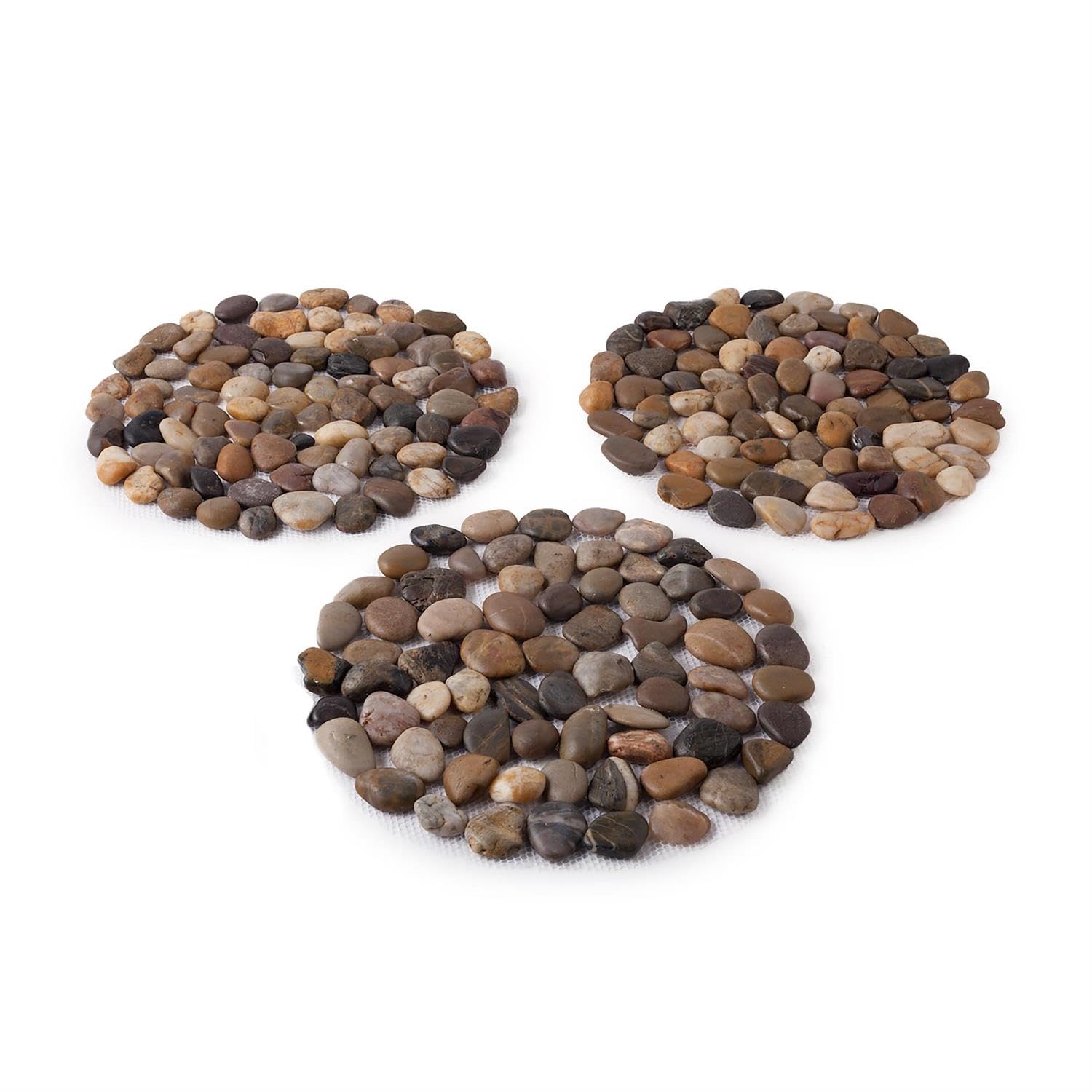
Choosing natural stepping stones is less about picking the prettiest pebbles and more about understanding how they are constructed. Almost every set on the market uses the same basic design: small polished river rocks held together by a flexible backing sheet. The quality differences show up in how well that backing holds up under weather and foot traffic.
The backing is the real spec to check
Look at what the stones are actually attached to. A heavy, weather-resistant mesh will keep everything locked in place all year, while a thinner white mesh can show through between the stones and pull apart faster. Owners repeatedly describe stones popping out of the netting before a single step, so this is the first thing to verify.
Diameter changes the whole feel
You want a stepping stone wide enough that both feet fit comfortably in a natural stride. A 9-inch paver works for narrow paths and decorative accents, while a 12-inch stone gives a more confident footing for bare feet and muddy walkways. Match the size to how much you actually plan to walk on it.
Quick Comparison
| Model | Best For | Diameter | Count | Weight | Amazon |
|---|---|---|---|---|---|
| Wind & Weather River Rock★ Best Overall | Decorative garden accents | 14 x 14 inches | 3 | — | Amazon |
| Natural Pebble Massage StonesTherapeutic Pick | Barefoot walking therapy | 9 inches | 6 | 11 pounds | Amazon |
| EYZH Garden River Stone | Light decorative paths | 9 inches | 6 | 1.9 pounds | Amazon |
| Xindian Hexagon Pebble Mats | Instant lawn walkways | 9.5 inches | 6 | — | Amazon |
| Qualdout 12-Inch Pavers | Real walking paths | 12 inches | 6 | — | Amazon |
In-Depth Reviews
1. Wind & Weather Exclusive River Rock Stepping Stones
Our pick — over 4★ from 100+ verified ratings; the strongest balance of quality and price.
The largest mat here, sized for real footfalls, not just looks.
The Wind & Weather stones measure 14 x 14 inches each — a full five inches wider than the 9-inch pebble mats below — so your whole foot lands on stone instead of straddling the edges. Each mat is built from multi-colored river rocks backed by a flexible PVC mat, which owners praise for holding its position on damp, muddy ground.
Some placed them around the base of shrubs to suppress weeds, and one used them under a curling water hose to keep it off wet dirt. The recurring note is that they work beautifully as a decorative accent — the exact phrase owners repeat is that they are “an attractive and economical solution.”
The honest watch-out is the construction: stones are glued to plastic netting, and buyers report a few rocks popping out of the mesh before the mat is even set down. The collective advice is to cut a liner for each one before placing it on the ground, which also makes the whole set easy to pick up for winter or rearrange later.
What wins people over
- A 14 x 14-inch footprint that fits a natural walking stride
- Flexible PVC backing that stays put in damp, muddy spots
- Naturally unique multi-colored rocks on every piece
Where it asks for care
- Rocks are glued to netting, not solid-set into a slab
- Some stones can pop out before you even place the mat
Reach for this if: you want a large, attractive path accent that stays anchored in wet ground and you are willing to add a simple liner underneath.
Look elsewhere if: you need a hard, dense slab that takes heavy daily foot traffic without any prep on your part.
2. Natural Pebble Stepping Stones 9-Inch Massage Mats
A foot-massage mat that doubles as a garden path, at a solid weight.
You can use this set as a walkway or a barefoot acupressure mat (a textured surface that stimulates pressure points on your feet). Each of the six round stones measures 9 inches across, and the whole set weighs 11 pounds — a full 5.8 times heavier than the 1.9-pound EYZH set below, so the mats stay flat under your weight. The polished river stones are hand-finished, and owners say they are hard and unlikely to crack or chip.
The strongest praise centers on appearance and quality, with owners calling them a great addition they plan to reorder. The practical win reported most often is laying them as a grass path to the car so you avoid wet shoes — the mesh padding is easy to place and stomp down into place.
Two caveats keep this from being a universal pick. The size runs smaller than many expect, and the white plastic mesh holding the stones is visible once the mat sits on the ground. Owners also note the stones are glued to that mesh cloth, so durability depends on how much traffic the path sees — one reviewer noted their stones fell apart after two days of use.
What stands out
- A purposeful foot-massage surface built from polished river stone
- 11-pound weight that keeps the mats grounded in place
- Hand-selected pebbles that resist cracking and chipping
What to know first
- Runs smaller than buyers expect from a photo
- Glued-on stones can separate if the path gets heavy use
Best for: anyone who wants the barefoot massage experience and can keep the path to light, careful use.
Think twice if: you want a larger, sturdier stone for a busy front walkway where every step lands hard.
3. EYZH Garden River Stone Stepping Stones

A light, pretty set for cottage gardens and flower beds.
Each circular paver here is 9 inches in diameter, and the manual polishing gives a smooth surface that owners say feels comfortable under bare feet. The whole six-pack weighs just 1.9 pounds, making it the lightest pick in this guide and the easiest to move or rearrange. A weather-resistant mesh base lets grass and soil grow through the gaps, so the path blends into your lawn instead of sitting on top of it.
The 29 owners who praised the appearance make this the crowd favorite for pure looks, and the same crowd calls the stones durable and attractive. For smaller gardens this is perfect: as one owner put it, the stones are on the smaller side, “but so is my garden, so it’s perfect.”
But the light weight cuts both ways. The manufacturer itself flags the product as lightweight, and the stones come glued to a flexible plastic mesh that shows in the gaps. Buyers warn that if all you do is throw them down on the ground, you will be disappointed, since the glue fails quickly and the stones can fall off. The winning move is to prepare the ground first and fill the joints between stones so the mesh is hidden.
Why it is easy to love
- Smooth hand-polished pebbles that feel fine on bare feet
- A 1.9-pound total weight that makes placement easy
- Mesh gaps that let grass grow through for a natural look
Why it needs care
- Visible mesh and quick glue failure if no prep is done
- Small 9-inch stones, not a full-stride walking surface
Choose it for: a decorative flower-bed border or cottage-garden accent where looks matter more than heavy foot traffic.
Pass on it if: you expect a solid stepping stone you can drop on bare dirt and walk on immediately.
4. Xindian 9.5-Inch Hexagon Pebble Mats

Hexagonal mats that slip into any layout, praised for their natural tone.
At 9.5 inches across, these hexagonal mats run a half-inch wider than the round 9-inch options above. The hand-picked polished pebbles sit on a heavy-duty invisible mesh, and the description promises a waterproof, sun-resistant build meant for year-round outdoor use. Owners say the setup is instant — you place the mats on lawn, mulch, or sand with no digging or cement required.
The quality earns the most praise here, with owners calling the texture and colors exactly what they expected, and the natural look wins a strong following for garden paths. One smart use reported is setting these around the base of small shrubs to smother grass, cutting down on weed pulling for anyone who struggles to get down to the ground.
The trade-off is the same story that runs through this category: the rocks are glued to a mesh material, and durability is the most common complaint, with buyers reporting stones falling off and mesh peeling away. Some owners also find them small for actual walking, which makes them a better fit as a mulch cover or decorative accent than a true high-traffic path.
What gets the praise
- Natural pebble texture and colors that blend into any yard
- A weather-resistant build meant for full-year outdoor use
- Tool-free placement on grass, mulch, or sand
What the reviews flag
- Stones attached by glue can peel away from the mesh
- Smaller than expected for real walking steps
Best suited to: gardeners who want an attractive, easy-to-move ground cover or shrub border rather than a firm walkway.
Reconsider if: you are building a path that must survive daily foot traffic and wet weather for multiple seasons.
5. Qualdout 12-Inch Natural River Rock Pavers
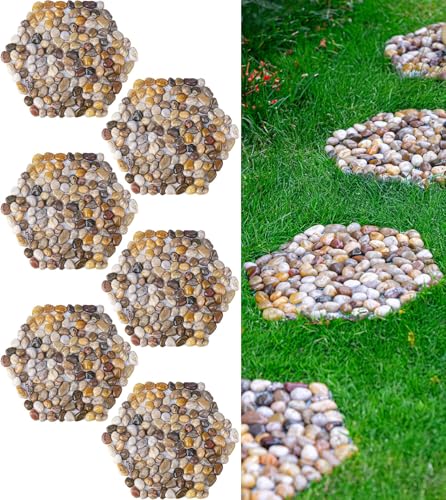
The widest stepping surface here, built for a real walking path.
These are the only mats in this roundup sized for a genuine stride: each of the six stones measures 12 x 12 inches, giving you a solid 2.5-inch advantage in every direction over the 9.5-inch Xindian mats. The hand-selected river stones are secured to a water-resistant PVC backing that conforms to the ground, so you can place, press, and reposition without any cement or tools. A pool owner describes them as a walkway to the pool where “the stones feel so nice on bare feet.”
The appearance draws the biggest wave of praise — by far the largest positive response in this entire guide — and owners find them easy to lay out and pick up when mowing. One buyer bought three sets to wrap a path around a raised flower bed and called them well-made and attractive. The hexagon shape also lets you butt multiple mats together for a tighter, more complete path.
Run your finger along the backing before you buy: the stones sit on flimsy white mesh that shows through in the gaps, and one disappointed owner calls it “pebbles glued to flimsy white mesh fabric.” Durability is the most common complaint in the review data, and you must press the backing firmly into the ground to feel stable. Plan to level each mat into the soil and accept that weeds may push up through the netting over time.
Why it leads on walking
- A full 12 x 12-inch stone that fits a natural step
- Hexagon shape that links tightly for a continuous path
- Barefoot-friendly stones that feel good in warm weather
What will test you
- White mesh backing visible between the stones
- Needs firm ground prep and leveling to stay stable
Lean this way if: you want the widest, most walkable natural stone mat available and you will spend a few minutes leveling each piece into the ground.
skip it if: you refuse to prep the soil and want a firm backing you can drop flat on grass without a second thought.
Understanding the Specs
Diameter and your stride
Diameter is the single most practical number on any stepping stone. A 9-inch stone fits a small foot but forces a wider stride to hop between mats. A 12-inch stone gives room for the whole foot to land naturally. If the path is decorative and lightly walked, 9 inches is fine. If you will walk it daily in bare feet or muddy boots, go as wide as you can.
Weight versus mesh stability
The total weight tells you how the mat will behave. An 11-pound set sits flat and stays put underfoot, while a 1.9-pound set is easy to move but more likely to skid. In every case here, the stones are glued to a mesh backing rather than set into a solid slab, so the mesh quality and your ground prep decide real-world durability.
FAQ
Why do the rocks keep falling off my stepping stones?
What size stepping stone do I actually need for walking?
Can I place these directly on grass without any prep?
Why is the white mesh showing between my stones?
Are these stepping stones strong enough for year-round outdoor use?
How many stepping stones do I need for a garden path?
Is a heavier stepping-stone set better than a light one?
Why do some stepping stones get weeds growing through them?
Can I pick these mats up and move them later?
What is the difference between a stepping stone and a pebble mat?
Final Thoughts: The Verdict
For most people, the natural stepping stones winner is the Wind & Weather River Rock set because its 14 x 14-inch footprint gives you the most usable walking surface in this guide, and the flexible PVC backing holds steady in damp, muddy spots where other mats slide. If you want the barefoot massage experience with stones that stay put, grab the Natural Pebble Massage Mats at a grounded 11 pounds. And if your goal is a real, walkable path with the widest steps of all, the Qualdout 12-inch pavers are the one to reach for — just be ready to press each one firmly into the soil.
How We Picked
We do not accept paid placement. Every pick is matched to a real buyer and a real use-case; we do not hands-on test units.
Sources & Methodology
Specifications: manufacturer listings and product documentation. Review insights: verified customer reviews, as of August 2026. Pricing: not shown on this page (it changes often); check the current price via the retailer link.
As an Amazon Associate, Lawn Gear Lab earns from qualifying purchases. This does not affect which products we feature.