
Specs are compiled from manufacturer listings and verified buyer reviews and can change over time — please confirm the key details on the product page before buying.
Picking a mycorrhizae product is not about buying any bag of powder — it is about selecting the specific fungal strains and spore counts that actually colonize your plant’s roots. The wrong choice leaves you with dead spores and no benefit, while the right one turns every transplant into a growth explosion. This guide breaks down the real concentration numbers, the strain diversity that matters, and which products actually deliver visible results.
I’m Rikta — the founder and writer behind Lawn Gear Lab. This guide is built by comparing the manufacturers’ published specifications and the patterns across verified customer reviews, so you get each pick’s real strengths and trade-offs instead of marketing spin.
Best mycorrhizae for plants depends on matching the fungi to your actual garden. For most people, the Espoma Bio-Tone Starter Plus wins because it combines both endo and ecto mycorrhizae with a 4-3-3 fertilizer, so you feed and inoculate in one step and never need a second product. If you want the purest spore density per gram, the Smart Grower 5-Strain delivers 100 spores per gram for the highest concentration available. And if you prefer watering in fungi without disturbing soil, the Big Foot Mycorrhizae concentrate dissolves fully for a no-dig routine.
Our Picks at a Glance
How To Choose The Best Mycorrhizae For Plants
Before you pick a bag, know this: not all mycorrhizal fungi are the same. Endo mycorrhizae (the kind that penetrates the root cell wall) is what most vegetables, flowers, and grasses need. Ecto mycorrhizae (which wraps around the outside of root tips) is what pines, oaks, and many trees depend on. A product that has both covers you for everything.
Spore Count vs Propagules vs Colony Forming Units
Manufacturers measure potency differently. You will see “spores per gram” — this is the number of live fungal bodies that can germinate on contact with your plant’s roots. A higher number, like 100 spores per gram or 245 spores per gram, means a denser dose per application. Propagules are another term for the same thing. Ignore the word “propagules” and just compare the actual count per gram across products.
Strain Diversity: Why a Blend Beats a Single Species
Different strains of mycorrhizae thrive in different soil conditions. A 5-strain blend (like Glomus intraradices, Glomus mosseae, and others) gives your plants a better chance that at least one strain will form a strong bond with the roots. Single-strain products work fine if you are growing a monocrop, but a garden with tomatoes, peppers, flowers, and herbs benefits from a wider genetic mix.
Water Solubility: Powder vs Granules
A water-soluble powder dissolves into a drench you can pour around existing plants or use in hydroponics. Granules work best when mixed into the planting hole at soil level. If you plan to water in the product after planting (for established plants or no-till gardens), a powder labeled “water-soluble” or “fully dissolves in water” is necessary.
Quick Comparison
| Model | Best For | Spore / Strain Info | Weight | Form | Amazon |
|---|---|---|---|---|---|
| Espoma Bio-Tone★ Best Overall | Fertilizer + myco combo | Endo & Ecto plus 4-3-3 NPK | 4 lb | Granules | Amazon |
| Mykos WPWater Soluble | Transplant dip & drenches | Powdered endo (WP) | 12 oz | Powder | Amazon |
| Smart Grower | Highest spore count per gram | 100 spores/g, 5 strains | 125 g | Powder | Amazon |
| TPS Billions | Broad microbial diversity | Water soluble, includes Trichoderma | 8 oz | Powder | Amazon |
| Mikro-Myco | Max strain diversity | 11 Endo/Ecto strains + Bacillus | 4 oz | Powder | Amazon |
| Big Foot | Water-in application for pots | Fully dissolves, 8 oz | 8 oz | Powder | Amazon |
| RootMax | Cuttings & rooting new plants | 245 spores/g, 1 strain | 200 g | Powder | Amazon |
In‑Depth Reviews
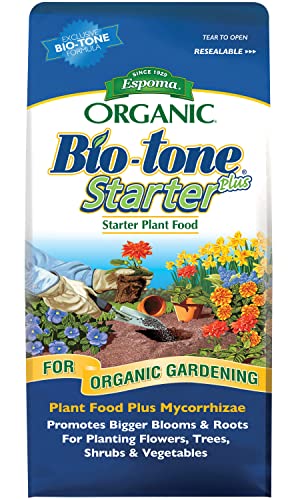
1. Espoma Organic Bio-Tone Starter Plus 4-3-3 (4 lb, Pack of 2)
Our pick — over 4.5★ from 800+ verified ratings; the strongest balance of quality and price.
The only pick here that combines mycorrhizae with actual plant food in one bag.
Espoma Bio-Tone is a hybrid product: a 4-3-3 fertilizer analysis with 5% calcium and both endo and ecto mycorrhizae mixed right into the granules. That means you feed the plant and inoculate the root system in one step. For the home gardener who just wants to sprinkle something into the planting hole and move on, this is the most time-saving option.
One reviewer noted that a tree planted with Bio-Tone “outgrew a two-year-old tree in one year,” which speaks to how well the combination of nutrients and fungi works on woody plants. The NPK feed gives an immediate growth boost while the fungi establish over the next few weeks. Because it contains both endo and ecto mycorrhizae, it works for everything from tomatoes to oaks.
The main thing to know is that Bio-Tone is a starter fertilizer first and a myco product second. The fungal spore count is not listed on the label the way it is on pure inoculants like Smart Grower or TPS Billions. If your priority is maximum spore density per gram, this is not the winner. But if you want one product that handles feeding and root inoculation together for every plant you set in the ground, this pack of two provides a massive amount of material.
Planting shortcut: Mix with backfill soil at planting time and you cover both food and fungi in one toss.
Odor note: It smells strong (buyers describe it as a “stinker” but effective) because it is made from natural organic materials.
Perfect for: anyone planting trees, shrubs, perennials, or vegetable seedlings who wants to feed and inoculate at the same time without buying two separate products.
Avoid if: you need a precise high-spore-count inoculant for established plants where you cannot disturb the soil.
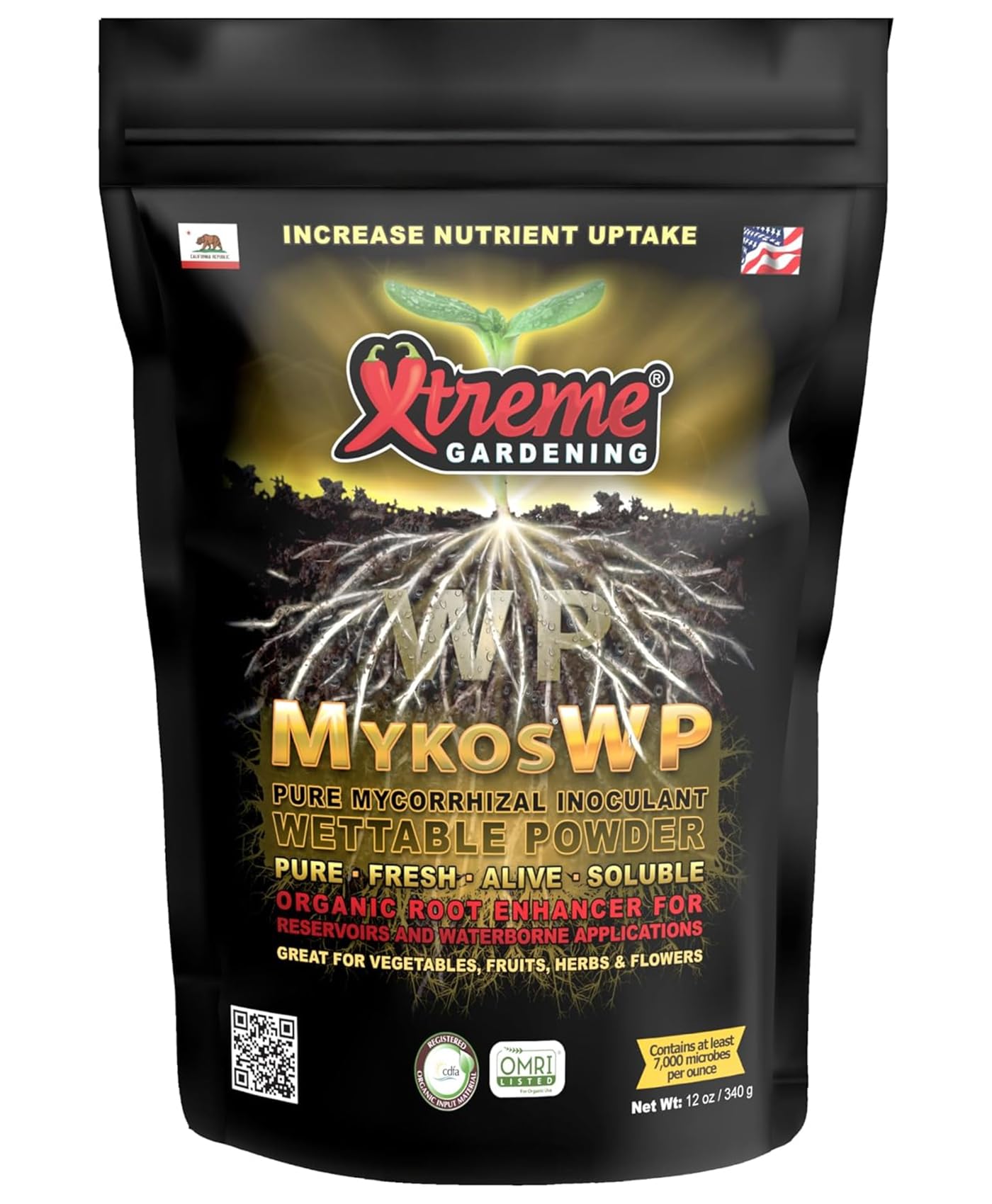
2. Xtreme Gardening Mykos WP Mycorrhizae Powder (12 oz)
The powder you mix with water for a root dip that coats every root hair instantly.
Mykos WP is a wettable powder (the “WP” stands for that) designed specifically for root dips and drenches. You mix it with water, dip the bare roots of a transplant, and the fungal spores cling to every root surface evenly. This method gives you 100% root contact — something granules placed in a hole cannot guarantee. Buyers report that it produces “explosive root growth” on transplants and that a single bag lasts months because a little goes a long way.
The product contains endo mycorrhizae species that work with the vast majority of garden plants — tomatoes, peppers, flowers, and vegetables. Unlike multi-strain blends that pack 11 species, Mykos keeps it simple with a targeted set of high-colonizing endo strains. This makes it especially reliable if you are using it in hydroponics or a soilless medium where consistency matters more than diversity. One reviewer switched from an expensive liquid product (“Voodoo Juice”) to Mykos and reported “roots burst out of pots.”
The 12-ounce bag covers a lot of ground — you only need a small scoop per gallon of water. The trade-off is that it focuses on endo mycorrhizae only, so if you are planting conifers, oaks, or blueberries that need ecto species, you will want a product that includes those too. But for almost every vegetable and flower bed, this is the most practical water-in formula on the list.
Best for transplants: Dip bare roots or drench the root ball and watch establishment speed up measurably.
Know before you buy: Designed for endo mycorrhizae users — if you have mostly trees or ericaceous shrubs, look for an ecto blend instead.
Grab it if: you want a simple, water-soluble powder that you can use on transplants, in hydroponics, or as a periodic root drench to maintain the fungal network.
Pass if: you need a fertilizer-myco combo or have a garden dominated by pines, oaks, and blueberries that require ecto-dominant fungi.
3. Smart Grower Mycorrhizal Fungi 5-Strain (125g)
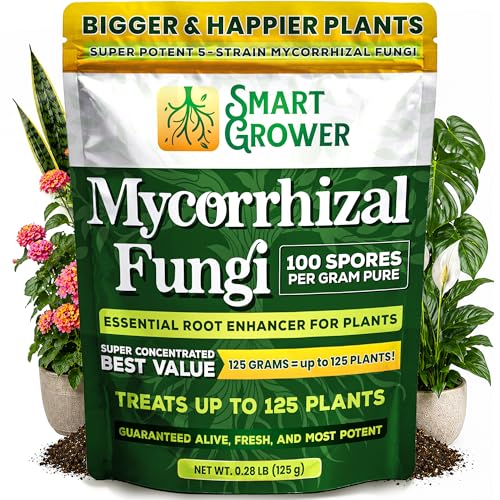
A dense 100-spores-per-gram powder with five different strains for diverse gardens.
Smart Grower’s 125-gram bag is small but potent — the label states “100 spores per gram” using living fungal spores (not just propagules), making it among the most concentrated pure inoculants in this lineup. The 5-strain blend gives you diversity across different endo mycorrhizae species, which matters if your garden has tomatoes, peppers, flowers, and herbs in different soil types. This is significantly more concentrated than most entry-level products, and the 125-gram size treats up to 125 plants based on the manufacturer’s directions.
One buyer mentioned adding the powder to a worm casting and coir mix for microgreens and noted that the fungi “speeds growth by supporting roots and nutrient uptake.” That same reviewer mentioned harvesting “pea shoots and sunflower sprouts 1-2 days earlier” than usual. Another used it mixed with bone meal for bulbs in a raised bed and described lilies, gladiolus, dahlias, and fall crocus growing “very strong and healthy.”
The trade-off is that Smart Grower contains only endo mycorrhizae, not ecto. If you are planting only vegetables, annuals, and lawns, that is exactly what you want. But if you also have a grove of pine trees or a row of blueberries, this will not help those. It is also a pure fungal powder with no added fertilizer or bacteria, so you will still need to feed your plants separately. For under 20 dollars, this is the best spore-per-dollar value in the pure-inoculant category.
Strong Points
- 100 spores per gram — a very high concentration.
- Five strains provide genetic diversity for varied soil conditions.
- Easy to mix with water or sprinkle directly into planting holes.
Limitations
- Endo-only formula — not effective for trees and conifers.
- No added fertilizer, bacteria, or Trichoderma.
- 125g bag is small, though highly concentrated.
Choose this for: vegetable gardens, flower beds, and houseplants where you want the highest spore density without paying for fertilizer blends you do not need.
Look elsewhere if: you need ecto mycorrhizae for trees, or you want a product that also includes beneficial bacteria and Trichoderma as a complete biological package.
4. TPS Nutrients Billions Mycorrhizal Fungi (8 oz)
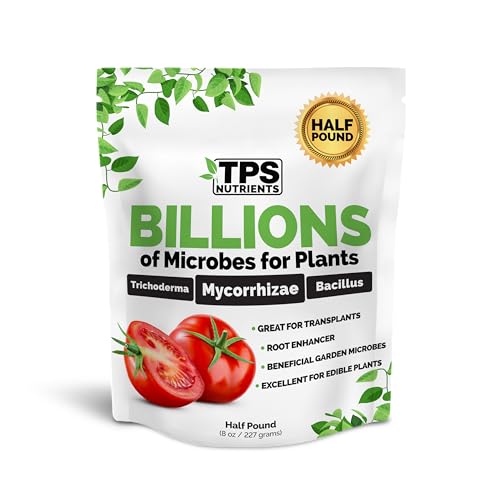
A powerhouse blend that includes Trichoderma for root-zone defense, not just colonization.
TPS Billions goes beyond mycorrhizae alone. The bag contains not only endo mycorrhizal spores but also beneficial bacteria and Trichoderma — a beneficial fungus that helps suppress root pathogens and break down organic matter in the soil. That three-part formula makes it stand out from pure myco products. Buyers who compared it to premium brands like Great White and Dynomyco reported that TPS “stands out for its high concentration and inclusion of Trichoderma.” This makes it especially valuable for high-value plants like aroids (monsteras, philodendrons) and vegetables where root health is critical.
The 8-ounce bag is advertised as “Billions” of beneficial microbes per teaspoon, meaning the spore and bacterial density is very high despite the small package size. One reviewer called it “more for your money than competitors” after buying and comparing several brands side by side. The water-soluble powder mixes easily into a drench for established plants or can be sprinkled into the transplant hole.
The one catch is that TPS Billions does not list its spores-per-gram count as explicitly as Smart Grower does (100/g) or RootMax does (245/g). The branding leans on “billions of microbes” as a total count rather than per-gram concentration. If you want a number you can compare directly, the other products give you that. But if you want a complete root-zone biostimulant — mycorrhizae, bacteria, and Trichoderma all in one bag — this is the best choice.
Why it stands out
- Three-part biological formula: mycorrhizae, beneficial bacteria, and Trichoderma.
- Water soluble for easy drench application on existing plants.
- High total microbe count per teaspoon.
Watch out for
- Spore count per gram is not specified on the label.
- 8 oz bag is relatively small compared to 4 lb fertilizer blends.
Reach for this if: you want a complete biological inoculant — not just mycorrhizae, but also the bacteria and Trichoderma that build a resilient soil food web around the roots.
skip it if: you need an ecto-mycorrhizae product for trees, or you prefer to see a verified per-gram spore number before buying.
5. Mikro-Myco Highly Concentrated Mycorrhizal Fungi 11 Endo/Ecto Strains (4 oz)
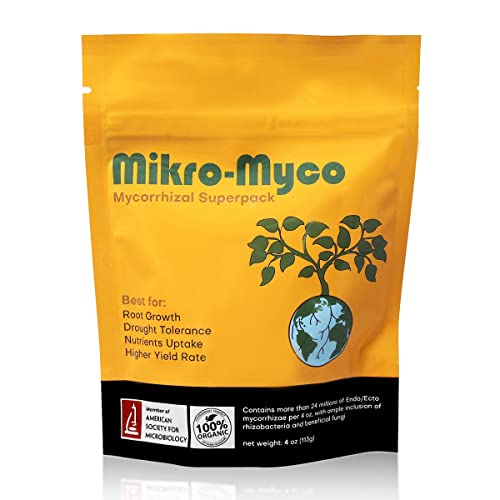
The 11-strain superpack that covers every type of plant from vegetables to pines.
Mikro-Myco packs 11 endo and ecto mycorrhizae strains into a single 4-ounce bag, making it the most genetically diverse option on this list. It also includes Bacillus and Trichoderma, so you get the same triad as TPS Billions but with more mycorrhizal species. This matters if you have a mixed garden: the endo strains colonize your tomatoes and peppers, while the ecto strains colonize your oaks, pines, and rhododendrons. One product covers everything.
Owners mention “dramatically increased growth, flowering duration, and vigor” and note that the powder is potent enough that a quarter teaspoon per gallon (the recommended max) is sufficient. One owner reported they used it in a propagation tray with Rockwool cubes and got clones to root in 7 days, calling it a “must-have for cannabis growers.” Because the formula also converts fixed phosphate in the soil into a form plants can use, you will often see greener stems and leaves after a few weeks. A single 4-ounce bag treats up to 300 plants (in 1-gallon pots), according to the manufacturer.
The downside is the smaller bag size. At 4 ounces, this is one of the smallest packages here. If you are planting a large garden bed with dozens of vegetable plants, you might need two bags. The lack of an NPK analysis also means you are buying pure biology — no fertilizer is included. But if you want the widest safety net for a diverse garden, the 11-strain diversity and the inclusion of Bacillus and Trichoderma make Mikro-Myco a heavy hitter.
what separates it
- 11 endo and ecto mycorrhizae strains — the most diverse blend here.
- Includes Bacillus and Trichoderma for complete root support.
- Treats up to 300 one-gallon plants from one 4 oz bag.
Consider
- 4 oz is a small bag — large operations may need multiple units.
- No added fertilizer; this is pure biology.
Buy this for: mixed gardens that include vegetables, flowers, shrubs, and trees — the endo+ecto coverage plus Bacillus and Trichoderma means one product covers the entire biological spectrum.
Avoid if: you want a large-volume bag that will last multiple seasons, or if you prefer a product with a built-in fertilizer component.
6. Big Foot Mycorrhizae for Plants Concentrate (8 oz)
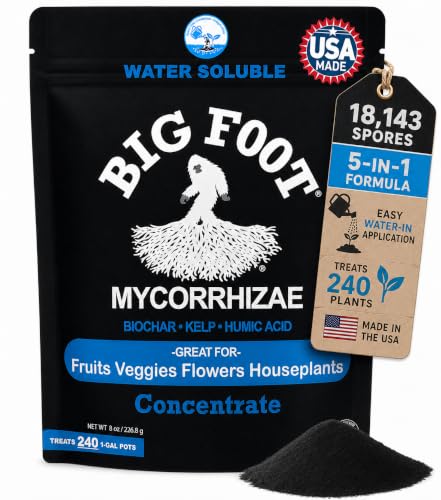
A fully dissolvable powder you can add to your watering can for easy weekly feeding.
Big Foot Mycorrhizae is designed specifically for gardeners who want to water in the fungi without disturbing the soil. The concentrate “fully dissolves in water” — it creates a dark gray solution that you pour around the base of the plant. The 8-ounce bag treats 75 gallons of water, which gives you a cost-effective way to treat a lot of potted plants or a medium-sized garden. Customers note that a little goes a long way and that they noticed “less transplant shock and healthier root systems” after adding it to their watering routine.
The manufacturer claims the product “will last for the life of the plant” after a single application, though the label also recommends using it weekly for best results. The bag contains a mix of endo mycorrhizae species and is labeled for lawns, gardens, and potted plants. One reviewer who grows in coco coir noted that after three weeks of weekly use, “the roots took up the entire buckets, plus roots out the bottom.”
A minor but real drawback: the dark residue it leaves. One customer observed the solution leaves a dark gray film on watering cans and plant saucers, which they traced to the biochar content in the formula. It is not harmful, but if you are particular about clean tools, it is something to know. Also, like several other pure-inoculant products, this one does not include ecto mycorrhizae, so trees and conifers will not benefit.
Ease of use: Stir into water, pour on soil, and the fungi reach the roots without digging or disturbing the root zone.
Be aware: The dark solution may stain plastic watering cans and saucers — use a dedicated container if that bothers you.
Reach for this when: you have established houseplants or garden plants that you want to treat without digging up or repotting — just water it in every week.
Pass if: you need a product that includes ecto mycorrhizae for trees and conifers, or if you dislike the staining residue.
7. RootMax Mycorrhizal Fungi Rooting Powder (200 g)
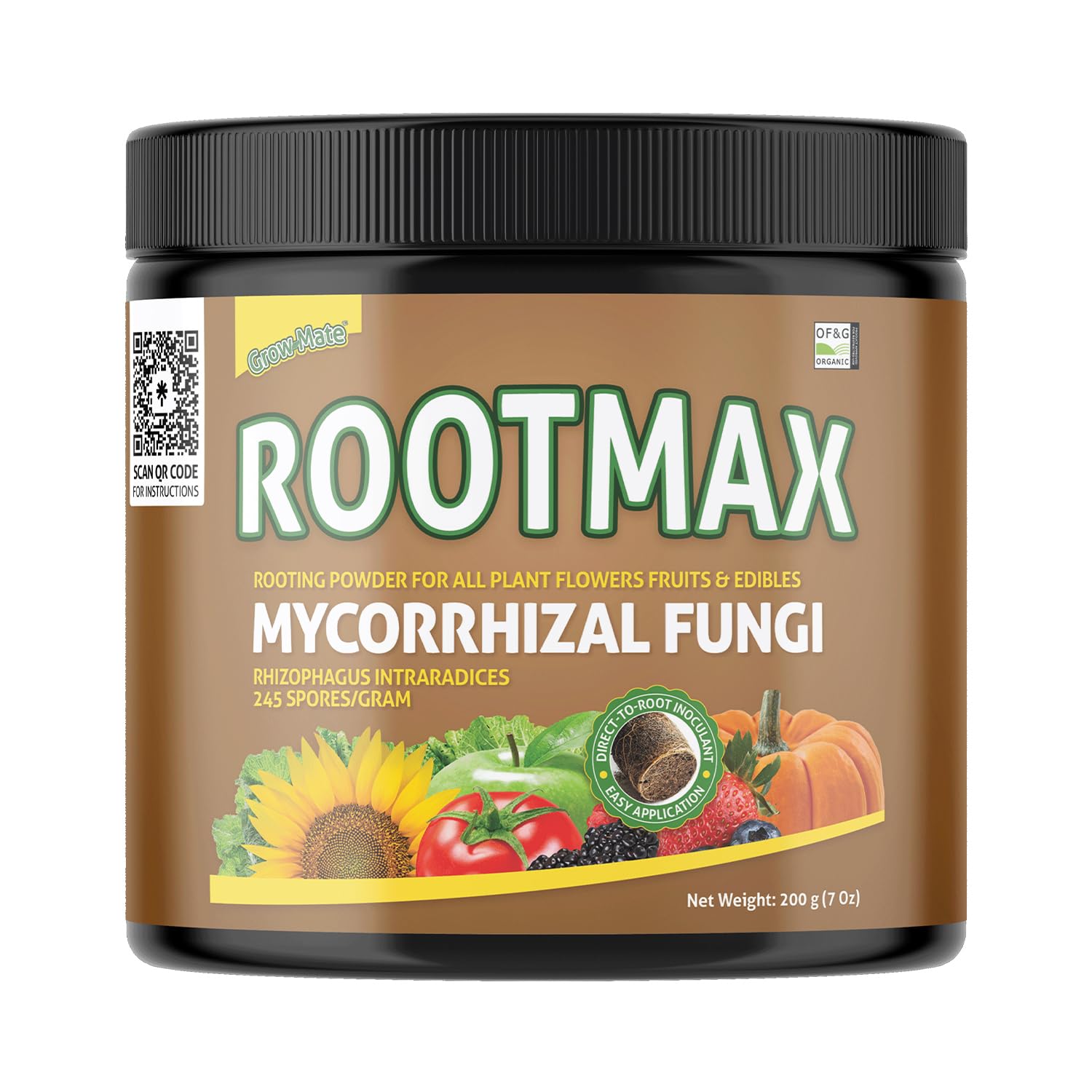
The highest spores-per-gram count on the list at 245 per gram, in a generous 200-gram bag.
RootMax gives you 245 spores per gram of Glomus intraradices — that is a 60% more gap in spore weight compared to 125-gram products like Smart Grower. The 200-gram bag treats over 40 plants based on the manufacturer’s guidance, making it an excellent value if you have a medium-sized garden and want a single-strain, high-density product. It is also certified for organic use and described as odorless, non-toxic, and safe around pets and children — useful if you are working in a backyard where kids or dogs might dig.
Reviewers point out success using it as a rooting aid for cuttings. One user highlighted, “I used this to root some cuttings of boxwood, it took a little while but they did root and they are still alive.” Others used it when transplanting tomatoes and noted that the root growth development after transplanting led to “bigger better fruits.” The powder can be used as a dip for cuttings (similar to rooting hormone) or sprinkled directly into the planting hole.
The main difference between RootMax and the products above is that it relies on a single species of mycorrhizae (Glomus intraradices) rather than a multi-strain blend. For a monocrop or a garden with a few types of vegetables, that single species does the job. But for a diverse garden bed with different soil conditions, a multi-strain product has a better chance of colonizing across all root types. Also, it is endo-only, so it does not work on trees.
Strengths
- 245 spores per gram — the highest measured density on this list.
- 200-gram bag provides a large volume for the price.
- Certified organic, odorless, and safe around pets.
Limitations
- Single-strain (Glomus intraradices) — less genetic diversity.
- Endo-only formulation — not effective for trees and conifers.
Best for: budget-conscious gardeners who want the highest spore concentration per gram and are planting a single crop type or a small vegetable bed.
Not ideal if: your garden includes trees, shrubs, or a wide variety of plant species that would benefit from a multi-strain blend.
Understanding the Specs
Spores per Gram
This is the simple measure of potency. A product with 100 spores per gram (like Smart Grower) or 245 spores per gram (like RootMax) packs significantly more living fungi per scoop than a generic bag. Higher numbers mean you get more potential colonization sites for your money, especially if you are treating many plants. Always check this number before buying any pure mycorrhizae powder — it is the closest thing to a “strength” rating you can compare.
Endo vs Ecto Mycorrhizae
Endo mycorrhizae (arbuscular mycorrhizae) penetrate the actual root cells and are what most vegetables, flowers, grasses, and houseplants need. Ecto mycorrhizae wrap around the outside of root tips and are found on trees like pines, oaks, firs, and birches. If a product says “Endo and Ecto,” it works on everything. If it says “Endo only,” it will not colonize tree roots. Read the label to match the fungi to the plants you are growing.
FAQ
Can I use mycorrhizae with chemical fertilizers?
How long does it take for mycorrhizae to colonize plant roots?
Is one application of mycorrhizae enough for the plant’s entire life?
Can I use mycorrhizae in hydroponics or soilless growing?
Does mycorrhizae work on all plant types?
How do I store mycorrhizal fungal products?
Will mycorrhizae help with drought tolerance?
Can I mix two different mycorrhizal products together?
What is Trichoderma and why is it in some mycorrhizae products?
Does the soil type affect how well mycorrhizae colonize roots?
Final Thoughts: The Verdict
For most buyers, the best mycorrhizae for plants winner is the Espoma Bio-Tone Starter Plus because it combines both endo and ecto mycorrhizae with a balanced organic fertilizer in one easy-to-use bag, so you feed and inoculate in a single step. If you want the highest measurable spore density and are building a pure-inoculant routine, grab the Smart Grower 5-Strain with 100 spores per gram. And for those who want to water in the fungi without disturbing established soil, the Big Foot Mycorrhizae concentrate dissolves fully and works well for houseplants and no-till gardens.
How We Picked
We do not accept paid placement. Every pick is matched to a real buyer and a real use-case; we do not hands-on test units.
Sources & Methodology
Specifications: manufacturer listings and product documentation. Review insights: verified customer reviews, as of July 2026. Pricing: not shown on this page (it changes often); check the current price via the retailer link.
As an Amazon Associate, Lawn Gear Lab earns from qualifying purchases. This does not affect which products we feature.