
Few sights are more disappointing than walking out to your strawberry patch only to find half your ripe fruit lying directly on wet soil, already starting to rot from the bottom up. This single problem — fruit rot from soil contact — is exactly why experienced growers never plant strawberries without a dedicated ground cover. The wrong choice invites slugs, splashes mud onto the berries, and traps excessive moisture around the crowns, while the right one keeps the fruit clean, the weeds down, and the soil temperature steady through spring and summer.
I’m Rikta — the co-founder and writer behind Lawn Gear Lab. My recommendations here come from cross-referencing manufacturer spec sheets, studying horticultural best practices for moisture management and weed suppression in soft-fruit beds, and analyzing hundreds of verified owner reports to separate products that actually perform from those that just look good in the box.
Whether you are starting a new raised bed of June-bearing plants or refreshing the pathways in an established patch, this guide examines the top contenders for the best mulch for strawberries on the market right now, with a clear focus on durability, organic safety, and measured coverage value.
How To Choose The Best Mulch For Strawberries
Strawberry plants are shallow-rooted and extremely sensitive to crown rot, so the mulch layer must breathe while blocking weeds and preventing soil splash. The wrong material — heavy wood chips, fresh grass clippings, or hay loaded with seeds — creates more problems than it solves. Focus on these three factors before deciding.
Straw Quality and Weed Seed Content
The single biggest risk when mulching strawberries is introducing weed seeds into the bed. Hay is notorious for this because it contains seed heads; wheat straw grown from the stalk rather than the seed head is far safer. Look for products labeled “weed-free” or “low weed seed” and check reviews for complaints about unwanted growth. Clean straw also decomposes slowly, keeping its structure through the entire fruiting season.
Compressed vs. Loose and Coverage Math
Compressed bales (often labeled as 2-3 cubic feet expanding to 8-10 cubic feet) look small but deliver serious coverage once fluffed. For a standard 4×8-foot raised bed, you typically need about 1.5 to 2 cubic feet of loose straw spread 2-3 inches deep. Buying compressed straw saves shipping space and storage hassle but requires you to manually separate and fluff the material before laying it down. If the product lists a square-foot coverage number, subtract 20 percent for real-world gaps.
Fabric vs. Loose Organic for Perennial Beds
Landscape fabric works under the plants to suppress weeds permanently, but it does nothing to cushion the fruit from the ground. Many strawberry growers combine fabric as a base layer with a thin top dressing of loose straw for fruit protection. Organic straw breaks down into compost over time, improving soil structure, while fabric is a one-time installation that stays effective for years. Your choice depends on whether you value long-term weed control or annual soil enrichment.
Quick Comparison
On smaller screens, swipe sideways to see the full table.
| Model | Category | Best For | Key Spec | Amazon |
|---|---|---|---|---|
| Back to the Roots Coco Mulch | Coconut Husk | Organic raised beds | Expands to 2+ cu. ft. | Amazon |
| HealthiStraw FarmStraw Coarse Cut | Wheat Straw | Deep bedding + mulch | Expands to 10+ cu. ft. | Amazon |
| Gardener Select Seeding Straw | Bonded Straw | New seed protection | Tackifier-bonded bale | Amazon |
| Long Needle Pine Straw | Pine Needles | Flower bed aesthetics | 100% organic pine | Amazon |
| Land Guard Weed Barrier | Landscape Fabric | Permanent weed control | 4 ft x 300 ft roll | Amazon |
| Natural Wheat Straw 1 LB | Wheat Straw | Small patch / craft use | 1 lb vacuum pack | Amazon |
| Out-Grow Wheat Straw 1 CF | Wheat Straw | Entry-level test layer | 1 cu. ft. compact | Amazon |
In‑Depth Reviews
1. Back to the Roots 100% Organic Coconut Husk Mulch
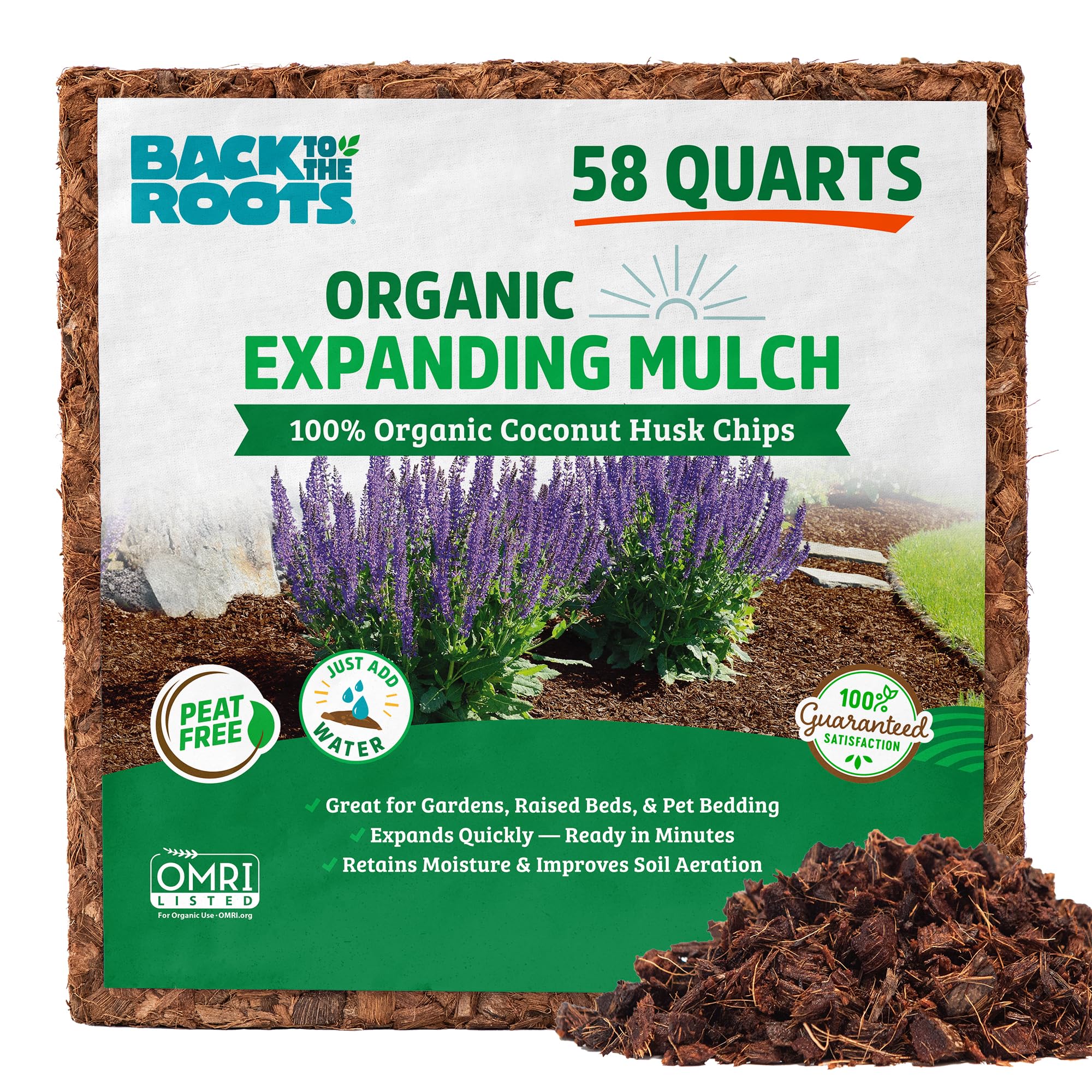
This compressed coconut husk block is a serious outlier in the strawberry mulch category because it offers the organic certification of wheat straw with substantially better moisture-holding capacity and slower decomposition. Once hydrated, the 10-pound block expands to over 2 cubic feet of fibrous, peat-free material that settles into a dense but breathable mat around strawberry crowns. The texture is coarse enough to prevent crusting yet fine enough to keep berries clean and off the soil.
Unlike wheat straw that can blow away or mat down into a soggy layer, coconut husk retains its structure through heavy rain and stays aerated. OMRI listing means no synthetic additives whatsoever, making it safe for edible crops right up to harvest. The expansion ratio is genuine — multiple verified users confirm it fills a standard wheelbarrow after soaking. Storage is trivial because the dry block takes up almost no space compared to a full bale of loose straw.
The trade-off is that you must rehydrate and fluff it manually, which takes a few minutes and a bucket of water. Some users note that the dark brown color hides fallen fruit more easily than bright golden straw. Also, this is not the cheapest option per cubic foot if you are covering a very large patch, though the organic label and ease of handling justify the mid-range price for most home growers.
What works
- Expands dramatically with water, easy to store dry
- Certified organic and completely safe for edibles
- Excellent moisture retention without getting soggy
What doesn’t
- Requires soaking and manual fluffing before use
- Dark color can make ripe berries harder to spot
2. HealthiStraw FarmStraw Coarse Cut Wheat Straw
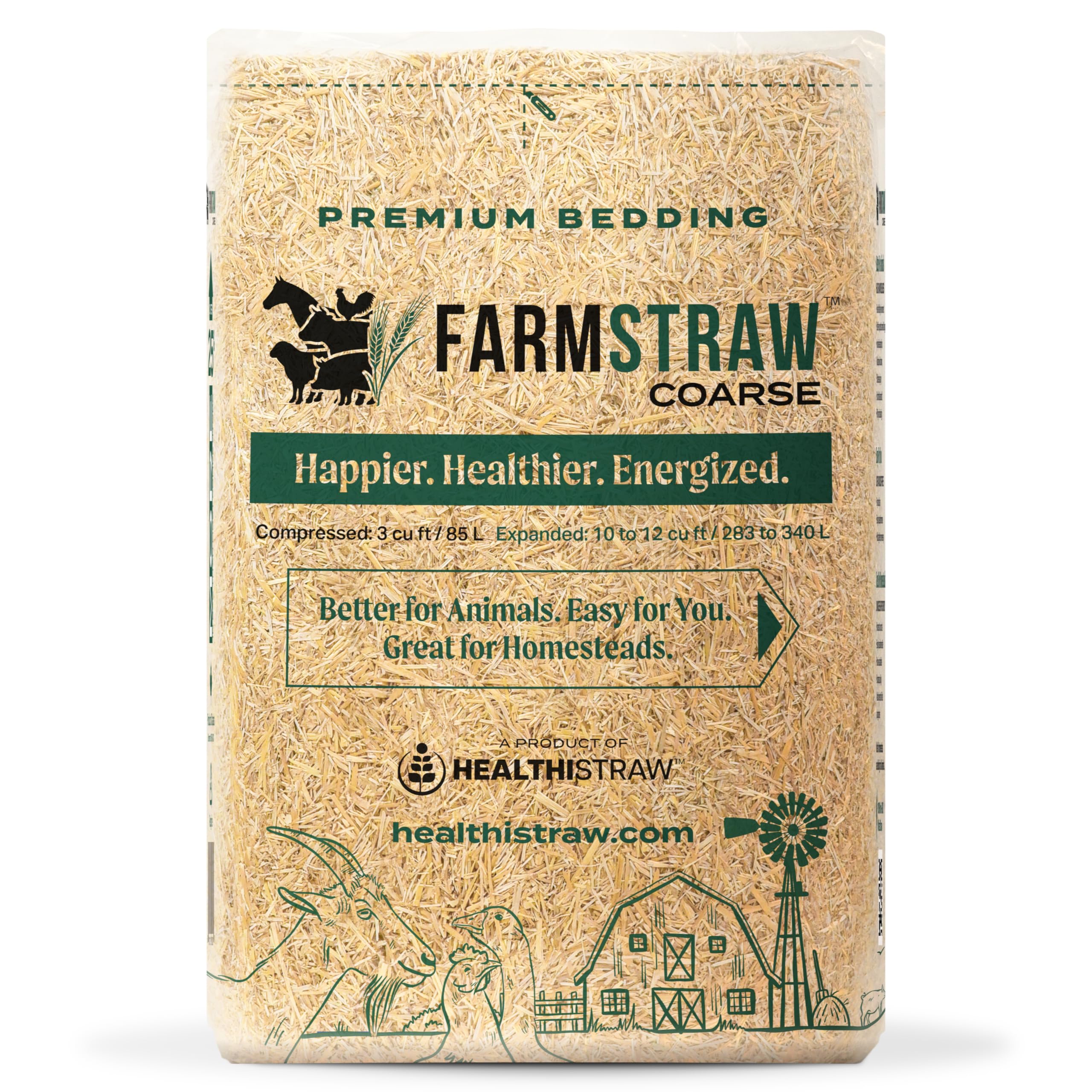
This is the bale you grab when your strawberry bed is measured in dozens of square feet rather than a single patch. The 3-cubic-foot compressed bale expands to over 10 cubic feet of coarse-cut, non-GMO wheat straw that is cleaned to remove dust and most weed seeds. The 2-3 inch piece length is ideal for strawberries because it creates a fluffy, insulating layer that cushions fruit while allowing air circulation around the crowns — critical for preventing botrytis rot.
Where this product separates itself from bulk-bin straw is the dust-free processing. Standard bales from farm supply stores kick up clouds of particulates that can irritate respiratory systems during application; HealthiStraw’s cleaning process nearly eliminates that problem. The straw wicks moisture down and away from the fruit surface, keeping berries dry even after a heavy dew. Owners consistently report that this straw remains effective for a full growing season without matting into a solid sheet.
No product is perfect: the compressed block takes substantial effort to break apart and fluff completely. Some users found stray foreign objects in their bales — not widespread, but worth noting. The price per cubic foot is higher than local farm straw, but for urban and suburban growers who lack easy access to agricultural suppliers, the convenience and consistent quality make it a worthwhile premium pick.
What works
- Expands massively — one bale covers large raised beds
- Exceptionally clean and low-dust, good for sensitive users
- Coarse fluffy texture keeps fruit elevated off wet ground
What doesn’t
- Compressed bale is labor-intensive to fully fluff
- Occasional quality control issues with foreign debris
3. Gardener Select Seeding Straw with Tackifier

This 2.5-cubic-foot bale uses a bonding agent called tackifier to create a straw layer that stays put in wind and rain — exactly what you need when mulching a newly planted strawberry bed where the soil is still loose. The tackifier gives each strand a slight stickiness that locks the straw together without forming a waterproof crust, so water still percolates through to the roots while the surface remains stable. Coverage is listed at 500 square feet, which translates to a generous 2-inch layer over a substantial patch.
Verified owners consistently praise this product for being completely weed-free — a critical advantage for strawberry beds where hand-weeding is tedious. Because the straw itself is processed and bonded, it contains virtually no seed heads. The biodegradable nature means you can leave it in place at the end of the season; it will break down into the soil and contribute organic matter without needing to be hauled away. For growers using plasticulture or fabric underneath, this serves as an excellent top layer for fruit protection.
On the downside, the tackifier can make the straw feel slightly sticky when you handle it during application, which some users find unpleasant. The bale is also heavy — about 24 pounds — so moving it around a large garden requires some physical effort. If your bed is already established and you only need a thin refresh layer, this bale might be more than you strictly require, but for starting new runners, it is a category standout.
What works
- Tackifier prevents wind blow-off even in exposed beds
- Completely weed-free, verified by multiple long-term users
- Biodegradable — zero cleanup at season end
What doesn’t
- Tackifier leaves a slightly sticky residue on hands
- Heavy bale can be awkward to transport alone
4. USA PINESTRAW Long Needle Pine Straw Mulch
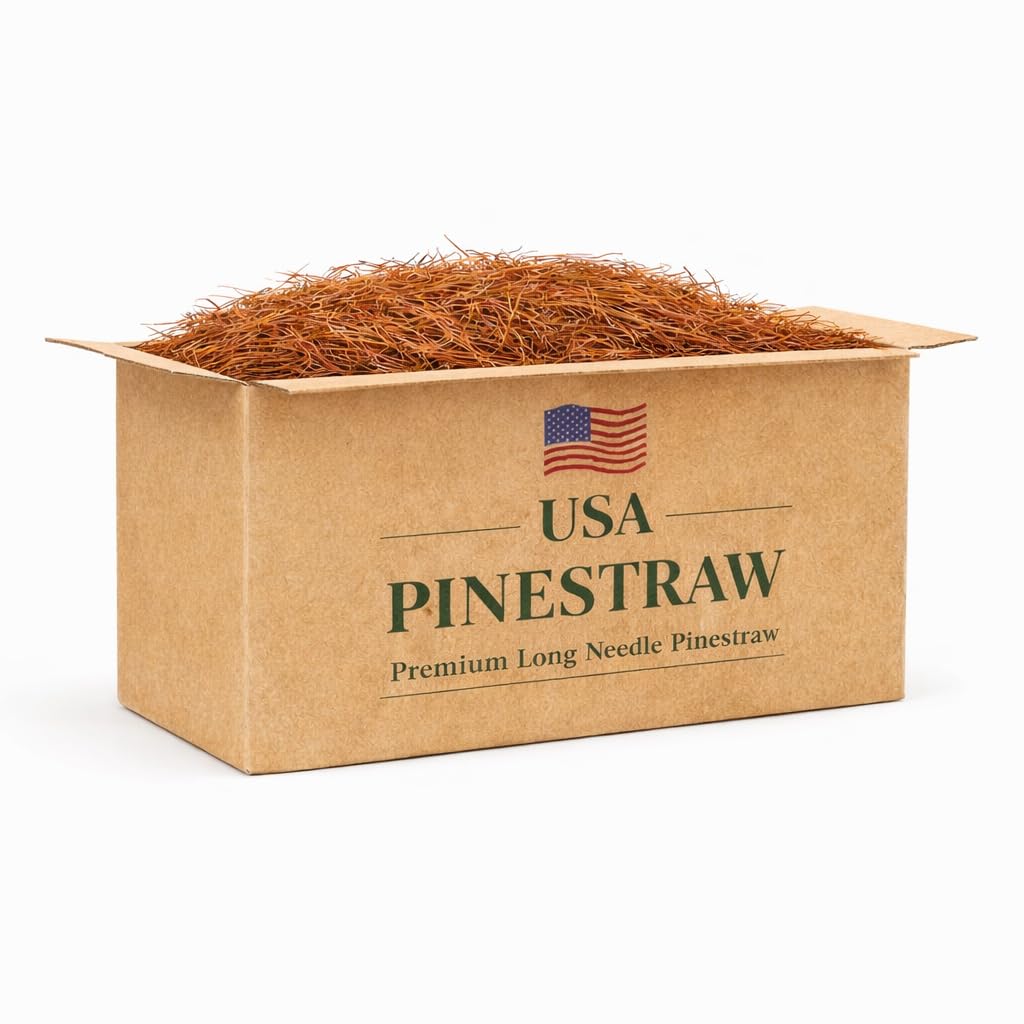
Pine straw is an unusual but highly effective mulch for strawberries in regions where pine is abundant, and this bale from USA PINESTRAW brings that material to growers everywhere. The long needles interlock naturally to form a mat that resists washout while staying porous enough to prevent crown rot. Because the needles are slightly acidic, they are particularly useful if your soil pH runs high and you need a gentle balancing effect around the strawberry roots.
Coverage is listed at 65-80 square feet per bale, which aligns with the real-world experience of owners who found it sufficient for six standard raised beds. The fragrance is pleasant — a clean, forest-like scent that is far more appealing than the musty smell of damp wheat straw. Users who grow strawberries in ornamental beds appreciate the visual uniformity: pine straw presents a tidy, reddish-brown surface that makes the green foliage and red fruit stand out beautifully.
The primary drawback is coverage consistency: several reviewers noted that the bale did not fully cover the advertised 80 square feet at the recommended depth. At the premium price point, this makes it less cost-effective than wheat straw for large patches. Additionally, pine straw decomposes more slowly than wheat straw, which is good for longevity but means it adds less organic matter to the soil each season. Best reserved for small premium beds where appearance matters.
What works
- Long needles interlock naturally, resisting wind and washout
- Pleasant pine scent and attractive reddish-brown color
- Slow decomposition means fewer annual reapplications
What doesn’t
- Coverage falls short of advertised 80 sq ft at 2-3 inch depth
- Premium price per square foot vs. traditional straw
5. Land Guard 4ft x 300ft Weed Barrier Fabric
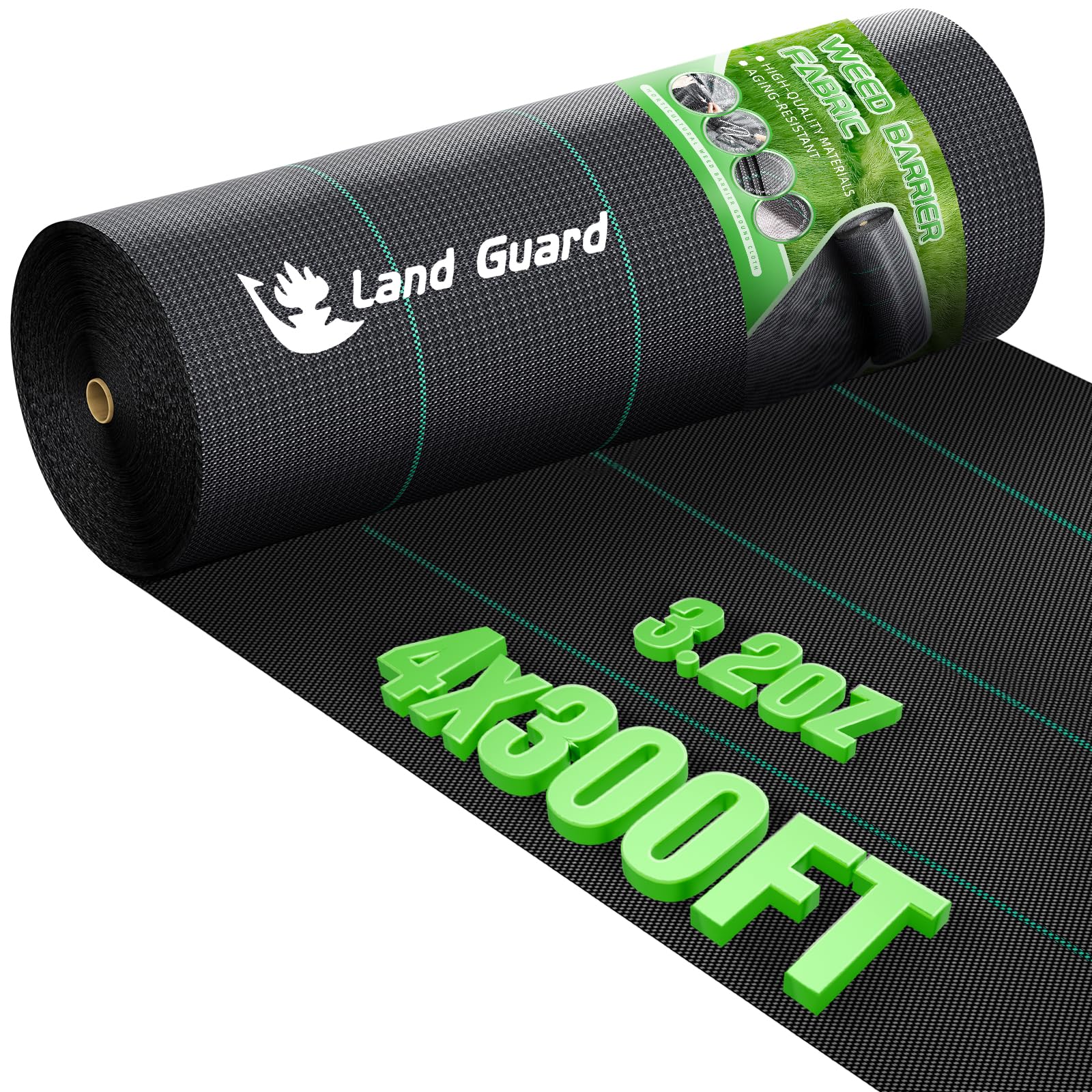
Landscape fabric is a completely different approach from loose organic mulches, but it earns a spot here because it is the single best solution for permanent weed suppression under strawberry rows. This Land Guard roll delivers a 4-foot-wide, 300-foot-long sheet of woven polypropylene that blocks sunlight while allowing water and air to pass through. In a strawberry bed, you lay the fabric down before planting, cut X-shaped slits for each plant, and the weeds beneath never see daylight.
The heavy-duty construction is noticeably thicker than budget landscape fabrics — owners consistently note that it resists tearing when stretched over uneven ground and holds up to foot traffic between rows. Because water penetrates freely, the soil stays hydrated without pooling on the surface. For growers who want to combine fabric with a thin layer of decorative straw on top, this provides the ultimate defense: zero weeds under the fabric plus fruit cushioning from the straw layer above.
The main downside is the upfront installation labor: rolling out 300 feet, pinning it down, and cutting planting holes takes a full afternoon for a medium-sized patch. Once installed, however, the fabric lasts for years and requires no annual replenishment. This is not a product for small container gardens — the roll is massive. But for serious perennial strawberry beds, this is the most durable and low-maintenance option on the list.
What works
- Blocks weeds permanently without chemicals
- Heavy woven construction resists tears and UV damage
- Permeable design prevents waterlogging above the fabric
What doesn’t
- Substantial installation effort required for large rolls
- Does not cushion fruit — needs a straw top layer for berries
6. Natural Wheat Straw 1 LB Multipurpose Mulch

This 1-pound vacuum-packed bundle is the entry-level option for gardeners who want to test straw mulch on a single strawberry pot or a tiny urban bed without committing to a full bale. The wheat straw is sun-dried and free from chemical treatments, making it safe for edible use. Because it arrives compressed in a sealed bag, it stays clean and odor-free — ideal for indoor craft use or for lining a small strawberry tower on a balcony.
Verified owners highlight its effectiveness for covering small seeded areas and protecting seedlings from birds. The straw fluffs up nicely once the bag is opened and retains moisture well in small spaces. Several users report using it successfully in raised garden beds as a thin top layer, noting that it stays in place better than they expected given the fine texture. For craft applications like straw bale decorations, the clean presentation is a clear advantage.
The biggest limitation is obvious: 1 pound of straw covers only about 2-3 square feet at the recommended depth. At the current price point, this works out to a significantly higher cost per square foot than bulk straw options. It is also lightweight enough to blow away in exposed, windy sites unless covered with a light sprinkling of water. This product makes sense only for very small, contained strawberry plantings or for decorative purposes alongside edible beds.
What works
- Compact packaging ideal for small spaces and storage
- Clean, dry, and free of chemical treatments
- Works well for craft applications alongside garden use
What doesn’t
- Extremely small quantity — covers only tiny patches
- High per-square-foot cost compared to bale options
7. Out-Grow 100% Natural Wheat Straw 1 Cubic Foot

This 1-cubic-foot bale from Out-Grow offers a straightforward, no-frills introduction to using wheat straw as garden mulch. The material is 100 percent natural wheat straw with no additives, making it safe for contact with strawberry fruit. It arrives in a compact box that is easy to handle and store — a major advantage if you do not have a truck or trailer to haul a full-size bale from a farm store. Once opened, the straw is dry, low-dust, and easy to spread.
Owner feedback focuses on its effectiveness for moisture retention and temperature regulation in garden beds. Multiple users who used it around vegetable and strawberry plants noticed significantly less water evaporation and happier root systems compared to bare soil. The low weed seed content is verified by several long-term reviewers who reported zero unwanted growth after application. For urban and suburban growers who just want a simple, clean option for one or two small beds, this fits the bill.
The catch is that 1 cubic foot does not go very far — expect to cover about 4-6 square feet at a 2-inch depth. That is fine for a single raised bed or a row of strawberries in the ground, but you will need multiple boxes for anything larger. Some users also reported finding unexpected debris in the box, suggesting occasional quality inconsistencies. For the price, this is a decent test-before-you-buy option for new strawberry growers, but the value diminishes quickly at larger scales.
What works
- Compact box format easy to store and handle
- Low dust and low weed seed content in most batches
- Improves moisture retention in small raised beds
What doesn’t
- Small volume — requires multiple units for a full bed
- Occasional quality issues with foreign debris inside
Hardware & Specs Guide
Looseness and Aeration
Strawberries need air movement around their crowns to prevent fungal rot. Straw that arrives densely packed must be hand-fluffed to create air pockets. Coarse-cut straw with 2-3 inch pieces holds its loft longest, while fine or shredded material compacts quickly under rain and gravity. Before laying mulch, check that the texture can be separated into loose, springy strands rather than a compacted mat.
Weed Seed Verification
The most expensive mistake in mulching strawberries is bringing in weed seeds. Wheat straw is typically safer than hay because it is harvested from the stalk rather than the seed head, but processing quality varies. Verified customer reports of “no weed growth” are a stronger indicator than labels alone. Tackifier-treated products often undergo additional cleaning steps and generally show the lowest weed seed presence.
FAQ
Should I use hay or wheat straw for strawberry beds?
How deep should I spread mulch around strawberry plants?
Does landscape fabric work for strawberries without straw on top?
Final Thoughts: The Verdict
For most gardeners, the mulch for strawberries winner is the Back to the Roots Coconut Husk Mulch because it combines OMRI-certified organic safety, outstanding moisture management, and a compact storage format that expands into real coverage. If you want a dust-free, coarse-cut straw bale that covers a huge area in one go, grab the HealthiStraw FarmStraw Coarse Cut. And for permanent weed suppression paired with a clean top layer, nothing beats the Land Guard Weed Barrier Fabric with a loose straw finish on top.