
Palm trees demand a specific balance of moisture, aeration, and nutrient availability in their root zone — conditions that standard bark or wood mulches often fail to deliver. The wrong mulch can trap excess moisture against the trunk, invite fungal disease, or slowly alter the soil pH in ways that cause frond yellowing and stunted growth.
I’m Rikta — the co-founder and writer behind Lawn Gear Lab. I’ve spent hundreds of hours analyzing horticultural data, comparing the chemical breakdown of organic mulches, and cross-referencing owner-reported results to determine which options actually support the unique physiology of palm root systems.
This guide breaks down the essential specs — from pH neutrality to cation exchange capacity — so you can confidently choose the best mulch for palm trees that keeps your palms vibrant without guesswork.
How To Choose The Best Mulch For Palm Trees
Palm roots are unusually sensitive to compaction and waterlogging. Selecting a mulch that maintains open air channels and a stable pH is more important than aesthetic uniformity. Focus on these three factors.
Moisture Retention vs. Drainage Balance
Palms thrive with consistent moisture, but roots rot quickly if the medium holds too much water. Coco husk chips excel here because their fibrous structure holds water while draining excess, creating the aerobic environment palm roots need. Avoid heavy, fine-textured mulches that form a watertight mat.
pH and Nutrient Profile
Palm roots are especially efficient at absorbing micronutrients in a slightly acidic to neutral pH range (6.0–7.0). Cocoa shell mulch offers a mild fertilizer value (2.5-1-3 NPK) and stays neutral, while pine straw trends acidic, which can help alkaline soils but may need monitoring for container palms.
Particle Size and Decomposition Rate
Large, chunky particles — like those in coco chips or pine straw rolls — resist compaction and allow oxygen to reach the root crown. Fine mulches break down faster, locking up nitrogen as they decompose. For palms, a slow-decomposing, chunky mulch reduces the need for supplemental nitrogen during the growing season.
Quick Comparison
On smaller screens, swipe sideways to see the full table.
| Model | Category | Best For | Key Spec | Amazon |
|---|---|---|---|---|
| Plantonix Coco Chips | Coco Chips | pH-neutral moisture control | Expands to 15 gallons | Amazon |
| Back to the Roots Coco Mulch | Coco Husk Block | OMRI-certified organic beds | Expands to 2 cubic ft | Amazon |
| Halatool Coco Husk Chips | Coco Chips | Wind-resistant top dressing | Expands to 72 quarts | Amazon |
| HealthiStraw GardenStraw | Wheat Straw | Large-area moisture conservation | Covers up to 100 sq ft | Amazon |
| Hull Farm Cocoa Shell Mulch | Cocoa Shells | Scent and mild fertilization | NPK 2.5-1-3 | Amazon |
| The Andersons BioChar DG | BioChar | Long-term soil structure | Covers up to 5,000 sq ft | Amazon |
| Longleaf Pine Straw Roll | Pine Straw | Clean, wind-resistant coverage | Covers up to 125 sq ft | Amazon |
In‑Depth Reviews
1. Plantonix Organic Coco Chips

This 10-pound compressed brick of coco coir chips from Plantonix is the most balanced option for palm owners. Its neutral pH and high cation exchange capacity (CEC) mean the chips actively hold onto magnesium, potassium, and other micronutrients that palms depend on, while letting excess water drain away. The chips expand to 15 gallons when hydrated, providing deep, breathable coverage around the root zone.
Users consistently note that the chips stay intact longer than finer coco coir, resisting compaction under heavy rain. The absence of dust during expansion is another practical win — you can hydrate it directly in the bed without creating a mess. For container palms in particular, the improved aeration reduces the risk of spiral root growth common in heavy soils.
Because these chips are not buffered, some growers recommend pre-rinsing with a dilute cal-mag solution to avoid calcium lock-up. This is a minor extra step, but the long-term payoff in root health makes it worth the effort for serious palm enthusiasts.
What works
- Neutral pH supports palm nutrient uptake
- Chips resist compaction longer than fine coco coir
- Significant space savings from compressed brick
What doesn’t
- Brick requires pre-soaking for full expansion
- Not buffered, may need cal-mag pre-treatment
2. Back to the Roots Organic Coconut Husk Mulch
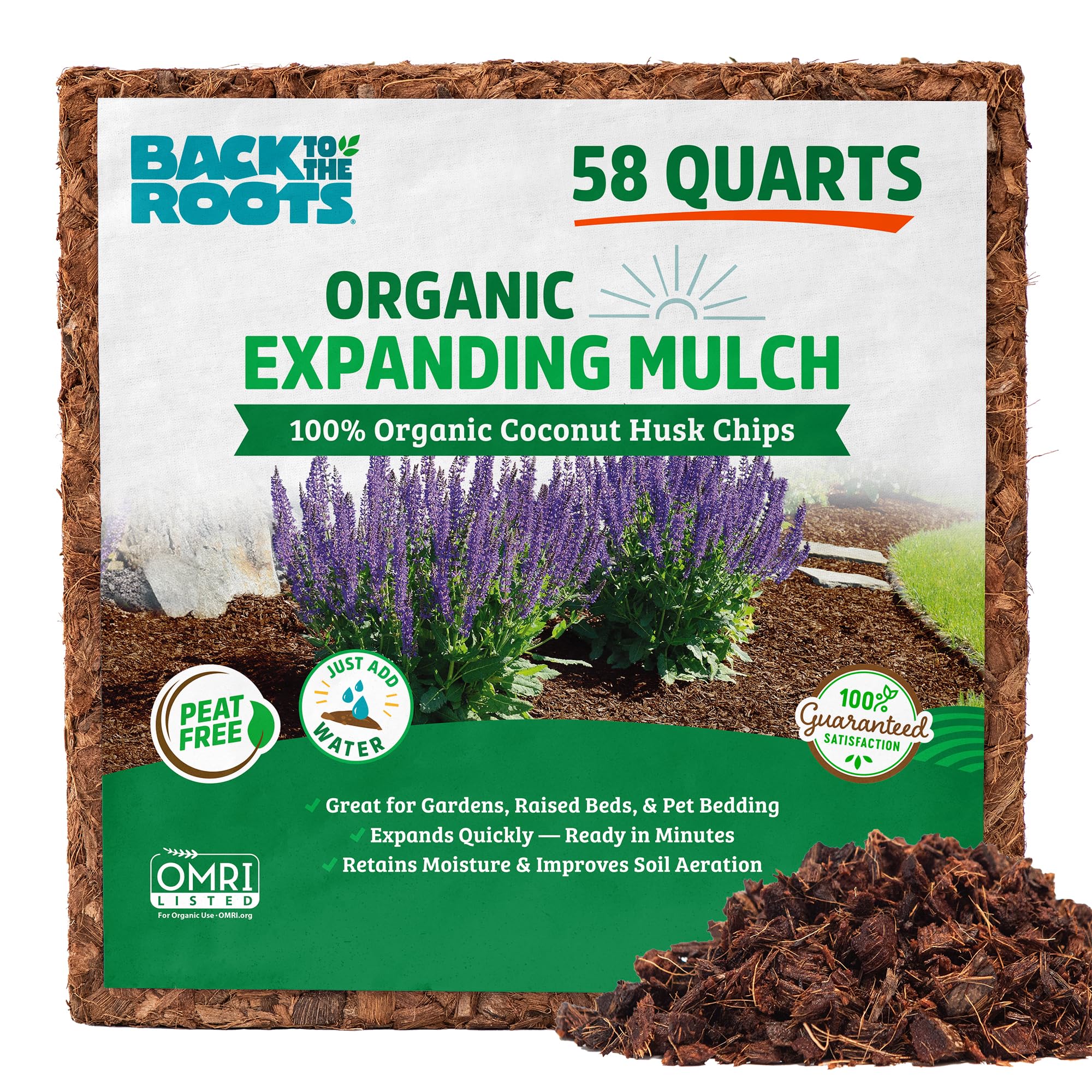
Back to the Roots delivers a 10-pound compressed block that expands to over 2 cubic feet — enough to cover a 4×4-foot raised bed with a 2-inch layer. The OMRI listing confirms it meets organic production standards, which matters for palms grown in edible landscapes or near vegetable gardens. The coconut husk material is peat-free and sustainably sourced.
Owner feedback consistently highlights how dramatically it expands with water. One reviewer noted it filled a wheelbarrow three-quarters full from a single block, making it easy to spread by hand. The natural tan color blends well with palm trunks without looking artificial, and the chips hold together under irrigation without floating away.
Because it decomposes slowly, this mulch won’t tie up nitrogen during the growing season — a common headache with fresh wood chips. For palms in heavy clay soil, tilling this into the top layer at season’s end improves texture and aeration for spring root activity.
What works
- OMRI-listed for organic compliance
- Impressive expansion ratio reduces storage space needed
- Slow decomposition prevents nitrogen tie-up
What doesn’t
- Blocks can be heavy when fully hydrated
- Not ideal as a topper if you want a dark aesthetic
3. Halatool Coco Husk Chips
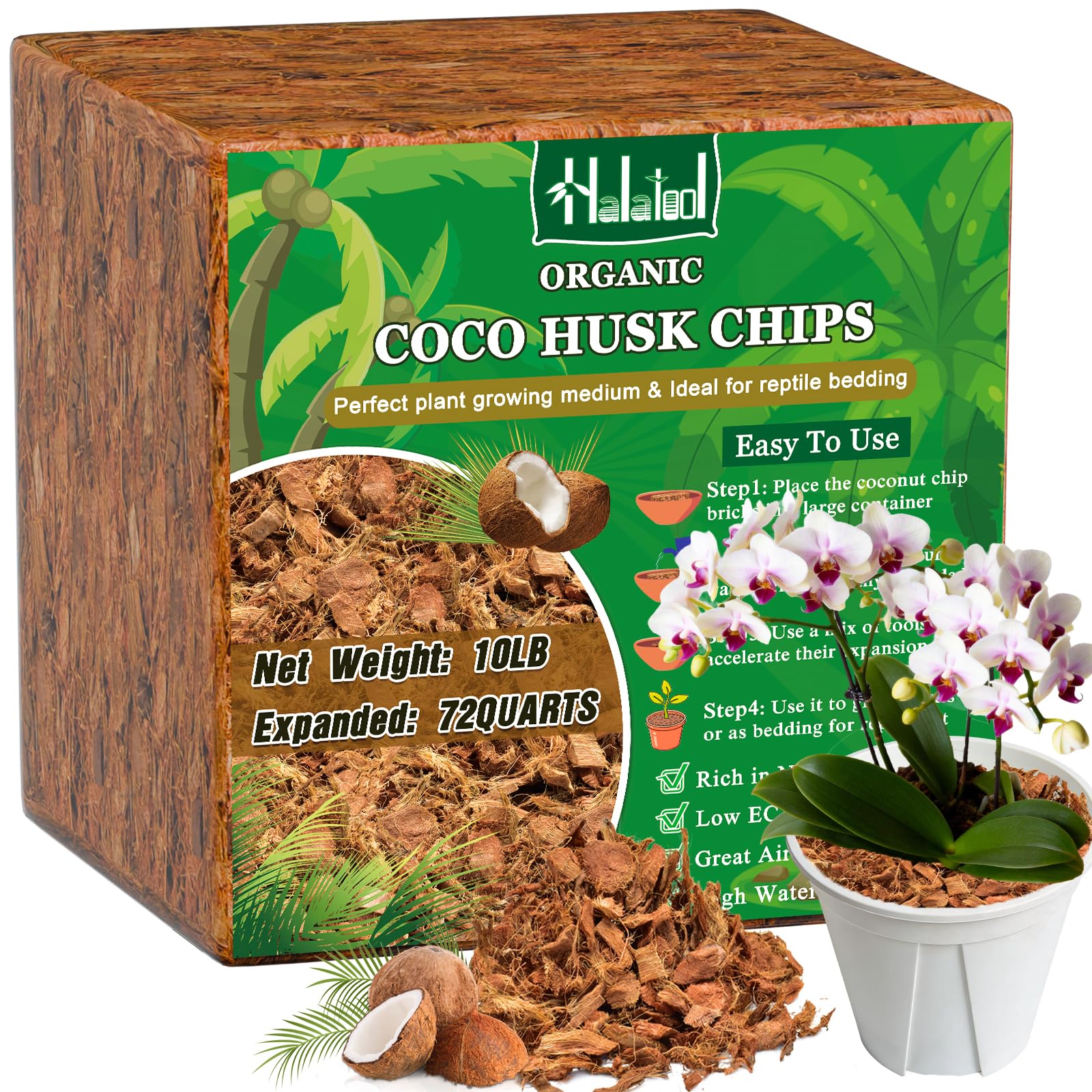
Halatool’s compressed brick is a volume champion, expanding to 72 quarts — roughly 2.4 cubic feet — from a single 10-pound block. The chips are sourced from matured coconut husks with low electrical conductivity, meaning they won’t introduce soluble salts that can burn sensitive palm roots. This makes it a safe choice for newly transplanted palms still establishing their root systems.
Customer reports emphasize the chips’ ability to stay put in windy conditions, a trait that standard bark mulches lack. The coarser texture creates natural air gaps that discourage fungal growth, while the coconut scent is pleasant without being overpowering. Multiple buyers described using it for the “mulch sandwich” method — a layer of chips over cardboard — with excellent weed suppression results.
The brick requires about a gallon of water for full expansion, so plan ahead with a large container or wheelbarrow. Once expanded, the material is light enough for easy transport to planter beds, and the price-per-quart is hard to beat for covering large areas around established palm groves.
What works
- Exceptional wind resistance keeps mulch in place
- Low EC means no salt buildup near roots
- High volume per brick at a low cost
What doesn’t
- Requires significant hydration time to fully expand
- Some chips are smaller than advertised in certain batches
4. HealthiStraw GardenStraw
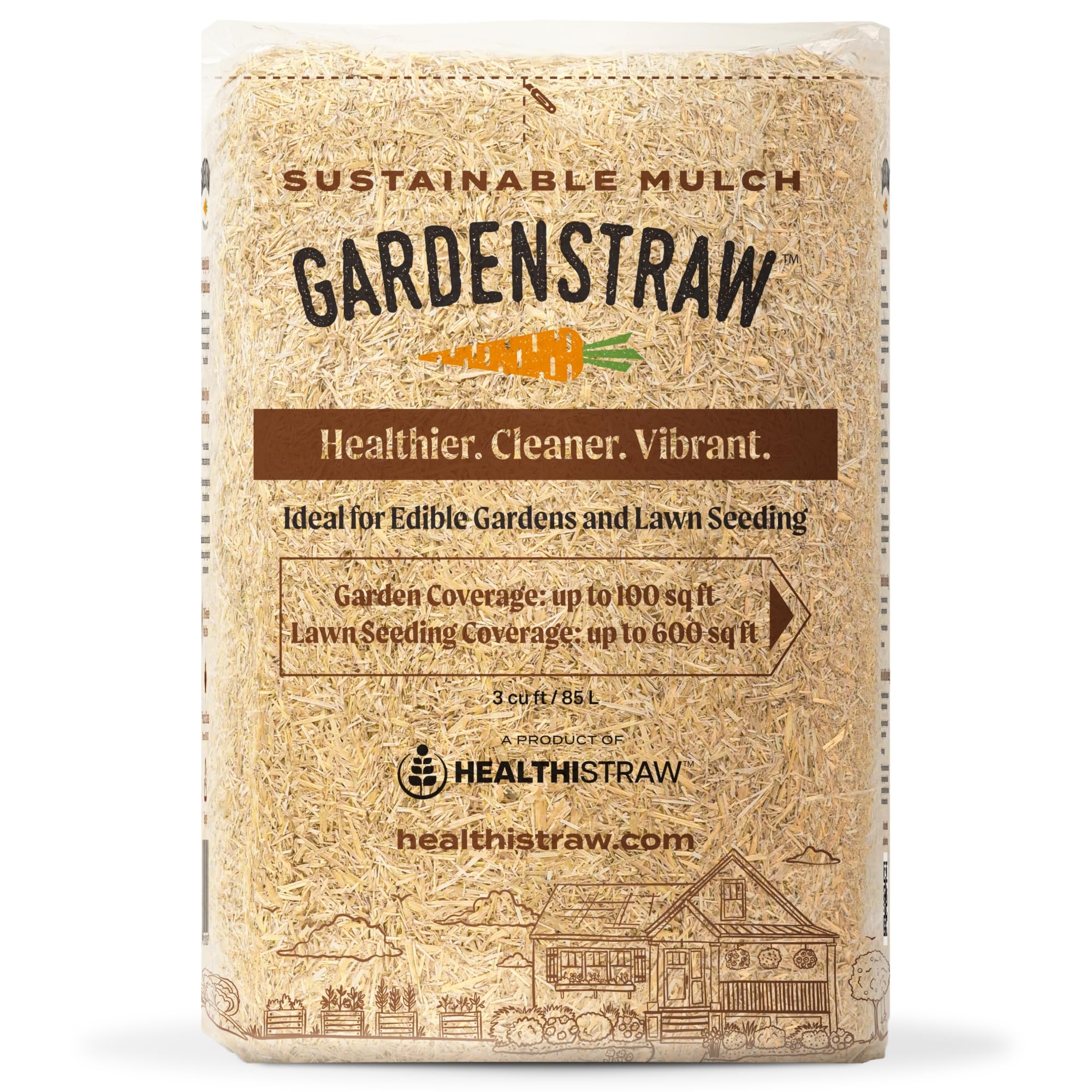
For palm owners managing large properties or multiple specimen trees, HealthiStraw’s wheat straw bale offers the most ground coverage per purchase. A single 3-cubic-foot bale covers up to 100 square feet at the recommended 2-3 inch depth. The straw is naturally filtered to remove dust, dirt, and as many weed seeds as possible — a critical advantage for reducing unwanted germination near palm plantings.
The fibers interlock when watered, creating a natural mat that resists wind displacement. This is especially useful for palms on exposed coastal or hillside lots where loose mulches blow away. Users consistently report a significant reduction in watering frequency, with the straw keeping soil temperatures cooler by limiting evaporation — ideal for palms stressed by full-summer sun.
The straw breaks down over a single growing season, adding organic carbon to the soil. This requires annual reapplication, but it also means you can till it into the soil in spring to boost microbial activity without worrying about persistent wood chunks. Some users noted a few grass seeds in their bale, so spot-checking for volunteers is wise.
What works
- Massive coverage reduces number of bags to buy
- Interlocking fibers resist wind and heavy rain
- Breaks down quickly to enrich soil carbon
What doesn’t
- May contain occasional grass seeds
- Requires annual reapplication due to fast decomposition
5. Hull Farm Cocoa Bean Shell Mulch

Cocoa shell mulch from Hull Farm offers a dual benefit: a rich chocolate scent that lingers for about a week after application, and a mild fertilizer value of 2.5-1-3 NPK that won’t burn vegetation. This makes it one of the few mulches that actively feeds palms as it breaks down. The shells form a light blanket that retains moisture without creating a watertight barrier.
Many users report that squirrels and other digging pests show less interest in cocoa shells compared to pecan or wood mulches. The texture is lightweight — almost fluffy — which means it can blow away on very windy days if not watered immediately after spreading. Once wet, the shells mat together into a stable, continuous layer that suppresses weeds effectively.
Potential buyers should be aware that cocoa shell mulch is toxic to dogs if ingested, as it contains theobromine. For households with canine companions, this is a hard no. Some batches may develop a harmless white mold in humid conditions, which disappears once the shells dry out.
What works
- Mild NPK value feeds palm roots during breakdown
- Chocolate scent is pleasant and deters some pests
- Forms a stable mat after watering
What doesn’t
- Toxic to dogs if ingested
- Can develop mold in high humidity environments
6. The Andersons BioChar DG
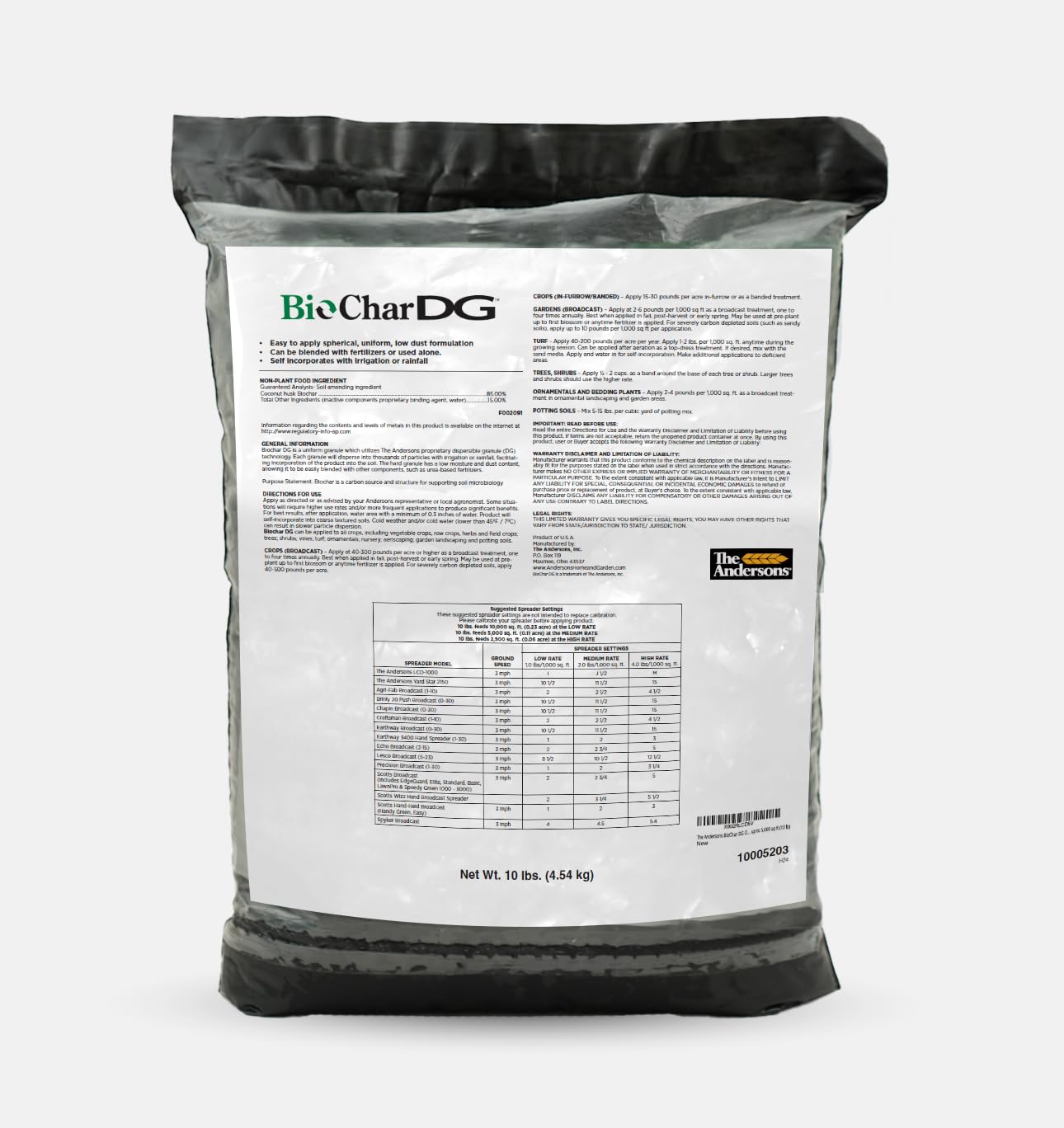
The Andersons BioChar DG is not a traditional surface mulch — it’s a dispersible granule biochar that works best when integrated into the soil. For palms struggling in heavy clay or sandy soils that cannot hold nutrients, this product provides a permanent solution. The patented DG Technology allows the granules to break apart and infiltrate the root zone with water, attracting beneficial bacteria and moisture directly to where palms feed.
User feedback from heavy clay regions is overwhelmingly positive, with lawns and garden beds showing improved tilth and drought resistance after two applications. For palms, this means the roots can access water and nutrients even during dry spells. The biochar stays active in the soil for years, steadily improving structure with each season.
The biggest drawback is the up-front cost and the need to “charge” the biochar before application. Several users reported yellowing when applied without first soaking it in a nutrient solution — the biochar can initially absorb nitrogen from the soil. Applying it alongside a balanced palm fertilizer avoids this issue entirely.
What works
- Permanently improves soil structure and water retention
- Dispersible granule design for even distribution
- Attracts beneficial soil microbes to root zone
What doesn’t
- Needs pre-charging with nutrients to avoid nitrogen tie-up
- Premium price for initial purchase
7. Longleaf Pine Straw Roll

Longleaf Pine Straw comes in a convenient roll form that unrolls quickly over beds, covering up to 125 square feet per package. The pine needles are sourced from longleaf pine trees and are non-colored, maintaining their natural reddish-brown hue. For palm landscapes aiming for a more natural, forest-floor aesthetic, this is a visually cohesive choice.
The needles interlock naturally, creating a durable mat that withstands heavy wind and rain without shifting. This is a standout feature for coastal palm plantings. Customer feedback highlights how clean the product is — virtually free of sticks, thorns, or debris — making it comfortable to handle bare-handed. The needles also stay soft underfoot, which many users noted reduced muddy paw prints from dogs walking across mulched areas.
Pine straw decomposes slowly, often lasting 12-18 months before needing a refresh. It naturally acidifies the soil as it breaks down, which can be beneficial for palms in alkaline soils but may require periodic pH testing for container palms. Coverage consistency can vary between batches, so buying extra is recommended for complete beds.
What works
- Extremely clean with no sticks or thorns
- Interlocking needles resist high winds naturally
- Soft on paws and comfortable to walk on
What doesn’t
- Coverage volume can vary between bales
- Naturally acidifies soil over time
Hardware & Specs Guide
Cation Exchange Capacity (CEC)
CEC measures a mulch’s ability to hold and exchange positively charged ions like potassium, calcium, and magnesium — all essential for palm health. Coco coir chips typically have a CEC of 40–60 meq/100g, significantly higher than peat moss or bark. This means coco-based mulches actively bank nutrients in the root zone, releasing them gradually as palms need them.
Expansion Rate and Volume
Compressed coco bricks typically expand 6–8 times their dry volume when hydrated. A 10-pound brick can yield 15–24 gallons of usable mulch. This ratio is critical for planning: one brick covers roughly 8–12 square feet at a 2-inch depth. Pine straw and wheat straw do not compress as tightly but provide more surface area per pound due to their needle and fiber structure.
FAQ
Will bark mulch or wood chips harm my palm tree?
How deep should I apply mulch around a palm tree?
Can I use cocoa shell mulch if I have dogs that dig in the garden?
Final Thoughts: The Verdict
For most gardeners, the mulch for palm trees winner is the Plantonix Organic Coco Chips because its neutral pH, high CEC, and chunky texture deliver the ideal moisture and nutrient balance for palm root systems. If you want an OMRI-certified organic option that expands dramatically, grab the Back to the Roots Coconut Husk Mulch. And for large-scale coverage where wind resistance is a concern, nothing beats the Longleaf Pine Straw Roll.