
You want a mulch that stops weeds, holds moisture, and looks good — but one type that works for your neighbor might blow away in your yard or even harm your dog. The right mulch for landscaping comes down to one honest question: what job do you need it to do, and how much wind, rain, or foot traffic does it have to survive? This guide breaks down five very different mulches — from pine bark nuggets to cedar chips to longleaf pine straw — so you can pick the one that actually delivers on its promises.
I’m Rikta — the co-founder and writer behind Lawn Gear Lab. This guide is built by comparing the manufacturers’ published specifications and the patterns across verified customer reviews, so you get each pick’s real strengths and trade-offs instead of marketing spin.
Whether you need to hold soil moisture for vegetable beds, block weeds around flowers, or add a clean finish to your garden, the right mulch for landscaping can transform your yard without hidden downsides like stray weed seeds or a short-lived scent.
How To Choose The Best Mulch For Landscaping
Mulch isn’t one-size-fits-all, even if every bag in the garden center looks similar. The secret to a good buy is matching the mulch’s material, texture, and coverage area to your specific garden beds, the local weather, and the time you have to maintain it.
Material: bark, straw, shells, or needles?
Pine bark nuggets (like the Soil Sunrise product) are chunky and great for aeration in containers and around trees, but they can float away in heavy rain. Pine straw (like the Longleaf roll) knits together so it stays put in wind. Cocoa shells (the Hull Farm option) smell incredible but can be toxic to dogs if eaten and lose their chocolate scent after about a week. Cedar chips (the Double Tree product) naturally repel insects and smell good, but they break down slowly so they add less organic matter to the soil.
Coverage: matching the bag to your square footage
A bag’s coverage claim only tells half the story — thickness matters more. The HealthiStraw GardenStraw, for example, covers up to 100 square feet at a 2-3 inch layer, which is the depth you need to actually suppress weeds. If you spread the same bag too thin (say 1 inch), it won’t block sunlight and weeds will poke through. Always plan for a 2-3 inch layer, and buy 20-30% more than your bed’s surface area to account for settling.
Natural vs. colored: avoiding hidden chemicals
Dyed mulches usually use carbon-based dyes that are safe, but the real concern is the wood source — some colored mulches are made from recycled pallets and construction waste that may contain chemicals like chromated copper arsenate (a wood preservative). All five picks on this list are natural, uncolored mulches, so you don’t have to worry about unknown contaminants leaching into your vegetable garden or flower beds.
Quick Comparison
On smaller screens, swipe sideways to see the full table.
| Model | Category | Best For | Key Spec | Amazon |
|---|---|---|---|---|
| 50,150 Cocoa Bean Shell Mulch | Premium | Chocolate scent & moisture retention | 2 cubic feet bag | Amazon |
| Soil Sunrise Pine Bark Nuggets | Mid-Range | Containers & aeration for roots | 30 quarts (1 cubic foot) | Amazon |
| Double Tree Incense Cedar Chips | Mid-Range | Natural insect repellent & scent | 16 quarts (0.5 cubic foot) | Amazon |
| HealthiStraw GardenStraw | Premium | Vegetable gardens & water conservation | 3 cubic feet (20 lbs) | Amazon |
| Longleaf Pine Straw Roll | Premium | Wind-prone areas & clean ground cover | Covers up to 125 square feet | Amazon |
In‑Depth Reviews
1. 50,150 Cocoa Bean Shell Mulch, 2 Cubic Feet

2.5-1-3 (N-P-K) fertilizer value and a genuine chocolate scent make the Hull Farm Cocoa Bean Shell Mulch the top pick for any gardener who wants a sensory-rich, soil-feeding mulch that won’t burn plant stems. It carries an approximate fertilizer value of 2.5-1-3 (N-P-K, meaning it adds a small boost of nitrogen, phosphorus, and potassium to your soil) and it won’t burn vegetation, so you can spread it right up against plant stems without worry.
Buyers report the “smell is strong when first added” and it “smells like chocolate even during a heat wave,” which makes it a genuine sensory experience in a courtyard or covered garden bed. Unlike shredded bark that can crust over, this mulch “retains moisture better than other mulches” and “doesn’t blow away too easily,” per buyers. If you’re trying to deter squirrels, one reviewer noted this mulch worked where pecan mulch failed — the rodents showed less interest in cocoa shells.
The honest limit is that the chocolate scent lasts only about the first week, and the product is notably expensive for its volume — one reviewer recalled paying a high price per bag years ago. Also, cocoa shell mulch is toxic to dogs if ingested, so skip it if your pets have access to the beds. For a small, focused area where you want a beautiful look and a brief chocolate aroma, this is the most unique pick available.
Why it’s great
- Smells like real chocolate, not artificial
- Naturally fertilizes as it degrades (2.5-1-3 N-P-K)
- Stays in place once watered and holds moisture
Good to know
- Scent fades significantly after the first week
- Harmful to dogs if they dig in or eat the hulls
- Only 2 cubic feet for a premium price
2. Soil Sunrise 100% Natural Pine Bark Mulch Nuggets, 30 Quarts
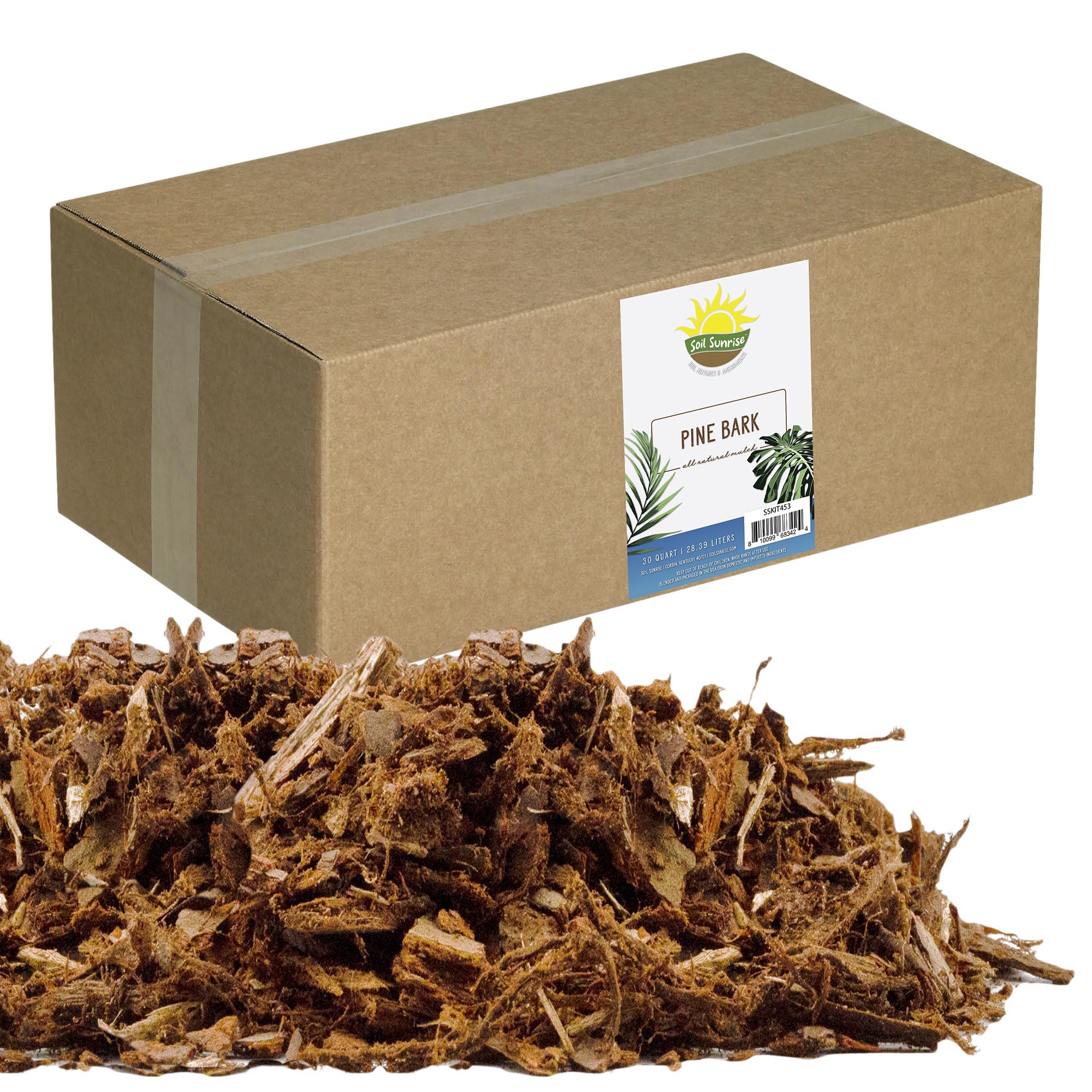
You get roughly 88% more volume with the Soil Sunrise Pine Bark Nuggets (30 quarts) than with the top pick Cocoa Bean Shell Mulch (2 cubic feet is about 16 quarts by usable volume), at a lower cost per quart, making it a much more practical choice for covering multiple containers or medium-sized beds. Where the cocoa shells deliver scent, these pine bark nuggets deliver structure — the average 1/2-inch pieces create air pockets in the soil that help roots breathe.
This is the mulch to grab when you’re potting up container plants or refreshing houseplant surfaces. Owners mention the nuggets are “chunky for aeration, fine for good texture” and one reviewer called them “perfect” for replacing peat moss in potting mixes because they help “evenly distribute moisture.” The pine scent is clean and natural, not overwhelming, so it won’t clash with flowering plants.
One trade-off noted by a reviewer is that the bag came unsealed, which caused a messy spill during shipping. Also, because these are nuggets and not shredded, they won’t lock together as a wind-resistant mat — expect some displacement in exposed beds during heavy storms. Choose this over the top pick if you’re working with containers, terrariums, or small raised beds and want a clean, aerating mulch that offers the best value in the lineup.
Where it shines
- Large 30-quart bag gives excellent coverage per dollar
- All-natural with no added fertilizers or pesticides
- Ideal size for potting mixes and container gardens
Worth noting
- Nuggets can float or move in heavy rain
- Bag seal isn’t always secure during shipping
- Not the best choice for large, open flower beds
3. Double Tree Incense Cedar Wood Chips, 16 Quarts

If bugs munch through your garden beds and you want a mulch that pulls double duty, the Double Tree Cedar Wood Chips are designed for exactly that — the natural cedar oil acts as a deterrent for beetles, moth larvae, and other common garden insects. Buyers confirm the chips are “effective for bugs, retains effectiveness after rain, colors don’t run.”
This product is ground fine enough that customers note the pieces “are not chips to float away” when watered, unlike larger bark nuggets such as the Soil Sunrise. The cedar scent is described as “amazing” by multiple buyers, and it lasts significantly longer than the cocoa mulch’s chocolate smell because the natural oils in cedar are slow to evaporate. One reviewer is even using it inside closets to protect woolens from moths.
Where it falls short is on volume-to-price — you get only 16 quarts (half a cubic foot), making it pricier per quart than the Soil Sunrise pine bark. And while cedar is wonderful for pest control, it takes longer to break down than straw or cocoa shells, so it adds less organic matter back to the soil each season. Choose this mulch for its dual action as a landscape topping and a natural insect repellent.
What stands out
- Strong natural cedar scent lasts well after application
- Deters beetles, moths, and other garden insects
- Fine texture resists floating in rain
The trade-offs
- Expensive per quart compared to bark or straw
- Slow to decompose, so less soil enrichment
- May be too pricey for large-scale landscaping
4. HealthiStraw GardenStraw, 3 cu ft (20 lbs)
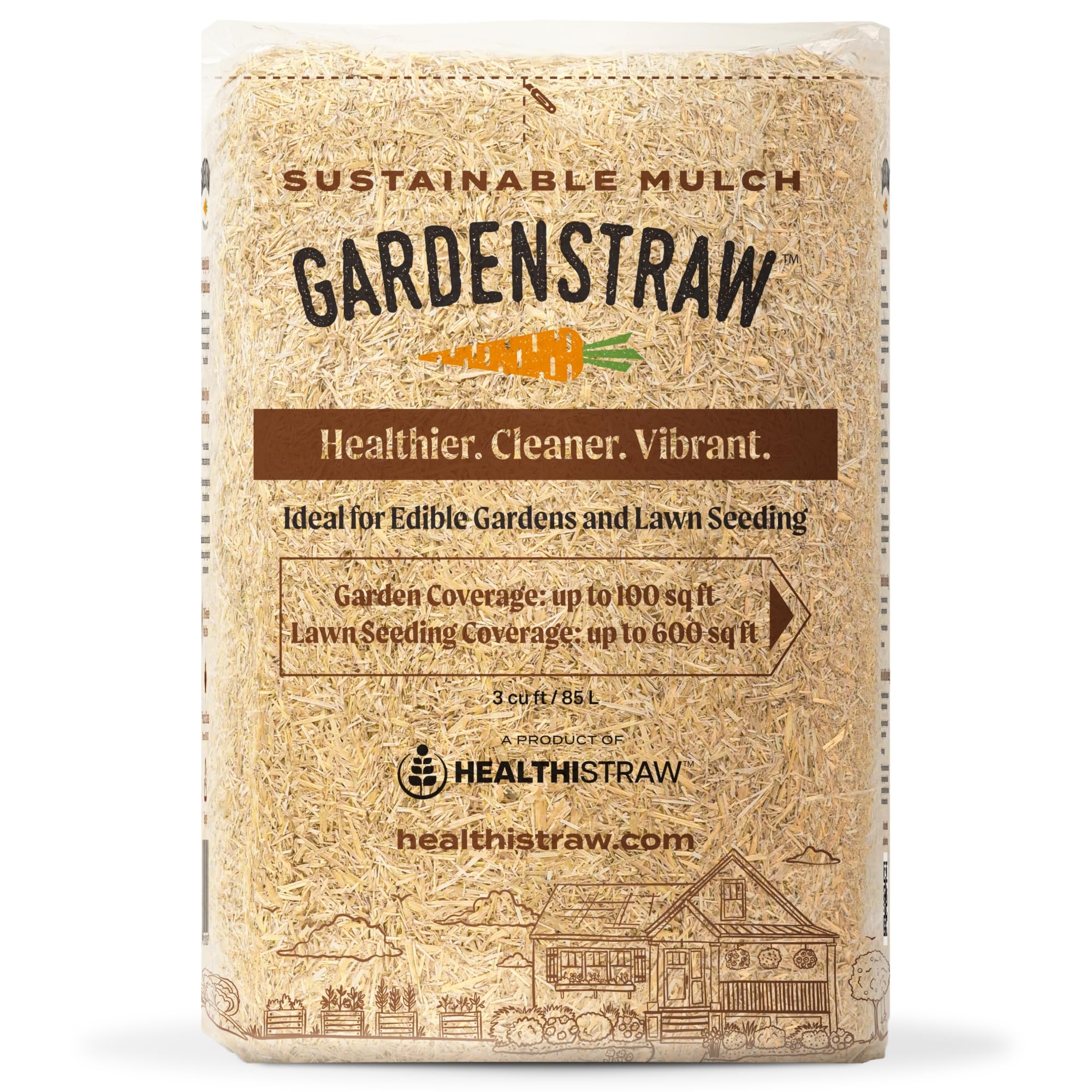
The single number that matters most in this category is coverage area at proper depth, and the HealthiStraw GardenStraw scores a 100 — 3 cubic feet (20 lbs) covers up to 100 square feet at a 2-3 inch layer, the depth needed to suppress weeds and hold moisture. The manufacturer says it can reduce watering needs by up to 50%, a bold claim backed by the straw’s natural ability to slow evaporation.
The catch you accept is the risk of weed seeds. While the product is “thoroughly cleaned,” one buyer mentioned “so many seeds” sprouting in their flower beds, calling it a 3-star experience. However, another buyer noted they “haven’t noticed any weed seeds in the package which is a concern with some types of garden straw.” The straw fibers are specially cut to interlock when watered, and reviewers confirm it “didn’t blow away in wind” once dampened.
At 20 lbs, the compressed bale is heavy to carry, but the coverage per bag is unmatched — it’s the most economical option for large vegetable beds, raised rows, and lawn seeding projects. For serious gardeners who want a clean, organic straw that improves soil as it degrades, this is the best dollar-for-square-foot value in the group.
The upsides
- Covers up to 100 sq ft at 2-3″ depth — most coverage per bag
- Claims to reduce watering needs by up to 50%
- Breaks down quickly to add organic matter to soil
Keep in mind
- Some batches may contain weed seeds that sprout
- Heavy bag (20 lbs) is awkward to move
- Not ideal for ornamental flower beds that need a tidy look
5. Longleaf Pine Straw Roll for Landscaping

For a buyer who lives in a windy area or wants a mulch that looks clean and uniform without blowing into the lawn, the Longleaf Pine Straw Roll is a category unto itself. The needles are about 14 inches long (far longer than straw from other pine species), and they naturally intertwine when spread, creating a mat that “withstands high wind and rain,” per buyer reports.
Reviewers consistently call it “clean, easy to apply, looks great” and note it’s “very clean” with “no sticks or thorns” — a meaningful detail compared to some bark mulches that contain sharp debris. One customer even uses it as a solution for muddy paws from their dog, saying it’s “soft, good-looking, effective coverage.” The coverage claim of up to 125 square feet is for a single compressed bale, though one owner reported round bales are about 98% needles but offer “inconsistent coverage per bale.”
The honest limit is that pine straw breaks down faster than bark or cedar, so you’ll need to top it off annually. It also slides off sloping beds more easily than interlocking straw mats. For flat, exposed beds where wind is the enemy, this is the best choice — the needles lock together in a way no shredded bark or cocoa shell can match.
Why we’d pick it
- 14-inch needles lock together to resist wind and rain
- Exceptionally clean with no sticks or thorns
- Soft texture is comfortable for walking and pet areas
A few caveats
- Coverage per bale can be inconsistent
- Breaks down faster than bark or cedar mulch
- May slide off sloped garden beds
Understanding the Specs
Volume vs. Coverage: reading the bag right
A bag labeled “2 cubic feet” or “30 quarts” tells you how much space the mulch takes up in the bag, not necessarily how far it spreads. Coverage depends entirely on how deep you apply it — a 2 cubic foot bag at a skimpy 1-inch layer covers about 24 square feet, but at the recommended 3-inch layer it covers only about 8 square feet. Always calculate: square footage of bed × 0.25 (for 3 inches of depth) gives you the cubic feet you actually need. Then buy 20% extra for settling and thick spots.
Nutrient content: what mulch actually feeds your soil
Not all mulches are created equal when it comes to soil enrichment. Cocoa bean shells have an approximate fertilizer value of 2.5-1-3 (N-P-K, meaning the percentage of nitrogen, phosphorus, and potassium) because they contain some natural nutrients that release as the shells break down. Pine bark and cedar chips are very low in nutrients — they’re primarily physical barriers that improve soil structure as they rot. Straw mulches like HealthiStraw GardenStraw add carbon to the soil, which feeds beneficial microbes, but they also tie up nitrogen temporarily as they decompose, so you may need to add a little extra fertilizer when working straw into the soil at the end of the season.
FAQ
Can cocoa bean shell mulch harm my dog?
How often should I replace or top off my mulch in a flower bed?
Does cedar mulch really repel bugs, or is that just marketing?
Final Thoughts: The Verdict
For most buyers, the best mulch for landscaping winner is the Soil Sunrise Pine Bark Nuggets because it combines the largest volume (30 quarts) with a versatile, all-natural texture that works in containers, houseplants, and garden beds alike. If you want a chocolate-scented statement piece for a small courtyard, grab the Hull Farm Cocoa Bean Shell Mulch. And for large vegetable gardens where water conservation matters most, the standout is the HealthiStraw GardenStraw for coverage depth and moisture retention.