
Specs are compiled from manufacturer listings and verified buyer reviews and can change over time — please confirm the key details on the product page before buying.
Florida’s sandy soil drains so fast your plants can get thirsty just hours after a rain, and the intense sun bakes exposed ground into hard, cracked earth. Picking a mulch that holds moisture without washing away in a summer downpour is the single smartest thing you can do for your yard down here.
I’m Rikta — the founder and writer behind Lawn Gear Lab. This guide is built by comparing the manufacturers’ published specifications and the patterns across verified customer reviews, so you get each pick’s real strengths and trade-offs instead of marketing spin.
Heat, humidity, and fast-draining sand call for a specific kind of ground cover — one that retains water, resists compaction, and breaks down slowly. Here is what you need to know to find the best mulch for florida that actually works in your yard.
Quick Picks
- Gro-Med Coco Husk Chips — Best Overall
- Plantonix Organic Coco Chips — Top Performer
- Back to the Roots Coco Mulch — Best Value
- HealthiStraw GardenStraw — Premium Pick
- Hull Farm Cocoa Bean Shell Mulch — Premium Pick
- USA PINESTRAW Pine Straw Mulch — Budget Champion
How To Choose The Best Mulch For Florida
Florida gardens face a unique challenge — fast-draining sand and scorching sun mean water evaporates quickly. A mulch that excels somewhere dry and cool might leave your beds parched in a Tampa summer. Focus on these three things when you shop.
Water Retention in Sandy Soil
Your mulch’s number one job in Florida is holding onto moisture so roots can drink before the sun steals it. Coco coir chips can absorb up to ten times their weight in water, making them a standout choice. Look for materials that trap moisture rather than letting rain run straight through.
Expanded Volume and Coverage
Many organic mulches arrive as compressed blocks or bales — they expand dramatically once you soak them. A 10lb coco block might expand to 65 quarts or about 2 cubic feet of usable mulch, so check the expanded volume, not just the bag weight, to know how much ground it actually covers.
Breakdown Rate and Longevity
In Florida’s heat and humidity, organic mulch decomposes faster than in cooler regions. Coco husk chips break down more slowly than bark or straw, saving you from reapplying every season. If you prefer a material that adds organic matter quickly to sandy soil, wheat straw is a faster-composting option that enriches the earth as it goes.
Quick Comparison
| Model | Best For | Expanded Volume | Water Retention | Material Type | Amazon |
|---|---|---|---|---|---|
| Gro-Med Coco Husk Chips | Best Overall for Moisture & Aeration | 65 Quarts | Holds 3X more water than bark | Coconut Husk Chips | Amazon |
| Plantonix Coco Chips | Top Performer for Nutrient Retention | 15 Gallons | Absorbs 10x its weight in water | Coconut Coir Chips | Amazon |
| Back to the Roots Coco Mulch | Best Value Expanded Coverage | 2 Cubic Feet | — | Coconut Husk | Amazon |
| HealthiStraw GardenStraw | Premium for Water Conservation | 3 Cubic Feet | Reduces watering needs by up to 50% | Wheat Straw | Amazon |
| Hull Farm Cocoa Bean Shell | Premium Pick for Nutrient Boost | 2 Cubic Feet | — | Cocoa Bean Shells | Amazon |
| USA PINESTRAW Pine Straw | Budget Champion for Weed Control | 65–80 Sq Ft Coverage | — | Pine Straw | Amazon |
In‑Depth Reviews
1. Gro-Med Coco Husk Chips
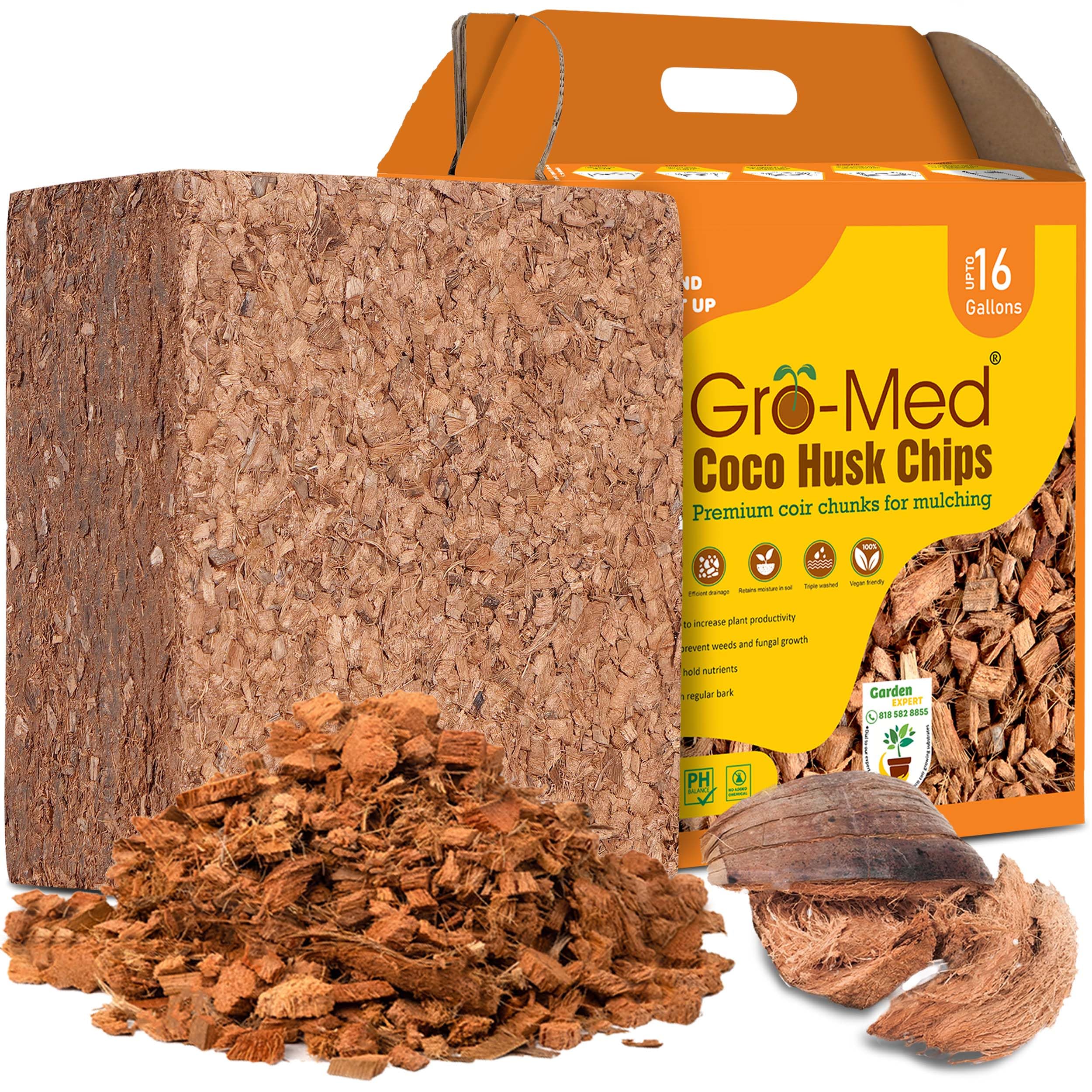
The compressed block that unlocks three times the moisture of bark for thirsty Florida beds.
Buyers report the 10lb block expands to 16 gallons of coarse, chunky mulch that won’t compact into a crust. That open structure creates air pockets so roots breathe even after a heavy rain — a lifesaver in Florida’s humid, saturated soil. The coconut husk chips hold up to three times more water than regular bark, meaning you water less often and the ground stays damp longer between showers.
Gro-Med triple-washes its chips to keep the electrical conductivity (EC) low and the pH stable, which prevents nutrient lock-up. Owners mention the chips work beautifully in a “chunky mix” alongside bark, perlite, and charcoal for improved airflow and drainage. One buyer called it “the perfect solution for improved soil drainage and moisture retention” and said the block “expands like a sponge.”
Unlike the straw options on this list that break down faster in heat, these coir chips are more resilient — the maker claims they are 2X more resistant than regular bark, so you get longer coverage before reapplication.
Where It Shines
- 65 quarts expanded volume from a single 10lb block
- Holds 3X more water than bark, cutting watering frequency
- Triple-washed for low EC and balanced pH — safe for sensitive roots
The Trade‑Off
- Compressed block requires soaking and manual breaking apart before use
- Chunky texture may not suit fine-grade top‑dressing for small seedlings
Reach for this if: you have sandy Florida soil that drains too fast — this block delivers 65 quarts of moisture-holding, airy mulch that stays in place.
Think twice if: you need a fine, decorative finish for a front-yard flower bed — the coarse chips look more natural than tidy.
2. Plantonix Organic Coco Chips

A 10lb coco block that drinks ten times its own weight to fight Florida’s dry spells.
Your vegetable roots stay hydrated through the afternoon heat because this mulch holds far more water than standard bark. Plantonix comes as a 10-pound compressed brick that expands to 15 gallons of coarse coconut husk chips. The manufacturer states these chips absorb up to ten times their weight in water — over three times the retention rate of standard bark. In sandy Florida soil where moisture vanishes fast, that extra holding power makes a real difference.
These chips also boast a high cation exchange capacity (CEC) — a technical term for the material’s ability to grab and hold onto nutrients so they don’t wash away in Florida’s frequent downpours. The neutral pH prevents nutrient lock-up, which is a common problem when you are pushing fertilizer through fast-draining sand. You can use the expanded chips as a top layer mulch, mix them into potting soil, or even add them to a hydroponic setup.
Unlike the wheat straw or pine straw options here, this coco product lasts longer before breaking down, so you won’t be replenishing as often. Its clean, natural look also works as a decorative top-dress for container plants.
What Makes It Stand Out
- Absorbs 10x its weight in water for class-leading moisture retention
- High CEC holds nutrients in the root zone, reducing fertilizer waste
- 15 gallons expanded volume covers generous ground
What to Consider
- No verified customer reviews available to confirm long-term field performance
- Block must be fully hydrated and fluffed before use — takes time
Grab this for: a thirsty vegetable garden in sandy soil where water runs through in minutes — the 10x absorption buys you hours between waterings.
Skip it for: instant use right out of the bag — the compressed brick needs a planned soak.
3. Back to the Roots Coco Mulch
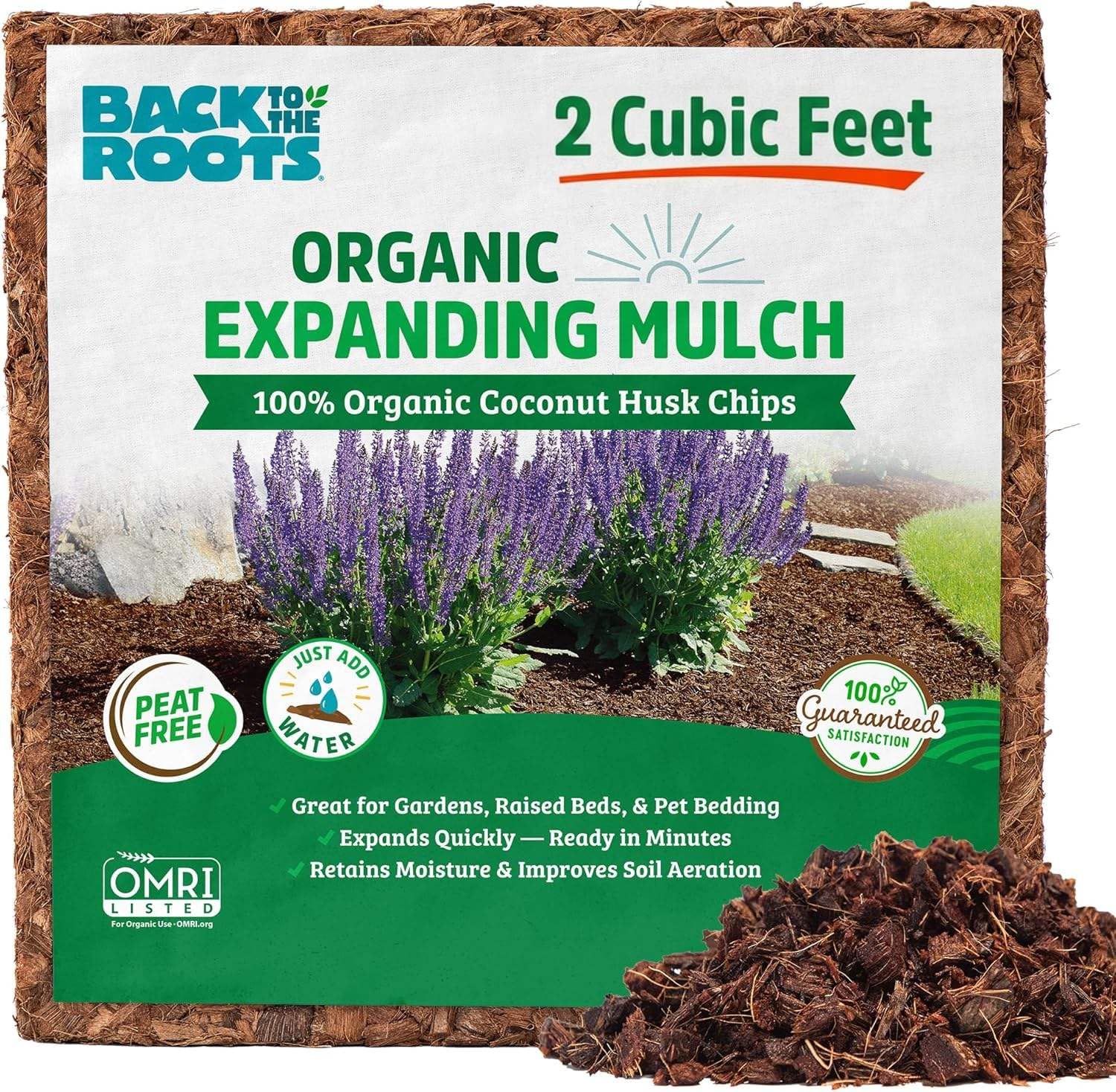
A peat-free, OMRI-listed coco block that expands to over two cubic feet for less.
Back to the Roots keeps it simple: a 10lb compressed block of coconut husk mulch that expands to over 2 cubic feet once you add water. That is roughly the same coverage as two standard 1-cubic-foot bags of wood mulch, but in a single compact brick that is easy to ship and store. It is peat-free and OMRI-listed, so organic gardeners can use it without worrying about added chemicals.
The brand also runs a “Grow One Give One” program — share a photo of your garden and they donate a grow kit and STEM curriculum to a classroom. That is a small bonus, but it speaks to how the company thinks about sustainability. Use it for raised beds, vegetable gardens, or even as pet bedding, just like the other coco chips on this list.
Compared to the Gro-Med block, this one matches the 10lb weight but stops at 2 cubic feet of expanded volume versus 65 quarts (roughly 2.4 cubic feet), so you get slightly less coverage per block. It still holds moisture well and improves aeration in heavy Florida soil.
Why It Wins on Value
- Expands to over 2 cubic feet — good coverage for the price
- Peat-free and OMRI-listed for organic gardens
- 100% satisfaction guarantee if you are unhappy with the product
The Fine Print
- No customer reviews available to confirm expansion or quality consistency
- Less expanded volume per block than the Gro-Med 65-quart option
Pick this if: you want a reliable, organic coco mulch at a friendly price point for covering raised beds and garden rows.
Look elsewhere if: you need maximum coverage from a single block — the Gro-Med gives you more cubic feet per brick.
4. HealthiStraw GardenStraw
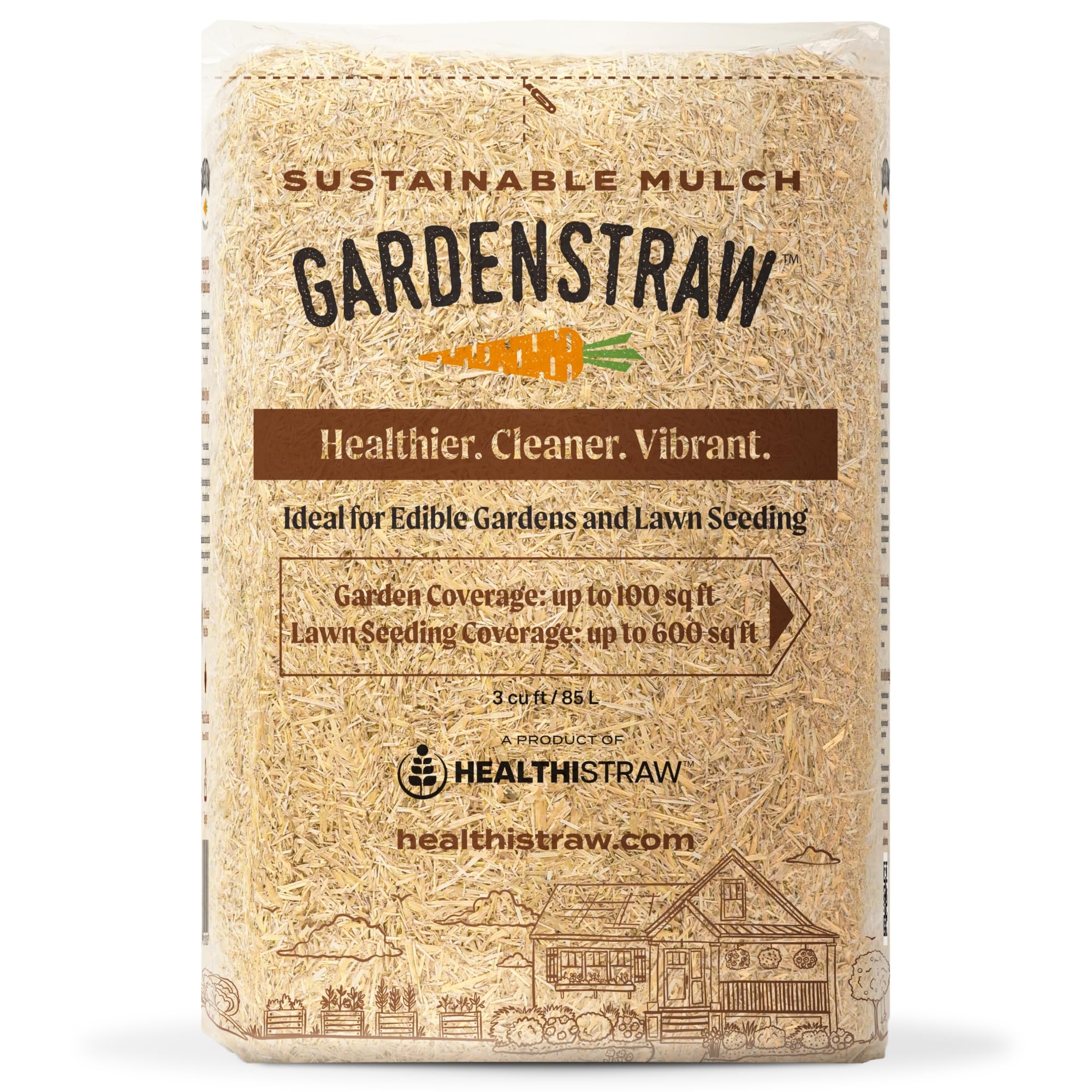
A 3-cubic-foot bale of clean wheat straw that cuts watering needs by half for Florida gardens.
HealthiStraw takes a different approach than the coco blocks — it is a 3 cubic foot compressed bale of 100% non-GMO wheat straw that has been naturally filtered to remove dust, dirt, and as many seeds as possible. That seed removal is a big deal in Florida, where volunteer wheat sprouting in your flower beds would be a headache. The bale covers up to 100 square feet at a 2 to 3-inch layer, or up to 600 square feet if you are using it for lawn seeding at a quarter-inch thickness.
Where this straw really earns its spot is water conservation. The manufacturer says it retains soil moisture and reduces watering needs by up to 50%. In the Florida heat, that could mean the difference between daily watering and every-other-day. The straw fibers interlock when watered, so they resist wind and rain without chemical binders — a practical advantage during summer thunderstorms compared to lightweight bark that can float away.
Unlike the slower-decomposing coco chips, wheat straw breaks down quickly and adds carbon to your compost, naturally enriching sandy soil. It stays cooler than dark mulches too, keeping root zones from baking.
The Big Advantage
- Retains soil moisture to cut watering frequency by up to 50% — huge for Florida’s dry spells
- 3 cu ft bale covers up to 100 sq ft at a 2-3 inch layer
- Specially cut fibers interlock to stay put in wind and rain
One Drawback
- Breaks down faster than coco husk chips in humid climates, requiring more frequent reapplication
- No customer reviews confirm the 50% watering claim in real-world Florida gardens
Reach for this if: you want to slash your water bill and build soil fertility at the same time — the straw enriches sand as it rots.
skip it if: you want a low-maintenance mulch that lasts multiple seasons — this one decomposes fast.
5. Hull Farm Cocoa Bean Shell Mulch

A 2-cubic-foot bag of cocoa shells that feeds your soil a mild 2.5-1-3 fertilizer boost as it mulches.
Hull Farm’s cocoa bean shell mulch brings a dual purpose to Florida flower beds: it covers the ground and slowly releases a gentle fertilizer with an approximate value of 2.5-1-3 (nitrogen-phosphorus-potassium). That means as the shells break down, they feed your plants without the risk of burning vegetation, which is a real concern with high-nitrogen mulches in the heat. The rich, dark brown color also gives garden beds a polished, decorative look that coarser coco chips or straw can’t match.
One thing to note: cocoa shell mulch is lighter than bark, so it can wash or blow around more easily during a Florida thunderstorm. It also locks in moisture well but may form a slight crust on the surface if applied too thickly. The 2 cubic foot bag covers roughly the same area as a standard bag of wood mulch, so it is easy to calculate how many you need for a project.
Compared to the HealthiStraw wheat straw above, the cocoa shells release nutrients rather than just improving soil structure, giving you a mild fertility boost without extra fertilizer.
Where It Excels
- Approximate fertilizer value 2.5-1-3 feeds plants as it decomposes
- Won’t burn vegetation even in hot Florida sun
- Attractive dark brown color for front-yard landscaping beds
Downsides
- Lightweight shells can scatter in heavy rain or wind
- Toxic to dogs if ingested in large quantities (theobromine) — not safe for pet owners
Best for: decorative flower beds where you want a nutrient boost and a polished look without extra fertilizing.
Not for: homes with dogs that chew or dig in garden beds — the shells contain theobromine, which is harmful to canines.
6. USA PINESTRAW Pine Straw Mulch
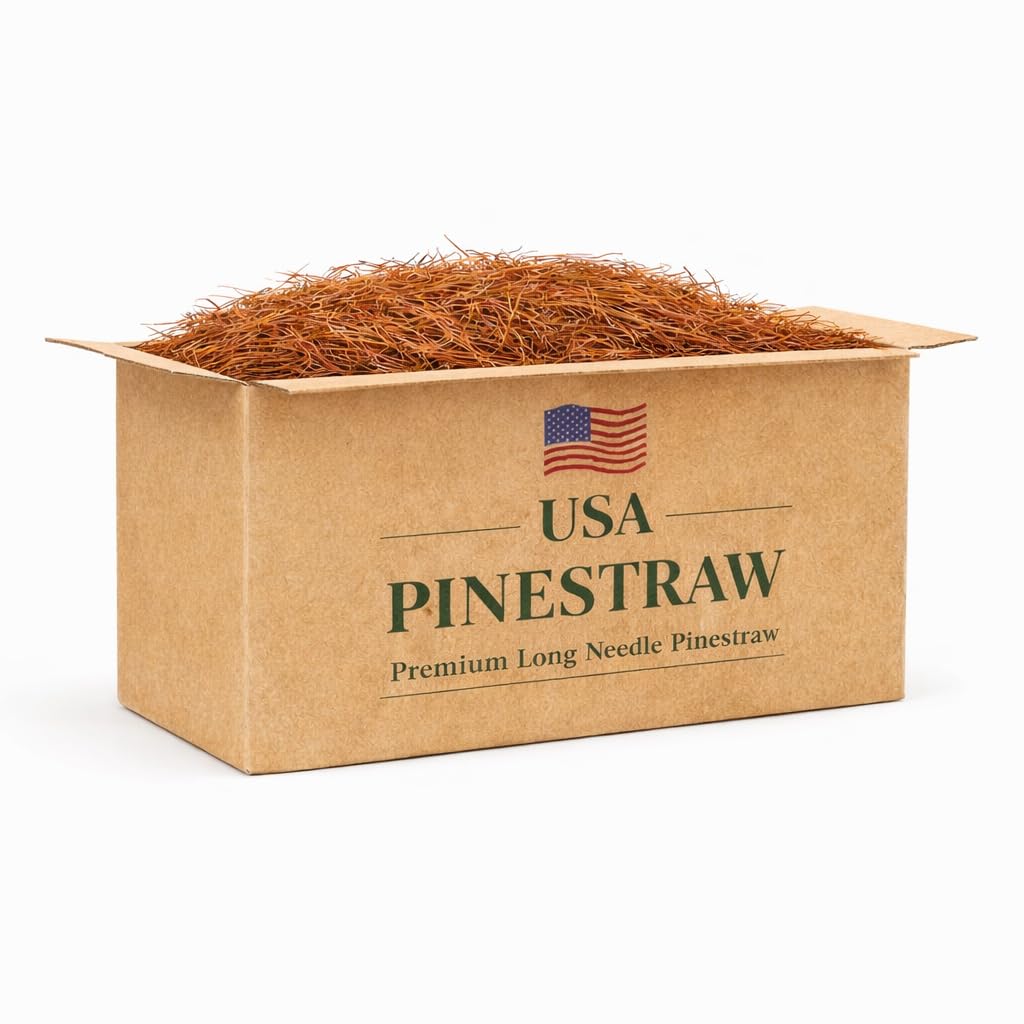
US-harvested long-needle pine straw that naturally blocks weeds over 65 to 80 square feet.
USA PINESTRAW delivers a square bale of long-needle pine straw harvested from sustainable US pine forests. It covers 65 to 80 square feet per bale, which is similar to a 2-cubic-foot bag of bark but at a lighter weight. The needles interlock as they settle, creating a dense mat that blocks sunlight and naturally inhibits weed growth without chemicals — a real advantage for Florida gardeners who want to avoid synthetic herbicides near vegetables or water features.
Pine straw is a classic Florida mulch because it handles the humidity well — it does not mold like wood chips can, and it stays in place better than shredded bark during heavy rain. It also breaks down slowly, adding organic matter to sandy soil over time. The dark red color looks clean and natural around trees, shrubs, and pathways. One drawback: the lightweight needles can be blown around by strong winds until they settle and mat down after a few waterings.
Unlike the coco chips that require soaking and fluffing, pine straw comes ready to spread straight from the bale — just pull off handfuls and lay them down. That makes it the fastest option on this list for a quick weekend project.
Why Budget Shoppers Like It
- Interlocking needles resist heavy rain and wind once settled
- Covers 65–80 sq ft per bale — good value for the coverage
- 100% organic and comes ready to spread with no soaking required
Things to Know
- Lightweight before settling — can scatter in strong winds
- No customer reviews available to confirm weed control performance in Florida conditions
Reach for this if: you want the quickest, most natural weed block for pathways and tree rings — no soaking, just spread and go.
pass on it if: you need heavy moisture retention around thirsty vegetables — the needles are better at blocking weeds than holding water.
Understanding the Specs
Expanded Volume
Compressed mulch blocks list their dry weight (like 10lb), but what matters is how much ground they cover after you add water. Look for the expanded volume in quarts, gallons, or cubic feet — a 10lb coco block might yield 65 quarts or 2 cubic feet. That number tells you how many bags you actually need for your garden beds.
Water Retention
Manufacturers often claim mulch holds “X times more water” than bark or “absorbs up to X times its weight.” In Florida’s sandy soil, higher retention means longer intervals between watering. Coco coir chips typically retain 3 to 10 times their weight, while straw and pine straw reduce evaporation by shading the soil rather than storing water internally.
FAQ
What is the best mulch for Florida’s sandy soil?
How much does a 10lb compressed coco block expand to?
Will cocoa bean shell mulch harm my dog?
Does pine straw mulch wash away in Florida rain?
How often do I need to replace organic mulch in Florida?
Can I use wheat straw mulch in a vegetable garden?
Is OMRI-listed mulch important for organic gardening?
What does “low EC” mean in coco coir mulch?
How deep should I apply mulch in Florida beds?
Final Thoughts: The Verdict
For most people, the mulch for florida winner is the Gro-Med Coco Husk Chips because it delivers 65 quarts of moisture-holding, airy mulch from a single 10lb block — a perfect match for Florida’s fast-draining sandy soil. If you want maximum water absorption that cuts your watering schedule, grab the Plantonix Organic Coco Chips. And for a fast, natural weed block that comes ready to spread from the bale, the USA PINESTRAW Pine Straw is a solid budget-friendly pick.
How We Picked
We do not accept paid placement. Every pick is matched to a real buyer and a real use-case; we do not hands-on test units.
Sources & Methodology
Specifications: manufacturer listings and product documentation. Review insights: verified customer reviews, as of July 2026. Pricing: not shown on this page (it changes often); check the current price via the retailer link.
As an Amazon Associate, Lawn Gear Lab earns from qualifying purchases. This does not affect which products we feature.