
Specs are compiled from manufacturer listings and verified buyer reviews and can change over time — please confirm the key details on the product page before buying.
A money tree that sits in heavy, waterlogged store soil slowly chokes — roots suffocate, leaves yellow, and growth stalls. The fix is a loose, fast-draining mix that mimics the tree’s natural habitat, and that’s exactly what the four blends here deliver in different ways.
I’m Rikta — the founder and writer behind Lawn Gear Lab. This guide is built by comparing the manufacturers’ published specifications and the patterns across verified customer reviews, so you get each pick’s real strengths and trade-offs instead of marketing spin.
You will learn which mixes offer the best drainage, moisture balance, and nutrient value as you shop for the best money tree soil for your indoor plant’s long-term health.
Our Picks at a Glance
How To Choose The Best Money Tree Soil
The single biggest mistake people make with a money tree (Pachira aquatica) is repotting it into ordinary garden soil or a dense houseplant mix. Those hold water for too long, and the roots of a money tree are prone to rot when they sit wet.
Drainage comes before everything else
Look for perlite and pine bark in the ingredient list. Those two chunky materials create air pockets so excess water drains fast while the mix still holds some moisture around the roots. A blend that mentions “drainage” and “airflow” in its description is usually built the right way.
Match the bag size to your pot
Bag volume is a real buying decision, not a footnote. A 2-quart bag roughly fits one small 6-inch pot, while a 4-quart bag gives you enough for a larger repot or several small plants. If you are repotting a mature tree, starting with a 4-quart bag saves you a second purchase.
Balance moisture, not just drainage
Coco coir and peat moss do the opposite job of perlite — they hold moisture and nutrients. A good money tree mix balances both: enough water retention to keep the roots hydrated, enough drainage to stop them from drowning. If the bag lists coco coir or peat moss alongside perlite, that balance is intentional.
Quick Comparison
| Model | Best For | Bag Size | Key Ingredients | pH Focus | Amazon |
|---|---|---|---|---|---|
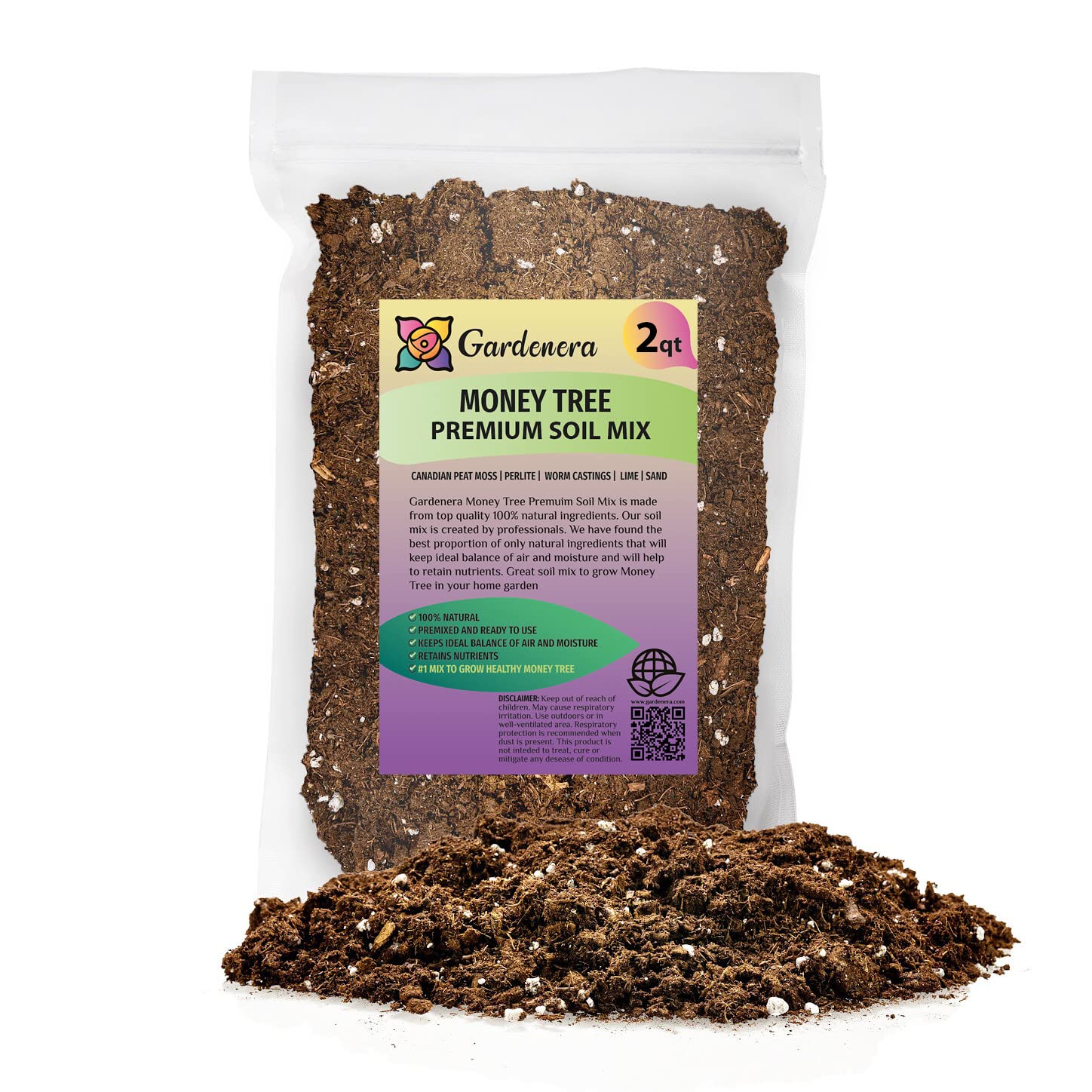
| Gardenera Money Tree Potting Mix★ Best Overall | Reviving a struggling tree | 2 quarts | Peat moss, perlite, worm castings | Lime included | Amazon |
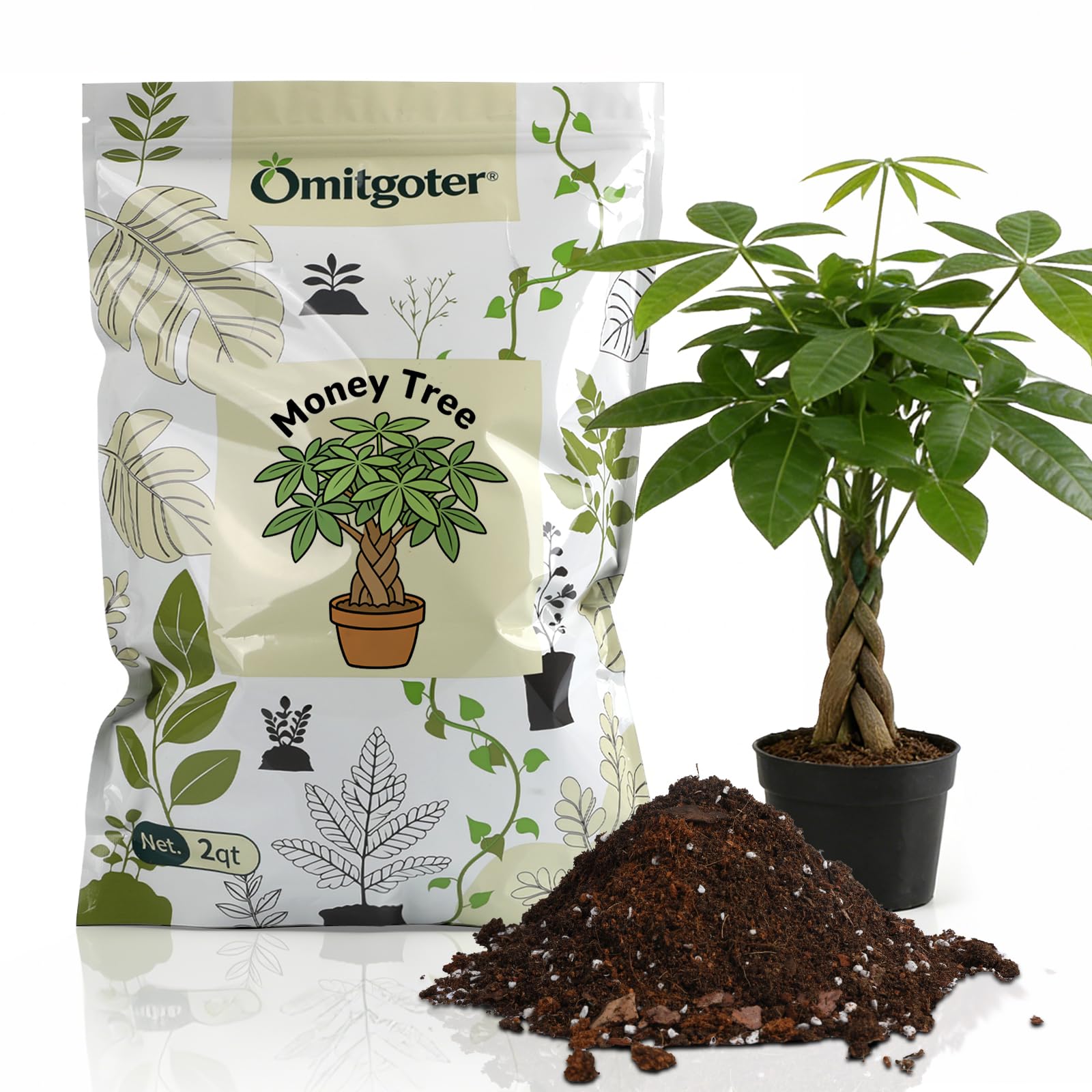
| Omitgoter All-Natural Mix | Budget-friendly repotting | 2 quarts | Peat moss, coco coir, perlite, bark | Stable pH-tune | Amazon |
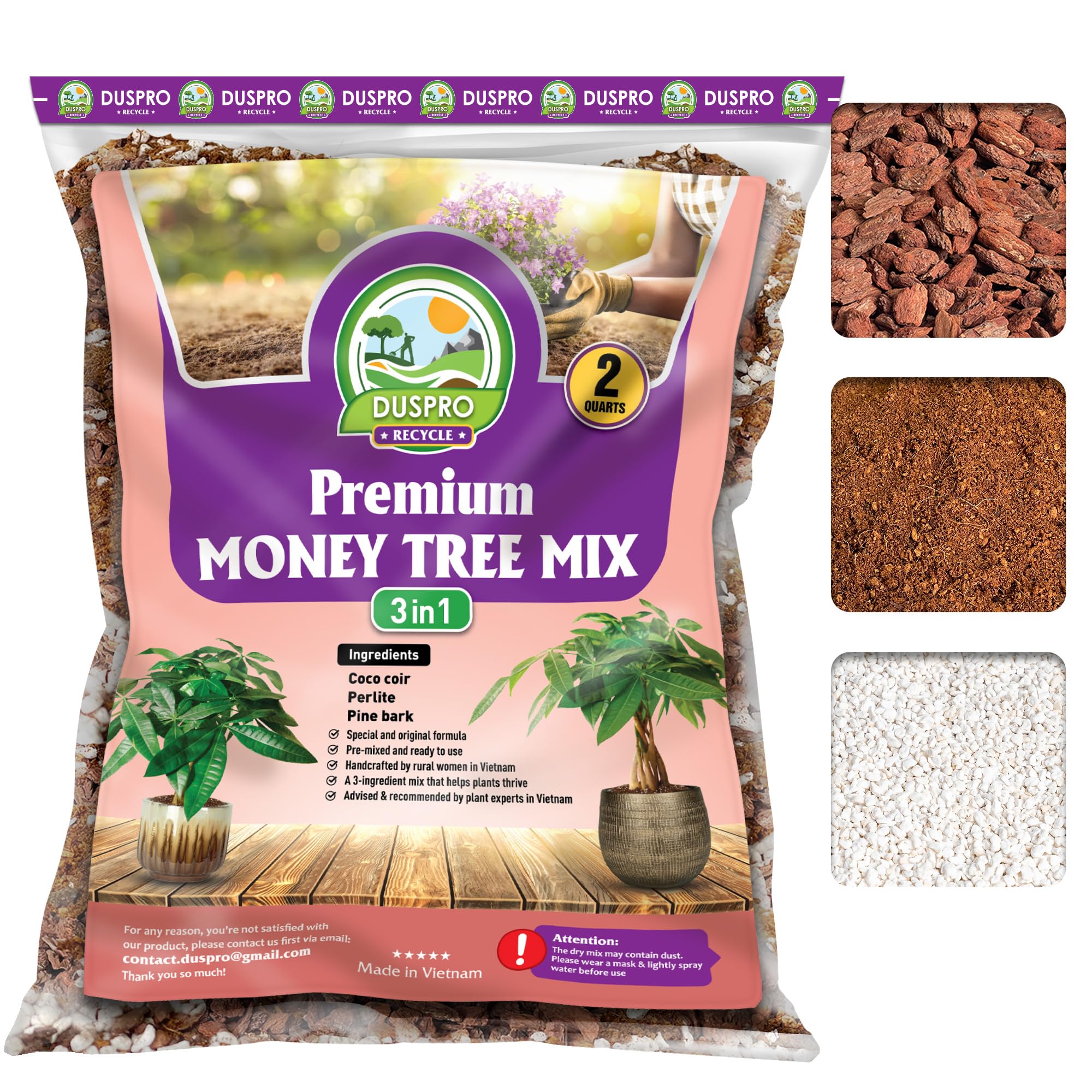
| Duspro 3-in-1 Money Tree Soil | Balanced moisture and airflow | 2 quarts | Coco coir, perlite, pine bark | — | Amazon |
| Doter Organic Money Tree Mix | Larger repotting jobs | 4 quarts | Organic compost, perlite, pine bark | Neutral to slightly acidic | Amazon |
In-Depth Reviews
1. Gardenera Money Tree Potting Mix
Our pick — over 4.5★ from 200+ verified ratings; the strongest balance of quality and price.
The revival specialist that pulls a yellowing tree back from the brink
If your money tree has been stuck in its original store pot for a year, this blend is the one people reach for. It is hand-mixed on a small family farm with Canadian Peat Moss, Perlite, Worm Castings, Lime, and Sand — a composition built to mimic the tree’s natural outdoor environment. The lime (a soil additive that balances acidity) is note because it helps keep pH stable for steady nutrient uptake.
You get a reviving effect that buyers notice fast — one reviewer says a struggling tree with holes in its leaves showed a difference “almost immediately” after repotting, and others report their trees are “growing like champions.” The praise consistently lands on soil quality and plant growth, which is what you need from a repot mix. The 2-quart bag holds enough for a single small pot or a young tree.
The one honest caveat is scale: a couple of buyers expected a larger bag than what arrived. For a mature tree you may want to grab two bags or size up. But for the classic repot-out-of-the-store-pot job, this mix delivers the fastest visible turnaround of the four here.
What it does best
- Worm castings add natural nutrients for leaf shine and root growth
- Perlite gives fast drainage to protect roots from sitting in water
- Buyers report visible new growth shortly after repotting
What to weigh
- 2-quart volume only covers one small pot
- A few buyers wanted a larger bag for the same price
Your best repot partner: the Gardenera mix is for anyone pulling a money tree out of its sad store soil and wanting a fast, visible revival.
Size check: if your tree sits in a pot larger than 6 inches, plan on buying more than one bag.
2. Omitgoter All-Natural Money Tree Soil
The pour-and-plant blend that thrives on African violets too
This mix is a pure blend of peat moss, coconut coir, perlite, bark, and humus — no added chemicals, just earth-friendly ingredients. The coco coir holds moisture while the perlite and bark open up the structure, giving you that balance of water retention and drainage that money trees need. It is pH-tune for stable conditions, so you are not chasing acidity problems after repotting.
The interesting thing here is the reach: owners mention their African violets thriving in this mix, and one buyer credits it with keeping a Venus fly trap alive. That versatility makes it a practical single-bag option if you keep several kinds of houseplants, not just a money tree. The “pour and plant” formula genuinely is beginner-friendly — no measuring or combining needed.
The honest trade-off is the volume. The 2-quart bag drew mixed feedback on size, with one buyer noting they could only fill an 18-count egg tray for seed starting, and another saying they couldn’t fill two 5-inch pots. The soil quality itself earns high marks — the recurring gripe is purely about how far the bag stretches. For a single small repot, it’s fine; for bigger jobs, look at the 4-quart option below.
Beyond money trees: the drainage and aeration make this a strong all-rounder for violets, pothos, and even carnivorous plants — just keep your expectations on bag size realistic.
Reach for it if: you want one affordable, chemical-free mix that works across several houseplant types.
Think twice if: you are repotting a mature tree — the 2-quart volume comes up short.
3. Duspro 3-in-1 Money Tree Soil
The lightweight trio that keeps roots aired out and watered just right
This one leans on a simple 3-ingredient formula — coco coir, perlite, and pine bark — and skips the guesswork of mixing your own. The coco coir holds balanced moisture, while the perlite and pine bark create a looser, more open structure so water moves through instead of pooling. That combination is aimed squarely at money trees and Pachira aquatica, where regular soil often feels too dense.
The results show up fast. Customers note plants “thrived 3-4 weeks post-repot, pushing new leaves,” and one buyer used it to repot a lemon tree with better results than regular potting soil. The quality is the most-praised aspect, with strong second-place votes on plant growth. Buyers also note it looks great after a few days — the lightweight texture settles into a clean, natural finish.
Two practical notes from the reviews: the bag size gets mixed comments (though one buyer repotted four pots and still had half a bag left), and the end of the bag can get dusty, so a mask helps when you pour the last of it. The brand also sells 4-quart and 6-quart versions, so you can size up for bigger jobs.
Set-and-forget structure: the ready-to-use formula means zero measuring, and the open texture is exactly what a money tree’s roots want for airflow.
Best for: anyone who wants a simple to use, pre-mixed blend and may repot more than one plant — the 2-quart bag goes further than expected.
Watch for: the final scoop of soil is dusty, so pour it in a ventilated spot.
4. Doter Organic Money Tree Soil Mix

The bigger bag with organic compost for trees ready to move up a pot size
Here is the one that solves the volume problem: a 4-quart bag, double the size of the others, enriched with organic compost for a rich nutrient base. The larger volume matters because a mature money tree repot eats through soil fast, and this gives you enough for a bigger pot without a second order. The perlite and pine bark still deliver the drainage that prevents root rot.
The pH is formulated to sit neutral to slightly acidic, which matches what a money tree naturally prefers. Reviewers point out a dying tree “revived” after repotting into a larger pot with new growth in about 3 weeks, and another says the tree is “growing like a weed.” Soil quality is the clear most-praised aspect here.
The honest caveats: plant growth and value-for-money drew mixed feedback, and one buyer found the bag not filled to the label top. Another noted it looked smaller than expected at roughly quart size. For a single mature repot, the extra volume still gives you the most working room of the four.
Room to grow: the 4-quart bag is the practical pick for anyone upgrading to a larger pot, where the 2-quart options run out mid-job.
Pick this if: you are repotting a bigger tree and want organic nutrients plus one bag’s worth of coverage.
Manage expectations: bag fill can vary slightly, so open it before you start your repot.
Understanding the Specs
Drainage and Aeration
Perlite and pine bark are the two ingredients that keep a money tree alive in a pot. They create air pockets so excess water drains away quickly and oxygen reaches the roots. Without them, soil compacts, water pools, and root rot takes over.
Moisture Retention
Coco coir and peat moss hold water and nutrients, working against the perlite to keep roots from drying out completely. A good mix balances both — enough moisture to stay hydrated, enough drainage to never sit soggy.
Bag Volume vs. Pot Size
A 2-quart bag roughly fills one small 6-inch pot, while a 4-quart bag covers a larger repot or several small plants. Check your pot size before buying, or you will run out mid-job and have to mix soils mid-project.
pH Level
Money trees prefer soil that is neutral to slightly acidic. Some mixes add lime to balance pH, others are formulated from the start. Stable pH means the tree can actually absorb the nutrients in the soil instead of struggling against the wrong acidity.
FAQ
Can I use regular potting soil for my money tree?
How much soil do I need for a money tree repot?
What ingredients should a money tree soil mix have?
Why is my money tree soil molding on top?
Does pH matter for a money tree?
Can I use money tree soil for other houseplants?
Should I add fertilizer to money tree soil?
How often should I repot my money tree?
What is the difference between coco coir and peat moss in potting soil?
Is the bag size accurate on these soil products?
Final Thoughts: The Verdict
For most people, the best money tree soil is the Gardenera Money Tree Potting Mix because its hand-blended ingredients deliver the fastest visible revival of a struggling tree. If you want an all-natural blend that works across several houseplants, the Omitgoter mix is a smart budget pick. And if you are repotting a mature tree that needs more room, the Doter 4-quart bag gives you the volume to finish the job in one go.
How We Picked
We do not accept paid placement. Every pick is matched to a real buyer and a real use-case; we do not hands-on test units.
Sources & Methodology
Specifications: manufacturer listings and product documentation. Review insights: verified customer reviews, as of August 2026. Pricing: not shown on this page (it changes often); check the current price via the retailer link.
As an Amazon Associate, Lawn Gear Lab earns from qualifying purchases. This does not affect which products we feature.