
A fresh mole hill appearing overnight after a day of hard yard work is frustrating. The raised tunnels ruin the seamless green carpet you maintain, and chasing these subterranean diggers with ineffective methods wastes time. The right mechanical trap, placed directly in an active runway, delivers the only reliable solution for reclaiming your lawn.
I’m Rikta — the co-founder and writer behind Lawn Gear Lab. I analyze dozens of owner reports and product specs to identify which trap designs actually perform in varied soil conditions, so you don’t have to test duds.
This guide compares scissor, choker loop, and wire tongue models to help you select the most effective mole traps for your specific yard situation.
How To Choose The Best Mole Traps
Selecting a mole trap comes down to understanding three variables: the trap mechanism, the soil type in your yard, and your ability to locate the active runway. Ignoring any one of these factors turns a promising trap into a lawn ornament. Focus on the mechanical design first — scissor, choker loop, or wire tongue — because each interacts with the tunnel environment differently.
Trap Mechanism: Scissor vs. Choker Loop vs. Wire Tongue
Scissor traps use two spring-loaded jaws that snap shut vertically when the mole pushes against a flat trigger pan. They sit mostly above ground and work best in loamy or soft soils where the pan can rest directly on the tunnel roof. Choker loop traps deploy a wire loop that tightens horizontally around the mole as it passes through a pre-formed tunnel. The moving parts stay underground, making this design safer for pets and children, but the loop slots can clog in sandy soil. Wire tongue traps consist of two opposing wire frames that impale the mole when it pushes through. These sit completely underground, allow mowing over the top, and work in deep tunnel systems where surface traps cannot reach.
Soil Type Compatibility
Soil density dictates which trap can seat properly. Heavy clay or hard-packed dirt prevents scissor trap prongs from penetrating, leading to misfires and bent components. Sandy soil fills into the slots of choker loop traps, filling the channel and requiring the mole to dig through loose material before reaching the trigger. Wire tongue traps accommodate most soil types because the setup involves digging a small pit to insert the trap below grade. If your yard has rocky or shallow topsoil, prioritize a trap with a low profile that settles without requiring deep insertion.
Construction Material and Durability
All mole traps endure moisture, soil acidity, and physical force from the spring mechanism. Galvanized steel resists rust but can wear over time as the coating scratches. Stainless steel offers superior corrosion resistance and holds up in damp coastal or irrigated lawns. Nylon and cast aluminum components, used in some premium choker and step-on designs, eliminate rust entirely but may crack under repeated impact in rocky soil. For long-term reuse across multiple seasons, stainless steel or a cast aluminum base provides the best balance of weight and weather resistance.
Quick Comparison
On smaller screens, swipe sideways to see the full table.
| Model | Category | Best For | Key Spec | Amazon |
|---|---|---|---|---|
| NoMol Mole Trap 4-Pack | Wire Tongue | Deep tunnels, mow-over lawn care | 4 traps per pack, sits flush underground | Amazon |
| POlAFLEX 2-Pack Black Stainless Steel | Scissor | Quick catch in soft loamy soil | 2-pack, 8.1″L x 5.4″W jaws | Amazon |
| Nash 100 Choker Loop | Choker Loop | Family/pet safety with underground action | Cast aluminum base, 130-year design | Amazon |
| Talpirid Mole Trap by Bell Labs | Step-On Scissor | Foot-operated setup in firm turf | Heavy-duty nylon, dual springs | Amazon |
| POlAFLEX Scissor Trap (1-Pack) | Scissor | Budget-friendly single-trap scouting | 316 stainless steel, red flag marker | Amazon |
| YardYield Scissor Trap | Scissor | Entry-level, all-purpose soil types | Galvanized steel, 1.41kg weight | Amazon |
| Motomco 008-34310 Worm Bait | Poison Bait | Low-effort dispersal in active tunnels | 12 bait worms, ready-to-use | Amazon |
In-Depth Reviews
1. NoMol Mole Trap 4-Pack by WCS

The NoMol trap uses a wire tongue design that sits completely underground, allowing you to mow over the set area without dislodging the mechanism. Each pack includes four traps plus wooden stakes, giving you enough coverage to set pairs facing opposite directions in multiple active runs. The rust-resistant coating keeps the steel functional across wet seasons, and the trapped mole remains concealed, which appeals to homeowners who prefer not to see the results.
Setting the trap requires digging down to the tunnel floor, inserting one trap facing each direction, then covering the hole with dirt. Owners report catching moles within one or two nights when they place the trap on its most sensitive setting and test the trigger with a piece of paper before closing the hole. The spring tension is stiff, requiring some hand strength to compress, but the included instructions guide you through the technique. Several long-term users report catching upward of 40 moles over years of use with very high reliability.
The main drawback is the effort required to check the trap — because it sits underground, you cannot visually confirm a catch from a distance. You must dig up the area to inspect, which can disturb the tunnel and trigger the trap accidentally. Some users also note that the trap works best in tunnels roughly 1.5 inches in diameter, so you may need to widen smaller runs slightly for a proper fit.
What works
- Allows mowing directly over the set trap
- Four traps cover multiple tunnel directions simultaneously
- Works in deep surface tunnels where above-ground traps cannot reach
What doesn’t
- Requires digging to inspect and retrieve catch
- Spring mechanism demands significant hand strength to set
- Not ideal for tunnels smaller than 1.5 inches without widening
2. POlAFLEX 2-Pack Black Stainless Steel Scissor Trap
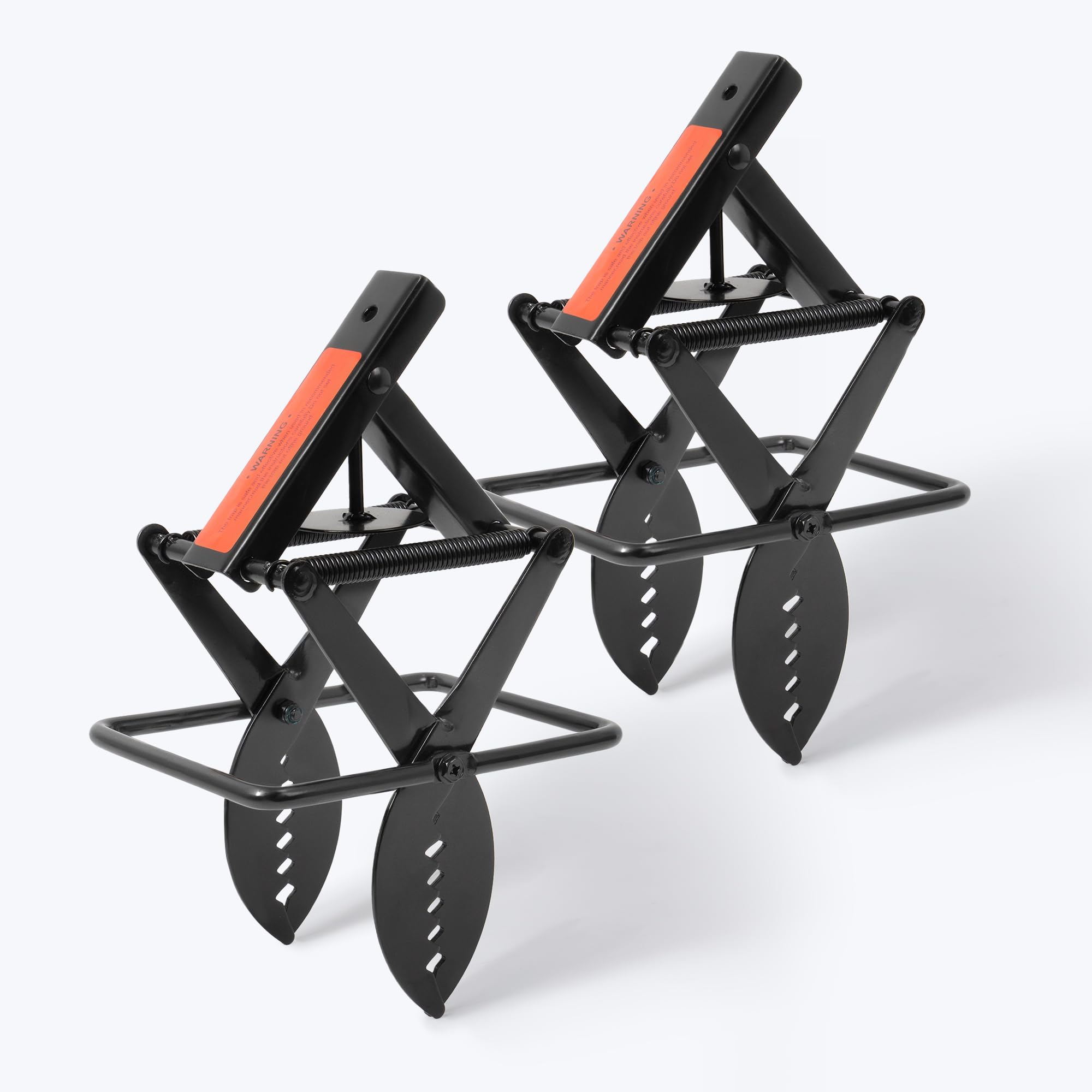
This scissor trap upgrade from POlAFLEX swaps standard galvanized metal for black stainless steel, which provides better corrosion resistance in consistently moist lawn conditions. The two-pack format gives you immediate backup, and the 8.1-inch long jaws cover a wide enough span to intersect both directions of a typical mole runway. Owners report catching moles within one hour of placement, often on the first night, when the trap is set over a recently raised tunnel ridge.
The spring mechanism delivers a strong, clean snap that holds the mole securely. Users with loamy topsoil describe the deployment as simple — push the prongs into the ground on either side of the tunnel, press the trigger pan flat, and set the safety catch. The black finish also helps the trap blend into dark soil, reducing visual clutter on the lawn.
The steel prongs are relatively broad, making insertion difficult in hard-packed clay or rocky soil. Some owners report that the trap shifts sideways when they attempt to push it into firm ground, causing misalignment with the tunnel. Additionally, releasing the mole from the scissor jaws after a catch can be challenging, requiring a firm pry with a tool to open the spring tension.
What works
- Black stainless steel resists rust and weathers well in damp lawns
- Powerful spring snaps shut cleanly on the first contact
- Two-pack allows setting both directions of a tunnel at once
What doesn’t
- Blades struggle to penetrate hard-packed clay soil
- Releasing a caught mole from the jaws requires significant force
- Broad prongs can shift sideways during insertion in firm ground
3. Nash 100 Choker Loop Mole Trap

The Nash Choker Loop trap uses a design that has remained largely unchanged since its patent in 1894, a testament to its mechanical simplicity. The cast aluminum base combined with galvanized steel loop resists corrosion while keeping the moving parts underground during operation, significantly reducing the risk of injury to children, pets, and non-target wildlife. Professional property managers and pest control operators frequently rely on this model for its repeatable performance in active tunnels.
Setup involves cutting two small slits in the turf, inserting the loop, and arming the trigger with your fingers. No digging or bait is required. Users report catches within 10 to 15 minutes of placement when the trap is set over a fresh runway. The hair trigger responds to the slightest pressure, which is excellent for catching moles but also means the trap can fire if bumped during handling. The aluminum base stays lightweight, and the loop mechanism resists jamming even after many uses.
The choker loop design struggles in sandy or loose soil because sand grains fall into the slot cut for the loop, filling the tunnel and forcing the mole to dig through dry material before reaching the trigger. The powerful spring can also pinch fingers during setup if you are not careful with placement. Owners with arthritis or weak hand strength have difficulty compressing the loop against the spring tension.
What works
- Moving parts stay underground, safe for pets and children
- No digging or baiting required; simple slit insertion
- Lightweight cast aluminum base resists corrosion
- High trigger sensitivity catches moles within minutes
What doesn’t
- Ineffective in sandy soil because sand fills the loop slot
- Strong spring tension difficult to manage with weak or arthritic hands
- Hair trigger can accidentally fire during handling
4. Talpirid Mole Trap by Bell Labs

The Talpirid trap breaks from the metal scissor norm by using a heavy-duty nylon body with dual springs and curved jaws. The yellow foot pedal allows you to set the trap by stepping down on it directly, which eliminates the need to squeeze stiff spring wires by hand. The nylon construction will not rust, making it suitable for irrigated lawns and damp environments where galvanized metal might eventually corrode.
The recommended placement involves stomping down the tunnel to collapse the roof, cutting a cross-shaped slot in the turf, inserting the jaws, and then pressing the yellow pedal to spread the jaws open before locking the mechanism. Owners who follow this method report catching moles within two to three days. The curved jaws grip the mole securely upon triggering, and the trap can be reused immediately after removal. Several users note that the trap works best when placed in a tunnel that has been re-collapsed, forcing the mole to dig through the trap’s path.
Positioning the trap correctly on the tunnel is finicky. If the tunnel is shallow, the jaws may protrude partially above ground, preventing the trap from seating flat. The design also requires a stable platform — if the ground is uneven, the trap tips, causing misfires. Some owners report that the pincher piece snapped off after repeated setting in rocky soil, though the nylon frame itself holds up well.
What works
- Foot-operated setting mechanism reduces hand strain
- Rust-proof nylon body lasts in wet conditions
- Curved jaws grip securely when triggered
What doesn’t
- Difficult to seat flush on shallow tunnels
- Requires stable, level ground to avoid tipping
- Pincher component can snap under repeated force in rocky soil
5. POlAFLEX Scissor Trap (1-Pack)

The single-pack POlAFLEX scissor trap brings 316 stainless steel construction at an accessible price point, making it a solid entry-level option for homeowners testing mechanical traps for the first time. The red flag marker attached to the trigger helps you locate the trap in tall grass or after rain. Owners who follow the recommended setup steps — wearing gloves, placing the prongs straight down into moist ground, and positioning the trigger flat over the tunnel — report catching moles within the first night or two.
Several verified buyers caught multiple moles in rapid succession, with one user tracking seven moles before the spring tension began to fade. The three-year warranty and free pest control consulting service add a layer of support that most budget traps lack. The trigger sensitivity is high enough to catch a mole pushing against the pan but stiff enough to avoid accidental firing from wind or light debris.
Some units arrive with springs so tight that setting them requires significant body weight and multiple attempts, even for physically capable users. The base plate can also pivot during setup, causing the prongs to enter at an angle and miss the tunnel alignment. After extended use, the trigger may fail to snap reliably, reducing the trap’s effectiveness over time.
What works
- 316 stainless steel resists corrosion better than standard galvanized
- Red flag marker improves visibility in tall grass
- Three-year warranty and free pest control consulting
What doesn’t
- Spring tension on some units is excessively tight
- Base plate pivots during setup, misaligning prongs
- Trigger reliability degrades after catching multiple moles
6. YardYield Galvanized Steel Scissor Trap
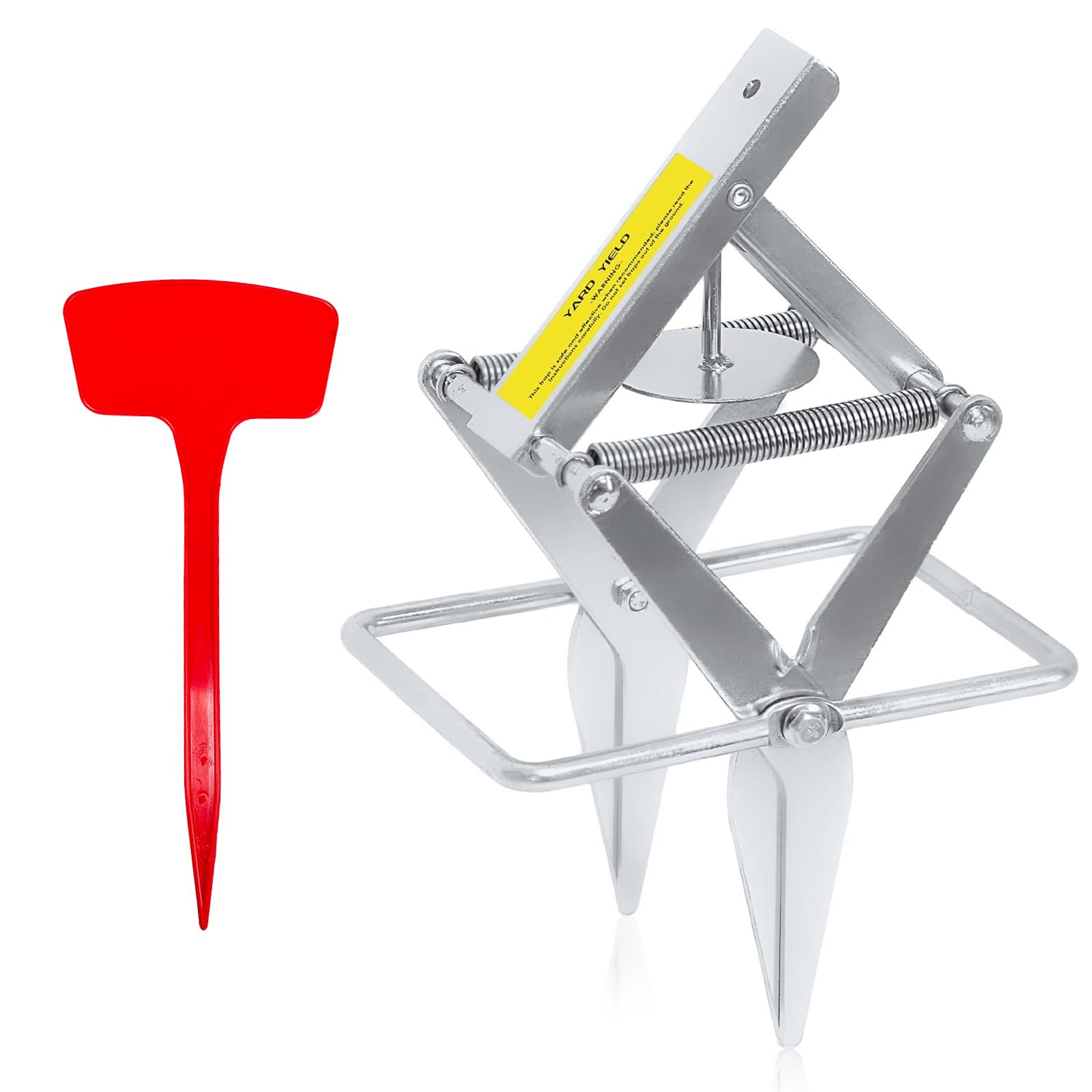
The YardYield trap is a straightforward galvanized steel scissor model designed for quick deployment in soft to moderate soil. Its 1.41-kilogram weight gives it a solid feel, and the manufacturer claims compatibility with loess, sand, and standard loam. The no-dig pedal setup lets you place the trap directly over a collapsed tunnel run without excavating a pit, which saves time when covering multiple mounds across a large yard.
Owners who successfully located active tunnels report catching moles within an hour of placement. The scissor jaws pop upward when triggered, providing a clear visual signal that the trap has fired. The bait-free design avoids the problem of poison worms melting in heat or being rejected by picky moles. For a first-time buyer, this trap offers the simplest learning curve — set it, wait, check the jaw position from across the lawn.
Multiple users report that the spring hooks pop off the retaining bar easily, causing the trap to fire prematurely before the mole reaches the trigger pan. This design flaw makes the trap inconsistent, especially in soft soil where the trigger pan may shift. Some buyers went entire seasons without a single catch, despite heavy tunnel activity. Releasing a trapped mole also requires prying the jaws open with a claw hammer, which can damage the galvanized coating.
What works
- Lightweight and easy to carry across the yard
- Visual pop-up indicator shows when trap has fired
- No bait required; works by blocking the tunnel
What doesn’t
- Spring hooks dislodge easily, causing false triggers
- Inconsistent results; some users caught zero moles
- Releasing a mole requires forceful prying that damages coating
7. Motomco 008-34310 Worm Mole Killer

The Motomco Worm bait product takes a chemical approach to mole control, using poisonous worm-shaped baits that mimic the mole’s natural food source. The box contains 12 individually tray-packed worms that you drop into active tunnels by poking a hole in the tunnel roof and inserting the bait. This method requires zero mechanical setup and no physical strength, making it accessible for anyone who can identify a fresh mound.
Users who saw results typically placed the worms in several tunnel locations simultaneously and reported a reduction in new mounds within a few days. One buyer who had previously failed with traps, smoke bombs, and repellents successfully eliminated a persistent mole after switching to this bait. The ease of use — peel, poke, drop, cover — encourages consistent treatment across multiple tunnel systems.
The bait worms melt or soften when left in direct sunlight or warm weather, turning into a mushy mess that moles ignore. This limits application to cooler parts of the day or shaded tunnel sections. Some moles consistently refused to eat the worms, requiring alternative methods. Additionally, poison bait carries inherent risks for pets and wildlife that may dig up the treated tunnel, and the user has no visual confirmation of a kill — the mounds simply stop appearing, which can be ambiguous.
What works
- Extremely simple application with no tools or setting required
- Mimics natural worm shape, appealing to moles’ feeding habits
- Effective when other mechanical traps have failed
What doesn’t
- Worms melt in heat or direct sunlight, becoming ineffective
- Some moles refuse to eat the bait entirely
- Poison risk for pets and wildlife that may dig up baits
Hardware & Specs Guide
Spring Tension vs. Trigger Sensitivity
Spring tension determines how much force the trap applies when triggered, while trigger sensitivity dictates the pressure needed to fire the mechanism. A high-tension spring ensures a clean kill, but if the trigger requires too much pressure, the mole may push through without setting it off. Scissor and choker loop traps typically use a hair trigger that responds to minimal contact. Wire tongue traps often have a more robust spring that requires the mole to push against the wire frame with its full body weight. The best balance for most yards is a trap with adjustable trigger settings, allowing you to dial in sensitivity based on soil density and tunnel depth.
Soil Compatibility and Trap Insertion Depth
Different traps seat at different depths relative to the tunnel floor. Scissor traps rest on the surface with prongs piercing the ground on either side of the tunnel, which works well when the tunnel roof is within three inches of the surface. Choker loops sit just below the turf, requiring the mole to pass through a pre-formed loop opening. Wire tongue traps require digging a pit that exposes the full tunnel diameter, then setting the trap on the tunnel floor. Soil with a high sand content tends to collapse into the trap channel, while heavy clay resists prong penetration. Matching the trap type to your predominant soil texture is a decisive factor in catch success.
FAQ
How do I find the active tunnel before setting a mole trap?
Can I reuse a mole trap after catching a mole?
Why do moles avoid traps set with bare hands?
Final Thoughts: The Verdict
For most gardeners, the mole traps winner is the NoMol 4-Pack because its underground wire tongue design pairs effective catching with the convenience of mowing over the set area. If you want a quick catch in soft loamy soil, grab the POlAFLEX 2-Pack Black Stainless Steel. And for a safe, no-dig solution with proven history, nothing beats the Nash 100 Choker Loop.