
Specs are compiled from manufacturer listings and verified buyer reviews and can change over time — please confirm the key details on the product page before buying.
Overwatering is the fastest way to kill a snake plant, and your finger only reads the top inch of soil while the roots sit deeper. A meter that reads at root level prevents overwatering by showing when the deeper soil is still wet. This guide breaks down the best moisture meters for snake plants, from simple no-battery probes to multi-function digital testers.
I’m Rikta — the founder and writer behind Lawn Gear Lab. This guide is built by comparing the manufacturers’ published specifications and the patterns across verified customer reviews, so you get each pick’s real strengths and trade-offs instead of marketing spin.
Snake plants thrive on neglect, so picking the right moisture meter for snake plant means finding one that reads deep, stays accurate, and survives years of weekly checks.
Our Picks at a Glance

How To Choose The Best Moisture Meter For Snake Plant
Snake plants store water in their thick leaves, so they rot quickly when the soil stays wet. A meter that reads only the top layer will tell you the soil is dry when the bottom is still soggy, which leads to overwatering.
Probe length decides how deep you can read
Longer probes reach the root zone where moisture lingers and rot begins. Standard probes reach a few inches, while long probes extend up to 5.5 inches (14 cm) past the regular style, which matters for deep pots and larger snake plants.
Analog versus digital readouts
Analog meters use a needle and color-coded dial, run on zero batteries, and cost less. Digital meters show exact numbers on an LCD screen, often adding pH, light, and temperature readings, but they need batteries and cost more.
Quick Comparison
| Model | Best For | Probe Length | Readout | Power | Amazon |
|---|---|---|---|---|---|
| XLUX Orange 2 Pack★ Best Overall | Budget households with many pots | Standard single probe | Analog dial | None | Amazon |
| Long Probe Plant Soil Moisture MeterDeep Probe Pick | Deep pots and tall snake plants | 5.5 in (14 cm) longer | Analog dial | None | Amazon |
| Dr.meter Long ProbeRoot-Safe Pick | Thin probes for delicate roots | Long, thin single probe | Color-coded analog | None | Amazon |
| 4-in-1 Soil Tester | Tracking pH and light too | Standard single probe | 1.95″ large dial | None | Amazon |
| IPPINKA Sustee Set of 4 | Leave-in monitoring, forgetful owners | 7.09 in stick | Color-change indicator | None | Amazon |
| HSLGOVE 7-in-One | Tech-savvy beginners | 6.8 in | Dual LCD screen | Battery | Amazon |
| ECOWITT WH0291 | Precise digital readings | Waterproof sensor probe | Digital LCD | 2 x AA (not incl.) | Amazon |
| 7-in-1 Digital Tester | Full lab-style analysis | ~10 cm insert depth | Backlit LCD | 4 x AAA (not incl.) | Amazon |
| Blumat Moisture Meter | Irrigation calibration, large pots | Stationary tensiometer | Analog gauge | None (water-filled) | Amazon |
In-Depth Reviews
1. XLUX Orange 2 Pack Soil Moisture Meter
Our pick — over 4★ from 70,500+ verified ratings; the strongest balance of quality and price.
Two battery-free probes for the price of one, so you can watch every pot at once
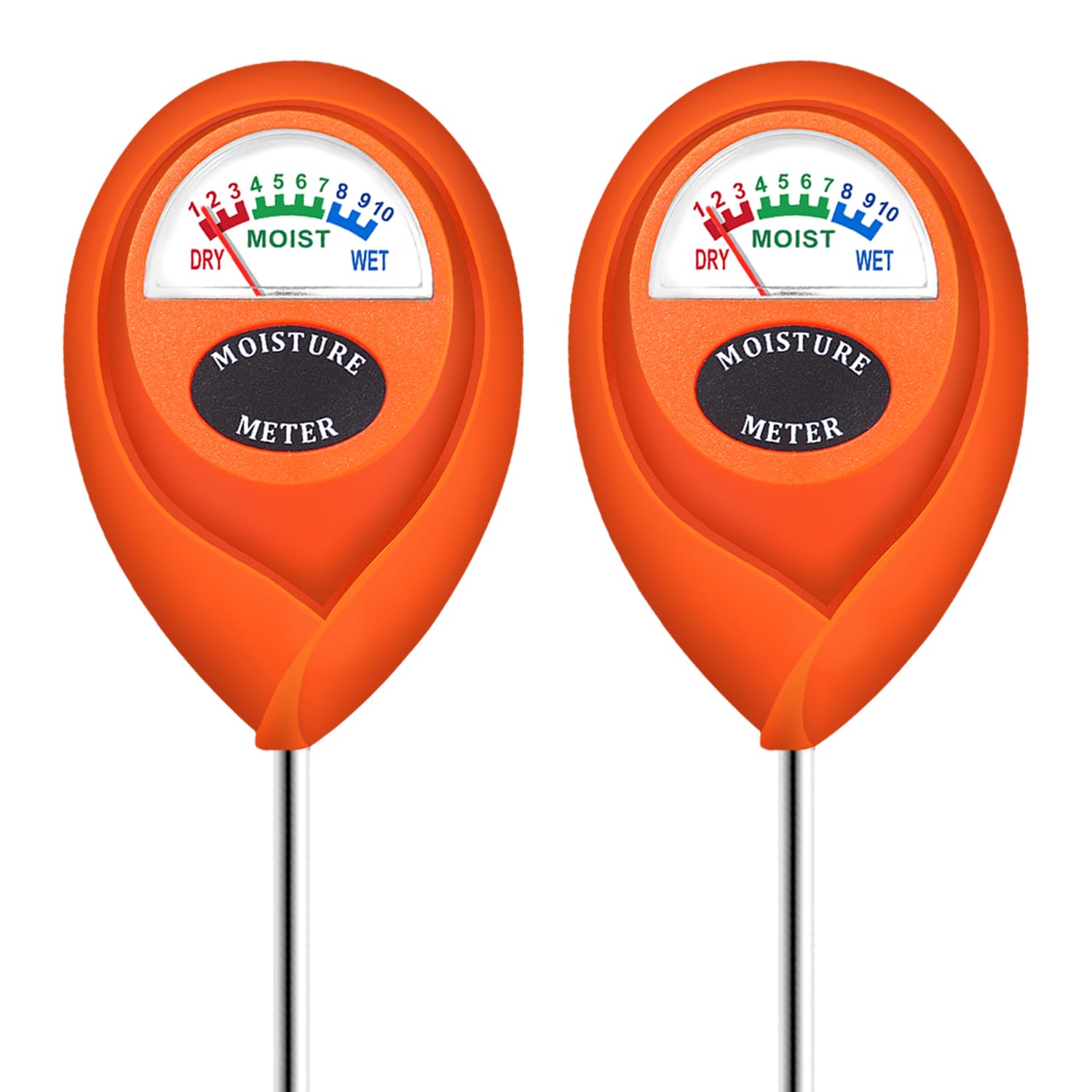
Over 1,700 owners praise its ease of use, making it the crowd favorite. You push the single probe into the soil, and the large dial with three zones and ten scales instantly shows dry, moist, or wet.
The 2-pack means you can keep one in your snake plant’s pot and another in your pothos or tomato plants without swapping. No batteries, no electronics — just a metal probe and a needle. As buyers report: “Appears to be accurate, showing moisture levels at varying depths.”
The honest trade-off is durability. The manufacturer warns not to leave the probe in the soil for more than 5 minutes, because the metal tip will gradually corrode. A drop can disconnect the internal probe and lock the needle on a permanent “dry” reading, so treat it gently and wipe the probe after each check.
What wins owners over
- Instant reading with no waiting — insert and see the dial move
- Single probe disturbs less soil and causes less root damage than multi-prong designs
- Great starting value for two meters
Treat it with care
- Metal tip corrodes if left in soil past 5 minutes
- Fragile if dropped — a hard fall can break the internal connection
Reach for it if: you want a cheap, no-fuss pair of meters for multiple houseplants and you always remove the probe after testing.
Look elsewhere if: you want one meter to live permanently in the pot — for that, you need a leave-in design.
2. Long Probe Plant Soil Moisture Meter
The one that reaches the bottom of deep pots where snake plant roots actually sit
If your snake plant lives in a tall pot, the standard probe simply doesn’t go deep enough. This meter’s probe is 5.5 inches (14 cm) longer than regular styles, so it measures moisture at the bottom of larger and deeper flower pots where rot starts.
Around 1,000 owners highlight its instant, reliable functionality. The anti-rust 304 stainless steel probe adds confidence for repeated weekly use, and the single-probe design keeps root disturbance minimal. Owners mention: “This is wonderful tool, i use it each day and it has transformed how I water my plants.”
Same 5-minute corrosion rule applies — pull it out after reading and wipe it clean. The one recurring nag is that the reading dial sits level, so it can be awkward to read when the probe is buried deep; you may need to tilt it slightly to see the needle.
Built for depth: the extra-long stem makes this the smarter cousin of a standard probe — it answers the question “is the bottom of this pot still wet?” that short meters can’t.
Keep in mind: it’s still fragile in a drop, and it’s not a leave-in tool.
3. Dr.meter Long Probe Soil Moisture Meter
A thin, long probe that slips between roots instead of shoving through them
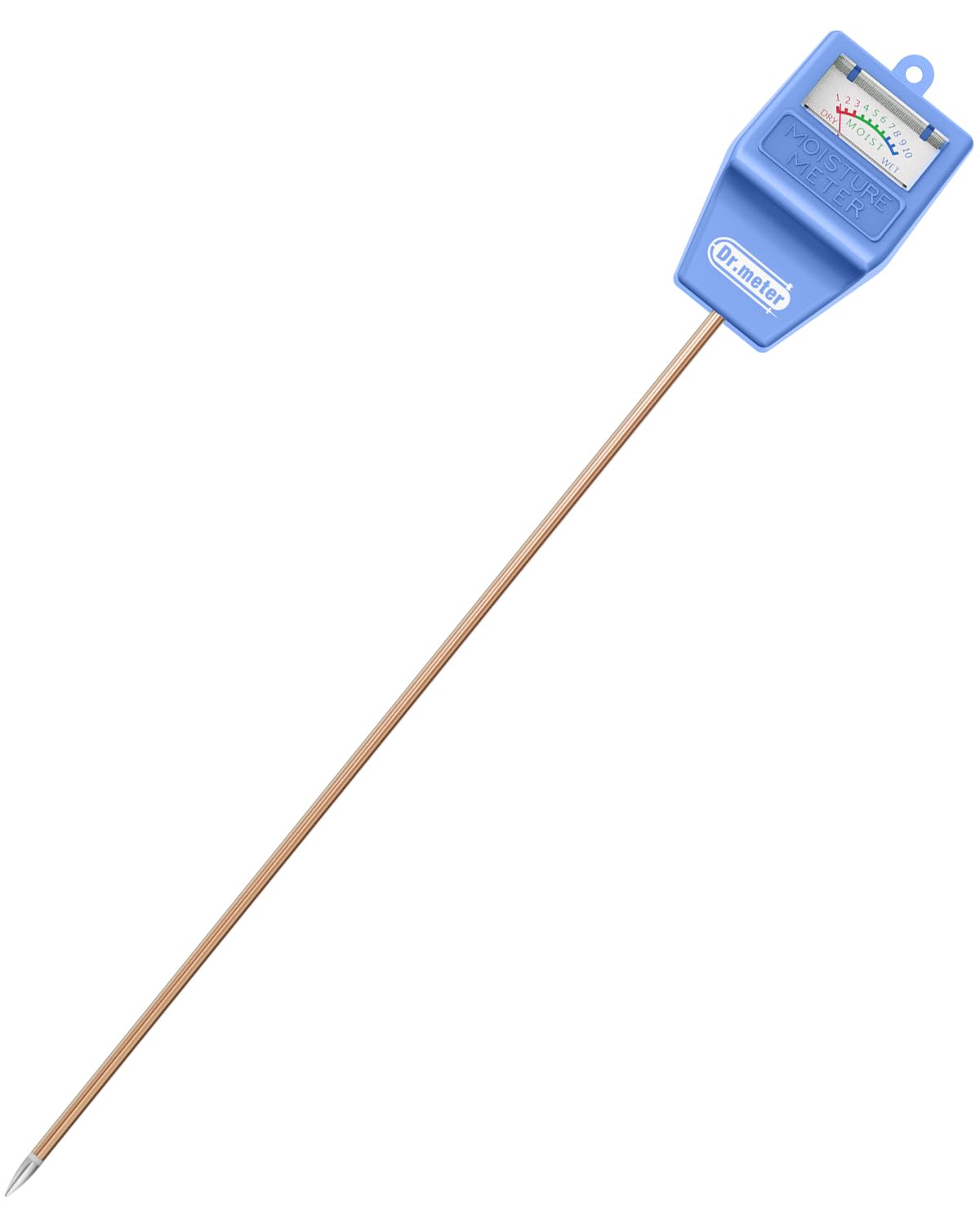
The single-probe design here is noticeably thin and long, which owners say is ideal for houseplants because it slides into the soil without disturbing sensitive roots. The interface uses ten scales with a color-coded reading system from red to green to blue, so reading dry versus wet takes a second.
Owners specifically call out how well it works for cactus plants and deep pots, and the functionality gets the most praise of any aspect. There’s no battery or electricity involved — just push the probe in and read.
The durability record is mixed, though. One owner reported the “Bottom of meter disintegrated” after leaving it in the soil, and another found it bent in half when pushed into wet soil. The lesson is clear: this is a probe you insert, read, and remove — not something to leave planted.
Slim and precise: the gentle probe is the standout trait for anyone with a dense root ball or compacted snake plant soil.
The catch: it demands a light hand — forcing it into dry, hard soil risks bending the thin stem.
4. 4-in-1 Soil Tester (pH/Fertility/Sunlight/Moisture)
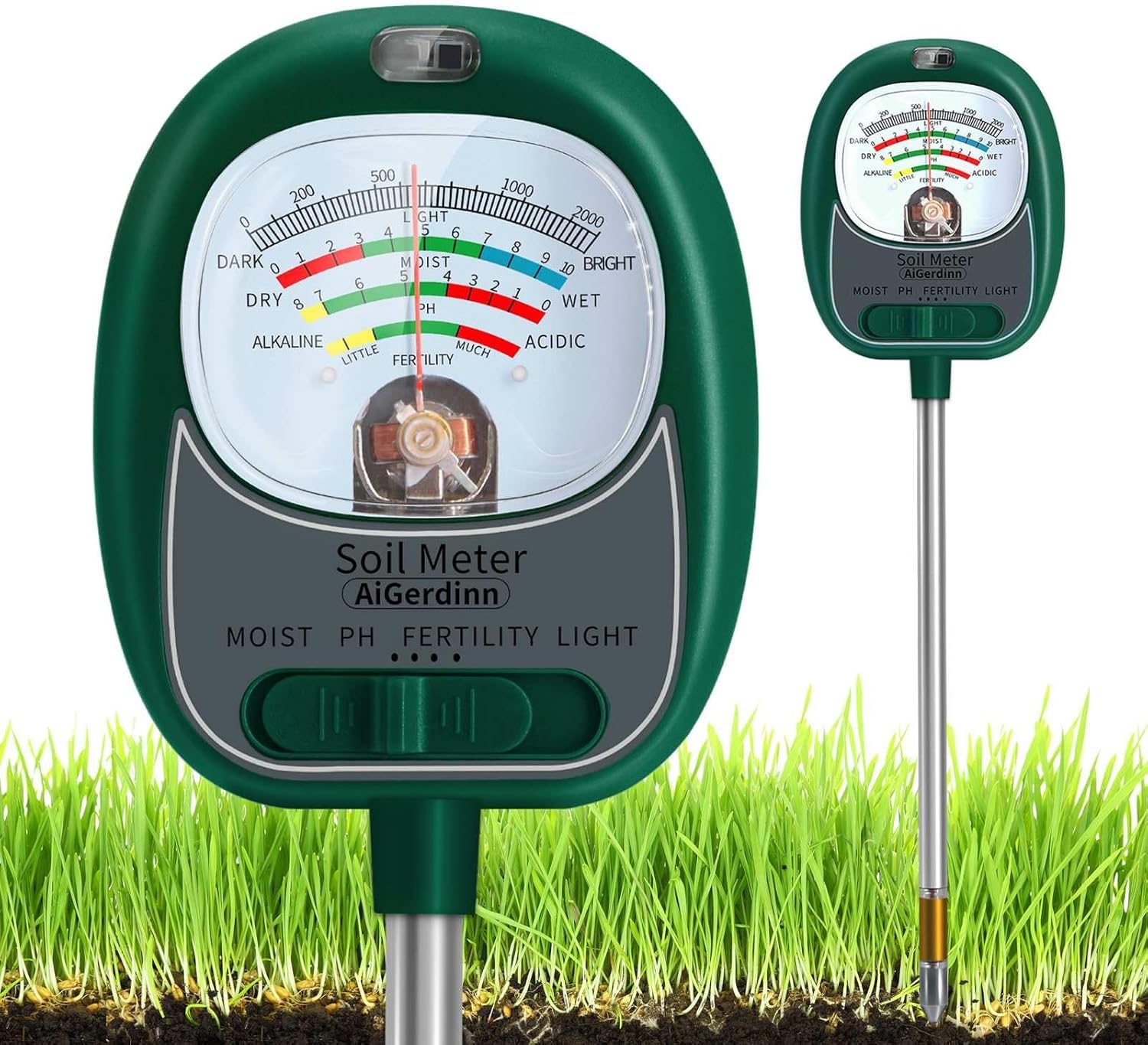
One oversized dial that tracks moisture, pH, fertility, and sunlight for total plant health
This tester goes beyond just water. With a 1.95-inch oversized dial — bigger than a traditional soil hygrometer — you get readings for soil moisture, pH, nutrients, and sunlight using a single button. That’s four data points from one battery-free device.
Owners most often praise its precise functionality for varied vegetable needs and plant health. The dial is big enough for both younger and older growers to read without squinting, and the whole tester weighs just 3.84 ounces, so it’s easy to store in a drawer between uses.
Follow the usage steps and you’ll get accurate results: moisten the soil before testing, avoid the very bottom of the pot, and don’t test right after watering. The manufacturer also says it’s unsuitable for water, slurry soil, red clay soil, hard soil, plant ash, and liquids.
More than a moisture meter: if you’ve ever wondered whether your snake plant’s pale leaves mean too much water or too little light, this answers both from one tool.
The trade-off: more functions mean more steps — you switch modes per reading rather than getting instant moisture only.
5. IPPINKA Sustee Aquameter (Set of 4)

A set of four sticks that live in the soil and turn white when it’s time to water
This is a completely different approach from the dial meters above. These 7.09-inch sticks stay in the soil permanently — no removing and wiping after each check. The color indicator does the thinking for you: white means the plant needs watering, blue means it’s been watered.
The refillable core is the clever part — each stick lasts roughly 6-9 months, then you replace just the core instead of the whole unit. The design was improved in collaboration with Tokyo University of Agriculture, and owners say it works better than needle-style meters for plants like cactuses and tropicals.
There are two honest caveats. It takes about two days for a new stick to register its first color change, so don’t panic on day one. And accuracy is mixed — some owners found the sticks stayed blue even when the soil was dry after the first week. It’s best for a steady, routine watering schedule rather than a precision instrument.
Why it stands out
- Stays in the pot — zero daily effort, just glance at the color
- Four sticks cover multiple pots at once
- Refillable cores extend the life of each stick
Know before you buy
- First color read can take about two days
- Ideal for soils with good water retention — not a universal tool
Grab this if: you want a set-and-forget visual reminder for several pots and you don’t want to test each plant by hand.
Think twice if: you need precise numeric readings — this shows a color, not a scale value.
6. HSLGOVE 7-in-One Soil Test Kit
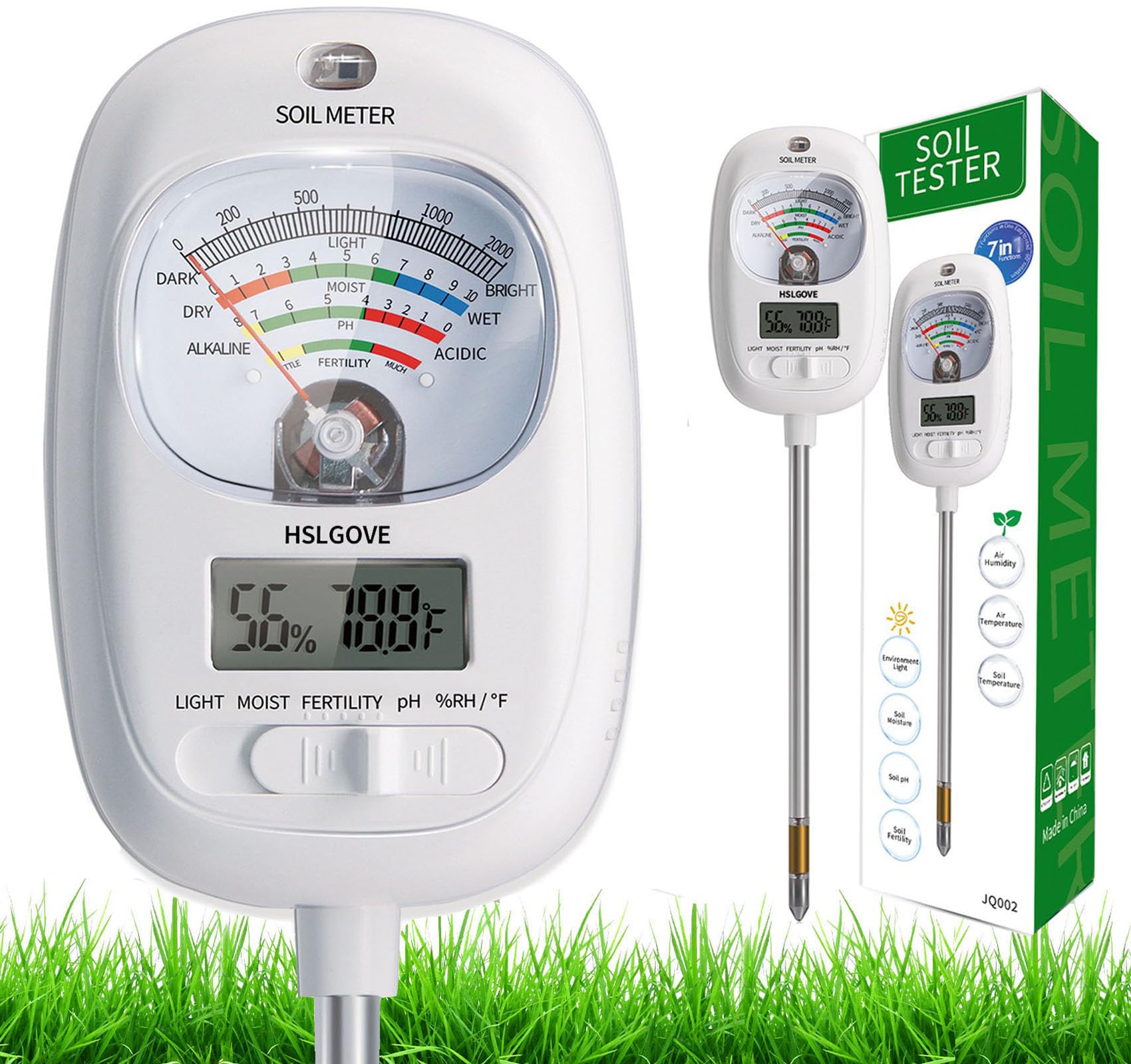
Seven measurements on a dual screen, built for beginners who want numbers, not guesswork
This kit measures soil moisture, pH, fertility, temperature, light, plus indoor air temperature and humidity — all with one button. The dual design pairs a classic dial with an LCD screen showing soil and air temperature, so you see multiple data points at once.
The probe is about 6.8 inches long and built on three metal materials, making it strong for medium to large potted plants while the single probe stays gentle on roots. Owners call it sturdy, root-safe, and beginner-friendly, consistently praising the clear dual-screen display.
Insert the probe more than 3 inches into the soil and switch the function button for instant readings. For the temperature and humidity functions, give it about 3 minutes to settle. It runs on batteries, which is a step up in complexity from the analog meters.
A learning tool first: it reveals pH and fertility issues that a moisture-only meter can’t, so you’ll understand why your plant looks off.
Keep in mind: it needs batteries, and you must insert the probe deep — more than 3 inches — for accurate results.
7. ECOWITT WH0291 Soil Moisture Tester

A gun-style digital reader with a separate waterproof probe and custom calibration for exact soil types
This is the most precise analog-free option on the list. The digital LCD display shows a lovely flower pot icon that directly indicates the moisture level, and it measures soil moisture content within 72 seconds — so you get an accurate number, not just a color zone.
What separates this from every other pick here is the custom mode: you can manually calibrate the low and high moisture values with 0% AD and 100% AD settings, which means different soil types can be tuned for more accurate results. The sensor is waterproof, making it safe for outdoor pots, lawns, and gardens.
Owners call it “1000 times better” than non-electric meters, noting it read 100% in water, which confirmed its accuracy. The design separates the reader from the delicate probe, so you avoid bending the sensor. It needs 2 AA batteries (not included), one for the display and one for the sensor.
For precision lovers: the custom high/low calibration is a genuine step up for dialing in the exact moisture range your snake plant prefers.
The quirk: there’s no on-off switch — owners remove the batteries after use to save power, and the manual takes some reading.
8. 7-in-1 Digital Soil Tester with Backlit LCD
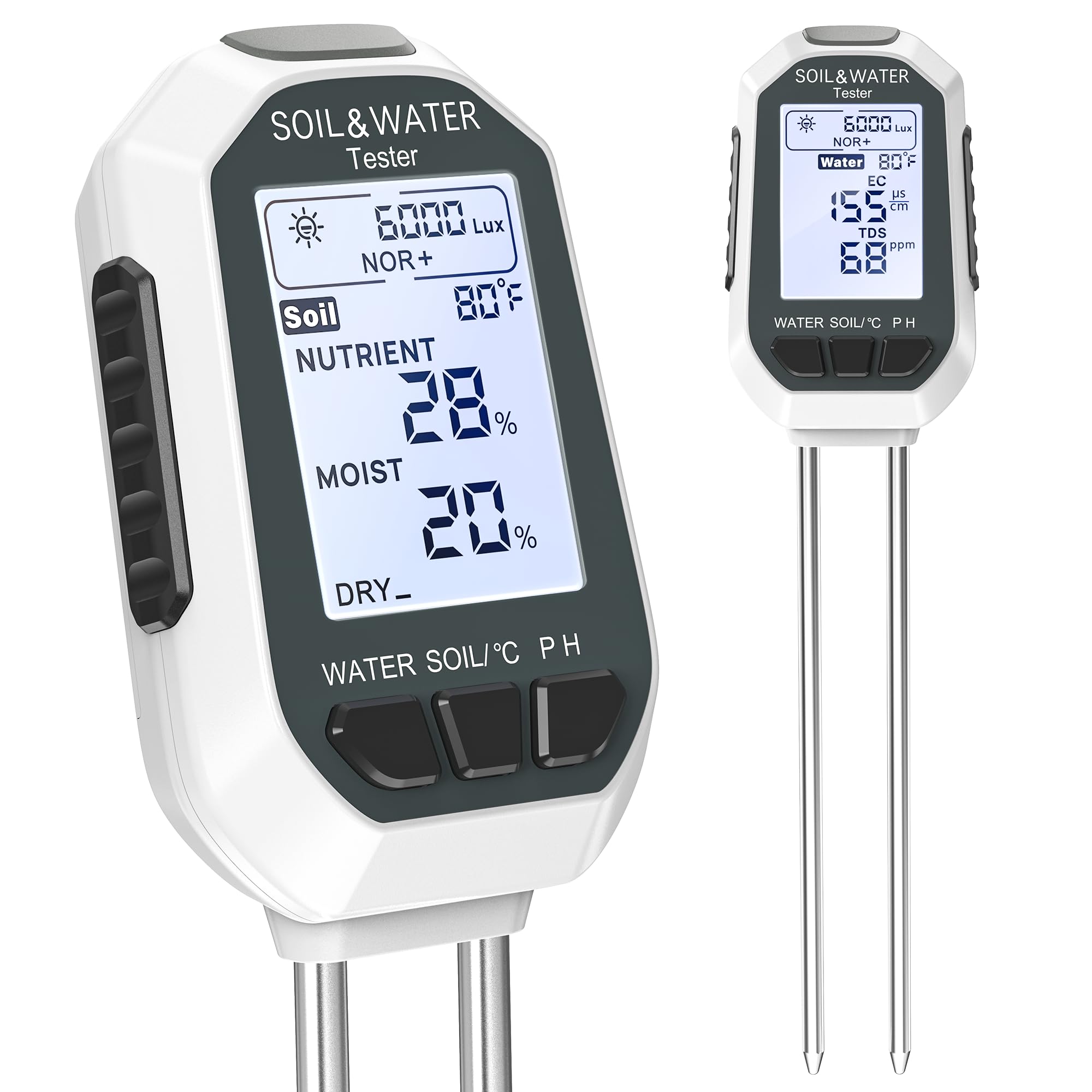
A backlit digital lab that tests soil and water quality, so you can read it even in the dark
If you want the full picture of your snake plant’s environment, this tester measures soil moisture, pH, temperature, light intensity, fertility, plus EC and TDS (electrical conductivity and total dissolved solids — ways to measure nutrients in water). The large LCD screen has a white backlight, so you can read it at night or in a dark corner.
Insert the probe about 10 cm deep, wait 10 seconds, and you get precise readings. Owners find it easier to read than a needle meter and say it removes guesswork from plant care. Screen quality and ease of use are the two most-praised features.
One owner cross-checked the functions against a control thermometer and distilled water and found the temperature reads about 5 degrees too warm — the only blemish on an otherwise accurate tool. It runs on 4 x 1.5V AAA batteries (not included) and warns you when power runs low.
The full toolkit: no other pick here measures EC and TDS, so if you also keep aquarium plants or want to test water quality, this one does double duty.
The catch: the temperature function runs slightly warm, and it’s the most battery-hungry option here.
9. Blumat Moisture Meter with Cap

A serious tensiometer for growers who want to calibrate their entire watering system
This is a different beast entirely. Instead of a handheld probe, the Blumat is a tensiometer (a device that measures how hard the soil pulls water) designed to be left in one spot as a stationary monitor for trees, shrubs, or very large pots. Its job is to help you dial in an irrigation system so you never waste water or drown roots.
Owners describe it as high quality for the price, with one noting it reduced home water usage dramatically and cut avocado winter watering by 90% — though that’s just one grower’s experience. Another says the meter is perfect for large pots and that their plants look happier, not just happy.
This tool demands setup and care: fill the tube with water to the top, reset it in dry soil for about 2 hours, and refresh the ceramic tip with grit sandpaper periodically. It’s also note the listing says a cap is included, but one owner flagged that theirs did not come with one. It’s not portable, so it stays put once installed.
For the serious grower: if you run drip irrigation or want one permanent sentinel for a large specimen pot, this is the most capable — and most involved — option.
Not for beginners: it requires setup, water filling, and maintenance, so it’s overkill for a casual single snake plant.
Understanding the Specs
Probe length and root depth
Snake plant roots grow deep into the pot, so a short probe only tells you about the surface where the soil dries out fastest. Longer probes — up to 5.5 inches (14 cm) beyond standard — reach the bottom zone where moisture lingers and rot begins. Test at the depth where the roots actually live, not the top inch.
Analog dial vs digital readout
Analog meters use a needle pointing at a scale (dry, moist, wet) and need no power at all — just insert and read. Digital meters show exact numbers on a screen and often add pH, light, and temperature, but they need batteries. For a quick daily check, analog is simpler; for tracking trends, digital wins.
FAQ
How deep should I insert a moisture meter for a snake plant?
Can I leave a moisture meter in the soil permanently?
Why does my snake plant need a moisture meter at all?
What does the dry, moist, wet scale actually mean?
Are digital moisture meters more accurate than analog ones?
Why does the probe bend when I push it into dry soil?
What does “single probe causes less damage” mean for my plant?
Can I use a moisture meter to test water or liquids?
Final Thoughts: The Verdict
For most snake plant owners, the moisture meter for snake plant winner is the XLUX Orange 2 Pack because it delivers two battery-free, easy-to-read meters for the price of one, backed by more than 70,000 owners. If you want to reach the bottom of a deep pot, grab the Long Probe Plant Soil Moisture Meter with its 5.5-inch extended stem. And for a set-and-forget visual cue across several pots, the IPPINKA Sustee Set of 4 changes color when it’s time to water.
How We Picked
We do not accept paid placement. Every pick is matched to a real buyer and a real use-case; we do not hands-on test units.
Sources & Methodology
Specifications: manufacturer listings and product documentation. Review insights: verified customer reviews, as of August 2026. Pricing: not shown on this page (it changes often); check the current price via the retailer link.
As an Amazon Associate, Lawn Gear Lab earns from qualifying purchases. This does not affect which products we feature.