
The sharpest curb appeal upgrade often starts at the edge of a flower bed—not with a roaring, vibrating machine, but with a single decisive step on a steel blade. A manual lawn edger uses your body weight, not a motor, to slice a crisp boundary between turf and pavement, delivering that groomed, professional line without a whiff of exhaust or a tangle of extension cords. The catch is that not all blades bite equally: cheap steel bends, foot plates slip, and handles can leave you hunched over halfway down the driveway.
I’m Rikta — the co-founder and writer behind Lawn Gear Lab. For this guide I’ve compared blade geometries, handle heights, foot-plate widths, and steel grades across seven of the most popular manual models, studying owner reports and construction specs to separate the tools that cut cleanly from those that just scrape the surface.
Whether you are edging a single sidewalk or maintaining multiple beds, the right manual lawn edger tool will save your back and deliver repeatable, straight lines season after season without any engine maintenance.
How To Choose The Best Manual Lawn Edger Tool
A manual edger is mechanically simple, so the few parts it has must be well executed. Steel thickness, blade geometry, handle height, and foot-plate surface area determine whether your afternoon edging session feels productive or punishing. Here are the specs to check before you buy.
Blade Material and Gauge
The blade must resist bending when you step down on compacted clay or thick root masses. Carbon steel blades are the standard for a reason: they hold an edge longer than plain steel and are easier to resharpen when they eventually dull. Gauge numbers matter here—a 12‑gauge edge is noticeably thicker and more torsion‑resistant than a 16‑gauge blade, though it also adds weight to the head. Heat‑treated cast iron is another option; it offers excellent rust resistance and can be sharpened, but it tends to be more brittle if struck against buried rocks.
Handle Height and Grip Design
Handle length directly controls how much you need to bend. Taller users (over 5’10”) should look for a tool with a maximum handle height of at least 40 inches to keep the back relatively straight during the step‑and‑rock motion. T‑grips offer fine rotational control for curving along garden beds, while D‑grips or ergonomic donut handles distribute force more evenly across the palm, reducing hot spots during longer sessions. The shaft material—fiberglass versus tubular steel—affects vibration dampening and overall weight; fiberglass is lighter and slightly more forgiving on impact, while steel is virtually unbreakable.
Foot Plate Width and Step Surface
The foot plate transfers your stepping force directly into the blade. A wider plate (roughly 4–5 inches across) gives you a stable platform even in work boots and reduces side‑to‑side wobble as the blade enters the soil. Some plates feature raised traction treads or serrated edges to prevent your sole from slipping, which is a genuine safety improvement when you are driving the tool into dry, hard earth. Avoid foot plates that are smooth or less than 3 inches wide—they force you to balance on a narrow ledge, making every cut less consistent.
Quick Comparison
On smaller screens, swipe sideways to see the full table.
| Model | Category | Best For | Key Spec | Amazon |
|---|---|---|---|---|
| Root Slayer 22611 | Premium | Aggressive root cutting in tough soil | Inverted V-serrated blade, 13-gauge carbon steel | Amazon |
| Yard Butler EDGE-180 | Premium | Professional clean edges along concrete | Alloy steel, cushioned handle, 4.5 lb | Amazon |
| Bully Tools 92251 | Mid-Range | Heavy-duty trenching and sod cutting | 12-gauge steel, 61.5″ overall length | Amazon |
| Radius Garden 25602 | Mid-Range | Comfortable extended edging sessions | Donut ergonomic grip, 4 lb, fiberglass shaft | Amazon |
| Roamwild Multi-Digger | Mid-Range | Lightweight digging and lump breaking | Dual AIR light grip, 40″ long, fiberglass shaft | Amazon |
| BARAYSTUS Height Adjustable | Budget | First-time manual edger owners | Adjustable 37″–41″, 7.9″ wide head | Amazon |
| Byhagern Professional Edge | Budget | New gardeners wanting a multi-piece kit | Saw-tooth blade, long handle, padded grip | Amazon |
In‑Depth Reviews
1. Root Slayer 22611 Serrated Garden Edger

The Root Slayer 22611 uses a 13‑gauge carbon steel half-moon blade with an inverted V‑shaped cutting tip and aggressive serrations to tear through compacted soil and shallow roots without you having to saw back and forth. The tip acts like an anchor point that helps the user keep a straight line, which is a real advantage when you’re edging along a long driveway. The fiberglass shaft is resin‑encased and paired with a non‑latex grip that stays comfortable even when your palms get sweaty.
Owner feedback consistently praises the blade’s sharpness right out of the box and the tool’s ability to cut through tough grass roots along curbs where gas edgers often scalp the surface. Several users mention that the edger is noticeably heavier than cheap alternatives—weighing in at 4.8 pounds—and that the weight gives it momentum on the downstroke but can fatigue smaller users during a long session.
For anyone who values clean borders without the noise of a power head, this tool represents a durable, single‑purchase solution that will likely outlive cheaper stamped‑steel models. The inverted V and serrated edge combo is the most effective root‑biting geometry in this price tier.
What works
- Inverted V‑tip bites roots immediately without sliding
- Fiberglass shaft dampens shock better than all‑steel handles
- Aggressive serrations reduce the need for secondary clearing passes
What doesn’t
- At 4.8 lb it is the heaviest manual edger here
- Paint can chip on the blade where it contacts rocks
2. Yard Butler EDGE-180 Step Edger

The Yard Butler EDGE-180 has been a mainstay in the manual edging category for years, and its simple layout—a powder‑coated alloy steel blade driven by a wide foot bar—is designed to produce sharp lines along sidewalks and beds without any frills. The blade is a straight, half‑moon shape, which is ideal for creating a defined trench that holds mulch or decorative stone in place. The cushioned upper handle reduces vibration through the palms, which matters when you’re stepping down on hard clay.
Real‑world owners report that the tool is sturdy enough to bury low‑voltage cable and to cut a trench for poundable metal edging strips, though several note that the factory edge is not razor‑sharp out of the box. Some users with thick‑rooted grasses like St. Augustine recommended filing the edge to a keener angle before the first serious use. The anti‑rust powder coating holds up well even when the tool is left out in damp conditions for short periods.
For the gardener who wants a no‑assembly, long‑handled step edger that feels solid in the hand and won’t rust after one season, the EDGE-180 is a straightforward choice. It earns its premium status through a refined powder coat finish that cheaper models lack.
What works
- Powder coated steel resists rust better than painted alternatives
- Wide foot bar offers stable leverage in work boots
- Cushioned handle reduces hand fatigue during repetitive stepping
What doesn’t
- Factory edge often requires immediate sharpening for thick turf
- Straight blade design struggles with dense root networks
3. Bully Tools 92251 Round Lawn Edger

Bully Tools builds its 92251 with a 12‑gauge steel round‑shaped edge that is noticeably thicker than the typical 14‑ or 16‑gauge blades found on mid‑priced competitors. The round profile allows the tool to be used for trenching, sod cutting, and even light root chopping, making it more of a multi‑purpose landscaping blade than a dedicated step edger. The 61.5‑inch overall length is the tallest in this roundup, which is a clear benefit for anyone over six feet tall who wants to keep their spine upright while working.
Customer reviews highlight the tool’s American‑made build quality and the fact that the blade stays factory‑sharp much longer than stamped imports. However, a recurring complaint is that the rubber handles are not bonded to the shaft and can twist off after 10–15 minutes of use unless secured with adhesive. The 3.69‑pound weight is relatively light for a 12‑gauge steel tool, making it easier to swing but slightly less momentum‑driven than heavier designs.
For a home landscaper who needs one tool that can cut a clean edge, rip out a thin sod strip, or dig a shallow trench for drip irrigation, the Bully 92251 is the most versatile and durable entry at this price point.
What works
- 12‑gauge steel resists bending even in rocky soil
- Extra‑long shaft eliminates stooping for tall users
- Round blade shape works for trenching and sod removal
What doesn’t
- Handle grips loosen during use and need adhesive
- Round blade is less effective for sharp 90° corners against concrete
4. Radius Garden 25602 Pro-Lite Carbon Steel Edger

Radius Garden’s design philosophy centers on the ergonomic donut‑shaped handle, which lets you grip the tool from a neutral wrist angle rather than forcing your wrist into a twisted T‑grip position. Paired with a fiberglass shaft that is lighter than steel, the 25602 reduces the overall strain on your forearm during repetitive edging. The heat‑treated carbon steel blade measures roughly 9 inches across and 5 inches deep, giving you a generous cutting face that can handle wider turf sections in fewer passes.
Owners consistently praise the handle design for making long edging sessions more comfortable, even when working in heavy clay soil that requires multiple stomps per cut. The bright green color is a minor but practical bonus—it’s easy to spot among plants when you set it down. A few users note that the blade could be sharper from the factory, especially for cutting through thick grass that has not been softened by rain.
If you suffer from wrist or hand fatigue after using standard T‑handle tools, the Radius Garden 25602 is the most comfortable option on this list without sacrificing blade quality or structural strength.
What works
- Donut handle promotes a neutral wrist angle during edging
- Fiberglass shaft keeps weight manageable at 4 pounds
- Wide 9‑inch blade covers ground faster than narrow edgers
What doesn’t
- Factory edge may need a quick file pass for thick, dry turf
- Donut grip style is not preferred by users who like a T‑grip
5. Roamwild Multi-Digger Garden Edger

The Roamwild Multi-Digger takes a hybrid approach: it combines a tapered, diamond‑pointed digging profile with edging blades, and its twin grip positions let you switch between a traditional top‑hand hold for edging and a lower shaft grip for breaking up soil clumps. The wide foot plates are contoured to accept the whole sole, which helps you transfer body weight effectively without the foot slipping off. At roughly 2.2 pounds, it is the lightest full‑size edger in this group.
Feedback from buyers indicates that the serrated edge on one side of the blade is genuinely useful for cutting through established bermudagrass runners, though the tool’s light weight means you will need to apply more of your own body force in hard soil compared to heavier models. The 40‑inch shaft length is fine for average height users, but taller gardeners mention they have to stoop slightly to maintain blade control.
For the weekend gardener who values a single tool that can edge, dig, and break soil lumps without requiring a shed full of specialized implements, the Roamwild Multi-Digger is a clever hybrid that prioritizes versatility and low weight over brute‑force head mass.
What works
- Extremely lightweight at about 2.2 lb reduces arm strain
- Wedge tines help break soil clods without a separate tool
- Dual grip positions improve control during different tasks
What doesn’t
- Light weight means less momentum in hard, compacted ground
- Handle length is short for users over 6 feet tall
6. BARAYSTUS Height Adjustable Garden Edger

The BARAYSTUS edger stands out for its two‑position height adjustment (37 inches and 41 inches) that lets you match the handle length to your height—a rare feature in the manual edger category. The blade combines a smooth edge with saw‑tooth serrations on a 7.9‑inch wide half‑moon head that can handle everything from light root trimming to cutting a new edge along a sidewalk. The foot plate is wide and reinforced, helping you drive the cast iron blade into the soil without bending or wobbling.
Customers report that assembly is simple, with two wrenches included to secure the T‑grip handle to the metal shaft. The blade is sharp enough to cut into heavy clay after rain, and multiple owners mention using it to clear thick ice from driveways as an unintended but effective bonus. However, the cast iron construction, while durable, is slightly more brittle than carbon steel if accidentally struck against a buried rock.
For households where multiple people of different heights share yard chores, the adjustable shaft of the BARAYSTUS is a genuine practical feature that you will not find on many competing manual edgers at this entry level.
What works
- Two height settings fit users from 5’4″ to over 6 feet
- Wide 7.9‑inch head covers more edge in each pass
- Heat‑treated cast iron resists rust and stays sharp
What doesn’t
- Cast iron is more brittle than carbon steel on rocks
- Not intended for heavy daily professional use
7. Byhagern Professional Edge Lawn Tool
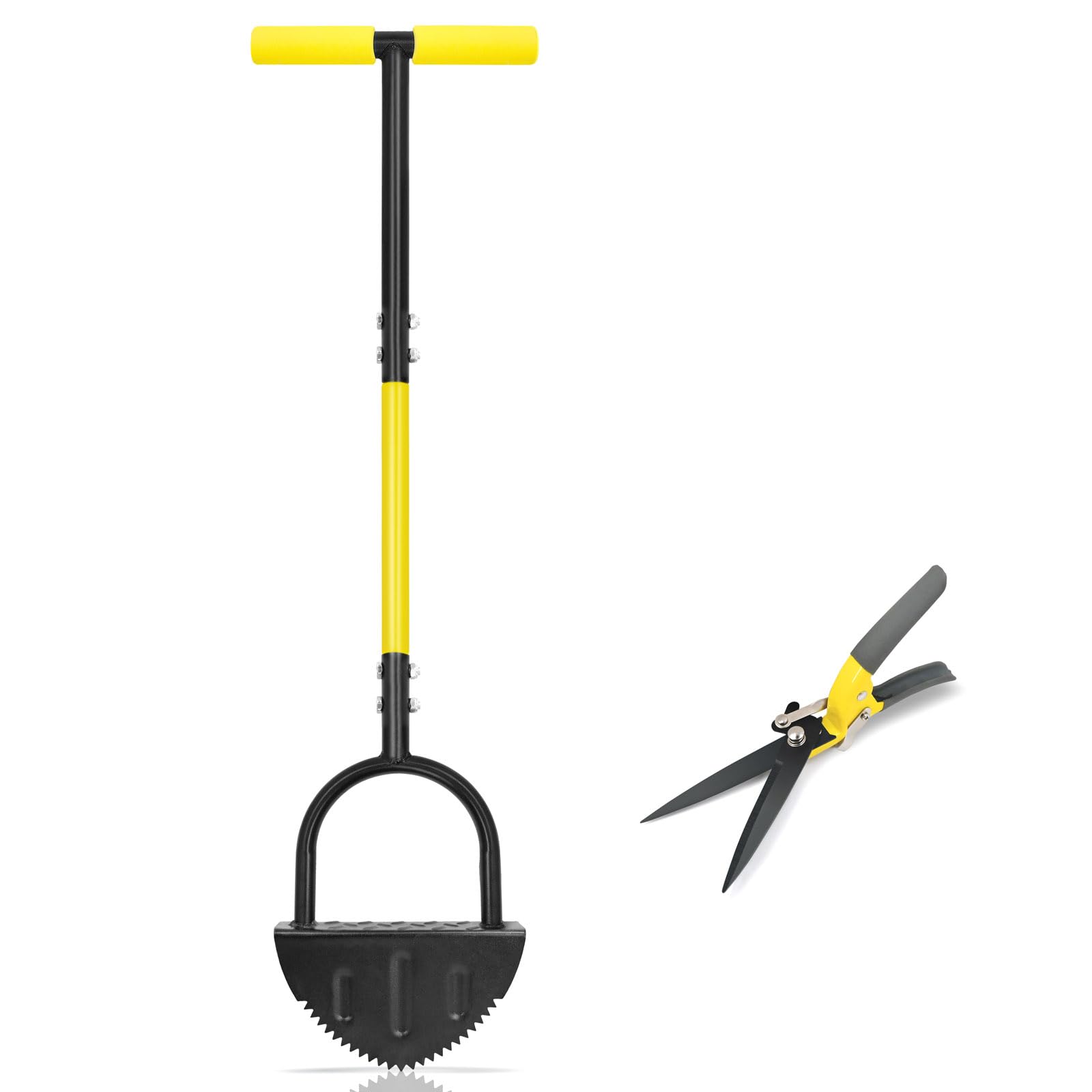
The Byhagern kit pairs a saw‑tooth half‑moon edger with a pair of shears and gloves, offering a ready‑to‑go bundle for a first‑time manual edging buyer. The saw‑tooth design lines the bottom of the curved blade with teeth that bite into grass and roots rather than just pushing them aside, which makes the initial cut easier in soft to moderately firm soil. The long handle and padded grip aim to reduce back strain, while the wide foot plate provides leverage for all shoe sizes.
Owners note that the blade cuts cleanly after a rain and that the included shears are a welcome bonus for trimming stray grass along the freshly cut edge. A few users mention that the blade is too thick (roughly 1/8 inch) for slicing through heavy turf without some grinding or filing to create a narrower, knife‑like edge. The handle material is plastic and rubber rather than full steel, so the overall feel is lighter but slightly less rigid than all‑metal alternatives.
As an entry‑level bundle that lets a new gardener start edging immediately without buying separate trimming tools, the Byhagern offers decent value for occasional use around flower beds and walkways.
What works
- Saw‑tooth edge bites into soil effectively after rain
- Bundle includes shears and gloves for complete starter setup
- Padded handle and long shaft reduce strain during use
What doesn’t
- 1/8‑inch thick blade needs user sharpening for dense turf
- Plastic handle components feel less durable than all‑metal builds
Hardware & Specs Guide
Blade Geometry: Half-Moon vs. Round vs. V-Tip
Half‑moon blades are the standard for manual edging because the curved shape concentrates force at the center of the cut, producing a clean line with less side‑to‑side rocking. Round blades, like those on the Bully Tools 92251, are better for digging trenches but do not create the same sharp 90° corner against a sidewalk. V‑tip blades, such as the Root Slayer’s inverted V design, act as a starting wedge that splits roots before the main blade passes through, making them the best choice for soil with heavy root content.
Shaft Material: Fiberglass vs. Steel vs. Cast Iron
Fiberglass shafts (Radius Garden, Root Slayer) are lighter and dampen impact shock better than tubular steel, which reduces fatigue during long sessions. Steel shafts (Bully Tools, Yard Butler) are nearly indestructible but transmit more vibration to your hands. Cast iron heads (BARAYSTUS) provide excellent rust resistance and weight for momentum but are more prone to cracking under extreme impact with buried rocks. Choose fiberglass for comfort, steel for absolute durability, and cast iron for rust‑free maintenance.
FAQ
Can a manual lawn edger cut through tree roots?
How do I keep the blade sharp on a manual edger?
How deep can a manual lawn edger cut?
Should I choose a serrated or smooth blade for clay soil?
Final Thoughts: The Verdict
For most gardeners, the manual lawn edger tool winner is the Root Slayer 22611 because its inverted V‑serrated blade design bites into roots on contact and the fiberglass shaft keeps the weight balanced for clean, controlled cuts. If you want the most comfortable handle for long edging sessions, grab the Radius Garden 25602 with its ergonomic donut grip. And for a heavy‑duty, multi‑purpose landscape tool that can edge, trench, and cut sod, nothing beats the Bully Tools 92251.