
Specs are compiled from manufacturer listings and verified buyer reviews and can change over time — please confirm the key details on the product page before buying.
Getting plump, sweet watermelons starts with what you feed the roots and vines during that short burst of summer growth. A liquid fertilizer delivers nutrients fast, exactly when your melons need them most—but the wrong one can push leaves at the expense of fruit. That is why you need a formula that does not just green up the vine, but specifically supports flowering, fruit set, and that final sugar-packed swell.
I’m Rikta — the founder and writer behind Lawn Gear Lab. This guide is built by comparing the manufacturers’ published specifications and the patterns across verified customer reviews, so you get each pick’s real strengths and trade-offs instead of marketing spin.
The right choice depends on your garden style, from concentrated melon-specific blends to broad organic options. Here is a no-nonsense look at the best liquid fertilizer for watermelon to get your patch producing this season.
Quick Picks
- Watermelon Fertilizer – Liquid Plant Food for Bigger Melons, Vigorous Vines & Stronger Root Development, 32 oz — Best Overall
- Alaska Fish Fertilizer OMRI Listed 5-1-1 — Proven Performer
- 1 Gallon Organic Fish Emulsion Fertilizer for Plants, 2-3-1 NPK — Best Value
- True Organic Liquid All Purpose Plant Food – 32 fl. oz. — Budget Champion
- Growth Technology GT Fruit Focus – Liquid Plant Food, 8.45 fl oz — Precision Feed
How To Choose The Best Liquid Fertilizer For Watermelon
Picking a liquid fertilizer for watermelons is not complicated, but you need to know a few key numbers and terms to avoid wasting money on a formula that grows only leaves. Here is what to look for.
NPK Ratio — The Three Numbers That Matter
Every bottle shows three numbers like 5-1-1 or 2-3-1. The first is nitrogen (N, for leaves and vines), the second is phosphorus (P, for roots and flowers), and the third is potassium (K, for fruit size and sweetness). For watermelons, you want a balanced or slightly phosphorus-focused feed once the plant starts flowering. Too much nitrogen early gives you a lush vine with few melons.
Organic vs. Synthetic
Organic liquid fertilizers like fish emulsion feed the soil microbes that in turn feed your plants, improving soil structure over time. Synthetics act faster but do not build long-term soil health. For watermelons, organic options are popular because they are gentle and unlikely to burn roots when used as directed.
Concentration and Coverage
Check how many gallons the bottle makes. A concentrated 32-ounce bottle might cover 60 square feet, while a gallon jug can cover over 160 gallons when mixed. The more concentrated it is, the further it goes, but you must follow the mixing ratio exactly to avoid damaging your plants.
Smell as a Quality Signal
With fish-based fertilizers, a strong fishy odor is actually a good thing—it means the product is minimally processed and retains its natural nutrients. Deodorized versions exist, but some gardeners prefer the real stuff, knowing the smell fades after it soaks into the soil.
Quick Comparison
| Model | Best For | NPK Ratio | Volume | Coverage | Amazon |
|---|---|---|---|---|---|
| TPS Watermelon Fertilizer | Melon-Specific Growth | — | 32 fl. oz. | Low | Amazon |
| Alaska Fish Fertilizer | Organic Nitrogen Boost | 5-1-1 | 115 fl. oz. | 1000 sq. ft. | Amazon |
| The Grow Co Fish Emulsion | High Volume Value | 2-3-1 | 128 fl. oz. | 160+ Gallons | Amazon |
| True Organic All Purpose | Budget-Friendly Organic | 3-2-2 | 32 fl. oz. | 60 sq. ft. | Amazon |
| Growth Technology Fruit Focus | Precision Fruiting Feed | — | 8.45 fl. oz. | Full | Amazon |
In‑Depth Reviews
1. Watermelon Fertilizer – Liquid Plant Food for Bigger Melons, Vigorous Vines & Stronger Root Development, 32 oz
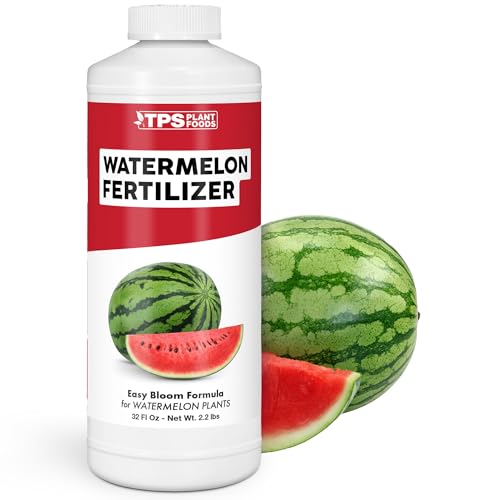
A dedicated melon feed that focuses on fruit, not just foliage.
This is the only pick on the list specifically formulated for watermelons, so you skip the guesswork. It is designed to promote strong vine development and fruit development, which is exactly what a watermelon patch needs from flowering to harvest. The 32 fluid ounce bottle packs a concentrated punch, and buyers report their “watermelons are not only growing in quickly, but they’re popping up more and more each time I check.” That kind of real-world result speaks directly to the goal of bigger melons.
At 2.2 pounds, it is noticeably lighter and more compact than the Alaska Fish Fertilizer, which weighs 8.8 pounds—a 4.0x difference. That makes it easier to handle and store, though you get less total volume. The formula includes kelp, copper, and iron, and multiple reviewers noted it promotes “more blooms” and “greener plants” even early in the season.
What You Get
- Made specifically for watermelons to target vine and fruit growth
- Concentrated formula delivers good value per application
- Includes beneficial micronutrients like kelp, copper, and iron
- Easy to mix and apply in garden or field settings
A Couple of Limits
- Coverage is marked as low, so you may need more frequent applications in large patches
- Specific NPK ratio is not listed in the specs, making it harder to compare directly
Reach for this if: You want a formula built around the exact needs of watermelon vines and fruit, with real backup from buyers seeing faster growth.
Look elsewhere if: You need a massive jug to cover a large garden—this 32-ounce bottle is best for focused patch work.
2. Alaska Fish Fertilizer OMRI Listed 5-1-1

A nitrogen-rich organic staple that fuels explosive vine growth.
Alaska Fish Fertilizer has been a go-to organic feed for generations, and the 5-1-1 ratio means it delivers a solid dose of nitrogen (5%) for fast, lush vegetative growth. That is ideal when you are starting your watermelon vines and want them to spread and establish quickly. It is OMRI listed for organic use, and one reviewer who called it “proven over 10 years on hundreds of plants” confirms its reliability. The 115 fluid ounce bottle covers 1000 square feet, giving you plenty of feeding power for a sizable garden.
Compared to the TPS Watermelon Fertilizer at 2.2 pounds, this jug weighs 8.8 pounds—a 4.0x weight difference—so it is a heavier commitment. The fishy smell is strong and can linger indoors for about a day, so use it in a ventilated area. Some owners mention you will need a phosphorus and potassium supplement during flowering and fruiting since the 5-1-1 ratio is nitrogen-heavy.
The Core Strengths
- OMRI certified for organic gardening, trusted by long-time users
- Covers 1000 square feet, good for large watermelon patches
- Cold-processed formula preserves micronutrients and feeds soil microbes
- Won’t burn plants when diluted correctly
The Trade-Offs
- High nitrogen content (5-1-1) needs a phosphorus boost for fruit development
- Strong fishy smell that can be unpleasant indoors
Stick with this if: You want a high-volume, organic nitrogen source to drive fast vine spreading and have a larger garden to feed.
Pass if: You are sensitive to strong odors or need a balanced NPK for the entire fruiting stage without mixing supplements.
3. 1 Gallon Organic Fish Emulsion Fertilizer for Plants, 2-3-1 NPK

A full gallon of fish emulsion with a fruit-friendly NPK for the long season.
This is the volume king on the list—128 fluid ounces of organic fish emulsion with a 2-3-1 NPK that leans into phosphorus for fruit and flower development. That ratio is a better match for watermelons once they start setting fruit than a high-nitrogen feed, because phosphorus (the middle number) supports blooming and melon formation. A reviewer with over 50 years of gardening experience noted the “very thin consistency; good value and goes a long way.” It covers 160+ gallons when mixed, which is a massive amount of feeding for the price.
The volume gap between this and the smaller picks is huge. Compared to the True Organic All Purpose at 32 fluid ounces, this bottle holds 128 fluid ounces. Compared to the tiny Growth Technology Fruit Focus at 8.45 fluid ounces, it holds 128 fluid ounces. Just be ready for the “pungent fishy aroma” the maker admits is a feature, not a bug.
Why It Wins
- 128 ounces of concentrated feed at a very low cost per gallon mixed
- 2-3-1 NPK with higher phosphorus for better fruiting
- Cold-processed and sustainably sourced from fish byproduct
- Gentle enough for foliar spray use on leaves
The Catch
- Strong fish smell that some gardeners find unpleasant
- Thin consistency means it can run off if not watered into the soil
Best for: Gardeners with large patches who want a budget-friendly, phosphorus-rich organic option, and do not mind the authentic fish smell.
skip it if: You need a quick, deodorized formula or only have a few small melon plants to feed.
4. True Organic Liquid All Purpose Plant Food – 32 fl. oz.
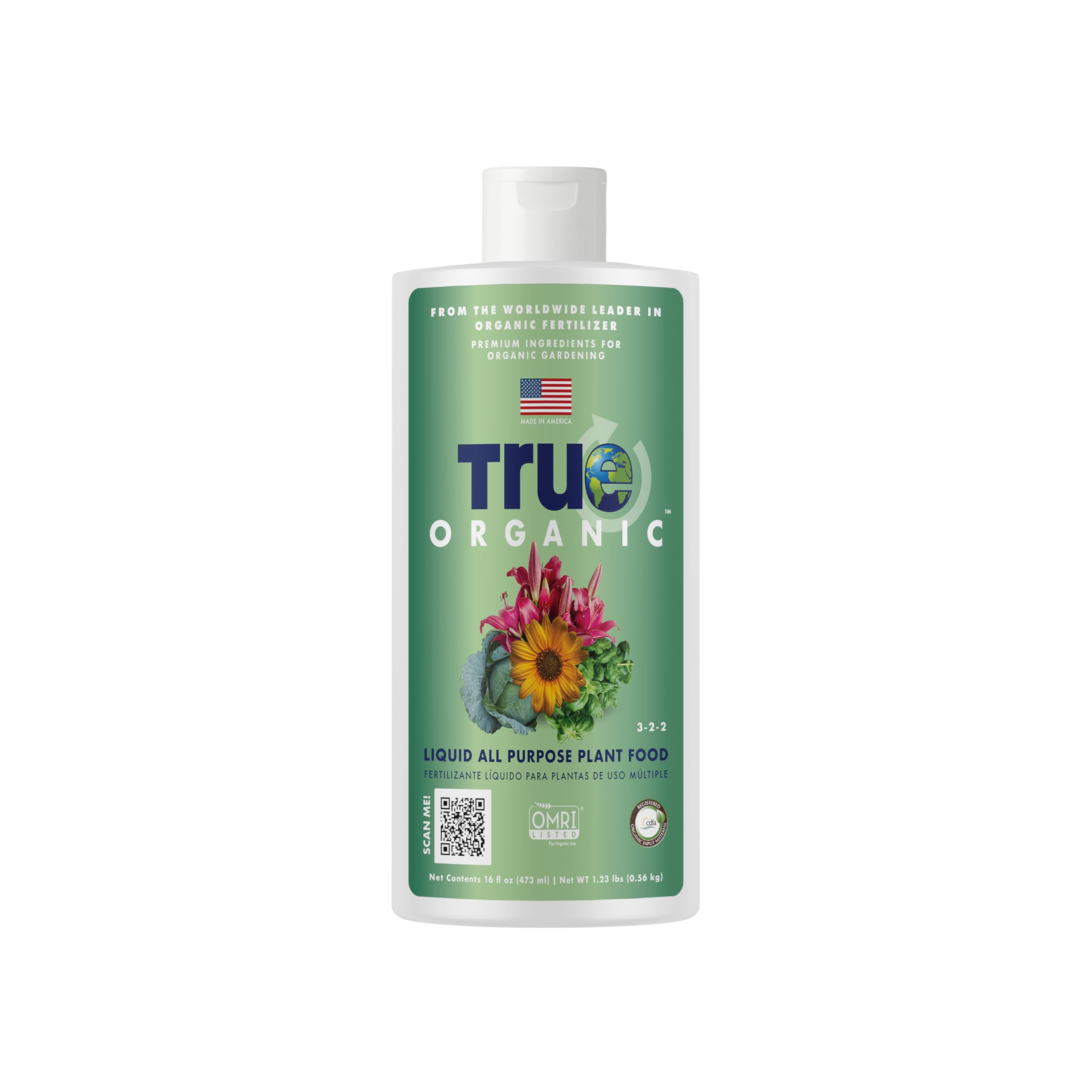
An entry-level organic feed that gets the job done while staying affordable.
If you are looking for a low-cost way to feed watermelons and other garden crops without synthetic chemicals, this is your starting point. The 3-2-2 NPK provides a balanced supply of nitrogen (3%), phosphate (2%), and potash (2%) from organic sources like fish solubles, soy protein hydrolysate, and kelp extract. You simply mix 2 ounces per gallon of water and apply every two weeks. The 32-fluid ounce bottle covers about 60 square feet, making it a good fit for a modest backyard patch.
It is smaller than the gallon jug options—4x less volume than The Grow Co fish emulsion at 128 ounces—but that lower upfront cost is perfect if you are not sure how much fertilizer you will go through. It is made in the USA with organic inputs and is free from harsh chemicals, so it is safe to use around pets and kids once watered in.
Good Things
- Budget-friendly price for a balanced organic formula
- Safe for indoor and outdoor use, gentle on plants
- Includes kelp extract and soy protein hydrolysate for soil health
- Simple mixing ratio of 2 oz. per gallon
Limited In
- Only 32 ounces covers just 60 square feet, not ideal for large gardens
- General-purpose formula, not optimized specifically for melon fruiting
Grab it for: A small backyard garden where you want a safe, chemical-free all-around feed for watermelons and other vegetables without a big investment.
Not for: Large melon patches that need high volume or a specialized phosphorus boost for heavy fruiting.
5. Growth Technology GT Fruit Focus – Liquid Plant Food, 8.45 fl oz
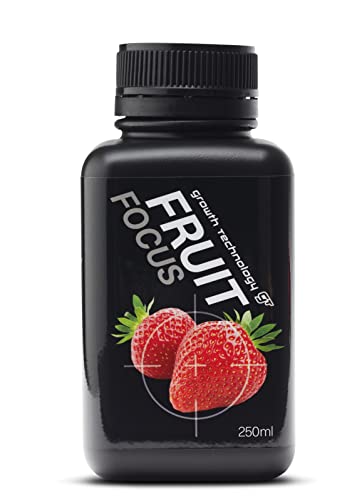
A small but mighty bottle packed with all 12 essential minerals for fruit.
This is the specialist at the opposite end of the volume spectrum. The 8.45 fluid ounce bottle from Growth Technology is tiny next to the 128-ounce gallon jugs—a 15.1x gap in volume—but it is designed with a different philosophy. It provides all 12 essential minerals, including calcium, in a precise, easy-to-absorb liquid. Calcium is critical for watermelons because it prevents blossom end rot, the black sunken spot that ruins melons. That single detail makes this bottle punch well above its size for fruit quality.
It is suitable for hydroponics, semi-hydro, and soil, with a mixing ratio of 5-7ml per liter for hydroponics and 3-5ml per liter for soil. The Single Part Technology means you just mix it with water and go—no complicated blending of separate nutrients. Reviewers do not mention specific results on watermelons, but the mineral focus makes it a strong targeted feed for the fruiting stage.
What Stands Out
- Contains calcium to prevent blossom end rot in melons
- All 12 essential minerals in a single liquid, ready to mix
- Works with hydroponic, container, and in-ground growing methods
- Easy measurement with clear ml-per-liter ratios
Smaller Side
- Very small bottle at 8.45 ounces, not enough for large gardens
- Higher cost per ounce compared to bulk fish emulsion options
Choose this for: Growing watermelons in containers or hydroponic setups where precise mineral feeding and calcium availability make the difference between good and great fruit.
Skip if: You are feeding a large in-ground patch and need gallons of fertilizer at a lower per-ounce cost.
Understanding the Specs
NPK Ratio — What Those Numbers Mean
Every fertilizer label shows three numbers separated by dashes, like 5-1-1 or 2-3-1. The first number is nitrogen (N), which drives leaf and vine growth. The second is phosphorus (P), which supports root development, flower formation, and fruit set. The third is potassium (K), which helps with overall plant health, disease resistance, and fruit quality. For watermelons, you want a balanced or phosphorus-focused formula once the plants start flowering. Too much nitrogen gives you a giant vine with few melons.
Fish Emulsion vs. Synthetic Fertilizer
Fish emulsion is made by processing fish byproduct into a liquid that feeds your soil microbes. It is organic, gentle, and improves soil structure over time, but it has a strong fishy smell. Synthetic fertilizers are lab-formulated to deliver exact NPK ratios fast, but they do not build long-term soil health. For watermelons, many gardeners prefer fish-based organics because they are less likely to burn roots and they support the soil biology that sustains the plants through the hot growing season.
FAQ
What NPK ratio is best for watermelons?
How often should I apply liquid fertilizer to watermelons?
Can I use tomato fertilizer on watermelons?
Will fish fertilizer make my watermelons taste fishy?
What causes blossom end rot in watermelons, and can fertilizer prevent it?
Is liquid fertilizer better than granular for watermelons?
How much fertilizer does a watermelon plant need per season?
Can I use these fertilizers on other vegetables and fruits?
Why does fish emulsion smell so strong?
Will liquid fertilizer burn my watermelon plants?
Final Thoughts: The Verdict
If you want one dependable pick, the best liquid fertilizer for watermelon winner is the TPS Watermelon Fertilizer because it is the only formula built specifically around melon vine and fruit development, with real customer results to back it up. If you want a high-volume organic option with a fruit-friendly phosphorus ratio, grab the The Grow Co Fish Emulsion. And for container or hydroponic watermelon growers who need precise mineral nutrition including calcium to prevent blossom end rot, the Growth Technology Fruit Focus is a targeted choice.
How We Picked
We do not accept paid placement. Every pick is matched to a real buyer and a real use-case; we do not hands-on test units.
Sources & Methodology
Specifications: manufacturer listings and product documentation. Review insights: verified customer reviews, as of July 2026. Pricing: not shown on this page (it changes often); check the current price via the retailer link.
As an Amazon Associate, Lawn Gear Lab earns from qualifying purchases. This does not affect which products we feature.