
Specs are compiled from manufacturer listings and verified buyer reviews and can change over time — please confirm the key details on the product page before buying.
The secret to a heavy tomato harvest isn’t luck, it’s feeding your plants the right nutrients at the right time. Tomato plants are heavy feeders, and a liquid formula gets those nutrients into the roots (and leaves) fast, so you spend less time guessing and more time harvesting.
I’m Rikta — the founder and writer behind Lawn Gear Lab. This guide is built by comparing the manufacturers’ published specifications and the patterns across verified customer reviews, so you get each pick’s real strengths and trade-offs instead of marketing spin.
Whether you are growing in a container on a balcony or in a full backyard plot, the right liquid fertilizer for tomatoes can be the difference between a few sad fruits and a bumper crop you are proud to share.
Quick Picks
- MaterAid Tomato Fertilizer — Top Performer
- Great Big Tomatoes and Vegetables Liquid — Heavy Harvest
- Dr. Earth Home Grown Tomato — Best Value
- Bloom City Tomato & Veggie Plant Food — Versatile Grower
- Liquid Power Tomato Fertilizer Spray — Budget Champion
How To Choose The Best Liquid Fertilizer For Tomatoes
The biggest mistake new tomato growers make is picking a general-purpose fertilizer instead of one tailored to the heavy-fruiting needs of tomato plants. Here are the key factors to look at.
Concentrate vs. Ready-to-Use
A concentrate (like the 24 oz or 32 oz bottles) gives you dozens of gallons of mixed feed for your money, but you must measure and mix each time. A ready-to-use spray (like the 8 oz bottle) costs more per quart but is grab-and-go simple — perfect if you only have a few plants and want zero mess.
NPK Ratio and Micronutrients
The N-P-K numbers (nitrogen, phosphorus, potassium) tell you the primary nutrient mix. For tomatoes, you want a balanced feed that supports fruit (potassium and phosphorus) without excessive nitrogen that only grows leaves. Extra calcium prevents blossom-end rot, and magnesium boosts chlorophyll for greener foliage.
Organic Certification
If you are gardening for clean produce, look for an OMRI-listed product or one that states it is made from natural ingredients. Organic formulas are safer for your soil’s microbiology and for your family and pets, though they may require more consistent application than synthetic ones.
Quick Comparison
| Model | Best For | Volume | Form | Weight | Amazon |
|---|---|---|---|---|---|
| MaterAid Tomato Fertilizer | Explosive growth & fruit set | 32 oz | Concentrate | 32 oz | Amazon |
| Great Big Tomatoes & Vegetables Booster | Mammoth-sized yields | 32 oz | Concentrate | — | Amazon |
| Dr. Earth Home Grown Liquid Fertilizer | Organic root development | 24 oz | Concentrate | 1 pound | Amazon |
| Bloom City Tomato & Veggie Plant Food | Versatile vegetable feeding | 32 oz | Concentrate | 32 oz | Amazon |
| Liquid Power Tomato Fertilizer Spray | Instant rescue & convenience | 8 oz | Ready-to-Use Spray | 0.25 pounds | Amazon |
In‑Depth Reviews
1. MaterAid Tomato Fertilizer
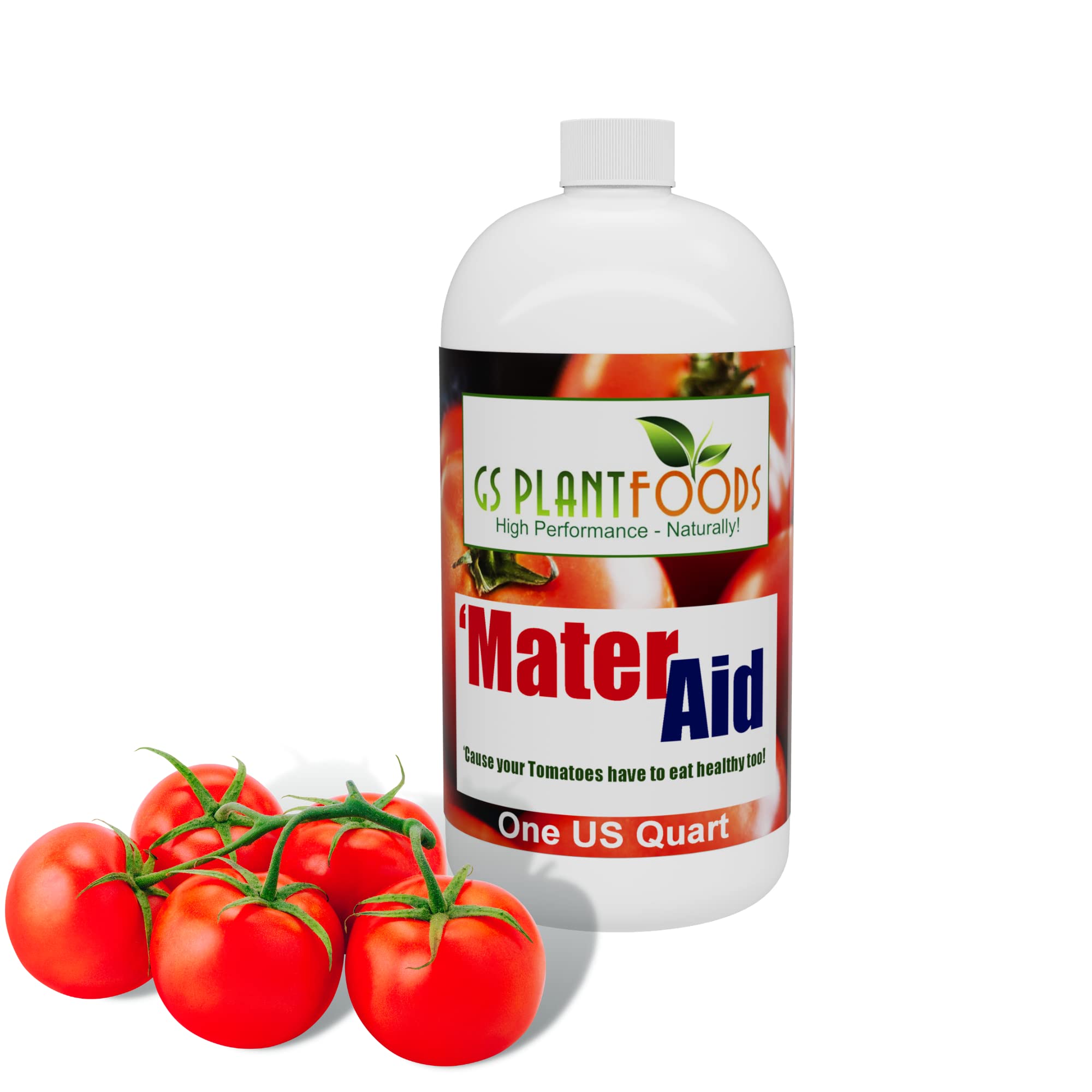
The organic concentrate that turns your tomato patch into a jungle in just over a week.
This is the pick for growers who want to see plants “shoot up and out overnight,” as one reviewer noted after mixing 1-2 ounces per gallon of water. The formula is packed with the three primary nutrients (Nitrogen, Phosphorus, Potassium) plus the tomato-specific trio of magnesium, calcium, and sulfur. That calcium is your defense against blossom-end rot — it helps build stronger roots and firmer fruit.
The feeding schedule is simple: apply every other week until fruit sets, then bump it to once a week. Buyers report explosive growth — one owner shared photos showing plants 9 days apart that already needed a bigger pot, with 5 or 6 flowers forming. At 32 oz it matches the volume of the Great Big Tomatoes booster, but MaterAid leans harder on that immediate root-feeding formula designed specifically for tomatoes rather than being a general vegetable booster.
It costs a bit more per bottle than the Bloom City option, but given the speed of results, serious home gardeners say it earns its place in the shed season after season.
What sold me
- Including calcium and sulfur specifically targets blossom-end rot and fruit firmness
- Multiple 5-star reports of visible growth in under a week
- Can be used on other plants as well
Watch points
- Requires mixing each time (not a spray-and-go)
- Premium price point
Reach for it if: you want the fastest, most dramatic growth response from your tomato plants and are happy to spend a few minutes mixing a concentrate.
Think twice if: you absolutely cannot abide measuring and mixing — the spray bottle below is less fuss.
2. Great Big Tomatoes and Vegetables Liquid Fertilizer Booster
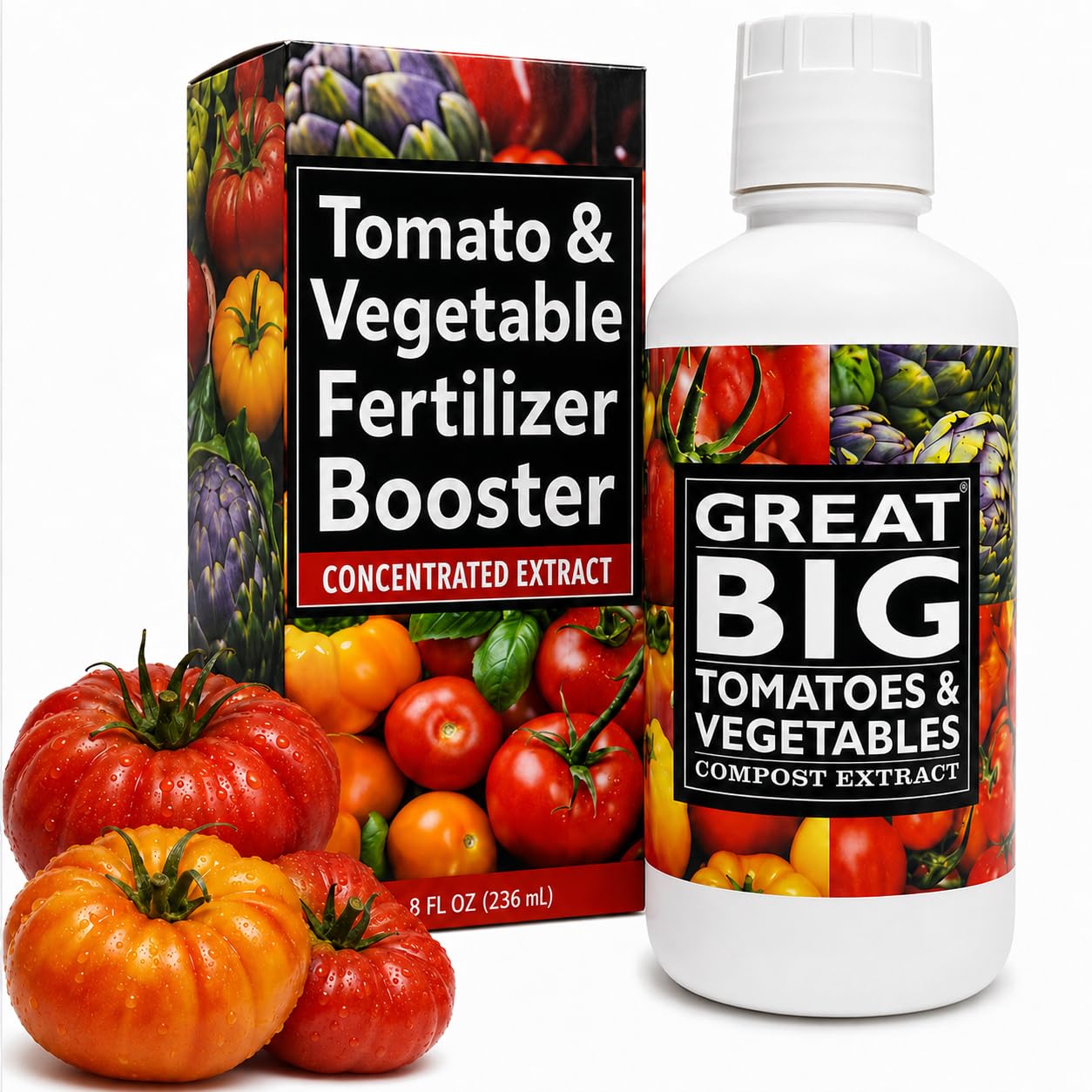
The soil-conditioning booster that routinely produces 1-pound-plus tomatoes that need serious staking.
This one works differently from the others here. It is not a standard NPK fertilizer but an organic compost extract that delivers over 70 chelated trace minerals, humic acid (from leonardite), and kelp seaweed straight to the root zone. Those 70 minerals make the existing soil nutrients bioavailable again — think of it as waking up your garden’s soil.
Owners mention that their vines required double or triple staking to handle the fruit weight, and that “big tomatoes, no end rot” is a common refrain in reviews. The mixing ratio is very concentrated — one tablespoon per pint of water gives you about 256 feedings per gallon according to the maker, so the 32 oz bottle goes a very long way. This makes it cheaper per feeding than the Dr. Earth or MaterAid options, even though the upfront cost is higher.
It works especially well if you already have decent soil and are using a standard fertilizer as your base, then adding this booster to push yields into the monster range.
Why it stands out
- Unique compost-extract formula with humic acid restores nutrient access in tired soil
- Extreme value per feeding — 256 feedings per bottle
- Works on peppers, cucumbers, squash, and green beans too
Limitations
- Works best as a booster alongside a base fertilizer, not a standalone feed
- Measuring one tablespoon per pint can be fiddly
Best for: experienced gardeners who already have a feeding routine and want to push their tomato plants into record-breaking territory.
skip it if: you want a one-bottle solution with balanced NPK — go with MaterAid instead.
3. Dr. Earth Home Grown Tomato, Vegetable & Herb Liquid Fertilizer

The OMRI-certified organic concentrate that keeps 1 pound of goodness coming back year after year.
Dr. Earth brings a 3-2-2 NPK in a thick 24 oz concentrate. “I applied every other week and my garden has never looked better,” one regular buyer noted. It is made from recycled grocery produce, fish, and meat — a 100% sustainable manufacturing process that results in OMRI-listed organic status. The 1:200 mixing ratio (one part concentrate to 200 parts water) means that despite the bottle being smaller by volume than the Bloom City or MaterAid options, it stretches to a surprising number of feedings.
This formula is purpose-built for root development according to the manufacturer, which is why it works so well for seedlings. Multiple reviewers mention using it successfully on broccoli, vegetables, and herbs as well as tomatoes. The label clearly warns it may be too strong for delicate flower pots, so stick to your vegetable beds with this one. At 1 pound total weight, it is four times heavier than the Liquid Power spray, but that weight is all concentrated nutrients.
Given the organic pedigree, the sustainable sourcing, and the price, this is a sturdy mid-range workhorse for the conscientious gardener.
Strong points
- OMRI-listed organic – safe for families, pets, and soil biology
- Made from recycled grocery byproducts – unique sustainability angle
- Excellent for starting seedlings and early growth
Trade-offs
- 24 oz bottle is smaller than the 32 oz competitors
- One reviewer found it too strong for flower pots
A reliable choice if: organic certification and sustainable sourcing are priorities, and you want a concentrate that builds strong roots from the seedling stage.
Consider the competition if: you want a single product that goes all the way from seedling to heavy fruiting without a second bottle.
4. Bloom City Tomato & Veggie Plant Food

The 32 oz concentrate that feeds everything from beefsteak tomatoes to bell peppers without overcomplicating things.
One first-time tomato grower said, “This made a huge difference in my tomato plant… it helped it thrive and produce tons of delicious beefsteak tomatoes.” Bloom City’s 32 oz concentrate is mixed at 2 oz per gallon of water, making it the most straightforward dosing in this lineup. The formula is designed to support fruit development and plant strength without overstimulating leafy growth — a balanced approach that works in raised beds, containers, and backyard soil alike.
At 32 oz it holds four times the volume of the Liquid Power spray and matches the MaterAid and Great Big bottles for quantity. Several buyers praised it for being water-soluble and easy to apply with a watering can or hose sprayer. One thoughtful reviewer noted it performed comparably to granular food but was much more convenient to apply, so they may stick with it for that reason alone. The price is mid-range, making it a practical choice for a gardener with a medium-sized plot.
If you want a straightforward, no-fuss concentrate that works across your whole vegetable garden without demanding weekly attention, this is your pick.
What works
- Simple 2 oz/gallon mixing ratio — hardest part is reading the cap
- Large 32 oz volume for a mid-range price
- Works well on tomatoes plus common garden vegetables
Room for improvement
- One verified buyer saw no noticeable difference vs. their granular food
- Lacks the added calcium that prevents blossom-end rot, which MaterAid includes
Choose this when: you need a reliable, versatile vegetable feed for a mix of crops, not just tomatoes, and you value simplicity above all else.
Look elsewhere if: you specifically need blossom-end rot protection or a formula dedicated solely to massive tomatoes.
5. Liquid Power Tomato Fertilizer Spray
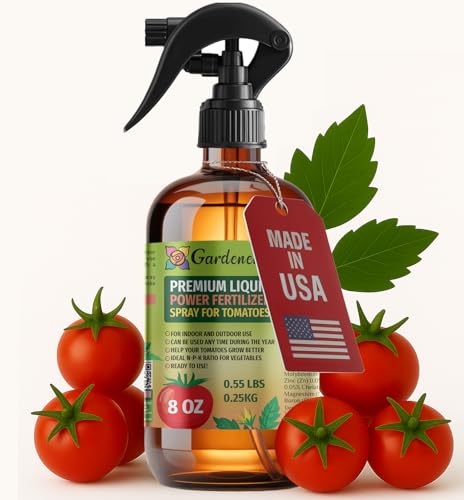
The grab-and-go rescue spray that “saved 2 plants that were dying” according to one buyer.
This is the smallest bottle in the lineup at just 8 oz and 0.25 pounds, but it is also the only premixed, ready-to-use foliar spray. You do not mix anything — just point and spray directly on the leaves and stems. The fast-acting formula delivers nutrients straight to the foliage for near-instant absorption, which is exactly why it works so well as a rescue treatment for struggling plants.
One reviewer shared that in just one day, their bell pepper plants showed bigger, greener leaves. Another reported it saved two tomato plants that were dying. Those outcomes are harder to achieve with a concentrate that requires soil drenching and waiting.
This is the perfect entry-level or emergency pick, not the choice for a full-season feeding program.
Why it wins
- Zero measuring, zero mixing — spray and walk away
- Foliar feeding works fast for plants that look sick or stalled
- Lowest upfront cost to try liquid fertilizer
Know this
- 8 oz is a small amount — not enough for a full season on multiple plants
- Expensive per ounce compared to concentrates
Ideal for: the balcony gardener with 2-3 tomato plants who wants instant results and zero cleanup, or as an emergency rescue spray for a dying plant.
Not for: a serious backyard grower who needs to feed 10+ plants all summer — you will need a concentrate for that.
Understanding the Specs
NPK Ratio
This three-number code shows the percentage of Nitrogen (N) — which drives leafy growth, Phosphorus (P) — which supports root and flower development, and Potassium (K) — which is essential for fruit quality and disease resistance. A ratio like 3-2-2 means the formula is slightly higher in nitrogen, which is fine for early growth, but you generally want potassium and phosphorus to be prominent for fruiting.
Foliar vs. Root Feeding
A foliar spray like the Liquid Power is designed to be absorbed through the leaf surface, which delivers nutrients within hours. Root-feeding concentrates (like the MaterAid, Dr. Earth, Bloom City, and Great Big) make nutrients available through the soil, sustaining the plant over days and weeks. Foliar is great for a quick fix; root feeding is better for long-term health.
FAQ
How often should I apply liquid fertilizer to my tomato plants?
Is liquid fertilizer better than granular fertilizer for tomatoes?
Can I use the same liquid fertilizer for my peppers or cucumbers?
What is blossom-end rot and can liquid fertilizer prevent it?
How do I mix and apply a concentrated liquid fertilizer?
Is the Liquid Power spray safe for indoor tomato plants?
What does “OMRI Listed” mean for Dr. Earth?
Can I use too much liquid fertilizer on tomatoes?
What is the shelf life of an opened bottle of liquid fertilizer?
Which product is best for first-time tomato growers?
Final Thoughts: The Verdict
If you want one dependable pick, the best liquid fertilizer for tomatoes is the MaterAid Tomato Fertilizer because it delivers explosive growth with a tomato-specific formula that includes calcium and magnesium for healthier fruit. If you want maximum yield per dollar with a unique soil-reviving booster, grab the Great Big Tomatoes and Vegetables Liquid Fertilizer. And for the instant-rescue convenience of a ready-to-use spray, the standout is the Liquid Power Tomato Fertilizer Spray.
How We Picked
We do not accept paid placement. Every pick is matched to a real buyer and a real use-case; we do not hands-on test units.
Sources & Methodology
Specifications: manufacturer listings and product documentation. Review insights: verified customer reviews, as of July 2026. Pricing: not shown on this page (it changes often); check the current price via the retailer link.
As an Amazon Associate, Lawn Gear Lab earns from qualifying purchases. This does not affect which products we feature.