
Specs are compiled from manufacturer listings and verified buyer reviews and can change over time — please confirm the key details on the product page before buying.
Feed your indoor plant a liquid fertilizer, and a week later those leaves should look darker, larger, and healthier — but pick the wrong bottle, and you get weak growth, burned roots, or that awful chemical smell that lingers for days. The trick is knowing which NPK ratio (the three numbers on the label telling you how much nitrogen, phosphorus, and potassium is inside) matches what your plant actually craves. This guide breaks down six concentrated liquid fertilizers by what they really deliver — the exact growth response, the mixing routine, and the honest feedback from people who have used them for months.
I’m Rikta — the founder and writer behind Lawn Gear Lab. This guide is built by comparing the manufacturers’ published specifications and the patterns across verified customer reviews, so you get each pick’s real strengths and trade-offs instead of marketing spin.
Whether you’re nursing a finicky Monstera back to health or keeping a row of pothos lush through the winter, the right liquid fertilizer for indoor plants makes the difference between a plant that just survives and one that truly thrives.
Quick Picks
- Growth Technology GT Foliage Focus — Premium Pick
- Dyna Gro Foliage Pro 32oz — Best Overall
- Monstera Plant Food (5-2-3 NPK) — Targeted Feed
- HiThrive 16oz Houseplant Fertilizer — Best Value
- Espoma Organic Grow! Liquid Concentrate — Organic Choice
- Alaska Fish Fertilizer 5-1-1 — High-Volume
How To Choose The Best Liquid Fertilizer For Indoor Plants
Choosing a liquid fertilizer for indoor plants depends on matching the NPK ratio (the three numbers on the label that stand for nitrogen, phosphorus, and potassium) to what your plant needs most. High nitrogen fuels leafy green growth, phosphorus strengthens roots and flowers, and potassium builds overall plant resilience. An all-purpose formula works fine for a mixed collection, but species-specific blends give tropicals like Monsteras the exact nutrient profile they evolved for.
Read the Mixing Ratio First
Concentrated liquid fertilizers vary wildly in how much water each ounce makes. A bottle that says “1 teaspoon per gallon” stretches much further than one that requires 1 ounce per quart. Check the mixing ratio (usually printed as a ratio like 1:16 or written out in teaspoons per gallon) to know whether that 8-ounce bottle will last two months or two years. The wrong ratio guess is the fastest way to burn roots — always measure, never eyeball.
Quick Comparison
| Model | Best For | NPK Ratio | Volume | Weight | Amazon |
|---|---|---|---|---|---|
| Growth Technology GT Foliage Focus | Premium all-in-one for rare tropicals | — | 946 mL (1 Qt) | 2.2 lbs | Amazon |
| Dyna Gro Foliage Pro | Professional-grade balanced growth | 3:1:2 (9-3-6) | 32 fl oz (1 Qt) | 2 lbs | Amazon |
| Monstera Plant Food | Targeted feeding for Monsteras & tropicals | 5-2-3 | 8 fl oz | 8 oz | Amazon |
| HiThrive 16oz Houseplant Fertilizer | Best value for a big plant collection | 6-2-4 | 16 fl oz | 1.2 lbs | Amazon |
| Espoma Organic Grow! | Organic feeding for indoor & outdoor pots | 2-2-2 | 16 fl oz | 16 oz | Amazon |
| Alaska Fish Fertilizer 5-1-1 | Organic nitrogen boost for foliage | 5-1-1 | 115 fl oz | 8.8 lbs | Amazon |
In‑Depth Reviews
1. Growth Technology GT Foliage Focus
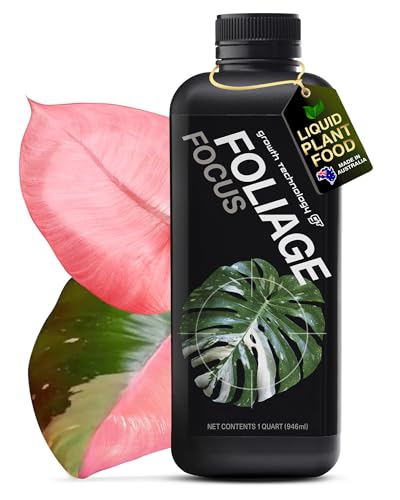
A premium concentrate built for collectors who want show-quality leaves on rare aroids and tropicals.
This formula is precision-engineered for leafy indoor plants — aroids, philodendron, Monstera, alocasia, ferns, palms, and calathea all benefit from its balanced mineral content that includes nitrate-nitrogen, potassium, calcium, magnesium, and trace elements. Unlike general all-purpose feeds, it targets chlorophyll production and steady leaf color, which explains why buyers report their “plants are glowing” and “the new growth and leaf size is significantly larger.” It works across soil, potting mix, hydroponics, semi-hydro setups, or as a foliar spray, making it the most versatile pick on this list.
For soil or potting mix, you dilute just 3–5 ml per litre of water; for hydroponics, bump that to 5–7 ml per litre. The 946 mL (1 quart) bottle is concentrated enough to last frequent feeding schedules, though a few buyers mention the original bottle can leak during shipping, so decant into a sealable container when it arrives. It carries a premium price, but if you have a collection of fussy tropicals that demand precise nutrition, this delivers consistent results that cheaper blends struggle to match.
Who it dazzles: Plant parents with rare aroids, alocasia, or hydroponic setups who want vibrant, dense foliage and are willing to pay for a specialized mineral profile.
The one caution: It costs more than all-purpose options, and you should transfer the liquid to a leak-proof bottle as soon as you open the package — the original container has a reported leak issue.
Reach for it if: You have a mixed collection of tropicals and want a single, versatile, high-performance formula that works in soil or hydro.
Look elsewhere if: You need a budget-friendly option for a few common houseplants — this is overkill for pothos alone.
2. Dyna Gro Foliage Pro 32oz
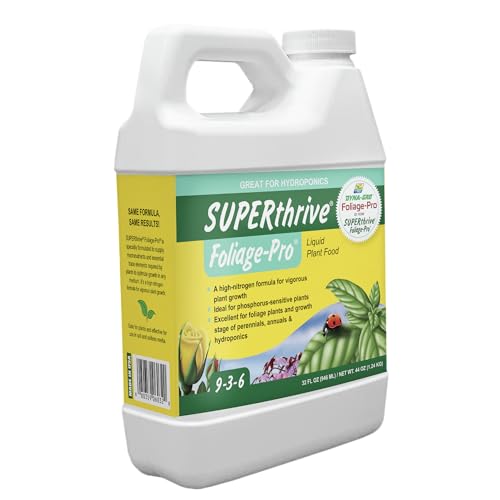
A professional-grade liquid that delivers fast, abundant new growth within days, according to growers.
This 1-quart bottle uses a 3:1:2 NPK ratio (9-3-6) that is widely considered the gold standard for foliage plants, tropicals, and low-light indoor environments. Reviewers consistently call out “fast, abundant new growth within days” and note that it is “recommended by professional growers,” with healthy plants showing bright leaves and strong stems.
It works in both soil and hydroponic systems, so you can use it for everything from a peace lily on the shelf to a greenhouse crop. One buyer gave a honest warning: be careful with dosage. They added too much and nearly killed all their plants, needing months to recover. Follow the mixing instructions closely — this stuff is potent, and a little goes a long way. It also lacks an organic certification, so skip it if you need an OMRI-listed input.
What makes it shine
- Professional 3:1:2 NPK ratio for sturdy foliage and root growth
- 32 ounces at 2 pounds — more concentrated juice per bottle than most competitors
- Works in soil, hydroponics, and low-light environments
Watch out for
- Very potent — over-application can damage or kill plants quickly
- Not organic or OMRI listed
Best for: Indoor gardeners who want professional-grade results and are comfortable measuring precisely. It beats almost any all-purpose blend on growth speed.
pass on it if: You prefer a gentle, organic formula or you tend to eyeball measurements — the burn risk is real.
3. Monstera Plant Food (5-2-3 NPK)
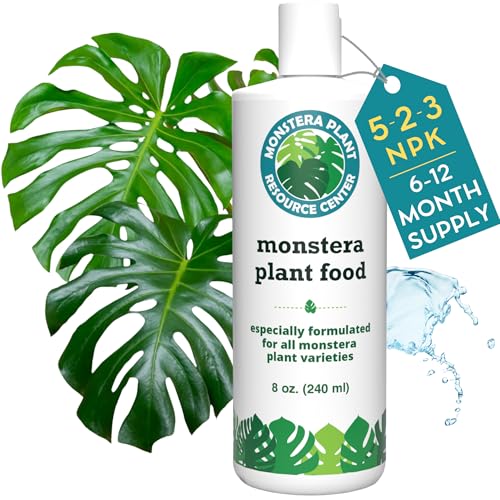
A species-specific formula that revived a dormant Albo Monstera after five months, owners mention.
This 8-ounce bottle is formulated specifically for Monstera Deliciosa, Adansonii, Thai Constellation, and other tropical aroids, with a 5-2-3 NPK blend that is heavy on nitrogen for deep green foliage and fenestrated leaves. Reviewers confirm it works: “Monsteras thrive; revived dormant Albo after 5 months, new leaves on slow-growing Burle Max Flame.” Another buyer said their Monstera “outgrew room in 3 years with beautiful leaves.” It is chelated for better absorption, meaning the nutrients are more available to the plant without overwhelming delicate roots.
The mixing instructions are a little unclear — the label says 1 teaspoon to “at least” 2 cups of water, but some users prefer 1 teaspoon per quart for a gentler feed. It is shelf-stable for 2 years and safe around children and pets when used as directed. The catch is volume: at just 8 fluid ounces, this bottle is 4x smaller than the Dyna Gro Foliage Pro’s 32 ounces, so you trade a higher per-ounce cost for a formula that is perfectly tuned to Monstera biology. Great for a targeted collection, less economical for a mixed shelf of generic houseplants.
Why Monstera lovers choose it: The 5-2-3 ratio is specifically tailored to the needs of aroids — it promotes large, fenestrated leaves and strong roots without the risk of nutrient overload. One buyer called it “amazing monstera feed.”
The honest trade-off: It is expensive per ounce compared to all-purpose liquids, and the mixing instructions leave some room for interpretation — start with 1 tsp per quart of water to be safe.
Reach for it if: You have one or more Monsteras and want a gentle, species-tune feed that visibly boosts leaf size and growth.
Look elsewhere if: You have a mixed collection of many plant types — an all-purpose formula will be more economical and just as effective.
4. HiThrive 16oz Houseplant Fertilizer

A 2x concentrated formula that makes 85+ gallons from a single 16-ounce bottle.
With a 6-2-4 NPK ratio, this is a nitrogen-forward feed designed to push green growth and thicker leaves across a wide range of indoor plants — fiddle leaf fig, Monstera, peace lily, pothos, dracaena, and bonsai. The standout stat is its coverage: mix just 1 teaspoon (half a capful) per gallon of water, and the whole bottle makes over 85 gallons of fertilizer. Buyers confirm the results: one said “I have seen a great difference in my plants since using it has even helped my snake plant and seedlings sprout for our garden,” and another noted “my plants have never bloomed as much as when I use this regularly.”
It can also be used as a foliar spray (sprayed directly on the leaves) or at a reduced ratio for water propagation (¼ teaspoon per gallon). The bottle weighs 1.2 pounds, notably lighter than the Dyna Gro’s 2 pounds, but the 6-2-4 ratio is potent — one reviewer advises spacing out applications rather than using it every watering to avoid overloading your plants with nutrients. For the price, this delivers the most gallons of feed per dollar on this list, making it ideal for a large collection on a budget.
Why it wins on value
- 6-2-4 NPK is strong on nitrogen for lush foliage
- Makes 85+ gallons from one bottle — exceptional economy
- Works as soil drench or foliar spray
Keep in mind
- Potent formula — do not use with every watering; space applications to avoid nutrient buildup
- Not organic-certified
Best for: Plant owners with a large, mixed collection who want maximum gallons per dollar and fast green-up for everything from pothos to snake plants.
it’s not for you if: You need an organic fertilizer or you prefer to feed with every watering — this one is strong enough that you should skip weeks.
5. Espoma Organic Grow! Liquid Concentrate

A gentle organic concentrate that one reviewer says is now the only fertilizer they use on their houseplants.
Espoma’s 16-ounce bottle uses a balanced 2-2-2 NPK made from natural proteins enhanced with kelp extracts and humic acids. It is approved for organic gardening, contains no sludges or toxic ingredients, and is safe for both indoor and outdoor containers. One long-time user said, “I first started using this on my holiday cactus and now it’s all I will use on my houseplants. It’s stinky but my plants love it and grow like crazy.” The “stinky” part is real — the base is derived from natural proteins, so the smell is noticeable but customers note it dissipates quickly.
You apply it every 2-4 weeks during the growing season by mixing with water as directed. The 16-ounce bottle is exactly the same volume as the HiThrive (16 fl oz), but at a 2-2-2 ratio it is much gentler, making it a good choice for seedlings, young plants, or anyone who prefers slow, steady organic feeding over a synthetic growth spike. The downside is the mild nutrient profile — if you want dramatic, fast green-up, a higher-nitrogen synthetic like the HiThrive or Dyna Gro will give you quicker visual results.
Why organic growers pick it: It is approved for organic gardening, made with natural ingredients, and gentle enough that it won’t burn roots even if you are slightly generous with the dose. It also feeds soil microbes, improving long-term soil health.
The honest smell warning: The liquid manure odor is strong fresh out of the bottle — dilute and apply in a well-ventilated area, and the smell fades within a day.
Reach for it if: You want an organic, gentle, soil-health-building feed for a mix of indoor and outdoor container plants, and you don’t mind a brief odor.
Look elsewhere if: You need a high-nitrogen formula for fast leaf growth or you are sensitive to strong smells during indoor application.
6. Alaska Fish Fertilizer 5-1-1

An OMRI-listed fish emulsion with a 5-1-1 NPK that delivers a heavy nitrogen punch for lush foliage.
This 115-fluid-ounce jug is the largest bottle on this list by a wide margin — it weighs 8.8 pounds and covers up to 1,000 square feet. Made from cold-processed fish, it is OMRI-listed for organic use and provides a natural source of nitrogen (5-1-1 NPK) that promotes strong stems, vibrant leaf color, and steady vegetative growth. One reviewer who has used it for over 10 years calls it “a garden staple… proven, effective, economical, and dependable.” It feeds soil microbes and works on vegetables, fruits, roses, shrubs, trees, and container plants, both indoors and outdoors.
The fishy smell is the main trade-off for indoor use — multiple reviewers point out the odor is “pungent” and lingers for about a day, and pets may be attracted to the treated soil. Because the nitrogen is high and the phosphorus and potassium are low (1-1), you may need to supplement with a bloom formula for flowering plants. Apply every 3 weeks during the growing season. If you have a large collection or also garden outdoors, this jug gives you the most physical volume for your money, but be prepared for the smell every time you open the cap.
Why it’s a workhorse
- Huge 115 fl oz jug — more volume than all other bottles combined on this list
- OMRI-listed organic, cold-processed to preserve micronutrients
- Promotes strong root and stem growth, reduces transplant shock
Be ready for
- Strong fish odor that lingers indoors for about a day
- Low phosphorus and potassium — not ideal for flowering plants without supplement
Best for: Organic gardeners with a big indoor collection plus outdoor beds who want a single, large-volume, nitrogen-rich fish emulsion — and don’t mind the smell.
look elsewhere if: You are sensitive to strong odors indoors or you primarily grow flowering houseplants that need higher phosphorus.
Understanding the Specs
NPK Ratio — The Three Numbers That Matter
The NPK ratio (for example, 6-2-4 or 5-2-3) tells you the percentage by weight of nitrogen (N), phosphorus (P), and potassium (K) in the bottle. Nitrogen drives leaf and stem growth — the higher the first number, the greener and bushier your plant will get. Phosphorus supports root development and flowers, while potassium builds overall plant health and stress resistance. A balanced all-purpose feed like 2-2-2 is gentle and safe for everything; a high-nitrogen formula like 5-1-1 is better for pushing fast foliage growth in leafy tropicals.
Concentration and Mixing Ratio
Liquid fertilizers are sold as concentrates that you dilute with water before applying. A bottle that says “1 teaspoon per gallon” is extremely concentrated — one 16-ounce bottle can make over 85 gallons of ready-to-use feed. A bottle that requires 1 ounce per quart is less concentrated and will run out faster. Always check the mixing ratio before buying: a small, pricey bottle with a very dilute mixing ratio can actually be more economical than a large, cheap bottle that you use up quickly. Measure with a proper teaspoon or syringe — guessing leads to burned roots.
FAQ
How often should I feed my indoor plants with liquid fertilizer?
Can I use outdoor liquid fertilizer on my indoor plants?
What does the NPK ratio mean for my Monstera?
How long does a bottle of liquid fertilizer last?
Is organic liquid fertilizer better than synthetic?
Can I mix liquid fertilizer with water in a spray bottle and use it as a foliar feed?
Will liquid fertilizer burn my plants if I use too much?
What is the difference between a 1-quart and an 8-ounce fertilizer bottle in practical use?
Final Thoughts: The Verdict
For most buyers, the best liquid fertilizer for indoor plants is the Dyna Gro Foliage Pro because its 3:1:2 NPK ratio is the closest thing to a universal foliage formula — potent enough for fast growth but balanced enough for year-round use. If you want an organic option that is gentle and soil-friendly, grab the Espoma Organic Grow!. And for a large collection on a budget, the standout is the HiThrive 16oz Houseplant Fertilizer which makes over 85 gallons from a single bottle.
How We Picked
We do not accept paid placement. Every pick is matched to a real buyer and a real use-case; we do not hands-on test units.
Sources & Methodology
Specifications: manufacturer listings and product documentation. Review insights: verified customer reviews, as of July 2026. Pricing: not shown on this page (it changes often); check the current price via the retailer link.
As an Amazon Associate, Lawn Gear Lab earns from qualifying purchases. This does not affect which products we feature.