
Specs are compiled from manufacturer listings and verified buyer reviews and can change over time — please confirm the key details on the product page before buying.
A lean-to greenhouse is the space-saver’s answer to gardening — it braces against an existing wall, so you skip the extra support posts and claim usable floor space a freestanding model would waste. This guide sorts through pop-up tents, hardtop metal gazebos, and rigid polycarbonate walk-ins — very different shelters that all share the lean-to shape. You will see exactly which one earns the Best Overall crown and which fits a patio party versus a seed-starting operation.
I’m Rikta — the founder and writer behind Lawn Gear Lab. This guide is built by comparing the manufacturers’ published specifications and the patterns across verified customer reviews, so you get each pick’s real strengths and trade-offs instead of marketing spin.
Match the shelter to your wall, your climate, and your plants with this lean-to greenhouse breakdown of six wall-attached designs built for backyards.
Our Picks at a Glance

How To Choose The Best Lean-To Greenhouse
Lean-to designs attach to an existing wall, which changes everything about how you shop. The wall provides stability and radiates warmth, extending your growing season. But the trade-off is that you must check your mounting surface and your weather before you pick a material.
Match the cover to your real climate
A pop-up PE tent is cheap, portable, and fine for frost protection and seed starting, but reviewers report tears and zipper failures within months. Rigid polycarbonate panels shrug off UV rays and hold heat far better, yet they cost more and take far longer to assemble. If you live where snow piles up, the manufacturer’s snow-load rating is the number that decides whether your frame bends or survives.
Weigh the installation effort honestly
Before you buy, know what you’re signing up for: assembly time varies wildly. A pop-up frame can be standing in ten minutes with one person, while a polycarbonate kit can eat a full weekend. Read the instructions complaints carefully — a few brands ship manuals so unclear that buyers report 40-hour builds and wrong screw sequences. Decide upfront if you want a weekend project or an afternoon quick win.
Check your anchoring plan before buying
Every one of these shelters needs to be secured, and the stock stakes are often the weak link. Several owners swap in concrete screws, extra stakes, or a wooden base to keep their greenhouse grounded. Since the whole point of a lean-to is attaching to a wall, confirm the kit includes expansion bolts for that wall and that your wall material can take them.
Quick Comparison
| Model | Best For | Frame Material | Cover Type | Weight | Amazon |
|---|---|---|---|---|---|
| EAGLE PEAK 9×4 Pop Up★ Best Overall | Easy seasonal use | Alloy Steel | Polyethylene (PE) | 26 lb | Amazon |
| EAGLE PEAK 10×5 Pop UpBigger Footprint | More growing space | Alloy Steel | Polyethylene (PE) | 33.1 lb | Amazon |
| ASJMR 8×5 Gazebo | Patio shade and gatherings | Metal | Polycarbonate | — | Amazon |
| Outsunny 6×4 Lean-To | Compact polycarbonate grow space | Aluminum | Polycarbonate | — | Amazon |
| MEISSALIVVE 10×10 Gazebo | Large covered deck area | Aluminum | Polycarbonate | 131.4 lb | Amazon |
| Palram Canopia 4×8 | Serious year-round growing | Aluminum | Polycarbonate | 61 lb | Amazon |
In-Depth Reviews
1. EAGLE PEAK 9×4 Easy Setup Pop Up Greenhouse
Our pick — over 4★ from 4,500+ verified ratings; the strongest balance of quality and price.
The ten-minute pop-up that gets beginners growing without a tool box.
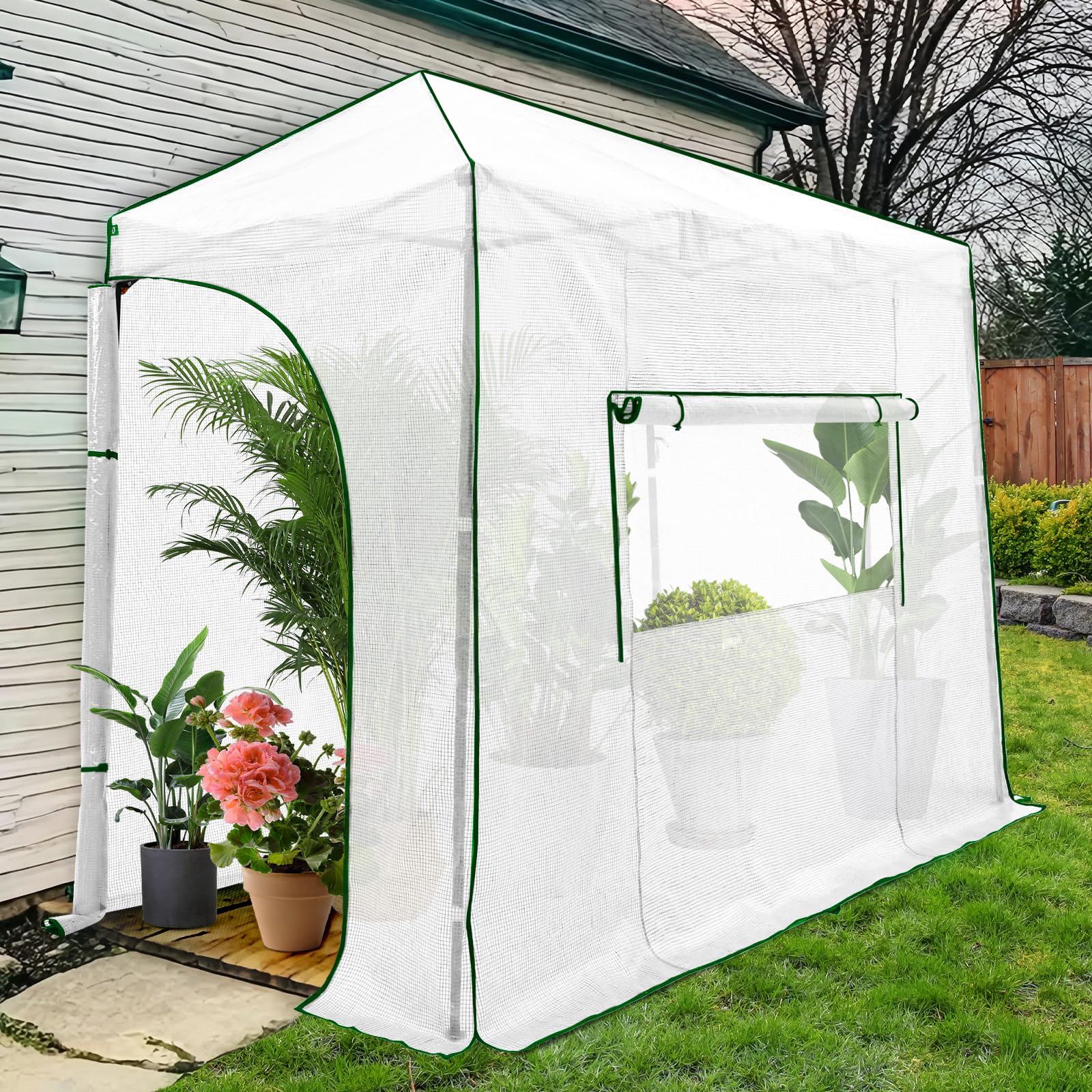
The single biggest draw here is the pre-assembled frame that needs no tools — it is the reason setup tops the list of what owners talk about, by a wide margin. You can have this 9×4 walk-in standing in about ten minutes with two people, per the reviews, and the alloy steel frame with a powder-coated, rust-resistant finish holds up through a season of weather. At 26 pounds it is light enough to move, and the whole thing folds down for compact storage when the season ends.
What wins people over is the value: the PE cover is water-resistant and UV-resistant, and the zippered roll-up door plus mesh windows give you ventilation control while keeping small animals out. Owners in Texas and the Carolinas report it handles winter fine when paired with a small greenhouse heater., and the brand backs the frame and top with 1-year protection. The recurring gripe is the cover’s long-term durability — a few report the zipper sticking and the roof seam tearing after a few months of real weather, so treat the plastic as a wear item rather than a forever skin.
The honest trade-off is that this is a seasonal shelter, not a permanent structure. Snow is fine in moderation, but owners note ice can bend the struts and strip screws, and the stock stakes benefit from being swapped for concrete blocks or heavier anchors on a patio. Owners mention the cover on some units failed after 3 months with a stuck zipper and a 6″ tear at the roof seam, which is why this gets the “think twice if you need a multi-year build” caveat.
What wins people over
- Tool-free pop-up setup that is genuinely one-person doable
- Heavy-duty steel frame with a rust-resistant powder coat
- Roll-up door and mesh windows for airflow and pest control
- Compact storage when the growing season ends
Where it shows its limits
- PE cover can tear or develop zipper issues after months of sun
- Stock stakes are weak on hard or windy surfaces
- Ice and heavy snow can bend struts and strip screws
Grab it for: a first-time grower who wants a cheap, fast, seasonal shelter for frost protection and seed starting.
Look elsewhere if: you need a permanent structure that will survive heavy snow year after year.
2. EAGLE PEAK 10×5 Easy Setup Pop Up Greenhouse
A roomier take on the pop-up, stretching 122 inches long for serious shelving.
Take everything that makes the 9×4 a fan favorite and add floor space — this one measures 122″L x 59.1″W x 102″H, which owners say fits four tall shelves and still leaves room to stand up inside. The extra size costs you 7.1 pounds over the 9×4 model (33.1 lb vs 26 lb), a 27% weight gap for a 15% larger footprint. The pre-assembled alloy steel frame still pops up with no tools, and the powder-coated finish keeps rust at bay.
Owners praise the heat retention, with one reporting the interior can reach 90°F quickly., then the dual doors and mesh windows bring it back down. The clear/white PE cover is UV-resistant, and the setup includes stakes, directions, and patching materials in a drawstring bag. One reviewer’s blunt verdict: “sturdy with reinforcement (glue, extra stakes); withstood 50-60 mph gusts, no tears” — after adding glue and extra stakes, this unit survived severe storms.
The catch is the same plastic-cover reality as its smaller sibling. A few customers note seams leaking near the roof windows in heavy rain and the cover catching in the frame joints, and the stock stakes are widely considered too weak for open ground. The brand does back the frame and top with 1-year protection, which softens the risk.
Why it is the bigger-value pick
- Fits four tall shelves with standing headroom
- Dual doors plus mesh windows for temperature control
- Quick heat-up for germination, reaching about 90°F
- Withstood 50-60 mph gusts after reinforcement
What to watch
- Some units show roof seam leaks in heavy rain
- Heavier than the 9×4 at 33.1 lb
- Replace stock stakes for open-ground stability
Pick this one if: you want the pop-up convenience but need enough floor to run a real shelving operation.
Reconsider if: you only grow a few pots and want the lightest, cheapest option.
3. ASJMR 8x5FT Lean to Gazebo
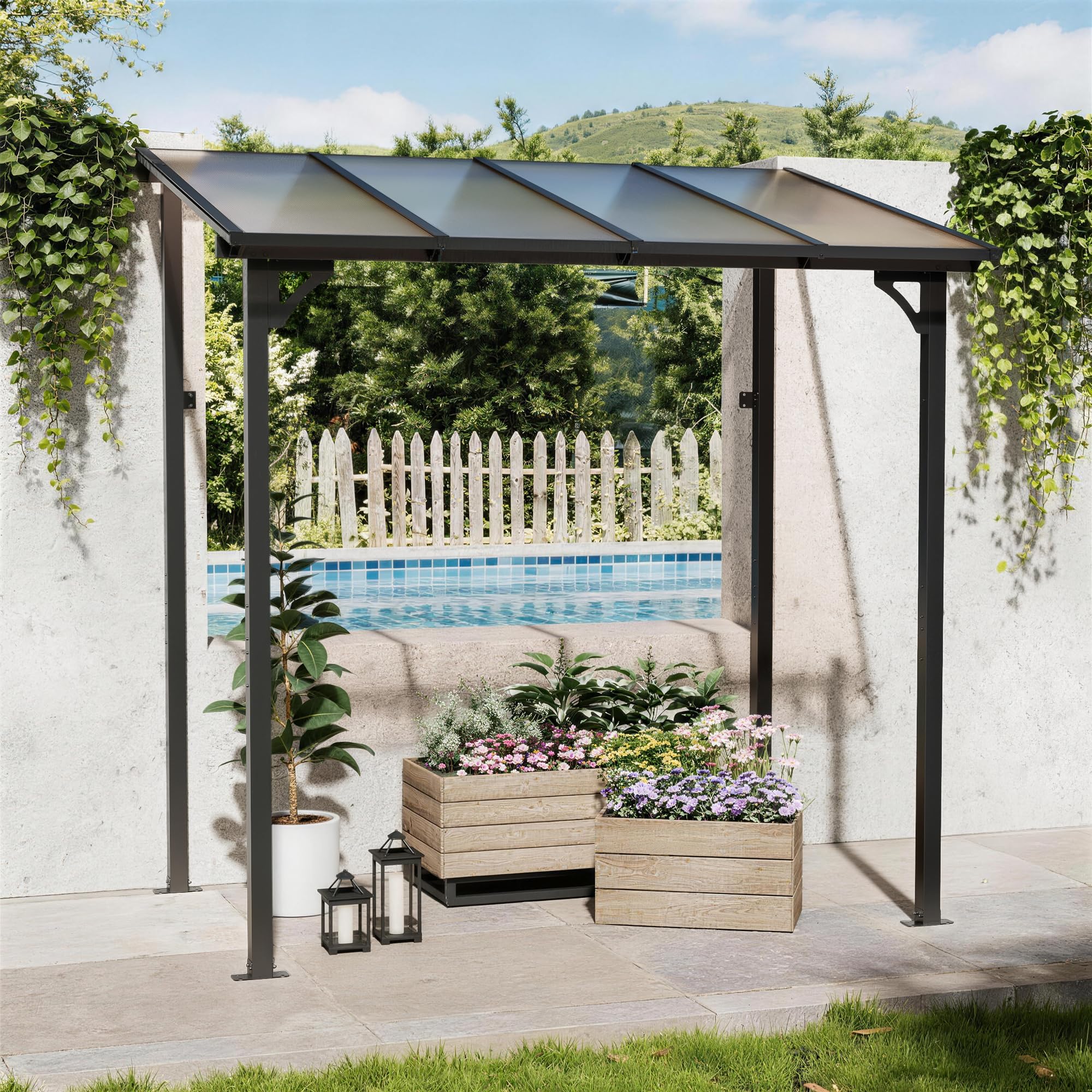
A hardtop shelter that turns a bare patio wall into a party-ready gathering spot.
This is the pick that blurs the line between greenhouse and outdoor living room, and the reviews make clear it shines at the second job. The translucent polycarbonate sloped roof lets light through while offering UV protection, and the slit drainage design sends rainwater off the eaves so guests stay dry. Sized at 94.5″L x 59.1″W x 98.4″H, it comfortably hosts 3-5 people for gatherings, parties, or a quiet corner near a hot tub.
Assembly is the headline here — it tops the owner discussion, and the experience is broadly positive. Two people can put it together in roughly four hours, though a few note a five-person crew makes the upright stage easier. Owners mention clear step-by-step instructions with labeled parts and extra hardware included, and one sums it up as “directions step by step, labeled parts.” The metal frame earns praise for its sturdy base and clean appearance.
The honest fit-note is that this gazebo is a shade and covered-dining structure, not a climate-controlled grow house. A few owners found the soft-metal fasteners strip easily and swapped in quality bolts, and the mixed durability chatter suggests it is not built for heavy snow. One buyer was surprised that their larger order shipped as two separate 9×12 units rather than one 10×24, so check your box count if you order big.
The group’s verdict: An easy, attractive wall-mounted shade structure whose assembly is its strongest selling point — treat the fasteners gently and it will serve a patio well.
The caveat: This is for entertaining and shade, not for overwintering plants or heavy snow regions.
4. Outsunny 6′ x 4′ Aluminum Lean-to Greenhouse

A tidy polycarbonate glasshouse that attracts gardeners and tests their patience in equal measure.
The appeal here is the rigid construction: a 75.6″W x 50″D x 84.3″H aluminum-alloy frame with a galvanized steel base and a five-level adjustable roof vent for airflow. The transparent polycarbonate panels block harsh UV rays while letting sunlight through for year-round growing, and the sliding door makes access easy. It is a true space-saving lean-to, but it demands a lot from its builder.
Value is what some owners point to positively, yet the assembly experience is where this product lives or dies — and the reviews skew hard against it. Instructions are the most-discussed pain point, with owners reporting a 40-hour build for two people, wrong screw sequences, and panels that must be installed during wall assembly or you take it apart. One verdict is blunt: “worst instructions ever.” A few reviewers point out flimsy stakes unsuited to concrete and aluminum that bends easily during handling.
Who this fits: a patient DIYer who treats the build as a project, replaces the weak legs with a 2×4 base, and anchors it well to the house. If you want a weekend project that fights back, this is it — but the recurring durability complaints and brittle aluminum make it a hard sell for beginners.
Fair value, heavy labor: Once assembled, owners admit it is a decent greenhouse for the money — getting there is the ordeal.
skip it if: You want a simple build; the instructions alone are enough to sink a casual weekend.
5. MEISSALIVVE 10′ x 10′ Wall Mounted Lean to Metal Gazebo
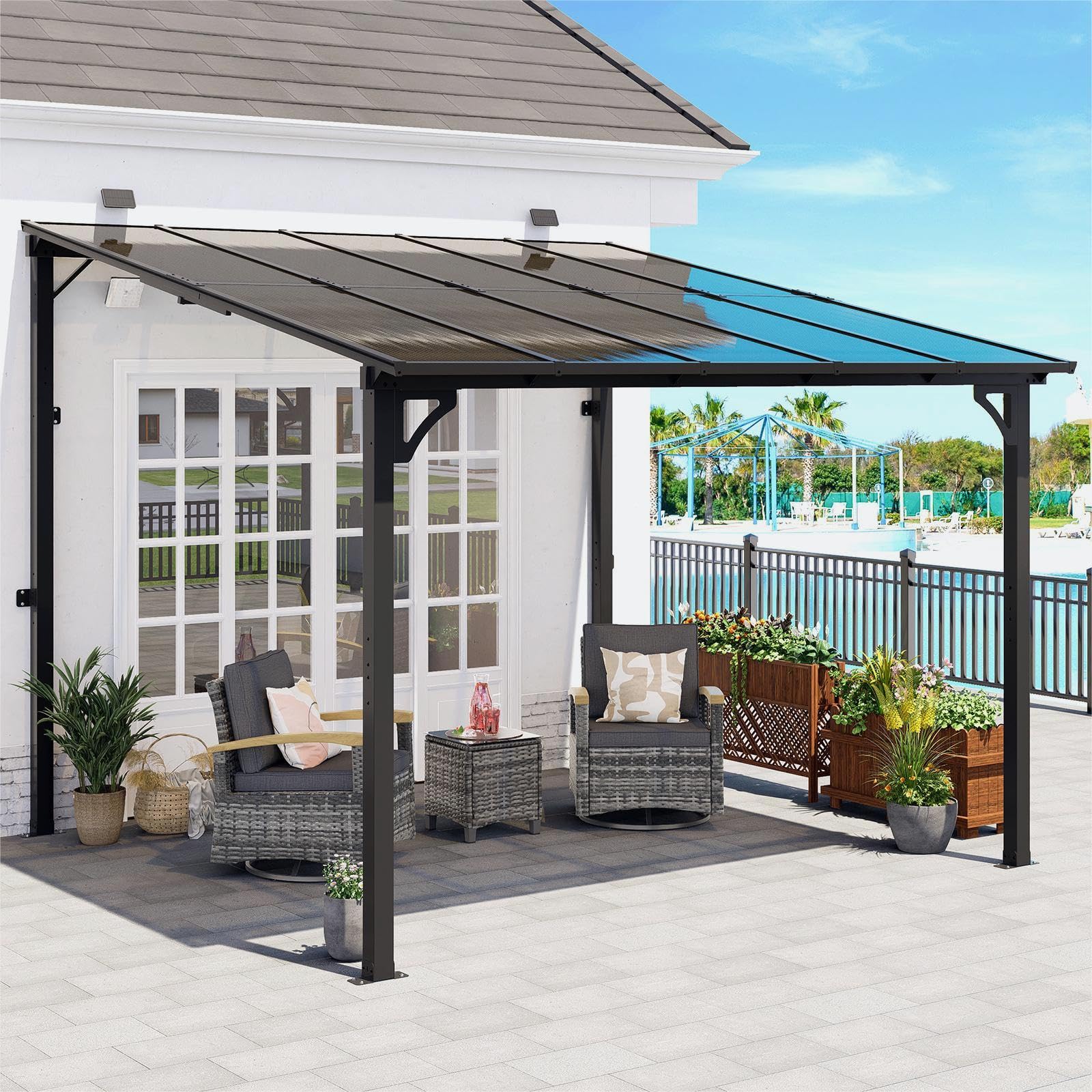
A 10×10 deck-sized canopy that brings solar-lit evenings under a solid roof.
This is the biggest footprint on the list — a square 118″L x 118″W x 98″H hardtop that turns an entire deck or patio corner into sheltered living space. The powder-coated aluminum frame resists fading, rust, and corrosion, and the included solar light extends the evening use. The polycarbonate roof reflects 95% of UV rays, with a manufacturer rating of 38 mph wind resistance and 4-inch snow depth capacity (60 lbs per square meter).
Owner praise centers on the shade it provides and the value relative to building from wood — one buyer notes it is cheaper than a lumber DIY project. Assembly is manageable with one helper, and the numbered parts and clear instructions get credit. The reinforced aluminum frame holds up well for most, but the sturdiness picture is genuinely mixed: some shoppers say the frame bending under ice and snow, needing extra wood supports and regular snow removal, and one unit collapsed in its first ice storm.
This is a shade and rain shelter first, and the snow-load claims are optimistic for heavy climates. Owners recommend mounting on concrete with expansion screws, keeping the white protective film on panels to avoid 50% sun bleed-through, and adding a mid support beam if you see real snow. It looks great and covers a lot of ground — just respect its rated limits.
Big value, big footprint: Cheap per square foot of coverage, with a solar light thrown in — ideal for a deck that needs a roof.
Respect the rating: Snow beyond 4 inches needs your own bracing; this is not a heavy-winter workhorse.
6. Palram Canopia Hybrid Lean-To 4′ x 8′ Polycarbonate Greenhouse

The rigid, lifetime-polycarbonate choice that serious growers graduate to.
This is the premium end of the lean-to spectrum — a 4′ x 8′ (roughly 8″L x 4.1″W x 7.5″H footprint) walk-in built from twin-wall polycarbonate roof panels and crisp wall panels that deliver over 90% light transmission. The powder-coated aluminum frame and galvanized steel base are designed to last, and The brand cites its selection as the Best Overall Greenhouse Kit by Better Homes and Gardens.. A lockable French door, magnetic door catch, built-in gutter system, and adjustable roof vent round out the thoughtfulness.
The appearance and functionality earn consistent praise, with owners highlighting how well it keeps plants warm and survives wind storms. One long-term owner reports it survived two Category 1 hurricanes, a tornado with hail, snow, and an ice storm over five years with no cracks or metal deterioration — only the vent came off once. The sturdiness is real once it’s bolted down, but it feels flimsy until then.
The catch is the assembly, which is the most-discussed topic by a wide margin and rated as mixed-to-negative. Owners call the instructions detailed but tedious, with one reporting a part-number mismatch and another taking over 8 hours and still not finishing. The classic tip is to assemble the corner posts with panels as one piece and to anchor it thoroughly — one owner’s roof panel came half off in 30+ mph wind before they added a steel cable net. This is a build-you-earn-it greenhouse, not a pop-up.
Why it is the long-term pick
- Over 90% light transmission through clear wall panels
- Galvanized steel base adds real structural stability
- Proven survival through hurricanes and ice storms when anchored
- Lockable door and built-in gutter system
What you sign up for
- Assembly is a multi-day project with dense instructions
- Feels flimsy until fully bolted to the ground
- Roof panel can detach in high wind without extra securing
Graduate to this if: you want a permanent, heat-retaining glasshouse and are ready for a serious weekend build.
Think twice if: you expect a quick setup — this one demands patience and anchoring skills.
Understanding the Specs
Cover material: PE tent vs polycarbonate panel
The cover decides how long your greenhouse lasts and how much heat it holds. Pop-up models use a polyethylene (PE) film that is water-resistant and UV-resistant — great for a season or two of frost protection, but it can tear, develop zipper issues, and degrade in the sun. Rigid polycarbonate panels block UV rays, transmit over 90% of light, and survive years of storms, but they cost more and take far longer to assemble.
Frame material and weight
The frame carries the whole structure, and its weight tells you how serious it is. Alloy steel with a powder-coated, rust-resistant finish is the pop-up standard and handles moderate wind well once staked. Aluminum is lighter and corrosion-resistant but can bend under ice or snow if the design is thin. A galvanized steel base, like the one on the premium kits, adds meaningful stability — which is why the 61 lb and 131.4 lb models feel far more permanent than the 26 lb pop-ups.
FAQ
What exactly makes a greenhouse a lean-to design?
Which is better, a PE pop-up tent or a polycarbonate greenhouse?
How do I anchor a lean-to greenhouse to my wall?
Will a lean-to greenhouse survive snow and winter?
How much assembly time should I expect?
Do lean-to greenhouses block harmful UV rays for my plants?
Can I use a lean-to greenhouse as a patio shade or party space?
How do I ventilate a lean-to greenhouse?
Final Thoughts: The Verdict
The lean-to greenhouse that most people should start with is the EAGLE PEAK 9×4 Pop Up — it delivers the fastest, cheapest path to frost protection and seed starting, and it is the crowd favorite for a reason. If your wall has room for serious shelving and you want the same tool-free setup, the EAGLE PEAK 10×5 adds meaningful floor space for a modest jump. And for the grower who wants a permanent, heat-retaining glasshouse that survives real winters, the Palram Canopia 4×8 is the one to reach for — if you are ready for the build.
How We Picked
We do not accept paid placement. Every pick is matched to a real buyer and a real use-case; we do not hands-on test units.
Sources & Methodology
Specifications: manufacturer listings and product documentation. Review insights: verified customer reviews, as of August 2026. Pricing: not shown on this page (it changes often); check the current price via the retailer link.
As an Amazon Associate, Lawn Gear Lab earns from qualifying purchases. This does not affect which products we feature.