
Every lawn mower cuts grass, but the gap between a clean, manicured finish and a ragged, brown-tipped mess comes down to deck engineering, blade tip speed, and how well the machine handles the transition between dry patches and damp clumps. A mower that clogs on wet grass, scalps bumps, or leaves uncut strips turns a weekend chore into a frustrating hour of rework.
I’m Rikta — the co-founder and writer behind Lawn Gear Lab. I’ve spent hundreds of hours comparing cutting deck designs, motor torque curves, battery voltage platforms, and longitudinal owner feedback across gas, cordless electric, and self-propelled configurations to find the models that deliver repeatable, professional-grade results without requiring a second pass.
For anyone looking to cut smarter and stop fighting their machine, this guide breaks down the engineering decisions that separate a capable workhorse from a frustrating compromise in the best lawn mowers category.
How To Choose The Best Lawn Mowers
Selecting a mower that matches your property size, terrain, and noise tolerance requires focusing on a few non-negotiable specifications rather than marketing claims. Here is what you need to evaluate before making a purchase.
Deck Design and Airflow Management
The deck is the most critical component for cut quality. A stamped steel deck is affordable but prone to rust and structural flex over time. A fabricated or deep-drawn deck with a vortex tunnel — like the WORX Aerodeck or SENIX vortex design — actively directs clippings upward for finer mulching and prevents clogging in damp grass. For mulching, a deck with a higher internal volume and a baffled discharge channel produces consistently finer clippings compared to a flat, open-bottom design.
Power Source: Gas vs. Cordless Electric vs. Battery
Gas mowers with engines between 144cc and 201cc deliver unlimited runtime and higher blade torque for thick, wet grass, but require oil changes, spark plug maintenance, and fuel stabilization. Cordless electric mowers with 40V to 60V batteries offer instant start, zero emissions, and significantly lower noise — but real-world runtime depends on the battery amp-hour rating and the brushless motor efficiency. A 40V 5.0Ah battery typically handles 1/4 to 1/2 acre on a single charge, while a 60V 4.0Ah platform can push closer to 3/4 acre. For properties under half an acre, cordless is now a genuinely competitive alternative to entry-level gas mowers.
Self-Propelled Drivetrain and Traction
Front-wheel drive (FWD) is lighter and easier to turn on flat ground, but loses traction on slopes and in wet conditions because the front wheels carry less weight. Rear-wheel drive (RWD) delivers superior traction on inclines and uneven terrain, and is the preferred configuration for yards with noticeable hills. Continuously variable transmission (CVT) systems, like the YARDMAX Select PACE, offer infinite speed adjustment within a range, allowing you to match the mower’s pace to your walking speed without fixed gear steps. Single-speed self-propelled models are simpler but force you to walk at one fixed pace, which can feel either too fast or too slow depending on the terrain.
Quick Comparison
On smaller screens, swipe sideways to see the full table.
| Model | Category | Best For | Key Spec | Amazon |
|---|---|---|---|---|
| Greenworks 60V 21″ Self-Propelled | Cordless | Large yards up to 3/4 acre | 60V 4.0Ah twin batteries | Amazon |
| EGO POWER+ LM2114SP | Cordless | Premium gas replacement | 6.0 ft-lbs cutting torque | Amazon |
| SENIX 22″ 201cc RWD | Gas | Hilly terrain and thick grass | 201cc 4.7HP engine | Amazon |
| YARDMAX YG2860 | Gas | Variable-pace mowing | 201cc CVT transmission | Amazon |
| SKIL SM4910C-11 | Cordless | Small-medium yards, easy storage | 40V 6.0Ah battery | Amazon |
| PowerSmart 22″ RWD | Gas | Rough, uneven ground | 22″ steel deck | Amazon |
| SENIX 21″ FWD | Gas | Flat yards up to 1/3 acre | 170cc 3.8HP engine | Amazon |
| PowerSmart EasyGlide 21″ | Gas | Budget-friendly, reliable runner | 144cc OHV engine | Amazon |
| WORX Nitro WG752 | Cordless | Eco-friendly, quiet operation | 40V 5.0Ah dual batteries | Amazon |
In‑Depth Reviews
1. Greenworks 60V 21″ Brushless Self-Propelled Cordless Lawn Mower

The Greenworks 60V platform delivers genuine gas-like power through its brushless motor paired with two 4.0Ah batteries, offering enough runtime to handle up to 3/4 acre on a single charge without the noise or fumes of an internal combustion engine. The rear-wheel drive self-propelled system provides consistent traction on moderate slopes, and the variable-speed paddle lets you dial in your walking pace on the fly rather than being locked into a single gear.
The 4-in-1 cutting system — mulching, bagging, side discharge, and turbo leaf pickup — gives you real flexibility across seasons. The mulching performance is notably strong thanks to the deck’s internal airflow design, producing finely chopped clippings that settle into the lawn rather than clumping. The integrated LED headlights extend usable mowing time into early morning or late evening, which is a practical adder for those with limited weekend daylight hours.
Some users report that the self-propel clutch can feel slow to disengage when releasing the paddle, occasionally requiring a forward nudge to free the drive wheels. The automatic battery swap between packs also introduces a brief delay when the first battery depletes, but the seamless handoff still beats stopping to manually swap connectors on single-battery designs. Overall, this is the most performance-dense cordless mower at this price tier for medium to large properties.
What works
- True 3/4-acre runtime with two 4.0Ah batteries
- Strong mulching performance with fine clipping size
- LED headlights enable low-light mowing
What doesn’t
- Self-propel disengagement can be sluggish
- Battery swap delay between packs is noticeable
- Headlights cannot be manually turned off
2. EGO POWER+ LM2114SP
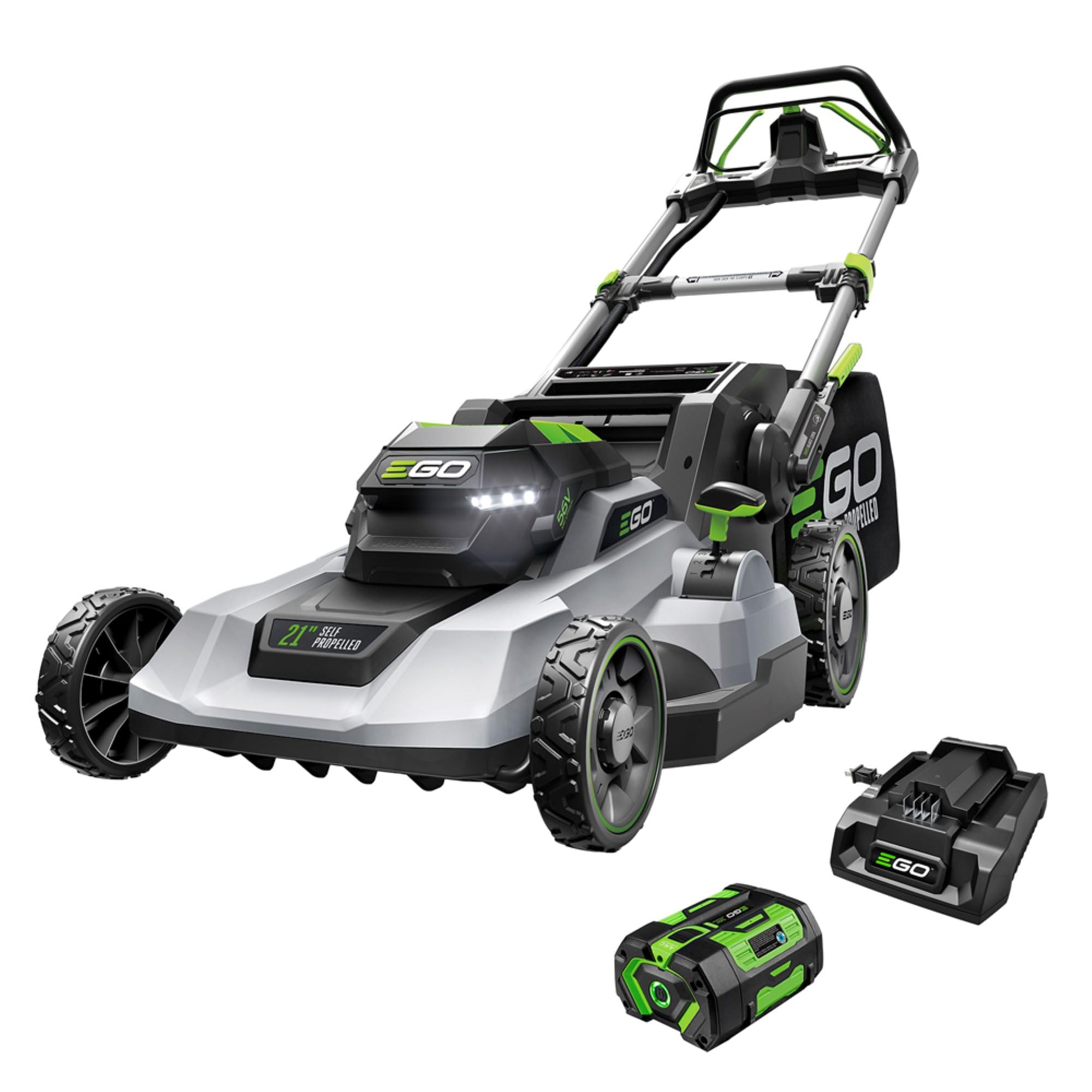
The EGO LM2114SP sits at the top of the cordless pecking order, delivering 6.0 ft-lbs of cutting torque that not only matches but exceeds many gas-powered competitors in thick, damp grass. The 56V ARC Lithium battery provides up to 50 minutes of runtime on a single charge, and the high-efficiency brushless motor maintains consistent blade speed even when the grass density spikes, preventing the bog-down that plagues lower-voltage electric mowers.
The self-propel system uses a dual-toggle handleset that engages the drive with either hand, which is a thoughtful design for anyone mowing around obstacles where grip shifts are frequent. Seven cutting height positions from 1.25 to 4 inches offer fine granularity for seasonal adjustments. The deck handles mulching and bagging equally well, though side discharge is the most efficient mode for heavy leaf cover in the fall. Users consistently report that the cut quality rivals or surpasses their previous gas mowers, with the added benefit of instant start and zero engine maintenance.
Battery life on a single charge is adequate for small to medium properties, but owners of larger lawns (over 1/3 acre with thick grass) should budget for a second battery or plan their cutting pattern to finish within the runtime window. The plastic deck, while durable and corrosion-free, can feel less substantial than a steel deck when hitting hidden obstacles, though it has held up well in long-term owner reports.
What works
- Exceptional blade torque out-muscles many gas mowers
- Instant push-button start with no maintenance
- Dual-toggle self-propel handleset for ambidextrous use
What doesn’t
- Runtime on one battery is tight for larger lawns
- Plastic deck lacks impact feel of metal decks
- LED headlights not included on this model
3. SENIX 22″ 201cc Rear Wheel Single Speed Self-Propelled Mower
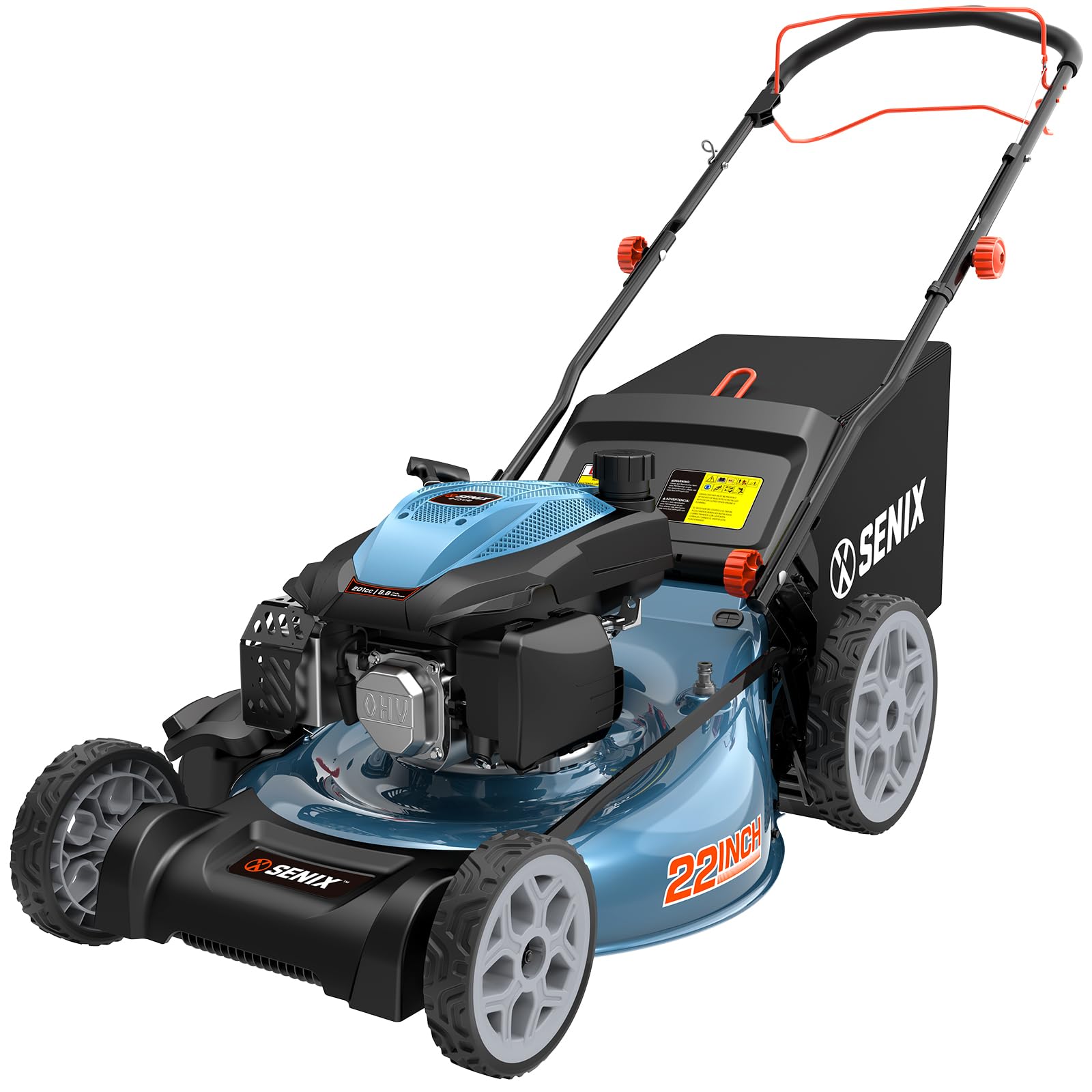
The SENIX 22-inch rear-wheel drive gas mower delivers serious grunt for challenging terrain. Its 201cc OHV 4-cycle engine generates 4.7 HP and 8.8 ft-lbs of torque, providing the sustained power needed to cut through overgrown grass, weeds, and even small saplings without the blade speed dropping. The single-speed self-propel drive reaches up to 2.9 MPH, which is a comfortable walking pace for flat yards but may feel limited on steep inclines where variable-speed systems offer more control.
The heavy-duty deck construction uses DC04-06 low-carbon high-strength steel, which resists denting from rocks and roots better than thinner stamped steel decks. The vortex tunnel airflow design improves clipping discharge into the bag or out the side chute, reducing cleanup time. Six cutting height positions from 1.25 to 4 inches provide broad range for seasonal transitions, and the foldable handle saves storage space in tight garages or sheds.
Several owners note that the user manual lacks critical information such as oil and gas capacity specifications, requiring online research for proper maintenance. The single-speed self-propel drive, while simple and reliable, lacks the pace variability that some users expect when transitioning between open lawn and tight obstacle-rich areas. The wheels on early production units have also been reported to detach after heavy use, though this appears to be an isolated fit-and-finish issue rather than a design-wide defect.
What works
- Powerful 201cc engine handles thick overgrowth easily
- Durable low-carbon steel deck resists impact damage
- Vortex tunnel improves bagging efficiency
What doesn’t
- Single-speed self-propel offers no pace adjustment
- Manual lacks basic maintenance specifications
- Wheel retention concerns on some units
4. YARDMAX 22″ 201cc Select PACE 6 Speed CVT FWD Mower
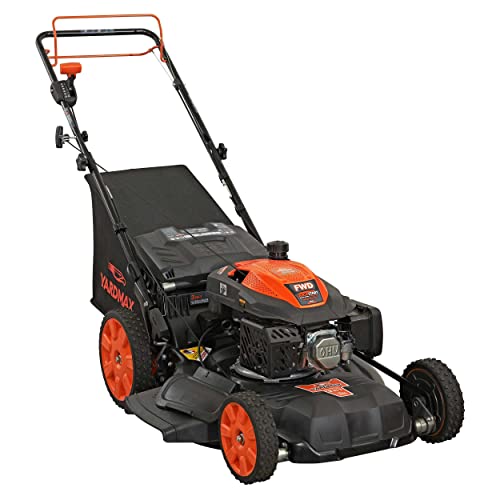
YARDMAX brings continuously variable transmission technology to the walk-behind mower segment with the Select PACE system, offering six speed settings within its CVT range. This allows you to match the mower’s forward pace precisely to your walking speed rather than accepting fixed gear increments. The 201cc engine starts reliably with automatic choke, eliminating primer bulb presses, and the aggressive spiked-tread rubber tires provide noticeably better traction on damp slopes than standard ribbed wheels.
The 22-inch stamped steel deck includes a cleanout port for washing away built-up clippings, which extends deck life and maintains airflow efficiency. Single-lever height adjustment with six positions covering 1.5 to 3.75 inches makes quick transitions between seasonal cuts simple. The front-wheel drive system works well on flat and gently rolling terrain, but loses traction on steep inclines where the front wheels carry less weight. Owners report that the CVT speed lever can slip out of position during use, requiring occasional re-adjustment during a mowing session.
At 84.9 pounds dry, this is a heavy machine. The weight helps it track straight through thick grass, but lifting it over curbs or loading it into a truck bed requires effort. The grass bag design has been criticized for its awkward attachment mechanism, and the front-wheel drive limits its effectiveness on properties with noticeable slopes. For flat to moderate lawns under 3/4 acre, the CVT pace control is genuinely useful; for hilly terrain, a rear-wheel drive model would be a better choice.
What works
- CVT transmission offers real pace variability
- Auto choke eliminates priming fuss
- Spiked tires improve wet-grass traction
What doesn’t
- FWD loses traction on steep hills
- Heavy at 84+ pounds with bag
- CVT speed lever can slip during use
5. SKIL PWR CORE 40 Brushless 40V 20-Inch Self-Propelled Mower

The SKIL PWR CORE 40 delivers an impressive 55 minutes of runtime from its 6.0Ah battery — enough to handle a quarter-acre lot on a single charge with margin to spare. The variable-speed self-propel system lets you match the drive speed to the terrain, and the push-button start is a welcome upgrade over pull-start cord frustration. The 20-inch deck is narrower than the 21- or 22-inch competition, but the trade-off is exceptional maneuverability around flower beds, fences, and tight corners.
The brushless motor maintains consistent blade speed under load, and the 3-in-1 system handles mulching, bagging, and rear discharge competently. The telescoping and folding handle reduces storage footprint significantly, making this a strong option for those with limited garage space. Seven cutting height positions provide fine granularity from 1.5 to 4 inches. Owners consistently praise the quiet operation and the ease of transitioning from gas, with many noting that the mulch quality is indistinguishable from their previous gas mower.
The self-propel drive engages via a dead-man switch that can snag on pockets or clothing. Some users report that bogging can occur when cutting grass taller than 4 inches at the lowest height setting, requiring a two-pass approach for overgrown lawns. The plastic deck, while lightweight and rust-proof, feels less durable than steel during heavy use. The included charger is an auto jump model that charges quickly, but replacement batteries are a significant additional investment if you need extended runtime.
What works
- Over 50 minutes of real-world runtime
- Compact folding design for small storage spaces
- Quiet, instant-start operation
What doesn’t
- 20-inch deck is narrower than most competitors
- Plastic deck lacks impact resistance
- Dead-man switch can snag on clothing
6. PowerSmart 22-Inch Self Propelled Gas Lawn Mower, 170cc RWD
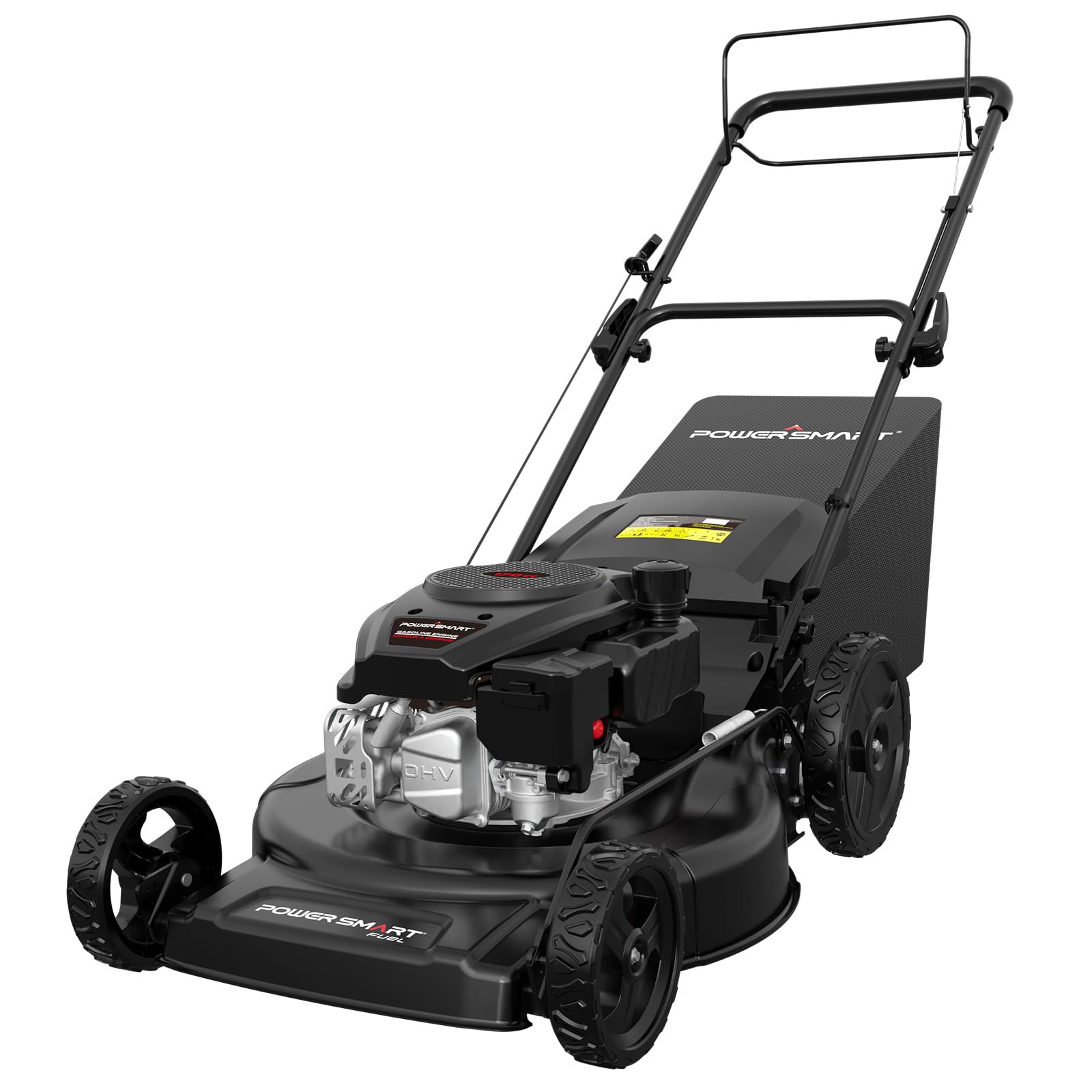
PowerSmart’s 22-inch self-propelled mower brings rear-wheel drive traction to a mid-range gas platform, making it a strong candidate for properties with uneven ground or gentle slopes. The 170cc OHV engine starts reliably with auto choke and delivers enough torque to maintain blade speed in thick fescue or damp Bermuda. The all-steel deck is 22 inches wide — wider than the 21-inch standard — which cuts down pass count for medium-sized lawns.
The rear-wheel drive system provides noticeably better traction on hills compared to front-wheel drive models at a similar price point. The 60-liter grass bag is large enough to reduce emptying frequency, and the 3-in-1 system offers mulching, rear discharge, and bagging flexibility. Six rear-wheel height adjustments from 1.5 to 3 inches allow reasonable seasonal range, though the maximum height of 3 inches is lower than some competitors that reach 4 inches. Owners report first-pull starts and easy assembly, typically under 15 minutes out of the box.
The rear rubber skirt that directs clippings has been reported to detach on some units and can get caught in the blade, causing damage. Replacement parts from PowerSmart are not always readily available through third-party retailers, which can be frustrating if a wear item fails mid-season. Handle hardware has also been known to loosen over time, requiring periodic tightening. For budget-conscious buyers with rough terrain, the RWD traction is a genuine advantage, but long-term durability is a mixed record compared to more established brands.
What works
- RWD provides solid traction on slopes
- 22-inch deck reduces mowing passes
- First-pull start with auto choke
What doesn’t
- Max cutting height limited to 3 inches
- Rubber skirt prone to blade damage
- Replacement parts availability is inconsistent
7. SENIX 21″ Self-Propelled Gas Lawn Mower, 170cc FWD
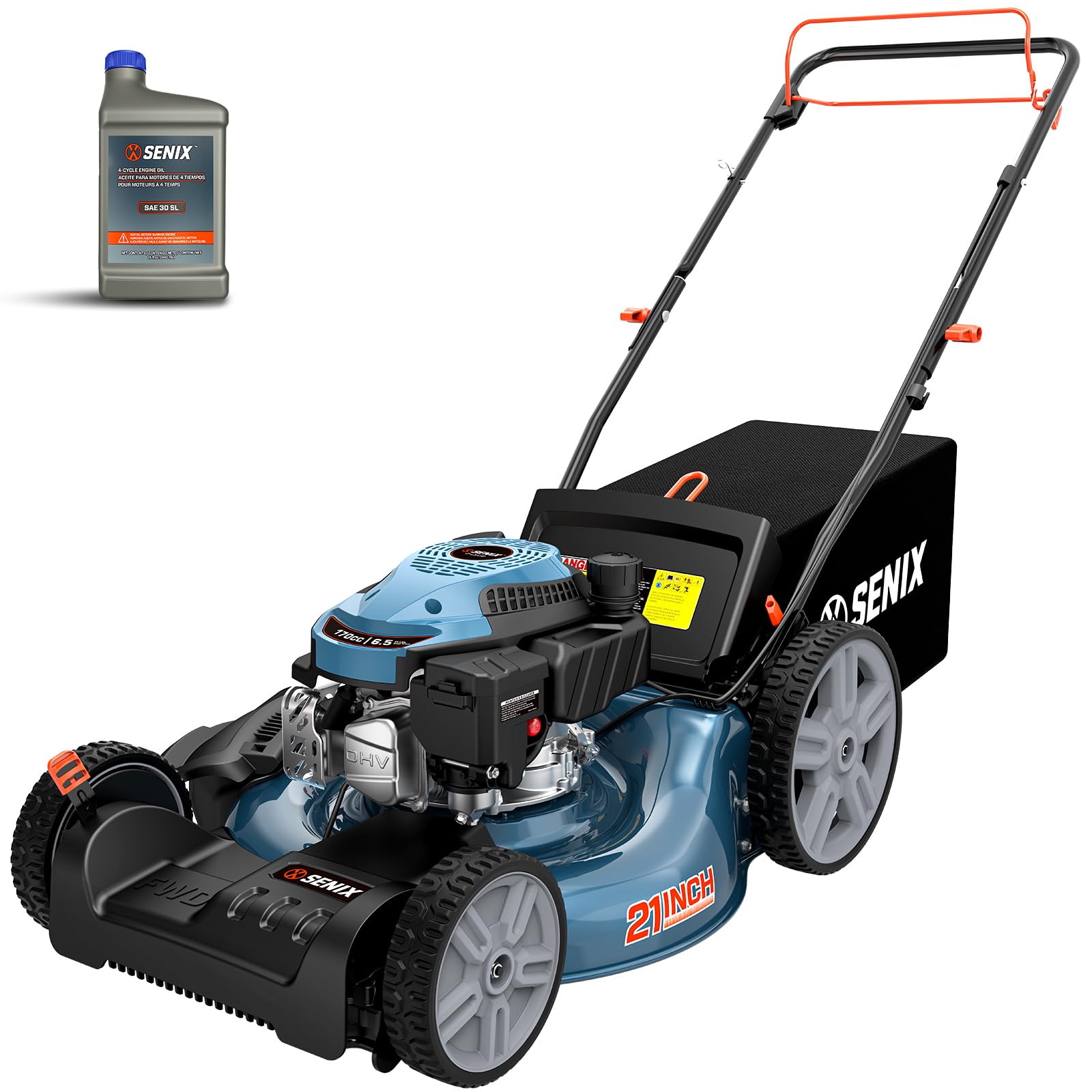
The SENIX 21-inch FWD mower is a straightforward, no-frills gas machine aimed at flat yards up to 1/3 acre. The 170cc OHV engine produces 3.8 HP with 6.5 ft-lbs of torque, which is sufficient for regular weekly cuts but does not have the reserve capacity of larger 201cc engines for tackling overgrown grass. The vortex tunnel deck design helps reduce grass buildup underneath, a common complaint with budget stamped decks, and the 1.7-bushel bagger is adequate for small lawns without frequent emptying stops.
The front-wheel drive system makes the mower feel lighter and easier to pivot around trees and garden beds compared to rear-wheel drive models, but it struggles on inclines. Six cutting height positions from 1.25 to 3.75 inches give solid range for warm-season and cool-season grasses. Assembly is minimal — attach the handle and add oil — and the included pre-filled oil allows for quick startup. Owners report that the mower handles 18-inch tall grass in a single pass when side-discharging, though mulching tall grass requires multiple passes at the highest setting.
Starting reliability is a point of contention. Some owners report first-pull starts, while others require 15 to 20 pulls and 15 primer bulb presses before the engine catches. A small number of units have experienced catastrophic engine failure — including internal knocking and sudden shutoff — within the first few uses, though this appears to be a manufacturing defect affecting a minority of units. The user manual is poorly organized and lacks clear maintenance information, and customer support has been criticized for requiring a credit card before answering basic questions.
What works
- Lightweight and easy to pivot in tight spaces
- Vortex tunnel reduces deck clogging
- Affordable entry point for small flat yards
What doesn’t
- FWD struggles on any incline
- Starting reliability is inconsistent
- Poor manual and customer support experience
8. PowerSmart EasyGlide 21-Inch Gas Lawn Mower, 144cc Push
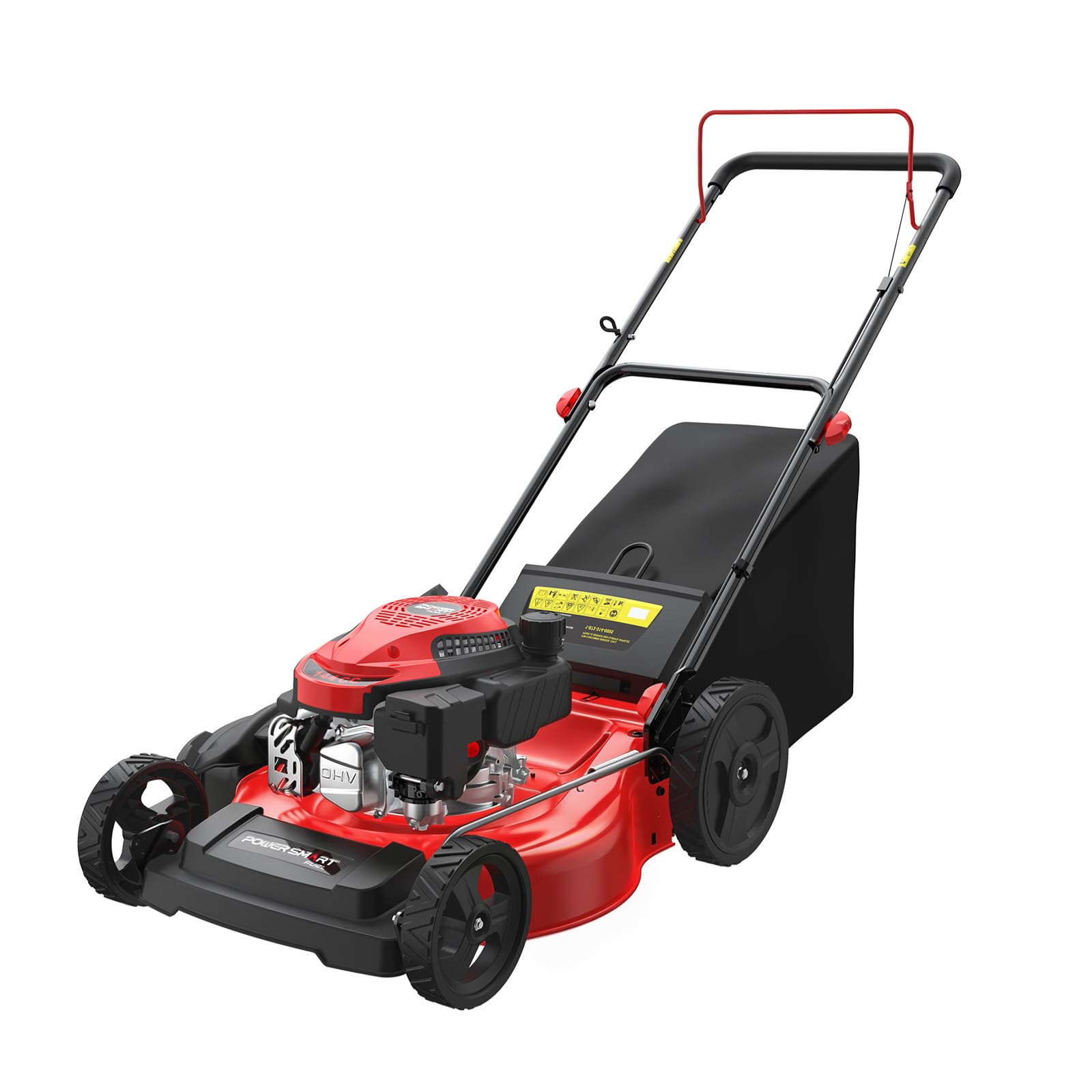
The PowerSmart EasyGlide is a pure push mower — no self-propel — but it earns its place by delivering reliable starting, good cut quality, and light maneuverability at a price that undercuts most gas competition. The 144cc 4-stroke OHV engine uses auto choke for simplified starting, and owners consistently report first- or second-pull starts even after storage. The 21-inch stamped steel deck is durable enough for seasonal use, and the specialized blade produces finely mulched clippings that settle into the lawn without clumping.
Six cutting height positions from 1.5 to 3.9 inches cover a useful range, and the single-lever adjustment makes switching heights easy. The 10-inch rear and 7-inch front double ball-bearing wheels provide smoother rolling than fixed-axle designs, reducing pushing effort on flat ground. The 3-in-1 system offers mulching, bagging, and side discharge flexibility. Assembly takes under 20 minutes, and the mower weighs just 61.6 pounds, making it easy to lift over curbs or into a vehicle for transport.
The fuel tank is relatively small, requiring refueling during longer mowing sessions. The foam grip on the handle can arrive damaged on some units, and the overall fit and finish reflect its price point — this is not a premium machine, but it does not pretend to be. For small to medium flat lawns where self-propel is unnecessary, the EasyGlide delivers dependable performance without the battery range anxiety or cord management hassles of electric alternatives.
What works
- Consistent first-pull starting
- Lightweight and easy to maneuver
- Fine mulching performance for a budget mower
What doesn’t
- Small fuel tank requires mid-session refills
- Handle grip foam can arrive damaged
- No self-propel option
9. WORX Nitro Cordless Lawn Mower, 21″ with 2 x 5.0Ah Batteries

The WORX Nitro distinguishes itself with Aerodeck technology — a vented deck design that increases internal air volume to prevent clogs and clumping, particularly in damp grass where conventional mowers struggle. The brushless motor 2.0 delivers 40% more power and 10% longer runtime than first-generation WORX motors, and the IntelliCut sensors automatically adjust blade speed based on grass density, conserving battery in thin sections and dialing up power through thick patches. Two 20V 5.0Ah PowerShare Pro batteries (operating in series as 40V) provide ample runtime for lawns up to half an acre.
The 7-position cutting height adjustment from 1.5 to 4 inches covers a broad range, and the 3-in-1 system handles mulching, bagging, and rear side discharge effectively. The collapsible handle allows vertical storage, saving floor space. The dual fast charger refills both batteries simultaneously, and the batteries are fully interchangeable with the WORX PowerShare ecosystem of over 140 tools, making this an excellent entry point for anyone already invested in WORX yard equipment or planning to expand their cordless toolkit.
The 21-inch deck is narrower than some competitors, and the plastic deck, while lightweight and corrosion-free, is less rigid than metal decks. Some users find the battery removal process stiff, requiring more force than expected. The manual is poorly organized and lacks clear guidance on the battery insertion and release mechanism. For those prioritizing zero emissions, low noise, and battery platform compatibility over raw torque for heavy overgrowth, the WORX Nitro is a well-executed, intelligent cordless mower.
What works
- Aerodeck prevents clogging in damp grass
- IntelliCut optimizes battery usage automatically
- Batteries compatible with 140+ WORX tools
What doesn’t
- Plastic deck is less rigid than steel
- Battery removal can be stiff
- Manual is poorly organized
Hardware & Specs Guide
Deck Material and Construction
The cutting deck is the structural core of any mower. Stamped steel decks are affordable and widely used in the mid-range, but they are prone to rust and flex over time if paint chips. Fabricated steel decks, found on higher-end gas models, are welded from flat plate steel and resist deformation from rocks and roots. Plastic decks, common on cordless mowers, are lightweight and corrosion-proof but can crack under sharp impacts. The thickness of the steel gauge (typically between 1.5mm and 3mm) directly impacts long-term durability — thicker gauges resist warping and maintain consistent blade-to-deck clearance for cleaner cuts.
Blade Tip Speed and Cutting Torque
Blade tip speed, measured in feet per minute, determines how cleanly the blade slices through grass rather than tearing it. Gas mowers typically spin blades at 2800 to 3200 RPM, generating enough tip speed to shatter leaf debris. Cordless mowers must balance blade speed against battery draw; higher torque motors (measured in ft-lbs) maintain blade speed under load better than high-RPM designs that bog down in thick grass. The EGO LM2114SP’s 6.0 ft-lbs of torque is a standout metric, sustaining cut quality even when the grass density exceeds the motor’s maximum power draw.
FAQ
What is the difference between stamped and fabricated steel decks?
How do I determine the right battery voltage for my yard size?
Is rear-wheel drive always better than front-wheel drive?
Can I use a cordless mower on wet grass without clumping?
Final Thoughts: The Verdict
For most gardeners, the best lawn mowers winner is the Greenworks 60V Self-Propelled because it delivers gas-like power, strong mulching performance, and enough runtime for up to 3/4 acre without the maintenance burden of an ICE engine. If you want true gas-matching torque and instant-start convenience, grab the EGO POWER+ LM2114SP. And for hilly terrain where rear-wheel drive traction is non-negotiable, nothing beats the SENIX 22″ 201cc RWD at this price point.