
Specs are compiled from manufacturer listings and verified buyer reviews and can change over time — please confirm the key details on the product page before buying.
You want a level, ballpark-style lawn without spending on fertilizer or a pricier mower—a roller attachment firms up seed-to-soil contact, flattens frost heaves, and mashes mole runs flat. To pick the right one, ask two questions: what machine you pull it with, and how many square feet you’re tackling. This guide sorts through the push, tow-behind, and striping options so you can match the tool to your yard instead of overbuying capacity you’ll never use.
I’m Rikta — the founder and writer behind Lawn Gear Lab. This guide is built by comparing the manufacturers’ published specifications and the patterns across verified customer reviews, so you get each pick’s real strengths and trade-offs instead of marketing spin.
Find the right lawn mower roller attachment for your yard’s size and your tractor’s hitch, and you can finally flatten bumps, press in new seed, and chase those crisp stripes all in one pass.
Our Picks at a Glance

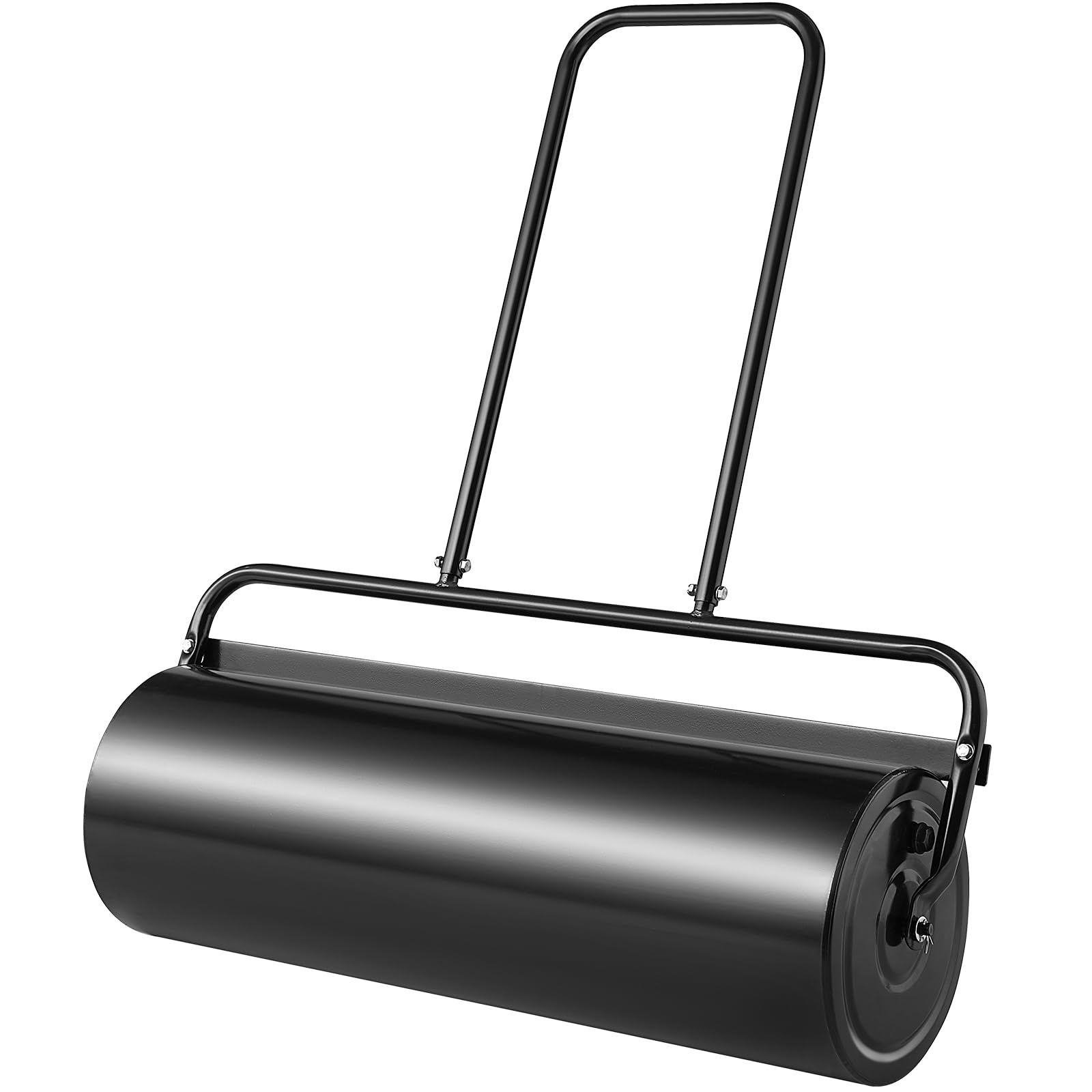
How To Choose The Best Lawn Mower Roller Attachment
Before you buy, match the roller’s job to your yard. A push roller is for small patches and hand-powered work. A tow-behind roller leans on your tractor or ATV to do the heavy lifting. A striping roller only bends grass blades for looks—it won’t level bumps at all.
Push, Tow, or Striping?
Push rollers have handles and work for tight areas or light packing of fresh seed. Tow-behind rollers hook to a tractor, ZTR, or ATV and use the vehicle’s momentum plus a heavier water or sand fill. Striping rollers, meanwhile, are built purely to bend grass one way, so don’t expect grading from those.
Drum Width And Filled Weight
Wider drums like 48″ cover more ground per pass and suit large lawns, but they’re heavier and harder to turn. A 24″ drum is nimble and stores easily. Filled weight is the real working spec—think 270–550 pounds with water—because that’s the force doing the compressing, and you’ll drain it out whenever you need to move it.
Quick Comparison
| Model | Best For | Drum Width | Filled Weight | Filling | Amazon |
|---|---|---|---|---|---|
| Brinly 270 lb Push/Tow★ Best Overall | Small yards, hand rolling | 24″ | 270 lbs | Water or sand | Amazon |
| VEVOR 61L PushBudget Champion | Entry-level seed packing | — | — | Water or sand | Amazon |
| VEVOR 400 lbs Tow | Mid-size tractor work | — | 400 lbs | Water or sand | Amazon |
| Lawn Stryper Gen 3 | Honda mower striping | 21″ | — | Dry sand | Amazon |
| Agri-Fab 45-0606 Tow | Garden tractors, 36″ swaths | 36″ | 400 lbs | Water | Amazon |
| Agri-Fab 45-0604 Tow | 48″ wide coverage | 48″ | 550 lbs | Water | Amazon |
| Brinly 485 lb Tow | Large yards, quick passes | 48″ | 485 lbs | Water or sand | Amazon |
In‑Depth Reviews
1. Brinly 270 lb Combination Push/Tow Poly Lawn Roller
Our pick — over 4★ from 450+ verified ratings; the strongest balance of quality and price.
The do-it-all roller that shifts from hand pushes to tractor tows without breaking stride.
The Brinly is the rare roller that works both ways: push it by hand across a small lot, or tow it behind a mower, ATV, or tractor for bigger jobs. The 24″ drum holds up to 28 gallons—that’s 270 pounds when filled with water or sand—so you’re getting genuine compaction force, not a glorified lawn ornament.
What wins people over is the build. The polyethylene drum won’t dent or rust, the steel arms are heavy-duty, and assembly is genuinely painless with a manual that labels each step and separately bags the parts you need. Owners note the fill plug now stays tethered to the drum, so you won’t lose it mid-project, and the extra-large opening means you can top it off with a plain garden hose.
Buyers report the weight gets the job done even when filled with water instead of sand, which is easier on your back when you drain it for storage. The honest caveats: the handle’s rubber grips are a bit loose, and on tight turns you can pinch skin if you’re not wearing gloves. And leaving it full on a flat surface risks a flat spot, so drain it when you’re done.
What Owners Rave About
- Works as push or tow for total versatility
- Rust-proof poly drum holds 270 lbs of water
- Clear, labeled manual makes assembly quick
Watch These Trade-offs
- Handle can pinch on tight turns without gloves
- Rubber grip quality is only so-so
- Leaving it full can create a flat spot
Reach for this if: you want one roller that covers both hand-rolling and machine-towing duty across a typical home yard.
Look elsewhere if: you need a 48″ wide drum to make quick passes over a large property—check the tow-only picks further down.
2. VEVOR 61L Sand or Water Filled Yard Roller
A lightweight push roller that’s ideal for pressing fresh seed into the soil.
The VEVOR is the entry point that gets you rolling seed into the dirt without a big upfront spend. Its 61L drum takes sand or water, and the push-style handle lets you start compacting right away. Owners say the grass came up better than ever after rolling in new seed, and it does a solid job on flat ground.
Assembly is simple, the high-carbon steel drum wears a double-layer rust-resistant coating, and rounded edges keep it from scarring your lawn. When you’re done, you can hang it on a garage wall to keep it out of the way. It’s a tidy package for home yards, park greens, and small vegetable patches.
Owners mention it’s “not really heavy enough to do major leveling projects,” so keep expectations aimed at seed-to-soil contact rather than big grading work. The same owners note that draining every last bit of water is a chore—a small manual pump helps get the final drops out.
Who it fits: first-time roller buyers and anyone with a modest lawn who wants to press in new seed without wrestling a heavy machine.
The catch: skip it if you’re trying to flatten mounds or fix serious unevenness—it simply doesn’t carry the weight for that.
3. VEVOR Tow Behind Lawn Roller, 400 lbs

A tow-behind workhorse that presses seed deep and flattens mole runs behind your tractor.
Hook the VEVOR’s extended hook to a tractor or ATV and you get 400 pounds of sand or water doing the flattening for you. That weight presses seeds into the soil to boost germination and smooths out mole runs—owners say their yard “looks so much better” after a pass. The heavy-duty steel frame keeps the drum stable and reduces tipping on uneven ground.
It comes with two water inlets so you can fill one or both as needed, plus sealed plugs that stay put while you work. The metal scraper rod clears away debris and soil buildup so the drum keeps rolling clean. Assembly is a matter of a few bolts and nuts, and the LLDPE drum shrugs off rust.
Reviews are pleasantly consistent: it performs exactly as advertised, and if a hardware piece is missing, the brand’s support resolves it quickly. The main caution from owners is that wet soil is essential for effective rolling—dry ground won’t respond the same way, but that’s true of any roller in this class. On sharp rocks or concrete, a thick plastic drum deserves care to avoid punctures.
Why It Earns Its Place
- 400 lbs of water or sand flattens effectively
- Two inlets speed up filling
- Steel frame keeps a low tipping risk
Keep In Mind
- Best results need wet soil
- Plastic drum could puncture on sharp rocks
Pick this if: you own a tractor or ATV and want a budget-friendly way to flatten tilled garden beds and press seed.
pass on it if: you’re grading hard, compacted ground that needs heavier iron—that’s a job for a bigger machine.
4. Lawn Stryper Generation 3 Lawn Striping System

The stripe-maker that turns a Honda walk-behind into a ballpark-grade patterning machine.
This isn’t a leveling roller—it’s a show roller. The Lawn Stryper mounts to Honda 20″-22″ residential walk-behind mowers and bends grass blades after the cut to produce the crisp, golf-course stripes you see on athletic fields. You can run straight stripes, waves, circles, or checkerboards across your yard for curb appeal that turns heads.
The Generation 3 version includes a grooved roller for a more consistent stripe, a cover, hardware, and a newer bracketing system that’s bigger and stronger than before. It attaches in seconds, and the roller comes off while the brackets stay put. Owners love the crisp lines—one happy user calls the striping “soooo gratifying,” and another says their lawn looks “pretty darn good.”
Assembly gets mixed reactions: some find it easy, others call the instructions convoluted. The filler hole is the recurring nitpick—it’s small enough that filling with dry sand (not included) took one owner a good 10 minutes with a funnel. The catch worth noting: a couple of owners found the plastic connectors on certain Honda HRX models break under stress, though the company sends replacement parts free of charge.
Best for: the neighborhood show-off who owns a compatible Honda and wants professional-looking stripes, not soil compaction.
Not for: anyone hoping this levels bumps or presses seed—buy a weighted roller for those jobs, not a striper.
5. Agri-Fab 45-0606 18″ x 36″ Tow Behind Poly Lawn Roller

A wide 36-inch drum that flattens more ground per pass on garden tractors.
The Agri-Fab 45-0606 rolls out a 36-inch wide swath, which lets you cover substantial areas faster than the compact push rollers. Fill it with water up to 400 pounds and it flattens uneven grass, levels new soil, and even reduces mole damage—customers note half-filling it for spring cuts gives a ballpark-like athletic field look.
Assembly is a genuine easy point: most owners had it together in about 15 minutes, with clear directions and good hardware. The poly drum weighs less than 50 pounds empty, so it’s simple to move and store, and the drain/fill plug empties easily while a regular garden hose tops it off. It’s covered by a 3-year limited warranty and built in the USA.
The tow connection to a lawn tractor is smooth, and the drum’s 18-inch diameter keeps turning manageable. One small knock: it doesn’t come with paper instructions, which frustrates a minority of buyers, though most manage just fine without them. For the combination of width and price, this is a strong mid-range pick.
Grab it if: you tow behind a riding mower or garden tractor and want a 36″ pass width to smooth lawns and level fill sand.
Think twice if: you need extra-wide coverage on a big property—the 48″ models down below cover more ground per pass.
6. Agri-Fab 18″ x 48″ Tow Behind Poly Lawn Roller

A 48-inch drum and 550-pound water capacity for bigger yards and faster passes.
When your lawn spans acres, a narrow roller wastes daylight. This Agri-Fab stretches to a 48-inch width and holds up to 550 pounds of water, so each pass covers serious ground and applies real compaction force. Owners say it mashes mole runs effectively and performs well even on slopes, which makes it a step up for undulating properties.
The polypropylene drum rides on a sturdy frame that pulls easily behind a lawn tractor or even a golf cart, one owner reports. Assembly is straightforward, and at 45 pounds empty, you can move it into the garage without a crane. It carries a 3-year limited warranty, so you’ve got coverage for normal use.
Durability is the honest split in the reviews: most find it well-built, but a fraction report large cracks developing in the drum under heavy use. The same owners note the tow-point bracket instructions could be clearer. It’s the right tool for big flat spaces, but treat the drum with care over rough terrain.
Why It’s a Standout
- 48″ width covers ground quickly
- 550 lbs of water flattens effectively
- Handles slopes and mole runs well
Know Before You Buy
- Some owners hit drum cracks under stress
- Tow-point bracket diagrams could be clearer
Reach for it if: you’ve got a larger, open yard and want the widest, heaviest Agri-Fab option without stepping up to a premium brand.
Look elsewhere if: you’re on rocky, rough ground—the heavier Brinly below offers a sturdier poly drum.
7. Brinly 485 lb Tow Behind Poly Lawn Roller, 18″ x 48″

The 485-pound wide-body that eats large yards for quick, level results.
This is the heavy hitter for bigger greenspaces. The Brinly’s 48-inch rolling width and 485-pound capacity let you cover more ground per pass than any narrower drum, and owners confirm it’s excellent at compaction for Bermuda grass and leveling. It pulls easily behind a Kubota tractor, and the rounded drum ends spare your turf during turns.
Routine maintenance is where it shines: the extra-large fill opening takes water from a garden hose fast, and the tethered Easy-Turn plug makes emptying a snap. When you’re done, drain it and hang the compact drum in the garage—it’s lightweight when empty. Assembly is a one-person job with the pictorial manual and fastener skin pack that matches each step, and a video is available if you prefer watching.
The universal hitch pin attaches to any rider, tractor, ZTR, or most ATVs, so compatibility is rarely a question. Durability gets mixed feedback—the build is generally solid, but a minority report small leaks at the seams after heavy use. The brand’s customer service is a bright spot, with owners praising quick responses when a part arrives missing or damaged.
The Premium Perks
- 485 lbs of water or sand for serious compaction
- 48″ drum cuts down pass count
- Universal hitch fits most riders and tractors
The Fine Print
- A few reviewers point out seam leaks over time
- Premium price territory for a roller
Best for: large yards and bigger greenspaces where you want maximum width, heavy compaction, and easy filling in one premium package.
Skip if: your lawn is small—the extra width and weight won’t earn their keep on a compact patch.
Understanding the Specs
Filled Weight vs. Empty Weight
The filled weight (like 270, 400, or 550 pounds with water) is what actually levels your lawn, so that’s the number to shop for. The empty weight matters for storage and transport—look for a drum under 50 pounds empty if you’ll be hauling it to the garage yourself.
Drum Width And Turning
Wider drums like 48″ cover more ground per pass, which saves time on big lawns but makes tight turns harder. A 24″ drum is nimble and stores easily. Water is the easiest fill—a garden hose tops it off—while sand adds more weight per gallon but is harder to drain.
FAQ
Should I fill my lawn roller with water or sand?
Will a roller attachment fit my tractor or mower?
How wide a roller do I need for my lawn?
Can a roller flatten mole runs and frost heaves?
Is a striping roller the same as a leveling roller?
How long does assembling a lawn roller take?
Can I leave water in the roller between uses?
What’s the difference between a push roller and a tow-behind roller?
Final Thoughts: The Verdict
If you want one dependable pick, the lawn mower roller attachment winner is the Brinly 270 lb Combo because it works as both a push and a tow-behind, so it adapts to any yard size. If you want a wide, quick pass over a big lawn on a budget, the Agri-Fab 36″ is the smart mid-range grab. And for ballpark-style stripes on a Honda walk-behind, the Lawn Stryper is the one to reach for.
How We Picked
We do not accept paid placement. Every pick is matched to a real buyer and a real use-case; we do not hands-on test units.
Sources & Methodology
Specifications: manufacturer listings and product documentation. Review insights: verified customer reviews, as of August 2026. Pricing: not shown on this page (it changes often); check the current price via the retailer link.
As an Amazon Associate, Lawn Gear Lab earns from qualifying purchases. This does not affect which products we feature.