
Specs are compiled from manufacturer listings and verified buyer reviews and can change over time — please confirm the key details on the product page before buying.
Finding the right lawn fungicide spray can feel like a guessing game. You see brown patches spreading across your grass, but the wrong product will do nothing but waste your weekend. The good news: a handful of proven formulas stop the most common lawn diseases fast—if you need a quick-acting synthetic or a gentle biological option that works with your soil instead of against it. This guide cuts through the hype and lines up the seven sprays that actually deliver, based on real feedback from yards and reviewers.
I’m Rikta, the writer behind Lawn Gear Lab. This guide is built by comparing the manufacturers’ published specs and patterns from verified customer reviews, so you get each pick’s real strengths and trade-offs instead of marketing spin.
You will get a full breakdown of what each spray does, how it works, and which yard it fits best, so you can choose the best lawn fungicide spray with confidence and get your grass back to a deep, healthy green.
Our Picks at a Glance


How To Choose The Best Lawn Fungicide Spray
Picking the right spray starts with knowing what you are fighting. Lawn diseases like brown patch, dollar spot, and powdery mildew each respond to different active ingredients. The key is matching the product’s chemistry to your specific problem and your preference for how it works—if you want a fast knock-down or a long-term soil-friendly solution.
Active ingredient matters most
Synthetic options like propiconazole are broad-spectrum and systemic (absorbed into the plant and moved through its tissues). They get into the grass and move through the plant, giving you control from the inside out. Biological sprays, on the other hand, use beneficial bacteria like Bacillus subtilis (a soil bacterium that outcompetes harmful fungi) to colonize the roots and crowd out harmful fungi. They are gentler and organic-approved, but they often need more frequent application.
Formulation and ease of mixing
A microemulsion concentrate (MEC — a liquid with very fine particles that stay suspended in water) mixes into water easily, so it stays mixed in your sprayer and does not settle at the bottom. This means you get consistent coverage across your whole lawn without having to re-shake the tank. Standard concentrates can work just as well, but you may need to stir the mixture more often during application.
Quick Comparison
| Model | Best For | Active Ingredient | Bottle Size | Item Weight | Amazon |
|---|---|---|---|---|---|
| Quali-Pro Propiconazole 14.3★ Best Overall | Broad-spectrum, long-lasting control | Propiconazole 14.3 | 32 oz | 2 lb | Amazon |
| Dow Eagle 20EWTop Performer | Professional-grade orchard & turf | Fungicide | 16 oz | 1 lb | Amazon |
| Southern Ag Biological Fungicide | Organic soil drench & root health | Biological Fungicide | 16 oz | 1 lb | Amazon |
| Select Source Propiconazole 14.3 | Budget-friendly propiconazole for turf | Propiconazole 14.3 | 16 oz | 1.4 lb | Amazon |
| Bonide Revitalize Biofungicide | Organic produce & immune-boosting | Biofungicide | 16 oz | 16 oz | Amazon |
| Monterey Complete Disease Control | Organic fruit & vegetable gardens | Biological Fungicide | 16 oz | — | Amazon |
| Atticus Gunner 14.3 MEC | Low-odor, rain-resistant formula | Propiconazole 14.3 | 32 oz | 32 oz | Amazon |
In‑Depth Reviews
1. Quali-Pro 83013366 Propiconazole 14.3 Fungicide, 32oz
Our pick — over 4.5★ from 850+ verified ratings; the strongest balance of quality and price.
This is the one bottle that turns brown patch into green grass, season after season, for most lawns.
Stop wasting time with guesswork. The Quali-Pro holds 32 fluid ounces of propiconazole 14.3 (a systemic fungicide absorbed into grass to stop fungi from the inside). It uses a microemulsion formulation (MEC — very fine particles that stay suspended in water), so it gives you consistent coverage and less odor than standard concentrates. It fights a long list of diseases — rusts, brown patch, dollar spot, powdery mildew, summer patch, anthracnose, and gray leaf spot. One reviewer treated a third of an acre for brown patch, mixing 2 ounces per gallon per 1,000 square feet on the worst spots, and saw new growth in about a week. Another used it on Bermuda grass with white and brown patches, and the lawn fully recovered after two weeks of rain. The top praise from owners is its sheer effectiveness — 48 buyers singled that out.
The catch: several reviews warn not to apply it in extreme heat, and the bottle is heavy at 2 pounds (compared to the 1-pound Southern Ag). But the trade-off is worth it. The larger bottle lasts years for most homeowners — a few owners mention it stretches four to five years with annual reapplications. This is the strongest value for anyone with a mid-to-large lawn who wants a single reliable weapon.
Potent broad-spectrum control: If you have Bermuda or Zoysia grass and see brown or white patches forming, reach for this. It stops the problem and keeps it stopped with a follow-up application 14 days later. If you need something organic-approved or prefer a biological approach, skip it — this is a synthetic systemic.
Versatile fungicide: medium to large lawns hit by brown patch, dollar spot, or rust — it handles the heavy lifting with one bottle.
Requires careful handling: you garden organically with edibles and need a harvest-day-safe spray; you have a very small patch of grass where a 32 oz bottle is overkill.
2. Dow AgroSciences 173917 Eagle 20EW Fungicide, 16oz
Orchard owners and serious gardeners pick this when they need a systemic that works from the inside out on tough diseases.
Dow Eagle 20EW is a systemic fungicide (absorbed into the plant and moves through it). It protects even new growth from diseases like powdery mildew, apple scab, dollar spot, brown patch, anthracnose, and red thread. It is labeled for turfgrass, landscape ornamentals, and fruit trees — apples, stone fruits, and grapes — making it the most versatile spray in this list. In reviewer data, effectiveness is the standout feature: 119 owners mention it, more than any single aspect across all seven products here. One owner in zone 7 says it is their go-to for powdery mildew. Another used it on Zoysia grass in Connecticut and eliminated clover and dandelions with two applications about 30 days apart, which is more than the Select Source Propiconazole can claim on broadleaf weeds.
The downside: it is a strong agricultural-grade chemical. One review says it requires full PPE (personal protective equipment like gloves, goggles, and a mask), and the mixing ratio can be complex, involving conversions from ounces per acre to gallons. It weighs 1 pound, the same as the Southern Ag biological option, though the bottle is 16 fluid ounces. This is not a casual grab-and-spray product — it demands careful handling. But for anyone with fruit trees, a large ornamental garden, or a stubborn fungal problem that milder products have not fixed, it is the most potent option here.
Effective on tough diseases: This is for the gardener who reads labels carefully and is comfortable with concentrated chemicals. Powdery mildew on hydrangeas and peonies? This stops it. Apple scab on a prized tree? This is what you want. But if you want something you can mix in ten seconds without gloves, choose a biological option instead.
Targeted disease fighter: tough, recurring diseases like powdery mildew and apple scab, especially on fruit trees, ornamentals, and large turf areas.
Limited coverage: you want a simple, beginner-friendly application; you are growing organic produce and need a harvest-day-safe option.
3. Select Source Propiconazole 14.3 Pint Select Fungicide

A low-cost, low-odor propiconazole that gives you the same active ingredient as the Quali-Pro, but in a lighter bottle for smaller lawns.
If you want the same active ingredient as the Quali-Pro (propiconazole 14.3) but at a lighter weight and a lower entry cost, this is your pick. The Select Source comes in a 16-ounce bottle at just 1.4 pounds, making it easier to handle than the 2-pound Quali-Pro. It is formulated for low odor and good residual control (staying active after drying), and it carries an EPA certification. Owners consistently praise its effectiveness — 38 people mention it — and the value is a close second. One owner says they alternate it with Azoxystrobin (another fungicide type) using a hose-end sprayer for a two-week rotation. Another calls it “magic,” noting it brought their lawn back to green twice in one year, even though the fungus kept returning.
The trade-off is bottle size: at 16 ounces, you get half the volume of the Quali-Pro, so if you have a third of an acre or more, you will need to buy it more often. It also does not come with a built-in measuring device like the Quali-Pro, so you will need your own measuring cup. That said, for a standard suburban lawn with an active brown patch or dollar spot problem, this is the most wallet-friendly way to get the same proven chemistry without paying for a larger bottle you might not need. It is sharper on value than the larger Quali-Pro for smaller yards.
Cost-effective concentrate: This is the best entry point into propiconazole fungicides. It works, it smells less than older formulas, and you do not have to spend premium money to get a premium result. Rotate it with a different mode-of-action fungicide to keep resistance low.
Budget-friendly option: small to medium lawns where cost matters; first-time users who want a proven synthetic without committing to a huge bottle.
Bulk storage: you need an organic biological approach; you have a very large property and will burn through 16 oz quickly.
4. Atticus Gunner 14.3 MEC Propiconazole Fungicide (32 OZ)
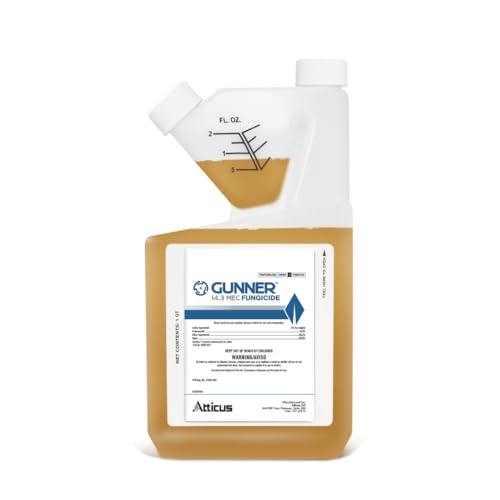
This one stays put on the leaf when the sky opens up, thanks to a rain-resistant microemulsion formula.
Atticus Gunner uses a microemulsion concentrate (MEC — very fine particles that do not separate in water). This gives you two concrete benefits: the product mixes into water easily without settling, and once it dries on the leaf, it resists being washed off by rain or irrigation. You do not have to reapply after a summer downpour. It contains the same 14.3% propiconazole active ingredient that golf course superintendents use in the brand Banner Maxx, and it targets over 20 plant fungi including brown patch, dollar spot, blights, and powdery mildew. The 32-ounce bottle is a practical size for a decent-sized lawn, and the low-odor formula means you will not smell the treatment for days afterward.
The main drawback: the instructions are hard to read — a few owners mention the tiny print on the label. You may need a magnifying glass or strong reading glasses to figure out the mixing rates. Also, it cannot be shipped to Alaska, DC, Hawaii, Puerto Rico, or Vermont. For everyone else, this is the most user-friendly synthetic option because you can mix it once and trust it to stay mixed, and trust it to stay on the grass even in wet weather. One owner calls it a must-have for the lawn, noting it works well alternating with granular azoxystrobin — a rotation that helps prevent resistance more effectively than the single-mode Quali-Pro.
Reliable disease prevention: The MEC formulation separates it. You do not have to keep stirring your sprayer, and you do not have to worry about re-spraying after a rainstorm. That alone saves time and product.
Trusted brand: wet climates or lawns with irrigation systems where rain wash-off is a constant worry; anyone who finds standard concentrates annoying to keep mixed.
Rotate with others: you want a biological, organic-friendly option; you prefer granular fungicides over liquid sprays.
5. Southern Ag Garden Friendly Biological Fungicide, 16oz

A biological fungicide that doubles as a soil tonic — it revives plants by colonizing their roots instead of nuking them.
This is not a synthetic chemical. It is a concentrated biological fungicide (1-pound bottle, 16 fluid ounces) that works by introducing beneficial bacteria (like Bacillus subtilis) into the soil. The bacteria colonize the root hairs and crowd out pathogenic fungi, which makes it excellent for organic gardening. Owners find it very effective. The most-praised aspect is its effectiveness (74 buyers mention it), and root health is a close second. One owner brought a wilting Hardy Hibiscus stem back to life overnight with a single soil drench at just 1 teaspoon per gallon. Another uses it in a recirculating deep water culture (RDWC) hydroponic system (a soilless method where plant roots hang in nutrient-rich water) and calls it the best product they have found, noting it is very concentrated.
Safe for organic use: This is more of a long-term health solution than a chemical burn-down. It is the best option for gardeners who want to build soil health and prevent disease rather than attack it aggressively. The concentration means a little goes a long way.
Eco-friendly choice: organic vegetable gardens, hydroponic setups, houseplants prone to root rot, or as a preventive soil drench for trees and shrubs.
Frequent application: you need immediate knock-down of a severe lawn fungus outbreak; you prefer the speed of a synthetic systemic.
6. Monterey Complete Disease Control Bundled with Measuring Spoon
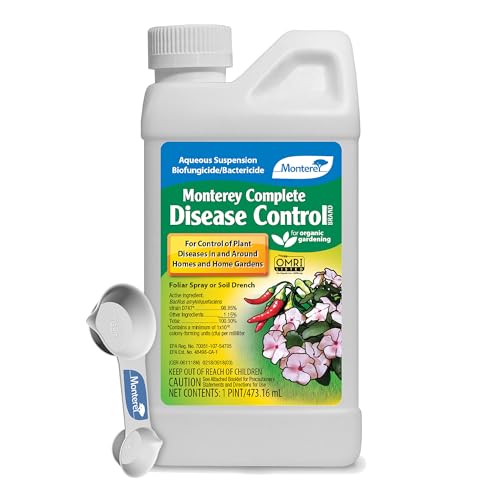
This OMRI-listed spray is what tomato growers in the south swear by for rainy-season blight.
Monterey Complete Disease Control is a biological fungicide with an OMRI listing (Organic Materials Review Institute — it meets USDA organic standards). It prevents and stops powdery mildews, rust, leaf blight, brown rot, leaf spots, anthracnose, and gray mold. It works by colonizing root hairs to prevent disease-causing fungi from taking hold. The 16-ounce bottle comes bundled with a measuring spoon, a small but helpful touch that the Southern Ag bottle lacks. Owners highlight effectiveness most of all (39 mentions), with value for money coming in second. One owner in the south says it is their favorite fungicide for tomatoes because it works well in wet weather and can be used as a soil drench for internal protection. Another calls it outstanding for peach leaf curl, noting it needs multiple applications in spring when leaves emerge — making it a more hands-on choice than the simpler Southern Ag option.
Convenient complete kit: This is the best organic option if you are proactive. Use it early in the season or at the first sign of leaf spot, and it will keep the problem from spreading. If you already have major blight covering half your tomato plant, you might want a stronger synthetic first (like the Dow Eagle 20EW), then switch to this for maintenance.
All-in-one solution: organic tomato gardens, peach trees, and rose beds; anyone who wants a preventive spray safe enough to use up to the day of harvest.
Price premium: you are dealing with a severe, active lawn fungus outbreak that needs an immediate synthetic cure; you dislike containers that are hard to open.
7. Bonide Revitalize Biofungicide, 16 oz Concentrate

A biofungicide that triggers a plant’s own immune system — ideal for houseplants and fruit trees with recurring issues.
Bonide Revitalize works differently from the other products here. Instead of directly killing fungi or colonizing roots, it triggers an immune response in the plant itself, helping it resist and control diseases like blight, anthracnose, powdery mildew, and black spot. It is approved for organic gardening and can be used up until the day of harvest, making it among the most flexible options for anyone growing food. The 16-ounce bottle weighs just 16 ounces, so it is light and easy to handle. You mix it with water and apply it as a foliar spray (on leaves) or a soil drench on vegetables, fruits, nuts, trees, shrubs, and houseplants. Effectiveness is the top praise from owners, with 51 people calling it out. One owner used it on mature pear trees showing signs of fire blight, applying it as a soil drench every 3-4 days. After about a month, the trees started rebounding with new leaves and no more black leaves.
The plant health aspect gets mixed feedback — while some see their plants thriving, others say their plants are slowly dying. This is likely because the product works best on strong plants; a plant that is already severely weakened may not have the energy to mount an immune response. It is also not a fast burn-down like a synthetic. But for the price, and given that you can use it indoors on houseplants without worrying about harsh fumes, it is a very smart choice for a specific use-case — better suited to ailing trees than the Monterey option, but less versatile on active lawn fungus.
Beneficial microbe blend: This is the specialist for fire blight in fruit trees and fungal issues in houseplants. It is not the best choice for a sudden outbreak on a St. Augustine lawn, but if you have a prized pear tree or a fiddle-leaf fig with fungus, this is what you want.
Natural defense: indoor houseplants, fruit trees (especially pears and apples with fire blight), and organic vegetable gardens where you want to build plant immunity.
Temperature sensitive: you need fast, broad-spectrum control on a large lawn; your plants are already very weak and may not have the strength to respond to the immune trigger.
Understanding the Specs
Propiconazole vs. Biological Ingredients
Propiconazole is a synthetic systemic fungicide. You spray it on the leaf, the grass absorbs it, and it moves through the plant to stop fungal growth from the inside. Biological fungicides use living bacteria (like Bacillus subtilis) that take up space on the roots and outcompete harmful fungi. Synthetics act faster. Biologicals are safer for pets, kids, and the environment, and they can be used on edibles up to the day of harvest.
Bottle Size and Coverage
A 16-ounce bottle of concentrate is enough for most small to medium lawns (roughly a quarter acre). A 32-ounce bottle covers larger areas. Pay attention to the mixing rate — most propiconazole products call for 1 to 2 ounces per gallon per 1,000 square feet. A larger bottle is usually a better value if you need to treat a lot of grass, but it can feel heavy in a backpack sprayer.
FAQ
Can I use a lawn fungicide spray on my vegetable garden?
How often should I apply a lawn fungicide spray?
What is the difference between a systemic and a contact fungicide?
Will a fungicide spray fix brown patch in St. Augustine grass?
Is it safe to spray fungicide around pets and kids?
What is the best time of year to apply a lawn fungicide?
Can I mix fungicide with fertilizer in my sprayer?
How do I measure the right amount of concentrate for my lawn?
Will rain wash away my fungicide application?
What does EPA certification mean for a fungicide?
Final Thoughts: The Verdict
Across the board, the lawn fungicide spray winner is the Quali-Pro Propiconazole 14.4 because it combines a large 32-ounce bottle, a powerful systemic formula, and a proven track record against the most common lawn diseases — all at a price that works out cheaper per application than most competitors. If you want an organic biological approach, grab the Southern Ag Garden Friendly Biological Fungicide. And for a strong, professional-grade option that handles fruit trees and ornamentals, the Dow Eagle 20EW is the one to reach for.
How We Picked
We do not accept paid placement. Every pick is matched to a real buyer and a real use-case; we do not hands-on test units.
Sources & Methodology
Specifications: manufacturer listings and product documentation. Review insights: verified customer reviews, as of July 2026. Pricing: not shown on this page (it changes often); check the current price via the retailer link.
As an Amazon Associate, Lawn Gear Lab earns from qualifying purchases. This does not affect which products we feature.