
A new lawn is a race against time. Every day after seeding or laying sod, the margin between a lush carpet and a patchy disappointment narrows. The wrong fertilizer doesn’t just fail to help—it can scorch tender roots, stall germination, or feed the weeds instead of the grass. Precision in the NPK ratio and release timing isn’t optional at this stage; it is the single factor that determines whether your investment in seed or sod delivers a dense, healthy turf.
I’m Rikta — the co-founder and writer behind Lawn Gear Lab. I’ve spent hundreds of hours analyzing starter fertilizer formulations, cross-referencing NPK data with soil science research, and studying owner feedback across thousands of verified reviews to separate the formulas that build roots from those that just burn green cash.
This guide cuts through the marketing to compare high-phosphorus granules, liquid bio-stimulants, and slow-release nitrogen blends, helping you select the lawn fertilizer for new grass that matches your specific seeding or sodding project.
How To Choose The Best Lawn Fertilizer For New Grass
Selecting a starter fertilizer revolves around three variables: the phosphorus level for root initiation, the nitrogen release mechanism to avoid burning delicate seedlings, and the coverage rate to match your lot size. Ignore any of these and you risk wasting your seeding window.
The Middle Number Matters Most
The NPK ratio lists nitrogen (N), phosphorus (P), and potassium (K) in that order. For new grass, phosphorus is the star. It drives root cell division and energy transfer. A starter with a P number of 18 or higher—like a 12-18-8 or 20-27-5—provides the chemical signal that tells a seedling to push roots deep before top growth begins. Avoid balanced fertilizers like 10-10-10 at seeding; they supply too much nitrogen too early, which forces leaf growth before the root system can support it.
Release Speed Controls Burn Risk
New grass roots are exceptionally vulnerable to salt damage from soluble fertilizers. Quick-release nitrogen can cause tip burn that stunts or kills seedlings within days. Look for products that combine a small fraction of quick-release nitrogen with a larger portion of slow-release or coated nitrogen. The immediate shot greens the leaf, while the delayed portion feeds the plant over 4 to 8 weeks. Liquid formulas can also be effective, but they require more frequent applications because they deliver nutrients instantly and leach faster.
Coverage Math and Application Timing
Check the square-foot coverage per bag, not just the bag weight. A concentrate that covers 5,000 sq. ft. at 18 pounds is far more nutrient-dense than a filler-heavy product covering the same area at 40 pounds. Apply the starter on the same day you seed or sod—before a rain or watering-in session. Phosphorus does not move readily through soil, so it must be placed where the root zone will develop. If your soil test already shows high phosphorus, a low-P or zero-P starter is the safer choice.
Quick Comparison
On smaller screens, swipe sideways to see the full table.
| Model | Category | Best For | Key Spec | Amazon |
|---|---|---|---|---|
| The Andersons Premium New Lawn Starter 20-27-5 | Granular | Fast root establishment | 20-27-5 NPK + 1% Iron | Amazon |
| Lawn Synergy Starter Fertilizer 15-20-10 | Granular | Slow-release feeding | 15-20-10 with XCU Nitrogen | Amazon |
| Jonathan Green Veri-Green 12-18-8 | Granular | Seeding & sodding combo | 12-18-8 NPK + Humates | Amazon |
| Fertilome New Lawn Starter 9-13-7 | Granular | Gentle, low-burn formula | 9-13-7 NPK | Amazon |
| GreenePOP Liquid Starter 16-21-2 | Liquid | Phosphorus-deficient soils | 16-21-2 + Sea Kelp & Humic | Amazon |
| Sunday Lawn Kickstart 22-0-2 | Liquid | Hose-end convenience | 22-0-2 with Iron | Amazon |
| Lawnifi New Lawn Starter Box | Liquid | Step-by-step program | 3-Bottle Grow & Maintain | Amazon |
In‑Depth Reviews
1. The Andersons Premium New Lawn Starter 20-27-5
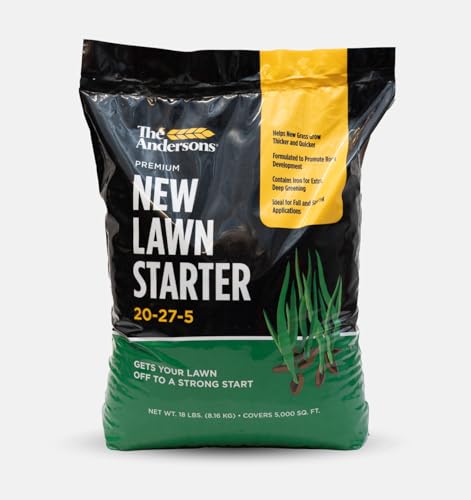
The Andersons delivers the highest phosphorus concentration in this roundup at 27%, which directly fuels the root initiation that new seed and sod require. The 20-27-5 ratio is paired with a dual-release nitrogen system: a quick-release fraction for immediate green-up and a slow-release portion that feeds for several weeks. The extra 1% iron provides a visual greening boost that is particularly satisfying during the first few mows after establishment.
Coverage is 5,000 sq. ft. per 18-pound bag, which means the nutrient density is high per square foot. The prill size is consistent and flows smoothly through broadcast and drop spreaders without bridging. Users report visible results within 10 days on new seed, with thick fill-in on bare patches and rapid root anchoring on sod laid in fall or spring.
Some owners wish the bag size were larger; the 18-pound format requires multiple bags for total lawn renovations above 5,000 sq. ft. The price per bag sits at the upper end of the granular segment, but the phosphorus density and iron inclusion justify the investment for anyone serious about first-year root mass.
What works
- High 27% phosphorus drives rapid root development
- Dual-release nitrogen feeds immediately and over weeks
- 1% iron delivers deep greening without extra applications
What doesn’t
- 18-pound bag is small for larger lawns over 5,000 sq. ft.
- Premium price point versus standard starter blends
2. Lawn Synergy Starter Fertilizer 15-20-10
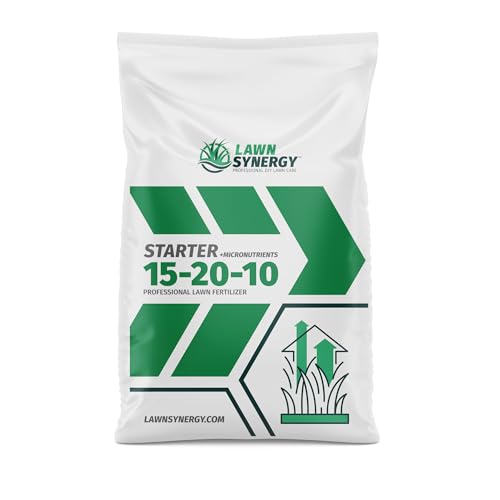
Lawn Synergy uses XCU slow-release nitrogen technology, which extends the feeding window beyond typical starter fertilizers. The 15-20-10 ratio provides strong phosphorus support while the nitrogen is released gradually, lowering the risk of salt burn in sensitive seedlings. This formula also includes ammonium sulfate and iron for early color without forcing excessive leaf growth.
Coverage is rated at 4,500 sq. ft. per 18-pound bag, slightly less area than some competitors but delivering a more concentrated nutrient load per square foot. The prills are clean and free-flowing, and users report even distribution with standard rotary spreaders. Owners of tall fescue lawns noted particularly strong results, with thick green coverage emerging within three weeks of seeding.
The bag is not sold at big-box retailers, which is a plus for those wanting a proprietary pro-grade blend, but it also means shipping costs can add to the total. A few users noted the price is above generic starter brands, though the inclusion of micronutrients and the sustained-release nitrogen make the per-pound cost reasonable for the results.
What works
- XCU slow-release nitrogen protects seedlings from burn
- High nutrient density in an 18-pound bag
- Contains iron and ammonium sulfate for early color
What doesn’t
- Coverage is 4,500 sq. ft., smaller than some 5,000 sq. ft. bags
- Not available in local stores; requires online ordering
3. GreenePOP Liquid Starter Fertilizer 16-21-2

GreenePOP is the liquid standout in this list, combining a 16-21-2 NPK with bio-stimulants including sea kelp and humic acid. The liquid form allows phosphorus to reach the root zone immediately without requiring soil incorporation, which is an advantage when top-dressing existing soil before seeding. The potassium hydroxide component acts as a mild liquid aeration, helping break up surface compaction for deeper root penetration.
A single gallon covers up to 8,500 sq. ft., making it the most coverage-efficient product here. The hose-end mixing is straightforward, though users should calibrate the sprayer to avoid overlapping, which can concentrate salt in specific zones. Owners of phosphorus-deficient soil reported dramatic improvements in seed germination rates and early root mass within two weeks of application.
The dispensing bottle design has drawn criticism across multiple seasons; some units arrived with cracked sprayer attachments or poorly seated intake tubes. The liquid format also demands reapplication every 3-4 weeks for sustained feeding, unlike slow-release granules that work in a single pass. For homeowners who prefer a single application, a granular option may be more practical.
What works
- Sea kelp and humic acid stimulate microbial soil activity
- Wide coverage of 8,500 sq. ft. per bottle
- Immediate phosphorus availability for root uptake
What doesn’t
- Sprayer attachment has inconsistent quality control
- Requires multiple applications for season-long feeding
4. Jonathan Green Veri-Green Starter Fertilizer 12-18-8
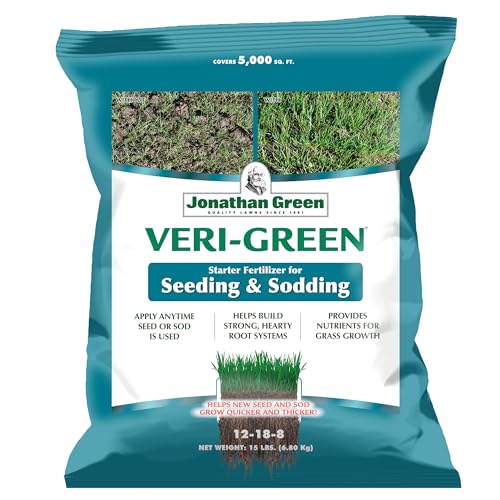
Jonathan Green brings humates into the formula, which improve nutrient exchange and buffer the soil pH to make phosphorus more available to young roots. The 12-18-8 ratio is solidly in starter territory, with phosphorus nearly doubling nitrogen to prioritize root growth over leaf production. This 15-pound bag covers 5,000 sq. ft., hitting the sweet spot of affordability without sacrificing coverage area.
Users repeatedly cite its compatibility with both seeding and sodding. Owners applying it the same day as laying Kentucky bluegrass or tall fescue seed report uniform germination and a rapid transition from thin coverage to a dense stand within four weeks. The granular material flows well through hand-held and rotary spreaders, though some care is needed on slopes to prevent wash-off before the first watering.
Humates are a welcome addition at this price tier, but the 12-18-8 ratio is less phosphorus-dense than the Andersons or Lawn Synergy options. For extremely poor or compacted soil, those higher-P formulas may produce faster visible results. The bag is also smaller than the Fertilome option, making it slightly less economical for total-lawn renovations above 5,000 sq. ft.
What works
- Humates enhance phosphorus availability in variable soil pH
- Cost-effective per square foot at 5,000 sq. ft. coverage
- Works well for both seed and sod installation
What doesn’t
- Phosphorus level is lower than top-tier competitors
- Granules may wash off sloped terrain before watering in
5. Fertilome New Lawn Starter Fertilizer 9-13-7
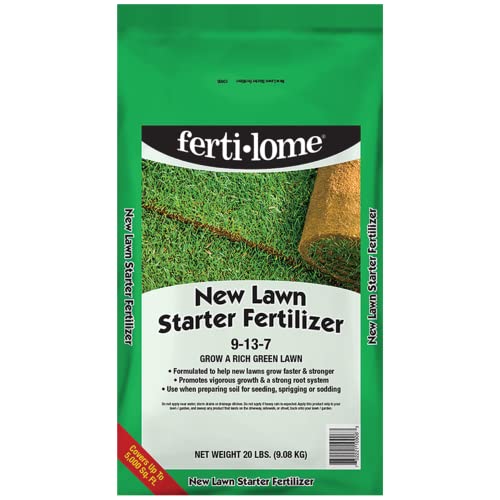
Fertilome takes a conservative approach with a 9-13-7 ratio that supplies lower total nitrogen to minimize the risk of seedling burn. The larger 20-pound bag covers the same 5,000 sq. ft. as the Jonathan Green 15-pounder, meaning this formula is lighter in overall nutrient concentration. That makes it an excellent choice for first-time seeders who tend to over-apply or for sandy soils that cannot retain high salt loads.
The granular texture is coarser than some competitors, which helps prevent it from leaching through the soil profile too quickly. Users applying it before zoysia sod reported strong root anchoring through the first fall and spring, with the grass surviving dormancy cycles without dieback. The 13% phosphorus is sufficient for most soil conditions, though heavily depleted soils may benefit from a higher-P product.
The price per bag is one of the most affordable in the granular category, making it a pragmatic choice for covering large areas on a budget. However, the low nitrogen content means you may need a follow-up application of a nitrogen-rich fertilizer after the first mow to sustain color and growth. Some owners noted the granules are inconsistent in size, causing minor streaking with drop spreaders.
What works
- Low nitrogen content makes it one of the safest for seedlings
- Large 20-pound bag offers good coverage for the price
- Coarse granules resist leaching in sandy soils
What doesn’t
- Low N concentration requires a nitrogen booster after establishment
- Granule size inconsistency can cause streaking in drop spreaders
6. Sunday Lawn Kickstart Fertilizer 22-0-2

Sunday targets the convenience shopper with a zero-phosphorus 22-0-2 liquid formula that includes iron and potassium for stress recovery and greening. This product is not a traditional starter in the phosphorus-rich sense—it is designed for lawns that have been seeded but already tested high in phosphorus, or for homeowners who want a quick green-up without committing to a high-P granular program. The 2-pack covers 10,000 sq. ft., and the included universal sprayer attaches to any standard garden hose.
The liquid application process takes under 15 minutes, and the nutrients are immediately available to the grass. Users on southern lawns with St. Augustine or Bermuda reported noticeable green improvement within two weeks, especially when used as the first spring application after winter thin spots. The absence of phosphorus also means there is zero risk of runoff into waterways, making this an eco-conscious choice for properties adjacent to ponds or streams.
The lack of phosphorus makes this unsuitable for bare-soil seeding or new sod that requires root development support. Several users reported no visible improvement in density or growth rate, noting the lawn remained thin and weedy after multiple applications. The hose-end sprayer also requires careful calibration; users who applied at the full rate experienced streaking before the material was watered in.
What works
- Extremely fast hose-end application for large areas
- Zero phosphorus eliminates runoff concerns near water bodies
- Iron content delivers visible greening quickly
What doesn’t
- No phosphorus means poor root support for new seed or sod
- Mixed results on thin lawns; some users saw no improvement
7. Lawnifi New Lawn Starter Box
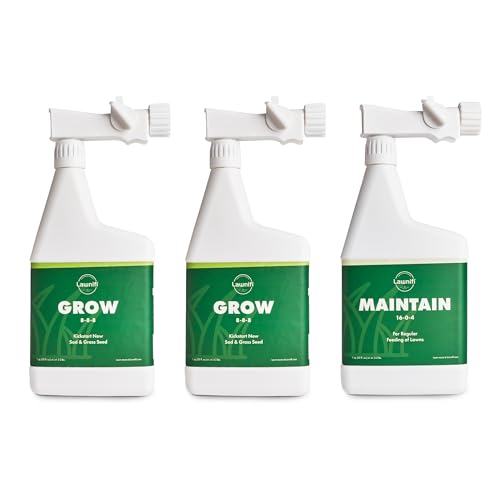
Lawnifi delivers a multi-step liquid program with two Grow bottles for root establishment and one Maintain bottle for the transition to regular feeding. The nano-sized nutrient particles are designed to increase cellular uptake efficiency, meaning the grass absorbs a higher percentage of the applied phosphorus and nitrogen. Each bottle covers 5,000 sq. ft., so the 3-box system handles up to 15,000 sq. ft. in a structured application schedule.
Users with St. Augustine and Zoysia sod reported outstanding results, with the grass filling in and achieving a dark green color within weeks of following the labeled schedule. The hose-end system is simple to operate, though the dispensing bottles lack fine flow control, causing some users to transfer the liquid to a dedicated sprayer for more uniform distribution. The programmatic approach removes guesswork for homeowners who are uncertain about when to switch from starter to maintenance fertilizer.
The price per box is the highest in this list, and the liquid format requires the user to reattach the bottle for each application. The dispensing bottle quality is a recurring complaint; the included sprayer heads can leak or fail mid-season. For large properties, the per-application cost adds up quickly compared to a single granular application that feeds for weeks.
What works
- Nano-sized nutrients improve uptake efficiency
- Structured 3-bottle system removes scheduling guesswork
- Excellent results reported on St. Augustine and Zoysia sod
What doesn’t
- Highest price per square foot in this roundup
- Dispenser bottles have inconsistent flow control
Hardware & Specs Guide
NPK Ratio and Phosphorus Density
The three-number ratio on a fertilizer bag represents the percentage of nitrogen, phosphorus, and potassium by weight. For new grass, look for a middle number (phosphorus) at 18 or higher. A 20-27-5 formula delivers 27% phosphorus, which is near the ceiling for granular starter products. The phosphorus level directly determines how much root-initiation energy is available per square foot. Products with a low phosphorus number may require a soil amendment or a separate phosphorus source.
Release Mechanism and Burn Potential
Quick-release nitrogen is water-soluble and immediately available, but it carries a high salt index that can burn tender seedling roots. Slow-release nitrogen—often listed as urea-formaldehyde, polymer-coated, or XCU technology—releases over 6 to 10 weeks, lowering the salt peak. A good starter combines a small quick-release fraction for immediate color with a larger slow-release portion for sustained feeding. Liquid formulas are generally fast-acting and require more frequent reapplication, but they pose lower burn risk when applied at the correct dilution rate.
Coverage Rate and Bag Density
Bag weight is a misleading metric. A 15-pound bag that covers 5,000 sq. ft. is far more nutrient-concentrated than a 20-pound bag covering the same area. Check the coverage specification on the label, not the weight. Higher density per square foot means fewer filler materials and more actual NPK content. For large lawns, select a product that minimizes the number of bag changes you need. For small patches, a concentrated bag that covers 5,000 sq. ft. can be stored for overseeding next season.
Liquid vs. Granular: Application Context
Granular fertilizers deliver phosphorus in a solid particle that must be watered in thoroughly to move the nutrient into the root zone. They offer a single-pass, weeks-long feeding window. Liquids provide instant nutrient availability and penetrate the soil surface faster, but they leach more quickly and require regular reapplication every few weeks. Choose granules for a set-it-and-forget-it approach during the initial establishment phase. Choose liquids when you need precise control over dosage or when top-dressing without tilling the soil.
FAQ
Can I use a regular lawn fertilizer on newly seeded grass?
How soon after seeding should I apply starter fertilizer?
Will a high-phosphorus starter fertilizer harm existing grass?
What happens if I over-apply starter fertilizer to new grass?
Should I use a liquid or granular starter for fall seeding?
Final Thoughts: The Verdict
For most gardeners, the lawn fertilizer for new grass winner is the The Andersons Premium New Lawn Starter 20-27-5 because its 27% phosphorus level plus 1% iron delivers the fastest root anchoring and visual greening in a single granular pass. If you want a slow-release system that protects seedlings from burn, grab the Lawn Synergy 15-20-10. And for a liquid program that removes guesswork from the first eight weeks, nothing beats the Lawnifi New Lawn Starter Box.